
To start your calisthenics journey, focus on mastering essential movements like push-ups, squats, and planks with proper form to avoid injuries. Build a simple routine of 3–4 sessions weekly, gradually increasing difficulty through advanced exercises and progression tricks. Avoid common mistakes such as neglecting warm-up or overtraining. Staying consistent, tracking your progress, and prioritizing recovery keeps motivation high. Keep going, and you’ll discover how to create a balanced, effective home workout plan customized just for you.
Key Takeaways
- Focus on mastering fundamental movements like push-ups and squats with proper form before progressing.
- Set realistic, achievable goals and prioritize consistency over intensity for sustainable progress.
- Incorporate gradual progression techniques such as increasing reps or introducing advanced variations.
- Ensure adequate recovery through rest, stretching, and good nutrition to prevent injury and promote muscle growth.
- Track your workouts and celebrate small victories to stay motivated and monitor improvements over time.
Starting With the Basics: Essential Movements and Principles
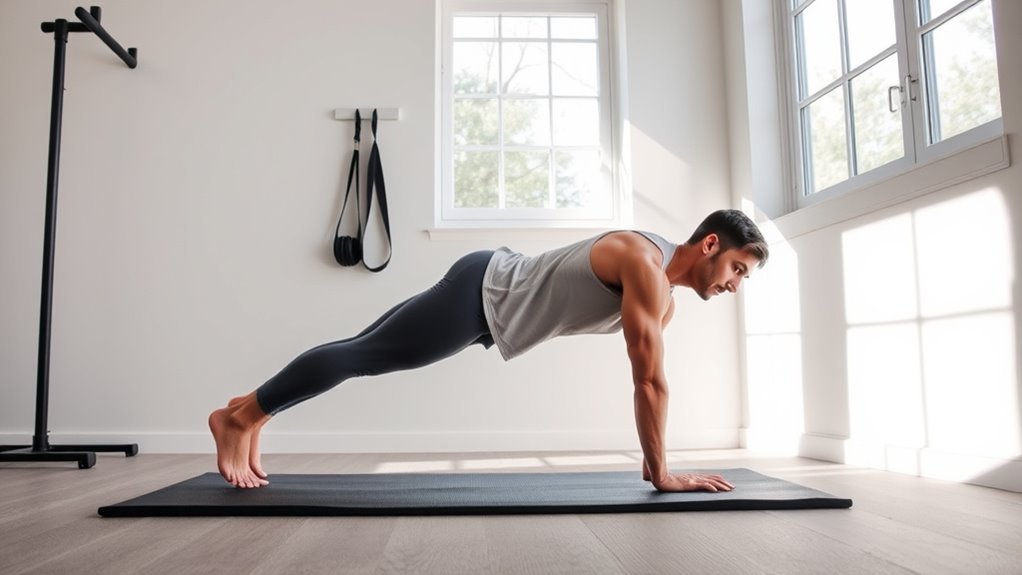
Before diving into advanced moves, it’s essential to master the fundamental calisthenics movements and principles. Focus on muscle activation to guarantee you’re engaging the right muscles during each exercise. Proper movement biomechanics are key to performing movements efficiently and safely, reducing the risk of injury. When practicing basics like push-ups, squats, and planks, pay attention to your body alignment and how muscles activate through each phase of the movement. This awareness helps you develop a solid foundation, improves control, and enhances overall strength. Consistently practicing correct form and understanding how your body moves will prepare you for more complex exercises later. Remember, mastering the basics is about quality, not quantity, setting the stage for sustained progress. Additionally, understanding the importance of muscle activation can significantly improve your workout effectiveness.
Building a Simple and Effective Workout Routine

Creating a simple and effective workout routine starts with setting clear, achievable goals that match your fitness level and schedule. Focus on consistency over intensity, gradually building strength. To keep things straightforward:
Set clear goals, stay consistent, and keep your routine simple for lasting fitness progress.
- Choose foundational calisthenics movements like push-ups, squats, and planks that require minimal workout equipment.
- Incorporate basic calisthenics nutrition, emphasizing balanced meals that fuel your workouts and aid recovery.
- Structure your routine to include 3–4 sessions per week, balancing workout and rest days for ideal progress.
Keep your plan manageable, and don’t overcomplicate it with too many exercises or equipment. Remember, simplicity helps build discipline and ensures you stick with your routine long-term.
Progression Strategies to Keep Improving

To keep making progress in calisthenics, you need to continually challenge your muscles by increasing the difficulty of your exercises. Incorporate advanced techniques like archer push-ups, one-arm variations, or explosive movements to push your limits. These methods help break plateaus and promote strength gains. Incorporating modern shower fixtures can be a motivating way to upgrade your bathroom and enhance your recovery experience after workouts. Equally important are recovery strategies; prioritize proper rest, stretching, and nutrition to allow your muscles to repair and grow stronger. Listening to your body and adjusting intensity prevent overtraining and injury. Gradually increasing reps, sets, or complexity ensures steady progress without burnout. By combining advanced techniques with effective recovery, you create a sustainable plan that keeps your gains consistent and your motivation high.
Common Mistakes and How to Avoid Them

One common mistake beginners make is neglecting proper form, which can lead to injuries and hinder progress. To avoid this, focus on technique over reps. Here are three pitfalls to watch out for:
- Overtraining pitfalls – Pushing too hard without rest causes fatigue and setbacks. Rest days are essential for recovery.
- Equipment misconceptions – Believing you need fancy equipment can lead to unnecessary expenses. Bodyweight exercises are effective and require minimal gear.
- Skipping warm-up and cooldown – Neglecting these steps increases injury risk and slows recovery. Always prepare your muscles before and after workouts.
- Additionally, understanding the importance of resources and tools like proper guidance from experienced professionals can make a significant difference in your progress.
Staying Motivated and Tracking Your Progress

Staying motivated can be challenging, especially when progress seems slow or setbacks occur. Building mental resilience helps you push through tough times, reminding you of your long-term goals. Tracking your progress is essential; use a journal or app to log workouts, reps, and improvements. Seeing tangible results boosts your confidence and keeps you committed. Don’t underestimate the power of social support—sharing your journey with friends or online communities provides encouragement and accountability. Celebrate small victories along the way to stay inspired. Remember, effectiveness of eye patches and how consistent use leads to better results—similar principles apply to your fitness routine. By focusing on steady progress, maintaining your mental resilience, and leveraging social support, you’ll stay motivated and make your calisthenics journey enjoyable and sustainable.
Frequently Asked Questions
How Long Should I Rest Between Calisthenics Workouts?
You should rest for about 48 hours between calisthenics workouts to allow proper recovery. This rest duration helps prevent overtraining and reduces injury risk. For ideal results, stick to a workout frequency of 3-4 sessions per week, giving your muscles enough time to rebuild. Listen to your body; if you’re sore or fatigued, extend your rest period. Consistency and adequate recovery are key to progress.
Can Beginners Do Advanced Calisthenics Moves Safely?
Think of advanced calisthenics moves as climbing a steep mountain—you need sturdy gear first. As a beginner, you can do these moves safely if you follow proper progression strategies and prioritize form correction. Build strength gradually, mastering foundational exercises before attempting complex ones. Always listen to your body, avoid rushing, and consider working with a coach or using guided tutorials to prevent injury and guarantee safe progress.
What Equipment Is Essential for a Home Calisthenics Gym?
You only need a few calisthenics equipment and home gym essentials to get started. Invest in a sturdy pull-up bar, resistance bands, and a set of parallettes for varied exercises. A comfortable mat helps with floor work, and optional items like gymnastic rings add challenge. These essentials are affordable, space-efficient, and perfect for building strength and flexibility right at home.
How Do I Prevent Injuries While Training at Home?
Imagine pushing your limits, but suddenly feeling a twinge in your muscles—that’s a warning. To prevent injuries, always do a proper warm-up to loosen up your muscles and joints. Focus on maintaining correct form during each movement; sloppy technique invites strain. Listen to your body, avoid rushing, and take breaks when needed. Staying mindful and prepared keeps your training safe and effective, so you can push further without setbacks.
Is It Possible to Build Muscle Without Weights?
Yes, you can build muscle without weights by focusing on bodyweight exercises that promote muscle gain. You’ll need to challenge your muscles through progressive overload, such as increasing reps or difficulty. Your body adapts to consistent training, leading to muscle growth. By maintaining proper form and gradually intensifying your workouts, you stimulate muscle gain and encourage body adaptation, even without traditional weights.
Conclusion
As you embrace calisthenics, remember that patience and consistency gently pave the way to progress. While challenges may subtly arise, viewing them as opportunities to refine your approach keeps your journey graceful and rewarding. Trust in your efforts, celebrate small victories, and let your dedication quietly transform your strength. With time, your disciplined habits will weave a tapestry of resilience and achievement, guiding you toward a healthier, more confident self.