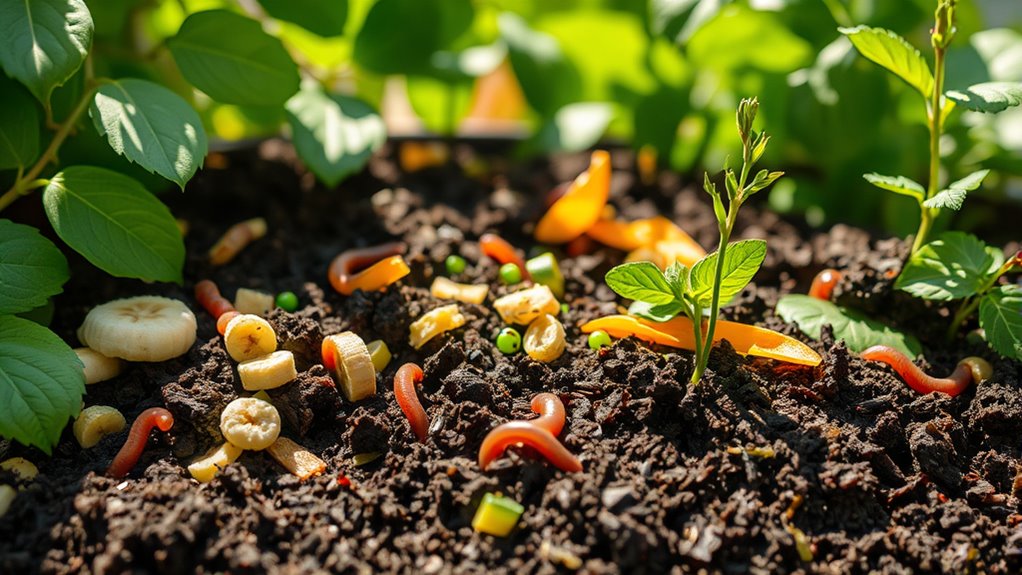

Composting is a fantastic way for you to reduce waste and enrich soil. It transforms organic materials like food scraps and yard debris into nutrient-rich compost while cutting down on harmful methane emissions from landfills. Start by balancing carbon-rich browns and nitrogen-rich greens in your compost pile. Maintain moisture and aerate regularly for ideal results. You can even join community initiatives for added support. Keep exploring to discover more tips and tricks for successful composting!
Key Takeaways
- Composting transforms organic waste into nutrient-rich compost, reducing landfill waste and harmful methane emissions.
- Achieve a balanced compost mix with a 25-30:1 ratio of nitrogen-rich greens to carbon-rich browns.
- Regularly aerate and monitor moisture levels to maintain compost health and promote decomposition.
- Safe composting ingredients include fruit scraps, vegetable peels, and yard waste; avoid diseased materials and glossy papers.
- Community composting initiatives strengthen local ties and promote sustainable practices while reducing waste disposal costs.
What Is Composting?

Composting is a fascinating natural process that transforms organic waste, like food scraps and yard debris, into valuable nutrient-rich compost, often referred to as “black gold.”
By recycling these materials, you not only reduce the amount of waste sent to landfills but also help decrease harmful methane emissions, which are a significant contributor to greenhouse gas emissions. Additionally, composting can also help improve soil structure and promote healthy plant growth. Many gardeners find that bee-friendly plants thrive in enriched soil, attracting pollinators that contribute to overall biodiversity.
You can compost a variety of organic matter, including fruits, vegetables, grass clippings, and leaves.
The process requires a balanced mix of carbon-rich materials (browns) and nitrogen-rich materials (greens), ideally in a ratio of 25-30 parts carbon to 1 part nitrogen.
Different methods like cold composting, hot composting, or vermicomposting can be employed based on your preferences and space.
Ultimately, the resulting compost serves as an excellent soil amendment, enriching your garden and promoting sustainability. Additionally, incorporating organic fertilizers into your compost can further enhance nutrient availability for your plants.
Benefits of Composting

While you may be familiar with composting as a way to recycle organic waste, its benefits extend far beyond waste reduction.
Composting greatly reduces the organic waste that ends up in landfills, where it contributes to methane emissions, a potent greenhouse gas. By creating compost, you enrich soil health with essential nutrients like nitrogen, phosphorus, and potassium, making it a cost-effective alternative to synthetic fertilizers. Additionally, solar energy solutions can further enhance sustainable agricultural practices by powering composting systems and reducing reliance on fossil fuels. Freshly squeezed juices can also be used in composting to add beneficial nutrients to the soil. Moreover, incorporating organic matter into compost significantly improves soil structure and enhances its ability to retain moisture.
Increased organic matter in soil improves water retention, allowing it to hold an additional 20,000 gallons per acre. Additionally, nutrient-rich compost supports healthier plant growth, enhancing agricultural sustainability and boosting crop yields. Furthermore, composting aligns with eco-friendly practices such as using renewable resources, contributing to a more sustainable environment.
Types of Home Composting
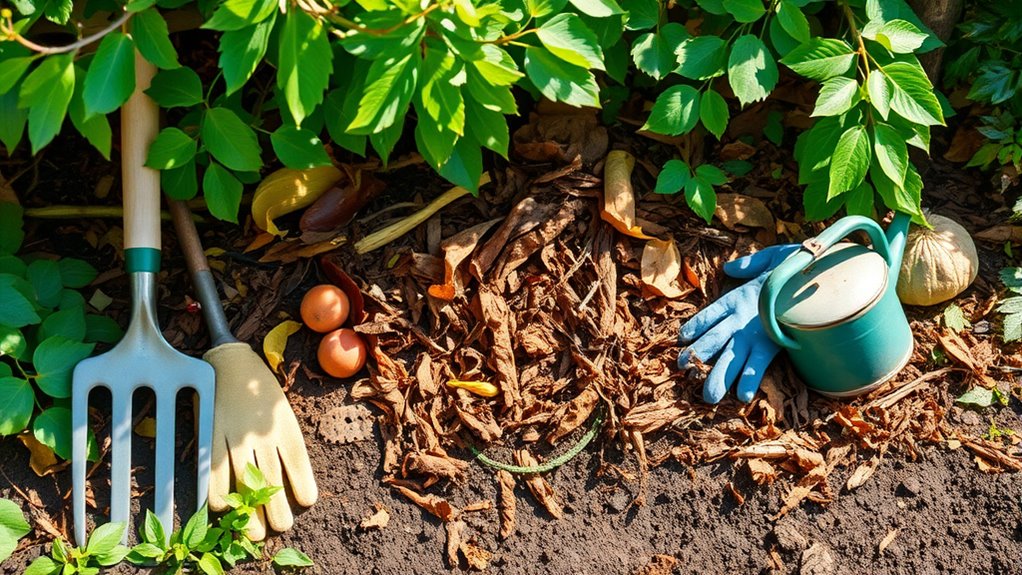
Choosing the right composting method can enhance your efforts in enriching soil and managing organic waste effectively. There are several composting systems to evaluate.
Cold composting is a low-effort approach, taking 1-2 years to decompose and perfect for those who prefer a hands-off method. This method works best with a diverse mix of organic materials to promote healthy decomposition.
Cold composting offers a hands-off, low-effort approach, taking 1-2 years for decomposition. Perfect for those who prefer minimal maintenance.
If you want quicker results, hot composting can produce finished compost in just 4-6 months by maintaining ideal temperatures and balancing nitrogen-rich materials with carbon-rich browns.
Trench composting is another simple option, allowing you to bury organic waste directly in the soil.
Finally, vermicomposting utilizes red wiggler worms and is great for small spaces, yielding nutrient-rich castings in 3-6 months. Additionally, incorporating nutrient-rich ingredients into your compost can enhance the quality of the soil produced.
Each method thrives on the right balance of greens and browns for successful decomposition.
How to Compost

To start composting effectively, you’ll want to gather the right materials and create ideal conditions for decomposition.
Layering nitrogen-rich greens with carbon-rich browns is key, and keeping your compost moist and aerated will speed up the process.
Let’s explore how to choose your composting materials and maintain the best environment for your pile.
Composting Materials Guidelines
When you’re ready to start composting, understanding what materials to include is essential for creating a thriving compost pile.
You’ll want to achieve a balanced mix of greens and browns, ideally in a ratio of 25-30 parts carbon to 1 part nitrogen. Here are some composting materials to evaluate:
- Greens: Vegetable scraps, fruit peels, coffee grounds
- Browns: Dried leaves, cardboard, straw
- Moisture: Water (aim for a sponge-like consistency)
Avoid adding meat, dairy, and oily foods, as they attract pests and create odors.
Remember to monitor moisture levels; too dry or too wet can hinder decomposition.
Maintaining Optimal Conditions
Achieving ideal conditions in your compost pile is essential for successful decomposition, as it guarantees that materials break down efficiently and produce nutrient-rich compost. To maintain proper moisture, keep it like a wrung-out sponge; too dry slows decomposition, while too wet creates anaerobic conditions. Aim for a carbon-to-nitrogen ratio of 25-30:1 to promote efficient breakdown. Regularly turn your compost every 1-2 weeks for aeration, which enhances oxygen flow and reduces odors. Also, monitor the temperature, targeting a peak of 130-140°F to kill pathogens. Layer browns and greens to encourage balanced decomposition.
| Condition | Importance |
|---|---|
| Proper Moisture | Supports microbial activity |
| Carbon-to-Nitrogen Ratio | Enhances decomposition |
| Regular Turning | Reduces odors |
| Temperature Monitoring | Kills pathogens |
| Layering Materials | Promotes balance |
What Can You Compost?
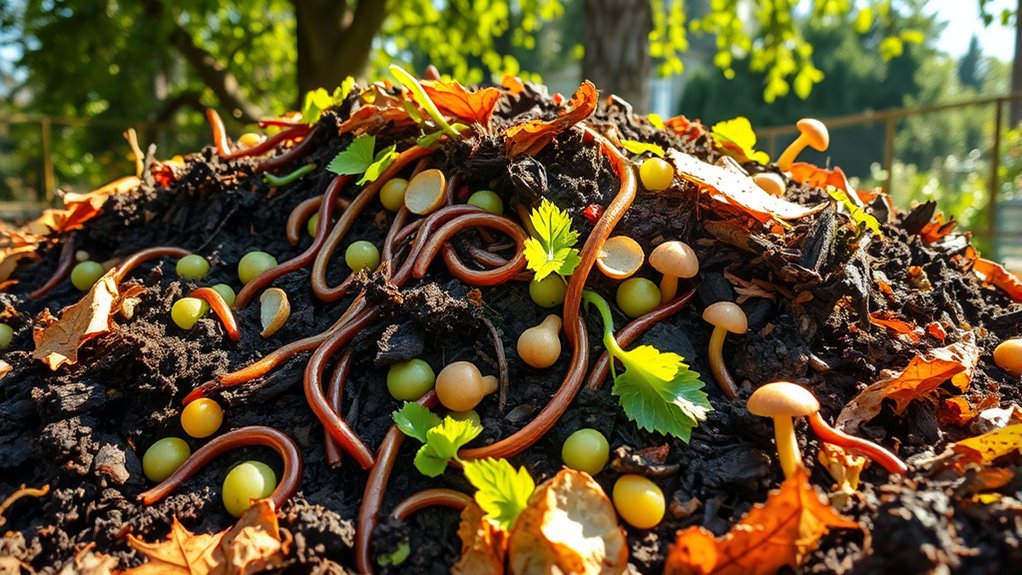
Composting is a fantastic way to recycle organic waste and enrich your garden soil. You can add a variety of materials to your compost pile, creating a nutrient-rich environment for your plants.
Composting recycles organic waste while enriching garden soil, creating a nutrient-rich haven for your plants.
Here are some great items to include:
- Food scraps: Vegetable scraps, fruit peels, and coffee grounds.
- Yard waste: Grass clippings, leaves, and small branches.
- Brown materials: Dead leaves and cardboard.
To maintain balance, mix nitrogen-rich greens with carbon-rich browns in a 25-30 to 1 ratio. This will help speed up the decomposition process and improve the quality of your compost.
What Not to Compost

While it’s tempting to throw all organic materials into your compost pile, there are essential items you should avoid to keep your compost healthy and effective.
Meat, dairy products, and oily foods can attract pests and create unpleasant odors, ruining your compost experience. Additionally, never add pet waste, as it may contain harmful pathogens that survive the composting process.
Inorganic materials, like plastics and metals, won’t decompose and will contaminate your compost, making it unsuitable for your garden. Also, steer clear of colored or glossy paper, which often contains harmful inks and chemicals.
Finally, avoid weeds and diseased plant material to prevent spreading unwanted growth and pathogens in your compost.
Stick to safe ingredients for the best results!
Community Composting

Community composting offers you a chance to get involved in local initiatives that make a big impact.
With curbside collection programs, you can easily recycle your organic waste while learning through workshops that teach effective composting methods.
This collective effort not only reduces landfill waste but also strengthens community ties and promotes sustainable practices.
Local Composting Initiatives
Local composting initiatives play an essential role in reducing organic waste and promoting sustainability.
By participating in community composting programs, you can contribute to a cleaner environment while enjoying the benefits of shared resources.
Here are some key advantages:
- Convenient drop-off sites for food scraps and yard waste, making it easy to participate.
- Cost savings on waste disposal, as you mightn’t need traditional trash services for organic materials.
- Community engagement that raises awareness about composting and encourages environmental stewardship.
Many local governments and organizations, like CompostNow, offer services to make composting accessible for everyone.
Curbside Collection Programs
Curbside collection programs make it easy for you to divert food scraps and yard waste from landfills, promoting a more sustainable lifestyle.
These programs provide specialized bins, allowing you to separate compostable materials from regular trash. By participating, you contribute to the composting process, helping to reduce organic waste and lower methane emissions.
In cities like San Francisco, these initiatives have successfully diverted over 80% of waste, showcasing their effectiveness.
Plus, many curbside collection programs offer educational resources to guide you on what can and can’t be composted. Not only do you support local environmental goals, but you may also save on municipal waste management costs by decreasing the volume of waste sent to landfills.
Community Composting Workshops
Engaging in community composting workshops offers a hands-on approach to reducing organic waste and enhancing sustainability.
These workshops empower you with the skills to compost effectively, diverting significant amounts of waste from landfills.
- Learn about balancing greens and browns for ideal composting
- Discover various methods like hot composting and vermicomposting
- Connect with fellow participants to build a community composting network
Frequently Asked Questions
Do and Don’ts of Composting?
When you’re composting, mix browns and greens in a 2:1 or 3:1 ratio for the best results.
Avoid adding meat, dairy, or oily foods, as they attract pests and smell bad.
Keep your compost pile moist, like a wrung-out sponge, and turn it regularly—every week in warm weather and every 3-4 weeks when it’s cooler.
Don’t add pet or human waste since they can introduce harmful pathogens.
Happy composting!
Are Eggshells Green or Brown Compost?
Eggshells are classified as a “brown” compost material.
They’re primarily made of calcium carbonate, providing essential carbon to your compost pile. However, they take longer to break down compared to typical browns.
To speed up decomposition, crush them before adding. Combining crushed eggshells with nitrogen-rich materials, like food scraps or grass clippings, will help maintain a balanced carbon-to-nitrogen ratio, ensuring your composting efforts are effective and beneficial for your plants.
Do Coffee Grounds Speed up Composting?
Yes, coffee grounds can speed up composting! Their high nitrogen content boosts microbial activity, which helps decomposition.
When you add coffee grounds in moderation—about 10-20% of your compost volume—you improve the compost structure, aiding aeration and drainage.
Just remember to mix them with other materials to keep that carbon-to-nitrogen ratio balanced. Too many grounds can make your compost too acidic, so moderation is key for ideal results.
What Are the 7 Steps in Composting?
To compost effectively, follow these seven steps.
First, choose your method—cold or hot composting.
Next, gather materials, mixing nitrogen-rich greens and carbon-rich browns.
Then, build your compost pile, layering browns and greens.
After that, maintain moisture and aeration by keeping it damp and turning it regularly.
Finally, wait and let it decompose.
In 1-6 months, you can harvest your compost when it’s dark, crumbly, and smells earthy.
Conclusion
Composting isn’t just a trend; it’s a timeless practice that connects you to the earth. By reducing waste and enriching your soil, you’re not only helping your garden thrive but also playing a crucial role in protecting the planet. Whether you’re tossing in kitchen scraps or yard waste, every little bit counts. So, grab your compost bin and start your journey—your future self (and the planet) will thank you for it!