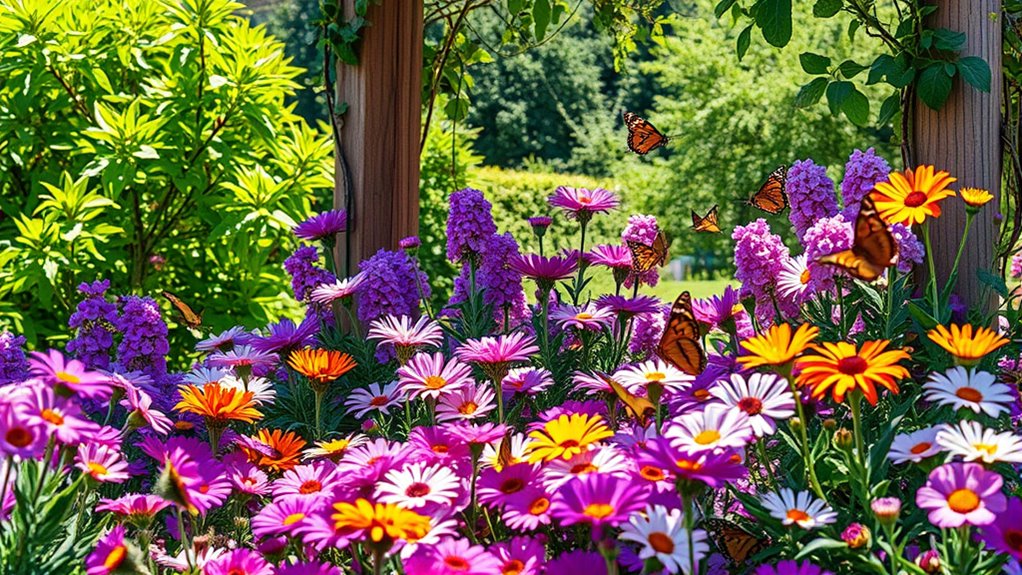

To create a butterfly garden, choose a sunny spot with at least 6 hours of sunlight daily. Incorporate a mix of native nectar and host plants for continuous blooms. Add sunbathing rocks and a shallow water source, like a butterfly puddle, to attract butterflies. Avoid pesticides to maintain a healthy ecosystem. Arrange plants in drifts of 3-5 for visual impact and to enhance attraction. There’s so much more to learn about enhancing your garden for butterflies.

Get furniture and decor delivered free with Prime
- Fast, free delivery on millions of items
- Prime Video, Amazon Music and more included
- Member-only deals all year
Key Takeaways
- Select a sunny location with 6 to 8 hours of sunlight daily to enhance butterfly activity and visibility.
- Use a diverse mix of native flowering plants that bloom at different times to ensure continuous nectar sources.
- Incorporate larval host plants, like milkweed for monarchs, to support the entire butterfly life cycle.
- Create a butterfly puddle for hydration and include flat rocks for sunbathing to attract more butterflies.
- Avoid pesticides to maintain a healthy ecosystem that supports butterflies and beneficial insects naturally.
butterfly garden native nectar plants
As an affiliate, we earn on qualifying purchases.
As an affiliate, we earn on qualifying purchases.
Selecting the Ideal Site for Your Butterfly Garden
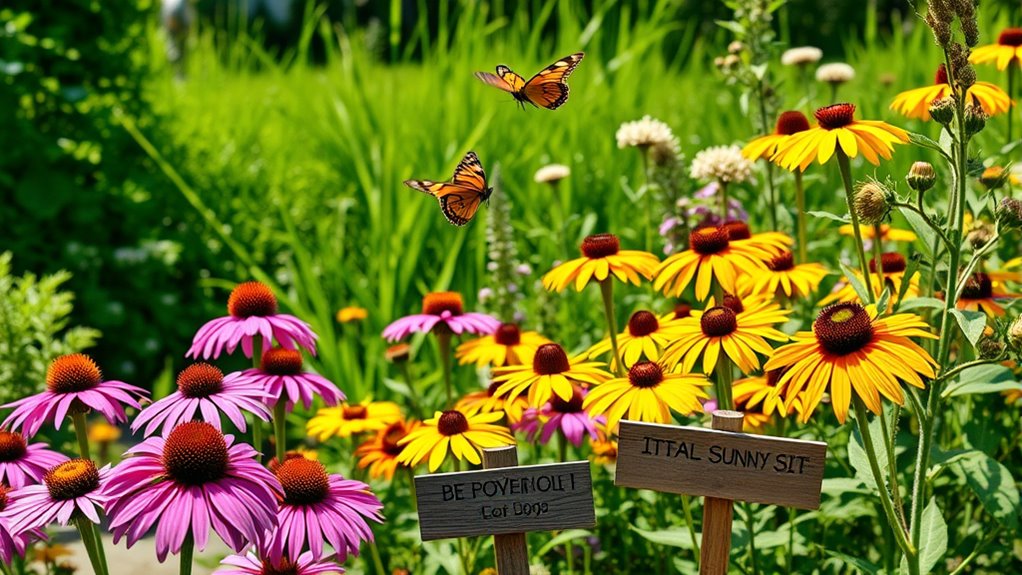
When you’re ready to create your butterfly garden, choosing the right site is essential.
Look for a sunny location that gets at least 6 to 8 hours of sunlight daily; this maximizes butterfly activity and helps attract butterflies. Many butterfly species are drawn to native plants that provide essential nectar sources. Additionally, clear communication about your gardening intentions can help engage community support for local biodiversity initiatives.
Seek a sunny spot with 6 to 8 hours of sunlight daily to boost butterfly activity and attraction.
You’ll also want to guarantee some shelter from wind and predators, so consider planting broad-leafed trees or shrubs.
Observing local butterfly activity can guide you in selecting the best spot to support the types you want to attract.
Make sure the area has enough space for diverse plants, fostering a thriving ecosystem. Additionally, healthy ecosystems provide essential services that support butterfly populations.
To enhance comfort for butterflies, incorporate flat rocks in sunny patches where they can rest and soak up the sun.
This thoughtful approach will create a welcoming environment for these beautiful creatures. Additionally, understanding the role of biodiversity awareness can help you select plants that support a wide range of butterfly species, ensuring a vibrant garden.
Incorporating Sunbathing Rocks

To create a welcoming space for butterflies, incorporating large, flat rocks in your garden is a fantastic idea.
These sunbathing rocks serve as ideal spots for butterflies to warm their wings and boost their body temperature for flight. Position them in sunny areas where they can absorb warmth, especially on cool mornings. Higher contrast ratios yield deeper blacks and brighter whites, enhancing your garden’s visual appeal and making it more attractive to butterflies. Additionally, using natural materials like stone in your garden design can create a more inviting atmosphere for these beautiful insects. Research indicates that astrological compatibility may enhance interpersonal attraction, which can be paralleled in how the right garden environment attracts butterflies.
Arrange the rocks in sheltered locations to protect butterflies from wind and predators while they rest. Observing butterfly behavior can help you identify their preferred basking spots, guiding your rock placement.
Plus, using a variety of rock sizes and colors not only attracts butterflies but enhances your garden’s beauty. This thoughtful addition complements nectar sources and provides beneficial insects a safe place to thrive. Additionally, ensuring a diverse range of nectar sources will further encourage butterflies to visit your garden.
Providing Essential Water Sources

To attract butterflies, you should create a butterfly puddle using a mix of sand and soil in a shallow bowl. Surround it with sun-warmed stones to give butterflies a perfect spot for drinking and basking. Don’t forget to place the puddle in a sunny area and keep it clean for easy access to water throughout the day. Additionally, providing essential water sources like this can significantly enhance the attractiveness of your garden to butterflies. This is similar to how ride-on car toys promote engagement and interaction for children, offering them a joyful play experience.
Butterfly Puddles Creation
Creating a butterfly puddle is a simple yet effective way to provide essential hydration for butterflies in your garden.
Mix sand and soil in a shallow bowl, ensuring it stays moist without standing water. This creates a perfect water source for those beautiful winged visitors.
Surround the puddle with flat stones that absorb sunlight, offering a warm spot for butterflies to land and drink. Position your butterfly puddles in a sunny location to catch morning rays, helping butterflies warm up and encouraging them to visit.
For consistent moisture, consider sinking a bucket of the wet mixture into the ground. Incorporating butterfly puddles not only supports hydration but also enriches your garden’s ecosystem, drawing in a variety of butterfly species.
Sunlit Water Sources
While butterflies need hydration to thrive, providing sunlit water sources enhances their experience in your garden.
Here’s how to create inviting areas for them:
- Butterfly Puddles: Mix sand and soil in a shallow bowl, keeping it saturated yet free from standing water for butterflies to drink.
- Flat Stones: Surround the puddle with sun-warmed stones that attract butterflies fluttering nearby, creating a perfect basking spot.
- Morning Sunlight: Position your water source to receive morning sunlight, as butterflies are drawn to warm environments for hydration and basking.
Choosing Butterfly-Attracting Plants

When choosing plants for your butterfly garden, focus on native species that butterflies naturally recognize and rely on.
To keep butterflies visiting throughout the season, select a variety of plants that bloom at different times.
This way, you’ll create a colorful and inviting habitat that supports these beautiful creatures.
Selecting Native Species
Selecting the right native species for your butterfly garden is crucial for attracting and supporting local butterfly populations. Native plants are adapted to your climate and soil, providing ideal habitat.
Here are three key types of native plant species to take into account:
- Nectar Sources: Flowers like milkweed, coneflowers, and black-eyed Susans offer essential nectar for adult butterflies.
- Caterpillar Food: Certain plants serve as food for caterpillars, ensuring the lifecycle continues.
- Diverse Range: Incorporating a variety of species with different bloom times enhances food availability throughout the growing season.
Using native plants not only helps attract butterflies but also promotes biodiversity, sustaining the local ecosystem and benefiting other pollinators and beneficial insects.
Ensuring Continuous Bloom
To attract a steady stream of butterflies to your garden, it’s essential to choose a mix of flowering plants that bloom at various times throughout the growing season.
Select spring, summer, and fall bloomers to guarantee a continuous supply of nectar. Incorporate native plants, as they provide reliable food sources and support local butterfly species.
Opt for flowering plants with tubular shapes, like bee balm and penstemon, for easy nectar access. Arrange these plants in drifts of 3-5 for a striking visual impact that draws butterflies from afar.
Don’t forget to include larval host plants, such as milkweed for monarchs and parsley for black swallowtails, to support their entire life cycle and encourage frequent visits to your butterfly garden.
Understanding Nectar and Host Plants

Understanding the importance of nectar and host plants is essential for creating a thriving butterfly garden.
These plants provide critical food sources for different stages of a butterfly’s life. Here’s how they contribute:
- Nectar Plants: These sugar-rich plants attract adult butterflies. Look for tubular flowers like bee balm and phlox.
- Host Plants: Caterpillars need specific host plants to feed on, such as the milkweed plant for monarch caterpillars.
- Variety of Butterflies: A diverse selection of both nectar and host plants increases the chances of attracting various butterfly species, enhancing your garden’s biodiversity.
Creating a Diverse Plant Palette

Creating a butterfly garden goes beyond just providing nectar and host plants; it’s about curating a diverse plant palette that supports butterflies at every stage of their life cycle.
To attract a wide range of butterflies, incorporate a diverse range of flowering plants, including both nectar sources and caterpillar host plants. Choose native plants that thrive in your area, ensuring they provide the necessary food for adult butterflies and their larvae.
Aim to plant at least 10 individuals of two different flowering species, creating drifts of 3-5 for maximum visibility. Select flowers with various bloom times and colors—think pink, red, orange, white, yellow, and purple—to provide consistent food sources throughout the season and enhance your garden’s appeal.
Avoiding Pesticides for a Healthy Ecosystem

While you may be tempted to use pesticides for quick fixes, doing so can harm not only butterflies but also their caterpillars and beneficial insects, throwing your garden ecosystem out of balance.
Instead, focus on practices that support a healthy garden ecosystem. Here are some steps to reflect upon:
- Avoid chemical insecticides to let natural predators thrive, managing pests organically.
- Implement organic gardening practices like hand-picking pests and using natural repellents.
- Create a diverse plant environment that supports various insect species, reducing the need for chemical interventions.
Designing Your Butterfly Garden Layout

A well-planned garden layout can greatly enhance your butterfly-friendly space, making it inviting and vibrant. When designing your butterfly garden layout, make certain it gets at least 6 hours of full sun daily to maximize butterfly activity.
Arrange flowering plants in drifts of 3-5 to create visible swaths of color that attract butterflies from afar. Incorporate flat rocks in sunny spots for butterflies to sunbathe and absorb warmth.
Additionally, include a shallow water source, like a butterfly puddle or birdbath, in morning sunlight to meet their hydration needs.
Don’t forget to create sheltered areas with broad-leafed trees and shrubs to protect butterflies from wind and predators, promoting a safe haven for them to thrive and enjoy the nectar you provide.
Recommended Plant Combinations for Success

To attract a variety of butterflies to your garden, consider combining plants that serve both nectar and larval food needs.
Here are three great combinations to get you started:
- Monarch Favorites: Include milkweed, butterfly bush, and lantana. These plants provide essential nectar and serve as larval food sources.
- Swallowtail Selection: Use phlox, bee balm, and verbena for their blooms, along with host plants like parsley and fennel for black swallowtail caterpillars.
- Native Mix: Incorporate native long-blooming perennials like aster and goldenrod to guarantee a continuous food source from summer into fall.
Grouping these plants in drifts of 3-5 maximizes visibility and attraction, making your garden a delightful haven for butterflies.
Frequently Asked Questions
How to Plan a Butterfly Garden Layout?
To plan a butterfly garden layout, start by choosing a sunny spot that gets 6 to 8 hours of sunlight daily.
Aim for about 100 square feet, mixing plants of different heights, colors, and bloom times. Incorporate sheltered areas with broad-leafed trees and flat rocks for resting.
Arrange flowers in groups of 3-5 to create vibrant color patches, attracting butterflies more effectively than scattered plants. This creates a lively, inviting habitat for them.
How Do You Build Your Garden to Attract Butterflies?
To build your garden and attract butterflies, start by choosing a sunny spot that gets 6 to 8 hours of sunlight.
Plant a variety of nectar-rich flowers in clusters for vibrant color and easy access. Include host plants like milkweed for caterpillars.
Create a shallow water source using sand and soil, and avoid pesticides to maintain a healthy ecosystem.
With the right setup, you’ll see butterflies flocking to your garden!
What Are the Best Plants for a Butterfly Garden?
Like a painter with a palette, you should choose a variety of vibrant flowers to attract butterflies.
Consider planting milkweed for monarchs, butterfly bush for nectar, and parsley for black swallowtail caterpillars. Incorporate native plants, as they thrive in your local climate.
Group plants in clusters of 3-5 for maximum impact. Remember, a continuous bloom throughout the season keeps those fluttering beauties visiting your garden all summer long!
What Is the Monarch Butterfly’s Favorite Flower?
The monarch butterfly’s favorite flower is milkweed, specifically the Asclepias species.
You’ll find that these plants are essential, as they provide both food for caterpillars and nectar for adult butterflies.
Monarchs are also drawn to vibrant flowers like butterfly bush, lantana, and coneflower.
When you plant these flowers in clusters, you’ll create an inviting environment, making it easier for them to access the nectar they love.
Keep diversity in mind for continuous blooms!
Conclusion
So, you’ve gone through the trouble of crafting the perfect butterfly garden, but remember, these delicate creatures don’t just flutter in because you’ve planted a few flowers. They need sun, water, and a safe haven from chemicals. Ironically, in our quest to attract beauty, we often forget nature’s simple rules. If you nurture your garden thoughtfully, you’ll not only invite butterflies but also create a sanctuary that thrives—proof that sometimes, the most beautiful things come from genuine care.
Fall Picks
fall essentials
As an affiliate, we earn on qualifying purchases.