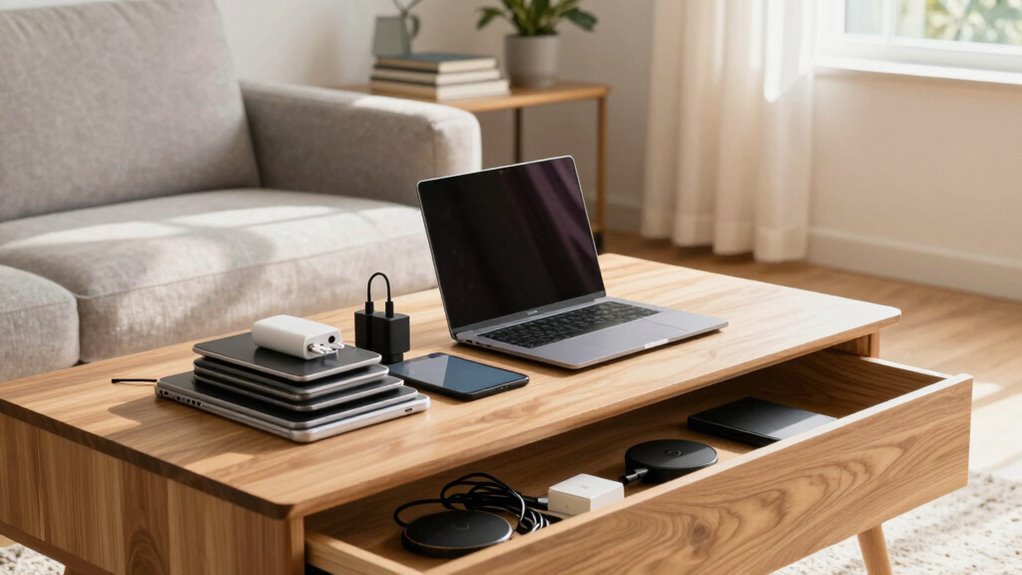

Creating a digital declutter routine helps you reduce digital chaos, leading to a calmer home environment. By setting boundaries on screen time, organizing files regularly, and deleting unused apps, you free up mental space and improve focus on family and household tasks. This habit also minimizes digital distractions, making your home feel more organized and peaceful. Keep exploring ways to integrate digital wellness into your daily life, and discover how it can transform your home space even further.

Get furniture and decor delivered free with Prime
- Fast, free delivery on millions of items
- Prime Video, Amazon Music and more included
- Member-only deals all year
Key Takeaways
- Establish specific device-free times to promote family connection and reduce digital distractions at home.
- Regularly delete unused apps and clear email inboxes to maintain an organized digital environment.
- Track and limit screen time to enhance focus on household activities and quality family interactions.
- Create daily or weekly routines dedicated to digital decluttering for ongoing digital and home organization.
- Setting digital boundaries around screen use fosters a calm, focused, and more organized home environment.

In today’s fast-paced digital world, clutter can easily accumulate, making it hard to focus and stay productive. Your devices are constantly buzzing with notifications, messages, and updates, which can quickly overwhelm you. To regain control, establishing a digital declutter habit is essential—one that not only clears your digital space but also improves your home life. The first step is setting clear digital boundaries. Decide when and where you’ll use your devices and stick to those limits. For example, avoid screens during family meals or right before bed. These boundaries help you stay present with loved ones and create a calm, distraction-free environment at home.
Managing your screen time is also crucial. It’s easy to lose hours scrolling through social media or binge-watching videos, but too much screen time can interfere with your sleep, mood, and overall well-being. You can start by tracking how long you spend on different apps and then gradually reduce unnecessary usage. Implementing specific periods of digital detox, like no screens after 8 p.m., helps create a healthier routine. When you cut back on screen time, you free up more moments for real-life interactions and activities that nourish your home environment. Incorporating digital wellbeing practices can further enhance your overall balance. Recognizing the importance of digital health can motivate you to maintain these habits for long-term benefits. Establishing consistent routines around digital use can help prevent digital clutter from becoming overwhelming in the first place.
Creating a regular digital declutter routine is a game-changer. Dedicate a few minutes each day or week to organize your digital files, delete unused apps, and clear your email inbox. This habit prevents digital clutter from piling up and makes it easier to find what you need when you need it. As you declutter digitally, you’ll notice a ripple effect in your home life—less mental clutter can translate into a more peaceful, organized living space. You might find it easier to focus on household chores or spend quality time with family because your mind isn’t constantly distracted by digital chaos. Regularly practicing digital organization techniques can also help you establish a more mindful relationship with technology and prevent digital clutter from recurring. Building awareness around digital boundaries can empower you to create sustainable habits that support your overall well-being. Keeping digital files organized and up-to-date can also contribute to digital security, protecting your information from potential threats.
Products Worth Considering

Dyson V8 Cordless Vacuum

Blueair Blue Pure 211i Max Air Purifier

LEVOIT Vital 100S-P Smart Air Purifier with Washable Pre-Filter
As an affiliate, we earn on qualifying purchases.
Frequently Asked Questions
How Often Should I Perform a Digital Declutter?
You should perform a digital declutter monthly to combat digital overload and prevent clutter chaos. Regularly deleting unnecessary files, unsubscribing from unwanted emails, and organizing apps keeps your devices efficient and your mind clear. By setting aside a specific time each month, you stay ahead of digital clutter, reducing stress and improving overall productivity. Consistency guarantees your digital space remains tidy, helping you enjoy a calmer, more organized home environment.
What Tools Can Help Automate Digital Organization?
Think of automation as your digital guardian, tirelessly working behind the scenes. You can use tools like cloud storage services, which automatically sync and organize files, and set up automated backups to protect your data without lifting a finger. These tools turn chaos into order, ensuring your digital life stays tidy and secure effortlessly. Embracing automation frees your time, so you focus on what truly matters—both online and at home.
Does Digital Decluttering Improve Mental Health?
Digital decluttering can considerably boost your mental health by promoting digital minimalism, which reduces overwhelm and distractions. As you organize your digital space, you create a calmer environment that supports emotional well-being. Less digital clutter means fewer stress triggers, helping you feel more focused and relaxed. Embracing this habit encourages mindful usage of technology, ultimately fostering a healthier mental state and a more balanced life both online and offline.
How Can I Involve My Family in Digital Decluttering?
You can involve your family in digital decluttering by turning it into a shared activity. For example, imagine everyone sorting photos or deleting unused apps together, making it fun and collaborative. Encourage family participation by setting shared digital habits, like weekly cleanups or device-free zones. This approach fosters teamwork, reduces screen time, and creates a sense of collective achievement, making digital decluttering an engaging family project.
Can Digital Decluttering Prevent Data Breaches?
Yes, digital decluttering can help prevent data breaches by improving your data privacy and reducing security risks. When you regularly delete unnecessary files, update passwords, and organize your digital information, you minimize vulnerabilities. This habit makes it easier to spot suspicious activity and keeps sensitive data protected. Staying proactive with decluttering guarantees your digital environment remains secure, lowering the chances of unauthorized access or potential breaches.
Conclusion
By embracing the digital declutter habit, you free up mental space and create a calmer, more organized home. It’s like tidying your physical space—both bring clarity and peace. Yet, while a clean inbox or clutter-free desk feels satisfying, it’s the quiet moments of digital discipline that truly transform your everyday life. In balancing both worlds, you find not just order, but a deeper sense of control and tranquility inside your home and mind.