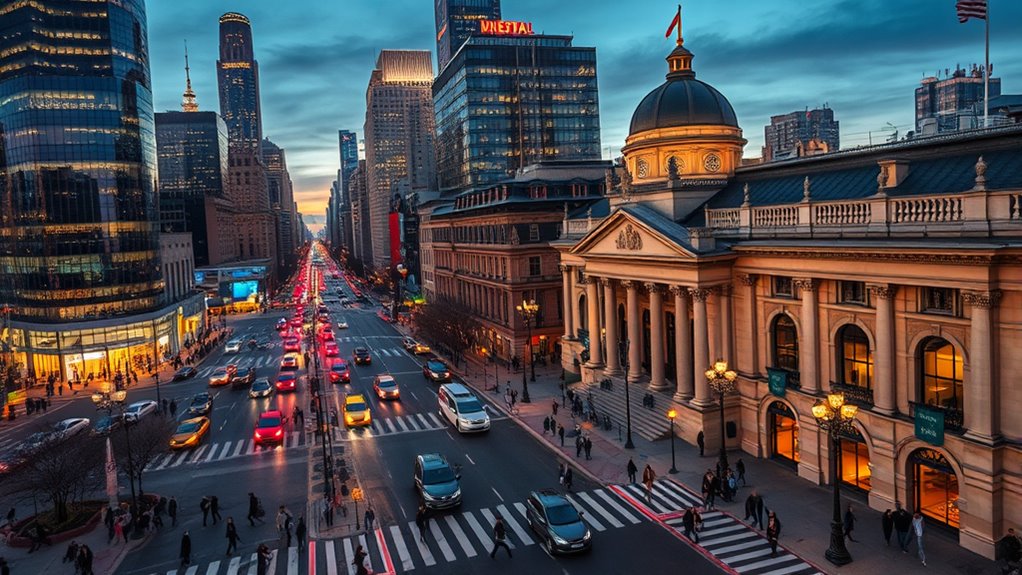

Fashion capitals like New York, Paris, Milan, and London rely heavily on government support to stay influential globally. These governments provide essential infrastructure, funding, and policies that boost industry growth, sustainability, and innovation. Initiatives range from eco-friendly programs to economic incentives that protect jobs and attract talent. Without these lifelines, such cities risk losing their competitive edge. If you want to see how this support shapes their future, there’s more to explore.
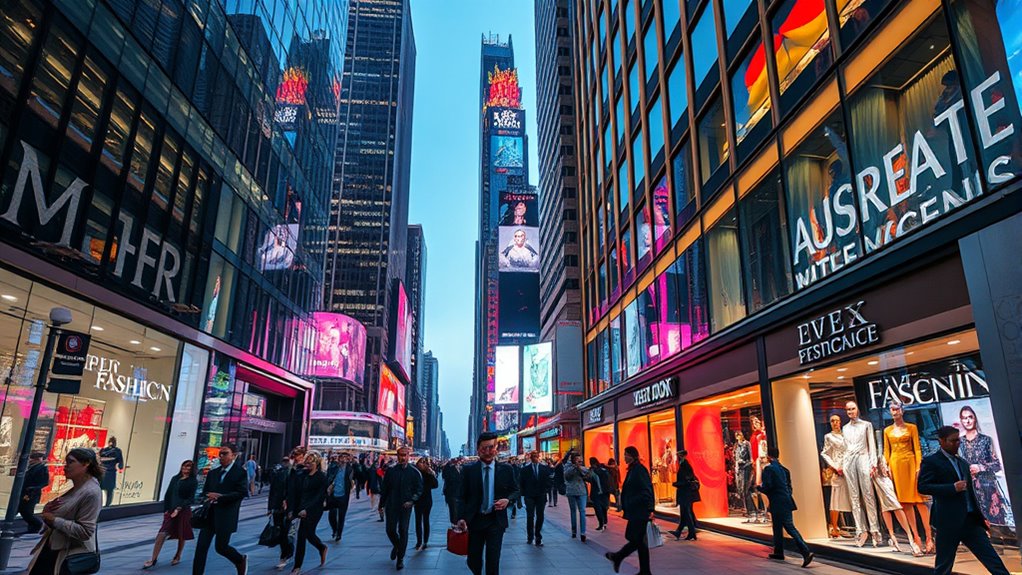
Fashion capitals like New York, Paris, Milan, and London have long defined the global style scene, but their future depends heavily on government support. These cities are more than just hubs of creativity; they’re economic engines that generate billions in revenue and sustain countless jobs. Yet, they face mounting challenges, from economic downturns to shifting consumer preferences, that threaten their dominance. For New York City, the fashion industry’s recent decline—dropping nearly 20% from 2019 to 2020—underscores the importance of targeted interventions. Without strategic support from the government and private sectors, NYC risks losing its global relevance and economic contribution. The city’s unique position, connected to industries like tech and finance, and its rich diversity and culture, are assets that need nurturing. Collaborative efforts are essential to provide resources, infrastructure, and talent, ensuring the city can rebound and maintain its influence. Targeted industry support is vital for resilience. Meanwhile, cities like Copenhagen showcase how government support can steer the industry toward sustainability. The Copenhagen Fashion Summit highlights the city’s leadership in eco-friendly fashion, backed by government policies that promote sustainability through tax incentives and stricter environmental regulations. These measures encourage brands to adopt sustainable practices, support slow fashion startups, recycling centers, upcycling initiatives, and second-hand markets. The local population’s awareness and demand for eco-friendly consumption further reinforce these efforts, making Copenhagen a model of how government policies can shape a more responsible fashion industry. Additionally, the integration of ethical hacking principles into cybersecurity strategies is crucial for protecting fashion brands from digital threats. In the UK, the fashion industry’s survival has become a priority amid ongoing crises. With reduced tourism and remote working cutting foot traffic, the government has been called upon to provide support through lease renegotiations, grants, and interest-free loans. These measures aim to preserve jobs and keep businesses afloat, especially small and medium-sized enterprises that struggled even before the pandemic. Investment in innovation, research, and circular fashion recycling is also seen as essential to future growth. Additionally, proposed regulations to help retailers manage inventory crises and support small businesses could stabilize the industry and foster resilience. Across these fashion capitals, government influence remains crucial. While Milan and Paris benefit from their established ecosystems—featuring tax incentives, infrastructure investments, and major fashion events—their governments’ continued support ensures they sustain their economic and cultural impact. These events attract international attention, driving growth and innovation. As emerging cities seek to rebrand themselves, government policies targeting industry support, sustainability, and infrastructure will determine their ability to compete on a global scale. Ultimately, the future of these fashion hubs hinges on strategic government involvement that balances economic, cultural, and environmental priorities.
Frequently Asked Questions
How Do Government Policies Influence Emerging Fashion Markets?
Government policies influence emerging fashion markets by setting regulations that promote sustainability, transparency, and ethical practices. You’ll find incentives like tax credits for reshoring and stricter rules against forced labor, pushing brands to adapt. These policies encourage innovation, improve supply chain accountability, and foster consumer trust. As a result, you’ll notice these markets shifting toward eco-friendly practices and higher standards, ultimately shaping a more responsible and competitive industry.
What Role Do Trade Agreements Play in Fashion Capital Growth?
Trade agreements play a vital role in your fashion capital’s growth by expanding market access, reducing tariffs, and encouraging diversification of sourcing regions. They enable you to tap into new markets and shift production to emerging countries with favorable trade terms. These agreements also foster regional stability, making supply chains more reliable. By leveraging trade deals, you can stay competitive, attract investments, and strengthen your position in the global fashion industry.
How Do Government Subsidies Impact Local Fashion Industries?
Government subsidies are like fertilizer for your local fashion industry, helping it grow stronger. They provide essential financial support, making raw materials like cotton more affordable and boosting small businesses. With these funds, you can innovate, adopt sustainable practices, and improve worker conditions. Subsidies also encourage transparency, ensuring your industry’s practices are fair and eco-friendly. Overall, they act as a catalyst, fueling your industry’s stability and long-term success.
Are Fashion Weeks Publicly Funded or Privately Sponsored?
Fashion weeks are usually funded through a mix of public and private sources. You’ll find many events receiving government support because they boost tourism and local economies. However, the majority of funding comes from private sponsors like luxury brands and industry stakeholders enthusiastic to showcase their collections. This blend of public and private funding helps balance cultural promotion with commercial goals, ensuring the events stay financially viable and impactful.
How Does Government Support Affect Sustainable Fashion Initiatives?
Government support boosts sustainable fashion initiatives by providing funding, tax incentives, and grants that lower costs and encourage eco-friendly innovations. It also enforces regulations requiring transparency, waste reduction, and responsible production, making brands more accountable. With policies like digital passports and environmental labels, you’ll find it easier to make informed choices. Overall, government backing accelerates the shift toward sustainable practices, helping you support brands that prioritize environmental and social responsibility.

ONE TO FOUR 800+Pcs Fashion Designer Kits for Girls with 6 Mannequins – Girls Fashion Design Craft Kit, Sewing Kit for Kid 8-12, Birthday Easter Gifts for Teens Girl 6 7 8 9 10 11 12
6 Mannequins Display More Designs: The newest fashion designer kits for girls includes 6 mannequins for display, along…
As an affiliate, we earn on qualifying purchases.
As an affiliate, we earn on qualifying purchases.
Conclusion
You can see how government support plays a vital role in maintaining fashion capitals’ global influence. For example, Paris invests over $1 billion annually in fashion initiatives, showcasing its commitment to industry growth. This financial lifeline helps sustain local designers, attract international talent, and keep these cities at the forefront of fashion innovation. With such backing, these capitals will likely continue shaping trends and inspiring the world for years to come.

Deeablo New York – Sustainable Reusable Indoor Recycling Bin for Kitchen, Multipurpose Recycle Bin, Large Recycling Bins for Home, Washable Paper Bag for Recycling (Olive)
A sustainable solution for laundry and storage needs. Functions as a storage bag, laundry basket or recycling bin
As an affiliate, we earn on qualifying purchases.
As an affiliate, we earn on qualifying purchases.

The Embroidered Closet: Modern Hand-stitching for Upgrading and Upcycling Your Wardrobe
As an affiliate, we earn on qualifying purchases.
As an affiliate, we earn on qualifying purchases.
second-hand designer clothing
As an affiliate, we earn on qualifying purchases.
As an affiliate, we earn on qualifying purchases.