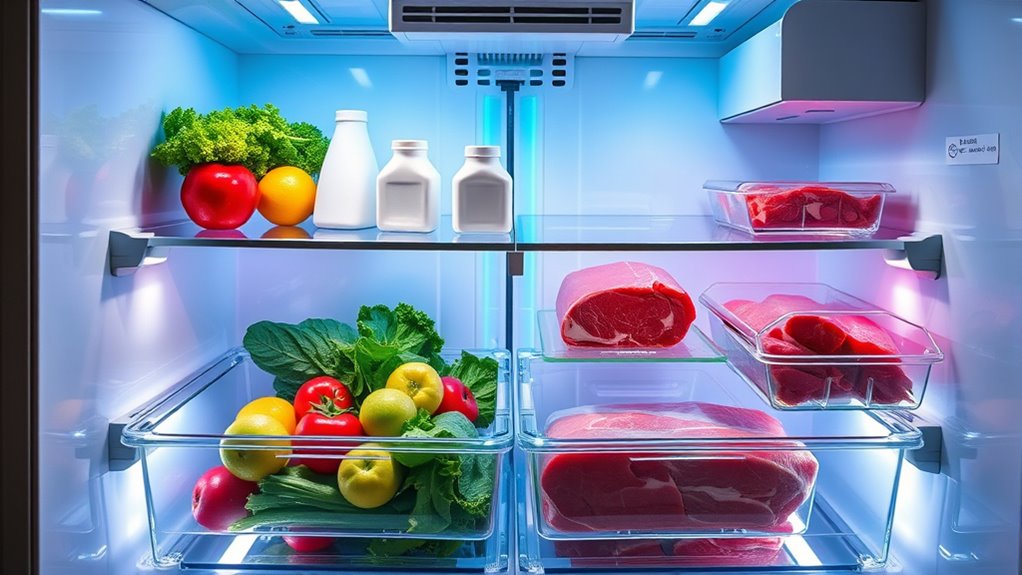

To optimize food safety, organize your fridge into specific zones: keep ready-to-eat foods on the top shelf, dairy and leftovers on middle shelves, and raw meat or fish on the bottom to prevent cross-contamination. Use crisper drawers for fruits and vegetables, and clear bins with labels for easy access. Maintaining correct temperatures and hygiene is key. Continue exploring tips on proper organization and maintenance to keep your fridge safe and efficient.
Key Takeaways
- Store raw meats on the bottom shelf to prevent cross-contamination and contain leaks.
- Keep ready-to-eat foods on the top shelf for easy access and to avoid contamination.
- Use middle shelves for dairy and leftovers, maintaining consistent temperatures for safety.
- Organize fruits and vegetables in crisper drawers with appropriate humidity controls to prolong freshness.
- Regularly check expiration dates and discard spoiled items to maintain a safe and hygienic fridge environment.
Understanding the Importance of Proper Fridge Organization
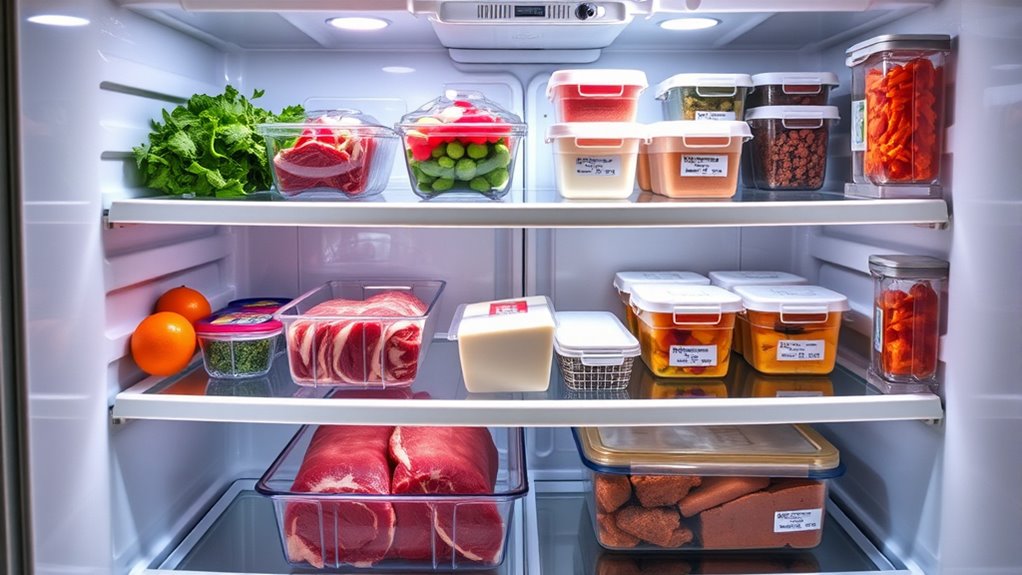
Proper fridge organization is essential for ensuring food safety and minimizing waste. Regular fridge cleaning helps you spot expired or spoiled items before they contaminate other food. By maintaining an orderly fridge, you can easily see what’s nearing food expiry, reducing the risk of consuming spoiled products. Proper placement of items prevents cross-contamination and keeps your food fresher longer. When you organize your fridge effectively, you’re more likely to develop habits like checking expiry dates regularly. This proactive approach helps prevent foodborne illnesses and saves money by avoiding unnecessary waste. Keep in mind that a well-organized fridge not only makes cleaning easier but also promotes better food safety practices overall. Staying on top of fridge cleanliness and expiry dates is key to a healthier, safer kitchen. Additionally, understanding proper storage techniques can further enhance food preservation and safety.
Designating the Top Shelf for Ready-to-Eat Items
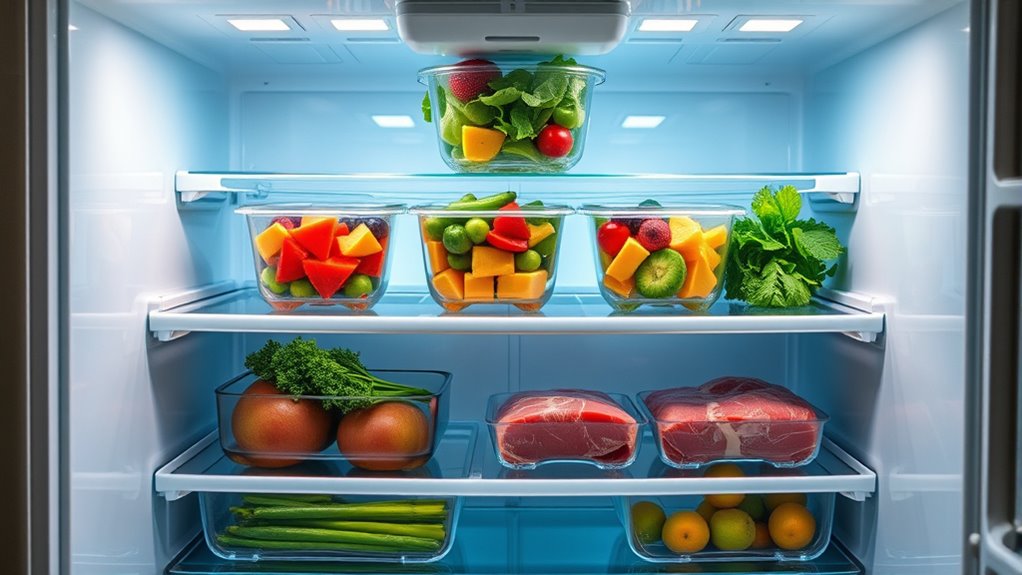
Designating the top shelf for ready-to-eat items is a simple but effective way to enhance food safety in your fridge. Proper shelf placement helps prevent cross-contamination and keeps your food safe. To make the most of this, consider these tips:
- Keep leftovers, cooked foods, and snacks on the top shelf to minimize handling and accidental contamination.
- Store ready-to-eat items separately from raw meats and produce to avoid bacteria transfer.
- Regularly check for expired items and discard them promptly to maintain a clean, safe environment.
- Incorporate organized zones within your fridge to easily identify and access different categories of food, improving overall safety and efficiency.
Using the Middle Shelves for Dairy and Leftovers
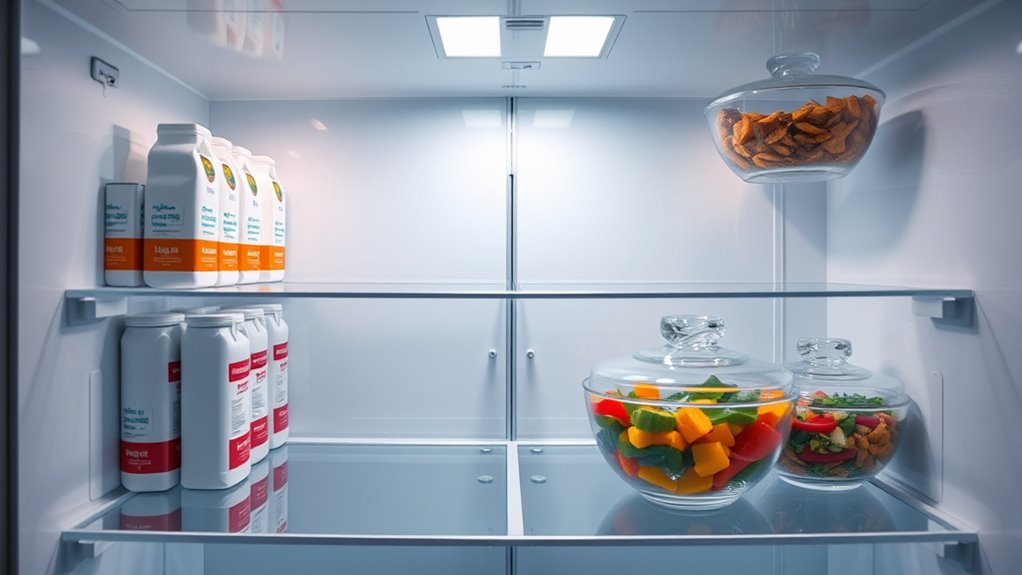
Using the middle shelves for dairy and leftovers helps keep these items at a consistent, safe temperature and makes them easy to access. Proper dairy storage guarantees milk, cheese, and yogurt stay fresh longer, reducing spoilage. This shelf placement also simplifies leftovers organization, allowing you to quickly identify and use stored meals without rummaging through the fridge. Keep dairy products in their original containers or covered to prevent cross-contamination. For leftovers, store them in clear, labeled containers so you can easily see what’s inside. Positioning these items on the middle shelves maintains ideal cooling and prevents accidental spills on lower shelves. Additionally, maintaining proper temperature control is essential for food safety and freshness. By dedicating this zone for dairy and leftovers, you promote better food safety and streamline your fridge management.
Allocating the Bottom Shelf for Raw Meat and Fish
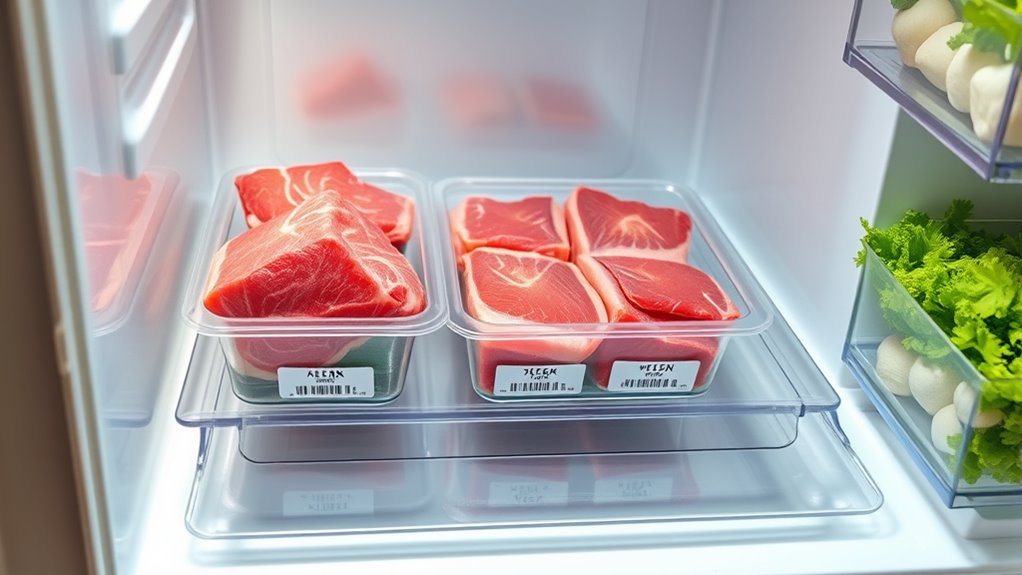
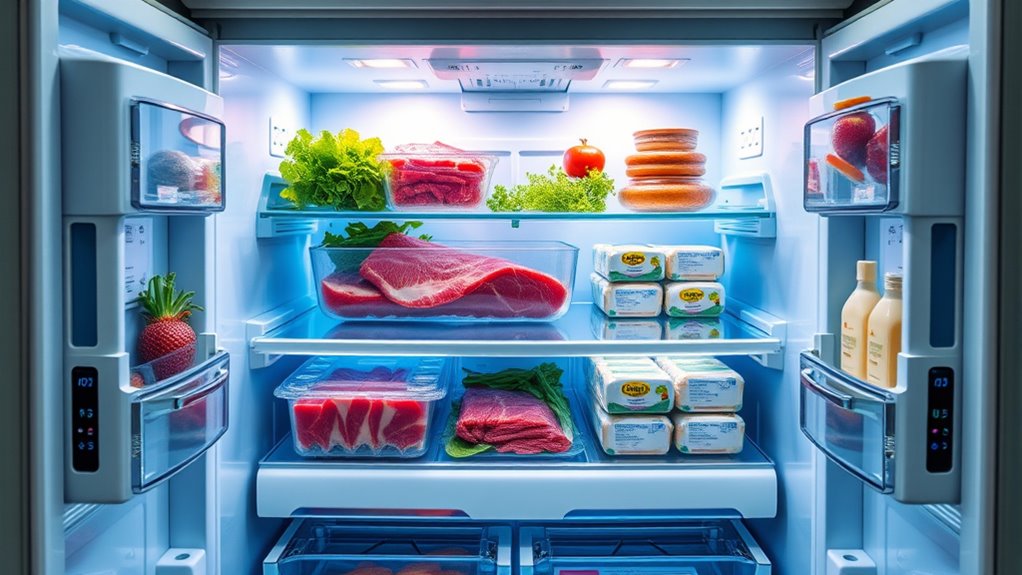
Placing raw meat and fish on the bottom shelf of your fridge is essential to prevent cross-contamination. This position keeps juices from dripping onto other foods and maintains raw meat safety. Follow these fish storage guidelines for ideal safety:
Always store raw meat and fish on the bottom shelf to prevent cross-contamination and ensure food safety.
- Store raw meat and fish separately, always on the lowest shelf.
- Use leak-proof containers or trays to contain any drips.
- Keep raw meat away from ready-to-eat foods, like fruits and cooked items.
Storing Fruits and Vegetables in the Crisper Drawers
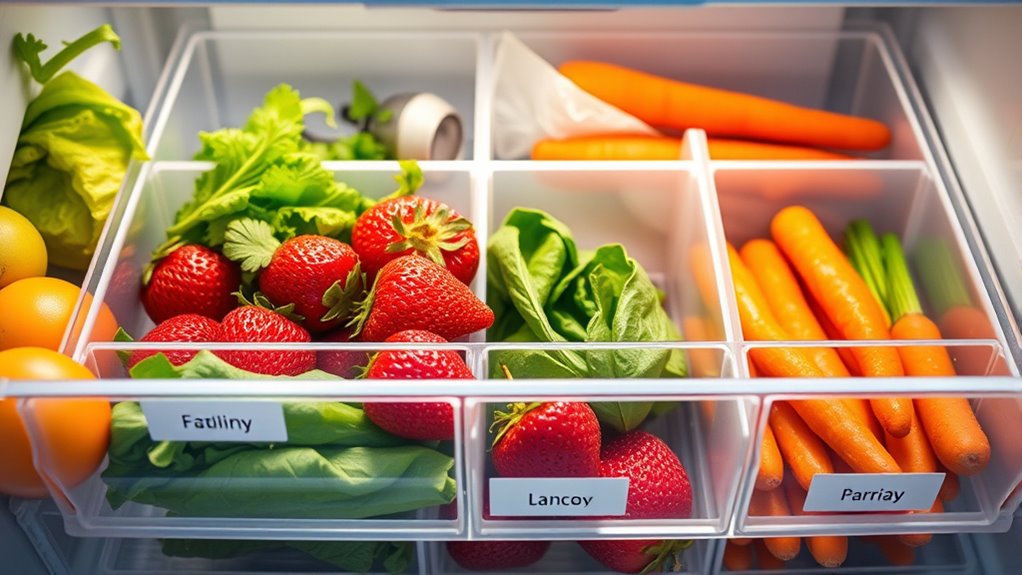
To keep your produce fresh and safe, storing fruits and vegetables in the crisper drawers is essential. These drawers help control humidity and temperature, which are key for proper fruit ripening and vegetable storage. Place fruits like apples, berries, and grapes in the high-humidity drawer to slow ripening and prevent spoilage. Vegetables such as leafy greens, carrots, and peppers also benefit from the same environment, maintaining crispness longer. Keep ethylene-producing fruits separate from vegetables to avoid premature spoilage. Proper organization in the crisper drawers reduces waste and keeps your produce fresh for as long as possible. Regularly check and remove any spoiled items to prevent mold and bacteria from spreading. Humidity control is crucial for maintaining optimal storage conditions and prolonging freshness. Effective crisper storage guarantees your fruits and vegetables stay safe and delicious.
Keeping Beverages and Condiments in the Door Shelves
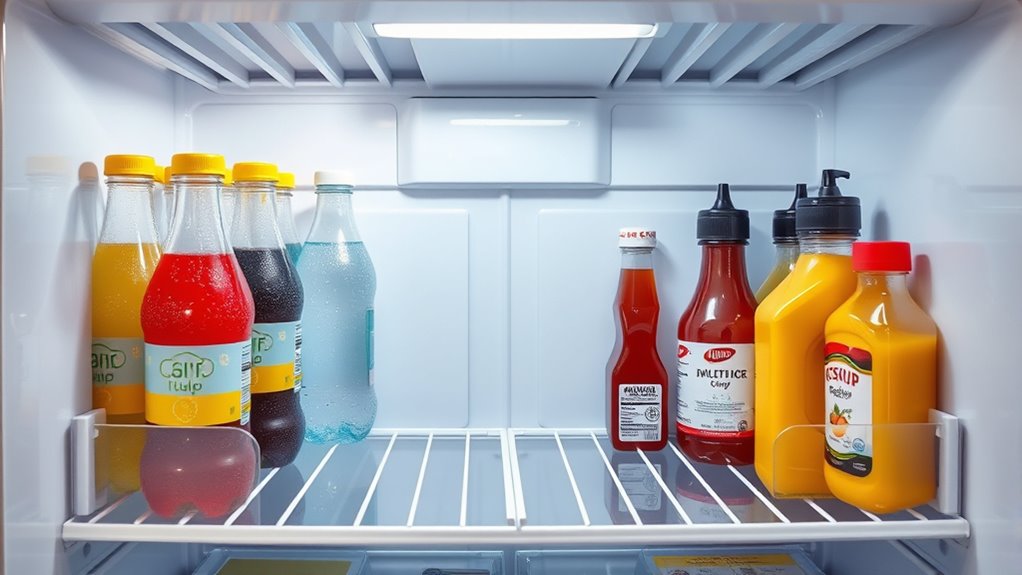
Organizing beverages and condiments in the door shelves keeps frequently used items within easy reach and helps maintain proper storage conditions. This placement assures beverage freshness by keeping drinks at a consistent temperature and prevents spoilage. To optimize your fridge space, consider these tips:
- Place everyday beverages like milk, juice, and water bottles in the door for quick access.
- Arrange condiments such as ketchup, mustard, and salad dressings in a designated section to keep them organized.
- Avoid storing perishable items with high moisture content in the door, as temperature fluctuations can compromise their safety.
- Utilizing automation’s role in business intelligence can help monitor and manage fridge temperatures more effectively, ensuring optimal food safety.
Implementing Clear Bins and Labels for Easy Access
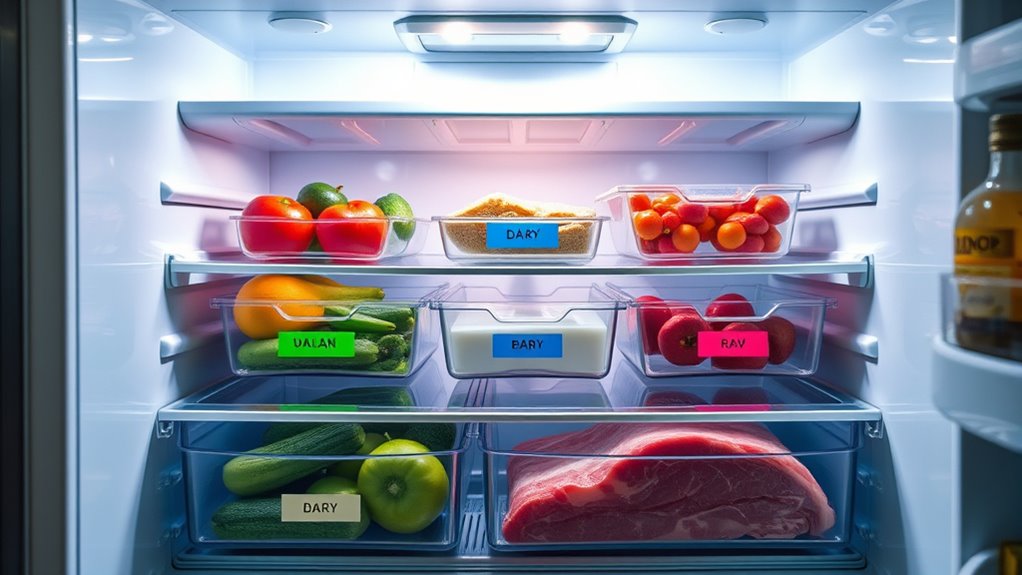
Using clear bins and labels can substantially improve your fridge organization by making it easy to find and access items quickly. Color-coded bins help categorize different food groups, reducing confusion and cross-contamination. For example, you might use green bins for vegetables, red for meats, and blue for dairy. Clear labeling on each bin ensures you know exactly what’s inside without opening multiple containers. This system streamlines your grocery management and prevents forgotten or expired items. When you implement these strategies, your fridge becomes more efficient and safer, reducing the risk of foodborne illnesses. Regularly update labels to reflect current contents, and keep the bins clean to maintain hygiene. Additionally, incorporating lifestyle habits like regular fridge cleaning can further enhance food safety and organization. Overall, clear bins and labels make food storage straightforward, organized, and safer for everyone.
Maintaining Temperature and Hygiene Standards
Keeping your fridge at the right temperature and maintaining proper hygiene are essential for preventing food spoilage and illness. Regular temperature monitoring helps guarantee your fridge stays between 35°F and 38°F, slowing bacterial growth. Follow these key hygiene practices:
Maintain proper fridge hygiene and temperature to prevent spoilage and keep food safe.
- Clean spills immediately to prevent bacteria buildup.
- Wash hands before handling food or opening the fridge.
- Use clean containers and utensils to avoid cross-contamination.
- Regularly check and replace your fridge’s air filters to maintain proper airflow and hygiene.
Regularly Checking and Rotating Stored Food
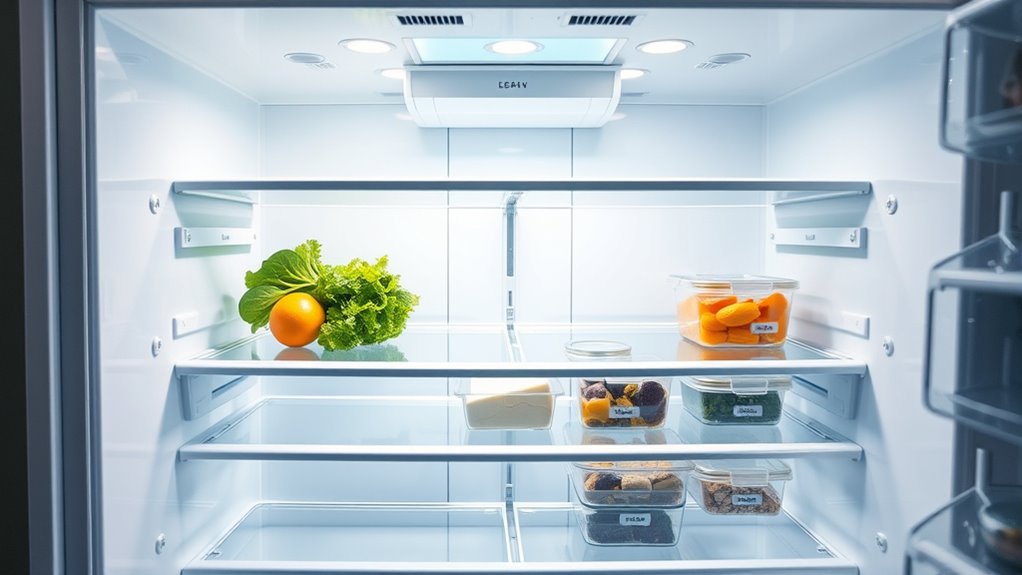
To prevent food from spoiling or becoming unsafe to eat, it’s important to regularly check the contents of your fridge and rotate older items to the front. This habit helps you spot expired foods before they cause food spoilage or health issues. When you review your fridge, discard any items past their expiration date and wipe away spills or leaks that could contaminate other foods. Rotating fresh items behind older ones ensures you use everything in a timely manner, reducing waste. Stay vigilant about food labels and storage times, and make it a routine to check weekly. Incorporating proper storage techniques can further extend the freshness of your foods and prevent spoilage. By staying proactive, you minimize the risk of consuming spoiled or unsafe food, keeping your fridge safe and your meals healthier.
Tips for Efficient and Safe Fridge Maintenance
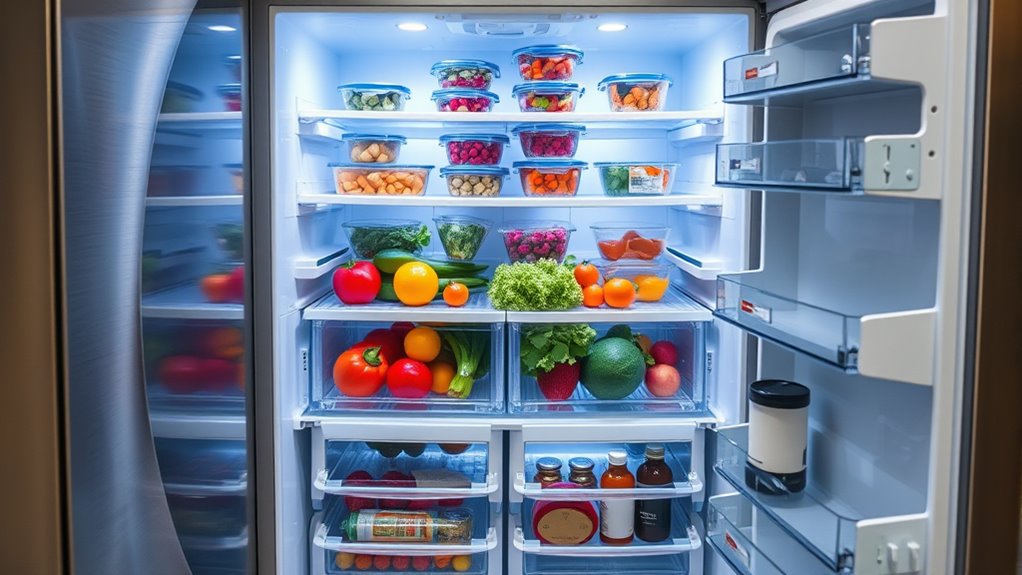
Regularly maintaining your fridge is essential for both efficiency and safety. Proper upkeep helps reduce food waste and improves energy efficiency, saving you money. To keep your fridge in top shape, follow these tips:
- Clean the interior and shelves weekly to prevent bacteria buildup and odors.
- Check and replace door seals if they’re worn, ensuring a proper seal to conserve energy.
- Organize food by zones, placing leftovers and perishables in designated areas to avoid cross-contamination and spoilage.
- Review your fridge’s organization regularly to ensure food safety and optimal performance, especially since home appliance maintenance is key to longevity.
Frequently Asked Questions
How Often Should I Clean and Sanitize My Fridge Zones?
You should clean and sanitize your fridge zones at least once a month. Follow a regular cleaning schedule to prevent bacteria buildup. Use effective sanitization techniques like wiping surfaces with a solution of water and mild bleach or vinegar. Remember to clean shelves, drawers, and door seals thoroughly. Consistent cleaning keeps your food safe and fresh, reducing the risk of cross-contamination and spoilage.
What Temperature Should Each Fridge Zone Ideally Be Maintained At?
You should keep your fridge zones at specific temperatures to guarantee food freshness and proper temperature control. The main compartment should be at 37-40°F (3-4°C), while the crisper drawers are best kept at 32-40°F (0-4°C) for produce. The freezer should stay at 0°F (-18°C). Maintaining these temperatures helps prevent spoilage, bacteria growth, and keeps your food safe and fresh longer. Regularly check with a thermometer to stay on target.
How Can I Prevent Cross-Contamination Between Different Food Zones?
To keep your fridge’s harmony intact, focus on food separation and zone labeling. Always store raw meats on the bottom to prevent drips from reaching other foods. Use clear labels to distinguish zones, making it easier to avoid accidental overlaps. Regularly clean shelves and check temperatures. By respecting these boundaries, you’ll reduce cross-contamination risks, ensuring your food stays fresh and safe while maintaining a well-organized fridge.
Are There Specific Storage Tips for Fragile or Easily Spoiled Items?
To keep fragile items fresh and prevent spoiled foods, store them on the middle or upper shelves where temperature fluctuations are minimal. Use airtight containers or wrap delicate produce to avoid crushing. Keep spoiled foods away from other items to prevent cross-contamination. Make sure to check expiration dates regularly and consume fragile items promptly. Proper storage helps maintain quality and safety, reducing waste and ensuring your food stays fresh longer.
How Do I Adjust Fridge Zones for Different Household Needs or Seasonal Changes?
To adjust fridge zones for seasonal storage or household needs, first identify which foods require specific temperatures. You can modify temperature settings or rearrange shelves to optimize storage. For seasonal changes, consider storing more perishable items in colder zones during summer and less in winter. Regularly monitor temperatures with a thermometer, and adjust zones accordingly to keep your food fresh and safe year-round.
Conclusion
By following these fridge zones, you’ll turn your fridge into a fortress of food safety—no bacteria, spills, or spoilage will stand a chance! Your groceries will stay fresher than ever, and you’ll become a kitchen superhero, effortlessly avoiding messes and waste. Just imagine, with a perfectly organized fridge, you’ll never fear food poisoning again—your meals will be safer, tastier, and more legendary than you ever thought possible!