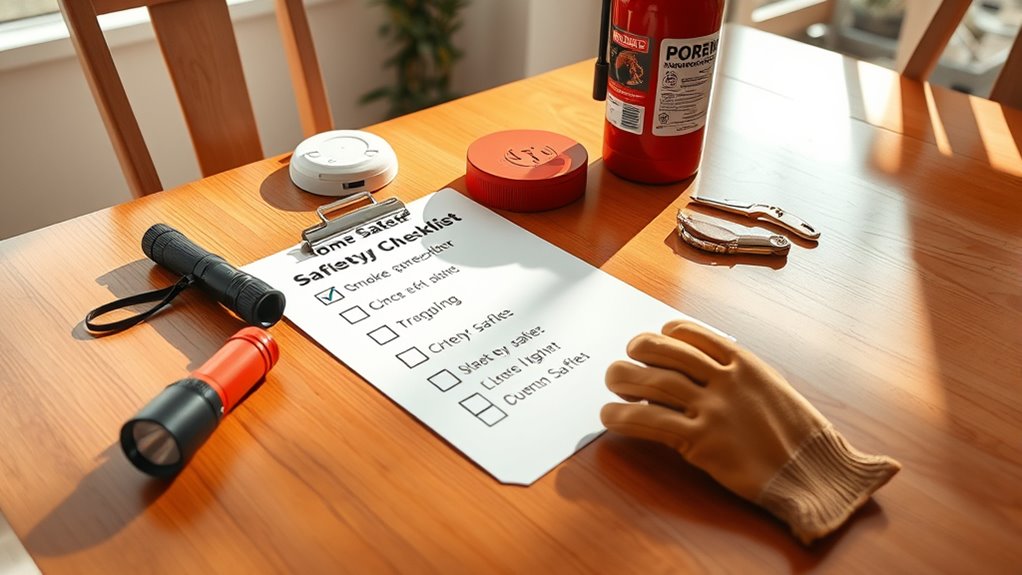

To keep your home safe, do a quick monthly check of your smoke alarms, ensuring they work and batteries are fresh. Verify your emergency kit has essentials and is accessible, update expired items, and practice your escape plan. Inspect fire hazards, such as electrical cords and heat sources, and make sure doors and windows open easily. Staying proactive with these simple steps helps prevent emergencies. If you want to know more tips, keep exploring the details.
Key Takeaways
- Test smoke detectors and replace batteries if needed to ensure early fire warning.
- Verify emergency kits are complete, with non-expired supplies and accessible to everyone.
- Inspect for fire hazards, such as flammable materials near heat sources and frayed electrical cords.
- Check windows, doors, and escape routes are secure, unobstructed, and understood by household members.
- Perform general safety maintenance, addressing hazards and ensuring safety devices are functional.

First Alert Smoke Alarm, Battery-Operated Detector with Test & Silence Button, SMI100, 1-Pack
First Alert's Precision Detection advanced sensing technology complies with new industry standards to reduce cooking nuisance alarms and…
As an affiliate, we earn on qualifying purchases.
As an affiliate, we earn on qualifying purchases.
Monthly Home Safety Checklist
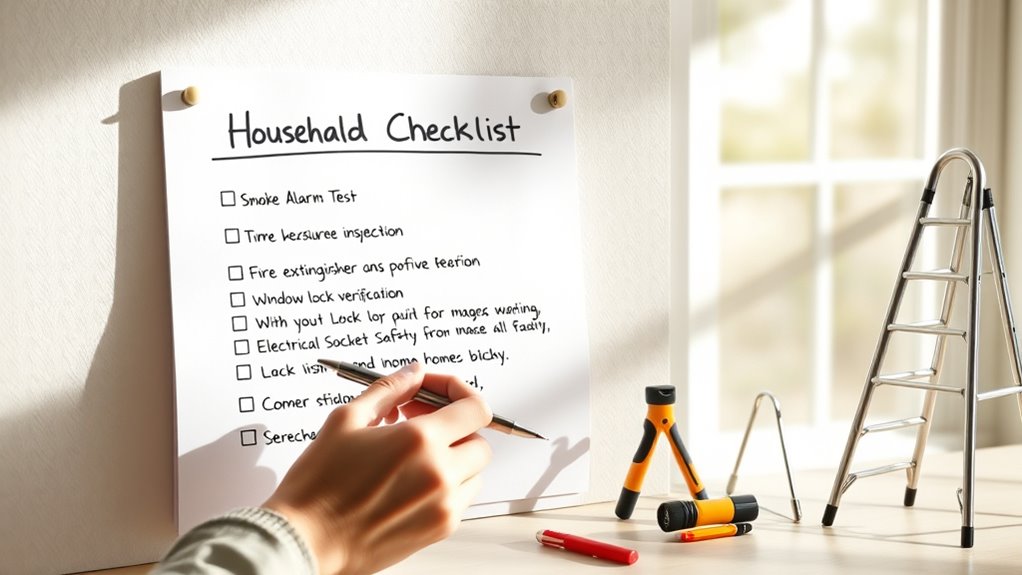
Ensuring your home is safe is essential for peace of mind and the well-being of everyone inside. Regular home safety checks help you stay ahead of potential hazards and ensure your safety measures are effective. One of the most important steps is to perform fire alarm maintenance monthly. Check that all your smoke detectors are functioning properly by pressing the test button; if they beep or alert, you know they’re working. Replace batteries if needed, especially if they’re more than six months old. Don’t forget to clean the units gently with a vacuum or a soft brush to remove dust and cobwebs, which can interfere with their sensitivity. Proper fire alarm maintenance is crucial because it ensures you’re alerted early in the event of smoke or fire, giving you precious time to evacuate.
Alongside fire alarm maintenance, reviewing your emergency kit preparedness is vital. Make it a habit to verify that your emergency kit contains essentials like water, non-perishable food, a flashlight with extra batteries, a first aid kit, and any necessary medications. Check expiration dates on items like batteries, canned foods, and medications, replacing expired supplies immediately. Ensure the kit is stored in an accessible location known to everyone in your household. It’s also wise to periodically practice a quick emergency plan, so everyone knows how to respond in a crisis, whether it’s a fire, earthquake, or other disaster.
Beyond alarms and emergency kits, inspect your home for fire hazards. Keep flammable materials away from heat sources, and ensure your heating appliances are in good condition. Make sure electrical cords are not frayed or overloaded, and unplug devices when not in use. Regularly test your carbon monoxide detectors if you have them, and replace their batteries annually. These checks help reduce risks and make your home safer.
In addition to device checks, examine windows and doors to ensure they open freely and are secure. Clear clutter that could block escape routes, and ensure that all escape plans are up-to-date and understood by everyone. Walking through your home periodically helps you identify potential hazards before they become emergencies. By integrating these simple but crucial steps into your monthly routine, you create a safer environment for your family and yourself. Consistent attention to fire alarm maintenance, emergency kit preparedness, and general home safety ensures you’re ready to handle unexpected situations confidently. Staying proactive is the best way to protect your loved ones and maintain peace of mind in your home.

First Aid Only 91248 OSHA-Compliant First Aid Kit, All-Purpose 50-Person Emergency First Aid Kit for Business, Worksite, Home, and Car, 260 Pieces
OSHA-Compliant Emergency Kit: Includes supplies including bandages, gauze, butterfly closures, burn cream packets, antibiotic ointment, BZK antiseptic towelettes,…
As an affiliate, we earn on qualifying purchases.
As an affiliate, we earn on qualifying purchases.
Frequently Asked Questions
How Do I Prioritize Safety Checks for Different Rooms?
You should prioritize safety checks by focusing on rooms with higher risks, like the kitchen and garage, where fire hazards and electrical safety issues are common. Regularly inspect appliances, outlets, and cords for damage. Verify smoke detectors work properly, and keep fire extinguishers accessible. By concentrating on these areas first, you reduce potential dangers and keep your home safer for everyone.
What Tools Are Recommended for Conducting Safety Inspections?
You should use a flashlight to spot electrical hazards and check for fire safety issues. A voltage tester helps identify electrical hazards, while a smoke detector tester ensures fire safety devices operate correctly. Keep a fire extinguisher nearby for safety checks. Additionally, a ladder allows you to inspect hard-to-reach areas for potential electrical or fire hazards, keeping your home safe and secure during your inspections.
How Can I Involve Children in Home Safety Routines?
Think of home safety education as planting seeds of awareness in your kids. You can involve children by turning safety routines into fun activities, like a treasure hunt for fire escape routes or labeling hazards around the house. Teach them about child safety with simple rules and role-playing, making safety a natural part of daily life. This way, they become little guardians of their own safety, growing confident and responsible.
Are There Any Safety Checks Specific to Rental Homes?
In rental homes, you should regularly inspect fire extinguishers to guarantee proper maintenance and check electrical outlets for safety, like loose plugs or exposed wiring. Make sure smoke detectors work and replace batteries as needed. Report any hazards to your landlord promptly. These checks help prevent accidents and ensure your safety, so stay vigilant and perform these routine inspections monthly.
How Often Should I Replace Safety Equipment Like Smoke Detectors?
You should replace smoke detectors every 8-10 years and test them monthly. For fire extinguishers, perform regular fire extinguisher maintenance and verify they’re fully charged and accessible. Don’t forget to check carbon monoxide testing devices periodically to ensure they’re working properly. Regularly replacing and testing these safety equipment pieces helps keep your home safe and ensures they function correctly when needed most.

Fire Dynamics Tools (FDT) Quantitative Fire Hazard Analysis Methods for the U.S. Nuclear Regulatory Commission Fire Protection Inspection Program: Supplement 1
As an affiliate, we earn on qualifying purchases.
As an affiliate, we earn on qualifying purchases.
Conclusion
By following this simple, steady safety schedule, you safeguard your space and guarantee security. Regular checks reduce risks, reinforce routines, and restore peace of mind. Stay vigilant, stay vigilant, stay vigilant—prioritize prevention over problems. A proactive approach provides peace, prevents peril, and promotes a safer, more secure sanctuary. Make monthly safety checks a habit, and you’ll maintain a safer, sounder home, shielding yourself and your loved ones from surprises and slips.
First Aid Only 91248 OSHA-Compliant First Aid Kit, All-Purpose 50-Person Emergency First Aid Kit for Business, Worksite, Home, and Car, 260 Pieces
OSHA-Compliant Emergency Kit: Includes supplies including bandages, gauze, butterfly closures, burn cream packets, antibiotic ointment, BZK antiseptic towelettes,…
As an affiliate, we earn on qualifying purchases.
As an affiliate, we earn on qualifying purchases.