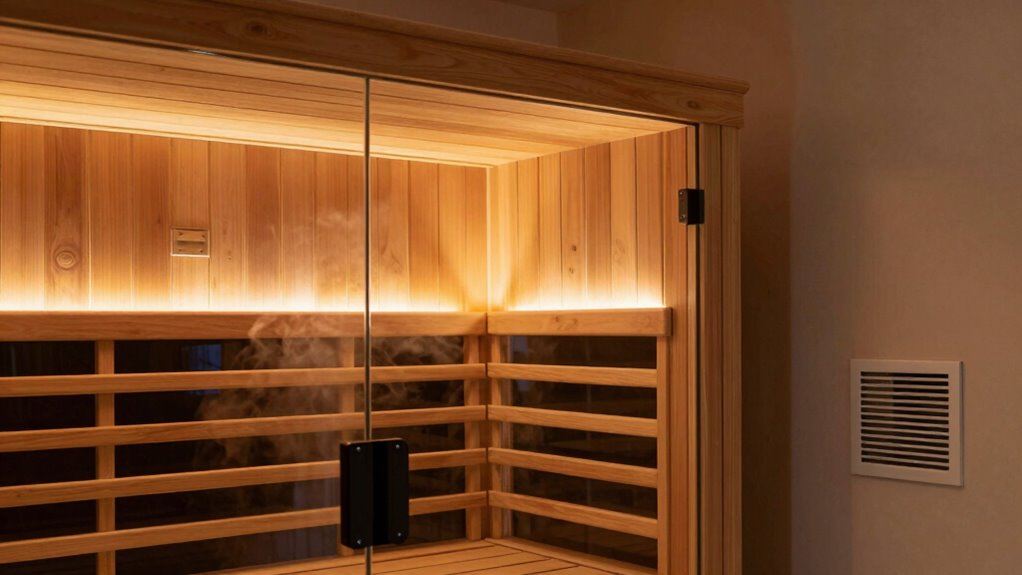

Proper ventilation in your home infrared sauna is crucial for safety, comfort, and longevity. Make certain vents are placed correctly—intake vents low and exhaust vents high—and keep them unobstructed. Regularly check and clean your vents, use adjustable vents, and maintain ideal humidity levels to prevent mold, odors, and uneven heating. Good airflow keeps the environment healthy and extends your sauna’s lifespan. Keep exploring to discover how to optimize your sauna’s ventilation effectively.
Key Takeaways
- Proper ventilation prevents mold, odors, and moisture buildup, extending the sauna’s lifespan and ensuring a healthy environment.
- Place intake vents low near the floor and exhaust vents high on the wall for optimal airflow and heat circulation.
- Regularly clean vents, use adjustable vents, and monitor humidity levels to maintain safe, effective ventilation.
- Poor airflow signs include persistent odors, mold, uneven heat, and excessive humidity requiring vent adjustments.
- Automate ventilation with timers and humidity sensors to sustain consistent, safe airflow and indoor air quality.

HOW TO BUILD A SAUNA: Turn Your Backyard into a Personal Spa: The Ultimate DIY Sauna Guide for Health, Healing, and Heat Therapy
As an affiliate, we earn on qualifying purchases.
As an affiliate, we earn on qualifying purchases.
Why Proper Ventilation Is Essential in Your Infrared Sauna
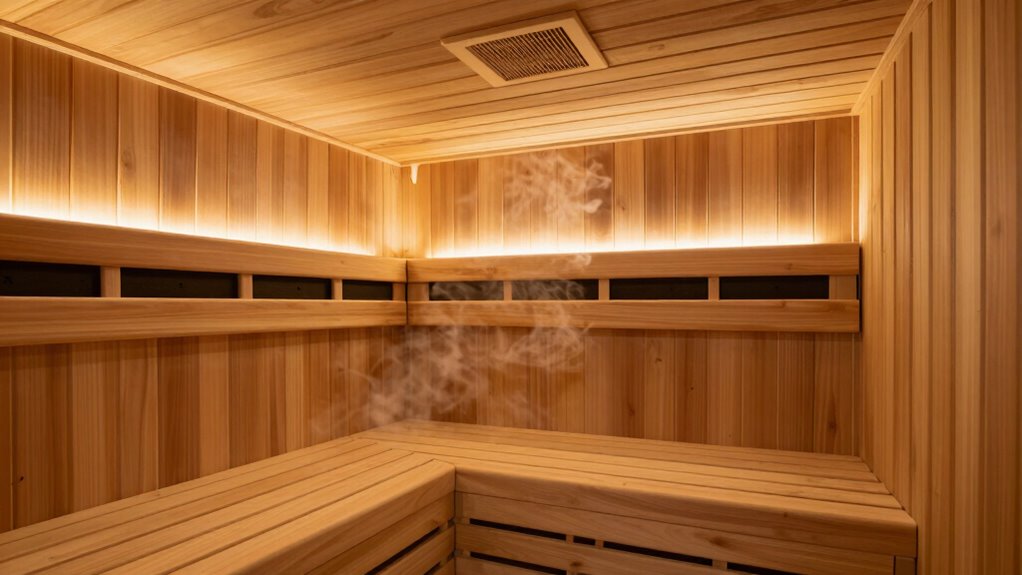
Proper ventilation is essential for your infrared sauna because it guarantees fresh air circulation and prevents the buildup of excess heat and humidity. Good airflow maintenance directly impacts air quality, making your sessions more comfortable and safe. Without proper ventilation, stale air can accumulate, leading to discomfort and potential health issues. Ensuring steady airflow helps remove excess moisture, reducing mold and bacteria growth. It also maintains a consistent temperature, so your sauna heats evenly. Proper airflow not only enhances comfort but also extends the lifespan of your sauna, making it a worthwhile investment. Additionally, maintaining proper ventilation supports a healthier environment inside your sauna, aligning with air quality best practices. Proper ventilation systems are increasingly integrated into energy-efficient sauna designs to promote sustainability and safety. Incorporating smart ventilation controls can optimize airflow based on usage, further improving safety and efficiency. Adequate ventilation also plays a crucial role in managing thermal comfort and preventing heat-related issues during sessions.

BESTNEWIE Adjustable Sauna Air Vent Grille – Equipped with Nylon Netting to Block Unwanted Foreign Objects from Entering The Sauna Room. Come with a Sauna Hat Sauna Accessory (Medium-Sized)
A nylon netting is embedded in the sauna air vent to effectively block foreign objects from entering the…
As an affiliate, we earn on qualifying purchases.
As an affiliate, we earn on qualifying purchases.
How Do I Know If My Sauna Has Poor Airflow? Signs to Watch For

If you notice strange odors or persistent humidity, your sauna might have poor airflow. Sudden temperature swings or uneven heat are also signs something’s amiss. Paying attention to these clues helps guarantee your sauna stays safe and effective. Additionally, inadequate ventilation can lead to free floating issues, which compromise the overall comfort and safety of your sauna environment.
Unusual Sauna Odors
Have you noticed any unusual odors lingering in a sauna? Strange smells can signal poor airflow, which hampers aroma control and makes odor elimination difficult. When airflow is restricted, dampness and heat can cause musty or chemical odors to develop. Poor ventilation can also lead to increased humidity, encouraging mold growth and further foul smells. Proper airflow is essential for dispersing odors and maintaining air quality. Ensuring adequate ventilation systems can greatly improve odor control and overall sauna comfort. Lack of proper airflow can also contribute to the buildup of bacteria and allergens, impacting your health and safety. Watch for these signs:
- Persistent sour or moldy smells
- Sweet or chemical scents that won’t fade
- Unpleasant mustiness after use
- Odors that intensify over time
- Stale air even after ventilation
If you notice any of these, your sauna likely needs better ventilation. Improving airflow helps remove unwanted odors and promotes proper aroma control. Ensuring proper ventilation is key to odor elimination and maintaining a fresh, inviting sauna environment. Don’t ignore these signals; they’re your cue to check and enhance your sauna’s airflow. Proper ventilation not only prevents odors but also supports a healthier sauna experience.
Excessive Heat Fluctuations
Excessive heat fluctuations in your sauna often indicate poor airflow, which disrupts consistent temperature control. When airflow is unbalanced, you may notice sudden changes in heat levels, making your sauna uncomfortable or unpredictable. Poor airflow can also hinder humidity control, causing hot spots or cold spots that fluctuate unexpectedly. Signs include uneven heating, feeling too hot or cold despite the thermostat setting, and difficulty maintaining a stable environment. If your sauna struggles to keep a steady temperature, it’s likely due to disrupted airflow balance. Proper ventilation ensures heat circulates evenly, maintaining both temperature stability and humidity control. Proper ventilation is essential for preventing heat and humidity inconsistencies, and addressing airflow issues promptly helps you enjoy a safer, more comfortable sauna experience without the frustration of unpredictable heat fluctuations.
Persistent Humidity Levels
Persistent humidity levels can be a clear sign that your sauna isn’t ventilating properly, especially when the moisture remains high despite your efforts to regulate it. Poor airflow control hampers humidity management, making the environment uncomfortable and potentially damaging your equipment. Watch for these signs:
- Excessive condensation on walls and surfaces
- A lingering damp or musty smell
- Visible mold or mildew buildup
- Difficulty maintaining consistent temperature
- Feelings of stuffiness despite ventilation efforts
If you notice any of these, your sauna may have poor airflow, which traps humidity and hampers proper ventilation. Improving airflow control can help regulate moisture levels, ensuring a more comfortable and safe sauna experience. Monitoring airflow is essential to prevent issues related to humidity buildup and maintain your sauna’s longevity. Don’t ignore persistent humidity; it’s a clear indicator you need better ventilation solutions. Proper ventilation management can significantly improve indoor air quality and extend the life of your equipment.

Sauna Thermometer and Hygrometer Combo – Precise Temperature & Humidity Gauge for Sauna Roomsk, Temperature Range 70-250°F, Humidity Range 0-100%
✅ 2-in-1 Sauna Thermometer & Hygrometer – This premium-quality analog gauge accurately measures both temperature (70-250°F) and humidity…
As an affiliate, we earn on qualifying purchases.
As an affiliate, we earn on qualifying purchases.
How to Choose the Right Ventilation System for Your Infrared Sauna
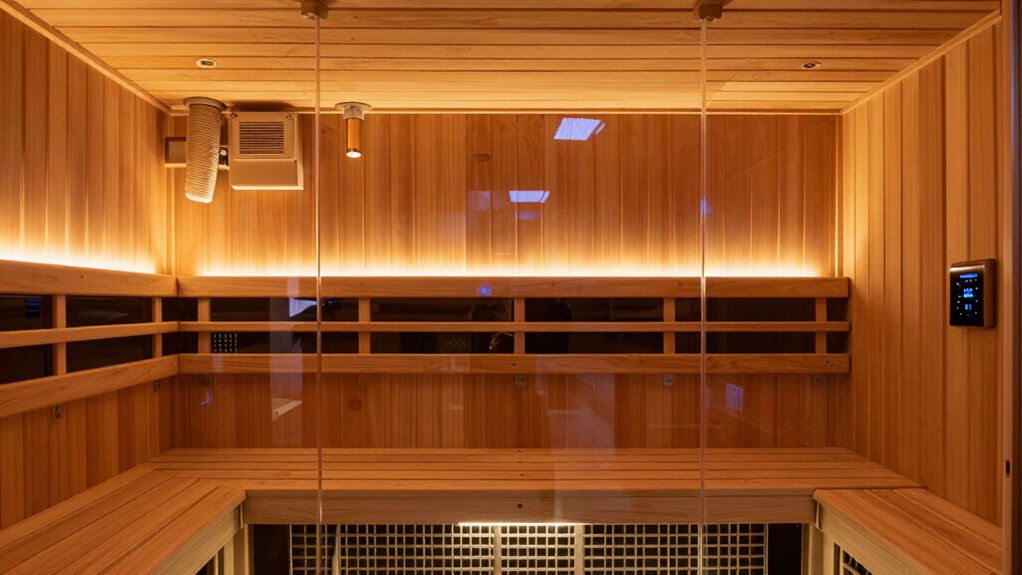
Choosing the right ventilation system is key to keeping your sauna comfortable and safe. You should consider airflow efficiency tips to maximize circulation and comfort. Additionally, selecting the best vent placement strategies guarantees proper airflow and easy maintenance.
Airflow Efficiency Tips
Selecting the right ventilation system for your infrared sauna is essential to guarantee ideal airflow and a comfortable experience. Proper airflow ensures even infrared heat distribution and prevents overheating. To optimize airflow efficiency, consider these tips:
- Use adjustable vents to control airflow based on your comfort level
- Install high-quality fans that match your sauna’s size and heat output
- Keep vents clean and free of dust for unobstructed airflow
- Incorporate smart ventilation timers to automate air exchange
- Complement ventilation with suitable sauna accessories for enhanced airflow management
Vent Placement Strategies
Proper vent placement can substantially improve airflow in your infrared sauna, ensuring even heat distribution and preventing hot spots. To achieve effective airflow control, position vents strategically—place the intake vent near the floor and the exhaust vent closer to the ceiling. This setup encourages warm air to rise and exit efficiently, creating a continuous airflow cycle. Consider the size and number of vents based on your sauna’s dimensions, avoiding obstructed airflow. Adjusting vent placement allows you to fine-tune ventilation, optimizing comfort and safety. Keep in mind that proper vent positioning not only enhances heat consistency but also reduces moisture buildup. Additionally, understanding retro home decor can inspire you to incorporate vintage-inspired ventilation features that blend seamlessly with your sauna’s aesthetic. Incorporating ventilation technology can further improve airflow, making your sauna more energy-efficient and comfortable. Proper airflow management is essential for maintaining the longevity and quality of your infrared sauna. Just as with art preservation, proper ventilation is essential for maintaining the longevity and quality of your infrared sauna. Implementing ventilation best practices can help prevent issues such as mold and odors, ensuring a healthier environment. Ultimately, thoughtful vent placement is key to maintaining a balanced environment, ensuring you get the most out of your infrared sauna experience.

4pcs Flexible Cleaning Brush Set for Dryer Vents, Fridge Coils, HVAC Systems & Tight Spaces – Multi-Use Lint and Dust Remover with Crevice Brush and Detailing Tools
【Deep Cleaning, Done Right】 Flexible stainless-steel shafts bend effortlessly into dryer vents, fridge coils, AC units, and behind…
As an affiliate, we earn on qualifying purchases.
As an affiliate, we earn on qualifying purchases.
Where Should I Place Vents and Fans for the Best Airflow?
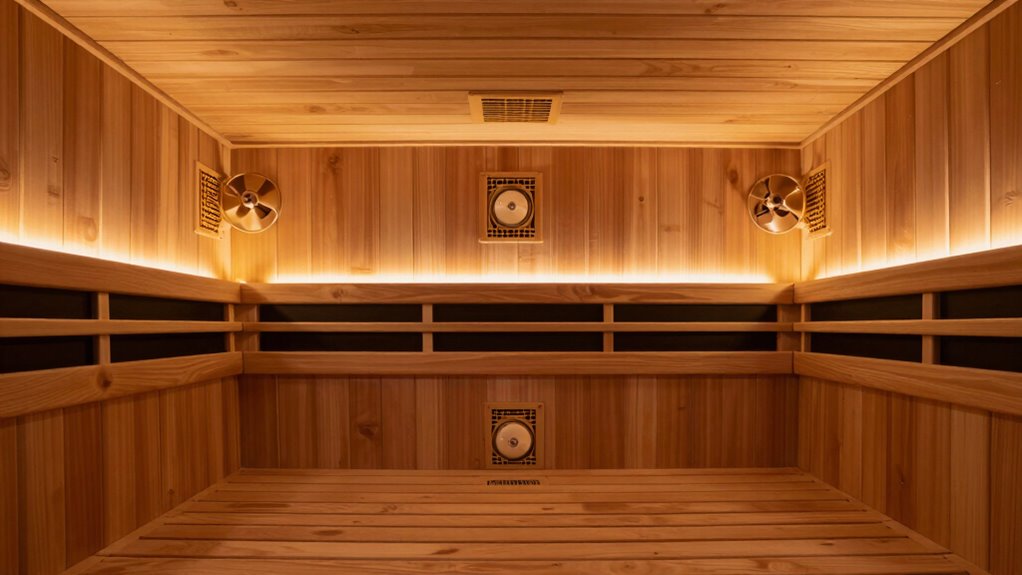
To guarantee effective airflow in your home infrared sauna, it’s crucial to carefully place vents and fans where they can promote proper circulation. Good airflow design depends on strategic ventilation placement to ensure fresh air enters and stale air exits efficiently. Position vents near the ceiling to remove hot, humid air, and place intake vents closer to the floor for fresh air intake. Fans should be installed to facilitate a smooth airflow path without creating turbulence. Consider these points:
For optimal airflow, place vents high for hot air and low for fresh air intake, using adjustable fans to ensure smooth circulation.
- Place exhaust vents high on the wall to vent out hot air
- Position intake vents low to maximize fresh air intake
- Use adjustable fans to control airflow direction
- Keep vents away from seating areas to prevent drafts
- Ensure vents are unobstructed for ideal circulation
- Incorporate local automation features to monitor and adjust ventilation for optimal air quality and comfort. Additionally, utilizing proper ventilation techniques can significantly improve your sauna’s airflow efficiency and safety. Proper ventilation design principles are essential for maintaining a healthy indoor environment and preventing moisture buildup. Implementing these ventilation best practices can help prevent issues like mold and ensure a safer sauna experience. When designing your ventilation system, consider air exchange rates to optimize fresh air intake and exhaust, thereby enhancing overall comfort and safety. This setup helps maintain a comfortable, safe environment during your sauna session.
Common Ventilation Mistakes in Infrared Saunas and How to Fix Them
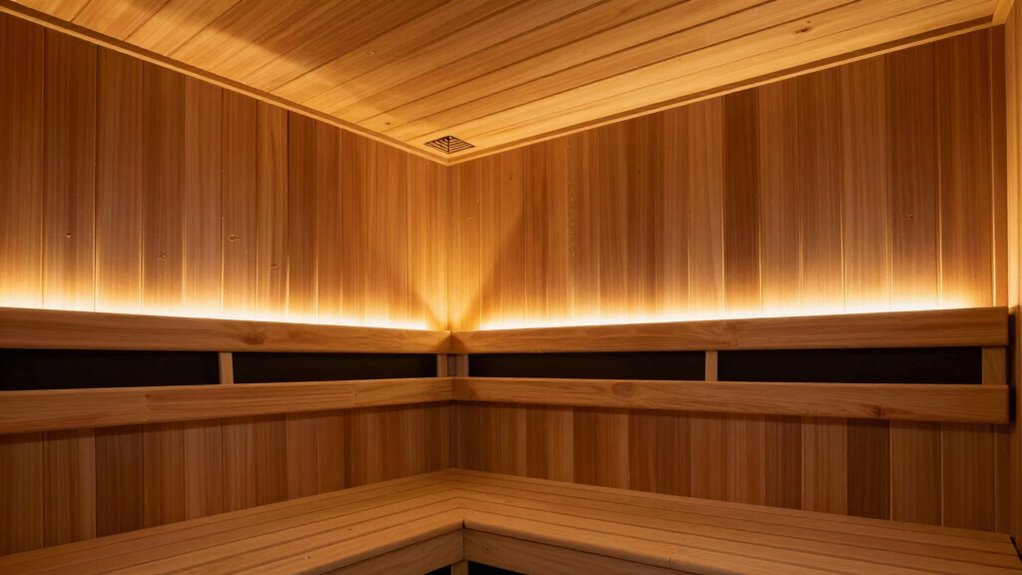
Many infrared sauna owners make common mistakes with ventilation that can compromise safety and comfort. One key error is neglecting proper ventilation design, which impacts air quality and circulating fresh air effectively. Poorly planned vents can lead to stale, humid air that reduces the sauna’s efficiency and causes discomfort. Another mistake is sealing vents too tightly or placing them incorrectly, which hampers airflow. To fix these issues, guarantee your ventilation design includes adequate intake and exhaust vents positioned for ideal airflow. Regularly check that vents aren’t blocked or restricted. Improving air quality starts with proper ventilation placement and openness, preventing buildup of harmful gases and maintaining a healthy, comfortable environment inside your sauna. Ensuring correct airflow is essential for safe, enjoyable infrared sauna sessions, and understanding ventilation principles can help you optimize your setup for better performance and safety.
How Can I Maintain My Sauna’s Ventilation for Safety and Comfort?
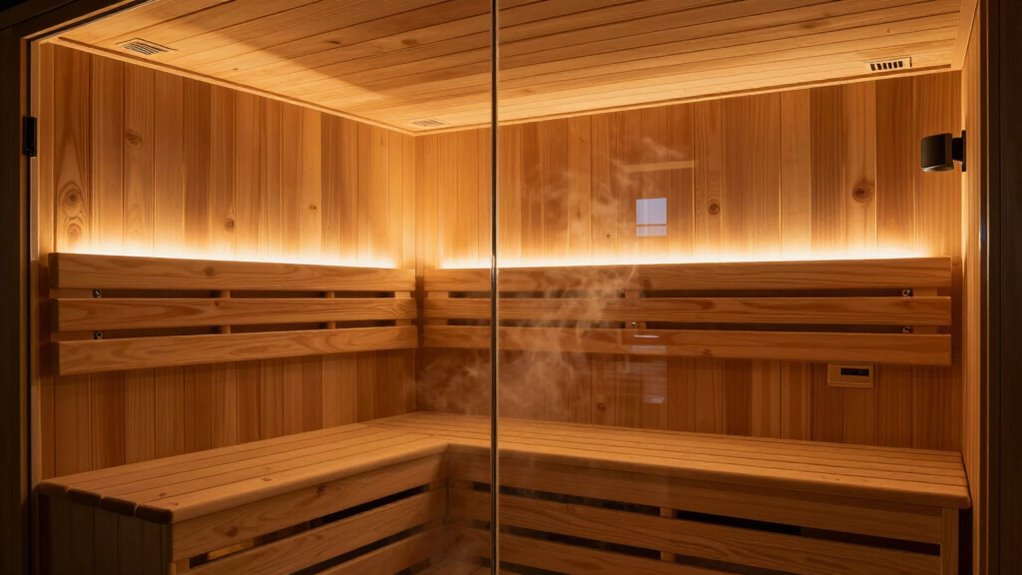
Maintaining your sauna’s ventilation is essential for guaranteeing safety and comfort during each session. Proper ventilation supports sauna filtration, keeping the air clean and reducing odors, while also aiding in temperature regulation. To keep ventilation ideal:
- Regularly check and clean vents to prevent blockages
- Use adjustable vents to control airflow based on your needs
- Ensure proper placement of intake and exhaust vents for efficient circulation
- Monitor indoor air quality and humidity levels
- Keep the sauna door slightly open after use to allow fresh air exchange
Expert Tips for Optimizing Infrared Sauna Ventilation
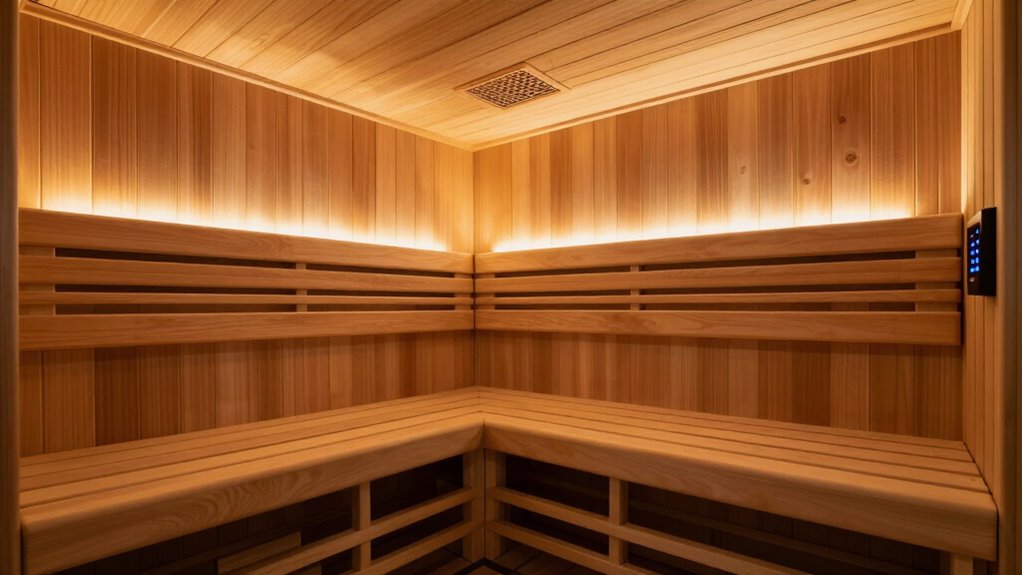
Optimizing your infrared sauna’s ventilation can substantially enhance your overall experience by guaranteeing fresh air flows consistently and comfortably. To do this, focus on humidity management and filter maintenance. Proper ventilation helps regulate humidity, preventing excess moisture that can cause mold or discomfort. Regularly clean and replace filters to improve air quality and keep airflow smooth. Consider the table below for key insights:
| Tip | Why It Matters | Action Step |
|---|---|---|
| Manage humidity levels | Prevents mold, enhances comfort | Use a hygrometer to monitor |
| Clean filters regularly | Maintains airflow, air quality | Follow manufacturer instructions |
| Ensure vents are unobstructed | Keeps air circulating properly | Check and clear vents monthly |
| Use proper ventilation | Balances humidity and fresh air | Install exhaust fans if needed |
Following these tips will optimize your sauna’s ventilation and elevate your experience.
Frequently Asked Questions
Can I Add Extra Ventilation if My Sauna Feels Too Hot?
Yes, you can add ventilation upgrades if your sauna feels too hot. Improving ventilation helps with better temperature control, making your infrared sauna more comfortable. You might install exhaust fans or adjustable vents to increase airflow and reduce heat buildup. Just make certain the upgrades don’t compromise the sauna’s safety or insulation. Proper ventilation adjustments can make your sauna more enjoyable and maintain consistent, pleasant temperatures during your sessions.
What’s the Ideal Humidity Level for Infrared Sauna Ventilation?
You should aim for a humidity level around 30-50% in your infrared sauna to guarantee ideal comfort. Proper humidity control enhances your experience, prevents overheating, and maintains safe airflow. Keep airflow optimized by adjusting vents to balance humidity and temperature. By managing humidity levels effectively, you create a more enjoyable and safe sauna environment, allowing you to relax without feeling overly damp or dry.
How Often Should I Inspect My Sauna’s Ventilation System?
You should inspect your sauna’s ventilation system at least once every three to six months. Regular ventilation maintenance keeps the sauna air quality high and prevents mold or dust buildup. Check for blockages, clean filters, and make certain vents open freely. By maintaining your ventilation system, you’ll enjoy better air circulation, a safer environment, and extend the lifespan of your infrared sauna. Don’t skip these inspections to keep your sauna in top shape.
Are There Specific Ventilation Requirements for Small vs. Large Saunas?
Your sauna’s ventilation design should adapt to its size. For small saunas, guarantee there’s a dedicated intake and exhaust vent to promote airflow without overcirculating heat. Larger saunas need more robust ventilation, with multiple vents or fans to maintain fresh air and prevent overheating. Always consider sauna size when planning ventilation, as proper airflow is key to safety and comfort, regardless of whether your sauna is small or large.
Can Poor Ventilation Cause Health Issues During Sauna Use?
Poor ventilation can definitely cause health issues during sauna use. If you neglect proper ventilation maintenance, your air quality worsens, leading to headaches, dizziness, or respiratory problems. Even in a small sauna, inadequate airflow traps toxins and humidity, making your experience uncomfortable and unsafe. Ensuring good ventilation helps circulate fresh air, reduces buildup of harmful substances, and keeps you safe while enjoying the benefits of your infrared sauna at home.
Conclusion
Did you know that poor ventilation can reduce your infrared sauna’s efficiency by up to 30%? Ensuring proper airflow not only keeps your sauna safe and comfortable but also extends its lifespan. By paying attention to vent placement, avoiding common mistakes, and regular maintenance, you’re maximizing your relaxation experience. Don’t overlook this essential aspect—your body and investment will thank you for it. Better ventilation means better results, so take action today!