To create a pantry inventory system that works, assess your household needs and goals first, then choose between manual or digital tools based on your pantry size and preferences. Organize your supplies with clear labels and containers for easy access, and set up a routine for regular checks and updates. Keep your system flexible by adjusting labels and methods as needed. Continue to explore these strategies to keep your pantry efficient and well-stocked.
Key Takeaways
- Choose between manual or digital tracking systems based on pantry size and user preference for accuracy and convenience.
- Organize items with clear labels, color coding, and accessible storage solutions to streamline inventory management.
- Regularly review and update inventory, discarding expired items and recording new purchases to maintain accuracy.
- Set consistent routines, such as weekly checks and meal planning integration, to keep inventory current and reduce waste.
- Use clear containers and labels with expiration dates for visibility, ensuring easy identification and inventory rotation.
Assessing Your Pantry Needs and Goals
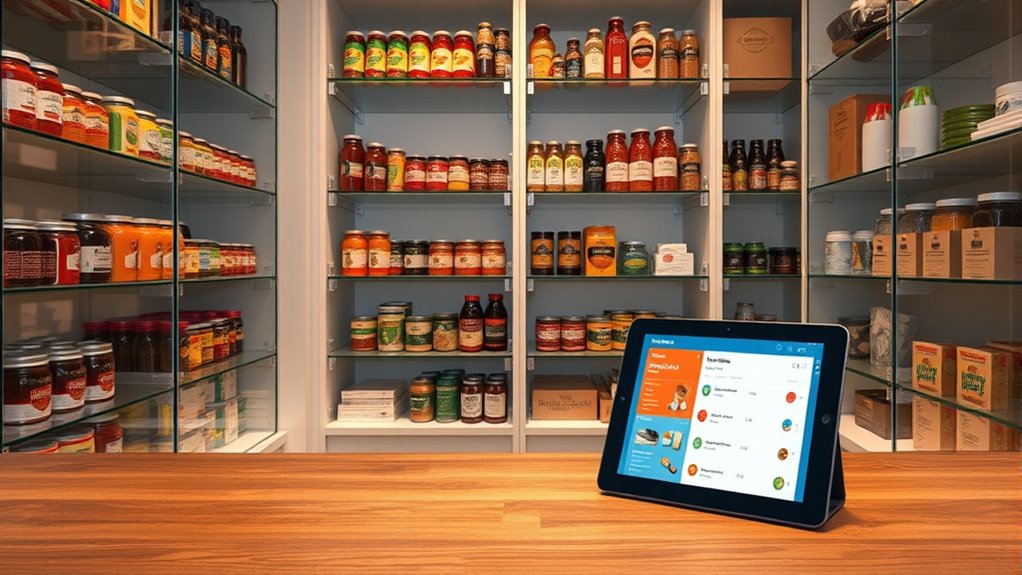
Have you ever wondered if your pantry truly meets your household’s needs? Evaluating your pantry needs and goals is the first step toward an effective inventory system. Think about your meal planning habits and how often you cook at home. Consider any dietary restrictions or preferences within your household, like gluten-free or vegetarian diets, to ensure you stock appropriate items. Take stock of your current supplies, noting what’s used frequently and what rarely gets touched. Set clear goals—whether you want to reduce food waste, save money, or streamline meal prep. Understanding these needs helps you decide what to keep, what to donate, and what to buy more of, making your pantry a practical, personalized resource. Additionally, understanding electric bike horsepower can help you choose energy-efficient options if you’re considering eco-friendly transportation to support your lifestyle goals.
Choosing the Right Inventory Method
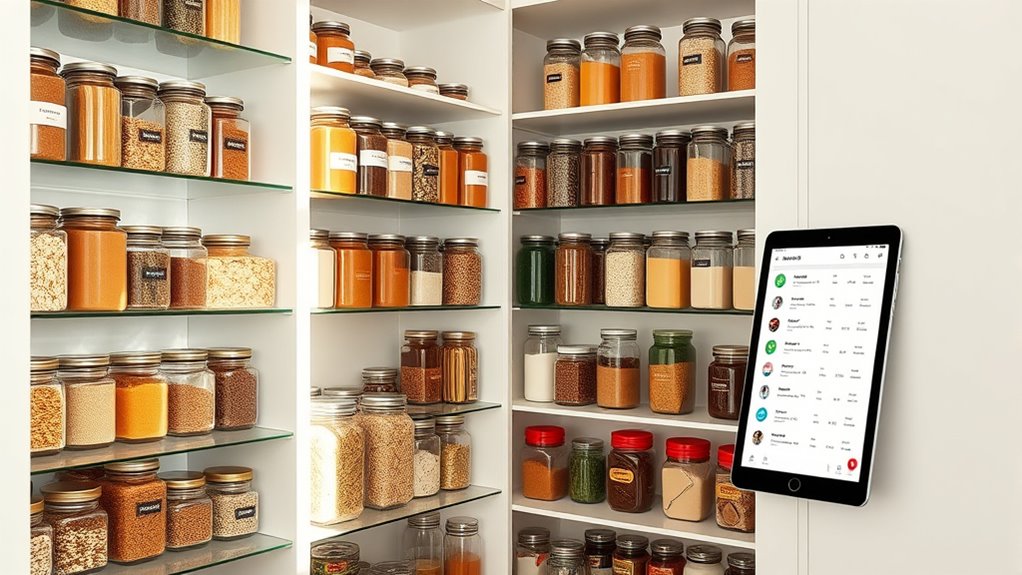
Choosing the right inventory method depends on how you want to track your supplies and your workflow. You can opt for perpetual systems that update in real-time or periodic ones that check stock at set intervals. Decide whether manual logs or digital tools best suit your needs for accuracy and convenience. Implementing an effective inventory system can help you monitor stock levels more efficiently and reduce waste.
Perpetual vs. Periodic
Understanding the differences between perpetual and periodic inventory systems is essential when selecting the right method for your pantry. With a perpetual system, you update your inventory in real-time, making expiration tracking and bulk item management easier. You’ll know exactly what’s available at any moment, reducing waste and preventing overdue items. In contrast, a periodic system requires you to count inventory at set intervals, which can be less accurate but simpler to maintain initially. If your pantry handles many bulk items or needs precise expiration dates, a perpetual system offers better control. Additionally, incorporating lifestyle strategies such as organized storage can optimize your inventory management. However, if you prefer a straightforward approach and don’t mind manual updates, periodic tracking might suffice. Choosing the right method depends on your inventory size, management style, and how closely you want to monitor expiration and bulk supplies.
Manual or Digital
Deciding between manual and digital inventory methods depends on your preferences and the complexity of your pantry. Consider these options:
- Manual tracking with pen and paper is simple, cost-effective, and great for small pantries.
- Digital apps streamline inventory management, making recipe substitution and meal planning faster.
- Digital systems can send alerts when items run low, reducing waste.
- Manual methods require more time but offer control without technology hurdles.
- When selecting an inventory system, consider the size and features of your pantry to ensure it meets your needs effectively.
Organizing Your Pantry for Easy Access

To make your pantry easier to navigate, start by grouping similar items together and arranging them in a way that reflects your daily routines. Place frequently used ingredients, like cooking oils or snacks, at eye level for quick access. Use clear containers for dry goods and label them clearly to simplify recipe planning and prevent clutter. Consider arranging items by category—baking supplies, canned goods, breakfast items—so you can find what you need instantly. When organizing, keep your shopping list integration in mind: place items you need to restock in a designated spot, making it easy to see what’s missing. Incorporating functional storage solutions like adjustable shelves or stackable containers can maximize space and improve accessibility. This setup saves time during meal prep and reduces the hassle of searching through clutter, making your pantry both functional and efficient.
Setting Up a Digital or Paper Tracking System
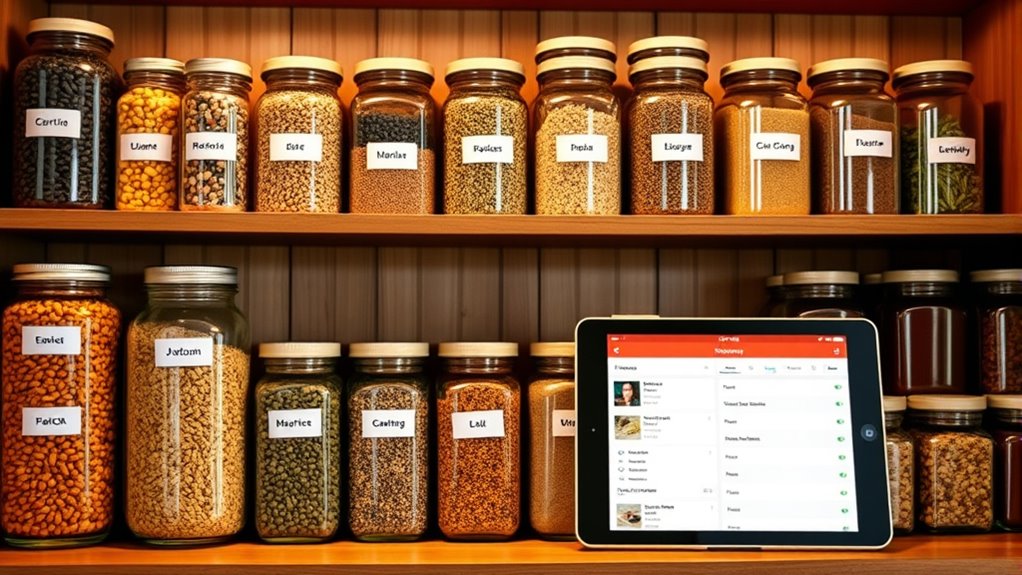
To set up your pantry tracking system, you need to decide whether a digital app or paper method works best for you. Organizing your inventory into clear categories helps keep everything manageable and easy to find. Make sure to update your system regularly so it stays accurate and useful. Incorporating regular inventory checks ensures that your system remains reliable and helps prevent shortages or overstocking.
Choose Your Tracking Method
Choosing the right tracking method is a crucial step in setting up your pantry inventory system. Whether you opt for digital or paper, consider how each impacts calculation accuracy and inventory frequency. To help decide, think about:
- Ease of updates—digital tools often streamline frequent updates, improving accuracy.
- Accessibility—paper methods work offline but may slow down quick checks.
- Budget—digital systems might have upfront costs but save time long-term.
- Personal preference—choose what fits your style for maintaining consistency and accuracy.
- Color accuracy and calibration can also influence how well digital systems display information, impacting your ability to quickly interpret inventory data.
Your choice influences how often you’ll need to check and update your inventory. Digital methods tend to support more frequent inventory checks, boosting calculation accuracy, while paper requires deliberate effort. Pick what aligns with your routine for a reliable pantry system.
Organize Inventory Categories
Organizing your inventory into clear categories is essential for an efficient pantry tracking system. Start by grouping similar items, such as canned goods, spices, grains, and snacks. For spice categorization, create a dedicated section or label jars to quickly identify flavors and types. Canned goods should be grouped by type—vegetables, soups, or fruits—to make restocking and usage easier. Use either a digital app or paper labels to assign each category a specific area in your pantry. This organization reduces clutter and prevents overbuying. Consistent categorization also helps you monitor quantities at a glance. Keep your system simple, logical, and easy to update, so maintaining your inventory remains manageable and effective over time. Additionally, integrating the mind-body connection concept from somatic therapy can help you stay mindful of your pantry habits, making storage and organization more intuitive and less stressful.
Maintain Regular Updates
Regularly updating your pantry inventory is essential to keep your system accurate and useful. Whether you choose a digital app or paper log, consistent updates guarantee proper inventory rotation and expiration tracking. To stay on top of things, consider these steps:
- Record new items immediately upon purchase.
- Check expiration dates weekly and remove expired products.
- Use your system to prioritize older items for use first.
- Adjust quantities as you consume or restock, maintaining accuracy.
- Incorporate inventory management techniques to optimize your pantry organization.
This routine helps prevent waste and ensures you always know what’s available. Keeping your inventory current makes meal planning easier and reduces last-minute shopping. Regular updates also highlight when items are nearing expiration, supporting better inventory rotation and minimizing spoilage. Stay disciplined, and your pantry management will become seamless and efficient.
Establishing a Routine for Inventory Management

To keep your pantry well-maintained, establishing a consistent routine for inventory management is essential. You should set aside a specific time each week to check what’s in your pantry, making it easier to incorporate inventory into your meal planning. When you know what ingredients you have, you can create more efficient grocery shopping lists, avoiding duplicates and missing staples. Regularly reviewing your inventory helps you identify items nearing expiration or those you no longer need. This routine ensures you stay on top of your supplies without feeling overwhelmed. Incorporating mindfulness into your routine can also help you stay present and attentive during these checks to promote focus and clarity. By making inventory checks part of your weekly schedule, you’ll streamline meal prep and shopping, saving time and money while keeping your pantry organized and functional.
Keeping Your Inventory Up-to-Date
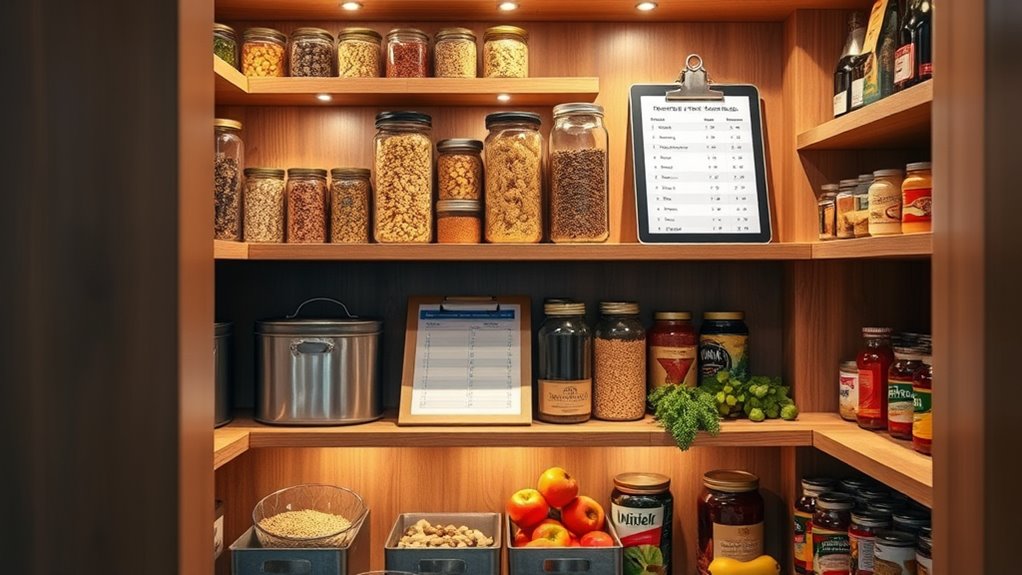
Keeping your inventory up-to-date is essential for maintaining an accurate and efficient pantry. Regularly checking and updating your stock helps with meal planning and creates a reliable shopping list. To stay on top of things, consider these steps:
- Set a regular schedule – check your pantry weekly or biweekly.
- Remove expired items – discard anything past its prime to avoid confusion.
- Record new items – add anything new to your inventory immediately.
- Adjust quantities – update counts based on usage to keep things accurate.
Using Labels and Containers for Better Organization
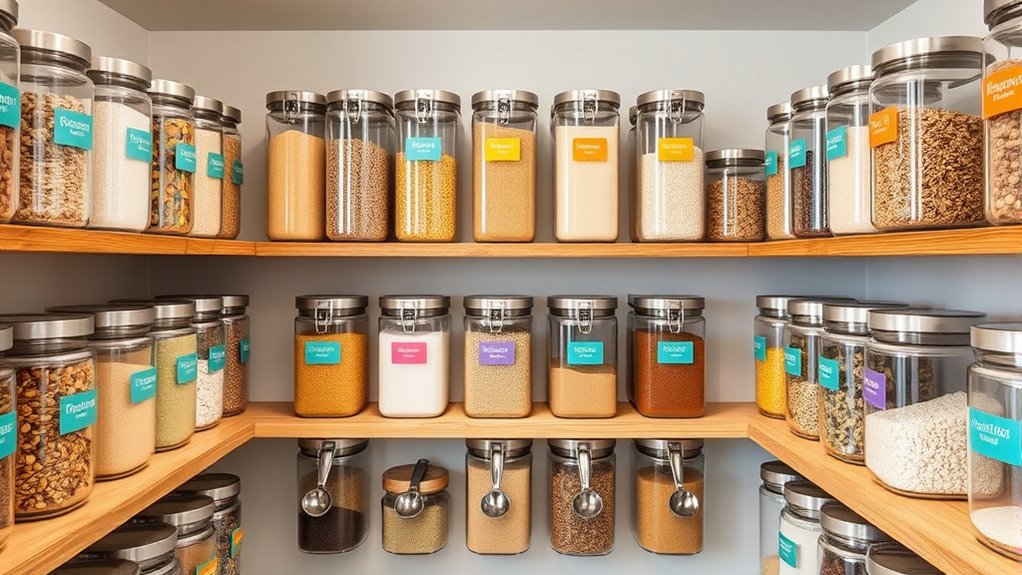
Using labels and containers can considerably enhance your pantry’s organization by making it easier to find and access items quickly. Effective labeling techniques help you identify contents at a glance, reducing clutter and saving time. Choose container types that suit your needs, such as clear jars, bins, or stackable containers, to maximize space and visibility. Proper labels should be legible and durable, ensuring longevity. Here’s a quick comparison:
| Container Types | Labeling Techniques |
|---|---|
| Clear jars | Use waterproof labels |
| Stackable containers | Write with permanent marker |
| Bins | Use pre-made adhesive labels |
| Airtight containers | Include expiration dates |
| Small storage bins | Color-code for categories |
Using these methods keeps your pantry tidy, organized, and easy to navigate.
Tips for Maintaining and Adjusting Your System

Once you’ve organized your pantry with labels and containers, maintaining that system requires regular attention and adjustments. To stay on top, consider these tips:
- Review your pantry weekly to check for expired items or clutter.
- Use your meal planning to identify what ingredients need restocking or removal.
- Update your shopping list based on what’s running low or missing.
- Rearrange items as needed to keep frequently used ingredients accessible.
Consistency keeps your system functional and saves time when cooking. modify labels or containers if you notice inefficiencies, and always tidy up after shopping. Regular maintenance ensures your pantry remains organized, making meal prep smoother and helping you avoid overbuying or waste. Staying proactive keeps your inventory system effective and tailored to your changing needs.
Frequently Asked Questions
How Often Should I Review or Update My Pantry Inventory?
You should review your pantry inventory weekly to keep everything current. This helps with meal planning and guarantees you don’t buy duplicates. Regular updates also make shopping list integration easier, saving you time and money. When you check your inventory consistently, you stay on top of expiration dates and stock levels, making your kitchen more organized and efficient. A quick weekly review keeps your pantry in tip-top shape.
What Are the Best Apps or Tools for Digital Pantry Tracking?
You should try apps like Out of Milk, Pantry Check, or Bring! They excel at smart shelf management and barcode scanning, making tracking your pantry effortless. These tools let you quickly scan items, update quantities, and organize your inventory digitally. With real-time updates and alerts, you’ll always know what’s running low. Embrace these apps to simplify your pantry management, save time, and reduce waste effortlessly.
How Do I Handle Expired or Spoiled Items in My Inventory?
Dealing with expired or spoiled items can feel like battling a never-ending flood. First, regularly check expiration dates and remove any spoiled items promptly. Dispose of them safely to prevent contamination. Update your digital inventory to reflect these removals, keeping your pantry accurate. This proactive approach helps prevent waste, ensures food safety, and keeps your inventory reliable, so you always know what’s good to eat and what’s not.
Can I Customize the Inventory System for Dietary Restrictions?
Yes, you can customize your inventory system for dietary restrictions. Look for systems with flexible customization options that let you add specific tags or categories for allergies, gluten-free items, or vegan products. You can adjust dietary restriction settings, set alerts for restricted items, and create filters to easily find suitable foods. This way, your inventory management becomes tailored to your needs, making it simpler to stick to your dietary restrictions.
What Common Mistakes Should I Avoid When Managing Pantry Inventory?
You might think managing your pantry is straightforward, but avoid common mistakes like poor labeling and stock mismanagement. If you skip clear labels, you’ll struggle to find items quickly and risk expiration. Overlooking stock levels leads to shortages or excess, wasting space and money. Regularly update your inventory, check expiration dates, and label everything clearly. This keeps your pantry organized, saves time, and prevents costly errors.
Conclusion
Think of your pantry as a well-tended garden—you need to regularly check, prune, and nurture it to thrive. When you stay on top of your inventory, you’ll avoid running out of essentials or wasting food. Just like watering plants keeps them healthy, maintaining your system keeps your pantry organized and efficient. With a little effort, you’ll enjoy a smooth, stress-free kitchen where everything’s just a glance away.