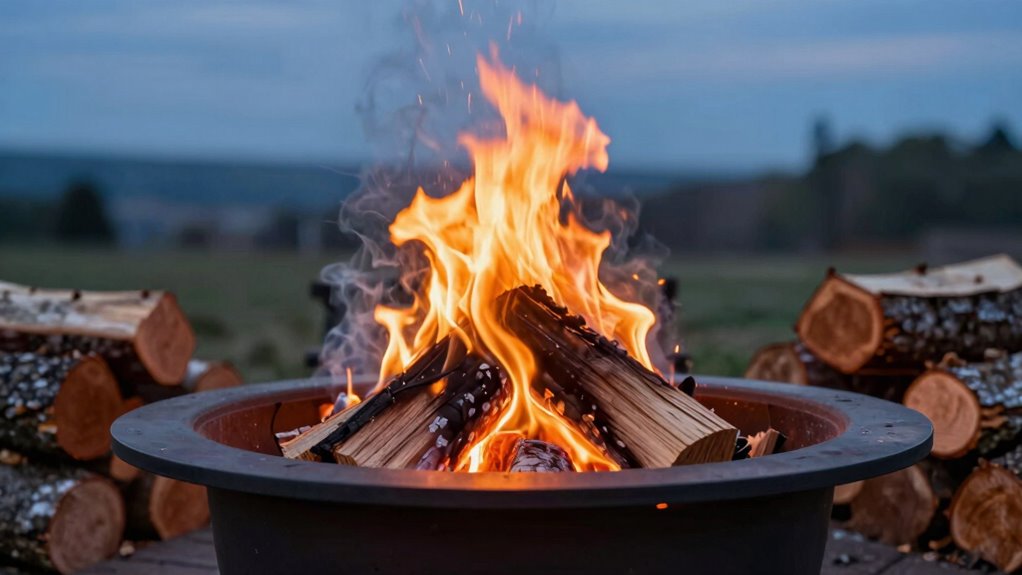

To enjoy a smokeless fire in your fire pit, use properly dried, seasoned wood with moisture below 20%. Avoid green or wet wood, which causes excess smoke and reduces heat efficiency. Store your firewood in a dry, well-ventilated area and split large logs to speed up seasoning. Choosing hardwoods like oak or maple also helps produce less smoke. Keep these tips in mind, and you’ll find that a cleaner, more efficient fire is within reach—learn more for an ideal fire experience.

Get furniture and decor delivered free with Prime
- Fast, free delivery on millions of items
- Prime Video, Amazon Music and more included
- Member-only deals all year
Key Takeaways
- Use well-seasoned, moisture-meter-tested wood with moisture content below 20% for a cleaner, smokeless fire.
- Store firewood in a dry, well-ventilated area, off the ground, and covered to maintain dryness.
- Choose hardwoods like oak or maple, which burn cleaner and produce less smoke than softwoods.
- Split large logs into smaller pieces to accelerate drying and improve combustion.
- Maintain proper airflow in the fire pit to ensure complete combustion and reduce smoke output.
As an affiliate, we earn on qualifying purchases.
How to Recognize Dry, Fire-Seasoned Wood for Your Fire Pit
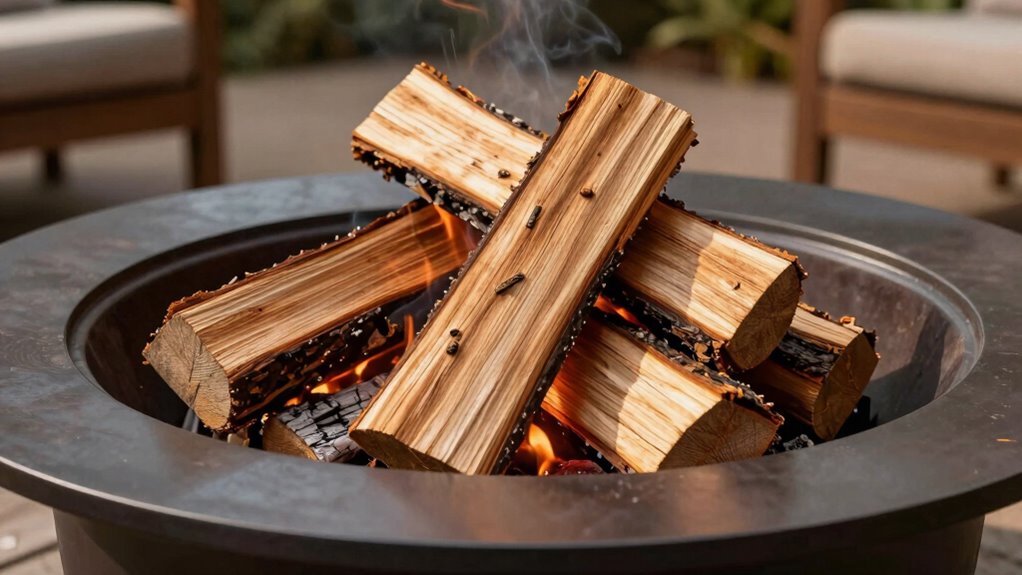
Knowing how to identify dry, fire-seasoned wood is essential for a successful fire in your smokeless fire pit. Proper wood storage is key; keep your wood in a dry, well-ventilated area, off the ground, and covered to prevent moisture absorption. To determine if your wood is dry enough, use moisture measurement tools like a moisture meter—aim for readings below 20%. Look for visual signs: wood should be split, with cracks in the ends and a dull, matte appearance rather than a shiny or fresh look. Lightweight wood also indicates dryness. If the wood feels heavy or sounds hollow when you tap it, it likely contains too much moisture. Recognizing these indicators helps ensure your wood burns efficiently, minimizing smoke and maximizing heat. Additionally, choosing properly seasoned wood with high-quality color and grain can further improve burning performance. Being aware of moisture content in your wood can make all the difference in achieving a cleaner, more efficient burn, and understanding wood seasoning can help you select the best firewood for your needs. Developing a good understanding of firewood storage practices can also enhance your fire-starting success and safety.
Why Dry, Seasoned Wood Is Essential for a Smokeless Fire
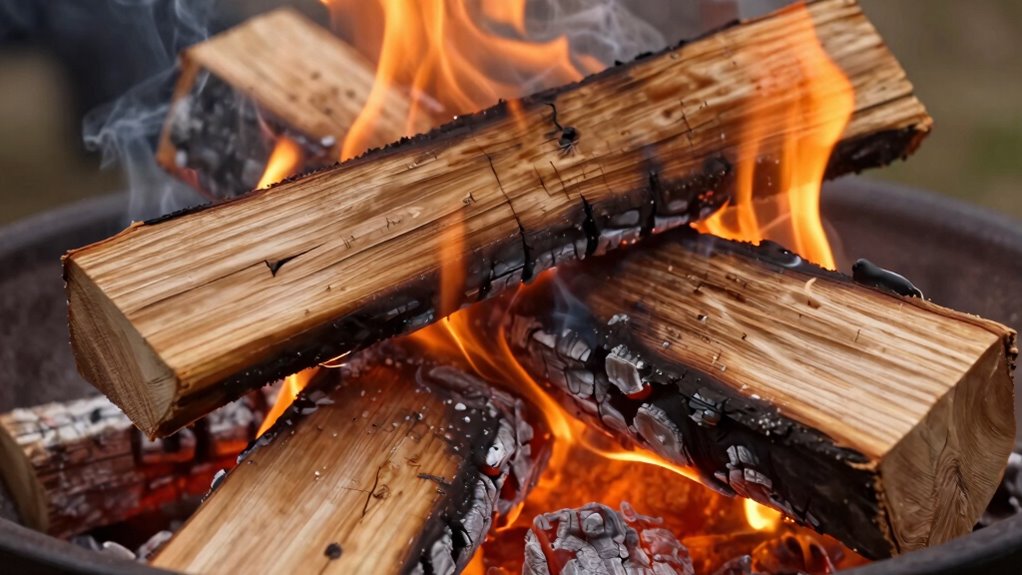
Using dry, seasoned wood in your smokeless fire pit makes a significant difference in how your fire performs. Wood moisture levels directly impact combustion efficiency; high moisture content leads to incomplete burning and excess smoke. Fire seasoning involves drying wood properly so moisture content drops below 20%, ensuring cleaner and hotter fires. When your wood is properly seasoned, it ignites quickly and burns more completely, producing less smoke and fewer creosote buildup. Green or wet wood introduces unnecessary water vapor, which cools the fire and creates smoke. Properly seasoned wood also helps improve airflow and combustion, making your fire more efficient and enjoyable. Additionally, well-seasoned wood reduces the need for frequent refueling, prolonging your fire’s burn time. Using properly stored wood not only maintains its seasoning but also prevents it from absorbing moisture again, ensuring optimal performance. Properly seasoned wood also helps sustain the fire longer and contributes to a sustainable and eco-friendly fire experience, reducing environmental impact. Ultimately, dry, seasoned wood is essential for achieving the smokeless fire experience you desire.
How Wet or Green Wood Causes Smoke and Reduces Fire Efficiency
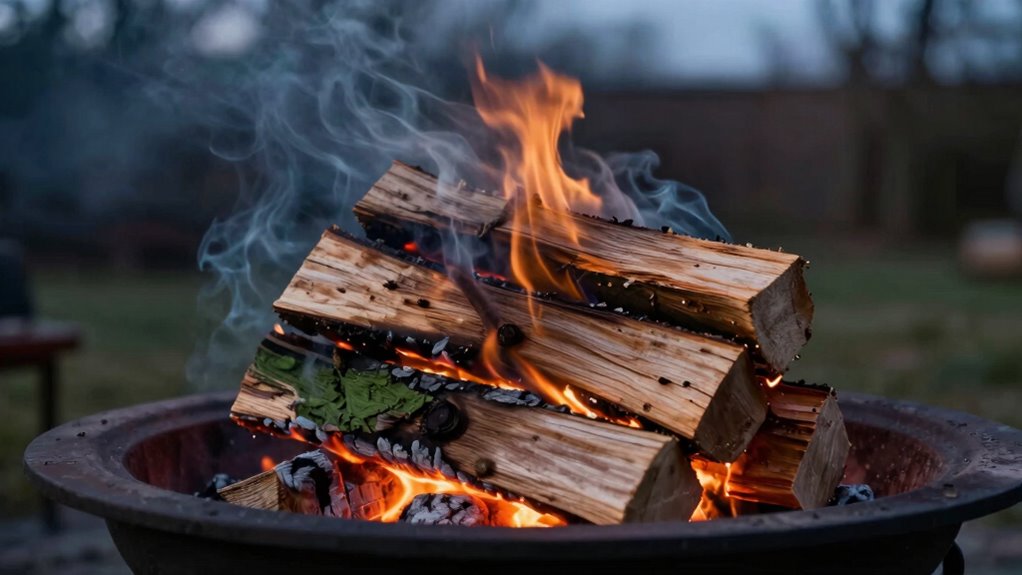
Wet or green wood introduces excess moisture into your fire, which hampers combustion and creates more smoke. When you burn wet wood, the fire struggles to reach high temperatures, causing incomplete combustion and increased smoke production. Using proper seasoning methods helps reduce moisture content, making your fire cleaner and more efficient. To guarantee your wood is dry, you can use moisture meters to accurately measure moisture levels. Consider this table:
| Wet or Green Wood | Properly Seasoned Wood |
|---|---|
| High moisture content | Low moisture content |
| Produces more smoke | Burns cleaner and hotter |
| Difficult to ignite | Easier to ignite and sustain |
Additionally, understanding the wood seasoning process ensures optimal burning performance and less smoke. Proper piercing care and hygiene practices also contribute to overall safety and enjoyment during outdoor activities. Employing effective fire management techniques can further enhance your outdoor experience and reduce smoke output.
How to Store and Season Firewood to Keep It Dry and Ready
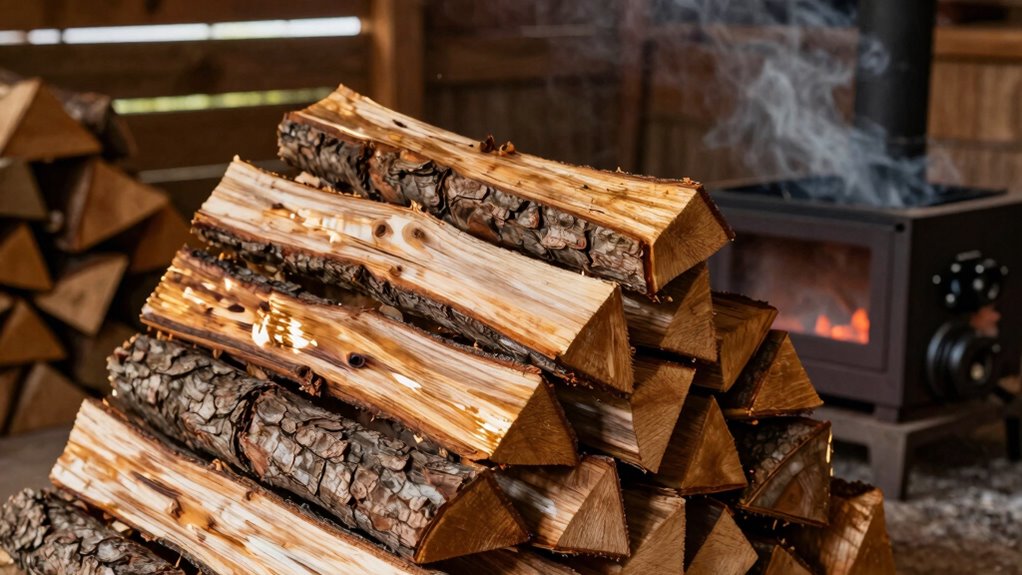
Proper storage and seasoning are essential for keeping firewood dry and ready to burn. When you store your firewood correctly, you ensure it stays dry and reduces smoke when lit. Here are three tips to improve your firewood storage and seasoning techniques:
- Stack firewood off the ground using pallets or a rack to prevent moisture absorption.
- Cover the top of the stack with a waterproof tarp, leaving the sides open for airflow.
- Allow firewood to season for at least 6-12 months, depending on wood type and climate, to reduce moisture content.
Following these firewood storage and seasoning techniques will help you achieve dryer wood, which burns cleaner and produces less smoke in your smokeless fire pit.
Why Moisture Content Matters for Your Fire Pit’s Performance

Moisture content in your firewood directly impacts how well your fire pit performs. If your wood has high moisture levels, it burns inefficiently, producing more smoke and less heat. Proper moisture measurement helps you determine if your wood is ready to burn; ideally, it should have a moisture content below 20%. Using effective wood drying techniques, like stacking wood in a dry, well-ventilated area and covering it properly, can considerably reduce moisture levels. Proper seasoning dry wood ignites faster, burns hotter, and generates less smoke, making your fire pit more efficient and enjoyable. Additionally, employing proper filtration can help remove impurities from the smoke, further improving air quality. Understanding the importance of moisture content ensures you get the best performance from your smokeless fire pit while minimizing smoke and maximizing warmth. Properly seasoned wood also minimizes the presence of volatile organic compounds, which can contribute to smoke and pollutant formation during combustion. Regularly checking the moisture content of your wood with a moisture meter can help maintain optimal burning conditions, and investing in a quality moisture meter can provide more accurate readings to guide your wood storage and selection.
Best Practices for Burning Dry, Safe, and Efficient Firewood
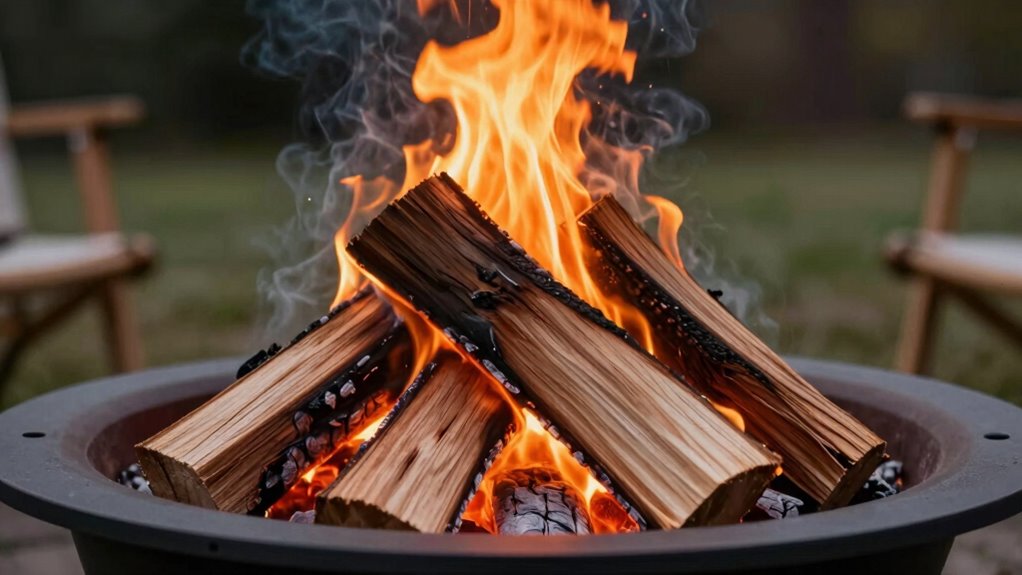
To guarantee your fire pit burns safely and efficiently, always start with dry, well-seasoned firewood. Proper firewood storage is essential—keep your logs off the ground and covered to prevent moisture absorption. Use moisture meters to confirm your wood has a moisture content below 20%, indicating it’s ready to burn. Here are three best practices:
Ensure safe, efficient fires by using dry, seasoned wood stored off the ground and checked with a moisture meter.
- Store firewood in a well-ventilated area away from rain and snow.
- Always check moisture levels before igniting; don’t guess by appearance alone.
- Split larger logs to promote even drying and faster seasoning. Ensuring proper firewood storage helps maintain your wood’s quality and reduces smoke production, which is crucial for maintaining a smokeless fire and enjoying a cleaner burn. Additionally, understanding the dry wood rule and its importance in the Gold IRA markets can help you select the best firewood for minimal smoke and maximum efficiency. Proper firewood seasoning also minimizes the risk of creosote buildup in your chimney or fire pit, enhancing safety during use.
Troubleshooting Excess Smoke: Is Your Firewood the Problem?
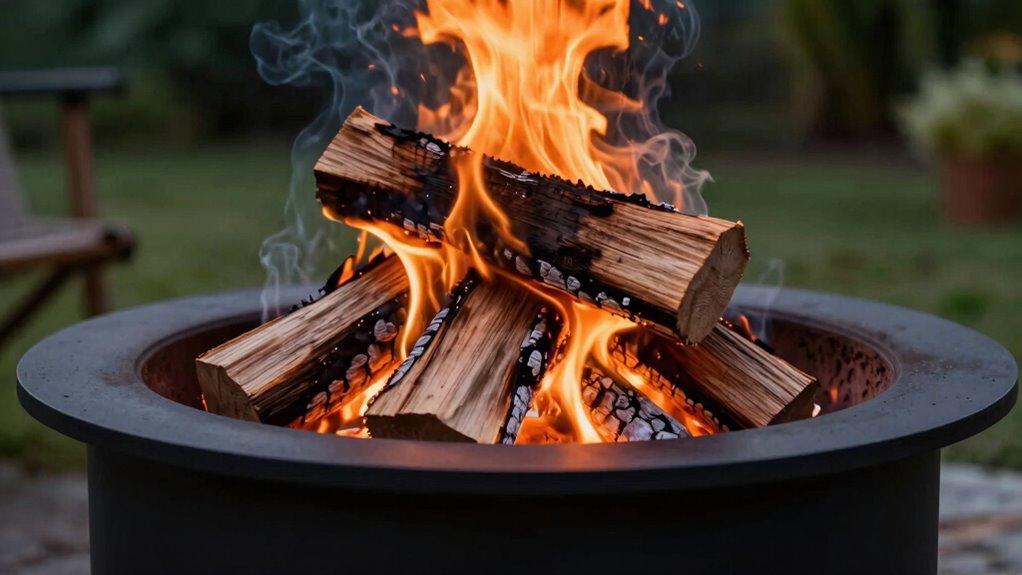
Excess smoke from your fire pit often signals issues with your firewood, especially if it’s not properly seasoned. When wood has high moisture levels, it burns inefficiently, producing more smoke and less heat. Check your wood storage: if your firewood is stored in damp or shady areas without proper ventilation, it absorbs moisture, making it harder to burn cleanly. To troubleshoot, ensure your firewood has been seasoned for at least 6-12 months, depending on the wood type. Properly stored firewood should be kept off the ground, covered, and stacked in a dry, well-ventilated space. If your wood still produces excess smoke, it’s likely due to excess moisture and improper storage, not necessarily the wood type. Properly seasoned, well-stored firewood is key to reducing smoke. Moisture content plays a crucial role in how efficiently your fire burns and how much smoke it produces. Additionally, using seasoned firewood reduces the need for excessive airflow and helps minimize smoke output.
Which Types of Firewood Produce Less Smoke?
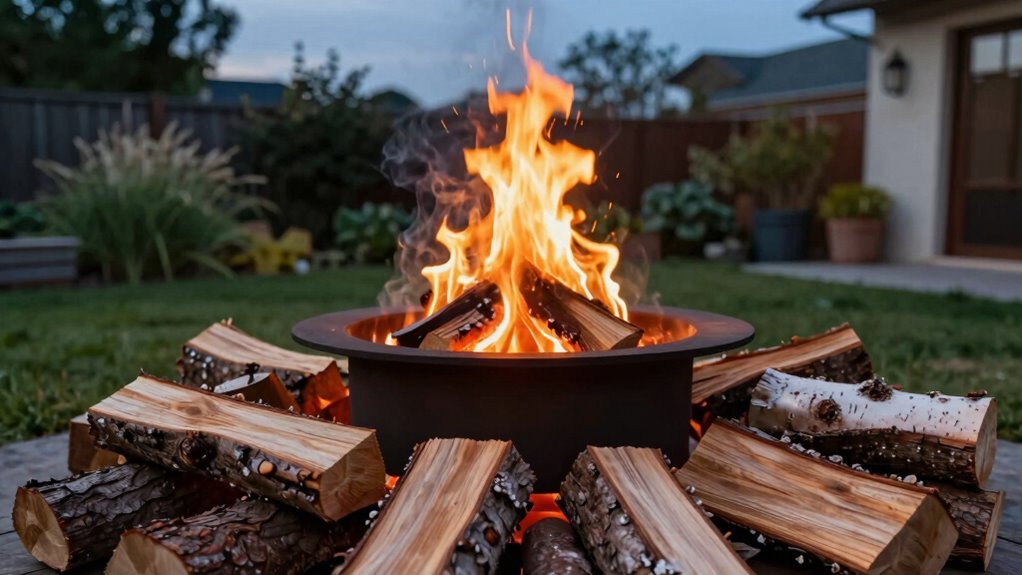
You’ll get less smoke from firewood that’s properly seasoned, so always choose wood that’s dried for at least six months. Hardwoods like oak and maple tend to burn cleaner than softwoods such as pine or cedar. By selecting the right type and ensuring your wood is well-seasoned, you’ll enjoy a cleaner, more efficient fire. Proper firewood storage also helps maintain dryness and reduces smoke production. Additionally, using a high-quality heat pump can improve overall energy efficiency and reduce reliance on burning wood for heating, further minimizing smoke emissions. To further reduce smoke, consider utilizing herbal infusion tools that can incorporate natural ingredients to help burn cleaner and enhance the aroma of your fire.
Hardwoods vs. Softwoods
When choosing firewood for a smokeless fire pit, understanding the differences between hardwoods and softwoods is essential. The key factors are wood density and tree species, which influence smoke production. Generally, hardwoods have higher wood density, resulting in cleaner, longer-lasting fires. Softwoods, with lower density, tend to produce more smoke and creosote.
Here are three points to contemplate:
- Hardwoods like oak and maple burn more efficiently with less smoke due to their dense structure.
- Softwoods such as pine and cedar ignite quickly but produce more smoke and creosote.
- Selecting the right tree species and focusing on hardwoods help minimize smoke, making your fire more enjoyable.
Properly Seasoned Wood
Properly seasoned firewood is essential for producing less smoke and achieving a cleaner burn in your smokeless fire pit. To verify this, focus on proper wood storage to keep your firewood dry and protected from rain and humidity. Well-stored wood should have low moisture levels, ideally below 20%, which helps it burn hotter and cleaner. Avoid using green or freshly cut wood, as high moisture content leads to more smoke and creosote buildup. When selecting firewood, look for seasoned logs that have been split and stored in a dry, ventilated area for at least six months. Properly seasoned wood ignites easily, produces less smoke, and burns more efficiently, making your fire pit experience more enjoyable and eco-friendly.
How Using Dry Wood Enhances Your Fire Pit Experience
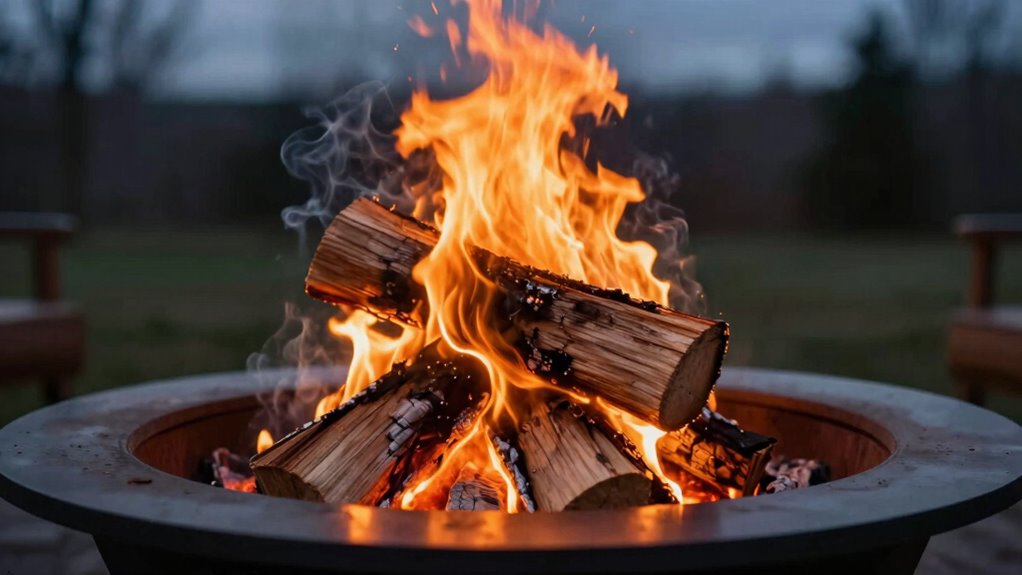
Using dry wood substantially improves your fire pit experience by ensuring a cleaner, more efficient burn. When firewood has low moisture content, it ignites easily and produces less smoke. Proper seasoning reduces the firewood moisture, making your wood stack ready for use. Here’s why dry wood makes a difference:
- Less Smoke and Odor: Dry wood burns cleaner, minimizing smoke and unpleasant smells.
- Higher Heat Output: Well-seasoned wood produces more heat, keeping you warmer longer.
- Easier Ignition: Reduced moisture makes starting your fire quicker and simpler.
Focusing on the seasoning process helps you identify when your firewood is dry enough. The moisture level drops as the wood cures, ensuring a better overall experience while enjoying your smokeless fire pit.
Quick Tips to Maintain a Smokeless Fire With Proper Wood
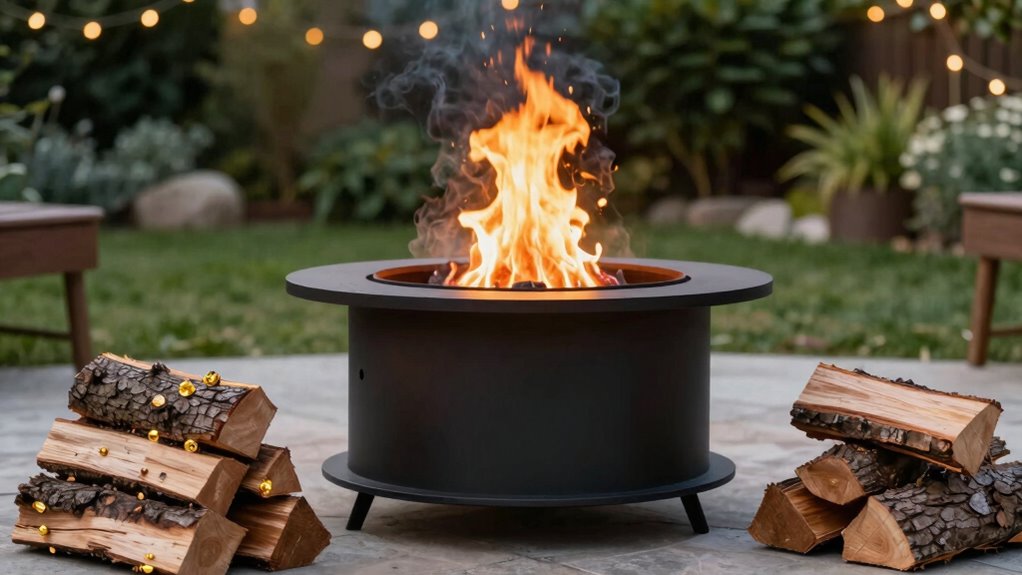
To keep your fire smokeless, start by choosing dry, seasoned wood that burns efficiently. Make sure your fire pit has proper airflow to promote complete combustion. When you combine these tips, you’ll enjoy cleaner, longer-lasting fires with less smoke.
Choose Dry, Seasoned Wood
Choosing the right wood is essential for a smokeless fire. You want wood that’s properly dried and seasoned, which means low moisture levels. Freshly cut wood contains high moisture, resulting in more smoke and less heat. To guarantee your wood is ready, consider these quick tips:
- Store wood in a dry, covered area to prevent moisture absorption.
- Check moisture levels with a moisture meter—aim for below 20%.
- Split larger logs into smaller pieces to speed up seasoning.
Using well-stored, seasoned wood reduces smoke and creates a cleaner burn. Proper wood storage keeps moisture out, ensuring your fire stays dry and efficient. Remember, the key is using wood that’s been properly dried for ideal performance and minimal smoke in your smokeless fire pit.
Maintain Proper Airflow
Maintaining proper airflow is essential for a smokeless fire because it guarantees your wood burns efficiently and completely. To do this, ensure your firewood storage allows for good ventilation, preventing excess moisture buildup. Proper moisture control is vital, as wet or damp wood produces more smoke and reduces burn efficiency. Stack your firewood in a way that promotes airflow around each piece, avoiding tight packing. Keep the firepit’s air vents clear of debris, and don’t overcrowd it, so oxygen can circulate freely. Regularly check your firewood for dryness before burning, and avoid using freshly cut wood. By managing firewood storage and moisture levels, you optimize airflow, resulting in a cleaner, smokeless fire every time.
Frequently Asked Questions
How Can I Tell if My Firewood Is Properly Seasoned?
You can tell if your firewood is properly seasoned by checking the moisture content, which should be below 20%. During the seasoning process, wood loses moisture, making it easier to burn with less smoke. Look for cracks in the ends, a dull appearance, and a hollow sound when tapped. Properly seasoned wood is lighter, easier to split, and produces minimal smoke, ensuring a cleaner, more efficient fire.
What Signs Indicate My Firewood Is Too Wet or Green?
Like a modern-day Sherlock inspecting a clue, you’ll notice your firewood is too wet or green through visual cues and moisture content. If the wood feels heavy, sounds hollow when tapped, or has a greenish hue or mold, it’s a sign it’s not properly seasoned. These indicators suggest high moisture content, which leads to more smoke and inefficient burning—so let your wood dry out for a cleaner, hotter fire.
Are There Specific Wood Types Better for Smokeless Burning?
You should choose hardwood varieties like oak, hickory, or maple for smokeless burning because they have higher wood density, which produces less smoke and burns longer. These dense woods ignite easily and generate more heat, making your fire cleaner and more efficient. Avoid softwoods like pine or cedar, as their lower density results in more smoke and creosote buildup. Opt for seasoned, dry hardwoods for the best smokeless fire experience.
How Long Should Firewood Be Stored to Ensure Dryness?
You should store your firewood for at least 6 to 12 months to guarantee dryness. Proper seasoning time allows moisture to evaporate, making your wood burn cleaner and produce less smoke. Keep your wood in dry, well-ventilated storage conditions, ideally off the ground and covered, but with airflow. If you rush, you’ll only get a soggy, smoky mess—so patience is your best fire-starting friend.
Can Adding Dry Wood Immediately Improve Smoke Levels?
Adding dry wood immediately improves smoke levels because lower firewood moisture enhances burning efficiency. When you use dry wood, it ignites more easily, produces less smoke, and burns more completely. This means you’ll enjoy cleaner, less smoky fires right away. Always make certain your firewood is properly seasoned, ideally with at least six months of drying, to maximize burning efficiency and minimize smoke every time you light your fire.
Conclusion
Using dry, seasoned wood is your secret weapon for a smokeless fire. Think of it as the fuel that keeps your fire dancing smoothly, free of unwanted smoke clouds. When you choose the right wood and store it properly, you’ll enjoy cleaner breaths and a cozy glow without the smoke curtain. Keep your firewood dry, and your firepit will thank you with a performance as steady as a drumbeat—smoke-free and satisfying.
Halloween Picks
halloween
As an affiliate, we earn on qualifying purchases.