
Eco labels and certifications signal that products meet certain environmental standards, but not all are trustworthy. Some may use vague claims or greenwashing tactics, so look for third-party verified seals like organic or biodegradable labels. Genuine labels are backed by clear standards and credible organizations, helping you avoid fake claims. To make smarter choices, it’s important to understand what these labels truly mean and how to spot authentic ones—keep exploring to learn more.
Key Takeaways
- Genuine eco labels are supported by third-party verification, ensuring credible environmental claims.
- Be cautious of vague terms like “eco-friendly” without specific evidence or certification.
- Recognize trusted seals such as biodegradable packaging, organic cotton, or recognized sustainability certifications.
- Fake or misleading labels often lack transparency and can use fake logos or unverified claims.
- Verify the standards behind eco labels by researching the certifying organization and their verification process.
Understanding Common Eco Labels and Certifications
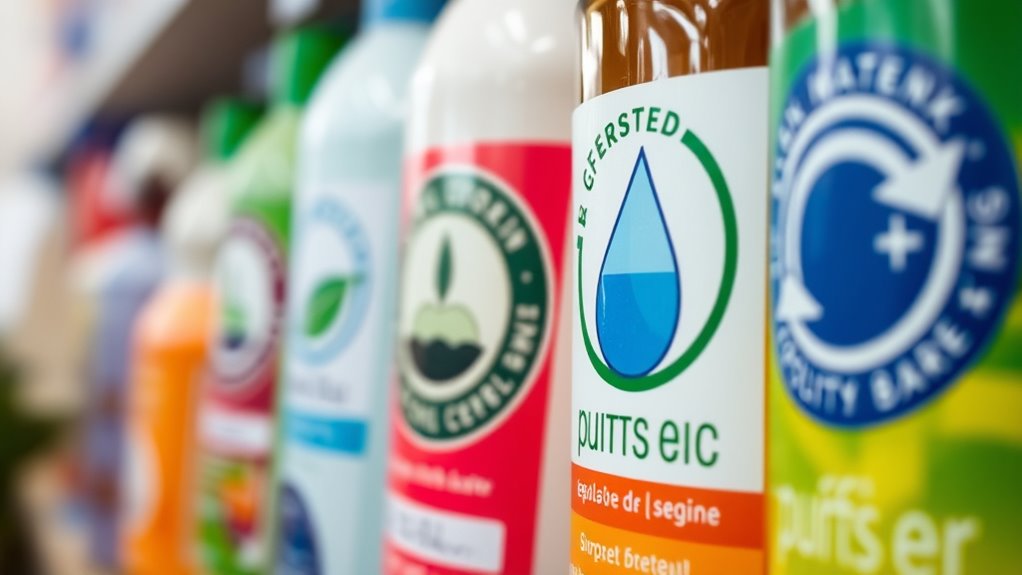
Eco labels and certifications help consumers identify products that meet specific environmental standards. When choosing items with eco labels, look for those indicating biodegradable packaging, which breaks down naturally and reduces landfill waste. Certifications like these guarantee that packaging materials are environmentally friendly and won’t persist in the environment. Additionally, some eco labels confirm that textiles meet organic cotton standards, meaning the cotton is grown without harmful chemicals or pesticides, supporting sustainable farming practices. Recognizing these labels helps you make more informed choices, ensuring your purchases align with your eco-conscious values. Creativity can be cultivated by anyone, regardless of skill level, which empowers consumers to explore and support sustainable and eco-friendly products confidently. Keep an eye out for trusted certifications that clearly communicate a product’s environmental benefits, so you can confidently select items that contribute to a healthier planet.
The Difference Between Genuine and Fake Sustainability Claims
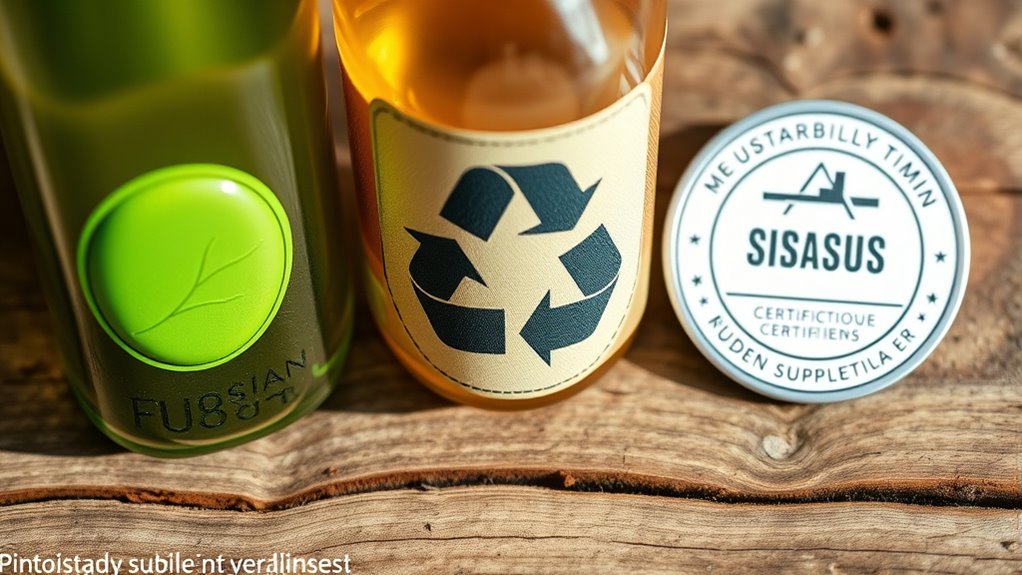
While labels and certifications can guide you toward environmentally friendly products, not all claims are genuine. Some companies use greenwashing tactics to make their products appear more sustainable than they are. They may highlight vague claims or cherry-pick eco-friendly features to mislead consumers. Certification scams are another issue, where products falsely display trusted-seal logos or create fake certifications to appear legitimate. To spot the difference, look for specific, transparent information about the company’s sustainability practices. Genuine claims are backed by verifiable standards and third-party audits. Recognizing these tactics helps you avoid being duped by false sustainability claims and supports truly eco-friendly products. Additionally, understanding how contrast ratio affects image quality can help consumers choose products that truly deliver on visual performance and environmental benefits.
How to Spot Trustworthy Eco Seals From Marketing Gimmicks
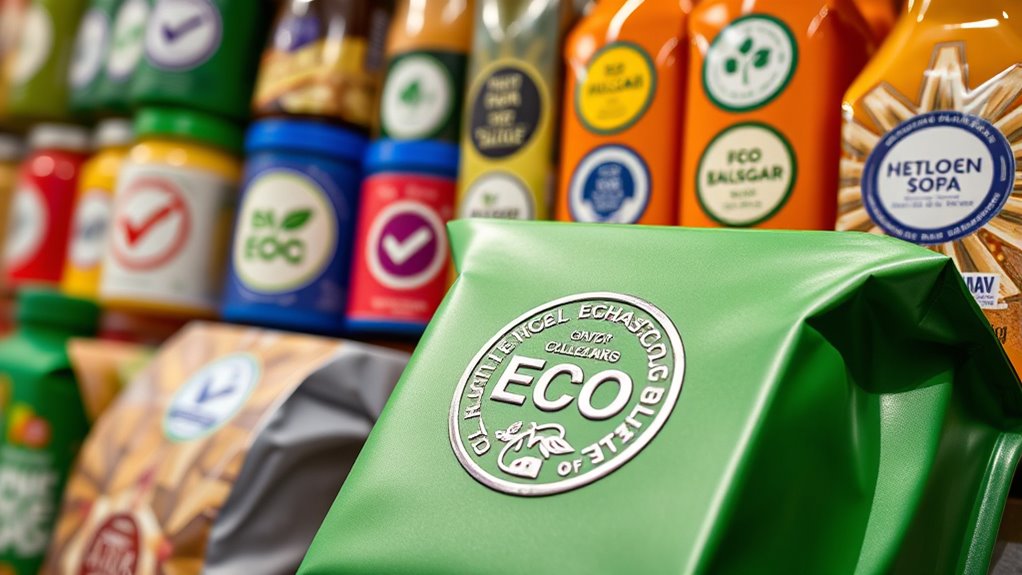
Trustworthy eco seals are built on transparency and credible third-party verification, making them stand out from marketing gimmicks. When evaluating labels, look for specific claims like biodegradable packaging, which indicates the product breaks down naturally without harming the environment. Be cautious of vague terms such as “eco-friendly” without supporting evidence. A genuine eco seal often includes certifications like vegan certification, ensuring no animal products are involved, and is backed by an independent organization. Check the certifier’s reputation and standards—trustworthy seals are transparent about their criteria. Avoid labels that use ambiguous symbols or overly generic language. By focusing on verified standards and clear, detailed information, you can confidently distinguish authentic eco seals from superficial marketing tricks. Additionally, vetted third-party organizations ensure that eco labels meet strict environmental and social standards, which adds an extra layer of trustworthiness.
The Role of Third-Party Verification in Eco Label Credibility

Third-party verification plays a critical role in establishing the credibility of eco labels by providing an unbiased assessment of a product’s environmental claims. It guarantees that companies are transparent about their supply chains, confirming that sustainable practices are followed at each stage. These independent organizations evaluate environmental impact metrics, such as carbon footprint, water usage, and waste management, giving consumers reliable information. By verifying claims through rigorous audits and standardized criteria, third-party certifiers help prevent greenwashing and build trust. When a product carries a verified eco label, you can be more confident that its environmental benefits are genuine and backed by credible data. This transparency in both supply chain and impact metrics is essential for making informed, eco-conscious purchasing decisions. Additionally, vetted certification processes ensure that labels are trustworthy and reflect real sustainability efforts rather than superficial claims.
Making Informed Choices: Tips for Selecting Truly Eco-Friendly Products

Choosing truly eco-friendly products requires more than just identifying a green label on the packaging. To make meaningful choices, look beyond the surface. Check if the company invests in carbon offsetting to reduce environmental impact. Confirm products use sustainable sourcing, supporting ethical and eco-conscious supply chains. Consider whether the item promotes durability, reducing waste over time. Research the company’s transparency about their practices and certifications. Be wary of greenwashing—labels that seem genuine but aren’t backed by real efforts. Ask yourself if the product aligns with your values, like protecting biodiversity or supporting local communities. Staying informed helps you avoid superficial “green” claims and choose items that genuinely make a difference. Incorporating sound environmental practices into product development can also be a sign of genuine sustainability. Make mindful decisions and support brands committed to real sustainability.
Frequently Asked Questions
Are All Eco Labels Legally Regulated or Standardized Worldwide?
Not all eco labels are legally regulated or standardized worldwide. You’ll encounter standardization challenges and regional differences that influence how labels are created and enforced. Some labels follow strict legal standards, ensuring credibility, while others rely on voluntary schemes with varying rigor. When choosing products, it’s essential to understand these differences, as not all eco labels guarantee the same level of environmental or social responsibility across regions.
How Do Eco Labels Impact Product Pricing and Affordability?
Eco labels often increase product cost because sustainable materials and ethical practices cost more. This can impact your consumer affordability, making eco-friendly products pricier than conventional options. While you might pay a premium upfront, you’re investing in environmental benefits and product quality. However, it is crucial to weigh these costs against long-term savings and the positive impact on the planet, ensuring your choices align with your budget and values.
Can Eco Labels Change Over Time or Be Updated?
Think of eco labels like evolving maps; they can change over time. Label updates happen as standards improve or new science emerges, so certifications stay valid and trustworthy. You should check for recent certification validity to guarantee products meet current eco criteria. This ongoing process helps protect your trust, ensuring that eco labels truly reflect the latest environmental efforts and aren’t outdated or misleading.
Do Eco Certifications Guarantee Environmental or Social Justice?
Eco certifications don’t guarantee full environmental or social justice, as greenwashing claims can obscure true impact. Certification credibility varies; some labels are rigorous, while others may be less strict. You should scrutinize the certifying organization, look for third-party verification, and avoid labels that lack transparency. Relying solely on eco labels isn’t enough—you need to investigate and ask questions to ensure genuine commitment to sustainability and justice.
Are There Eco Labels Specific to Certain Industries or Regions?
Yes, you’ll find industry-specific labels and regional eco standards designed to target particular sectors and locations. These tailored tags, like organic food labels or regional forestry certifications, guarantee standards suit local conditions and practices. Industry-specific labels focus on specialized sectors, while regional eco standards address geographic environmental concerns. By recognizing these, you can better understand the sustainability promises behind each label and make more informed, impactful choices that support local and global eco-efforts.
Conclusion
Now that you know what those eco labels really mean, you’ll never look at them the same way. But beware—some claims are still cloaked in deception. The real question is, how many of those products claiming to be eco-friendly are truly trustworthy? Stay vigilant, ask questions, and keep digging. Because the next time you make a purchase, you might just hold the power to make a real difference—if you know what to look for.