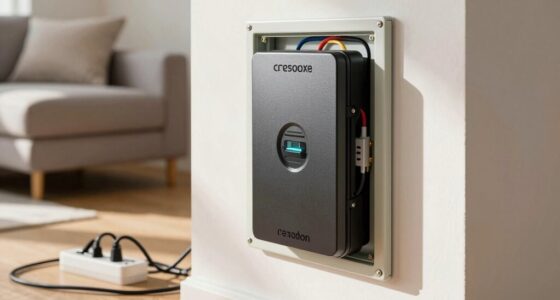
A home energy audit helps you identify where your house wastes energy and what improvements can boost efficiency and comfort. It shows you how to seal leaks, upgrade insulation, and evaluate appliances for saving money. Whether through a professional assessment or a DIY check, understanding your home’s energy use is key. Addressing common issues like drafts and gaps results in long-term savings. Keep exploring how these steps work together for a more efficient home.
Key Takeaways
- An energy audit identifies home areas where energy is wasted and suggests improvements to enhance efficiency.
- Common issues include insulation gaps, duct leaks, and drafts around windows and doors.
- Cost-effective strategies include sealing leaks, upgrading insulation, and installing programmable thermostats.
- Audits can be done professionally with advanced tools or DIY using simple inspections and thermal imaging.
- Regular assessments help track improvements, maintain efficiency, and support long-term energy savings.

Emporia Vue 3 Home Energy Monitor – Smart Home Automation Module and Real Time Electricity Usage Monitor, Power Consumption Meter, Solar and Net Metering for UL Certified Safe Energy Monitoring
SAFETY YOU CAN TRUST WITH UL CERTIFICATION: With Emporia Energy, your home energy monitoring is safe, reliable, and…
As an affiliate, we earn on qualifying purchases.
As an affiliate, we earn on qualifying purchases.
What Is a Home Energy Audit?

Ever wonder how you can reduce your home’s energy bills? A home energy audit identifies areas where your house wastes energy and shows you how to fix them. During the audit, professionals inspect insulation improvements to ensure your home keeps heat or cool air effectively. They also evaluate your appliances and recommend upgrades if certain devices are inefficient. This process pinpoints drafts, leaks, and insulation gaps that cause energy loss. By understanding where your home leaks energy, you can target specific improvements. An energy audit provides a clear picture of your home’s efficiency and helps prioritize cost-effective measures. Incorporating seasonal checklists can help maintain your home’s energy efficiency year-round. In short, it’s your first step toward saving money and making your home more comfortable.

TOPDON TC004 Mini Thermal Imaging Camera, 240 x 240 TISR Resolution, 15-Hour Battery Life, 128 x 128 IR Resolution, 25Hz Handheld Infrared Camera with High/Low Temp Alerts, Auto Shutdown- Blue
【Enhanced Thermal Clarity】Start with 128×128 thermal imaging and enhance to 240×240 resolution with TISR technology for greater details….
As an affiliate, we earn on qualifying purchases.
As an affiliate, we earn on qualifying purchases.
Reasons to Conduct an Energy Audit

Conducting an energy audit helps you cut down on your monthly bills by pinpointing where your home wastes energy. You’ll discover inefficient areas that may be costing you more than necessary. Addressing these issues can save you money and improve your home’s overall comfort. Just as properly inflated tires ensure a smoother ride, optimizing your home’s energy use can lead to a more efficient and comfortable living environment, much like maintaining well-functioning bike components.
Reduce Energy Costs
Have you ever wondered how much money you could save on your energy bills? Conducting an energy audit helps identify areas where you can cut costs. By reviewing your billing analysis, you’ll see exactly where your money goes each month. Then, you can implement effective energy saving tips to lower your bills. Here are three benefits:
- Reduce your monthly expenses considerably.
- Avoid unexpected charges by spotting inefficiencies early.
- Increase your home’s energy efficiency, saving money long-term.
- Utilizing professional voice actors in your promotional efforts can help communicate these savings more effectively.
Taking these steps makes energy costs more manageable and puts money back in your pocket. An energy audit provides the insights you need to make smarter choices about your energy use, ultimately leading to lower bills and more savings.
Identify Inefficient Areas
Identifying inefficient areas in your home is a key step in lowering your energy bills. Look for insulation gaps around windows, doors, and attic hatches that let warm or cool air escape. HVAC inefficiencies, like dirty filters or leaky ducts, also waste energy and increase costs. To help visualize, here’s a simple example:
| Area | Common Issue | Impact |
|---|---|---|
| Attic | Insulation gaps | Heat loss in winter, gain in summer |
| Windows | Poor sealing | Drafts, increased heating/cooling |
| Ductwork | Leaks or blockages | Reduced HVAC efficiency |
| Doors | Gaps around frames | Unwanted air exchange |
| Thermostat | Incorrect placement | Ineffective temperature control |
Spotting these weaknesses allows you to target your efforts and optimize your home’s energy use. Conducting a home energy audit can help you systematically identify and address these issues more effectively.

New! Honeywell Home Programmable Thermostat, Single-Stage, 1 Heat/1 Cool Compatibility, 5-2 Day Schedule, X2P, White, RTH20B
CUSTOMIZE: Choose to receive change air filter reminders and select display settings to optimize this thermostat for home.The…
As an affiliate, we earn on qualifying purchases.
As an affiliate, we earn on qualifying purchases.
Types of Home Energy Audits
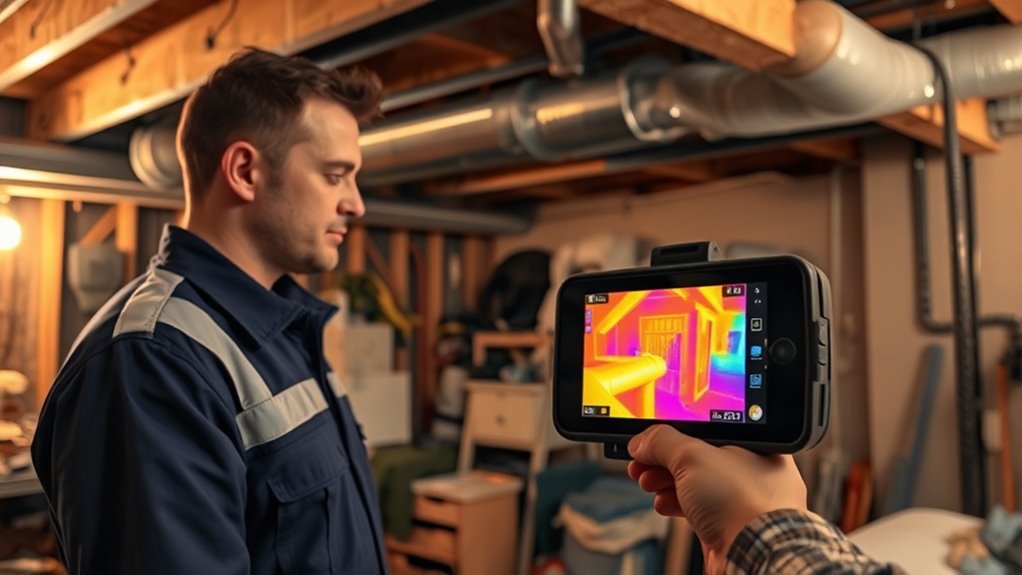
You can choose between professional and DIY energy audits, depending on your needs and budget. Professional audits often include advanced equipment and detailed analysis, while DIY methods rely on visual inspections you can do yourself. Understanding these options helps you decide which approach best fits your home and goals. Additionally, utilizing advanced data processing tools can enhance the accuracy of professional assessments.
Professional vs. DIY Audits
Choosing between a professional and a DIY home energy audit depends on your budget, skills, and the level of detail you want. A professional audit often offers a thorough analysis, with experts using specialized tools. You’ll benefit from their certification requirements, ensuring accurate results, but it comes at a higher cost comparison. DIY audits are budget-friendly and empower you to identify obvious issues, but they may lack the precision of a pro’s assessment. Consider these factors:
- Save money now, but risk missing hidden problems.
- Gain confidence with expert certification, or rely on your own skills.
- Achieve peace of mind knowing your home’s energy efficiency is thoroughly evaluated.
- Proper assessment techniques can help you identify areas for improvement more effectively.
Ultimately, your choice depends on how much you value detailed insights versus cost savings.
Visual Inspection Methods
Visual inspection is a fundamental step in home energy audits, whether conducted professionally or DIY. During this process, you look for visual clues like gaps around windows, doors, and outlets that may cause heat loss. Thermal imaging cameras can be especially helpful, revealing hidden issues such as insulation gaps or air leaks that aren’t obvious to the naked eye. By carefully examining walls, ceilings, and floors, you can identify areas where energy may be escaping. Observing the condition of vents, chimneys, and ductwork also provides insight into potential inefficiencies. This hands-on approach helps you prioritize which areas need sealing or upgrading. Combining visual clues with thermal imaging makes your inspection more thorough, giving you a clearer picture of your home’s energy performance. Additionally, inspecting for air leaks and evaluating ventilation systems can further improve your assessment.

Duck MAX Strength Window Insulation Kit, Winter Window Seal Kit Fits up to 5 Windows, Heavy Duty Shrink Film Cuts to Size for Easy Indoor Installation, Window Tape Included,62 In. x 210 In., Clear
Save on energy costs during cold weather months. Duck Max Strength shrink window film is puncture-resistant and two…
As an affiliate, we earn on qualifying purchases.
As an affiliate, we earn on qualifying purchases.
Preparing for Your Audit

Are you ready to get the most out of your home energy audit? Preparation is key. First, verify you schedule your appointment well in advance, so you’re ready when the technician arrives. Second, review safety precautions—clear clutter from around your utilities and ensure easy access to areas like the attic and basement. Third, gather recent utility bills to help identify patterns and potential problem areas. Taking these steps will make the process smoother and more effective. When scheduling, confirm the date and time, and ask about any specific safety protocols you should follow. Proper preparation reduces disruptions and allows the technician to conduct a thorough inspection. Additionally, understanding energy-efficient practices can help you implement recommended improvements after the audit. Get ready to gain valuable insights into your home’s energy use and start saving money today.
The Step-by-Step Process of an Energy Audit
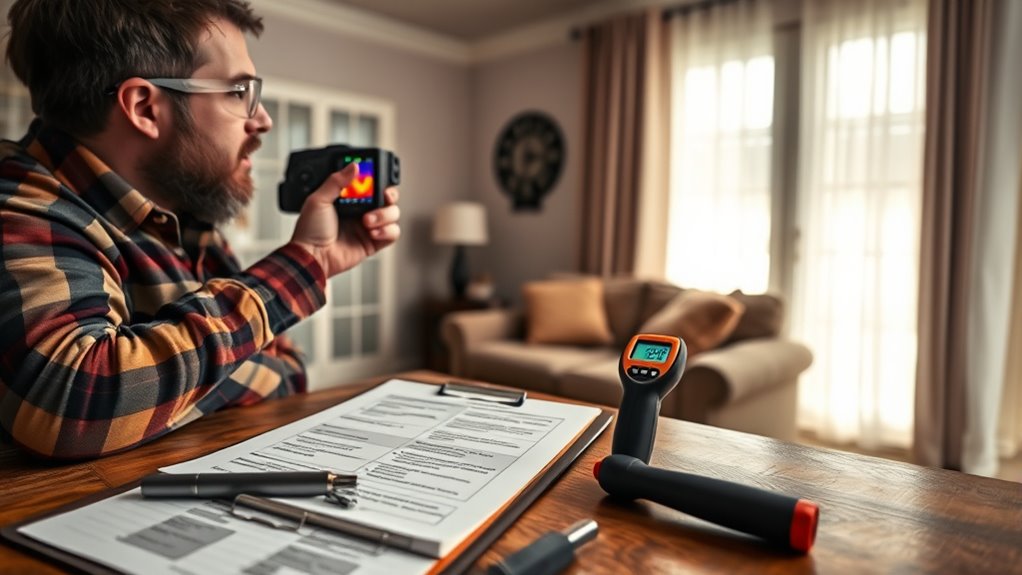
The step-by-step process of an energy audit guides you through identifying where your home wastes energy and how to fix it. First, a professional inspector conducts a thorough inspection, looking at insulation, windows, and HVAC systems. They may perform blower door tests to find leaks and assess air sealing needs. Next, they analyze utility bills to pinpoint areas of high energy consumption. This helps you understand potential energy savings and prioritize home upgrades. After collecting data, the auditor provides recommendations tailored to your home’s specific issues. These might include upgrading insulation, sealing leaks, or installing energy-efficient appliances. Additionally, understanding home energy systems can help you better interpret audit findings and implement effective solutions. Following this process, you’ll have a clear plan to improve home performance, reduce energy waste, and achieve meaningful energy savings over time.
Common Energy Loss Points in Homes

Many homes lose energy through common points that often go unnoticed. These leaks can markedly drive up your energy bills and reduce comfort.
- Insulation Gaps: Missing or damaged insulation allows heat to escape in winter and enter in summer, making your system work harder.
- Duct Leaks: Leaking ducts waste heated or cooled air, reducing efficiency and causing uneven temperatures.
- Unsealed Windows and Doors: Gaps around frames let air seep out, forcing your HVAC system to compensate constantly.
Addressing these issues can save you money and improve your home’s comfort. Regularly inspecting for insulation gaps and duct leaks ensures you catch problems early. Sealing these points keeps energy where it belongs—inside your home, not lost to the outside.
Identifying Cost-Effective Improvements

To maximize your energy savings without overspending, focus on identifying improvements that deliver the best return on investment. Prioritize cost-effective upgrades that reduce energy waste efficiently. Start by evaluating which improvements will yield the highest savings relative to cost. Use the table below to guide your improvement prioritization:
| Improvement | Cost Estimate | Expected Savings |
|---|---|---|
| Sealing leaks | Low | High |
| Upgrading insulation | Moderate | Significant |
| Installing programmable thermostat | Moderate | Moderate |
| Replacing old windows | High | Variable |
This table helps you target upgrades that balance cost and benefit, ensuring your efforts are both impactful and affordable. Focus on high-return, low-cost improvements first for quick, effective results. Additionally, considering electric bikes for commuting can reduce energy consumption associated with transportation.
Implementing Energy Efficiency Measures

- Upgrade your attic and wall insulation for maximum thermal protection.
- Switch to ENERGY STAR-rated appliances to save on energy bills.
- Seal gaps around windows and doors to prevent drafts and improve overall efficiency.
Benefits of Regular Energy Assessments
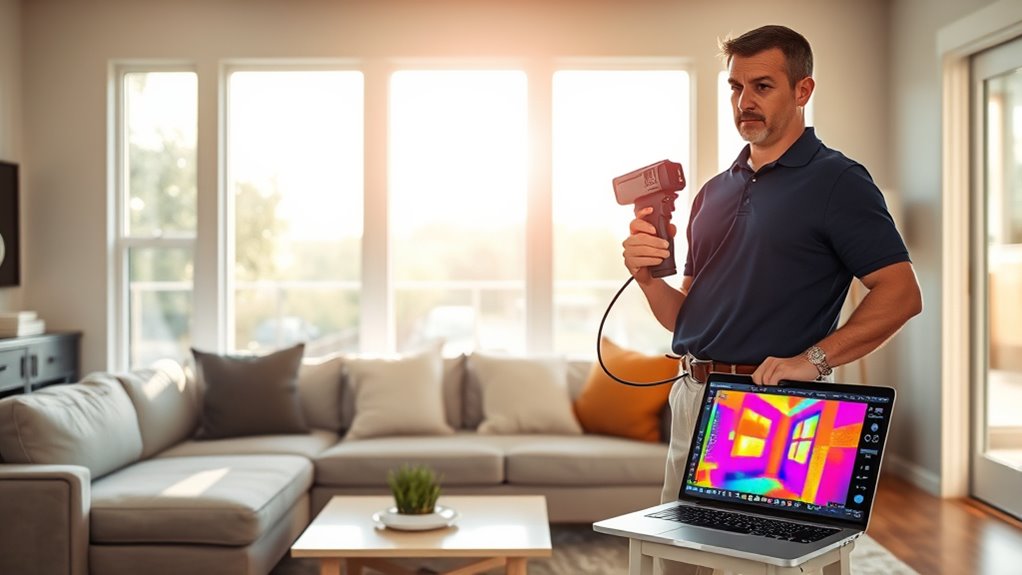
Regular energy assessments help you identify areas where your home can save more energy and reduce costs. By conducting these assessments regularly, you can uncover inefficiencies you might overlook otherwise. This not only boosts your energy savings but also helps you prioritize upgrades that deliver the best returns. Additionally, consistent evaluations support sustainability benefits by decreasing your home’s carbon footprint. Over time, they enable you to track the effectiveness of energy efficiency improvements and adapt your strategies accordingly. Staying proactive with assessments ensures your home remains energy-efficient, saving you money and contributing to environmental conservation. Ultimately, regular energy assessments empower you to make informed decisions, maximize savings, and enjoy the long-term benefits of a more sustainable home.
Frequently Asked Questions
How Often Should I Schedule a Home Energy Audit?
You should schedule a home energy audit every 3 to 5 years to maximize energy savings. Regular audits help you identify new issues and track improvements, ensuring your home stays efficient. If you’ve recently made upgrades or notice higher energy bills, consider more frequent audits. Staying consistent with your audit frequency allows you to catch problems early, optimize energy use, and save money on utility costs over time.
Can I Perform a Basic Energy Audit Myself?
Yes, you can perform a basic energy audit yourself by doing a DIY assessment. Start by checking for drafts around windows and doors, inspecting insulation, and reviewing your energy bills. Use simple tools like a flashlight and a candle to detect leaks. Implement energy saving tips such as sealing leaks and upgrading insulation. While a professional audit provides detailed insights, your DIY efforts can still help improve your home’s energy efficiency.
What Is the Average Cost of a Professional Energy Audit?
You’d be surprised how affordable a professional energy audit can be—usually around $300 to $500, making it a worthwhile investment for your wallet and comfort. Ironically, this cost estimation helps you plan your budget better, avoiding surprises later. While it might seem like a splurge, the insights gained can save you hundreds in energy bills, turning a small expense into long-term savings and smarter home management.
Are There Government Incentives for Home Energy Audits?
Yes, you can often access government rebates and tax credits for home energy audits. These incentives aim to encourage energy efficiency improvements and can substantially reduce your costs. Check with your local or federal programs, as they regularly update offers. By taking advantage of these rebates and tax credits, you save money while making your home more energy-efficient. Don’t forget to keep documentation for future claims!
How Long Does a Typical Home Energy Audit Take?
Typically, a home energy audit takes about 2 to 4 hours. For example, if you schedule an audit, you can expect the process to include a thorough home inspection time, during which the auditor assesses insulation, HVAC systems, and air leaks. The audit duration depends on your home’s size and complexity. You’ll find that most audits are completed efficiently, leaving you with valuable insights to improve energy efficiency.
Conclusion
Regular home energy audits can save you up to 30% on energy costs each year. By identifying and fixing inefficiencies, you not only cut expenses but also reduce your environmental impact. Don’t wait—schedule an audit today and start enjoying a more comfortable, cost-effective home. Remember, staying proactive with energy assessments helps guarantee your home runs efficiently and keeps your bills in check. Your smarter, greener home is just an audit away!