To effectively dry clothes indoors, choose a well-ventilated space near windows or doors to promote airflow. Use durable, rust-resistant clotheslines or racks, and secure clothes with clips or clothespins. Enhance circulation with fans or dehumidifiers, and monitor humidity levels to prevent mold. Spin clothes thoroughly before hanging, and space garments evenly for faster drying. Keep your setup clean and maintained to guarantee safety and efficiency—continue exploring for more helpful tips.
Key Takeaways
- Select a well-ventilated area near windows or vents to ensure good airflow and reduce humidity.
- Use durable, rust-resistant clotheslines and secure clothes with clips or pins for stability.
- Enhance airflow with fans and promote cross-ventilation by opening windows or doors during drying.
- Spin garments thoroughly, shake out wrinkles, and turn delicate items inside out before hanging.
- Regularly clean and inspect drying equipment to prevent odors, mold, and ensure safety.
Choosing the Right Space for Indoor Air-Drying
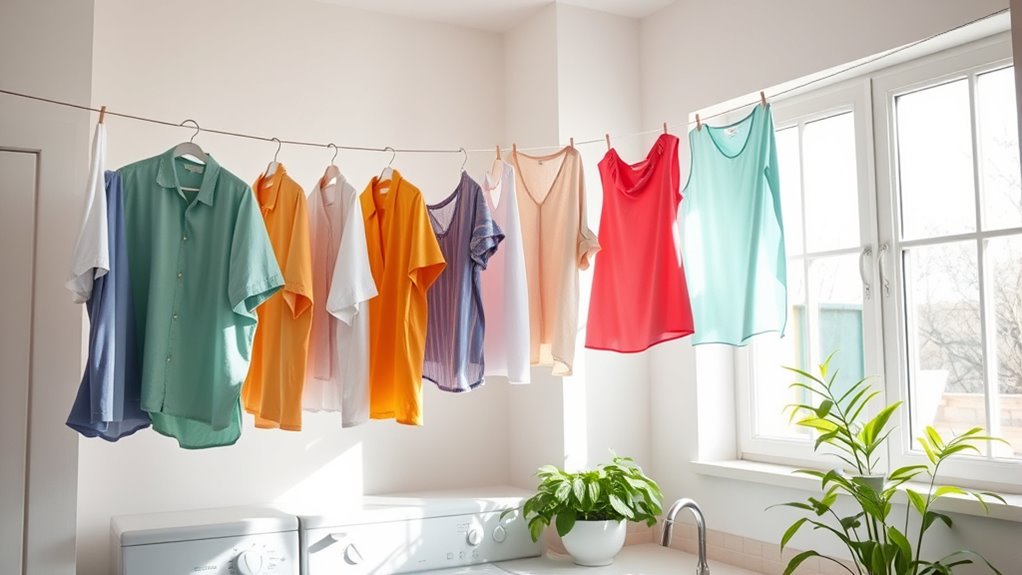
Choosing the right space for indoor air-drying is essential to guarantee your clothes dry efficiently and prevent issues like mold or musty odors. Start by considering a spot with good space selection—enough room for clothes to hang without overcrowding. Look for areas with ample ventilation options, such as near windows, vents, or doors that can be opened to promote airflow. Avoid cramped corners or areas with poor circulation, as stagnate air slows drying and encourages mold growth. Ideally, pick a space where you can control humidity and airflow, ensuring moist air escapes and fresh air enters. Proper space selection with adequate ventilation options helps your clothes dry faster and keeps your indoor environment fresh and mold-free. Additionally, ensuring proper air circulation can significantly improve drying times and prevent dampness.
Selecting the Best Drying Equipment and Accessories
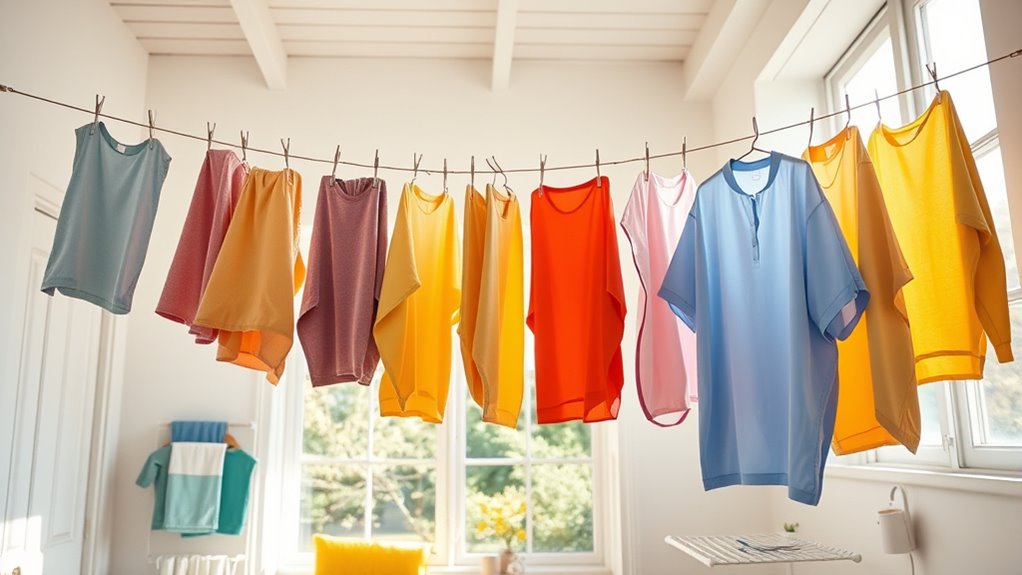
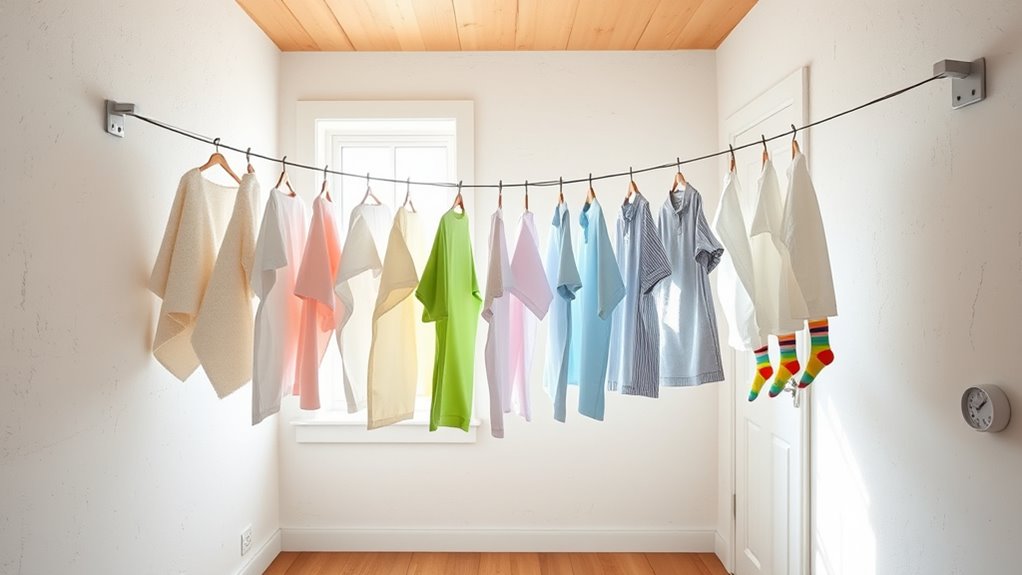
Once you’ve identified the ideal space for indoor drying, selecting the right equipment and accessories can make a significant difference in how efficiently your clothes dry. Start by choosing a suitable clothesline material, such as stainless steel for durability, nylon for flexibility, or retractable lines for versatility. Consider hanging accessories like adjustable hooks, clothespins, or clips to secure garments firmly and prevent slipping. These accessories help maximize space and keep clothes organized. Look for rust-resistant and easy-to-clean options to ensure longevity and hygiene. Properly chosen equipment reduces drying time and minimizes wrinkles. Additionally, selecting dog breed-inspired accessories can add a touch of personality and fun to your drying setup. With the right clothesline material and accessories, you’ll create an effective drying setup that’s both practical and efficient, making indoor clothes drying a hassle-free routine.
Preparing Your Clothes for Optimal Drying
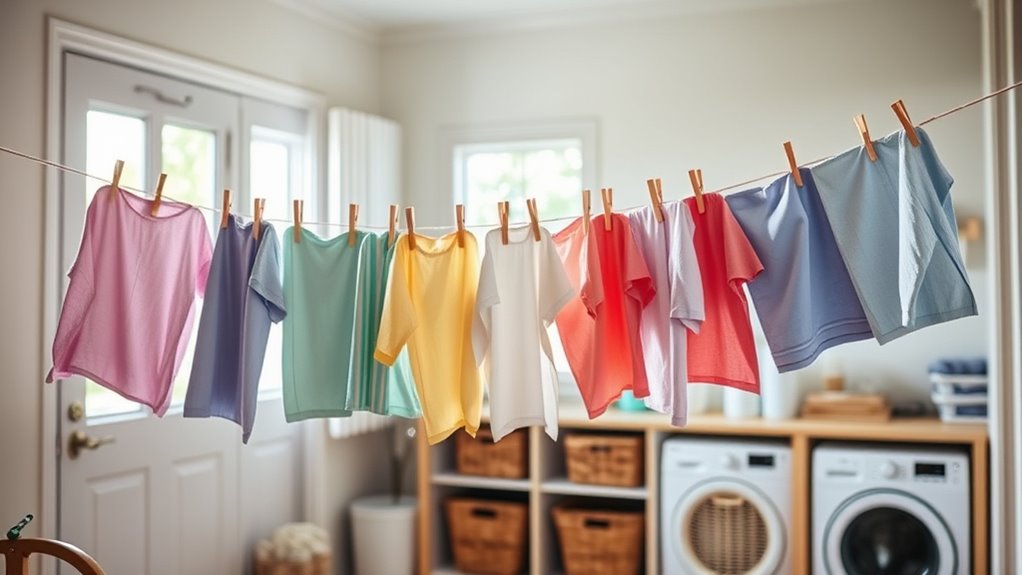
Start by spinning your wet garments to remove excess water, which helps them dry faster. Shake out wrinkles thoroughly to improve airflow and reduce creases once hung. Choose clothing items that are suitable for indoor drying to guarantee the best results. Utilizing professional equipment such as portable fans can further enhance the drying process.
Properly Spin Wet Garments
Before hanging your clothes to dry indoors, it’s important to spin out as much water as possible. Use the spin cycle on your washing machine to maximize water extraction, which helps your clothes dry faster and reduces indoor humidity. A well-balanced spin cycle efficiently removes excess water without damaging fabrics. If your machine has adjustable spin speed, opt for the highest setting suitable for your garments. For delicate items, use a gentler cycle to prevent stretching or damage. Proper spinning minimizes residual moisture, making indoor drying more efficient and less time-consuming. Remember, the better you spin out water, the less moisture your clothes will hold, leading to quicker drying and less indoor humidity buildup. Incorporating a high-quality spin cycle technology can further improve water removal and overall drying efficiency.
Shake Out Wrinkles Thoroughly
To guarantee your clothes dry smoothly and evenly, it’s essential to shake out wrinkles thoroughly before hanging them up. This step helps with wrinkle removal and fabric smoothing, ensuring your garments dry flat and neat. Gently lift each piece and give it a few firm shakes to loosen any creases. Focus on areas prone to wrinkling, like the shoulders, sleeves, and hems. Properly shaking out your clothes reduces the need for later ironing and prevents unnecessary creases from setting in during drying. This simple action promotes even drying and keeps your clothes looking fresh. Taking a moment to smooth out fabric before hanging not only improves the appearance but also speeds up the drying process by reducing trapped moisture in deep folds. Additionally, understanding clothing care can help you choose the best drying methods to preserve your garments’ quality over time.
Select Appropriate Clothing Items
Choosing the right clothing items for indoor drying guarantees they dry efficiently and maintain their shape. Start by selecting fabric types that dry quickly, like cotton or polyester blends, and avoid heavy or thick materials such as wool or towels, which take longer and may stretch. Consider weather considerations—if it’s humid or cold outside, opt for lighter fabrics to reduce drying time indoors. Check labels for specific care instructions, and turn delicate or easily wrinkled items inside out to prevent damage. Lighter fabrics tend to dry faster and better retain their form, making them ideal for indoor clothesline drying. Properly selecting your clothes ensures a smoother drying process and helps your garments stay in great condition.
Maximizing Air Circulation to Speed Up the Process

Maximizing air circulation is key to drying clothes indoors more quickly. To achieve this, focus on airflow optimization by positioning your clothesline in a well-ventilated area. Use ventilation techniques like opening windows or doors to encourage fresh air movement. Placing a fan nearby can also enhance airflow, helping moisture escape faster. Avoid overcrowding your drying space, as this restricts air movement and slows the process. Keep the room well-ventilated to facilitate continuous air exchange. If possible, create cross-ventilation by opening multiple windows or vents on opposite sides of the room. These strategies improve air circulation, reducing drying time and preventing musty odors. Proper airflow not only speeds up drying but also maintains your clothes’ freshness and overall indoor air quality. Additionally, incorporating self watering plant pots into your space can help regulate humidity levels, preventing excess moisture that can hinder drying.
Managing Humidity and Preventing Mold
Since high humidity levels can slow down drying and promote mold growth, managing indoor moisture effectively is vital. To control moisture, ensure good ventilation by opening windows or using vents during and after drying clothes. Using a hygrometer helps you monitor humidity levels, keeping them below 60% for mold prevention. Avoid drying clothes in damp or poorly ventilated areas, as excess moisture creates ideal conditions for mold. Wiping down surfaces and fixing leaks also help reduce excess humidity. If you notice a musty odor or visible mold, address it immediately with cleaning solutions designed for mold removal. Proper moisture control keeps your indoor environment healthy, speeds up clothes drying, and prevents mold from taking hold. Incorporating comfort solutions for interior spaces can further enhance air circulation and reduce humidity levels.
Utilizing Fans and Dehumidifiers Effectively

To dry clothes efficiently indoors, you need to position fans where they can circulate air without blowing directly on wet fabrics. Adjust your dehumidifier settings to maximize moisture removal without overworking the unit. Proper placement and settings make a noticeable difference in speeding up drying and preventing excess humidity. Incorporating automation technology can further optimize the drying process by monitoring humidity levels and adjusting device settings automatically.
Optimal Fan Placement
Have you ever wondered how the right fan placement can speed up indoor drying? Proper fan placement is key to airflow optimization, ensuring warm air circulates evenly around your clothes. Position fans so they direct airflow across the drying area without blowing directly onto wet fabrics, which can cause uneven drying or wrinkles. Placing a fan slightly above or to the side of your clothesline helps promote gentle, consistent airflow. Avoid blocking vents or windows that allow fresh air in, as good ventilation aids drying. Experiment with angles and distances to find the most effective setup for your space. When airflow is optimized, moisture evaporates faster, reducing drying time and minimizing musty odors. Proper fan placement makes a noticeable difference in indoor clothes drying efficiency. Effective airflow also helps prevent the buildup of excess humidity, which can otherwise prolong drying times.
Dehumidifier Settings
Adjusting your dehumidifier settings is essential for efficient indoor clothes drying, especially when used with fans. First, set your dehumidifier to a humidity level around 50-60%, which balances moisture removal and energy use. This humidity control prevents excess dampness that can slow drying or promote mold growth. Make certain your dehumidifier’s capacity matches the room size; a larger capacity is better for bigger spaces to maintain consistent humidity levels. Keep your unit running continuously or on a high setting during drying periods for ideal results. Using fans in conjunction with the dehumidifier helps circulate air and speed up evaporation. Regularly monitor humidity levels with a hygrometer to adjust your dehumidifier settings accordingly, ensuring your clothes dry quickly and thoroughly indoors. Recognizing soulmate angel numbers can also provide motivational energy and positive vibes during your drying process.
Timing Your Drying Sessions for Efficiency
Timing your indoor drying sessions carefully can make a significant difference in how quickly your clothes dry and how efficiently you use your space. To do this, establish effective timing techniques that align with your daily routine and environmental conditions. Create consistent drying schedules by choosing ideal times when humidity is lower and airflow is better—typically during mornings or early afternoons. Avoid starting a drying session during peak humidity or right after showering, as excess moisture hampers evaporation. Monitor your clothes and adjust your schedule as needed, ensuring they aren’t left too long or taken down too early. By planning your drying times thoughtfully, you maximize drying speed and preserve fabric quality while making the most of your indoor space.
Maintaining Your Indoor Drying Setup
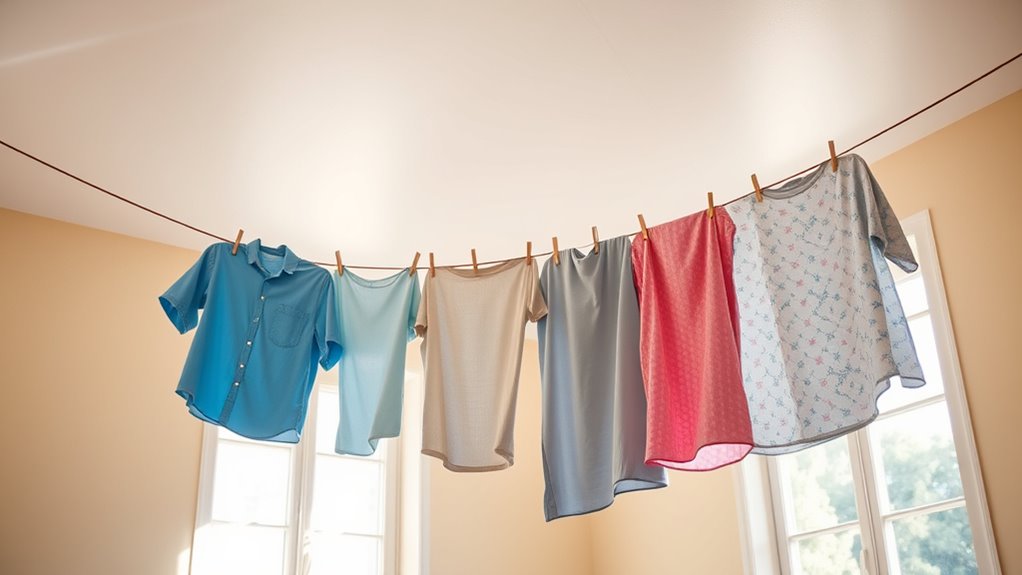
To keep your indoor drying setup effective, regular maintenance is essential. Start by ensuring your space has adequate indoor lighting, which helps clothes dry evenly and prevents musty odors. Check that your drying area has good ventilation to reduce humidity and speed up the process. Pay attention to wall color choices; lighter shades reflect more light, brightening the space and making it easier to monitor drying progress. Keep your drying lines or racks clean and free of dust or lint, which can transfer to clothes. Inspect hooks, pulleys, and supports regularly for wear or damage, replacing parts when necessary. Maintaining a tidy, well-lit, and ventilated environment will prolong your setup’s efficiency and keep your clothes fresh and dry.
Incorporating Drying Racks and Line Systems Seamlessly
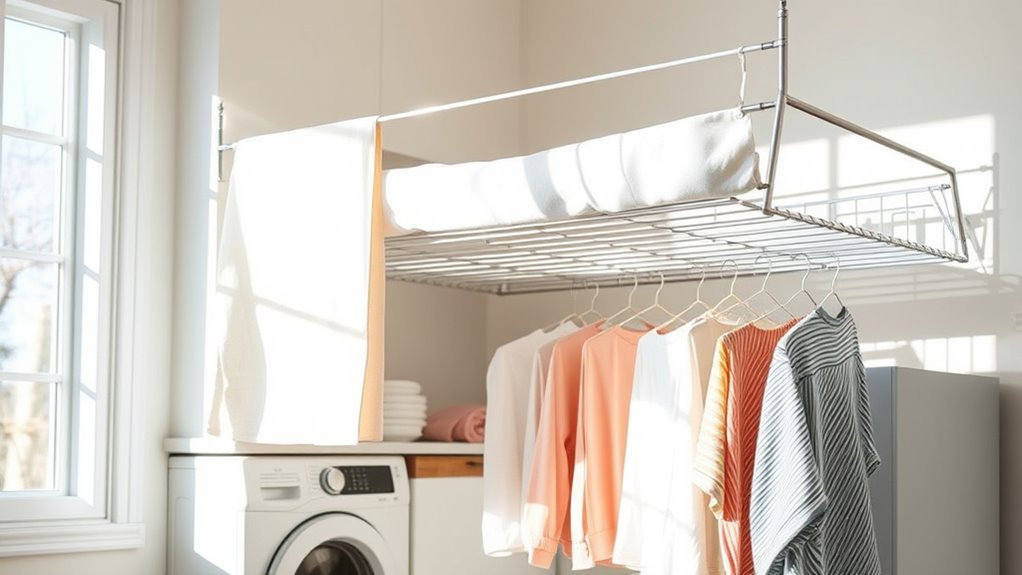
Incorporating drying racks and line systems into your indoor space can enhance drying efficiency without compromising room aesthetics. To blend functionality with style, choose clothesline aesthetics that complement your decor. Consider retractable lines or foldable racks to save space when not in use. Regular drying rack maintenance ensures longevity and prevents musty odors. Here’s a quick guide:
| Feature | Benefit | Maintenance Tip |
|---|---|---|
| Retractable Clothesline | Keeps laundry accessible and hidden | Check for slack and clean lines |
| Foldable Drying Racks | Easy to store, versatile for different loads | Wipe with damp cloth regularly |
| Wall-mounted Systems | Maximize space, blend with walls | Inspect hooks and tighten screws |
Seamlessly integrating these systems keeps your indoor laundry neat, efficient, and visually pleasing.
Frequently Asked Questions
How Do I Prevent Clothes From Developing Odors Indoors?
To prevent odors when drying clothes indoors, guarantee good airflow around your drying racks and avoid overcrowding. Use fabric softeners to keep clothes smelling fresh, and regularly clean your drying racks to prevent musty smells. Ventilate your space by opening windows or using a fan, and don’t leave damp clothes sitting too long. These steps help keep your laundry smelling clean and fresh indoors.
Can Indoor Drying Damage Delicate Fabrics?
Like a Victorian artist, you might worry about indoor drying damaging delicate fabrics. Rest assured, if you hang items properly, you avoid fabric stretching and color fading. Use a gentle hanger or lay fabrics flat, and keep them out of direct heat or sunlight. This careful approach prevents damage, ensuring your delicate garments stay vibrant and intact, just as the old masters preserved their masterpieces.
What Are Eco-Friendly Alternatives to Electric Drying Aids?
You can choose eco-friendly alternatives like solar drying and air drying racks instead of electric drying aids. Solar drying uses natural sunlight to dry clothes outdoors or in a sunny indoor space, reducing energy consumption. Air drying racks are versatile and energy-free, perfect for indoor or outdoor use. Both options help you save electricity, lower your carbon footprint, and are gentle on delicate fabrics, making them sustainable choices for eco-conscious drying.
How Often Should I Clean My Drying Equipment?
You should clean your drying equipment regularly to keep it in top shape. For clothesline maintenance, wiping down the lines and pulleys every few months prevents buildup and guarantees smooth operation. This simple routine helps extend the drying equipment’s longevity, saving you money and hassle in the long run. Think of it as a gentle refresh for your setup, keeping everything performing beautifully and your laundry fresh and breezy.
Is It Safe to Dry Clothes Indoors Overnight?
Drying clothes indoors overnight can be safe if you control humidity and choose the right drying rack placement. Make sure to keep your space well-ventilated and avoid excessive humidity, which can cause mold. Place your drying rack in a well-ventilated area, ideally near a window or fan. This helps moisture escape and prevents dampness, ensuring your clothes dry safely and your indoor air stays fresh.
Conclusion
Think of your indoor drying space as a sanctuary where clothes find new life, airy and free from the chaos of the outside world. With the right setup and care, you create a gentle breeze that whispers freshness into every thread. As you master humidity and airflow, your laundry transforms into a calm, steady river flowing smoothly to completion. Embrace this process, and let your space become a haven of renewal for your clothes and peace of mind.