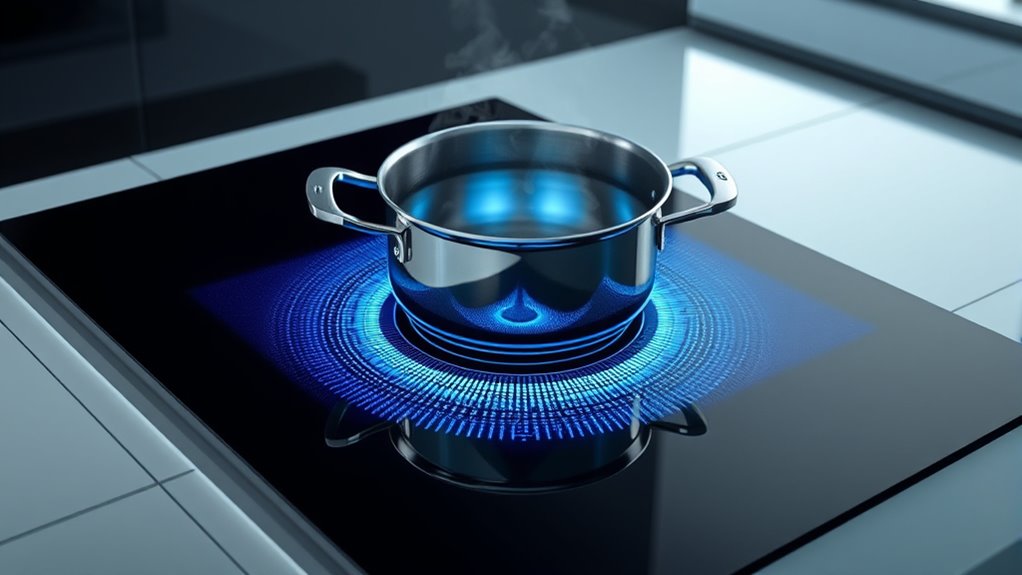

Induction cooking works by generating electromagnetic fields through a copper coil beneath the ceramic surface. When you place magnetic cookware like cast iron or stainless steel on it, these fields induce eddy currents in the metal, producing heat directly in the cookware. This method heats faster, offers precise control, and is energy-efficient. To understand the detailed science behind how magnetic fields create heat and why compatible cookware matters, keep exploring further.
Key Takeaways
- Induction cooking uses magnetic fields generated by a copper coil to heat ferromagnetic cookware directly.
- Magnetic flux induces eddy currents in the cookware, producing heat through electrical resistance.
- Only cookware made of magnetic materials like cast iron or certain stainless steels is compatible.
- The ceramic glass surface stays relatively cool, with heat generated directly in the cookware for efficiency and safety.
- Induction offers precise temperature control, faster cooking times, and energy savings compared to traditional methods.

VEVOR Smart Electric Curtain Track, 71-118 inch Adjustable Length, Motorized Rod with Remote, Ceiling and Wall Mount, Automated Curtain Track System Compatible with Alexa, Google Home, App Control
No Customization Needed: Upgrade to a dual-sided smart electric curtain track with a telescopic design that fits any...
As an affiliate, we earn on qualifying purchases.
The Basics of Electromagnetic Induction
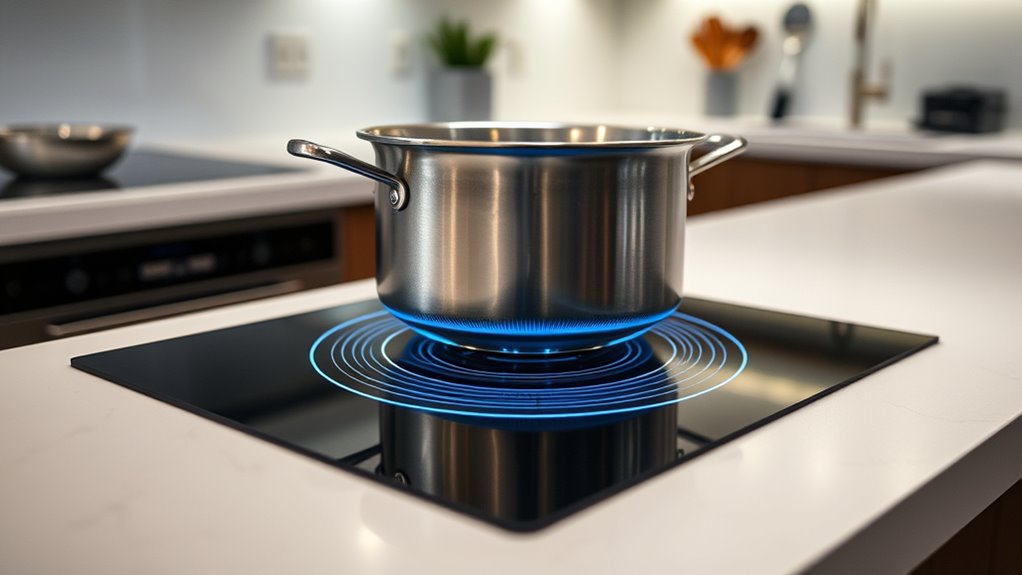
Electromagnetic induction is the principle that powers induction cooking, and it works by generating a magnetic field that directly heats your cookware. This process requires cookware compatibility; only pots and pans made of ferromagnetic materials, like cast iron or certain stainless steels, will work effectively. When you use compatible cookware, the induction cooktop creates an efficient transfer of energy, making your cooking faster and more precise. Because heat is generated directly in the cookware rather than through an intermediary, induction cooking offers superior energy efficiency. You’ll notice less heat loss and quicker response times, saving electricity and reducing your energy bills. Ensuring your cookware is compatible maximizes these benefits, allowing you to enjoy a more efficient and controlled cooking experience and optimizing energy transfer.
Quoya QL500 Smart Curtains System, Electric Curtain Track with Automated Rail【Motorized and Adjustable Tracks/Rod/Pole (up to 7 metres / 275 inches)】【Motor compatible with Alexa】
【QUOYA Smart Electric Curtain Range】 Tailored for every home and lifestyle: 1. ❮QL500 offers powerful, heavy-duty performance with...
As an affiliate, we earn on qualifying purchases.
Components of an Induction Cooktop
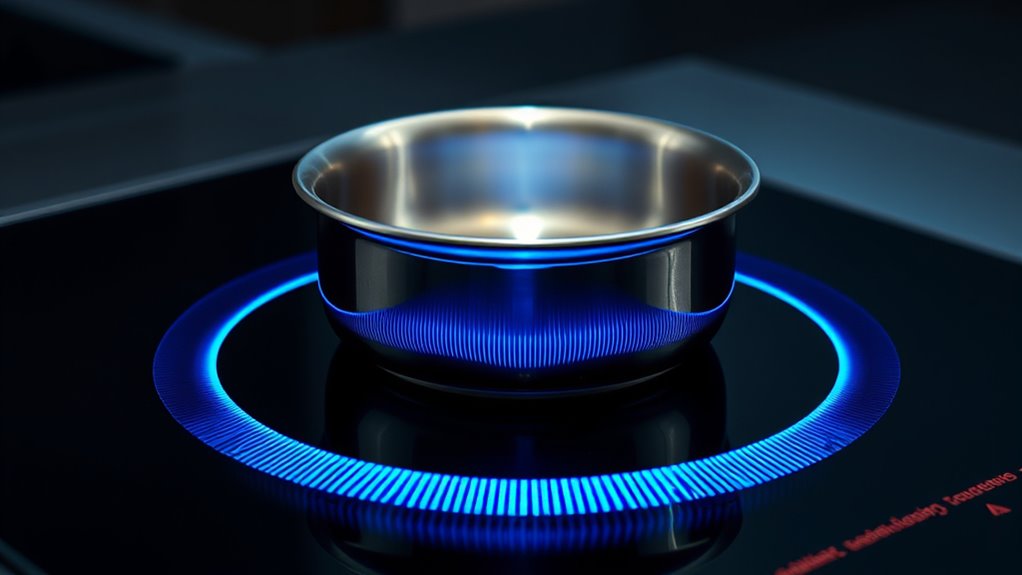
You’ll notice the heating element structure is designed to generate magnetic fields that heat pots directly. The control panel features intuitive buttons and displays to adjust settings easily. Together, these components make your cooking experience efficient and straightforward. Additionally, some induction cooktops incorporate performance upgrades that enhance heating speed and energy efficiency.
Heating Element Structure
The heating element structure in an induction cooktop primarily consists of a copper coil and a ceramic glass surface. The copper coil generates a magnetic field when powered by an electrical supply, creating the heat directly in your cookware. Beneath the coil, a ceramic coating provides insulation and durability, protecting the internal components and guaranteeing safety. The ceramic surface not only resists scratching and staining but also helps distribute heat evenly. The power supply delivers controlled electrical energy to the coil, which then produces the electromagnetic field necessary for induction heating. This design ensures efficient energy transfer and quick response times. By combining these components, the heating element structure provides the foundation for precise, rapid, and safe cooking. Additionally, understanding the divine love signals can help users connect spiritually with their cooking experience, promoting mindfulness and positive energy in the kitchen.
Control Panel Features
The control panel of an induction cooktop brings together various components that enable precise and convenient operation. You’ll find touchscreen controls that allow you to adjust heat levels, set timers, and switch functions effortlessly. These controls respond quickly to your touch, providing a smooth user experience. The digital display shows important information such as current heat settings, cooking time, and any error messages, helping you monitor your cooking at a glance. Some models also include additional features like lock buttons for safety or quick-start options. Overall, the control panel simplifies your cooking process with intuitive controls and clear feedback. By understanding these components, you can optimize your use of the induction cooktop for efficient and safe cooking sessions. Incorporating industry trends into your knowledge can help you stay updated on the latest features and innovations in induction technology.

Motorized Curtain Track Kit with Remote & Smartphone App - Compatible with Alexa & Google Home, DIY Electric Curtain Rod for Smart Home, White, 7-14ft Adjustable Length, 88lbs Capacity
Intelligent Control: This product can realize voice, APP, and RF remote control through WIFI, and it has a...
As an affiliate, we earn on qualifying purchases.
How Magnetic Fields Generate Heat
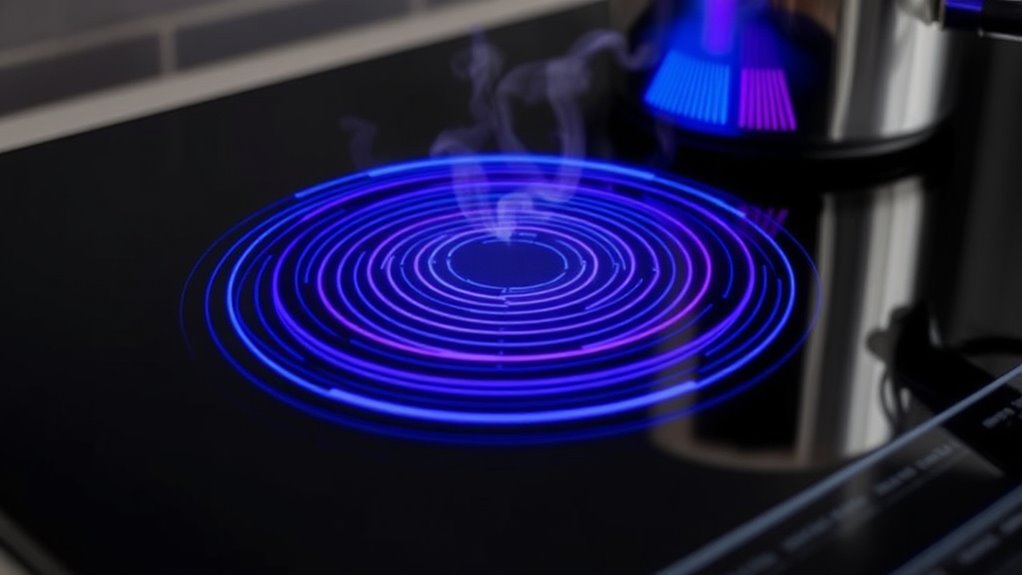
When you turn on an induction cooktop, an electric current creates a magnetic field beneath the surface. This magnetic field induces eddy currents in the cookware, causing it to heat up rapidly. As a result, heat is generated directly in the pan, making your cooking efficient and precise. Proper cookware with magnetic properties is essential for optimal performance.
Magnetic Field Creation
Magnetic fields are at the heart of induction cooking, creating heat through rapid electromagnetic interactions. When the cooktop’s coil is energized, it produces a changing magnetic flux that penetrates the cookware. This magnetic flux generates electromagnetic forces within the ferromagnetic material, causing the electrons to move quickly. These moving electrons create localized electrical currents—called eddy currents—that produce heat directly in the cookware. The strength and stability of the magnetic field are vital, as they determine how effectively heat is transferred. The rapid oscillations of the magnetic field ensure consistent, precise heating. By manipulating the magnetic flux, induction cooktops can deliver quick response times and energy efficiency, making them a modern and effective way to cook using electromagnetic principles. Additionally, the technology’s efficiency is partly due to its WWE Raw’s Financial Impact, which highlights the significant revenue generated from advanced entertainment and technology sectors.
Eddy Currents Formation
Have you ever wondered how magnetic fields directly produce heat in induction cooking? It all starts with magnetic flux passing through the cookware. When the induction cooktop activates, its changing magnetic field induces electrical currents within the metal. These are called eddy currents, which flow in loops inside the cookware’s material. As these currents move through the resistive metal, they generate heat due to electrical resistance. This process efficiently converts magnetic energy into thermal energy right where you need it. The strength of the magnetic flux influences the size and intensity of the eddy currents, directly affecting how much heat is produced. By controlling the magnetic flux, induction cooktops can precisely and rapidly heat cookware, making the process highly efficient and responsive. magnetic flux plays a critical role in the effectiveness of this heating method.
Rapid Heat Generation
Ever wonder how induction cooktops heat up so quickly? It all comes down to rapid heat generation through magnetic fields. When you turn on the stove, an alternating magnetic field creates energy transfer directly into the cookware. This process causes electrical currents—like eddy currents—that generate heat efficiently within the pan itself. Because the heat is produced directly in the cookware, heat efficiency is maximized, and wasted energy is minimized. Additionally, induction heating enables precise temperature control, allowing for more accurate cooking. Unlike traditional methods, induction cooking delivers instant, precise heat control, allowing you to cook faster and more effectively. This rapid heat generation guarantees your food heats evenly and swiftly, making your cooking experience more responsive and energy-efficient.

Umimile Smart Electric Curtain Track, Motorized Curtain Track System, 70.8-129 inch Adjustable Length, App/Remote Control, Compatible with Alexa, Google Home, for Ceiling and Wall Mount
【Premium Durable Aluminum】Crafted from thickened, corrosion-resistant aluminum alloy, our track ensures incredibly smooth and stable operation. Confidently supports...
As an affiliate, we earn on qualifying purchases.
The Role of Cookware in Induction Cooking
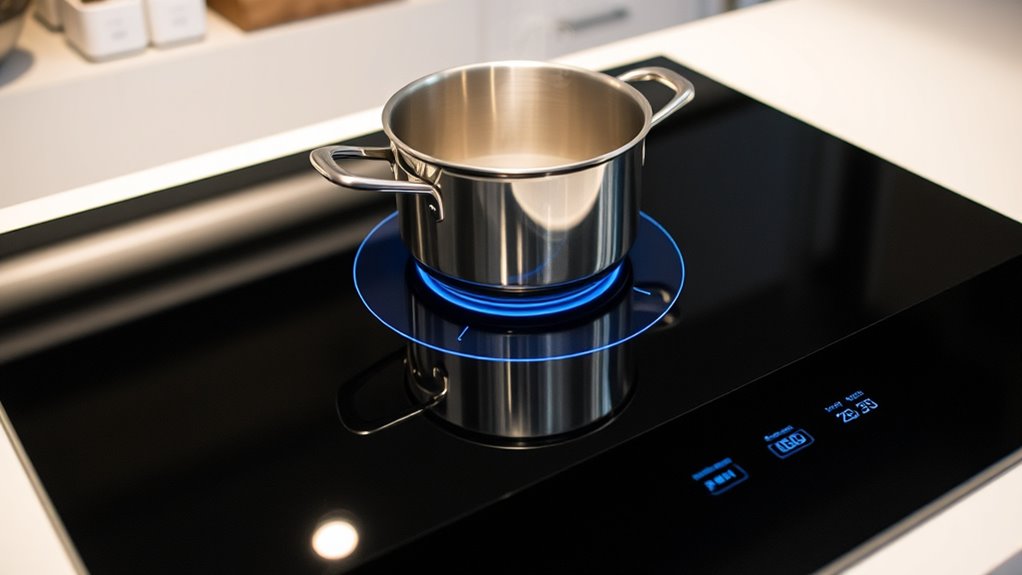
What makes cookware essential in induction cooking is its ability to efficiently transfer heat directly from the cooktop to the food. This depends largely on cookware compatibility, specifically whether it’s made of magnetic material. To guarantee proper heating, you need to select magnetic cookware, such as cast iron or stainless steel with a magnetic base. Non-magnetic pots and pans, like aluminum or glass, won’t work because they don’t create the necessary electromagnetic field. When choosing cookware, always check for a magnetic layer or test with a magnet. Proper magnetic cookware selection assures even heat distribution and maximum performance. Additionally, relationship skills like active listening and empathy can enhance your understanding of the cookware’s performance and your overall cooking experience. Remember, using incompatible cookware can lead to poor heating, energy waste, and frustration during your cooking process.
Advantages Over Traditional Cooking Methods
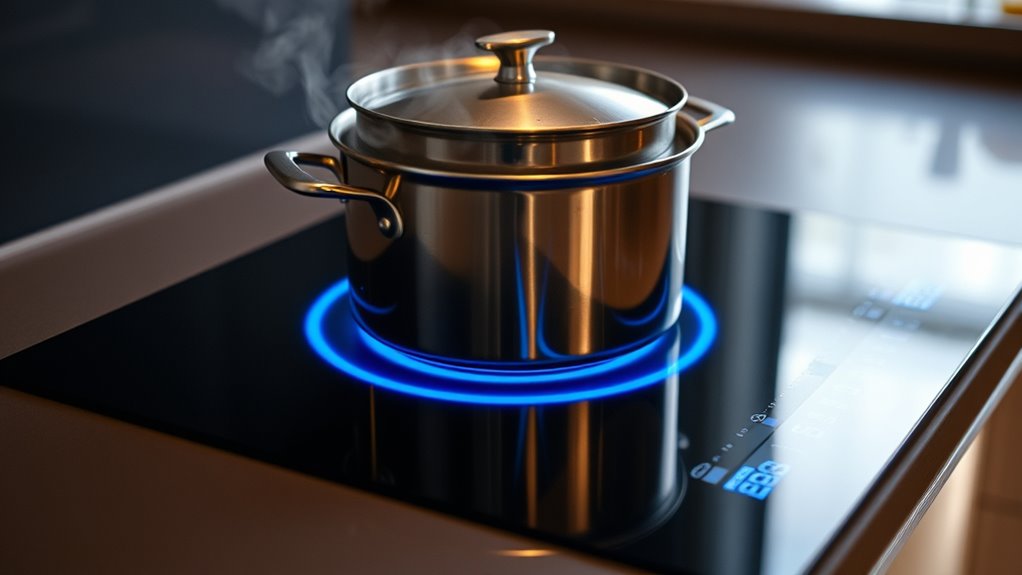
Induction cooking offers several advantages over traditional methods, primarily due to its efficiency and speed. You’ll notice it uses less energy because it directly heats your cookware through electromagnetic fields, reducing wasted heat. This energy efficiency means quicker cooking times and lower utility bills. Additionally, induction stoves provide exceptional cooking precision; you can easily adjust the heat instantly, giving you better control over your dishes. Unlike gas or electric stoves, induction surfaces respond immediately to your settings, preventing overheating or undercooking. This precise temperature control helps you achieve consistent results and enhances your overall cooking experience. Overall, induction cooking saves time, conserves energy, and offers greater control, making it a superior choice for modern kitchens.
Safety Features of Induction Stoves
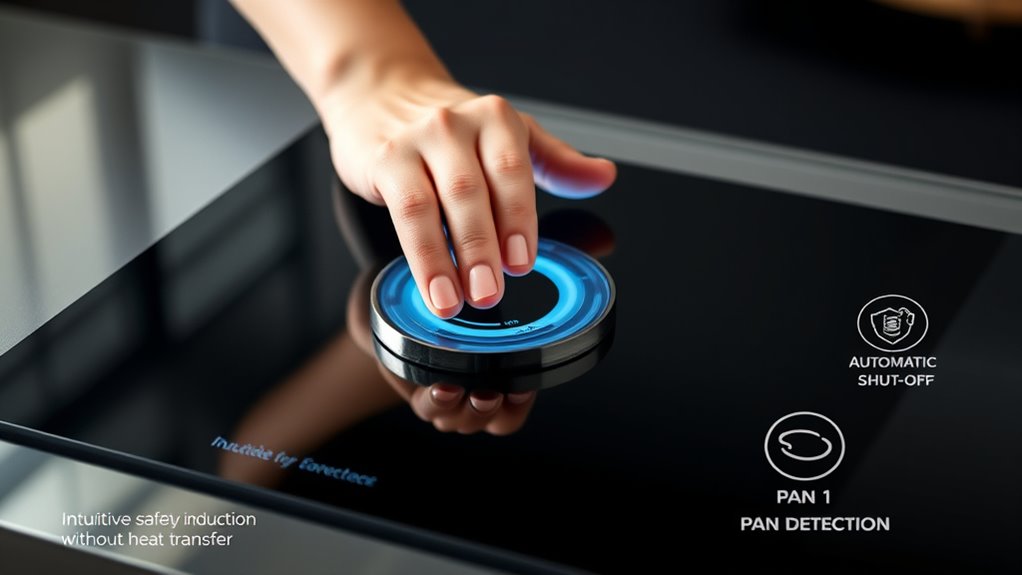
One of the key safety features of induction stoves is that they only heat cookware when it’s directly in contact with the surface and actively powered. This design minimizes the risk of accidental activation, making it safer for households with children. If you accidentally touch the stove during operation, you’ll notice that the surface remains relatively cool, reducing burn hazards. Many induction stoves also include child safety locks, preventing children from turning on or changing settings without your permission. Additionally, the stove automatically shuts off when cookware is removed, ensuring no heat remains active unintentionally. Understanding city dynamics can also help prevent accidents by being aware of appliance placement and usage patterns. These features work together to provide peace of mind, especially in busy kitchens, by preventing accidental injuries and promoting safe cooking practices.
Common Misconceptions About Induction Technology

Many people believe that induction cooking is only suitable for experienced chefs or that it requires specialized, expensive cookware. In reality, cookware compatibility is broader than you might think; many common pots and pans work with induction stoves, including stainless steel and cast iron. Some assume induction isn’t energy efficient, but it actually heats faster and uses less energy compared to traditional methods. You don’t need to buy costly, purpose-built cookware to enjoy its benefits. Misconceptions also include concerns about safety or difficulty in use, but induction technology is safe, with features like automatic shut-off and cool-to-touch surfaces. Understanding these facts helps you see that induction cooking is accessible, cost-effective, and compatible with most kitchen setups.
Frequently Asked Questions
Can Induction Cooktops Be Used Outdoors or in Non-Kitchen Environments?
Yes, you can use induction cooktops outdoors or in non-kitchen environments. Look for models with outdoor durability features like weather-resistant surfaces and sturdy builds. Portable options are ideal, letting you easily move them to picnics, camping, or other outdoor settings. Just make certain you have a reliable power source and a flat, stable surface. With the right choice, induction cooking becomes convenient and safe outside your usual kitchen space.
How Does Power Consumption of Induction Cooking Compare to Gas or Electric Methods?
You’ll find that induction cooking is more energy-efficient than gas or traditional electric methods because it uses direct magnetic heat transfer, reducing wasted energy. In a power comparison, induction consumes less electricity for the same cooking tasks, saving you money and reducing your carbon footprint. So, if you’re looking for a more efficient and eco-friendly option, induction cooking outperforms gas and electric alternatives in energy efficiency and power use.
Are There Specific Recipes That Don’T Work Well With Induction Cooking?
Some recipes may not work well with induction cooking due to cookware compatibility or the need for recipe adaptation. You might find that dishes requiring traditional non-magnetic cookware, like certain copper or aluminum pots, won’t perform well. Additionally, recipes needing precise heat control or slow simmering may require adjustments. To guarantee success, check your cookware’s compatibility and adjust cooking techniques as needed for specific recipes.
What Maintenance or Cleaning Is Required for Induction Cooktops?
Did you know that regular cleaning routines can extend your induction cooktop’s lifespan by up to 30%? You should clean your cooktop daily with a soft cloth and gentle cleaner to prevent residue buildup. For maintenance tips, avoid abrasive scrubbers and always unplug before cleaning. Wiping spills immediately and using suitable cleaners will keep your surface shiny and functioning efficiently, ensuring safe, trouble-free cooking.
Are Induction Cooktops Compatible With Smart Home Technology or Remote Control?
Yes, induction cooktops often support smart home integration and remote control compatibility. You can easily connect them to your smart home system via Wi-Fi or Bluetooth, allowing you to control temperature, power, and timers remotely. This makes cooking more convenient, letting you start or adjust your cooktop from your smartphone or voice assistants. Just verify your model explicitly states smart home compatibility for seamless integration and remote control functionality.
Conclusion
Think of induction cooking as a dance where magnetic fields lead your cookware gracefully across the stage. With each step, heat rises effortlessly, leaving behind no residue or fuss. As you master this rhythm, you’ll find your kitchen becomes a harmonious place—fast, safe, and precise. Embrace this dance of technology, and let your culinary creations flow seamlessly, turning simple moments into a beautiful performance that’s all about control and ease.