Level 2 EV charging at home uses a dedicated 240V circuit, requiring a proper outlet and electrical panel upgrades in some cases. It typically involves a charger rated at 40-50 amps, providing faster charging times than standard outlets. Safety is key—proper wiring, circuit breaker ratings, and adherence to electrical codes guarantee reliable operation. To learn more about setting up your home charger safely and efficiently, keep exploring the electrical basics involved.

Get furniture and decor delivered free with Prime
- Fast, free delivery on millions of items
- Prime Video, Amazon Music and more included
- Member-only deals all year
Key Takeaways
- Level 2 home chargers operate at 240 volts and require dedicated circuits with appropriate amperage (40-50A).
- Proper wiring and circuit breakers are essential to ensure safe, efficient charging and prevent electrical hazards.
- Installation may need electrical panel upgrades or additional wiring to meet power demands.
- Professional assessment helps verify electrical capacity, code compliance, and optimal placement for safety.
- Incentives and long-term savings can offset installation costs, while faster charging improves convenience.
Level 2 EV home charging station
As an affiliate, we earn on qualifying purchases.
As an affiliate, we earn on qualifying purchases.
What Is Level 2 EV Charging and How Does It Work?
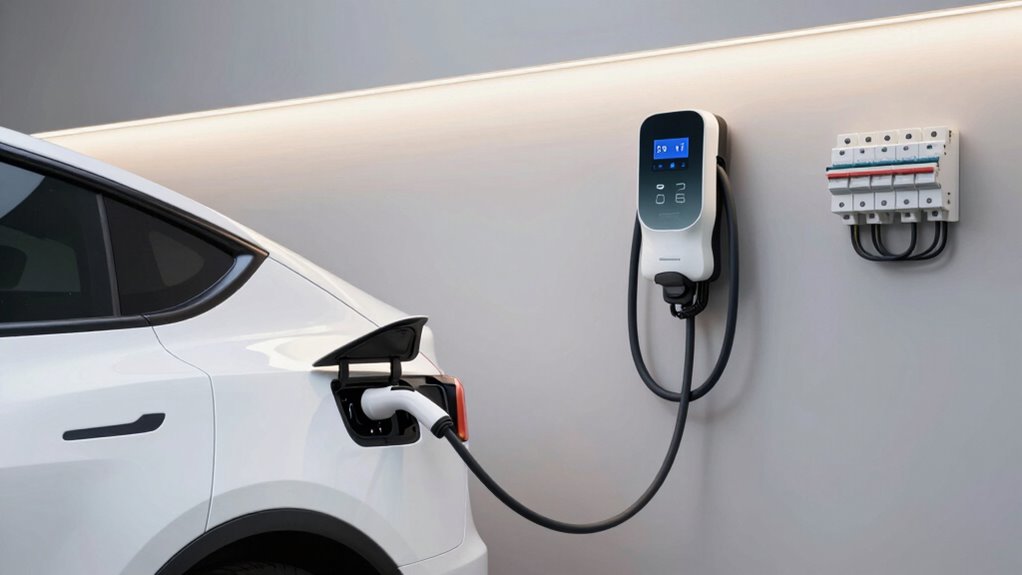
Level 2 EV charging is a method of recharging your electric vehicle faster than standard home outlets. It uses a dedicated charging station that supplies higher power, typically 240 volts. To set this up, your electrical panel needs to handle the increased load, often requiring an upgrade or dedicated circuit. The charging station connects directly to your electrical panel, ensuring safe and efficient power delivery. Unlike Level 1 chargers, which use basic outlets, Level 2 chargers provide quicker charging times, so you spend less time waiting. Proper installation involves ensuring your electrical system can support the station’s demands, preventing overloads. Electrical system safety is crucial to ensure the charger operates effectively without risking overloads or hazards. Additionally, consulting with a qualified electrician helps ensure your electrical infrastructure is prepared for the added load and complies with local codes. With the right setup, Level 2 charging makes maintaining your EV convenient and efficient right at home. Proper planning and understanding your home’s electrical capacity can help optimize the charging experience. Being aware of the power requirements and how they relate to your home’s existing electrical system can prevent potential issues during installation. Also, system upgrades may sometimes be necessary to fully support higher charging demands safely.
Is a Level 2 EV Charger Right for Your Home?
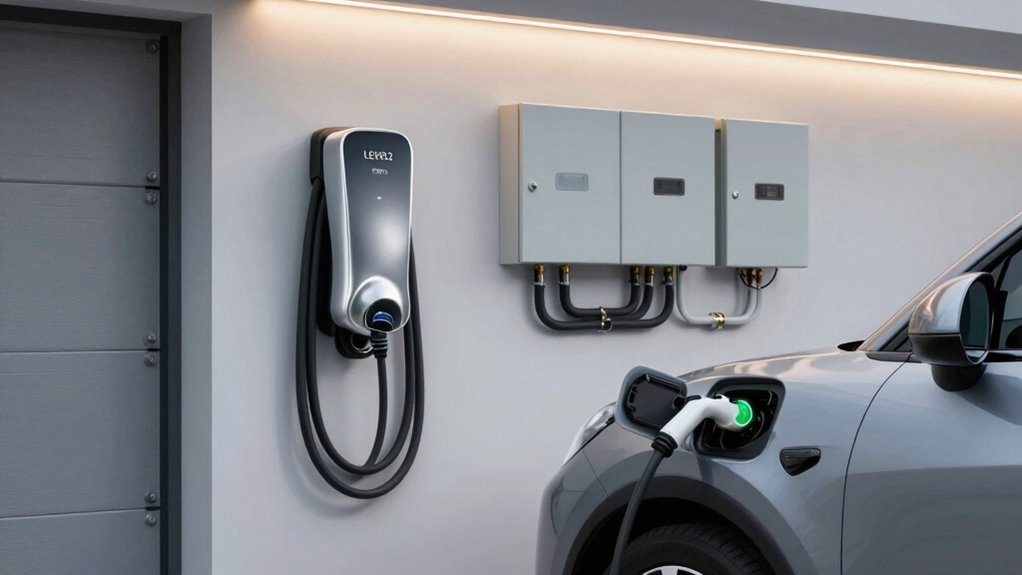
To decide if a Level 2 charger suits your home, consider whether it’s compatible with your vehicle and how complex the installation might be. You’ll also want to weigh the costs and see if any incentives are available to help offset expenses. Evaluating these points will help you determine if upgrading makes sense for your charging needs. Additionally, understanding the electrical basics involved can ensure a safe and effective upgrade.
Compatibility With Vehicle
Before installing a Level 2 charger at home, it’s important to check if your vehicle is compatible. Not all electric vehicles support Level 2 charging, so verify your car’s charging capabilities. Your vehicle’s charging port must match the charger’s connector type. Additionally, consider the recommended charging station placement to ensure easy access and safe operation. Confirming electrical code compliance is vital; your vehicle’s charging system must meet local regulations. Some vehicles may require specific power levels or adapters, so review your manufacturer’s guidelines. Verifying compatibility helps you avoid unnecessary expenses or installation complications later. It’s also beneficial to review charging standards to ensure your setup adheres to recognized safety and performance protocols. If your vehicle supports Level 2 charging, you’ll enjoy faster charging times and more convenience at home. Always double-check your vehicle specifications before proceeding with installation. Understanding global security standards can also ensure your home charging setup aligns with broader safety protocols. Moreover, consulting with a licensed electrician can help you assess your home’s electrical capacity for proper installation.
Installation Complexity Level
Evaluating whether installing a Level 2 charger makes sense for your home depends on how comfortable you are with electrical work and home upgrades. Installation challenges can vary based on your existing electrical system and wiring complexity. If your home already has a dedicated circuit and sufficient capacity, the process may be straightforward. However, if your electrical panel needs an upgrade or additional wiring, it could become more involved and costly. You might also face challenges locating the best placement for the charger and ensuring safety compliance. While some homeowners handle minor wiring tasks, others prefer to hire professionals to navigate complex wiring and installation challenges. Appraising your comfort level and the complexity of your home’s electrical setup helps determine if a Level 2 charger is a feasible and practical choice. Additionally, safety considerations are crucial when working with high-voltage electrical systems to prevent hazards during installation. Ensuring your electrical system is compatible can also involve understanding electrical capacity and load management, which may require a professional assessment. Recognizing the importance of proper wiring can help prevent potential electrical issues and ensure safe operation. For this reason, consulting with a qualified electrician can provide valuable insights into your home’s specific electrical infrastructure before proceeding.
Cost and Incentives
Considering the costs and available incentives is essential when deciding if a Level 2 EV charger makes sense for your home. While the upfront investment can be significant, the potential for cost savings over time is notable, especially with faster charging reducing your charging costs. Many states and local governments offer rebates or tax credits, which can offset installation expenses and make the upgrade more affordable. These government rebates can sometimes cover a substantial portion of the charger’s cost, helping you recoup your investment quicker. Additionally, the increased convenience and faster charging speed can add value to your home and make EV ownership more practical. Researching Free Floating, available incentives in your area can help determine if a Level 2 charger aligns with your budget and long-term savings goals. Understanding charging infrastructure options can also guide you in making an informed decision about your home setup. Exploring utility company programs may reveal additional rebates or discounts that can further reduce your overall costs. Being aware of Glycolic Acid Benefits for Skin and how they can improve skin health might also influence your decisions about home upgrades and maintenance.
What Are the Electrical Requirements for Level 2 Charging?
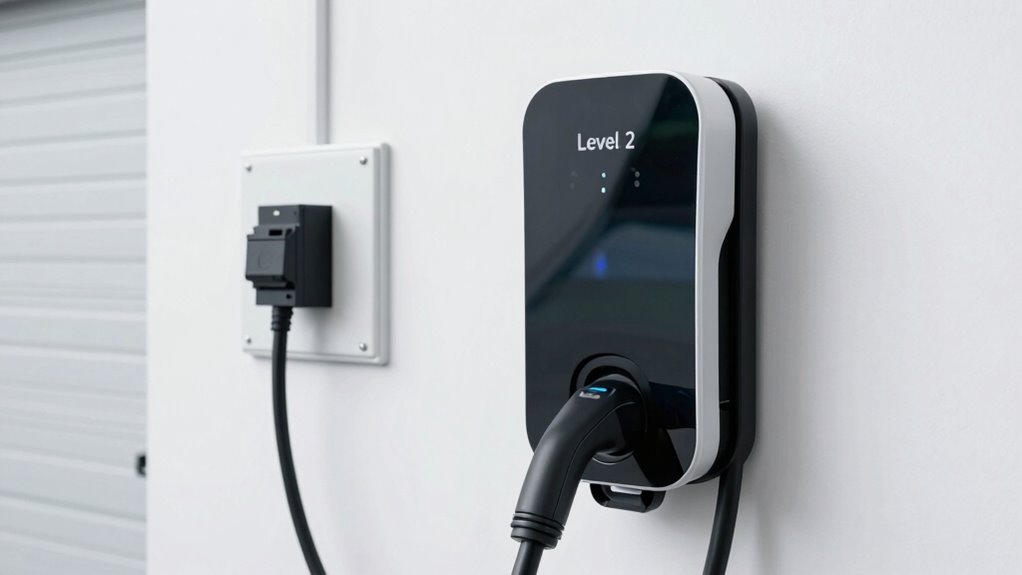
Level 2 EV charging requires a dedicated 240-volt circuit, similar to what your dryer or oven uses. To support your charging station, your home’s electrical wiring must handle increased power securely. Here are key electrical requirements:
Level 2 EV charging needs a dedicated 240-volt circuit with proper wiring and safety standards.
- Dedicated Circuit: A separate circuit prevents overloads and ensures reliable charging.
- Proper Circuit Breaker: Usually a 40-50 amp breaker, compatible with your charging station’s specifications.
- Adequate Wiring: Use gauge wiring recommended for the circuit’s amperage to avoid overheating.
- Permitted Installation: All wiring and electrical work should meet local code standards for safety and efficiency.
- Correct Setup and Safety: Proper installation and power tool safety practices help prevent electrical hazards and ensure optimal operation. Additionally, ensuring your home’s wiring can handle the increased load is crucial to prevent potential electrical hazards during operation. Properly designed wiring systems incorporate electrical safety considerations to protect your home and equipment, and conducting a load calculation can verify your system’s capacity. Regular inspections and adherence to electrical codes further safeguard your setup and prolong the lifespan of your charging station.
How to Install Your Level 2 EV Charger Safely and Correctly
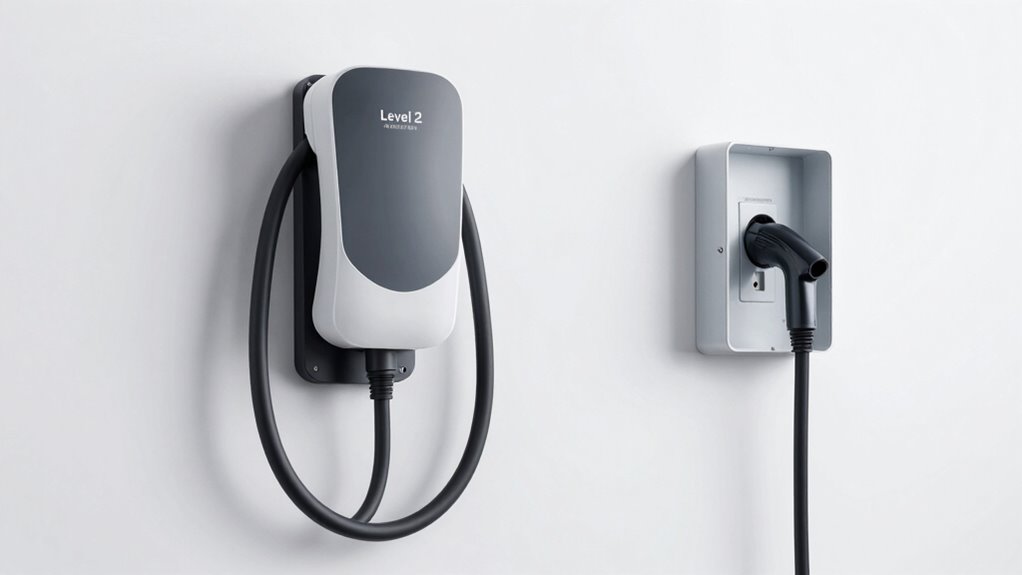
To install your Level 2 EV charger safely and correctly, start by turning off the main power supply to prevent electrical accidents. This guarantees electrical safety during installation. Choose a suitable location for your charging station that’s close to your electrical panel and accessible. Make sure the wall outlet or dedicated circuit can handle the required voltage and amperage. Use properly rated wiring and a compatible circuit breaker to avoid overloads. Follow the manufacturer’s instructions carefully, securing all connections tightly. Double-check that the charger is grounded properly to prevent electrical shocks. Once installed, turn the power back on and test the charging station. Prioritizing safety and proper installation helps protect your home and ensures reliable, efficient EV charging.
How Much Power Does a Level 2 Charger Use? Understanding Voltage and Amperage

Your Level 2 charger’s power depends on voltage and amperage, which directly affect how quickly your car charges. Higher voltage or amperage can speed up charging times, but they also require the right electrical setup. Understanding these factors helps you choose a charger that fits your home’s electrical system and your needs. Proper kitchen knife techniques can make your cooking more efficient and enjoyable, just as understanding electrical fundamentals improves your EV charging experience.
Voltage Requirements for Charging
Understanding the voltage requirements for a Level 2 charger is essential because it determines how much power your electric vehicle can draw at home. Your home’s power outlet and circuit breaker must support the charger’s voltage needs. Most Level 2 chargers operate at 240 volts, requiring a dedicated circuit. Here are key points to evaluate:
- Your power outlet must match the charger’s voltage specifications.
- The circuit breaker should be rated for the charger’s amperage to prevent overload.
- Upgrading your electrical system might be necessary for higher voltage and power draw.
- Verify your home’s existing wiring can handle the load safely.
- Embracing artistic expression can help you stay curious about your home’s electrical capabilities and ensure safe upgrades.
Ensuring proper voltage and circuit protection helps optimize charging speed while maintaining safety.
Amperage and Charging Speed
The amperage of a Level 2 charger determines how quickly your vehicle can recharge, directly impacting charging speed. Higher amperage capacity means more power flows to your car, reducing charging time. For example, a charger with 30 amps will charge your vehicle faster than one with 16 amps. The key is balancing amperage with your home’s electrical capacity and the vehicle’s maximum charging rate. If your system supports higher amperage, you can enjoy quicker charging sessions, saving you time. However, confirm your circuit breaker and wiring are rated for the increased amperage to prevent safety issues. Understanding the relationship between amperage and charging speed helps you choose the right Level 2 charger that fits your needs and ensures efficient, safe home charging. Electrical capacity is an important factor to consider when selecting a charger to match your home’s capabilities.
What Are the Costs and Incentives for Installing a Home Level 2 Charger?
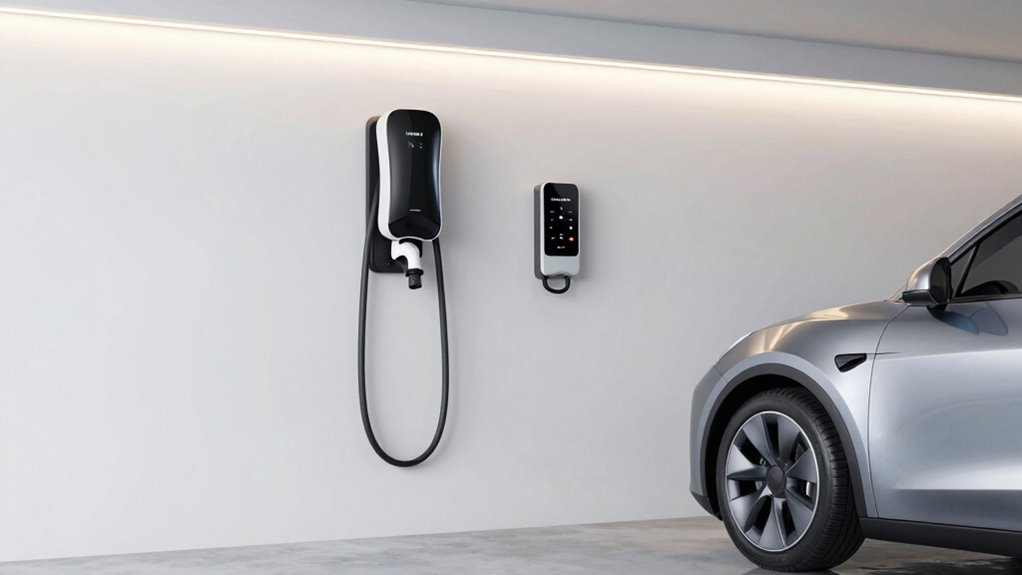
Installing a home Level 2 EV charger involves upfront costs that vary depending on the model and installation requirements. While the initial investment can seem significant, consider the long-term cost benefits, such as faster charging and increased home value. Many states and utility companies offer financial incentives like rebates or tax credits to offset installation expenses. To make the most of these benefits, keep in mind:
Upfront costs vary, but incentives and long-term savings make home Level 2 EV chargers a smart investment.
- Incentive programs vary by location and may have specific eligibility criteria.
- Installing a dedicated circuit might be necessary, adding to installation costs.
- Choosing an energy-efficient charger can reduce ongoing electricity expenses.
- The overall savings from faster charging can outweigh initial costs over time.
Understanding these factors helps you maximize financial incentives and realize the true cost benefits of installing a Level 2 charger at home.
Troubleshooting Your Level 2 Charger: Tips for Reliable Charging
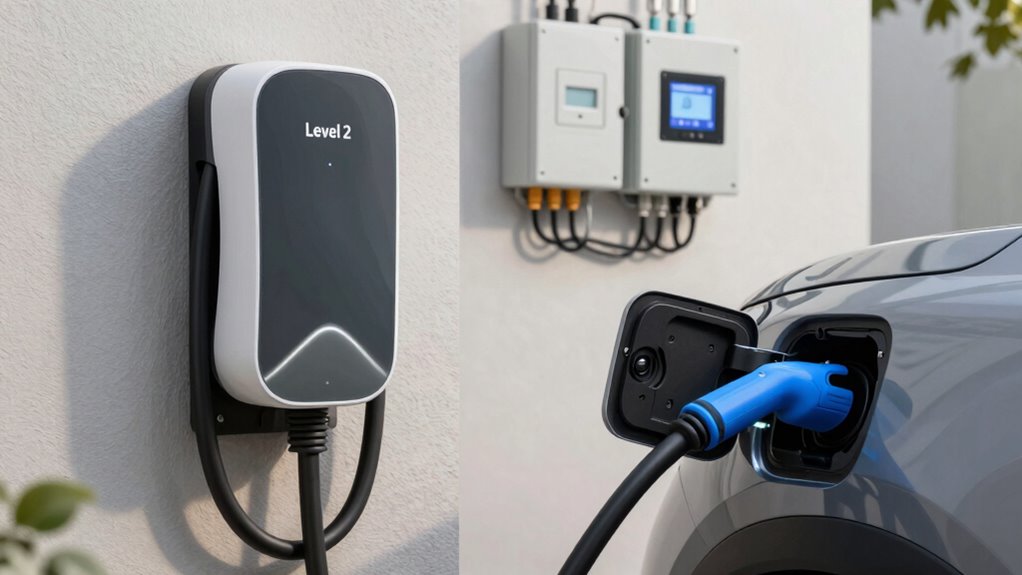
Even with proper installation, your Level 2 charger can sometimes encounter issues that disrupt reliable charging. Regular charger maintenance helps prevent problems, but troubleshooting electrical issues is essential when problems arise. Start by checking the circuit breaker; a tripped breaker is a common cause. Inspect the charging cable and connector for damage or dirt, which can interfere with proper connection. If issues persist, reset your charger or consult the user manual for specific troubleshooting steps. Use the table below to identify common causes and solutions:
| Issue | Possible Cause | Solution |
|---|---|---|
| Charger not powering on | Tripped circuit breaker | Reset breaker |
| Slow charging | Dirty or damaged connectors | Clean or replace connectors |
| Intermittent charging | Faulty wiring or loose connections | Check wiring and tighten connections |
| Error messages on display | Internal hardware malfunction | Contact professional support |
Frequently Asked Questions
Can I Upgrade My Existing Outlet to Support Level 2 Charging?
Yes, you can upgrade your existing outlet to support Level 2 charging, but it depends on outlet compatibility and electrical wiring. You’ll need to verify your current wiring can handle the higher amperage required for Level 2 chargers. It’s best to have a licensed electrician assess your system, upgrade the wiring if needed, and install a dedicated 240-volt outlet designed for Level 2 charging to ensure safety and efficiency.
How Long Does It Typically Take to Install a Level 2 Charger?
Installing a Level 2 charger is like planting a new seed in your home’s electrical garden. Usually, the charger installation takes about 4 to 8 hours, depending on your current setup and needed electrical upgrades. If your electrical system is ready, it might be quicker. But if electrical upgrades are necessary, it could extend the process. Either way, a professional electrician guarantees your charging station blooms safely and efficiently.
Will My Home’s Electrical Panel Need an Upgrade?
Yes, your home’s electrical panel might need an upgrade. When installing a Level 2 EV charger, the electrical load increases, which can surpass your current circuit capacity. You should have an electrician assess your panel’s capacity to handle the additional load safely. If your existing panel isn’t sufficient, they’ll recommend an upgrade to ensure your home’s electrical system can support the charger without overloading.
Are There Portable Level 2 Chargers Available?
Portable chargers are like your trusty travel companions, ready to charge your EV on the go. Yes, there are portable Level 2 chargers designed for travel charging; they’re compact and easy to carry. These chargers connect to standard outlets, giving you flexibility when you’re away from home. Keep in mind, they may not match the speed of a dedicated home charging station, but they’re perfect for emergency or occasional use.
How Often Should I Have My Charging System Inspected?
You should have your charging system inspected annually to guarantee safety and proper function. Regular inspections help catch potential issues early, preventing costly repairs and hazards. Follow maintenance tips like checking connections, keeping the area dry, and monitoring for signs of wear. If you notice any problems, don’t delay; schedule an inspection sooner. Staying proactive with inspection frequency keeps your home charging system reliable and safe for everyday use.
Conclusion
Now that you’re armed with the electrical basics, charging your EV at home should be a breeze—until you realize you forgot to turn on the breaker. But don’t worry, with the right setup and a little patience, you’ll be zooming around in your eco-friendly ride in no time. Just remember: charging your car isn’t rocket science, but it’s close enough to make you feel like a tech genius—minus the space suit.
Columbus Day / Indigenous Peoples' Day Picks
long weekend sales
As an affiliate, we earn on qualifying purchases.