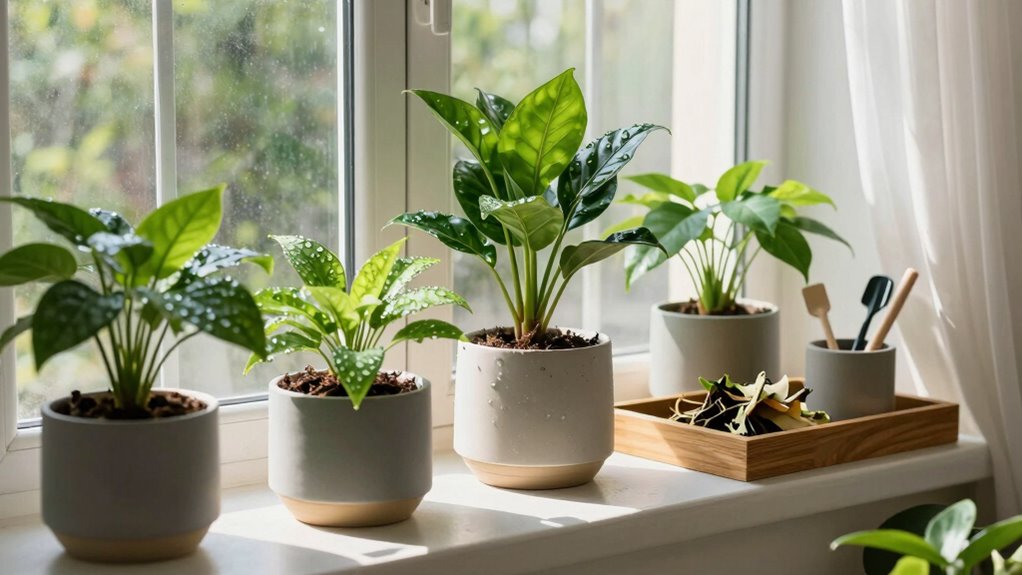

To keep indoor plants alive with less waste and fuss, focus on proper propagation from healthy cuttings to grow new plants naturally. Use well-draining soil and containers with drainage holes, and check moisture levels regularly by feeling the soil or using a moisture meter. Keep plants in bright, indirect sunlight and adjust watering based on the season to avoid over or underwatering. For practical tips that help your plants thrive sustainably, continue exploring simple care techniques.

Get furniture and decor delivered free with Prime
- Fast, free delivery on millions of items
- Prime Video, Amazon Music and more included
- Member-only deals all year
Key Takeaways
- Propagate healthy plants from cuttings to expand greenery while reducing purchase waste.
- Use well-draining soil and containers with drainage holes to prevent overwatering and root rot.
- Regularly check soil moisture and water only when the top inch feels dry to avoid excess water.
- Choose a variety of resilient indoor plants to promote biodiversity and pest resistance.
- Keep plants in bright, indirect light and adjust watering seasonally to match growth needs.

Indoor plants can brighten up your living space and improve air quality, but they require proper care to thrive. One way to do this while minimizing waste and fuss is by mastering plant propagation. Instead of constantly buying new plants, you can propagate your existing ones, which allows you to grow new plants from cuttings or offsets. This process not only saves money but also reduces waste, as you’re making the most out of your current plants. When propagating, you’ll want to focus on healthy parent plants and specific methods suited to each species, like stem cuttings or leaf propagation. It’s a satisfying process that gives you more greenery with minimal effort and waste.
Propagate healthy plants to grow more greenery with less waste and effort.
Equally important to successful plant propagation is maintaining appropriate soil moisture levels. Overwatering can lead to root rot and other issues, while underwatering causes dehydration and stunted growth. To keep your indoor plants healthy, check the soil moisture regularly by sticking your finger about an inch into the soil. If it feels dry, it’s time to water, but if it’s still moist, hold off. Using containers with drainage holes helps prevent excess water from sitting at the bottom, which can be detrimental. Consider implementing a simple watering schedule based on your plant’s needs—some plants prefer the top inch of soil to dry out between watering, while others like consistently moist soil.
Additionally, understanding the importance of biodiversity in plant care can help you select a diverse range of indoor plants that support a resilient and thriving environment. Incorporating plant diversity promotes a more balanced ecosystem within your home, which can help prevent pests and diseases. Combining proper plant propagation with careful attention to soil moisture levels allows you to extend the life of your indoor plants without unnecessary waste. When propagating, only take healthy cuttings from strong plants to guarantee your new plants thrive and grow quickly. Keep the cuttings in a suitable environment, like a bright spot with indirect sunlight, and change the water or soil as needed. For soil-based propagation, use fresh, well-draining soil to promote healthy root development. Monitoring moisture levels during this process is vital because too much or too little water can hinder root formation. Furthermore, understanding how different plant species respond to various care techniques can optimize your propagation success.
In addition, adjusting your watering techniques based on the season and the specific needs of your plants helps prevent waste. Many indoor plants require less water during winter months when growth slows down. Using moisture meters can give you a more accurate picture of soil moisture, reducing guesswork. Incorporating sustainable practices such as repotting and reusing containers can further minimize waste in your plant care routine. By combining these simple practices—propagating plants thoughtfully and managing soil moisture carefully—you’ll enjoy lush, healthy indoor plants with less waste, less fuss, and a more sustainable approach to plant care. A focus on environmentally friendly methods can enhance your overall sustainability efforts and promote healthier plant growth.
As an affiliate, we earn on qualifying purchases.
Frequently Asked Questions
How Often Should I Repot My Indoor Plants?
You should repot your indoor plants every 1-2 years to maintain healthy plant root health. Keep an eye out for signs like roots growing out of drainage holes or slow growth, which indicate it’s time for a repotting schedule adjustment. Regularly checking your plants guarantees they have enough space to thrive, prevents root-bound conditions, and promotes overall health, making your indoor garden more vibrant and resilient.
What’s the Best Way to Prevent Pests Indoors?
Think of your indoor garden as a peaceful sanctuary, not a battleground. To prevent pests, embrace natural pest control by inviting beneficial insects like ladybugs or predatory mites indoors. Regularly inspect plants and keep leaves clean to deter unwelcome guests. Quarantine new plants before introducing them, and avoid overwatering. These gentle strategies create a balanced ecosystem, helping your plants thrive free from pests without harsh chemicals.
How Can I Tell if My Plant Needs More or Less Water?
To tell if your plant needs more or less water, start by checking your watering schedule and moisture monitoring. Feel the soil—if it’s dry several inches down, your plant likely needs water. If it’s still damp, hold off. Overwatering can cause root rot, so make certain proper drainage. Adjust your watering routine based on these signs, and monitor moisture regularly to keep your plant healthy and thriving.
Are There Eco-Friendly Fertilizers Suitable for Indoor Plants?
Yes, there are eco-friendly fertilizers suitable for indoor plants. You can use organic compost or natural amendments like worm castings, fish emulsion, or seaweed extract, which provide essential nutrients without harmful chemicals. These options boost plant health while being sustainable. Just mix them into your soil or dilute as a liquid feed, giving your indoor plants a gentle, eco-conscious boost that promotes growth and minimizes waste.
How Can I Reduce Indoor Plant Waste Sustainably?
You can reduce indoor plant waste sustainably by composting plant scraps using simple composting methods like worm bins or bokashi. Reusable containers for soil or fertilizer minimize single-use packaging. Avoid plastic waste by repurposing old containers for watering or plant holders, and opt for eco-friendly, biodegradable pots. These steps help cut down waste, nourish your plants naturally, and support a greener lifestyle.
Conclusion
With a little patience and mindful habits, your indoor plants can thrive like a lush oasis in your home. Think of caring for them as tending a delicate symphony—each note of watering, pruning, and feeding plays a part in harmony. Keep things simple, minimize waste, and let your plants grow naturally. Before you know it, your space will bloom like a vibrant garden, transforming your home into a sanctuary of life and freshness.
Columbus Day / Indigenous Peoples' Day Picks
long weekend sales
As an affiliate, we earn on qualifying purchases.