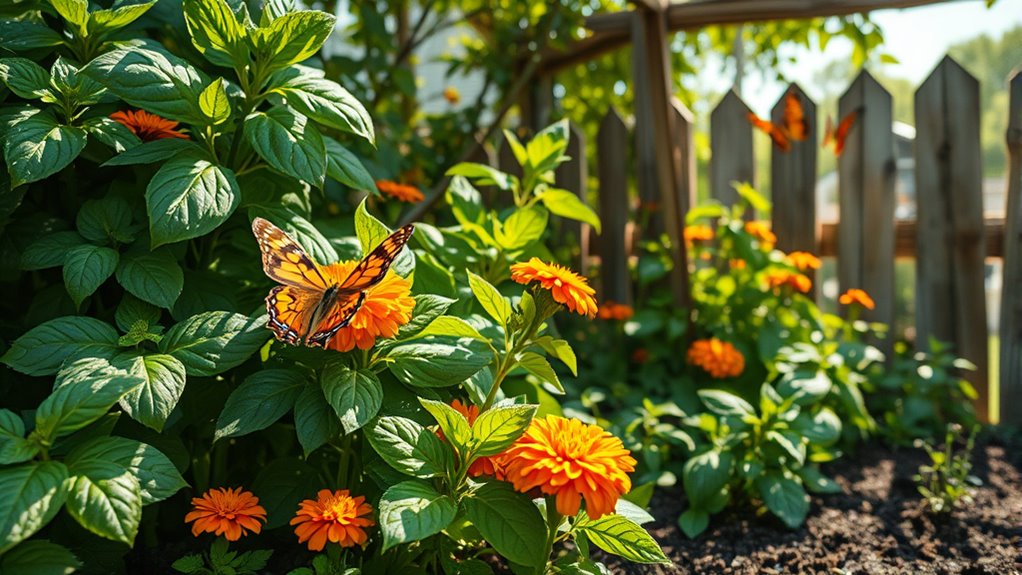

To master natural pest deterrents in 7 days, you’ll identify common pests and understand their habits, then set up physical barriers like netting and row covers. Use aromatic herbs such as basil, lavender, and mint to repel pests, and craft homemade sprays with vinegar, garlic, or soap. Attract beneficial insects by planting flowers and releasing ladybugs. Maintaining healthy soil and plants keeps pests at bay. Keep monitoring and adjusting your strategies as you go—more tips await to strengthen your skills.
Key Takeaways
- Learn to identify common pests and observe their behaviors to choose targeted natural control methods.
- Implement physical barriers and proper garden placement to prevent pest access effectively.
- Use botanical deterrents like aromatic herbs and homemade sprays to repel pests safely.
- Attract beneficial insects with diverse flowering plants and release natural predators to maintain pest balance.
- Conduct regular inspections and maintain soil health to detect issues early and reduce pest attraction naturally.
Day 1: Identifying Common Pests and Their Behaviors
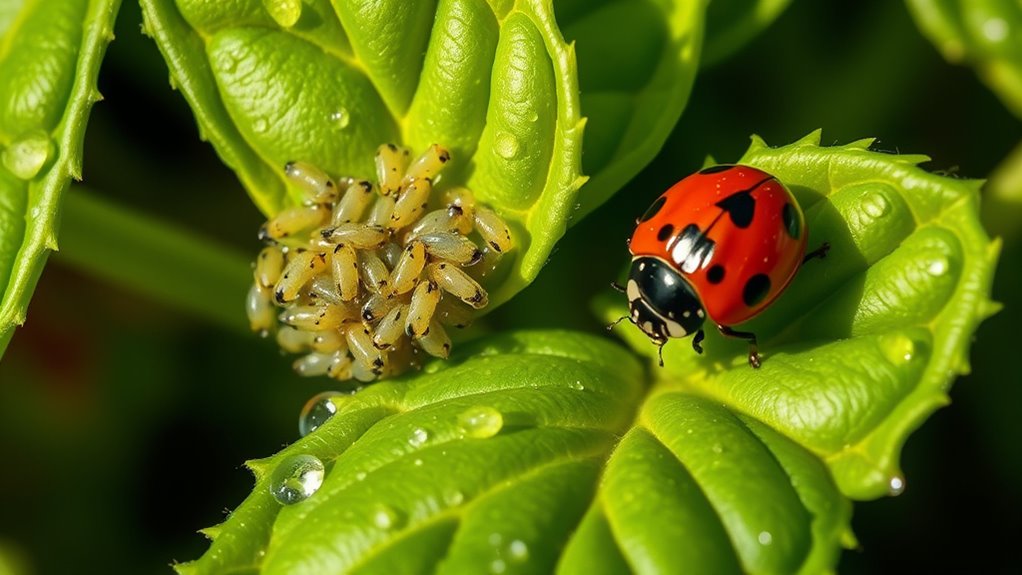
Understanding the pests you’re dealing with is essential for effective natural deterrents. When you identify common pests, you can apply targeted strategies like companion planting and crop rotation. Companion planting involves pairing plants that repel pests with those they attack, such as marigolds near tomatoes to deter nematodes. Crop rotation helps break pest life cycles by changing plant families each season, preventing pests from establishing themselves. By observing pest behaviors—where they feed, hide, or lay eggs—you gain insight into which natural methods will work best. Recognizing signs of specific pests allows you to tailor your approach, making your garden less attractive to them. Integrated pest management is a comprehensive approach that combines these methods for more effective pest control. Mastering these identification skills is the first step toward creating a healthier, pest-resistant garden naturally.
Day 2: Setting Up Natural Barriers and Physical Deterrents
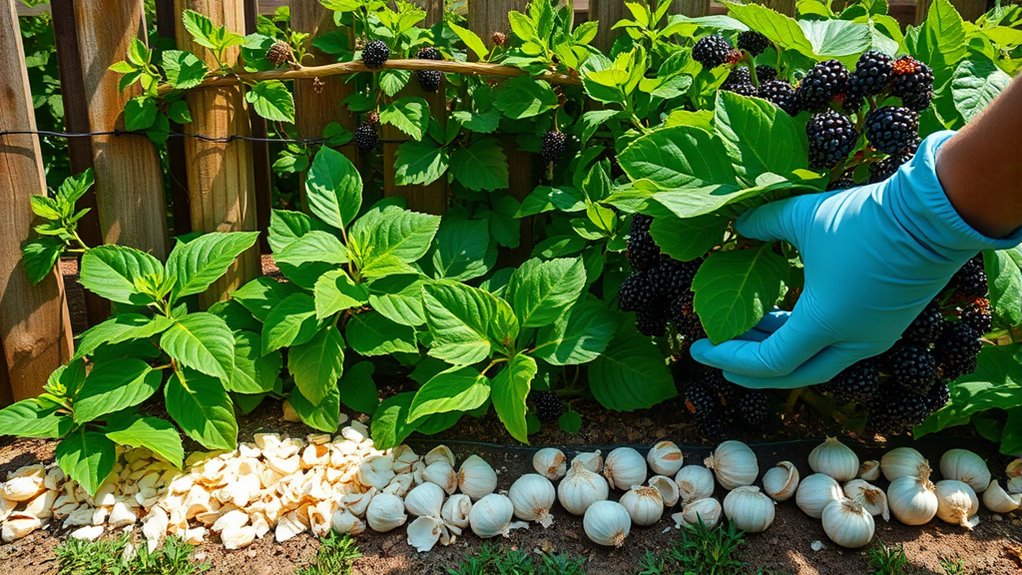
Setting up natural barriers and physical deterrents is a smart way to protect your garden without chemicals. You can choose from options like fencing, row covers, or thorny plants to keep pests out. Proper garden placement also helps minimize pest access and enhances your overall pest management strategy. Incorporating garden layout principles can further improve the effectiveness of these deterrents by optimizing space and pest prevention.
Physical Barrier Options
Have you ever considered how physical barriers can effectively keep pests at bay? Installing simple options like row covers, netting, or fencing creates a strong defense against unwanted visitors. These barriers work best when combined with good drainage solutions, preventing water buildup that attracts pests. Using composting methods properly also reduces pest attraction by managing decaying plant material that pests seek. Make certain that fences are tall enough and woven tightly to prevent rodents and insects from slipping through. Covering vulnerable plants with fine mesh keeps insects out while allowing sunlight and air to circulate. Additionally, understanding the divergence between human and artificial intelligence helps inform more sustainable and eco-friendly pest management practices. By setting up these physical deterrents, you create a multi-layered defense system that reduces the need for chemical controls and helps your garden thrive naturally.
Strategic Garden Placement
Strategic garden placement is key to naturally deterring pests before they even reach your plants. By thoughtfully arranging your garden, you create barriers that confuse or repel pests. Consider these tactics:
- Plant pest-repellent companions like marigolds near vegetables to deter nematodes and aphids.
- Rotate crops each season to interrupt pest life cycles and prevent buildup of species targeting specific plants.
- Position vulnerable crops behind hardy, pest-resistant plants to act as natural shields.
- Incorporating visual and auditory cues in your garden design can also help in early pest detection and deterrence, enhancing overall pest management strategies.
Using companion planting and crop rotation, you reduce pest attraction and promote healthier growth. Proper placement makes it harder for pests to find their preferred hosts, decreasing the need for chemical interventions. This strategic approach guarantees your garden remains resilient and pest-free naturally.
Day 3: Harnessing the Power of Aromatic Herbs and Plants
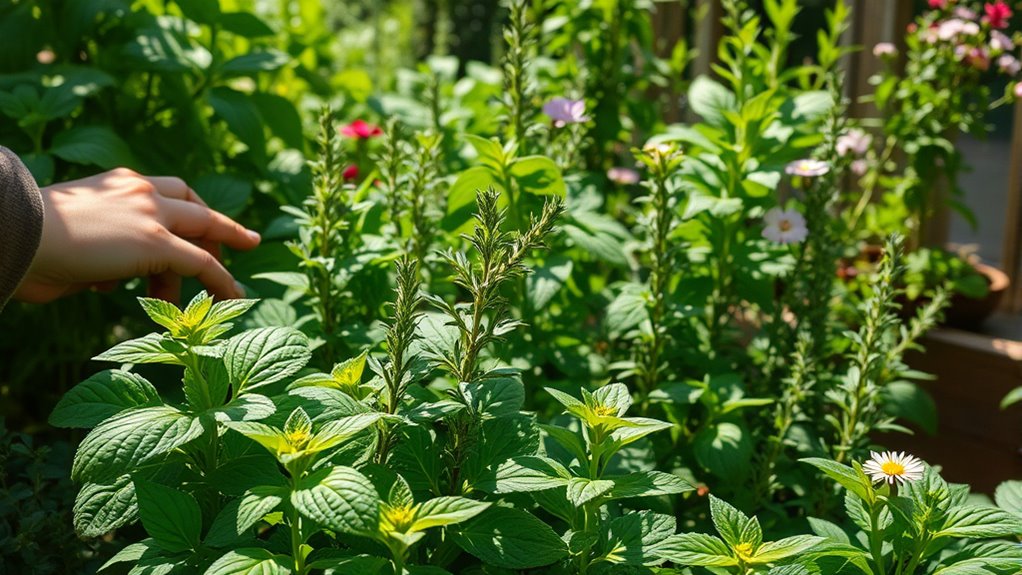
Aromatic herbs and plants have long been natural allies in pest control, offering a safe and eco-friendly alternative to chemical repellents. By planting or placing aromatic herbs around your garden, you can effectively deter pests while enhancing your space’s aroma. These pest deterrents release scents that pests find unpleasant, helping to protect your plants naturally. Incorporating herbs such as basil, lavender, and mint can create a natural pest barrier that is both effective and pleasing to the senses.
Day 4: Creating Homemade Repellent Sprays With Household Ingredients
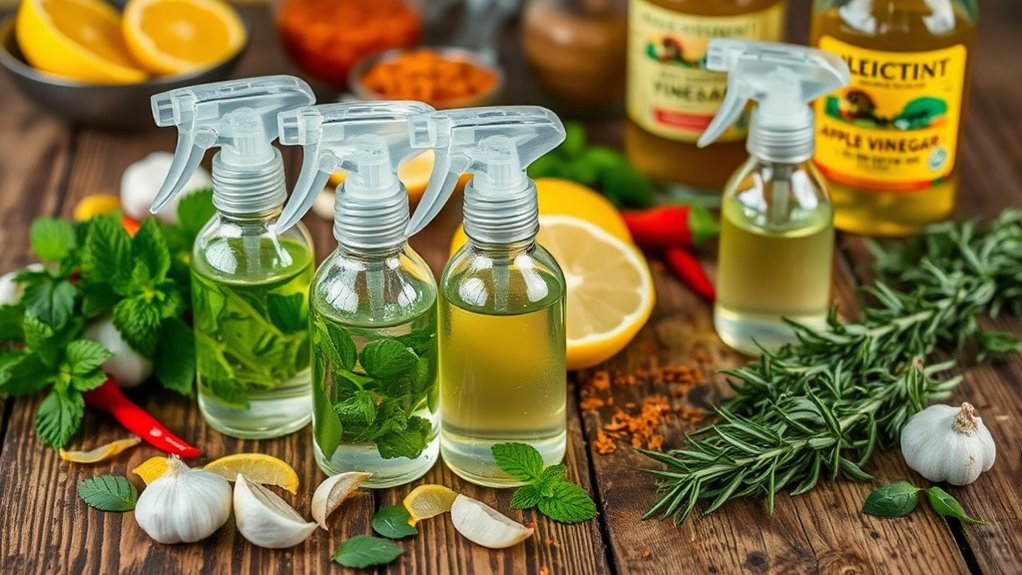
Building on the natural pest-repelling properties of herbs, you can create effective homemade sprays using household ingredients. These DIY solutions are simple, inexpensive, and environmentally friendly. To start, gather common items like:
- Apple cider vinegar, which’s strong scent deters many insects.
- Dish soap, helping the spray adhere to plant leaves and pests.
- Garlic cloves, releasing a potent aroma that pests dislike.
Mix these ingredients in a spray bottle: combine vinegar with water, add crushed garlic, and a few drops of dish soap. Shake well before applying to plants or around your home. Homemade sprays made with household ingredients provide a safe, natural alternative to chemical pesticides, helping you keep pests at bay while protecting your environment.
Day 5: Incorporating Beneficial Insects for Natural Pest Control
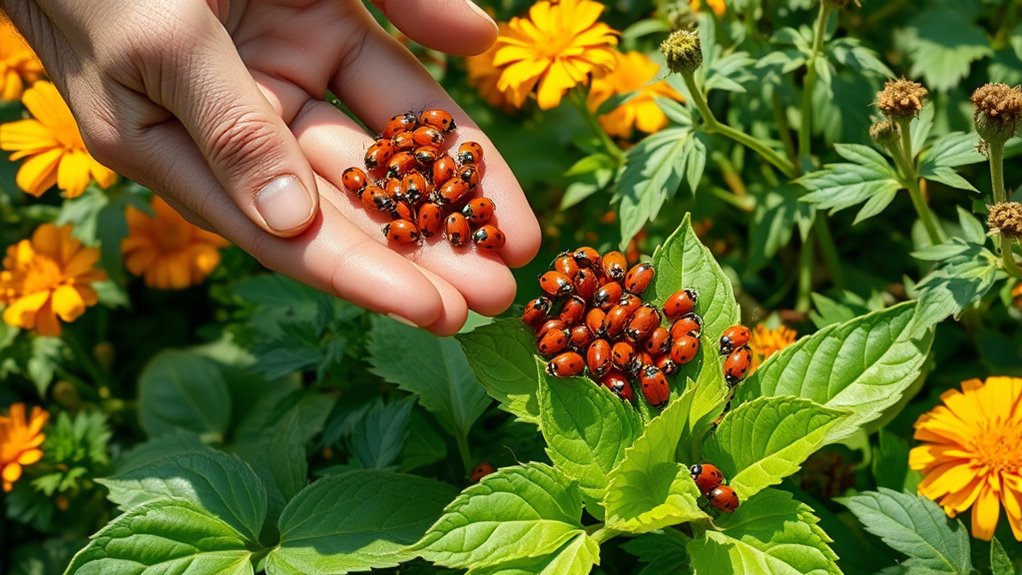
Incorporating beneficial insects into your garden is one of the most effective natural pest control methods available. These pest predators target common garden pests, reducing the need for chemicals. To attract beneficial insects, plant a diverse range of flowers and herbs that provide nectar and pollen. You can also release purchased beneficial insects like ladybugs or lacewings directly onto affected plants. Here’s a quick guide:
| Beneficial Insects | Pest Predators |
|---|---|
| Ladybugs | Aphids, scale insects |
| Lacewings | Whiteflies, caterpillars |
| Hoverflies | Nematodes, thrips |
Beneficial insects are often attracted by pollen and nectar, which makes planting flowering plants an essential part of natural pest control.
Day 6: Maintaining Your Garden’s Health to Prevent Infestations
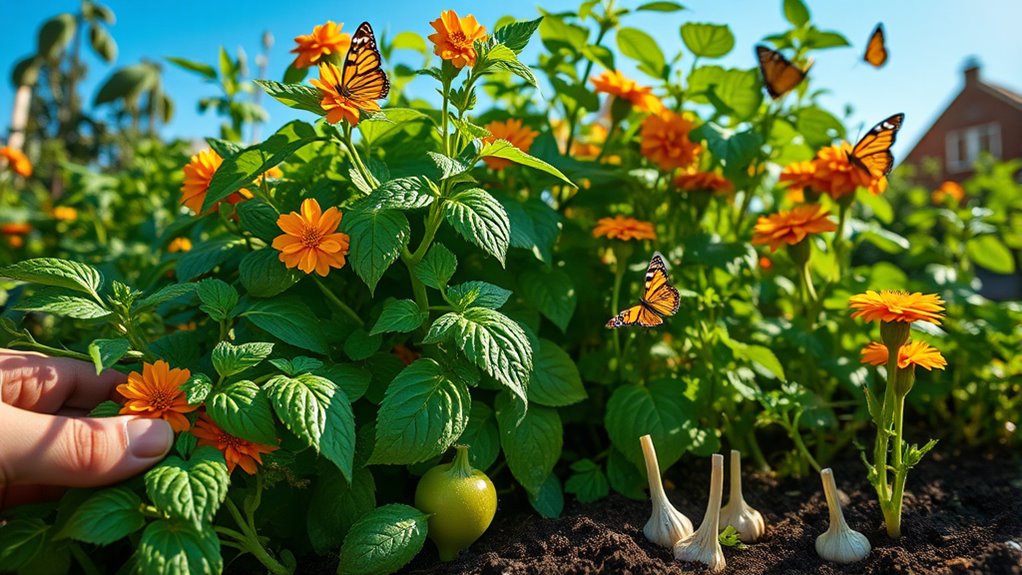
Keeping your garden healthy starts with checking soil fertility to guarantee plants get the nutrients they need. Proper watering techniques help prevent stress that can attract pests, while choosing pest-resistant plants reduces the risk of infestations. When you focus on these practices, you create a strong, resilient garden that naturally wards off pests. Additionally, practicing integrated pest management by combining biological, cultural, and mechanical controls can further enhance your garden’s defenses.
Soil Fertility Checks
Regularly checking your soil’s fertility is essential for preventing pest infestations before they start. Conducting soil testing and nutrient analysis helps you understand what your garden needs to stay healthy. Imagine:
- Digging into rich, dark soil that’s teeming with life.
- Using a testing kit to reveal the exact nutrient levels.
- Adjusting compost or fertilizers based on test results for ideal growth.
- Ensuring optimal soil fertility conditions to promote robust plant health and natural pest resistance.
Proper Watering Techniques
Ensuring your garden receives the right amount of water is key to preventing pest problems. Establish a consistent watering schedule that keeps moisture levels steady, avoiding both drought stress and overly wet conditions. Deep, infrequent watering encourages roots to grow deeper and strengthens plants against pests. Check soil moisture regularly to prevent it from becoming too dry or too soggy, which can attract pests like fungus gnats or aphids. Early morning watering reduces evaporation and helps plants absorb moisture efficiently. Use a soaker hose or drip irrigation to deliver water directly to the roots, reducing excess moisture on the foliage that pests love. Maintaining proper watering techniques creates a healthy environment, discouraging pests from settling in and thriving. Proper watering and soil moisture management are essential for healthy plant growth and pest prevention.
Pest-Resistant Plant Choices
Choosing pest-resistant plants is one of the most effective ways to prevent infestations in your garden. By selecting plants naturally resistant to pests, you reduce the need for chemical treatments. Incorporate companion planting, pairing pest-resistant plant choices with vulnerable crops to create a protective barrier. Imagine planting marigolds around tomatoes or basil near peppers; these combinations deter pests naturally. Here are some top pest-resistant plant choices:
- Nasturtiums – repel aphids and whiteflies
- Chrysanthemums – ward off nematodes
- Lavender – deters moths and fleas
Using these plants strategically enhances your garden’s health and discourages pests from settling in. When combined with smart companion planting, your garden becomes a resilient, pest-free haven.
Day 7: Monitoring Effectiveness and Adjusting Your Pest Management Strategy
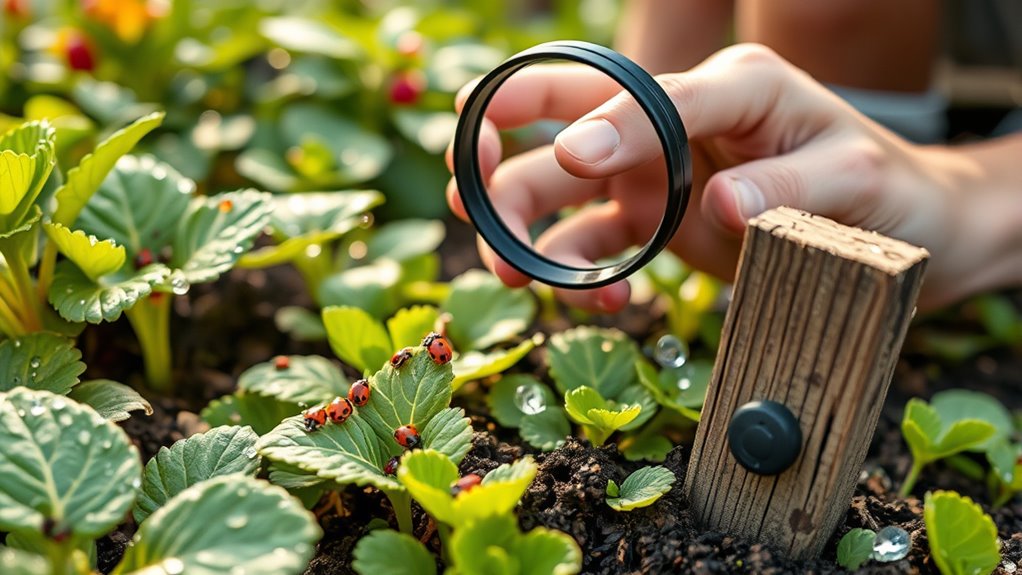
After a week of implementing natural pest deterrents, it’s essential to evaluate how well they’re working. Use pest monitoring techniques like visual inspections, sticky traps, or regular scouting to assess pest activity. Look for signs of damage or pest presence, noting any areas where pests persist. If you notice ongoing issues, it’s time to adjust your pest control strategies. This might mean repositioning deterrents, increasing their frequency, or trying alternative methods. Monitoring helps you identify patterns and determine which tactics are effective. Remember, pest management is an ongoing process. Proper monitoring techniques help ensure your methods remain effective and that your garden stays healthy without relying on chemicals.
Frequently Asked Questions
How Do I Identify if Pests Are Natural or Chemical Resistant?
To identify if pests are natural or chemical resistant, look for signs of pest resistance, like pests surviving treatments or reproducing rapidly. You can test for chemical markers by using specific baits or traps that reveal resistance patterns. Monitoring pest activity over time also helps; if pests keep coming back despite treatments, they might have developed pest resistance. Accurate identification helps you choose effective, natural deterrents instead of relying solely on chemicals.
Are There Specific Plants That Attract Beneficial Insects Naturally?
Think of certain plants as magnets for helpful bugs. You can use companion planting to attract beneficial insects naturally, like planting marigolds or dill near your vegetables. Native insect habitats, such as flowering plants or herbs, also draw in helpful bugs that prey on pests. By creating a diverse garden with these plants, you turn your space into a friendly neighborhood for beneficial insects, reducing the need for chemical interventions.
What Are the Signs of Overusing Homemade Pest Repellents?
If you overuse homemade pest repellents, you might notice pest resistance, where pests stop responding, or signs of repellent overdose like plant stress, leaf burn, or wilting. You could also see beneficial insects decrease or avoid your garden. To prevent this, rotate repellents and use them sparingly. Keep an eye on plant health and pest activity to catch overapplication early and maintain a balanced ecosystem.
How Often Should I Rotate Pest Deterrent Strategies?
Think of your pest control like a chess game; you need to stay one move ahead. Rotate your strategies every 2-3 weeks, considering seasonal timing to stay effective. Regular variation prevents pests from adapting, keeping your garden safe. By shifting tactics, you preserve the power of natural deterrents and guarantee long-term success. Stay vigilant, adapt your approach, and your garden will flourish free of unwanted visitors.
Can Natural Deterrents Affect Pollination and Plant Growth?
Natural deterrents can influence pollination impact and plant growth if used excessively or improperly. You might find that strong scents or repellents deter beneficial pollinators, reducing pollination efficiency. To avoid this, apply natural deterrents carefully, ensuring they don’t harm pollinators or hinder plant growth. Balance is key—monitor your plants and pollinator activity regularly to maintain healthy growth and effective pest management without disrupting natural pollination processes.
Conclusion
By mastering natural pest deterrents in just a week, you transform your garden into a resilient sanctuary. Remember, each step you take is a brushstroke on the canvas of a healthy, thriving ecosystem. Like a skilled gardener tending their masterpiece, your consistent care and adjustments will keep pests at bay—proving that nature’s solutions are not only effective but also beautifully sustainable. Your garden’s harmony is within your grasp; nurture it with confidence.