
Natural ventilation remains essential in modern homes because it improves indoor air quality, helping you breathe healthier by reducing pollutants, allergens, and odors naturally. It also saves energy and lowers utility bills by minimizing reliance on mechanical systems. Plus, it allows you to control your indoor climate, keeping your home comfortable and fresh without complex equipment. By designing with proper airflow, you can create a healthier, more sustainable space—if you want to discover how to maximize these benefits, keep exploring.

Get furniture and decor delivered free — and shop member deals
- Fast, free delivery on millions of items
- Access to Prime Big Deal Days deals on October 6–7
- Prime Video, Amazon Music and more included
Key Takeaways
- Natural ventilation improves indoor air quality by reducing pollutants, allergens, and odors without relying on mechanical systems.
- It enhances energy efficiency, lowering utility bills and decreasing reliance on environmentally harmful cooling devices.
- Properly designed natural airflow maintains comfortable indoor temperatures and humidity levels naturally.
- It promotes healthier living environments by decreasing airborne illnesses and respiratory issues.
- Incorporating passive design strategies ensures sustainable, cost-effective ventilation that complements modern eco-friendly homes.

Natural ventilation has become an essential feature in modern homes, offering a sustainable way to improve indoor air quality and reduce reliance on mechanical cooling systems. You might think that with advanced air filters and HVAC systems, natural ventilation isn’t as necessary, but it still plays a vital role. When you open your windows or design your space to promote airflow, you’re actively enhancing indoor air quality by flushing out indoor pollutants, humidity, and odors. This process helps create a healthier living environment, especially in urban areas where air pollution can seep indoors. Better air quality isn’t just about comfort; it’s linked to your overall health, reducing allergies, respiratory issues, and the risk of airborne illnesses.
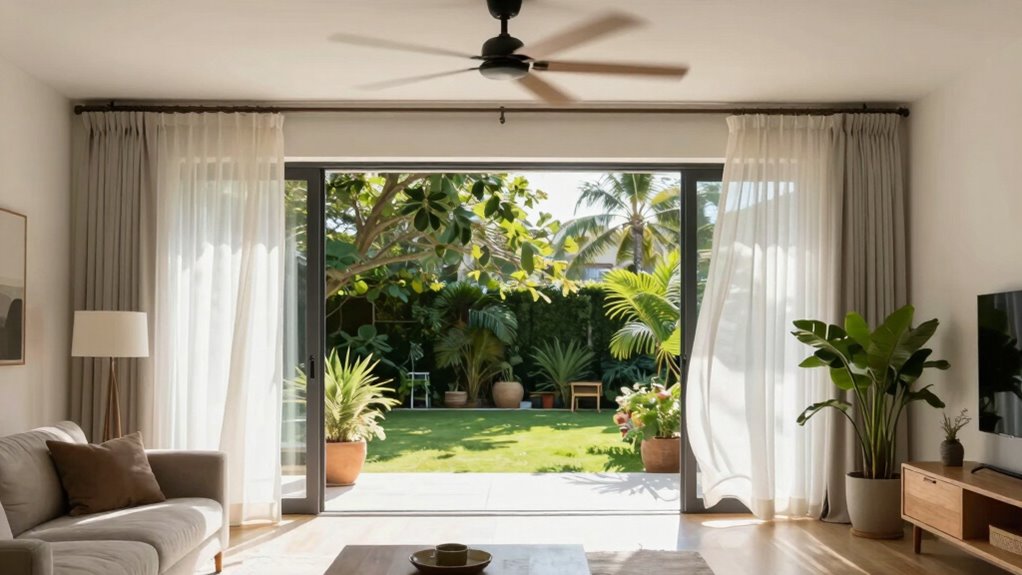
Natural ventilation enhances indoor air quality and health by flushing out pollutants and odors, especially in urban environments.
Beyond health benefits, natural ventilation notably boosts energy efficiency. When you allow fresh air to circulate naturally, you lessen the need for constant air conditioning or mechanical ventilation. This reduces your energy consumption, leading to lower utility bills and less environmental impact. In warm or temperate climates, strategic ventilation can maintain comfortable indoor temperatures without relying heavily on cooling systems. You can achieve this by designing homes with proper window placement, cross-ventilation, and ventilation shafts that promote airflow. As a result, your home becomes more sustainable, and you contribute to reducing greenhouse gas emissions. Incorporating passive design strategies can further optimize natural airflow and indoor comfort.
You also gain control over your indoor environment. Mechanical systems often have fixed settings, but natural ventilation lets you adjust based on the weather and your comfort preferences. When temperatures are mild, opening windows can cool your home naturally, saving energy and money. In addition, natural ventilation can help regulate humidity levels, preventing mold growth and protecting your property’s integrity. It’s a simple yet effective way to maintain a balanced indoor climate without sophisticated equipment. Proper ventilation design maximizes airflow and allows you to tailor your indoor environment more precisely. Plus, the fresh air invigorates your space, making it more inviting and lively. Proper ventilation design is crucial for maximizing airflow and ensuring your home benefits fully from natural ventilation. Using ventilation principles can help you optimize airflow paths and achieve better indoor air quality. Incorporating natural airflow patterns into your design can also enhance comfort and energy savings.
Designing a home to maximize natural ventilation requires some planning, but the benefits are well worth it. Larger windows, vents, and thoughtful placement of openings allow you to harness prevailing breezes and create a continuous airflow. By doing so, you’re not just improving indoor air quality but also making your home more energy-efficient. Ultimately, natural ventilation remains relevant because it’s a low-cost, eco-friendly, and health-conscious approach that complements modern technology. It’s about working with nature, not against it, to create a space that’s healthier, more sustainable, and more comfortable for you.
natural ventilation window vents
As an affiliate, we earn on qualifying purchases.
As an affiliate, we earn on qualifying purchases.
Frequently Asked Questions
How Does Natural Ventilation Impact Indoor Air Quality?
Natural ventilation improves indoor air quality by enhancing indoor air circulation, which helps in reducing indoor pollutants. You benefit from fresh air replacing stale air, which removes pollutants like dust, allergens, and odors. This process naturally filters and dilutes airborne contaminants, creating a healthier living environment. By opening windows and vents, you actively promote pollutant removal, ensuring cleaner, fresher air inside your home without relying solely on mechanical systems.
Can Natural Ventilation Reduce Energy Costs Significantly?
Natural ventilation is like a gust of fresh air financially—yes, it can cut your energy costs profoundly. By harnessing passive cooling, you reduce reliance on air conditioning, lowering your bills. Plus, integrating natural airflow enhances architectural aesthetics, creating a more inviting, sustainable home environment. You’ll enjoy lower energy expenses while boosting your home’s beauty, proving that good design and eco-friendly choices go hand in hand.
What Design Features Enhance Natural Airflow in Homes?
You can enhance natural airflow in your home through strategic window placement, such as positioning windows opposite each other for cross-ventilation. Incorporate roof vents to allow hot air to escape, creating a continuous airflow cycle. Additionally, using adjustable windows and vents lets you control airflow based on weather conditions. These design features work together to promote fresh air, reduce reliance on mechanical systems, and keep your home comfortable naturally.
Is Natural Ventilation Suitable for All Climates?
Think of natural ventilation as a delicate dance with the climate. It’s not suitable for every climate, especially extreme cold or heat, where you need more control. However, with smart technological integration, you can adapt and optimize airflow regardless of conditions. Climate adaptability becomes your ally, allowing natural ventilation to work harmoniously, cooling or ventilating your home naturally when the weather permits, and stepping back when it doesn’t.
How Does Natural Ventilation Affect Indoor Humidity Levels?
Natural ventilation helps regulate indoor humidity levels by promoting air flow, which aids in moisture management. When you open windows or vents, you allow moist air to escape and fresh, drier air to enter, reducing excess humidity. This process supports humidity control, preventing issues like mold and dampness. By using natural ventilation, you can maintain a healthier indoor environment without relying solely on mechanical systems.
Conclusion
So, don’t underestimate the power of natural ventilation—it’s like giving your home a gust of fresh air, awakening its senses and keeping it lively. In a world full of high-tech gadgets, a simple open window or a well-placed vent can be your home’s heartbeat, dancing with the breeze. Embrace this timeless practice, and watch your living space flourish with energy, turning your house into a sanctuary where refreshing air flows as freely as your own spirit.
Halloween Picks
halloween
As an affiliate, we earn on qualifying purchases.