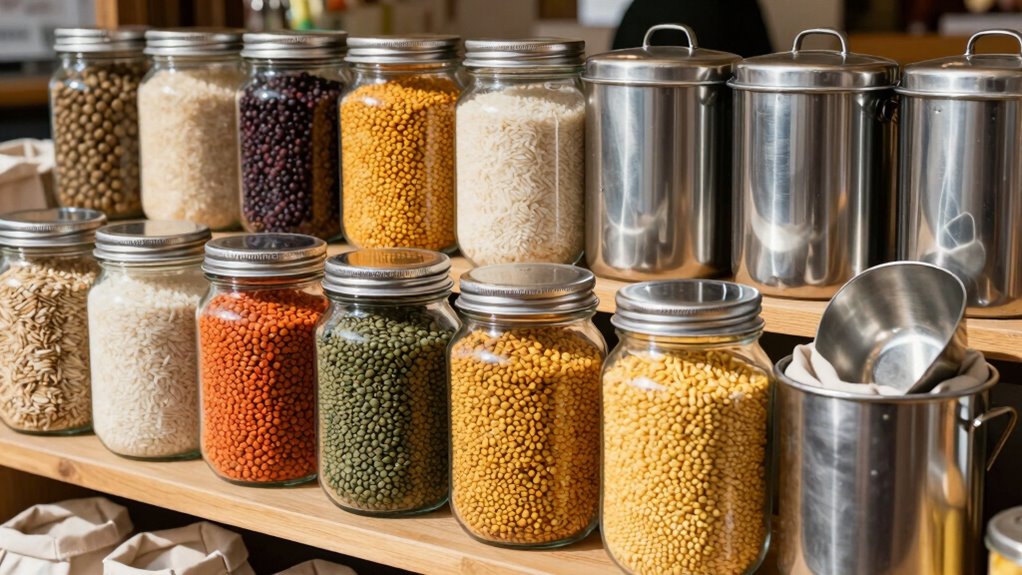

To shop for better packaging-free household staples, choose eco-friendly, bulk-sourced items from ethical brands that support minimal or biodegradable packaging. Bring reusable containers and create shopping lists to avoid unnecessary waste. Explore refill services and local stores that accept personal jars, prioritizing local producers to reduce transportation emissions. Look for brands with transparent supply chains and certifications. Stay committed to sustainable choices, and you’ll find even more ways to make your shopping eco-friendly as you continue.

Get furniture and decor delivered free — and shop member deals
- Fast, free delivery on millions of items
- Access to Prime Big Deal Days deals on October 6–7
- Prime Video, Amazon Music and more included
Key Takeaways
- Bring reusable containers and jars to bulk stores to reduce packaging waste.
- Choose local, ethically sourced products with transparent supply chains and eco-friendly certifications.
- Shop online from refill-focused brands that prioritize sustainable sourcing and packaging-free options.
- Organize your storage with labeled, durable containers to encourage regular use and minimize packaging reliance.
- Support local producers and brands committed to minimal, biodegradable packaging and responsible production.
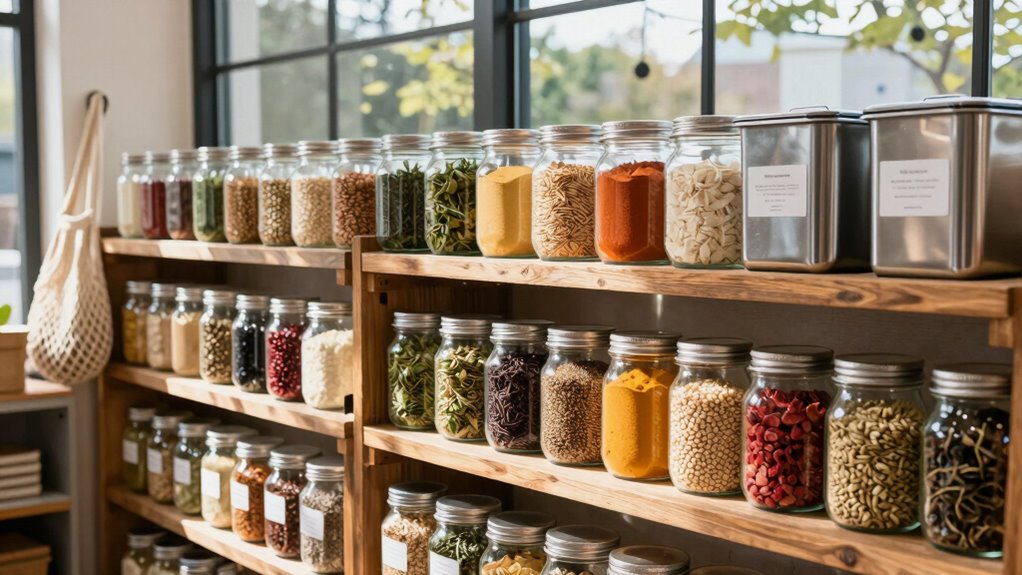
Switching to packaging-free household staples can seem challenging at first, but with a few simple strategies, you can make more sustainable choices effortlessly. The key is to focus on sourcing products that are eco-friendly and easy to buy in bulk, reducing both packaging waste and your environmental footprint. When it comes to sustainable sourcing, look for shops and brands committed to ethical practices, such as using minimal or biodegradable packaging and supporting local producers. These choices guarantee you’re not only reducing waste but also encouraging responsible production methods. Additionally, many stores now offer bulk discounts, making it more affordable to choose sustainable options regularly.
Choose eco-friendly, bulk-sourced products from ethical brands to reduce waste and support sustainable practices.
Bulk buying tips are essential as they allow you to purchase larger quantities of household staples without extra packaging. Find local bulk stores or co-ops where you can bring your own containers, jars, or reusable bags. This way, you avoid single-use plastics and excessive packaging materials. Before heading out, make a shopping list to help you stick to what you need, reducing impulse buys that might come with unnecessary packaging. When shopping, weigh your containers beforehand and label them clearly to avoid confusion at checkout, making the process smooth and efficient.
In addition to local stores, consider online options that specialize in packaging-free or zero-waste products. Many companies now offer refill services for common household staples like grains, nuts, cleaning supplies, and personal care items. When ordering, ensure they use sustainable sourcing practices—look for certifications or transparent supply chains indicating environmentally responsible practices. This way, you support companies that prioritize eco-friendly sourcing, which is crucial for a truly sustainable lifestyle. Furthermore, choosing products with transparent supply chains helps you make informed decisions and promotes accountability among producers. Incorporating sustainable sourcing into your shopping habits is an important step toward reducing your ecological impact. Additionally, staying informed about the benefits of ethical production can further guide your purchasing choices and support responsible businesses.
Another effective bulk buying tip is to organize your pantry or storage space for easy access to your staples, which encourages regular refilling and reduces reliance on packaged alternatives. Investing in durable, reusable containers not only keeps your purchases fresh but also minimizes waste. Label your containers with contents and purchase dates to keep track of freshness and ensure you’re using products efficiently. Moreover, developing a routine for refilling and maintaining your containers can help foster long-term sustainable habits.
Lastly, educate yourself about the origins of your staples, prioritizing products from local farms or producers who practice sustainable sourcing. This reduces transportation emissions and supports local economies. By combining these bulk buying tips with a focus on sustainable sourcing, you’ll find it easier to shop consciously and make a positive environmental impact. Over time, these habits become second nature, helping you maintain a more sustainable household with less packaging waste and a smaller ecological footprint.
eco-friendly bulk food containers
As an affiliate, we earn on qualifying purchases.
As an affiliate, we earn on qualifying purchases.
Frequently Asked Questions
Are Packaging-Free Options More Cost-Effective Long-Term?
Packaging-free options can be more cost-effective long-term because you save on packaging costs and often buy in bulk, reducing overall expenses. When doing a pricing comparison, you’ll notice the initial investment might be higher, but the savings add up over time. Plus, these options lower your environmental impact by reducing waste, which aligns with eco-friendly living and can lead to potential savings in waste disposal costs.
How Do I Store Packaging-Free Household Staples Properly?
Did you know that proper storage can extend the life of your staples by up to 50%? To store packaging-free household staples effectively, use reusable containers that keep items fresh and protected. Opt for airtight storage solutions like glass jars or durable bins, and label everything clearly. Keep your supplies in a cool, dry place, away from sunlight, to prevent spoilage and maintain quality.
Can I Find Packaging-Free Alternatives for All Household Staples?
Yes, you can find packaging-free alternatives for most household staples. Look for brands that prioritize sustainable packaging and use eco-friendly materials, like glass, metal, or biodegradable options. Shop at bulk stores or co-ops where you can refill your containers. While some items might be harder to find, with a bit of research and persistence, you’ll discover countless options that reduce waste and support a greener lifestyle.
What Are the Best Local Stores for Packaging-Free Shopping?
Imagine a treasure hunt where local markets are your map to zero waste living. You’ll find the best packaging-free household staples at farmers’ markets, co-ops, and bulk stores nearby. These places act as your compass, guiding you through aisles of sustainable choices. Supporting local markets not only reduces waste but also builds community. Keep an eye out for stores that champion plastic-free, eco-friendly products, making your shopping trip a step toward a greener planet.
How Do I Ensure the Hygiene of Bulk Packaging-Free Products?
To guarantee hygiene of bulk packaging-free products, always wash your hands before handling them. Use clean, reusable containers and sanitize them regularly. Look for products from sustainable sourcing, which often follow strict hygiene standards. Check product labeling for freshness dates and storage instructions. When shopping, choose reputable stores that maintain cleanliness and proper storage. This way, you keep your household safe while supporting eco-friendly practices.
Conclusion
By choosing packaging-free household staples, you’re steering your shopping cart away from waste and toward a greener future. Think of it as planting seeds for change—each small step creates a garden of sustainability. When you shop consciously, you’re not just filling your home; you’re nurturing the planet. So, embrace these tips and turn your shopping routine into a powerful act of kindness for the Earth. Your choices today shape a cleaner tomorrow.
Halloween Picks
halloween
As an affiliate, we earn on qualifying purchases.