
Energy vampires are devices that drain power even when turned off or in standby mode, causing higher electricity bills and environmental harm. To stop phantom power, unplug chargers, use power strips, or switch to smart plugs that cut power automatically. Recognizing signs like warm devices or glowing indicator lights helps identify hidden energy drainers. Taking these simple steps saves money and benefits the environment—keep exploring to learn more ways to eliminate energy vampires effectively.

Get furniture and decor delivered free with Prime
- Fast, free delivery on millions of items
- Prime Video, Amazon Music and more included
- Member-only deals all year
Key Takeaways
- Unplug devices when not in use or fully charged to prevent unnecessary standby power consumption.
- Use power strips with switches or smart plugs to easily cut off phantom power to multiple devices.
- Monitor energy usage with smart plugs or energy monitors to identify and manage energy vampires effectively.
- Turn off chargers and electronics at the wall when not in use to eliminate standby power drain.
- Support energy-efficient habits like using timers, switching to LED lighting, and investing in renewable energy sources.
Products Worth Considering

Philips Hue Large Smart Light Tube, Black – White and Color Ambiance LED Color-Changing Light – 1 Pack

Philips Hue Festavia Globe Outdoor String Lights, 32 Bulbs, 91 ft

LEVOIT Vital 100S-P Smart Air Purifier with Washable Pre-Filter
As an affiliate, we earn on qualifying purchases.
What Are Energy Vampires and How Do They Work

Energy vampires are devices or behaviors that drain your energy or power without providing any real benefit in return. They are often small gadgets or electronics that consume power even when turned off, a phenomenon known as standby electricity. These devices keep their internal circuits active, leading to unnecessary power consumption. Over time, this phantom power can add up, increasing your electricity bills and wasting resources. For example, chargers, gaming consoles, and TVs often draw power in standby mode. You might not notice this drain daily, but it’s a hidden energy loss. Recognizing how energy vampires work helps you take control of your power consumption. By unplugging unused devices or using power strips, you can cut down on standby electricity and save money. Additionally, understanding AI-powered energy management tools can further optimize your energy use at home.
Common Devices That Steal Power When Off

Many devices keep drawing power even when you think they’re off. Your standby TV, charging stations, and home office equipment often continue to use energy in the background. Recognizing these power thieves can help you cut costs and reduce your energy waste. Using smart outlets and timers can further optimize energy efficiency by automatically turning off devices when not in use.
Standby TV Power Drain
Have you ever noticed your TV blinking or glowing even after you’ve turned it off? That’s a sign of standby tv power drain, where your TV continues to draw power despite being off. This phantom power can add up over time, wasting energy and increasing your electricity bill. Many modern TVs and entertainment systems consume power in standby mode, ready to turn on quickly or display notifications. To reduce this phantom power, unplug devices when not in use or use a power strip with an on/off switch. Some smart plugs also allow you to control power remotely, helping you cut standby tv power drain altogether. Energy efficiency can be improved by choosing ENERGY STAR-rated devices that are designed to minimize standby power consumption. Taking these simple steps can considerably reduce energy waste and help you save money while being more eco-friendly.
Charging Devices Off-Mode
Even when your devices are turned off, they can still be quietly draining power if they’re designed to stay ready for quick use or notifications. Charging devices, like smartphones and tablets, often draw power even after they’re fully charged, impacting your energy bill and device longevity. To protect your devices and ensure proper battery maintenance, unplug chargers when not in use. Using power surge protection can prevent sudden voltage spikes that damage chargers and devices while they’re off. This not only saves energy but also extends the lifespan of your electronics. Consider investing in smart outlets or power strips with individual switches to easily cut power when devices are off. Managing this off-mode power consumption helps you save money and keeps your devices in good shape longer. Additionally, understanding phantom power can help you identify all sources of energy vampires in your home.
Home Office Equipment
Your home office is likely filled with devices that draw power even when you think they’re off, quietly increasing your energy bills. To cut costs, consider power saving strategies like unplugging devices or using smart power strips. Many common office devices have varying device energy ratings that impact their phantom load. Additionally, some devices, such as monitors with LED indicators, may continue to draw power through their standby modes, highlighting the importance of understanding power management features.
Recognizing the Signs of Phantom Power Consumption

Detecting phantom power consumption starts with paying attention to unusual energy patterns and subtle signs that appliances are still drawing power when turned off. Many people believe power consumption myths, thinking only active devices use energy. However, devices like chargers, TVs, and computers often draw power even when not in use. To recognize these signs, use simple energy audit techniques, such as checking if gadgets stay warm or if indicator lights remain on. A noticeable increase in your electricity bill without obvious reasons is another warning. Pay close attention to devices connected to power strips and outlets, especially those with standby features. Being aware of these signs helps you identify energy vampires and take action to reduce unnecessary power drain. Additionally, automatic power management features in modern electronics can contribute to phantom loads, making it important to understand device settings.
The Environmental Impact of Energy Vampires

While phantom power may seem insignificant individually, collectively, energy vampires contribute markedly to environmental harm. This unnecessary energy drain increases carbon emissions, impacting climate change. When devices consume power in standby mode, they rely on fossil fuels, undermining efforts toward renewable energy and energy conservation. Regularly unplugging devices or using smart power strips can help mitigate this energy loss.
Easy Ways to Detect Hidden Energy Drainers
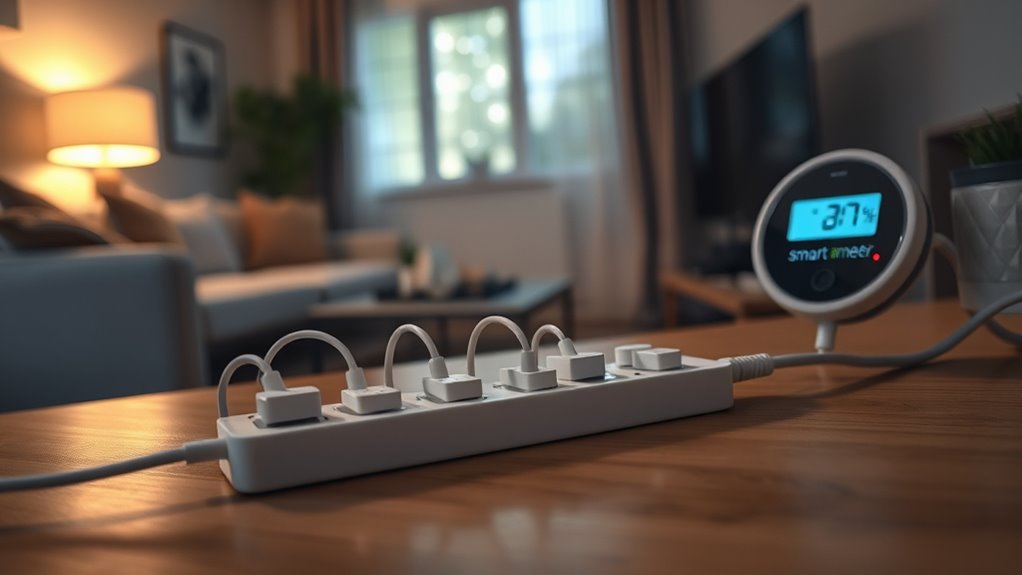
Identifying hidden energy drainers around your home doesn’t have to be complicated. Start by examining your appliances’ energy ratings—those labels reveal which devices consume the most power. Look for outdated or inefficient models, especially those with low energy ratings, that might be silently draining energy. Smart home integration can help you monitor usage in real-time, providing insights into which devices are the biggest culprits. Use energy monitors or smart plugs to track power consumption of individual appliances, making it easier to spot hidden drainers. Also, check for devices that stay plugged in but aren’t in use, as they often continue to draw power. These simple steps can help you uncover phantom loads and start reducing unnecessary energy waste around your home. Additionally, understanding paint sprayer maintenance and proper usage can prevent equipment inefficiencies that may contribute to energy waste.
Practical Tips to Cut Off Phantom Power

To effectively cut off phantom power, start by unplugging devices when you’re not using them or when they’re fully charged. This prevents unnecessary power consumption from devices in standby mode. Here are practical tips:
- Use power strips and turn them off when devices aren’t in use, cutting the power supply entirely.
- Switch off chargers and appliances at the wall instead of leaving them plugged in, reducing standby power drain.
- Invest in smart plugs that automatically cut power to devices when they’re not active, preventing phantom power from sneaking in.
- Be aware of standby power consumption in household devices, which can contribute significantly to energy waste over time.
These simple actions eliminate unnecessary power consumption, help reduce energy bills, and lessen your environmental impact. Managing device standby modes is a quick, effective way to stop energy vampires in their tracks.
Using Power Strips and Smart Plugs to Save

Using power strips and smart plugs makes it easy to reduce energy waste from standby devices. With a simple remote control or smartphone app, you can turn off multiple devices at once, preventing phantom power from draining your energy. Smart home technology allows you to schedule device shutdowns or set them to turn off automatically when not in use, saving you money and reducing your carbon footprint. By plugging devices into power strips, you can easily switch off everything with a single press, avoiding the hassle of unplugging individual items. Smart plugs can also detect when devices are idle and cut power accordingly. This approach streamlines energy management, making it convenient to eliminate phantom power and boost your home’s efficiency effortlessly. Additionally, using user consent management features helps you control which devices or services are actively tracking your energy usage, ensuring your privacy preferences are respected.
Implementing Energy-Efficient Habits at Home
Adopting energy-efficient habits at home can considerably reduce your energy consumption and lower your utility bills. You can also support renewable energy by choosing providers that supply green power or installing solar panels. To optimize energy use, consider these habits:
- Use energy storage solutions like batteries to store excess renewable energy for later use, reducing reliance on the grid.
- Turn off appliances and electronics when not in use, avoiding phantom power drain.
- Adjust your thermostat to conserve energy, especially during peak hours, and leverage smart thermostats for better control.
Implementing these habits not only cuts costs but also promotes a sustainable lifestyle. Small changes can make a big difference in reducing your carbon footprint and supporting renewable energy initiatives.
Long-Term Benefits of Eliminating Energy Vampires

By cutting out energy vampires, you’ll see lower energy bills over time. You’ll also reduce your carbon footprint and help protect the environment. Plus, your appliances will last longer, saving you money on replacements.
Lower Energy Bills
Eliminating energy vampires can lead to significant savings on your monthly utility bills over time. By unplugging devices or using smart power strips, you prevent unnecessary phantom energy use. This directly lowers your energy consumption and costs. Additionally, switching to energy-efficient lighting reduces the power needed for illumination, further decreasing bills. Exploring renewable energy options like solar panels can offset your electricity needs altogether. Here are three ways to maximize savings:
- Use energy-efficient lighting to cut lighting costs.
- Unplug devices when not in use to stop phantom power drain.
- Invest in renewable energy options for long-term savings and independence.
Taking these steps not only lowers your bills but also promotes a more sustainable lifestyle. Small changes today lead to bigger savings tomorrow.
Reduce Carbon Footprint
Reducing your energy vampire consumption can substantially lower your overall carbon footprint, helping combat climate change over the long term. When you unplug devices or switch them off completely, you decrease unnecessary energy use, which reduces carbon emissions from power plants. This small change adds up, especially as energy vampires account for a significant portion of household energy waste. By conserving energy, you also support the growth of renewable energy sources, making your home more eco-friendly. Cutting back on phantom power not only benefits the environment but also encourages responsible energy habits. Over time, these efforts contribute to cleaner air and a healthier planet, making a real difference in reducing your overall impact on climate change.
Extend Appliance Life
When you unplug devices that are not in use, you prevent unnecessary wear and tear on their components. This simple step helps improve appliance maintenance and extends device longevity. By reducing constant power flow, you lessen stress on internal parts, preventing overheating and early failure.
Here are three ways unplugging benefits your appliances:
- Reduces electrical strain, decreasing the risk of component damage.
- Prevents overheating, which can weaken internal circuits.
- Minimizes dust and corrosion, protecting sensitive parts over time.
Taking this small action regularly can markedly prolong your appliance’s lifespan. It keeps them functioning smoothly longer, saving you money on repairs or replacements and ensuring your devices stay reliable for years to come.
Frequently Asked Questions
Can Energy Vampires Cause Electrical Fires?
Yes, energy vampires can cause fire hazards. When you leave devices plugged in, they can create electrical overloads, especially if the cords are damaged or faulty. These overloads can generate excess heat, increasing the risk of electrical fires. To stay safe, unplug devices when not in use and regularly check cords for signs of wear. Taking these steps minimizes fire hazards linked to phantom power and energy vampires.
Are Some Devices More Prone to Phantom Power Than Others?
Some device types are more prone to phantom power due to their design. You’ll find that chargers, entertainment systems, and standby appliances tend to have higher power consumption even when off. Think of it as leaving a light on in a room you’re not using. Devices with constant functions or features that stay active, like smart TVs, are more likely to drain power, making them prime culprits for phantom energy loss.
How Much Energy Do Energy Vampires Typically Waste Annually?
You waste about 10-15% of your home’s power consumption on standby energy each year due to energy vampires. These devices draw power even when turned off, adding up over time. Small gadgets like chargers, TVs, and gaming consoles are common culprits. By unplugging or using smart power strips, you can markedly reduce phantom power and save money on your energy bill annually.
Do Energy-Efficient Appliances Also Contribute to Phantom Power?
Yes, energy-efficient appliances can still contribute to phantom power through their standby mode. Even when turned off, many appliances draw power for features like remote control sensors or digital displays. This appliance standby power consumption adds up over time, wasting energy and increasing your electricity bills. To reduce this, unplug devices when not in use or use power strips with switches to cut off power entirely.
Is There a Financial Benefit to Eliminating All Energy Vampires?
Yes, eliminating all energy vampires can lead to significant cost savings on your electricity bill. By unplugging devices or using smart power strips, you reduce unnecessary energy consumption. This not only saves you money but also lessens the environmental impact by decreasing overall energy demand. Over time, these small actions add up to meaningful financial benefits and contribute to a more sustainable future.
Conclusion
Now that you know about these sneaky energy vampires, it’s time to turn the tables. Say goodbye to phantom power drains and hello to a fatter wallet—and a happier planet. Remember, every device you unplug is one less ill-behaved ghost sucking your energy. So go ahead, outsmart these invisible thieves—because why pay for power you’re not even using? Sleep soundly knowing you’re a true energy-saving hero, even if no one’s watching.