A rainwater harvesting starter guide helps you understand how to collect, store, and use rainwater effectively on your property. It covers benefits like reducing water bills and conserving resources, choosing the right system components, installing gutters and tanks, and ensuring water safety with proper treatment. By planning carefully and maintaining your setup, you can maximize efficiency and sustainability. Continue exploring to discover detailed tips that will help you build a successful rainwater harvesting system.
Key Takeaways
- Assess local rainfall patterns, site conditions, and legal regulations to plan an effective rainwater harvesting system.
- Choose durable, non-toxic components and design gutters, tanks, and filters for efficient collection and maintenance.
- Install filtration and treatment systems to ensure water quality for household, irrigation, or safe drinking use.
- Regularly maintain gutters, filters, and tanks to prevent clogs, leaks, and contamination.
- Use eco-friendly storage solutions and optimize system design to maximize efficiency and sustainability.

Elkhart Plastics 1000 Gallon Vertical Water Storage Tank, Plastic Water Tank for Collection, Holding, and Storage, UV-Resistant, for Rainwater Harvesting, Agricultural, RV, Emergency, and General Use
RELIABLE LONG-LASTING VERTICAL WATER STORAGE: The Elkhart Plastics 1000 Gallon Water Container is designed for a wide range…
As an affiliate, we earn on qualifying purchases.
As an affiliate, we earn on qualifying purchases.
Understanding the Benefits of Rainwater Harvesting

Rainwater harvesting offers numerous benefits that can considerably improve your water management and reduce costs. One key advantage is its positive impact on rainwater economics, as collecting and using rainwater decreases your reliance on municipal water supplies. This can lead to lower water bills and lessen the strain on local water resources. Additionally, it promotes water conservation by capturing rain before it runs off, helping you use this natural resource more efficiently. By harvesting rainwater, you can irrigate gardens, wash cars, or even supply household needs, reducing overall water consumption. These benefits not only save you money but also contribute to environmental sustainability. Embracing rainwater harvesting aligns with responsible water practices and supports long-term resource management. Incorporating sound design techniques into educational materials or promotional campaigns can further enhance awareness about sustainable water practices.

Rain Harvesting Leaf Eater Advanced 2"x 3"/ 3"x 4" – Downspout Filter with 955 Micron Angled Mesh Filter Screen and Compact Design for Easy Installation and Maintenance
95%+ Capture Efficiency
As an affiliate, we earn on qualifying purchases.
As an affiliate, we earn on qualifying purchases.
Assessing Your Property’s Rainwater Collection Potential
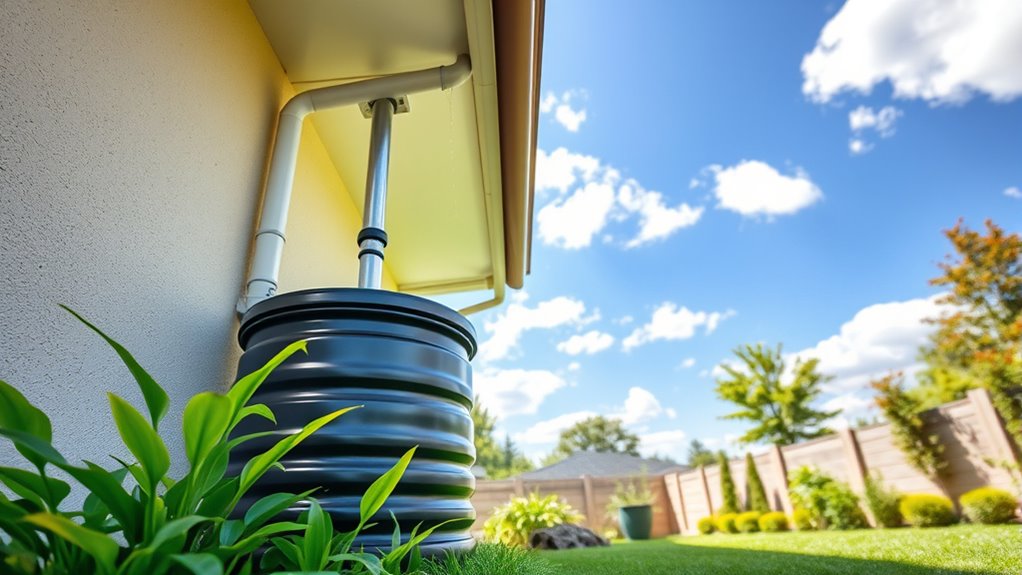
To start evaluating your property’s rainwater collection potential, you should analyze your area’s rainfall patterns to understand how much water you can capture. Next, evaluate your roof’s size and material, along with the land around your property, to determine the most effective collection points. These steps help you make informed decisions about optimizing your rainwater harvesting system. Additionally, consider the potential benefits of integrating rainwater harvesting into your property’s water management plan to maximize sustainability.
Rainfall Analysis Techniques
Evaluating your property’s rainwater collection potential starts with a thorough analysis of local rainfall patterns and your specific site conditions. You should consider factors like cloud cover and rainfall variability, which influence how much water you can harvest. Tracking historical rainfall data helps identify trends and peak seasons. Using tools like local weather stations or online databases provides accurate insights. Here’s a quick overview:
| Cloud Cover Impact | Rainfall Variability | Data Collection Methods |
|---|---|---|
| Reduces direct rainfall | Causes fluctuations in harvest potential | Weather stations, online sources |
| Affects runoff intensity | Varies yearly or seasonally | Rain gauges, local records |
| Influences evaporation rates | Important for long-term planning | Satellite data, climate reports |
This analysis ensures you set realistic expectations and optimize your harvesting system. Additionally, understanding rainwater harvesting techniques can help you maximize collection efficiency based on your site’s unique conditions.
Roof and Land Evaluation
Evaluating your property’s roof and land features is a key step in determining how much rainwater you can collect. Your roof’s size, material, and slope directly influence runoff volume, while land contour affects water flow and collection potential. Consider how the climate impact varies seasonally, affecting rainfall patterns and collection efficiency. Additionally, legal regulations may restrict rainwater harvesting practices, so understanding local laws is essential. Incorporating analytical cookies can help monitor seasonal rainfall trends and optimize your harvesting system.

2 Pack Rain Gutter Downspout Extensions Flexible,Down Spout Extender Diverter Extendable from 21 to 68 in,Screws for Included,Black
KEEPS FOUNDATIONS DRY:Gutter Downspout extension can easily be extended from 21 Inch to 68Inch to divert unwanted stormwater…
As an affiliate, we earn on qualifying purchases.
As an affiliate, we earn on qualifying purchases.
Choosing the Right Collection System and Components

Choosing the right collection system and components is essential for an efficient rainwater harvesting setup. Start by evaluating your storage capacity needs based on your water usage and rainfall patterns. This ensures you select tanks that can hold enough water without overflowing or wasting space. Material selection is equally important; opt for durable, non-toxic materials like polyethylene, fiberglass, or concrete that resist corrosion and contamination. Properly designed collection surfaces and gutters will direct water smoothly into your storage tanks, minimizing debris and contaminants. Consider ease of maintenance when choosing components to keep your system functioning optimally over time. Additionally, understanding rainwater quality factors can help you select the best filtration and treatment options for your needs. By carefully evaluating storage capacity and selecting suitable materials, you set a strong foundation for a reliable, efficient rainwater harvesting system.

RTS Home Accents 50-Gallon Rain Barrel with Brass Spigot, Flat Back Rain Water Collection Barrel, Walnut Color
50-Gallon Capacity: Provides ample storage for harvested rainwater, ideal for watering gardens, lawns, and plants.
As an affiliate, we earn on qualifying purchases.
As an affiliate, we earn on qualifying purchases.
Setting Up Your Rainwater Collection System
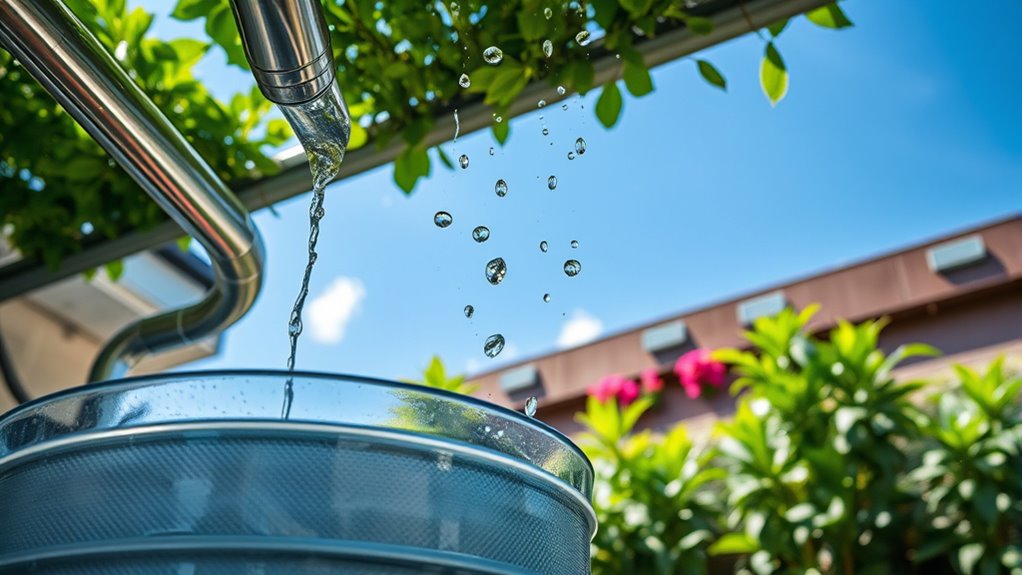
First, you’ll need to choose the best area for collecting rainwater, such as a roof or other surfaces. Next, install your storage tanks in a secure and accessible location. Proper setup guarantees efficient collection and easy maintenance down the line. Additionally, ensure your system includes filtering and purification components to maintain water quality and safety.
Choosing Collection Area
Have you considered where your rainwater collection system will gather the most, and safest, runoff? Choosing the right collection area is crucial for efficiency and safety. Look for rooftops or paved surfaces that direct water away from hazards. Guarantee the area’s landscape design minimizes erosion and contamination risks. Integrate the collection spot into your garden design for seamless landscape integration. Avoid areas with trees or debris that could clog your system. Think about the slope and drainage, ensuring water flows naturally toward your catchment. Select a spot that’s accessible for maintenance and inspection. Consider how the location fits into your overall landscape to maximize water collection without disrupting existing features. Properly choosing your collection area ensures a sustainable, efficient system that works with your environment. Additionally, understanding proper planning can help you avoid costly errors and optimize water harvesting efficiency.
Installing Storage Tanks
Setting up your rainwater storage tanks is a critical step in establishing an efficient collection system. Choose tank materials that are durable and suitable for potable or non-potable water, such as polyethylene, fiberglass, or metal. Confirm the tank is placed on a stable, level surface to prevent leaks or tipping. Proper installation includes connecting your tank securely to the downspout and installing a screen or filter to prevent debris from entering. Water level monitoring is essential to avoid overflow and manage your water supply effectively. Consider installing a gauge or using a float valve to keep track of water levels easily. Additionally, understanding the impact of water storage efficiency can help optimize your system’s performance. With the right tank materials and monitoring methods, you’ll ensure your rainwater storage system works reliably and efficiently.
Properly Installing Gutters and Downspouts

To guarantee your rainwater harvesting system works effectively, installing gutters and downspouts properly is essential. Well-installed gutters ensure efficient water collection, while proper downspout design prevents overflow and erosion. Focus on secure attachment to your roofline, maintaining a slight slope for water flow, and choosing durable materials. Regular gutter maintenance, like cleaning and inspecting for leaks, keeps the system functioning smoothly. When installing downspouts, consider their length and outlet placement to direct water away from foundations. Use brackets and anchors to firmly hold gutters in place, avoiding sagging. Ensure downspouts extend sufficiently away from your home to prevent water pooling. Proper installation minimizes debris buildup and reduces the risk of damage, making your rainwater harvesting system reliable and low-maintenance. Proper installation and maintenance are vital for system longevity.
Storage Options and Container Selection

Choosing the right storage options and containers is vital for maintaining clean, safe, and accessible rainwater. You want containers that are durable enough to withstand weather conditions and prevent leaks or cracks over time. Look for options with high container durability, such as UV-resistant plastics or corrosion-resistant materials, to guarantee longevity. Material compatibility is also essential; select containers made from safe materials that won’t leach chemicals into your water. Food-grade plastics are a popular choice, but metal tanks can work if properly coated. Avoid containers that are prone to algae growth or contamination. Properly selected storage options not only protect your harvested rainwater but also make maintenance easier, ensuring your system remains reliable and safe for future use.
Water Treatment and Filtration Techniques

Effective water treatment and filtration are essential to guarantee your harvested rainwater is safe for use. Choosing the right filtration methods guarantees contaminants like debris, bacteria, and chemicals are removed, providing clean water for your needs. Water purification techniques can involve simple filters or advanced systems, depending on your requirements. Proper filtration not only improves water quality but also extends the lifespan of your storage system. To enhance safety, consider the following:
Ensure safe, clean rainwater with proper filtration—remove debris, bacteria, and chemicals effectively.
- Sediment filters to remove dirt and particles
- Activated carbon filters for chemical absorption
- UV sterilizers to kill bacteria and viruses
- Chlorination or chemical disinfection methods
- Regular maintenance and testing of your filtration system
Implementing these water treatment and filtration techniques guarantees safe, high-quality rainwater for your household or garden.
Using Rainwater Safely for Various Purposes

Ever wondered how to use rainwater safely for different household and garden needs? Ensuring good rainwater quality is vital, especially when using it for drinking, cooking, or watering edible plants. First, check local legal regulations regarding rainwater use, as rules vary widely by region. For safe application, avoid collecting water from contaminated surfaces like rooftops with debris or pollutants. Use properly maintained storage tanks and ensure the water is filtered before use. For non-potable purposes such as watering gardens or cleaning, minimal treatment may suffice, but for drinking or cooking, additional purification is essential to eliminate bacteria and pathogens. Staying informed about legal requirements and maintaining your collection system helps you use rainwater safely and responsibly across your household and garden.
Maintenance and Troubleshooting Tips
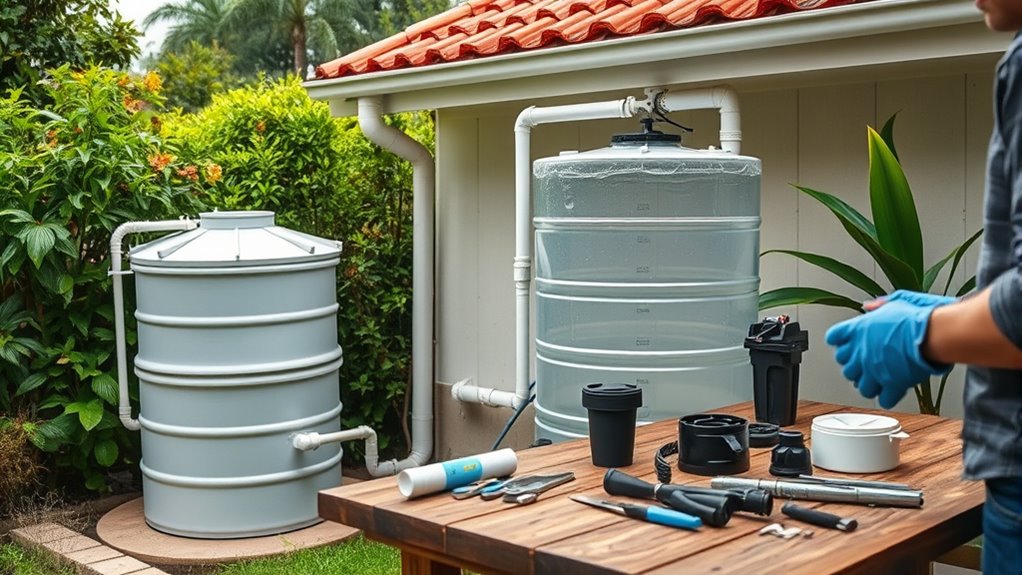
Maintaining your rainwater harvesting system guarantees the water remains safe and the setup functions efficiently. Regular component maintenance prevents issues and extends your system’s lifespan. Check for debris clogging gutters and filters, and clean them promptly. Inspect pipes and fittings for cracks or leaks, troubleshooting leaks early before they worsen. Ensure the storage tank’s inlet screens are clear and functioning properly. Test the system’s valves and pumps to confirm they operate smoothly. Keep an eye on the overall condition of the system, addressing rust or corrosion immediately. To troubleshoot leaks, tighten fittings or replace damaged parts as needed. Proper maintenance not only safeguards water quality but also minimizes costly repairs down the line.
- Regularly clean gutters and filters
- Inspect for and repair leaks promptly
- Check and tighten fittings and joints
- Test valves and pumps for smooth operation
- Monitor for corrosion or damage
Maximizing Efficiency and Sustainability in Rainwater Harvesting

To get the most out of your rainwater harvesting system, focus on ideal collection techniques that maximize catchment and minimize losses. Choosing eco-friendly storage solutions helps reduce environmental impact and keeps your water safer. Implementing these strategies ensures your system is both efficient and sustainable over the long term.
Optimal Collection Techniques
Optimizing rainwater collection starts with selecting the right catchment surfaces and designing the system to minimize losses. Use smooth, clean roofs to reduce debris and contamination, ensuring better water quality. Incorporate gutters and downspouts effectively to direct water into storage without overflow or splashing. Implement stormwater management practices like permeable pavements and swales to reduce runoff and improve groundwater recharge. For irrigation, consider drip irrigation systems that maximize water use efficiency and reduce wastage. Regularly clean gutters and filters to prevent blockages and contamination. Position collection points strategically to capture the most runoff during storms. By focusing on these techniques, you enhance both efficiency and sustainability, ensuring your rainwater harvesting system functions most effectively over time.
Eco-Friendly Storage Solutions
Choosing eco-friendly storage solutions is essential for maximizing both efficiency and sustainability in rainwater harvesting. The right storage container options can help maintain ideal rainwater quality, ensuring the water stays clean and safe for use. Look for containers made from recycled or sustainable materials, such as BPA-free plastics or natural options like clay or wood. These eco-friendly choices reduce environmental impact and can enhance water filtration naturally. Properly sealed, inert containers prevent contamination and algae growth, preserving water quality over time. Additionally, selecting containers that are durable and weather-resistant minimizes replacement needs, supporting long-term sustainability. By prioritizing eco-friendly storage solutions, you ensure your rainwater harvesting system is both efficient and environmentally conscious, maximizing the benefits for your home and the planet.
Frequently Asked Questions
How Much Does a Basic Rainwater Harvesting System Typically Cost?
A basic rainwater harvesting system usually costs between $500 and $2,500, depending on your needs. Your cost estimation considers factors like tank size, materials, and installation complexity. Smaller setups with simple barrels are more affordable, while larger, more sophisticated systems with filtration and pump components increase pricing. To get an accurate estimate, evaluate your water usage and site conditions, then compare different options based on these pricing factors.
Are There Legal Restrictions or Permits Required for Rainwater Harvesting?
Think of rainwater harvesting like planting a garden—you need permission from the city to guarantee everything grows smoothly. You should check local laws for legal compliance and permit requirements before setting up your system. Regulations vary by area, some requiring permits or specific standards. By following these rules, you protect your project and stay on the right side of the law, making your rainwater collection a legal and sustainable venture.
Can I Use Harvested Rainwater for Drinking Without Treatment?
You should not use harvested rainwater for drinking without proper treatment because water quality varies and can contain contaminants. To make it safe, you need effective treatment methods like boiling, filtration, or chlorination. These steps help remove bacteria, viruses, and pollutants, ensuring the water is safe for consumption. Always test your water regularly, and follow local health guidelines to avoid health risks from untreated rainwater.
What Are Common Signs of System Issues or Leaks?
Did you know that up to 80% of rainwater harvesting system malfunctions are caused by leaks? You should watch for leak indicators like unexpected water pooling, low water levels, or increased runoff. System malfunctions often include clogged filters or damaged pipes. Regular inspections help catch issues early, preventing costly repairs and ensuring your system works efficiently. Stay vigilant for these signs to maintain a healthy, leak-free rainwater system.
How Can I Improve Rainwater Collection During Droughts?
To improve rainwater collection during droughts, focus on stormwater filtration and storage optimization. Install efficient filters to maximize water quality and reduce debris. Use larger or additional storage tanks to capture more rain when it does fall, ensuring you have reserves during dry periods. Regularly maintain your system, check for leaks, and consider incorporating graywater systems to supplement your supply. These steps help maximize your rainwater harvest even in drought conditions.
Conclusion
Imagine your yard thriving with lush greenery, all powered by rainwater you captured and trusted. With the right system in place, you become a steward of sustainability, turning grey skies into a gift for your home. Every drop you harvest not only reduces your water bills but also nurtures your landscape. Embrace rainwater harvesting today, and watch your property transform into a vibrant, eco-friendly oasis—proof that small actions can make a big difference.