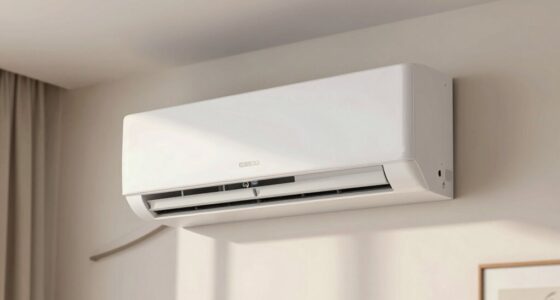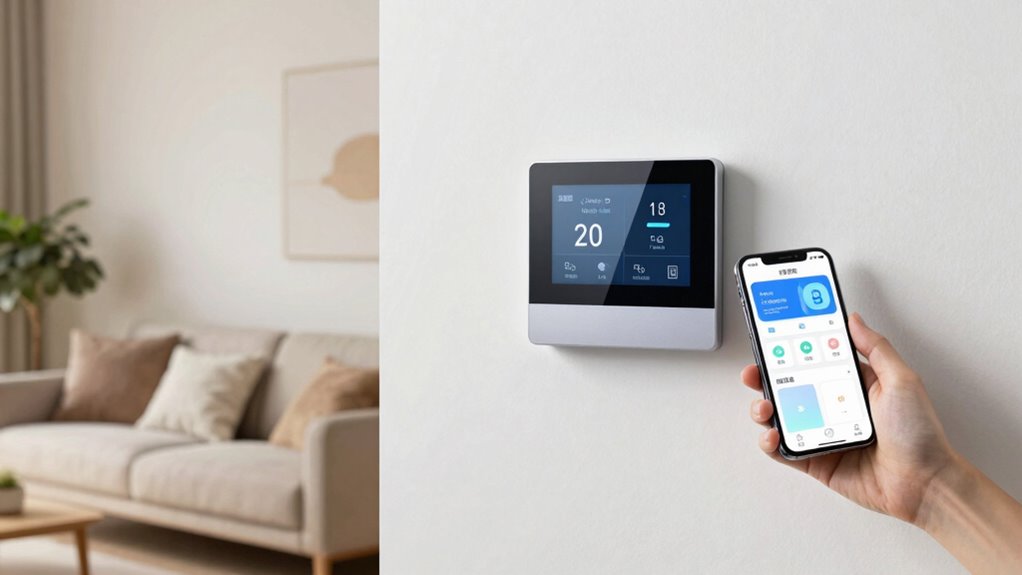

Smart thermostats support lower-energy habits by automatically adjusting your home’s temperature based on your routines, occupancy, and real-time conditions. They learn your preferences over time and use adaptive scheduling to reduce energy when you’re away or sleeping. Features like geofencing and remote control help you save energy effortlessly. By tracking your habits and offering tips, they encourage smarter decisions that lower your energy use without sacrificing comfort. Keep exploring to see how you can maximize these benefits.

Get furniture and decor delivered free with Prime
- Fast, free delivery on millions of items
- Prime Video, Amazon Music and more included
- Member-only deals all year
Key Takeaways
- They analyze user behavior to create personalized schedules that optimize energy use and comfort.
- Real-time adjustments respond to current conditions, reducing unnecessary heating or cooling.
- Automation features, like geofencing, adjust settings when residents leave or return home.
- Feedback and detailed reports encourage energy-efficient habits through actionable insights.
- Integration with other smart devices enables coordinated actions that lower overall household energy consumption.
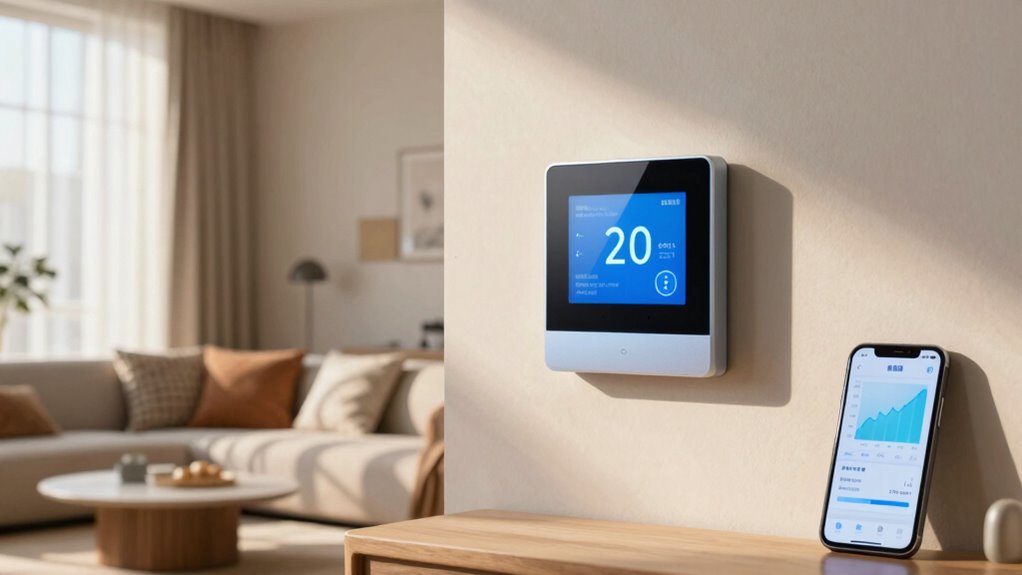
Smart thermostats are transforming the way you manage your home’s energy use, making it easier to save money and reduce your environmental impact. These devices come equipped with energy saving features that optimize your heating and cooling patterns without requiring constant manual adjustments. Instead of setting a fixed temperature and forgetting about it, you benefit from adaptive scheduling and real-time adjustments that respond to your daily routines. By learning when you’re home or away, the thermostat can lower energy consumption during periods when you’re not actively using your space, helping you cut down on unnecessary energy use.
Smart thermostats optimize energy use by adapting to your routines, saving money and reducing environmental impact.
One of the key advantages of smart thermostats is their ability to gather user behavior insights. Over time, these devices analyze your habits—such as preferred temperatures, occupancy patterns, and even your comfort preferences. This data enables the thermostat to create personalized schedules that maximize efficiency while maintaining your comfort. For example, it might learn that you typically turn down the heat at night or increase cooling during the afternoons and automatically adjust accordingly. This continuous learning process ensures that your energy consumption aligns with your actual needs, rather than arbitrary schedules or manual inputs. Additionally, many models incorporate learning algorithms, which further enhance their ability to adapt to your lifestyle over time. Incorporating behavioral data helps these devices fine-tune their performance for optimal energy savings. Furthermore, some models utilize machine learning techniques to improve their accuracy in predicting your habits and preferences over time. These advancements enable the thermostat to better anticipate your comfort needs and optimize energy use more precisely.
A feedback loop allows these devices to continually refine their recommendations based on your ongoing interactions, increasing overall efficiency.
Furthermore, smart thermostats often provide intuitive interfaces and mobile apps that make it simple for you to monitor and tweak settings on the go. You can easily review your energy usage and identify opportunities for further savings. Many models offer detailed reports and tips based on your usage patterns, which encourage you to adopt lower-energy habits. For instance, you might discover that reducing the temperature by just a few degrees during the winter can markedly cut your heating bill without sacrificing comfort. These insights empower you to make smarter decisions about your energy habits and reinforce behaviors that promote efficiency.
In addition to automation and insights, many smart thermostats come with features like geofencing, which detects when you’re leaving or returning home. This functionality automatically adjusts your home’s temperature to conserve energy when you’re away and ensures comfort as you return. Integration with other smart home devices further enhances energy management, enabling coordinated control over lighting, blinds, and appliances to reduce overall consumption. Recognizing and leveraging home automation capabilities can significantly boost your energy savings and streamline your household management.
Products Worth Considering

Levoit Core 600S-P Smart Air Purifier for Large Rooms

Samsung 48-Inch S90H OLED 4K Smart TV (2026)

Samsung 42-Inch Class OLED S90F 4K Smart TV (2025)
As an affiliate, we earn on qualifying purchases.
Frequently Asked Questions
Can Smart Thermostats Learn User Preferences Over Time Automatically?
Yes, smart thermostats can automatically learn your preferences over time. They use learning algorithms to analyze your user behavior, adjusting the temperature settings based on your habits. As you interact with your thermostat, it recognizes patterns, like when you prefer a warmer or cooler environment, and adapts accordingly. This personalized approach helps optimize energy use while maintaining comfort, making it easier for you to develop lower-energy habits effortlessly.
Do Smart Thermostats Require Professional Installation?
Smart thermostats often don’t require professional installation because they use remote sensing and energy monitoring features that make setup straightforward. You usually just need to follow the manufacturer’s instructions to connect the device to your Wi-Fi network. These features help you monitor your energy usage easily, and some models even adapt to your habits automatically, making installation simple and convenient without needing a technician.
Are Smart Thermostats Compatible With All Heating and Cooling Systems?
Like the myth of Icarus reaching new heights, smart thermostats soar in compatibility, but they don’t fit every system. Many models work with most central heating and cooling setups, enhancing energy efficiency and delivering cost savings. However, some older or specialized systems might need adapters or professional installation. Before purchasing, you should check your system’s compatibility to guarantee you maximize energy savings without extra hassle or expense.
How Secure Is Data Collected by Smart Thermostats?
The data collected by smart thermostats is generally secure because manufacturers implement data encryption to safeguard your information from unauthorized access. Additionally, they follow strict privacy policies to guarantee your data isn’t misused or shared without your consent. However, it’s wise to review these policies and keep your device’s software updated. This way, you can feel confident that your personal data remains protected while enjoying the benefits of smart technology.
Can Smart Thermostats Control Other Smart Home Devices?
Yes, smart thermostats can control other smart home devices, enhancing your energy-saving habits through user customization. With features like scheduling and automation, they can coordinate with smart lights, blinds, or fans to optimize energy use. You set preferences, and the thermostat adjusts devices accordingly, saving energy effortlessly. This integration streamlines your home management, making it easier to maintain eco-friendly habits while enjoying personalized comfort and efficiency.
Conclusion
So, here’s the irony: these smart thermostats, designed to save energy, often end up making you more comfortable — and maybe a little lazy. Instead of constantly adjusting settings, you just set it and forget it, trusting technology to do the work. Ironically, in trying to be energy-efficient, you might find yourself relying more on your smart device than your own habits. Who knew that being “smart” could make you a little less so?