To optimize your building’s passive design, focus on proper solar orientation by positioning windows and facades to capture winter sunlight and minimize summer heat. Use the sun’s path to guide overhangs and shading devices, and incorporate thermal mass materials to store heat. Think about how natural ventilation and careful site planning can enhance cooling without mechanical systems. Continue exploring these strategies to create energy-efficient, comfortable spaces that adapt to seasonal solar shifts.

Get furniture and decor delivered free with Prime
- Fast, free delivery on millions of items
- Prime Video, Amazon Music and more included
- Member-only deals all year
Key Takeaways
- Proper building orientation maximizes solar gain in winter and minimizes overheating in summer.
- South-facing windows and strategic shading devices enhance passive heating and cooling.
- Understanding sun path and seasonal sun angles guides window placement and overhang design.
- Material choices like thermal mass help absorb and release heat for interior temperature regulation.
- Site planning and architectural features optimize natural ventilation and daylight, reducing reliance on mechanical systems.
As an affiliate, we earn on qualifying purchases.
The Basics of Solar Orientation in Building Design

Understanding solar orientation is essential for maximizing the efficiency of passive solar design. Your goal is to position your building to optimize sunlight throughout the year, considering factors like solar declination and sun altitude. Solar declination affects how the sun’s position shifts seasonally, influencing which sides of your building receive the most sunlight. Sun altitude, or the angle of the sun above the horizon, varies daily and impacts how sunlight penetrates windows and heats interior spaces. By aligning your design with these movements, you can ensure that windows face the sun during winter for warmth and minimize heat gain during summer. Proper comprehension of these elements helps you reduce energy costs and create a more comfortable, sustainable living environment. Additionally, understanding solar tracking can further optimize passive design strategies by aligning building features with the sun’s path.
How Sun Path Affects Building Performance

The sun’s path across the sky directly influences how your building performs throughout the year. It determines the effectiveness of solar panels, the quality of daylight harvesting, and overall energy efficiency. Here are three key ways the sun path impacts your building:
- Optimal Solar Panel Placement: Understanding the sun’s trajectory helps you position panels for maximum sunlight exposure, boosting energy generation.
- Daylight Harvesting Opportunities: By tracking sun movement, you can design windows and shading to maximize natural light while minimizing glare.
- Passive Performance: The sun’s position affects how sunlight warms your space naturally, reducing reliance on artificial heating and lighting. Additionally, solar energy patterns influence seasonal heating loads and cooling needs, further optimizing your building’s passive design.
Passive Solar Heating Strategies

To make the most of passive solar heating, you should focus on ideal window placement to maximize sunlight during winter. Using the right insulation and materials helps retain that warmth efficiently. Additionally, overhangs and shading devices can control heat gain in summer while letting in warmth during colder months. Incorporating glazing options can further enhance energy efficiency and optimize solar heat gain.
Optimal Window Placement
Have you ever considered how the placement of your windows can dramatically boost your home’s passive solar heating? Ideal window placement is key to maximizing daylight optimization and energy efficiency. To achieve this, focus on these three strategies:
- Position large, south-facing windows to capture maximum winter sunlight.
- Minimize east and west windows to reduce unwanted heat gain and loss.
- Use shading devices or overhangs to control summer heat while allowing winter sun.
- Incorporate window tuning techniques to optimize natural light and reduce energy consumption throughout the year.
Insulation and Materials
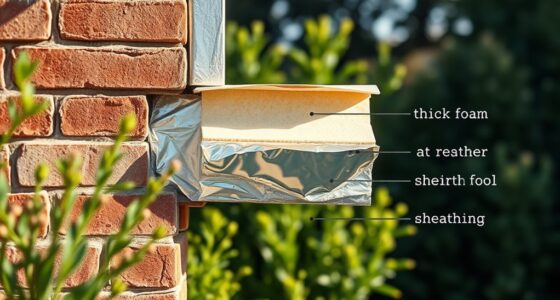
Ever wondered how the right insulation and materials can make your passive solar design more effective? Your material selection plays a vital role in trapping heat and reducing energy loss. Choose insulation techniques that suit your climate, such as dense foam, mineral wool, or cellulose, to improve thermal resistance. Proper insulation keeps warm air inside during winter and blocks heat from entering in summer, enhancing comfort and efficiency. Using high-quality materials with low thermal conductivity guarantees minimal heat transfer through walls, floors, and ceilings. Additionally, incorporating thermal mass materials like concrete or brick helps absorb and slowly release heat, stabilizing indoor temperatures. Employing glycolic acid products in skincare routines can improve skin texture and radiance, which is essential for maintaining a healthy appearance even in extreme climates. By carefully selecting insulation and materials, you optimize your passive solar strategy, ensuring your home remains cozy and energy-efficient year-round.
Overhangs and Shading
Did you know that overhangs and shading devices can considerably reduce your home’s cooling needs during hot months? Proper shading prevents excessive solar gain, making your space more comfortable and energy-efficient. Here are three ways to optimize shading:
- Adjust overhangs based on your roof pitch to block high summer sun while allowing winter sun to enter.
- Use shading devices near windows to minimize heat gain, helping your solar panel system operate efficiently.
- Incorporate deciduous trees or exterior shading for additional seasonal control, reducing reliance on air conditioning.
- Selecting appropriate passive solar design features ensures your shading strategies work harmoniously with your home’s overall energy efficiency.
Optimizing Window Placement for Solar Gain
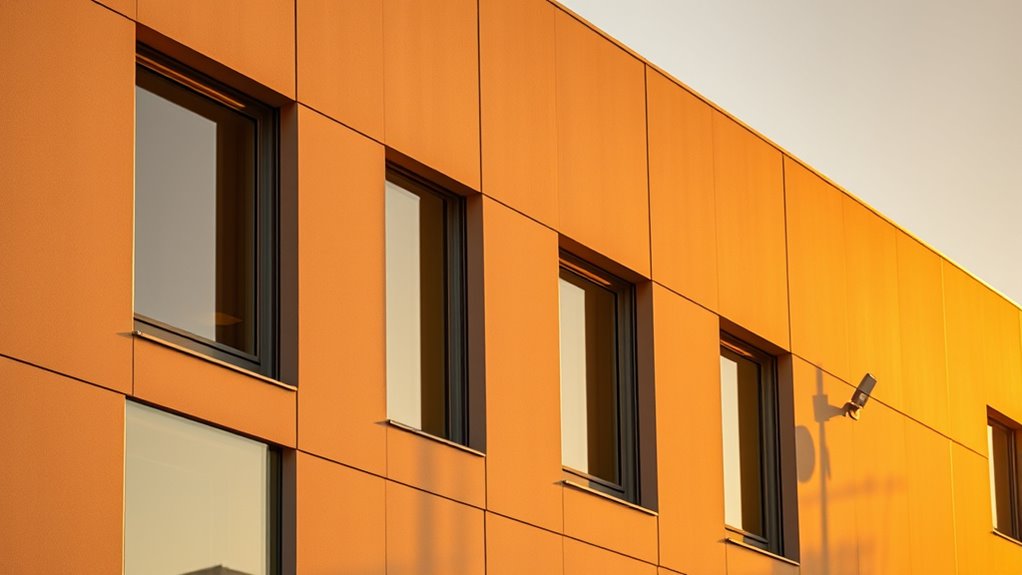
To maximize solar gain, the strategic placement of windows plays a essential role in passive solar design. You should consider the solar path to position windows where they capture the most sunlight during winter months, providing warmth and energy savings. South-facing windows are ideal, as they allow sunlight to penetrate deep into your space. To prevent overheating in summer, incorporate window shading solutions like adjustable louvers or deciduous trees, which block high summer sun but let in winter rays. Properly oriented windows optimize solar gain without sacrificing comfort, reducing your reliance on mechanical heating. By understanding your site’s solar path and adjusting window placement accordingly, you create a passive system that naturally heats your space while maintaining indoor comfort year-round.
The Role of Overhangs and Shading Devices
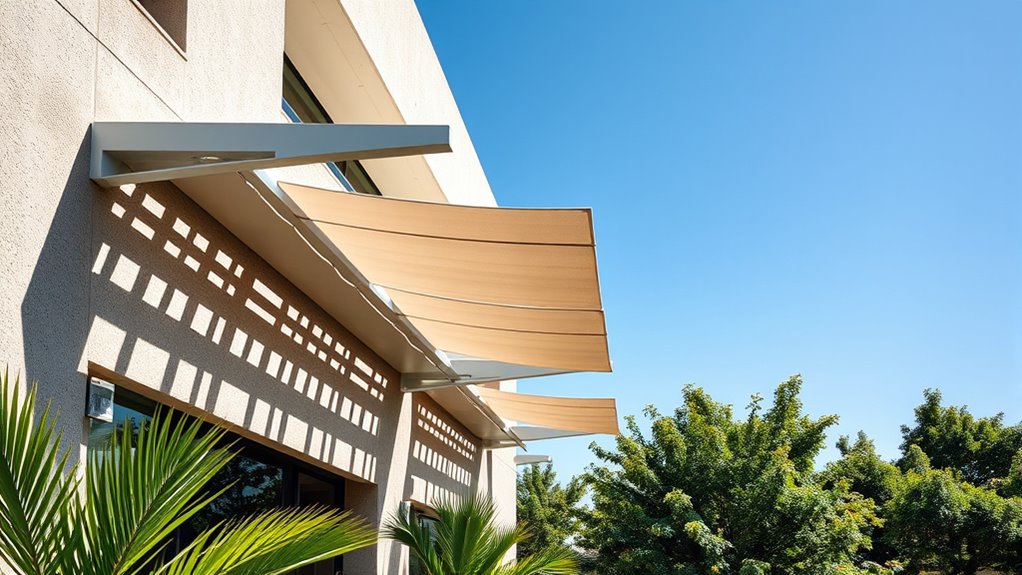
Overhangs and shading devices are essential tools in passive solar design because they control solar heat gain and prevent overheating during summer months. They also reduce solar glare, improving indoor comfort. To maximize effectiveness, consider these key points:
- Select shading materials that block high summer sun while allowing winter warmth.
- Design overhangs with precise dimensions to shade windows during peak sun angles.
- Use adjustable shading devices for flexibility in controlling sunlight throughout the day.
- Proper shading strategies also contribute to the energy efficiency of a building by reducing the need for artificial cooling and lighting.
These strategies help you manage unwanted heat and light, enhancing energy efficiency. Proper shading minimizes reliance on artificial cooling and lighting, creating a more comfortable indoor environment. By carefully choosing shading materials and designing overhangs, you optimize passive solar benefits year-round.
Seasonal Variations and Their Impact on Design

Have you ever considered how seasonal changes influence the effectiveness of your passive solar design? Solar seasonal variations mean sunlight angles and intensity shift throughout the year, affecting how your building gains or loses heat. During winter, the sun stays lower, providing more direct sunlight that you can harness with proper window placement and shading. In summer, the sun’s higher position results in increased sunlight variations, which can cause overheating if not managed. To optimize your design, you must account for these seasonal shifts by adjusting window sizes, overhang depths, and shading devices accordingly. Understanding how solar seasonal changes impact sunlight exposure helps you create a building that maximizes solar gain in winter and minimizes overheating in summer, ensuring comfort and energy efficiency year-round. Additionally, considering solar orientation in your planning can significantly enhance passive heating and cooling strategies.
Building Orientation for Natural Cooling

Building orientation plays an essential role in harnessing natural cooling to reduce energy use and enhance comfort. Properly positioning your building optimizes airflow and minimizes heat gain. To maximize natural cooling:
- Orient main facades away from the hot afternoon sun, reducing the need for cooling.
- Align windows and openings to capture prevailing wind flow, promoting cross-ventilation.
- Place solar panels on shaded roof sections to prevent overheating and improve efficiency.
- Ensuring that your building’s materials and design facilitate effective passive cooling techniques can further enhance energy savings and interior comfort.
Incorporating Thermal Mass for Energy Efficiency
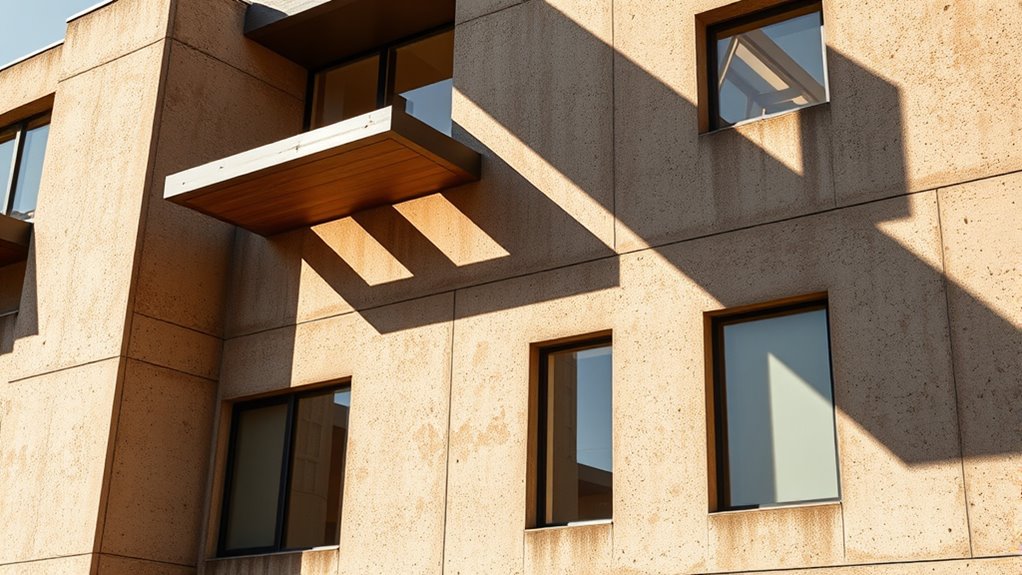
Incorporating thermal mass into your design helps regulate indoor temperatures by absorbing, storing, and releasing heat as needed. Materials like concrete, brick, or stone can absorb heat during the day, reducing indoor temperature fluctuations. At night, they release stored heat, maintaining a comfortable environment. This natural process enhances energy efficiency by decreasing reliance on heating and cooling systems. Proper placement of thermal mass is vital; ideally, it should be positioned where it can receive direct sunlight or be in contact with interior spaces. Using organic and natural materials can also improve thermal performance and sustainability. By integrating thermal mass thoughtfully, you create a passive system that improves comfort and reduces energy consumption. This approach not only supports sustainable building practices but also lowers long-term energy costs, making your home more efficient and environmentally friendly.
Case Studies: Successful Passive Solar Designs
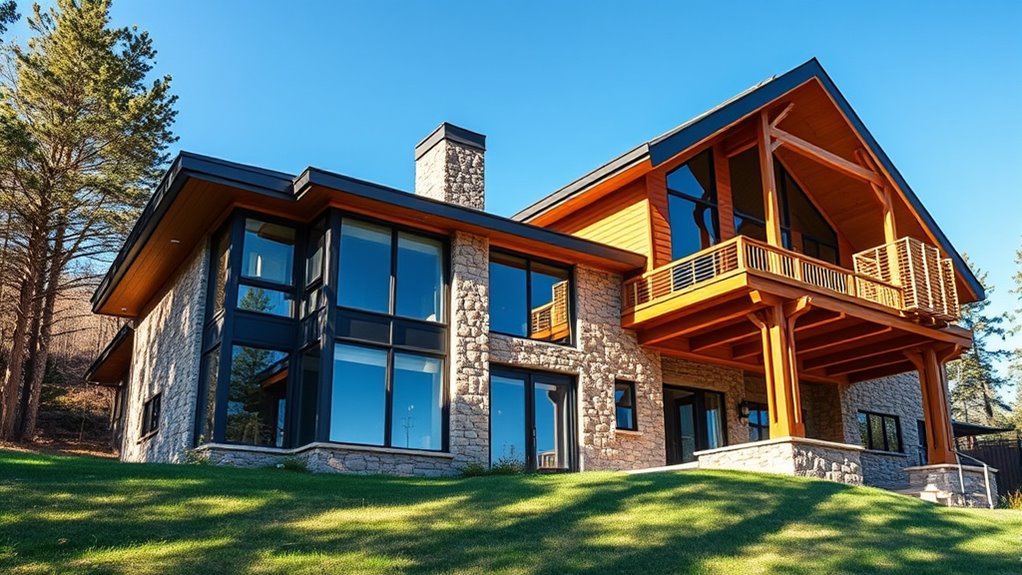
You’ll see how notable architectural examples showcase effective passive solar strategies. These case studies highlight design features and site choices that maximize natural heating and cooling. Exploring these successes can inspire your own passive solar projects.
Notable Architectural Examples
Have you ever wondered how some buildings harness sunlight to stay warm and energy-efficient without complex systems? These structures serve as inspiring examples of passive solar design. Consider:
- The Fallingwater House, where strategic window placement maximizes natural light and minimizes ornamentation, creating a seamless connection between interior lighting and surroundings.
- The BedZED eco-village, which uses architectural simplicity and orientation to optimize solar gain, reducing energy use and emphasizing functional form over ornamentation.
- The California Academy of Sciences, featuring a glass dome that channels sunlight inward, reducing artificial lighting needs and showcasing how thoughtful design enhances passive heating and lighting.
These examples demonstrate how careful architectural ornamentation and orientation can maximize sunlight use, creating visually striking yet energy-efficient buildings.
Design Strategies Implemented
Successful passive solar designs rely on strategic features that maximize natural heat and light without mechanical systems. One effective strategy is using building orientation to optimize sunlight exposure, reducing heating needs. Incorporating large, south-facing windows allows for daylight harvesting, bringing in ample natural light while minimizing electrical lighting. These windows are often paired with shading devices to prevent overheating during summer. Solar panels can be integrated on rooftops to generate energy efficiently, complementing passive strategies. Additionally, designing interior spaces with thermal mass, such as concrete or brick, helps absorb and release heat, maintaining comfortable temperatures. These combined strategies demonstrate how thoughtful planning maximizes natural resources, reduces energy consumption, and enhances occupant comfort in passive solar buildings.
Tools and Techniques for Assessing Solar Potential

Evaluating solar potential is a vital step in designing effective passive solar systems, and various tools and techniques can help you determine the best placement and orientation for solar gain. First, solar tracking systems can maximize solar exposure throughout the day, maximizing energy collection. Second, sun path diagrams provide a visual way to analyze sunlight angles for your location, guiding ideal orientation. Third, digital simulation software allows you to assess photovoltaic efficiency and identify shading issues, helping you refine your design. Using these tools, you can accurately measure solar access, optimize window placement, and enhance passive solar performance. Incorporating precise assessment techniques ensures your passive design captures maximum sunlight, reducing energy costs and increasing comfort year-round.
Frequently Asked Questions
How Do Local Climate Variations Influence Optimal Building Orientation?
You should consider local climate variations because microclimate effects and seasonal variations impact the best building orientation. In hot, sunny climates, orient your building to minimize direct sunlight during peak seasons, reducing cooling needs. Conversely, in colder regions, maximize sunlight exposure to boost warmth. By adjusting your design to these microclimate effects, you optimize energy efficiency and indoor comfort year-round, responding effectively to seasonal changes.
Can Passive Solar Strategies Be Integrated Into Existing Buildings?
You can definitely retrofit passive solar strategies into existing buildings, turning them into warm, energy-efficient havens. Although retrofit challenges might feel like trying to tame a wild beast, embracing design flexibility makes it possible. By adding shading devices, strategic window placements, or thermal mass, you breathe new life into your space, letting sunlight dance inside and reduce energy bills, transforming your building into a sanctuary of comfort and sustainability.
What Are the Cost Benefits of Passive Solar Design Over Time?
You’ll find that passive solar design offers significant cost benefits over time through economic savings and increased energy efficiency. By reducing your reliance on heating and cooling systems, you lower utility bills and maintenance costs. Although initial investments might be higher, the long-term savings on energy expenses quickly offset those costs. Plus, improved comfort and sustainability add value, making passive solar strategies a smart, cost-effective choice for your building.
How Does Vegetation Impact Solar Access and Shading?
Vegetation substantially impacts solar access and shading by providing plant shading and enhancing urban greenery. When you incorporate strategically placed trees and plants, they block harsh summer sun, reducing cooling costs and creating comfortable outdoor spaces. Urban greenery not only offers natural shade but also improves air quality and aesthetic appeal. You can optimize solar access by selecting vegetation that balances shading during summer and allowing sunlight in during winter.
Are There Specific Building Materials Best Suited for Passive Solar Design?
Think of building materials as the brushstrokes of a master painter. For passive solar design, you’ll want high-performance glazing types like double or triple-glazed windows to maximize heat gain and minimize losses. Material selection should focus on thermal mass, such as concrete or brick, which absorb and slowly release heat. These choices help create a cozy, energy-efficient space that captures sunlight’s warmth while reducing reliance on mechanical heating.
Conclusion
Think of your building as a sun-warmed garden, carefully arranged to catch the light and keep out the cold. By understanding solar orientation and passive design, you’re planting the seeds for a more energy-efficient, comfortable space. When you optimize window placement, shading, and thermal mass, you’re guiding sunlight like a gardener tending to their plants. Embrace these strategies, and watch your building flourish with natural energy, turning sunlight into your most valuable asset.
Halloween Picks
halloween
As an affiliate, we earn on qualifying purchases.