
Sustainable flooring options include fast-growing bamboo, which regenerates quickly and minimizes environmental impact, and reclaimed or recycled wood, giving old materials new life while reducing deforestation. Cork provides natural insulation and comfort without harming trees, while linoleum and Marmoleum are biodegradable, made from renewable resources. Eco-friendly WPC and vinyl alternatives offer durable, low-emission options that use recycled materials. To discover how these materials can enhance your space sustainably, explore more about each of these green flooring choices.
Key Takeaways
- Bamboo flooring is a highly renewable resource, harvested every 3-5 years, promoting rapid regeneration and reducing deforestation.
- Reclaimed and recycled wood flooring repurposes old materials, supporting upcycling and decreasing environmental impact.
- Cork flooring is renewable, harvested without harming trees, and offers excellent insulation and resilience.
- Linoleum and Marmoleum are biodegradable, made from natural resources, and promote healthier indoor environments.
- WPC and vinyl alternatives utilize recycled materials and eco-friendly manufacturing for durable, low-impact flooring options.

43.3in-59in Extendable Round Dining Table for 4-8,Modern Kitchen Oval Dining Table with Removable Leaves Space Saving,Wood Base with Storage Shelf for Kitchen Living Room (Walnut)
Retractable dining table for 4-8 people: Considering the use in different scenarios, the dining table adopts a retractable...
As an affiliate, we earn on qualifying purchases.
Bamboo Flooring: A Fast-Growing Renewable Resource
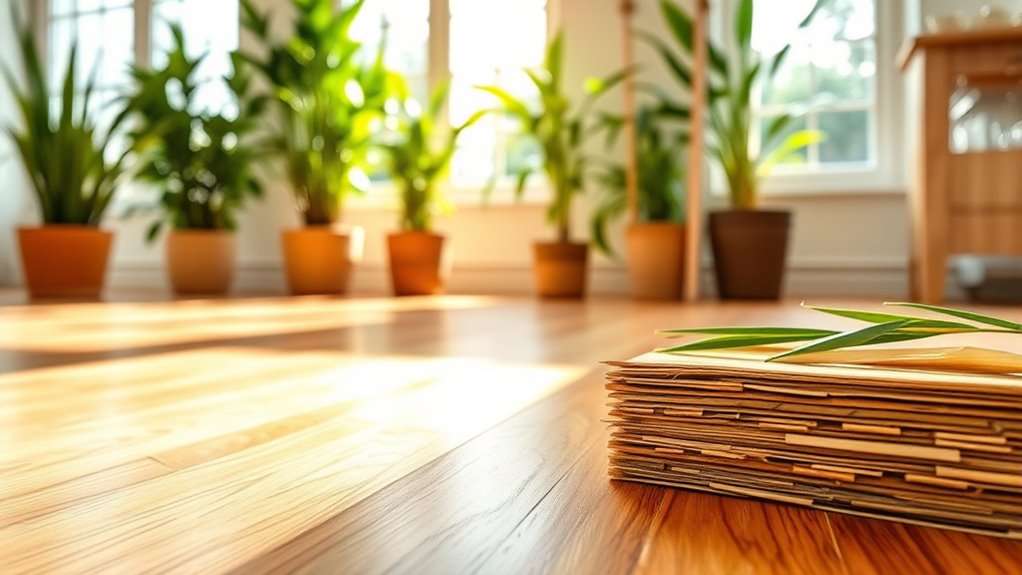
Bamboo flooring has gained popularity as an eco-friendly choice because bamboo is one of the fastest-growing plants on Earth. Its rapid growth cycles mean bamboo can be harvested in just three to five years, unlike traditional hardwoods that take decades. This quick renewal makes bamboo an excellent sustainable resource. When you opt for bamboo flooring, you’re supporting a process that minimizes environmental impact since bamboo plants regenerate quickly after harvesting. Bamboo harvesting is precise to guarantee the plant’s health and longevity, allowing for continuous, sustainable yields. Its fast growth cycles mean you don’t have to wait long for new material, making bamboo a renewable resource that balances durability with eco-consciousness. This efficiency helps reduce deforestation and preserves natural habitats.
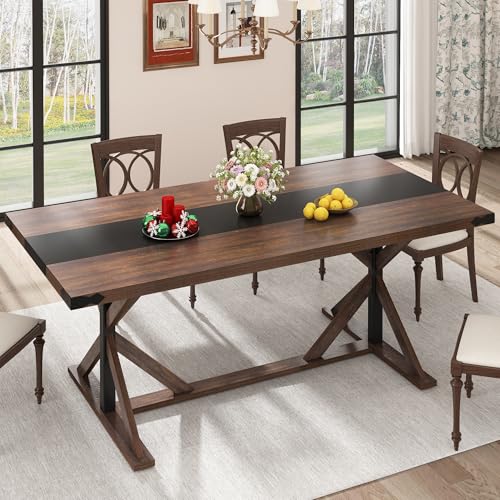
Hlivelood 71 Inch Dining Table for 6 People, Rectangular Kitchen Farmhouse Table W/Thickness Waterproof Wood Tabletop,Long Dining Room Tables W/Wood Strip Base for Kitchen Living Room(BR)
Classic Farmhouse Design: This large rectangular kitchen table features delicate lines and a simple yet stylish design. The...
As an affiliate, we earn on qualifying purchases.
Reclaimed and Recycled Wood: Giving Old Materials New Life
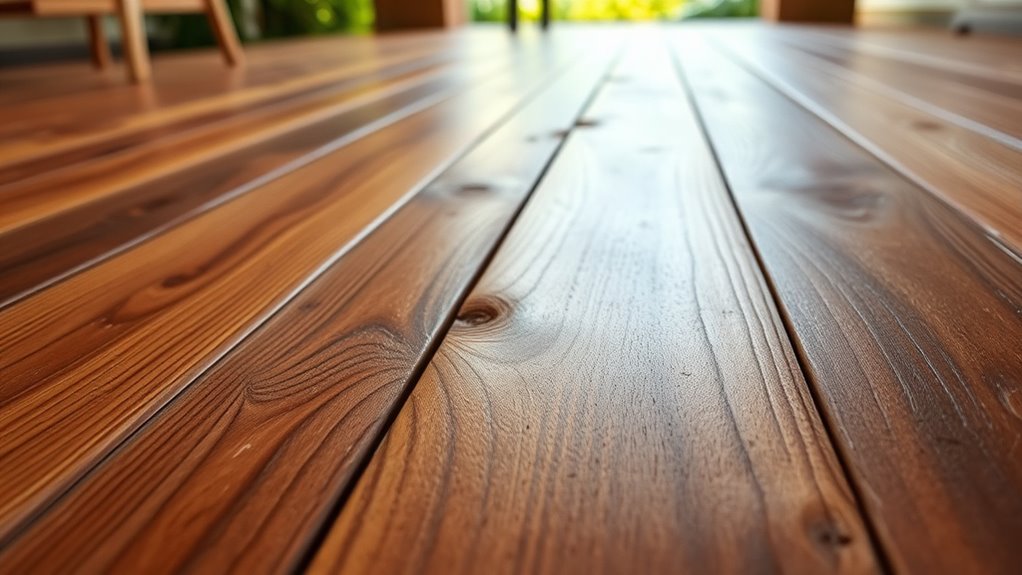
Building on the idea of sustainable materials, reclaimed and recycled wood offer an environmentally friendly alternative by giving new life to old, discarded timber. This practice supports upcycling craftsmanship and promotes historical preservation, transforming vintage wood into beautiful, durable flooring. By choosing reclaimed wood, you help reduce deforestation and waste while adding character and uniqueness to your space. Additionally, the unique textures and natural aging of reclaimed wood can evoke a sense of celebrity transformations, highlighting how aging can add value and beauty.

LUXOAK 60" Farmhouse Dining Table Set for 6, Solid Wood Kitchen Table with 4 Upholstered Chairs & Bench, 6-Piece Dining Room & Living Room Furniture, Cream White
Farmhouse Design: Crafted from solid Elm wood, this dining set features a natural wood grain tabletop in a...
As an affiliate, we earn on qualifying purchases.
Cork Flooring: Sustainable Comfort and Insulation
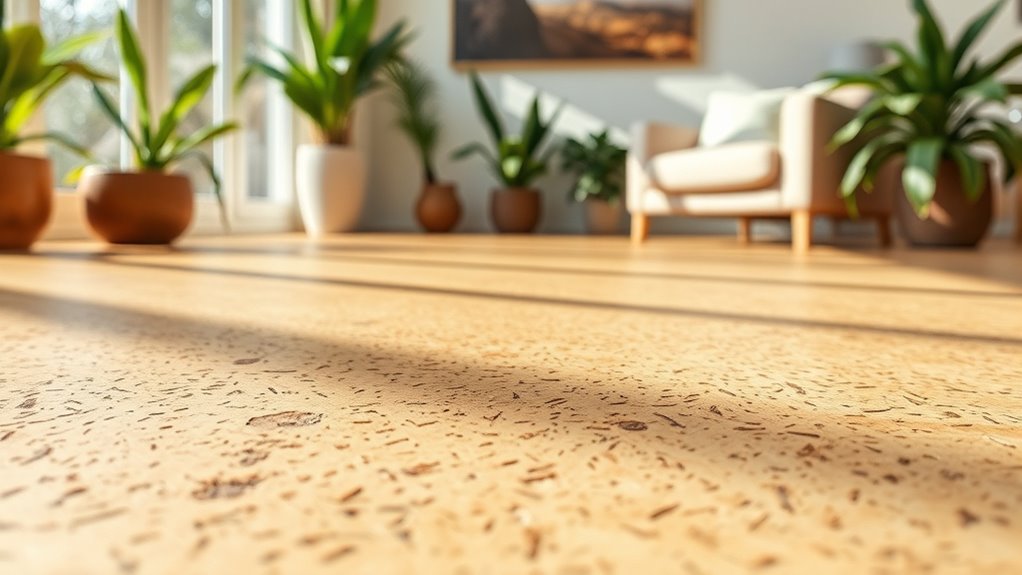
Cork flooring offers a natural, sustainable choice that combines comfort with effective insulation. Its unique cellular structure provides excellent sound absorption, reducing noise levels within your space. This makes it ideal for homes or offices where quiet is a priority. Cork also delivers impressive thermal insulation, helping to maintain a comfortable temperature and lower energy costs. Because cork is harvested without harming the tree, it’s a renewable resource that regenerates quickly. Additionally, cork’s integration with modern building standards ensures it meets safety and environmental regulations. Plus, its soft surface feels warm and inviting underfoot, adding to the overall comfort of your environment. Durable and resilient, cork flooring withstands everyday wear while maintaining its insulating properties. Choosing cork supports sustainability and creates a cozy, quiet, and energy-efficient space you’ll enjoy for years.

VASAGLE MAEZO Collection - Extendable Dining Table for 4/6/8, Kitchen Table with Tapered Legs, Curved Transitions, for Dining Room, Kitchen, Home Office, Honey Brown UKDT090K01V1
Style Reigns: Discover the MAEZO Collection—a furniture line featuring streamlined designs, tapered legs, and smooth, curved transitions. Each...
As an affiliate, we earn on qualifying purchases.
Linoleum and Marmoleum: Natural, Biodegradable Options

Linoleum and Marmoleum are excellent natural, biodegradable flooring options that combine sustainability with durability. Made from renewable resources like linseed oil, cork dust, wood flour, and natural pigments, they exemplify eco-friendly manufacturing. These floors offer numerous biodegradable benefits, enabling them to break down naturally at the end of their lifespan, reducing landfill waste. When considering these options, you’ll appreciate their resistance to wear, comfort underfoot, and ease of maintenance. Additionally, their environmental impact is minimal, aligning with eco-conscious building practices. Choosing linoleum or Marmoleum supports sustainability efforts and ensures a healthier indoor environment, making them ideal choices for eco-conscious homeowners.
WPC and Vinyl Alternatives: Eco-Friendly Synthetic Floors
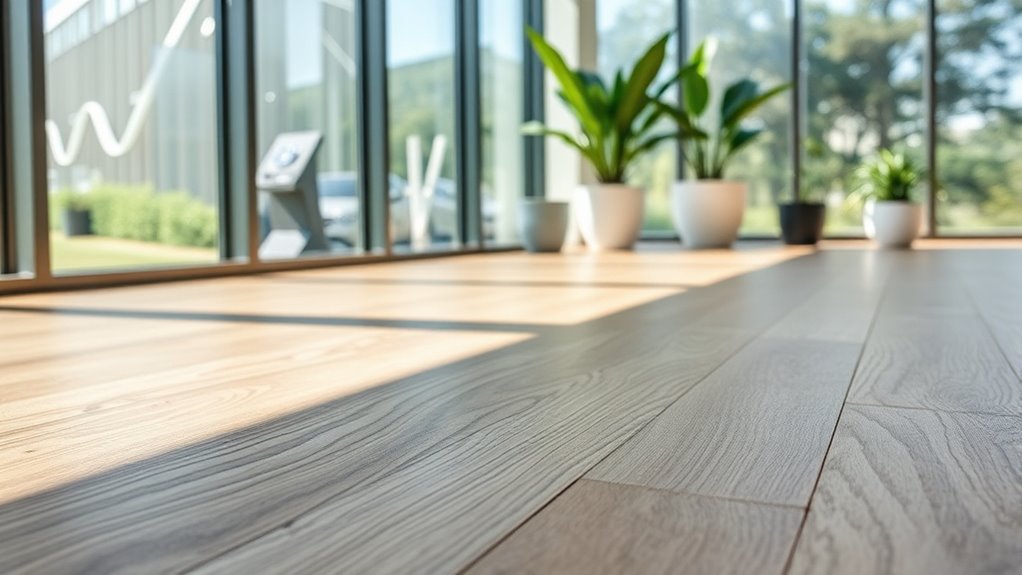
As homeowners seek sustainable flooring options, eco-friendly WPC (Wood Plastic Composite) and vinyl alternatives are gaining popularity for their durability and environmental benefits. These synthetic floors are produced through eco friendly manufacturing processes that reduce harmful emissions and waste. Many options now feature chemical free finishes, ensuring a healthier indoor environment by avoiding toxic substances. WPC and vinyl alternatives are resistant to moisture, scratches, and wear, making them practical choices for busy households. They often contain recycled materials, further lowering their ecological footprint. Plus, their ease of installation and maintenance adds to their appeal. By choosing these eco-conscious synthetic floors, you support sustainable practices without sacrificing style or durability. They offer a responsible, long-lasting solution for modern, eco-friendly homes.
Frequently Asked Questions
How Do Sustainable Flooring Options Compare in Durability and Lifespan?
You’ll find sustainable flooring options vary in durability and lifespan, but many offer impressive comparative longevity. For instance, bamboo and cork are durable but may have lower lifespan compared to hardwoods, which excel in durability metrics and last decades with proper care. Vinyl and linoleum also provide good durability, often matching or surpassing traditional materials. Ultimately, your choice depends on your specific needs for longevity and how well you maintain the flooring over time.
What Are the Environmental Impacts of Manufacturing Synthetic Flooring?
Sure, manufacturing synthetic flooring is like throwing a party for pollution. You contribute to manufacturing emissions and resource depletion, leaving a hefty environmental footprint. It’s almost as if the planet’s resources are just endless supplies for your trendy, low-cost floors. But beware—while you enjoy the sleek look, remember you’re also inviting a hefty dose of environmental damage that’s hard to ignore once the party’s over.
Can Sustainable Floors Be Recycled or Reused at the End of Their Life?
Yes, sustainable floors can be recycled or reused at the end of their life. You can explore recycling processes designed for eco-friendly materials, helping to reduce waste. Many sustainable flooring options, like cork or bamboo, have high reuse potential because they can be repurposed into new products or broken down for other uses. By choosing these materials, you contribute to a circular economy, minimizing environmental impact over time.
Are There Any Health Concerns With Eco-Friendly Flooring Materials?
You might wonder if eco-friendly flooring poses health concerns. Generally, these materials improve indoor air quality because they emit fewer volatile organic compounds (VOCs). However, some products can still undergo chemical off-gassing initially, which might cause temporary irritation or sensitivities. To stay safe, choose certifications like Green Seal or FloorScore, and guarantee proper ventilation during installation. This way, you enjoy the benefits without compromising your health.
How Do Maintenance Requirements Differ Among Sustainable Flooring Types?
You’ll find that maintenance requirements differ among sustainable flooring types. For example, hardwood may need regular cleaning routines and occasional refinishing, while bamboo often requires simple sweeping and damp mopping. Cork floors need gentle cleaning routines to avoid damage, and linoleum benefits from routine cleaning with mild cleaners. Repair procedures also vary; hardwood and bamboo can be sanded or replaced, whereas cork and linoleum might need patching or replacement of damaged sections.
Conclusion
Choosing sustainable flooring options like bamboo, cork, or reclaimed wood helps protect the environment. Some worry about durability, but many eco-friendly floors are built to last and withstand daily wear. Plus, they add natural beauty and comfort to your space. By selecting these materials, you make a positive impact without sacrificing style or quality. It’s an easy, responsible choice that benefits both your home and the planet.