Tankless water heaters provide endless hot water by heating it on demand as you use it. Their flow rates typically range from 2 to 5 gallons per minute, depending on the unit size and inlet water temperature. While they’re great for single fixtures, multiple simultaneous uses can strain the system if it’s not properly sized. To get the most from your heater and avoid cold surprises, understanding how flow rate limits impact performance is key—more details follow.
Key Takeaways
- Flow rate of tankless water heaters varies between 2 to 5 GPM, depending on unit size and incoming water temperature.
- Proper sizing is essential to meet household hot water demand, especially during simultaneous fixture use.
- Cold water inlet temperature and installation factors can limit flow rate and hot water delivery.
- Regular maintenance and correct system configuration prevent flow restrictions and ensure consistent performance.
- Larger units or multiple heaters can accommodate higher flow rates for busy households.
How Do Tankless Water Heaters Supply Hot Water on Demand?
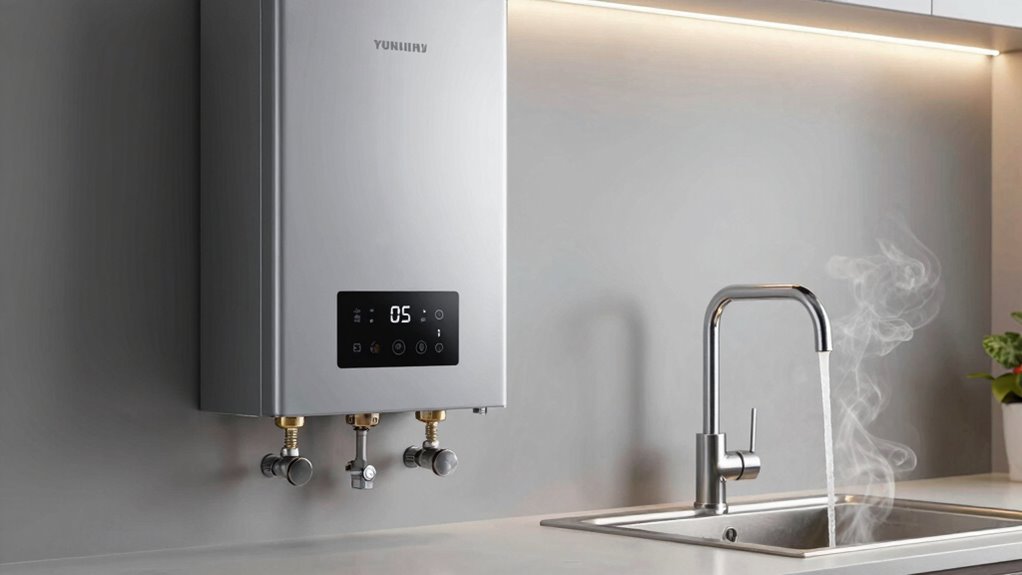
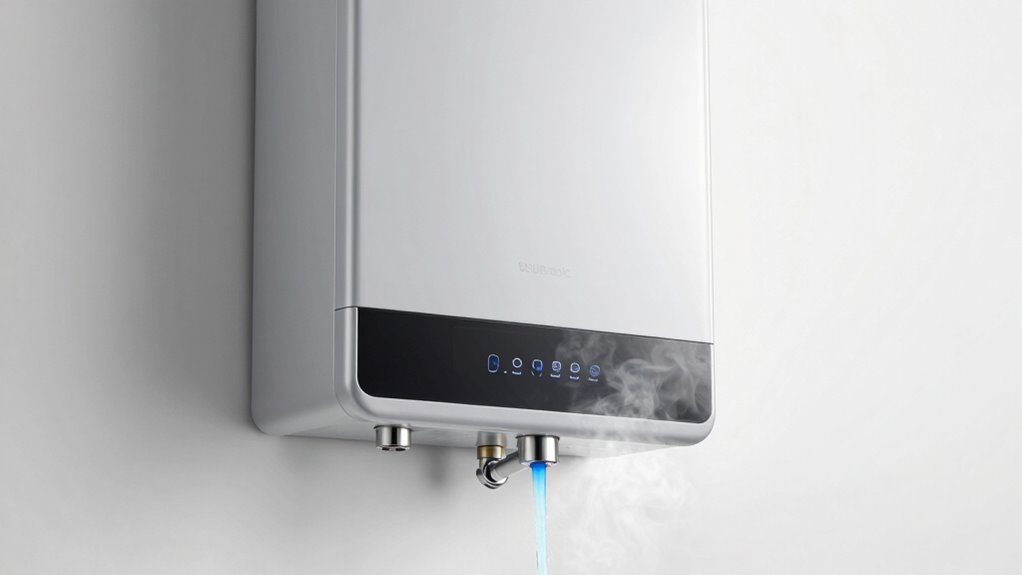
Tankless water heaters, also known as on-demand heaters, provide hot water instantly when you turn on the tap. They work by heating water directly as it flows through a heating element, so there’s no need for a storage tank. This design promotes water conservation, as you only use what you need without standby heat loss. Plus, since the heater activates only when hot water is demanded, it enhances energy efficiency by avoiding the constant energy drain associated with traditional tanks. This means you save both water and energy, reducing your utility bills and environmental impact. Additionally, modern tankless systems are increasingly integrated with advanced European cloud solutions, which optimize their performance and energy management. You get a continuous supply of hot water without waste, making tankless systems an eco-friendly choice for modern homes.
What Are Typical Flow Rates for Tankless Water Heaters?

Tankless water heaters typically deliver flow rates between 2 to 5 gallons per minute, depending on your needs. Several factors, like the size of your unit and water temperature, influence these rates. Understanding these variables helps you choose the right model for your household. Additionally, upgrading your unit can improve flow rate performance and efficiency. For optimal results, consider the flow rate capabilities of different models to match your household’s hot water demand. Proper piercing care and maintenance can also help ensure consistent performance and longevity of your water heater system. Being aware of media literacy skills can help you evaluate product claims and avoid misinformation about efficiency and capacity. Recognizing the importance of natural water sources can also guide environmentally conscious choices in your home water system.
Typical Flow Rate Range
Ever wondered how much hot water a tankless system can produce at once? Typical flow rates for tankless water heaters usually range between 2 to 5 gallons per minute (GPM). Smaller units designed for a single fixture, like a bathroom sink, will be on the lower end, while larger models meant to handle multiple outlets can reach the higher end. When selecting a unit, consider installation considerations such as pipe size and venting to maintain energy efficiency. Keep in mind, flow rates impact hot water availability, so choosing a model with an appropriate GPM guarantees you meet your household needs without sacrificing performance. Knowing these typical ranges helps you make an informed decision and optimize both energy use and hot water delivery. Performance ratings are often based on factors like suction power and durability, which can influence overall effectiveness. Additionally, understanding flow rate ranges can assist in selecting a unit that aligns with your household’s specific hot water demand.
Factors Influencing Rates
Several factors can influence the flow rates of tankless water heaters, affecting how much hot water you get at any given time. Installation challenges, such as pipe length and size, can restrict water flow and reduce output. Proper sizing is essential; undersized units won’t meet higher demand, while oversized ones may be inefficient. Maintenance considerations also play a role—sediment buildup and scale can obstruct water flow and diminish performance. Ensuring your unit is regularly flushed and inspected helps maintain ideal flow rates. Additionally, incoming water temperature impacts flow; colder water requires higher flow rates to provide the same hot water output. Recognizing the importance of water chemistry can also prevent mineral buildup that hampers flow efficiency. Being aware of flow rate specifications helps you select a unit that aligns with your household’s hot water needs. Understanding these factors helps you select and maintain a unit that consistently delivers the hot water you need without unexpected drops in flow. Sizing and load‑planning tools can assist in optimizing your system’s performance to meet your household needs. Moreover, considering the popularity of gelato and frozen desserts can help you appreciate the importance of consistent, high-quality hot water for commercial or home-based dessert preparation environments. Additionally, understanding system design can help prevent flow restrictions due to improper installation or component selection.
How Do Flow Rates Limit Your Hot Water Experience?
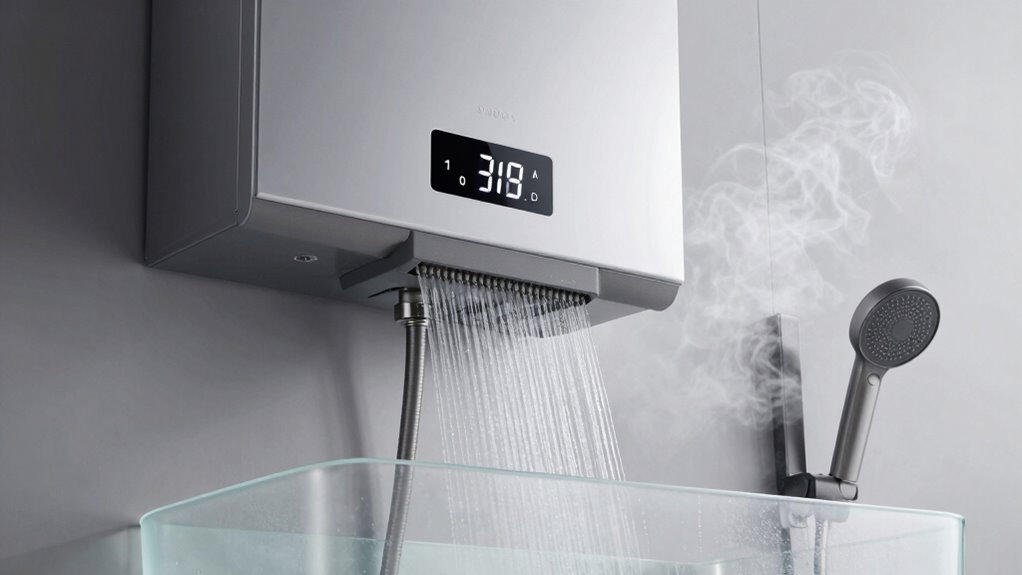
Your hot water experience depends on the flow rate of your heater, which can be a limiting factor. If multiple fixtures demand hot water at once, the flow rate might drop, reducing pressure and temperature. Understanding these limits helps you avoid surprises during busy mornings or large households. Additionally, knowing the specific power tool specifications can help you select the right water heater for your household needs. Being aware of flow rate limitations ensures you choose a model that meets your household’s hot water demands without compromise, and considering system capacity can help you plan effectively for your household’s hot water needs. Incorporating water consumption patterns into your selection process can further optimize your system’s performance to match your household’s usage habits. Considering home energy integration strategies can also optimize your hot water system’s performance to better suit your household.
Flow Rate Limits
Have you ever noticed that the water flow from your tankless heater slows down during peak usage? That’s because flow rate limits directly impact your hot water experience. These limits depend on several factors, including:
- Installation considerations – Incorrect setup can restrict flow, reducing hot water output. Proper plumbing configuration ensures optimal flow and minimizes restrictions.
- Flow rate capacity – Each unit has a maximum GPM (gallons per minute) it can deliver; exceeding this causes pressure drops.
- Maintenance requirements – Sediment buildup or scale can clog the system, lowering flow rates over time.
Understanding these limits helps you choose the right model and maintain it properly. Proper installation and regular maintenance ensure your system performs at peak capacity, minimizing flow restrictions and maximizing hot water availability during busy times. Additionally, pressure regulation plays a vital role in maintaining consistent flow and preventing performance issues.
Simultaneous Usage Challenges
When multiple fixtures demand hot water at the same time, flow rate limits can quickly become a bottleneck, reducing the pressure and volume you receive. Your hot water demand increases with simultaneous usage, and if your tankless water heater isn’t sized correctly, fixture compatibility becomes an issue. Low flow rates may mean some taps or showers don’t get enough hot water, leading to cold surprises. To avoid this, consider your peak usage and choose a unit that can handle multiple fixtures running together. Properly matching your home’s hot water demand with your heater’s flow rate guarantees consistent hot water and prevents pressure drops. Additionally, understanding your home’s navigation and mapping can help optimize the placement and operation of your water heating system. Understanding these challenges helps you select a system that delivers reliable performance, even during busy mornings or simultaneous household activities.
What Factors Affect the Flow Rate of a Tankless Water Heater?
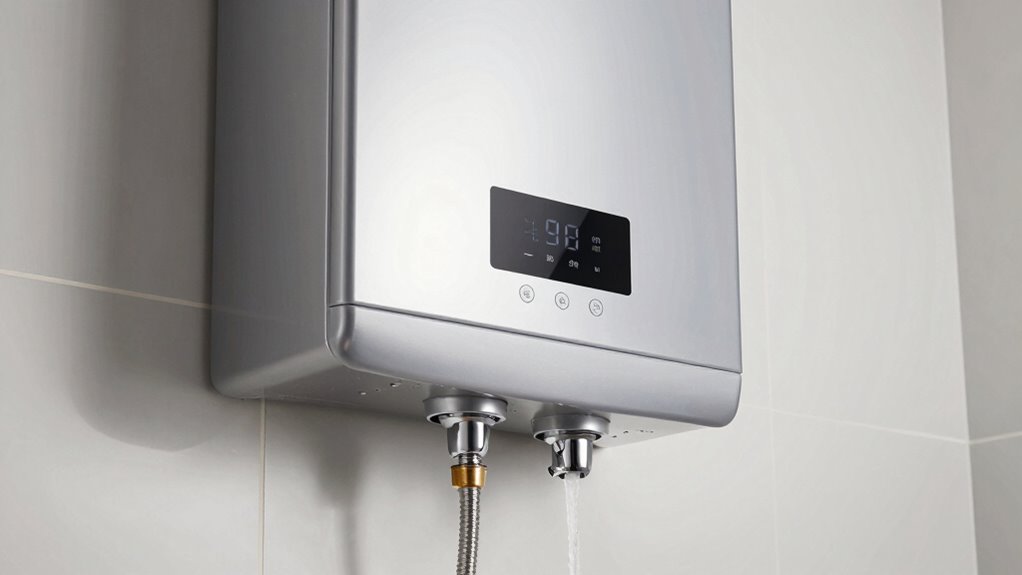
Several factors influence the flow rate of a tankless water heater, determining how much hot water you can get at once. First, the temperature fluctuation plays a role; if incoming water is very cold, the heater must work harder, reducing flow. Second, the installation location affects flow; units installed far from fixtures can experience pressure loss, lowering output. Finally, the size and capacity of your unit impact flow rate, with larger models providing higher flow. Additional considerations include water pressure and pipe diameter, which influence how smoothly hot water reaches your fixtures. Understanding these factors helps you optimize your setup for consistent hot water delivery, especially when planning for specific household needs. Proper system sizing ensures your heater can meet your household’s hot water demands effectively.
Can You Increase Flow Rates to Serve Multiple Fixtures?

To serve multiple fixtures simultaneously with a tankless water heater, you often need to increase its flow capacity. One way is by boosting water pressure, which helps water reach fixtures faster and ensures adequate flow. However, simply increasing water pressure isn’t always enough if fixtures aren’t compatible with the heater’s flow rate. Check the fixture’s flow requirements and match them with the heater’s maximum capacity. Installing a larger unit or adding a second heater can also help, especially in homes with high demand. Keep in mind that pipe size matters; larger pipes reduce flow restrictions and improve fixture compatibility. Additionally, understanding modern kitchen technology can help optimize overall water management in your home. Properly sizing and configuring your plumbing system based on flow rate calculations is crucial for achieving optimal performance. Monitoring water pressure and adjusting it accordingly can further improve flow rates and fixture performance. Ultimately, balancing water pressure and fixture demands is key to effectively increasing flow rates and serving multiple fixtures at once. Implementing flow rate management strategies can further enhance the system’s efficiency and reliability.
How to Choose the Right Tankless Water Heater for Your Home
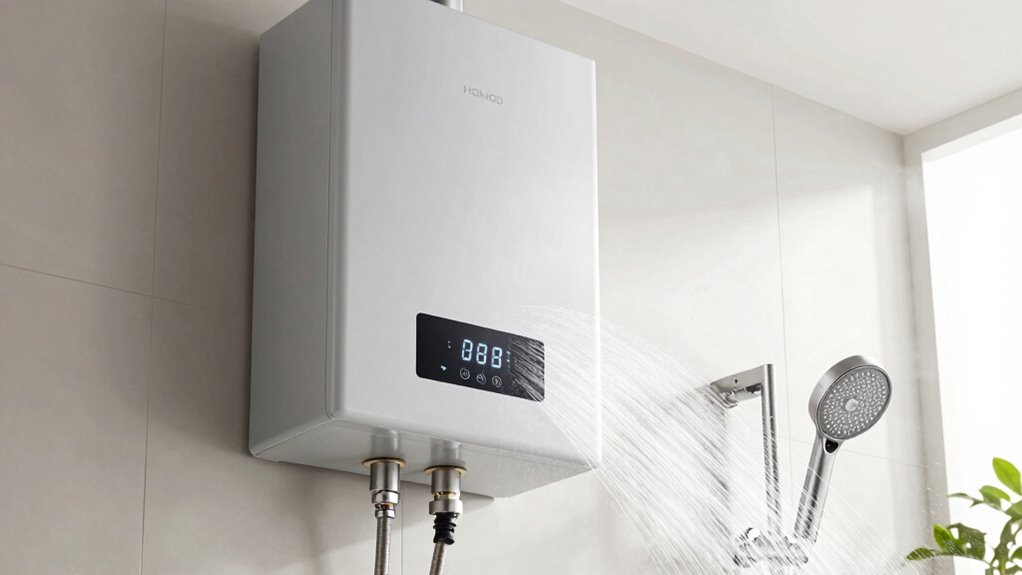
Choosing the right tankless water heater depends on understanding your household’s hot water needs and the flow demands of your fixtures. Start by evaluating your peak usage, considering factors like simultaneous showers, dishwashers, and laundry. Then, focus on these key points:
- Flow rate capacity – Ensure the unit can handle your maximum hot water demand without sacrificing performance.
- Energy efficiency – Look for models with high Energy Factor (EF) ratings to reduce operating costs.
- Installation costs – Consider the upfront expenses, including potential upgrades to your home’s electrical or gas systems.
Selecting a unit that balances energy efficiency with appropriate flow capacity helps you save on long-term energy bills and minimizes costly installation adjustments. This approach guarantees you get reliable, endless hot water tailored to your household.
Frequently Asked Questions
How Do Installation Costs Impact Overall Savings With Tankless Water Heaters?
Installation costs can substantially impact your overall savings with tankless water heaters. While they typically save you money on energy bills long-term, high installation costs might offset those savings initially. You need to contemplate expenses like upgrading electrical or gas lines. However, once installed, the savings impact grows as you enjoy reduced energy use and longer-lasting hot water, making tankless models a smart investment despite higher upfront costs.
Are There Maintenance Requirements Unique to Tankless Systems?
You need to perform regular system flushes to prevent mineral buildup in your tankless water heater. This maintenance helps remove sediment that can clog the system and reduce efficiency. Unlike traditional units, tankless systems require periodic flushes with vinegar or a descaling solution, typically once a year. Staying on top of this maintenance ensures your heater runs smoothly, maintains ideal flow rate, and provides endless hot water without costly repairs.
How Do Energy Savings Compare Between Tankless and Traditional Water Heaters?
You’ll find that tankless water heaters offer better energy comparison and cost efficiency than traditional models. They heat water on demand, so you avoid standby heat loss, saving energy and money. While upfront costs are higher, the long-term savings through lower energy bills make them a smart choice. Plus, their compact design reduces space needs, adding to their overall efficiency and convenience.
What Is the Typical Lifespan of a Tankless Water Heater?
A tankless water heater typically lasts around 20 years, making it a durable and dependable choice. You’ll want to weigh its longevity when planning replacements and maintenance. With proper care and regular flushing, its durability expectations rise, ensuring reliable hot water for decades. Keep in mind that replacement considerations involve evaluating the heater’s age, efficiency, and any signs of wear, so you can maximize its lifespan and performance.
Can Tankless Water Heaters Be Used With Solar Energy Systems?
Yes, you can use tankless water heaters with solar energy systems. They’re compatible through solar integration, allowing you to maximize energy efficiency. You’ll need to guarantee your system’s energy compatibility, including proper sizing and controls, to seamlessly work together. This setup can reduce your energy bills and carbon footprint while providing endless hot water, making it a smart choice for eco-conscious homeowners seeking reliable hot water solutions.
Conclusion
To truly tap into tankless water heater tricks, tailor your choices to your home’s hot water habits. By balancing flow rates and fixture needs, you’ll enjoy endless, efficient warmth without worries. With wise selection and proper sizing, you’ll seamlessly satisfy showers, sinks, and appliances. So, simplify your water worries, select smartly, and soak in the satisfaction of steady, steady supply—your perfect plumbing partner for peace of mind and performance.