Xeriscaping helps you create a beautiful landscape that uses less water by choosing drought-tolerant plants, preparing your soil, and planning efficient irrigation. Start by evaluating your site, including sunlight, soil, and climate conditions. Select native or drought-resistant plants suited to your area. Use mulch to retain moisture and apply drip irrigation for targeted watering. Focusing on these steps ensures sustainability and saves water, and exploring further will give you even more tips for success.
Key Takeaways
- Focus on planning water-efficient landscapes by selecting native or drought-tolerant plants suited to your climate.
- Prepare soil properly with amendments to support healthy, drought-resistant plants and improve water retention.
- Use mulching and targeted irrigation methods like drip systems to conserve moisture and reduce evaporation.
- Group plants with similar water needs to optimize watering schedules and improve overall water efficiency.
- Incorporate rainwater harvesting and environmental assessments to enhance sustainability and reduce reliance on municipal water.
Understanding the Principles of Xeriscaping

Understanding the principles of xeriscaping begins with recognizing that it’s a landscaping approach designed to reduce water use and promote sustainability. You start by focusing on soil preparation, which involves improving soil drainage and fertility to support drought-tolerant plants. Healthy soil helps plants adapt more easily to dry conditions, making them more resilient and less dependent on frequent watering. Plant adaptation is key; choose native or drought-resistant species that thrive in your local climate. By understanding how soil and plants interact, you create a landscape that conserves water naturally. Proper soil prep ensures plants can access moisture efficiently, while selecting adaptable plants minimizes maintenance and water needs. Additionally, awareness of AI’s role in sustainable practices can help optimize xeriscaping strategies through data-driven insights. This foundation sets the stage for a sustainable, water-efficient landscape.
Assessing Your Site and Climate Conditions
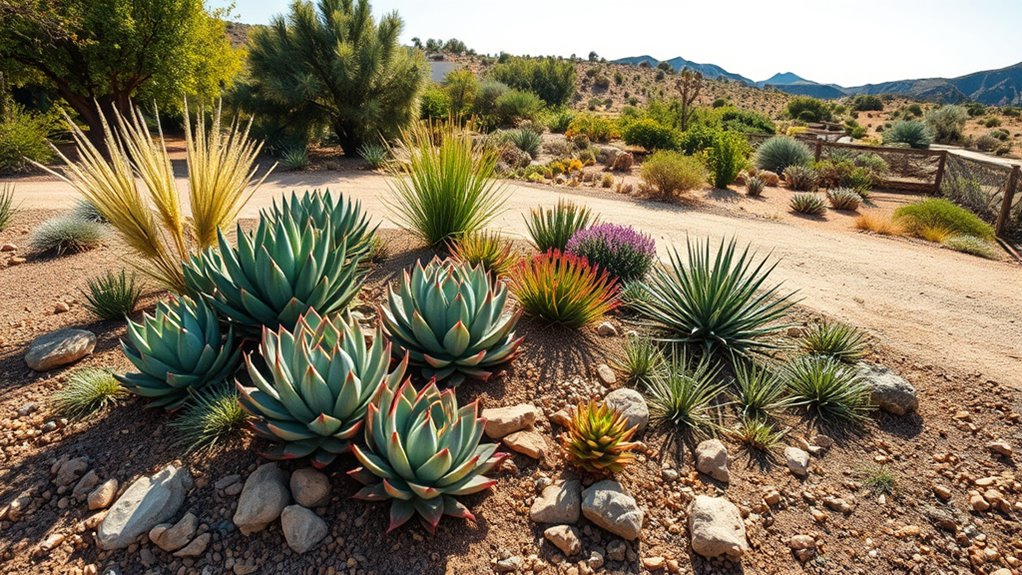
Before designing your xeriscape, conducting a thorough assessment of your site and climate conditions is essential. Start by testing your soil to determine its composition, drainage, and nutrient levels—this helps you choose the right plants and amendments. Next, evaluate sun exposure throughout the day; identify areas that receive full sun, partial shade, or full shade. This information guides your plant selection, ensuring you match plants to their preferred light conditions. Take note of prevailing wind patterns and temperature fluctuations, as these factors affect plant health and water needs. Understanding your site’s unique characteristics allows you to make informed decisions, optimize water conservation, and create a sustainable landscape that thrives in your climate. Proper assessment sets the foundation for a successful xeriscape. Additionally, familiarizing yourself with water-efficient landscaping practices can further enhance your xeriscaping efforts and ensure long-term water savings.
Planning Your Water-Efficient Landscape

Planning your water-efficient landscape begins with setting clear goals that prioritize conservation and sustainability. Start by designing a garden layout that groups plants with similar water needs together, reducing unnecessary watering. Consider how your space will be used and focus on creating zones that maximize efficiency. When it comes to irrigation systems, choose options like drip or soaker hoses that deliver water directly to roots, minimizing waste. Confirm your irrigation system is properly scheduled to water early mornings or evenings, when evaporation is low. Incorporate rain sensors or smart controllers to further optimize water use. To ensure your plants thrive with minimal water, select low-water plants that suit your climate and soil conditions. By thoughtfully planning your garden layout and selecting appropriate irrigation systems, you set a strong foundation for a sustainable, low-water landscape.
Selecting Drought-Tolerant Plants and Materials
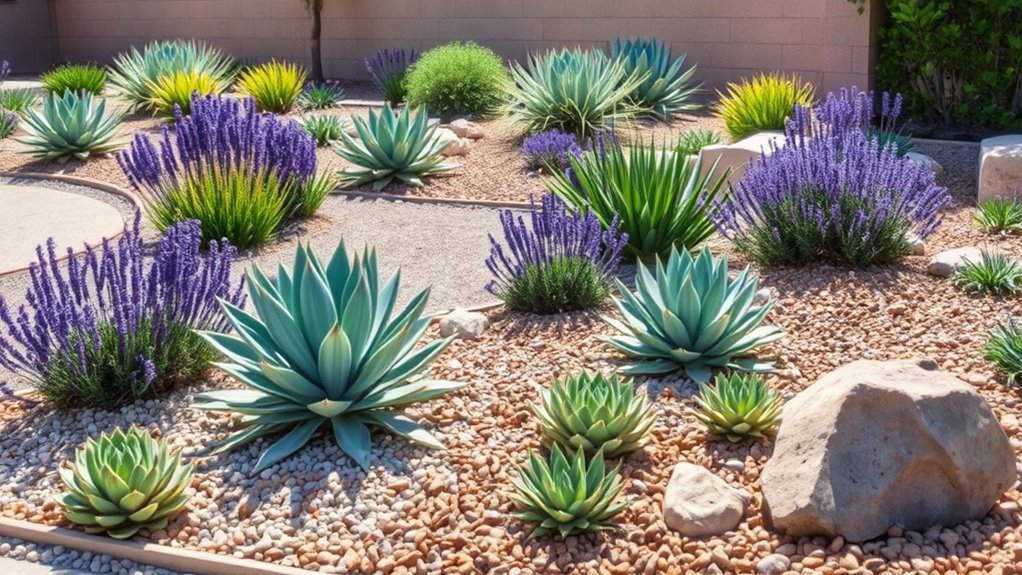
When selecting plants, choose native or drought-tolerant varieties that thrive with less water. Using effective mulch helps retain soil moisture and suppress weeds. Together, these choices create a resilient, low-maintenance landscape.
Choosing Suitable Plants
Choosing the right plants is essential for successful xeriscaping, especially since drought-tolerant varieties can thrive with minimal watering. You should focus on selecting hardy plants like succulent varieties, which store water and endure dry conditions. Additionally, flowering shrubs can provide color and texture without requiring much maintenance. Opt for native plants whenever possible, as they’re adapted to your local climate and soil, increasing their drought resistance. Mix different textures and growth habits to create visual interest while maintaining low water needs. Avoid plants that demand frequent watering or rich soil. By choosing suitable drought-tolerant plants such as succulents and flowering shrubs, you’ll establish a resilient landscape that conserves water and reduces your gardening effort. Incorporating drought-resistant landscaping principles can further enhance your xeriscape’s success.
Using Effective Mulch
Effective mulch plays a crucial role in xeriscaping by helping retain soil moisture and suppress weeds, which reduces your watering needs. Choosing the right types of mulch, such as organic options like bark or compost, or inorganic materials like gravel or rubber, depends on your landscape’s needs. Apply mulch evenly around plants, keeping it a few inches away from stems to prevent rot. Use proper mulch application techniques by spreading it in a layer 2-4 inches thick, ensuring it covers the soil without suffocating plants. Mulching not only conserves water but also improves soil health and appearance. Regularly check and replenish mulch as it decomposes or shifts over time. Selecting appropriate mulch and applying it correctly enhances your xeriscape’s drought-tolerance and sustainability. Additionally, understanding contrast ratio can help optimize the visual appeal of your landscape by creating depth and contrast in plant arrangements.
Designing for Water Conservation and Aesthetic Appeal

When designing your xeriscape, choosing native plants makes sure your garden thrives with less water while blending seamlessly with the environment. Incorporate colorful, drought-resistant plants to add visual interest without sacrificing water efficiency. Mulching helps retain moisture and reduces evaporation, supporting both your garden’s beauty and conservation goals.
Native Plant Selection
Have you considered how native plants can enhance both water conservation and the beauty of your landscape? Choosing native plants offers numerous benefits, including reduced water needs and easier maintenance. Their local plant adaptation makes them more resilient to climate conditions, pests, and diseases. This resilience often leads to cost-effective landscaping and less need for chemical treatments. This means you’ll spend less time and resources on upkeep. To get started, consider these ideas:
- Research plants native to your region for ideal native plant benefits.
- Select species that thrive in your soil and sunlight conditions.
- Incorporate a variety of native plants to create visual interest and ecological balance.
Colorful, Drought-Resistant Plants
Adding colorful, drought-resistant plants to your landscape not only conserves water but also creates a vibrant visual display. These plants offer stunning vibrant blossoms that brighten your yard without demanding much water. Look for species with drought resistant foliage, which helps the plants withstand dry conditions while maintaining their lush appearance. Succulents, such as agave and sedum, deliver striking shapes and colors, while lavender and yarrow add both fragrance and vivid hues. By choosing plants with bold, drought-tolerant foliage, you can achieve a lively, colorful garden that stays resilient in dry weather. Incorporating these plants ensures your landscape remains eye-catching and sustainable, reducing water use while enhancing aesthetic appeal. Biodiversity and the presence of native plant species can further support local ecosystems. It’s an easy way to create a beautiful, eco-friendly outdoor space.
Mulching for Moisture Retention
Mulching is an effective strategy to conserve moisture and enhance your landscape’s beauty. By applying mulch, you reduce evaporation and regulate soil temperature, helping plants thrive in dry conditions. Using organic matter as mulch improves soil health over time, providing nutrients and encouraging beneficial microbes. Choose from various mulch types, such as bark, straw, or compost, based on your aesthetic and functional needs. For best results: 1. Select mulch types suited to your plants and visual preference. 2. Apply a 2-3 inch layer around plants, avoiding direct contact with stems. 3. Refresh organic mulches periodically to maintain coverage and effectiveness. Incorporating mulch also supports water conservation efforts by decreasing the need for frequent watering, especially during hot or drought-prone periods.
Installing and Maintaining Your Xeriscape Garden

To successfully install and maintain your xeriscape garden, start by planning carefully and selecting drought-tolerant plants suited to your climate. Conduct soil testing to determine nutrient levels and drainage capacity, ensuring your plants thrive. Use drip irrigation systems to deliver water efficiently directly to the roots, minimizing waste. Regularly check soil moisture and adjust watering schedules accordingly. Mulching helps retain soil moisture and suppress weeds, reducing maintenance needs. Additionally, incorporating energetic alignment techniques can enhance your connection to your garden and promote healthier plant growth. Here’s a quick guide:
| Step | Focus Area | Key Tip |
|---|---|---|
| Planning | Plant selection | Choose native, drought-tolerant varieties |
| Soil Testing | Soil health | Adjust amendments as needed |
| Installation & Maintenance | Watering & upkeep | Use drip irrigation, mulch regularly |
Tips for Successful Xeriscaping in Different Environments
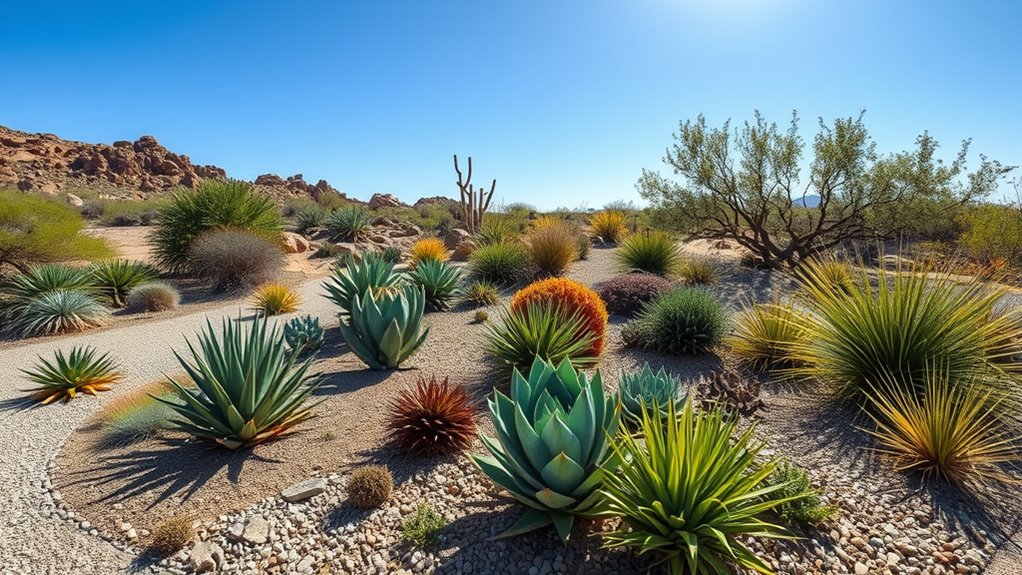
Successful xeriscaping depends on tailoring your approach to the specific environment you’re working with. In different settings, you need to adapt your strategies to optimize water efficiency and plant health. First, assess your soil and consider soil amendment techniques to improve drainage or water retention, depending on your climate. Second, incorporate rainwater harvesting systems to reduce reliance on municipal water and make the most of natural resources. Third, select drought-tolerant plants suited to your environment, whether it’s hot and dry or cooler and wetter. Additionally, understanding your area’s water features can help you implement effective irrigation and conservation measures. By understanding your environment’s unique conditions, you can create a sustainable xeriscape that conserves water and thrives year-round. Adaptation is key to success in any landscape.
Frequently Asked Questions
How Long Does It Take for a Xeriscape to Establish?
It typically takes about 1 to 2 years for your xeriscape to fully establish. During this time, your native plants and well-prepared soil will develop strong roots. You should water regularly initially, then reduce as plants settle in. Consistent care, proper soil preparation, and choosing native plants suited to your climate will help your xeriscape thrive faster and reach full maturity sooner.
Can Xeriscaping Be Combined With Traditional Gardening Techniques?
Yes, you can easily combine xeriscaping with traditional gardening techniques. Imagine blending a water-efficient design with lush flower beds—this hybrid landscaping creates a vibrant, sustainable yard. About 60% of homeowners find that integrating xeriscaping principles reduces water use while maintaining aesthetic appeal. By mixing drought-tolerant plants with conventional garden elements, you get the best of both worlds, making your landscape both beautiful and eco-friendly.
What Are Common Mistakes to Avoid in Xeriscaping?
You should avoid common mistakes like poor plant selection and inadequate soil preparation. Choose drought-tolerant plants suited for your climate, and make certain your soil is well-drained and enriched before planting. Don’t overwater or plant too closely, as this can cause issues with pests and health. Regularly maintain your xeriscape by mulching and watering efficiently. By paying attention to these details, you’ll create a sustainable, beautiful xeriscape that thrives with minimal effort.
How Often Should I Water My Xeriscape Initially?
Think of your xeriscape as a marathon runner needing steady hydration. Initially, you should water deeply once or twice a week, depending on your climate and soil. Establish a consistent watering schedule to make certain of proper plant hydration, gradually reducing frequency as plants establish roots. This approach helps prevent overwatering and encourages resilient growth, making your xeriscape thrive with less water while staying healthy and vibrant.
Are There Specific Tools Recommended for Xeriscaping Installation?
You should use essential tools like a shovel, rake, and garden hoe for xeriscaping installation. A drip irrigation system is highly recommended to efficiently water your plants with minimal waste. Before planting, perform soil testing to determine its nutrient content and drainage capacity. This helps you choose the right plants and amendments, ensuring your xeriscape thrives with less water and maintenance. Proper tools and preparation pave the way for a successful xeriscape.
Conclusion
By applying these xeriscaping basics, you’ll create a stunning, water-efficient garden that thrives in your climate. Even if you worry it might look sparse or unappealing, think of a desert scene with vibrant cacti and colorful succulents—beautiful and low-water. With thoughtful planning and plant choices, your landscape can be both functional and eye-catching. Embrace the process, and soon you’ll enjoy a sustainable, lush garden that saves water and enhances your outdoor space.