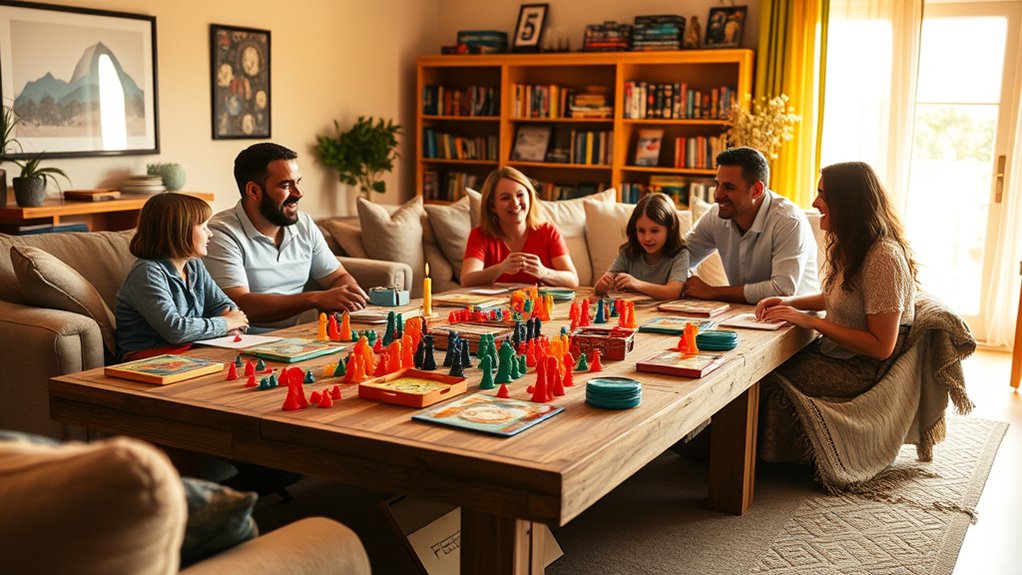

For a fun family night with quick turns and easy rules, UNO is my best overall pick, while Taco Cat Goat Cheese Pizza brings lively, fast-paced play and Blank Slate suits families who enjoy wordplay. The right choice depends on your group’s ages, appetite for competition, and how much time you want to spend learning rules. Some games reward quick reactions; others make conversation, guessing, or longer strategy the main event. I compare all 11 options by ease of play, group fit, and the kind of fun they offer. Read on for the picks and tradeoffs that can help you choose.

Get furniture and decor delivered free with Prime
- Fast, free delivery on millions of items
- Prime Video, Amazon Music and more included
- Member-only deals all year
Complete the kit


Key Takeaways
- UNO is the most flexible lead pick here: its familiar turn structure makes it easier to bring mixed ages into a game than word-association or bluffing options.
- Taco Cat Goat Cheese Pizza favors speed and physical reactions, so it suits energetic groups better than families looking for relaxed conversation.
- Blank Slate and Herd Mentality put shared answers and group dynamics ahead of board movement, making them good fits for families who enjoy talking and guessing.
- Scrabble and Yahtzee offer more deliberate, turn-based play, but can feel slow for younger players or anyone who wants constant action.
- Trouble and Sorry! keep the mechanics approachable for children, while their luck-driven turns may offer less control for players seeking strategy.
| Do You Really Know Your Family? Family Card Game |  | Best for Family Conversation | Game type: Card game | Age range: Kids 8+, teens, and adults | Included components: Cards | VIEW ON AMAZON | See Our Full Breakdown |
| Taco Cat Goat Cheese Pizza Card Game |  | Best for Quick Laughs | Game type: Card game | Players: 2–8 | Game duration: 10–15 minutes | VIEW ON AMAZON | See Our Full Breakdown |
| The Chameleon: Bluffing Board Game for Family, Adults & Friends |  | Best for Teen and Adult Groups | Game type: Bluffing and social deduction game | Players: 3–8 | Age range: 14+ | VIEW ON AMAZON | See Our Full Breakdown |
| USAOPOLY Blank Slate – Family-Friendly Word Association Board Game for 3-8 Players |  | Best for Word Association | Players: 3–8 | Age range: 8+ | Play time: 20–35 minutes | VIEW ON AMAZON | See Our Full Breakdown |
| Mattel Games UNO Card Game |  | Best for Flexible Group Sizes | Game type: Card game | Players: 2–10 | Recommended age: 7 years and older | VIEW ON AMAZON | See Our Full Breakdown |
| Runs in The Family: Fun Family Board Game for Kids and Adults |  | Best for Family Conversation | Recommended age: 8 and up | Gameplay time: 15 minutes | Number of topics: Over 200 | VIEW ON AMAZON | See Our Full Breakdown |
| Sorry! Classic Board Game for Kids Ages 6 and Up |  | Best for Playful Rivalry | Recommended age: 6 years and up | Pawns per player: 4 | Goal: Race pawns to the home space | VIEW ON AMAZON | See Our Full Breakdown |
| Hasbro Gaming Yahtzee Dice Game |  | Best for Flexible Group Play | Recommended age: 8 years and up | Players: 2 or more | Game type: Dice and strategy game | VIEW ON AMAZON | See Our Full Breakdown |
| Hasbro Gaming Scrabble Classic Board Game for 2–4 Players, Ages 8+ |  | Best for Word-Loving Families | Recommended age: 8 and up | Players: 2–4 | Game type: Word game | VIEW ON AMAZON | See Our Full Breakdown |
| Hasbro Gaming Trouble Board Game for Kids, Ages 5 and Up, 2–4 Players |  | Best for Younger Players | Recommended age: 5 and up | Players: 2–4 | Game type: Board game | VIEW ON AMAZON | See Our Full Breakdown |
| Herd Mentality: Udderly Funny Family Board Game with Extra Questions |  | Best for Big Family Gatherings | Number of players: 4–20 | Recommended age: 10+ | Included extras: 20 extra questions | VIEW ON AMAZON | See Our Full Breakdown |
| board games for family night | Game type | Players | Recommended age |
|---|---|---|---|
| Do You Really Know Your Family | Card game | — | — |
| Taco Cat Goat Cheese Pizza Car | Card game | 2–8 | — |
| The Chameleon: Bluffing Board | Bluffing and social deduction game | 3–8 | — |
| USAOPOLY Blank Slate | — | 3–8 | — |
| Mattel Games UNO Card Game | Card game | 2–10 | 7 years and older |
| Runs in The Family: Fun Family | — | — | 8 and up |
| Sorry! Classic Board Game for | — | — | 6 years and up |
| Hasbro Gaming Yahtzee Dice Gam | Dice and strategy game | 2 or more | 8 years and up |
| Hasbro Gaming Scrabble Classic | Word game | 2–4 | 8 and up |
| Hasbro Gaming Trouble Board Ga | Board game | 2–4 | 5 and up |
| Herd Mentality: Udderly Funny | — | — | 10+ |
More Details on Our Top Picks
Do You Really Know Your Family? Family Card Game
Conversation and silly challenges give this game a different kind of family-night fun from the quick reflexes of Taco Cat Goat Cheese Pizza. Its questions invite players to share what they know about one another, so it suits families who enjoy talking and laughing together as much as keeping score. Simple rules make it approachable for kids ages 8 and up, teens, and adults, with cards that keep setup straightforward. Compared with Blank Slate, which centers on matching word associations, this game focuses more directly on family connections. That personal angle is its strength, though it may be less appealing when a group wants a strategy challenge or a game that works well alone. I’d choose it for a relaxed night where the fun comes from the people around the table.
Pros:- Questions encourage family conversation and help players learn about one another
- Silly challenges add variety beyond answering prompts
- Easy to learn for kids, teens, and adults
- Card format keeps the components simple
Cons:- Designed for group play rather than solo sessions
- Conversation-based play may be less appealing to families seeking strategy or a strong competitive challenge
Best for: Families with children ages 8 and up who want conversation prompts and playful challenges for a shared game night.
Not ideal for: Solo players or groups looking for strategic decisions, competitive depth, or a game that avoids personal questions.
- Game type:Card game
- Age range:Kids 8+, teens, and adults
- Included components:Cards
- Material:Cardstock
- Number of packs:1
- Manufacturer:ASM Holdings LLC
- Model number:91533
- UPC:864722000485
Our verdict“Choose this for an easygoing family night built around sharing stories, answering questions, and laughing together.”
Taco Cat Goat Cheese Pizza Card Game
Fast rounds and easy rules make Taco Cat Goat Cheese Pizza a lively choice when a family night needs a game everyone can join without a long explanation. Its 10–15 minute play time makes it easy to fit in between other activities, while the compact card format suits gatherings away from home. Compared with UNO, it offers a much shorter session and a lighter commitment; UNO is the better fit when your group wants a familiar game that can stretch across multiple rounds. The tradeoff is that simple, quick play may leave players wanting more decisions or a longer challenge. I’d place this among the most accessible picks for energetic groups, especially when ages and attention spans vary, but it won’t satisfy families looking for deep strategy or an extended game.
Pros:- Easy to learn and start playing
- Short 10–15 minute rounds fit busy family evenings
- Portable card format works well for gatherings and trips
- Supports groups from 2 to 8 players
Cons:- Gameplay may feel too simple for players seeking complexity
- Short rounds may not provide the longer session some families want
Best for: Families and mixed-age groups who want a portable, easy-to-explain game for a short burst of shared fun.
Not ideal for: Players who prefer long sessions, strategic choices, or a game with more complexity than quick card play.
- Game type:Card game
- Players:2–8
- Game duration:10–15 minutes
- Age range:All ages
- Format:Compact and portable
- Play style:Fast-paced
Our verdict“Pick this for quick, portable fun when your group values a short game everyone can learn fast.”
The Chameleon: Bluffing Board Game for Family, Adults & Friends
Bluffing and deduction give The Chameleon more social tension than the open word matching in Blank Slate. Players use hidden codes and secret words to spot an imposter, making each round a test of what to reveal and what to keep quiet. That gives older families a more strategic, talk-driven option while keeping the rules quick to learn. The included 80 extra secret words add variety for repeat gatherings. Its age guidance of 14+ sets a clear limit: unlike UNO or Do You Really Know Your Family?, it is not aimed at younger children. The social deduction also means it may fall flat for players who dislike bluffing or being put on the spot. I’d choose it when the family group is mostly teens and adults and enjoys reading one another’s clues.
Pros:- Hidden codes and secret words create a deduction challenge
- Quick to learn and suited to gatherings
- Works for groups of 3–8 players
- Includes 80 extra secret words for added variety
Cons:- Age guidance of 14+ excludes younger children
- Bluffing and social deduction may not suit every player
- Relies on group discussion and interpreting other players
Best for: Families with teens ages 14 and up, plus adults, who enjoy bluffing and trying to catch a hidden player.
Not ideal for: Families with younger children or players who dislike social deduction, bluffing, and clue-based discussion.
- Game type:Bluffing and social deduction game
- Players:3–8
- Age range:14+
- Includes:80 extra secret words
- Core elements:Hidden codes and secret words
- Award:Best Party Game, UK Games Expo
- Award:Seal of Excellence, Dice Tower
Our verdict“Choose The Chameleon for teen and adult family nights where bluffing and deduction sound more fun than word matching.”
USAOPOLY Blank Slate – Family-Friendly Word Association Board Game for 3-8 Players
Word prediction and matching make Blank Slate a good fit for families who like guessing how others will complete a phrase. The 3–8 player range gives larger groups room to join, and the 8+ age guidance makes it more accessible to younger families than The Chameleon, which is intended for ages 14 and up. With 250 double-sided cue cards and dry-erase slates, it offers a repeatable prompt-based format without relying on personal family questions. The tradeoff is that the game stays focused on word association; families wanting action-card twists may prefer UNO, while those seeking deduction may prefer The Chameleon. Players also need markers, which are not included. I’d pick it for a group that enjoys creative guesses and comparing how people think.
Pros:- Supports groups of 3–8 players
- Cue cards invite creative word association
- Suitable for ages 8 and up
- Includes eight dry-erase slates and a scoreboard
Cons:- Word prediction may not appeal to families who prefer other game styles
- Dry-erase markers are not included
- The 20–35 minute play time may be shorter than some groups want
Best for: Families with children ages 8 and up who enjoy word games and want a format that accommodates up to eight players.
Not ideal for: Groups that dislike word prediction or do not want to provide their own dry-erase markers.
- Players:3–8
- Age range:8+
- Play time:20–35 minutes
- Included components:Scoreboard
- Included components:8 dry-erase slates
- Included components:250 double-sided word cue cards
- Included components:Rules
- Markers:Not included
Our verdict“Choose Blank Slate for a larger family group that enjoys creative word guessing and can supply dry-erase markers.”
Mattel Games UNO Card Game
Flexible player count is UNO’s family-night advantage: it supports 2–10 players, so it can work for a small household or a larger gathering. Matching colors or numbers keeps the main idea easy to grasp, while Action and Wild Cards add turns that can change a round’s direction. Color-identifying symbols help players with color blindness distinguish cards, and three blank Wild Cards let groups add their own rules. Compared with Taco Cat Goat Cheese Pizza, UNO can support a longer session, but scoring to 500 points may require multiple rounds. Players also need to remember to call “UNO!” when they have one card left, which can be easy to miss amid the action. I’d choose it for groups wanting a familiar card game with room to customize.
Pros:- Supports 2–10 players
- Color and number matching is easy to learn
- Color-identifying symbols help players with color blindness
- Three blank Wild Cards allow custom rules
Cons:- Players must remember to call “UNO!” when down to one card
- Reaching 500 points may take multiple rounds
- Action and Wild Cards can change the flow of a round
Best for: Families who want a familiar card game that can accommodate anywhere from two players to a larger group.
Not ideal for: Groups that want one brief round or prefer games without ongoing scorekeeping and a callout rule.
- Game type:Card game
- Players:2–10
- Recommended age:7 years and older
- Deck features:Action Cards, Wild Cards, and 3 blank Wild Cards
- Accessibility:Color-identifying graphic symbols
- Winning condition:First player or team to 500 points
Our verdict“Choose UNO for a familiar, adaptable card game that can include a wide range of family group sizes.”
Runs in The Family: Fun Family Board Game for Kids and Adults
Runs in The Family makes the most sense when the point of family night is learning amusing things about one another. Its topic cards ask players to match answers, so the fun comes from shared knowledge and conversation rather than moving pieces around a board. With over 200 topics and a roughly 15-minute game, it offers an easy short activity that can also travel. Compared with Sorry!, it avoids sending anyone back to the start, but it depends more on players being willing to talk and guess. The short play time is convenient for a quick round, though families wanting a longer, replayable contest may prefer Yahtzee or Scrabble. The age guidance starts at 8, and younger children may find the questions less engaging.
Pros:- Simple rules make it quick to learn
- Matching answers can prompt laughter and family conversation
- Over 200 topics provide a range of prompts
- Travel-sized format is easy to bring along
Cons:- A 15-minute session may feel too brief for a full game night
- Enjoyment depends on family knowledge and player engagement
- May not hold younger children’s attention
Best for: Families with school-age kids who enjoy conversation games and want a portable activity for short game-night breaks or trips
Not ideal for: Families seeking a longer strategy game, or groups with young children who may not follow the topics
- Recommended age:8 and up
- Gameplay time:15 minutes
- Number of topics:Over 200
- Format:Travel-sized
- Gameplay:Draw topic cards and score points by matching answers
- Play style:Screen-free family game
Our verdict“Choose Runs in The Family for a quick, portable round built around family jokes and conversation.”
Sorry! Classic Board Game for Kids Ages 6 and Up
Sorry! suits families who like a race with a little payback: card draws move pawns toward home, while slides and send-backs can undo another player’s progress. That mix of luck and simple choices gives younger players a way into the competition without word skills or lengthy rules. Compared with Trouble, its card-driven movement gives turns more variety, but the same reversals that create dramatic moments can frustrate a child whose pawn is repeatedly sent to the start. Its four pawns per player give the race a clear objective, though the description does not specify a player limit. The age guidance begins at 6, making it a more accessible pick for younger families than Scrabble, while its reliance on card luck offers less control than a word-building game.
Pros:- Easy-to-follow race objective works across generations
- Card draws combine luck with choices about pawn movement
- Slides and send-backs create lively swings in the race
Cons:- A pawn can be sent back to the start, which may frustrate younger players
- Card luck can outweigh strategic decisions
- The provided product data does not state the player limit
Best for: Families with children aged 6 and older who enjoy competitive races and can laugh off setbacks
Not ideal for: Players who get upset by losing progress, or families looking for a word, trivia, or cooperative experience
- Recommended age:6 years and up
- Pawns per player:4
- Goal:Race pawns to the home space
- Movement:Draw cards to move pawns
- Special actions:Slides and send opponents’ pawns back to the start
- Gameplay:Strategy and luck
Our verdict“Pick Sorry! for family nights where playful rivalry and unexpected reversals are part of the fun.”
Hasbro Gaming Yahtzee Dice Game
Yahtzee is a flexible fit when family members enjoy rolling dice, chasing combinations, and deciding which chances to take. Players work toward straights, full houses, or five of a kind, so each roll presents a choice about which score to pursue. Its listed format allows two or more players, giving it room for larger family groups than Scrabble, which is limited to four. That flexibility comes with a caveat: the product data does not give a maximum player count, and every game still needs at least two people. Dice luck shapes the results, so Yahtzee offers less control than Scrabble’s word placement. For families after quick-to-grasp scoring decisions, it can bring lively suspense; those wanting conversation prompts may find Runs in The Family more social.
Pros:- Familiar dice combinations make the basic objective easy to grasp
- Players choose which combinations to pursue
- Listed for two or more players, with no stated upper limit
- Works across kids, teens, and adults
Cons:- Requires at least two players
- Dice luck has a significant effect on scoring opportunities
- The provided product data does not specify game length or a maximum player count
Best for: Families of at least two who want an easy-to-understand dice game with score-chasing choices
Not ideal for: Solo players or groups who prefer word crafting, conversation, or outcomes driven mostly by skill
- Recommended age:8 years and up
- Players:2 or more
- Game type:Dice and strategy game
- Scoring combinations:Straights, full houses, and five of a kind
- Objective:Earn the highest score
- Gameplay:Luck and strategic choices
Our verdict“Choose Yahtzee for a family group that enjoys rolling, weighing odds, and competing over combinations.”
Hasbro Gaming Scrabble Classic Board Game for 2–4 Players, Ages 8+
Scrabble gives family night a more thoughtful pace: players build intersecting words and compete for points, with wooden tiles and racks supporting the familiar tile-drawing format. It accommodates two to four players and includes tips and alternate ways to play, which can help families adjust the experience. Compared with Yahtzee, Scrabble rewards vocabulary and placement decisions more than dice luck; that makes it satisfying for word fans, but less welcoming when younger or less confident readers are at the table. Its team-play option can bring people together across different skill levels, though the base player limit is still four. Families wanting quick, silly movement may prefer Trouble; Scrabble is better suited to groups happy to pause, consider their letters, and build a word.
Pros:- Word building gives players meaningful placement and scoring choices
- Wooden tiles and racks support individual play
- Tips and alternate ways to play offer flexibility
- Team play can include family members with different word-game confidence
Cons:- Players need to be comfortable forming words
- Limited to two to four players
- Turn pace can feel slow for families wanting a quick, active game
Best for: Families of two to four with children aged 8 and older who enjoy word games or want to play in teams
Not ideal for: Larger groups, reluctant readers, or families seeking a fast game with little downtime between turns
- Recommended age:8 and up
- Players:2–4
- Game type:Word game
- Letter tiles:100 wooden tiles
- Included accessories:Wooden tile racks
- Board:Textured gameboard
- Additional content:Guide with tips and alternate ways to play
Our verdict“Choose Scrabble for a smaller family group that enjoys vocabulary challenges and thoughtful turns.”
Hasbro Gaming Trouble Board Game for Kids, Ages 5 and Up, 2–4 Players
Trouble is the most accessible starting point here for families with younger children: players press the Pop-o-Matic bubble to roll and race pieces around the board. The built-in roller keeps the die in place and makes the turn-taking action easy to follow, while classic rules keep setup straightforward. Families can add Power Up Spaces for a more challenging variation as players get comfortable. Compared with Sorry!, Trouble starts at age 5 and keeps the roll mechanism right on the board, but its stated two-to-four-player limit makes it less flexible for a larger gathering. Both games focus on racing pieces, so families who want conversation or word challenges should look to Runs in The Family or Scrabble instead.
Pros:- Simple rules and quick setup suit younger players
- Pop-o-Matic roller keeps the die attached to the board
- Power Up Spaces add a more challenging option
- Clear racing objective is easy to follow
Cons:- Requires at least two players and accommodates no more than four
- Dice rolls influence movement, limiting player control
- The provided product data does not specify gameplay duration
Best for: Families with children aged 5 and older who want a simple, hands-on racing game for two to four players
Not ideal for: Families with only one player, groups larger than four, or anyone seeking a conversation or word game
- Recommended age:5 and up
- Players:2–4
- Game type:Board game
- Die roller:Pop-o-Matic bubble
- Gameplay options:Classic or Power Up Spaces
- Objective:Race to move all pieces around the board
Our verdict“Pick Trouble as an easy first racing game for a family with younger children and two to four players.”
Herd Mentality: Udderly Funny Family Board Game with Extra Questions
Herd Mentality is the group pick I’d reach for when family night includes cousins, grandparents, and friends around the same table. With room for 4–20 players, it suits a larger crowd than Blank Slate, which is listed for 3–8 players. The rules are easy to learn: answer prompts, try to match the majority, and collect cows; an outlier can end up with the pink cow of doom. That simple social hook keeps turns moving and gives quieter players a way to join in without mastering a strategy system. The tradeoff is that matching answers can feel repetitive over repeated sessions, and the game needs at least four people. Its 20 extra questions add variety, but this is still best for a lively group rather than a small, tactical game night.
Pros:- Accommodates groups of 4–20, making it a strong fit for large family gatherings
- Easy-to-learn majority-answer format helps new players join quickly
- The pink cow of doom adds a memorable consequence for answers outside the herd
- Includes 20 extra questions for additional prompt variety
Cons:- Requires at least four players, limiting its use for smaller family nights
- The answer-and-match loop may feel repetitive over frequent plays
- Its humor and fun depend on the group enjoying social guessing
Best for: Families hosting holiday gatherings or game nights with at least four players, especially groups that enjoy silly conversation and quick, accessible rules
Not ideal for: Small households that usually play with two or three people, or families looking for strategic choices and varied mechanics across repeat sessions
- Number of players:4–20
- Recommended age:10+
- Included extras:20 extra questions
- Core play:Guess what other players are thinking
- Majority answers:Earn cows for matching the majority
- Outlier penalty:Pink cow of doom
- Play style:Easy-to-learn group party game
Our verdict“Choose Herd Mentality for a large family group that wants quick, funny social play and can gather at least four players.”

How We Picked
I ranked these games for the specific demands of family nights: a group may include different ages, varying comfort with rules, and limited time to get everyone playing. I weighed how readily new players can join, how well each game supports group interaction, whether turns keep people involved, and what kind of fun the format encourages. I also looked at the tradeoffs: speed can mean frantic play, simple rules can mean less strategic choice, and word or bluffing games depend on the group enjoying those activities.
UNO leads because its recognizable, flexible card play is an easy starting point for many mixed groups. The next spots favor quick shared fun and accessible wordplay, while specialized picks rank lower for families who may not enjoy their particular pace or style. Classic games remain useful choices, but they are less suited to every family-night mood. I considered the stated player counts and age guidance as fit clues, rather than assuming every household has the same mix of players.
| board games for family night | Game type |
|---|---|
| Do You Really Know Your Family | Card game |
| Taco Cat Goat Cheese Pizza Car | Card game |
| The Chameleon: Bluffing Board | Bluffing and social deduction game |
| USAOPOLY Blank Slate | — |
| Mattel Games UNO Card Game | Card game |
| Runs in The Family: Fun Family | — |
| Sorry! Classic Board Game for | — |
| Hasbro Gaming Yahtzee Dice Gam | Dice and strategy game |
| Hasbro Gaming Scrabble Classic | Word game |
| Hasbro Gaming Trouble Board Ga | Board game |
| Herd Mentality: Udderly Funny | — |
Factors to Consider When Choosing Board Games For Family Nights
Before choosing, think about the evening you want the game to create. A loud, quick round calls for different mechanics than a relaxed game where players talk, plan, or build words. These broader factors can help you choose a game your group will actually want to bring back to the table.
Match the game to your group’s ages
Age guidance is a starting point, not a promise that every person at that age will enjoy the game. Younger players may follow simple rules but still struggle with reading, keeping score, or waiting through long turns. Adults can help by choosing a format where children get meaningful choices instead of just moving pieces. For mixed-age groups, check whether the younger players can participate without constant coaching. A game that is easy for one child to learn can still bore older players if every decision is automatic. Aim for a shared challenge that leaves room for different skill levels.
Choose the pace you want for the evening
Fast games create energy, but they can become noisy or overwhelming for players who prefer time to think. Slow turns can suit a calm evening, yet leave younger participants waiting. Consider when the game will be played: a short activity before dinner has different needs from the main event on a free evening. A quick game can also be a useful warm-up before something longer. Avoid choosing by the shortest advertised play time alone; setup, rule explanations, and resolving disagreements add time. Think about whether your group likes rapid reactions, steady turns, or room for conversation.
Look at what keeps everyone involved
Player count tells you how many people can join, but it does not reveal how long each person waits between turns. In a larger group, simultaneous actions or shared guessing can keep more players engaged. Games built around individual turns may work better with a smaller circle or with players who enjoy watching and planning. Ask whether eliminated players can return or whether a mistake sidelines someone for the rest of a round. That detail can matter especially when children are playing together. Choose a format where the least patient person still has a reason to stay interested.
Decide how much competition feels fun
Take-that moves and direct challenges can produce funny moments for one family and arguments for another. Cooperative conversation, word association, or shared guessing may soften the contest while still giving players something to solve. On the other hand, families who enjoy a clear winner may find a purely social game less satisfying. Consider how your group reacts to luck: it can help younger players compete with adults, but it can frustrate players who want their choices to matter. Talk about whether playful rivalry is welcome before choosing a game built around disrupting another player. That expectation can shape the evening as much as the rules do.
Pay for replay variety, not just a familiar name
A classic title can be a safe choice when players already know how it works, but familiarity alone does not guarantee that everyone wants to play it again. Look for reasons a game might feel different across sessions, such as new prompts, changing group combinations, or decisions that lead to varied outcomes. A simple game may get frequent use because setup is easy, even if each round follows a similar pattern. A deeper game can offer more variety but see less table time if it takes too long to teach. Consider who will explain the rules and how often the game is likely to come out. The best fit is the one whose replay appeal matches your household’s habits.
Frequently Asked Questions
Which of these games works best when children and adults have different skill levels?
UNO is a practical starting point when players need to learn the rules quickly, and its turns do not depend on spelling or broad trivia knowledge. Trouble and Sorry! also use accessible movement and luck, which can narrow the advantage of older players’ experience. If your family enjoys word association, Blank Slate can bring different ages together through matching ideas, though comfort with language may vary. Consider whether younger players can act independently before settling on a choice. A short practice round can reveal more about fit than the age label alone.
What should I pick for a family that dislikes long rule explanations?
Start with a game whose central action is easy to demonstrate, such as playing a matching card or rolling dice. UNO and Taco Cat Goat Cheese Pizza are more direct entry points than games that ask players to bluff, infer hidden information, or build words strategically. Still, a fast game can be confusing if everyone starts at once, so explain the key action and take one open practice turn. Keep optional house rules out of the first round. If players are still asking what to do after several turns, the game may not match the group’s patience that evening.
Are quick reaction games a good choice for a family with younger children?
They can be, if the children enjoy fast movement and do not mind occasional mistakes. A reaction game may keep everyone alert, but speed and hand coordination can give older players an advantage. It may also become loud or frustrating when several players reach for the same action at once. Try a short round with flexible expectations before making it the main family-night game. For a calmer alternative, pick a turn-based option where children have time to decide.
Should I choose a word game if family members have different reading abilities?
Check what the game asks players to do: matching ideas aloud can be more accessible than spelling or forming words on a board. Blank Slate centers on association, while Scrabble makes spelling and vocabulary more central. Differences in reading confidence can affect how fair or comfortable the contest feels. You can reduce pressure by allowing teams or inviting players to contribute together, as long as the group agrees on that approach. If language skill varies widely, a card or dice game may be a more even fit.
Is a classic game a better family-night choice than a newer social game?
It depends on what your household enjoys repeating. A familiar classic may take little explanation and provide a comfortable routine, while a social game can create more conversation and fresh group moments. Classics with luck-driven movement may feel fair across ages, but players who want more control can find the outcomes arbitrary. Social and word-based games depend on people enjoying the prompts and group interaction. Choose based on the mood and mechanics your family returns to, rather than the game’s age or familiarity.
Conclusion
For the broadest mix of ages and moods, I recommend UNO as best overall: it is easy to bring to the table and offers lively competition without a long rules lesson. Taco Cat Goat Cheese Pizza is my best value in play style for families who want a compact, energetic diversion, while Scrabble is the best premium-style choice here for households that prize thoughtful word play and longer sessions. For beginners, start with Trouble or UNO; for conversation and shared guessing, choose Blank Slate or Herd Mentality. Families seeking calm, strategic turns may prefer Yahtzee or Scrabble, while groups with younger children can begin with Trouble or Sorry!. Pick the pace and interaction your family enjoys most, and the game is more likely to become part of the night.
Halloween Picks
halloween
As an affiliate, we earn on qualifying purchases.