

A carbon monoxide detector can be a standalone alarm, a plug-in unit, or part of a smoke alarm, and the right choice depends on where you need coverage and how you want it powered. My best overall pick is the First Alert Battery-Operated Combination Smoke and Carbon Monoxide Alarm for households seeking two types of warning in one device. The Kidde Plug-In Carbon Monoxide Detector with Digital Display and 9V Battery Backup adds a visible reading, while the TOPTES CT-580 suits people who need a portable detector. The main tradeoffs are fixed versus portable placement, battery-only versus outlet power with backup, and a simple alarm versus extra information or functions. Read on for how the 15 options compare and which type fits your needs.

Get furniture and decor delivered free with Prime
- Fast, free delivery on millions of items
- Prime Video, Amazon Music and more included
- Member-only deals all year
Complete the kit


Key Takeaways
- Combination coverage sets the overall pick apart: the First Alert smoke-and-CO alarm combines two warning functions, while most options here detect carbon monoxide only.
- Plug-in models vary most in the information and backup they offer: the Kidde digital-display model adds a visible reading, while other plug-in picks focus on alarm coverage and battery backup.
- Battery-powered alarms fit more placement situations: models from First Alert and Kidde do not depend on an outlet, though buyers need to check battery and replacement requirements.
- Portability and household protection serve different jobs: the TOPTES CT-580 and Klein Tools ET110 are portable instruments, while standard alarms are designed for fixed warning locations.
- Several entries are close variants rather than distinct categories: the roundup includes repeat Kidde plug-in models with AA backup, so buyers should compare the exact model and listed features rather than brand name alone.
| First Alert Battery-Operated Combination Smoke and Carbon Monoxide Alarm |  | Best Smoke-and-CO Combination | Brand: First Alert | Model: SMICO100 | Alarm type: Smoke and carbon monoxide | VIEW ON AMAZON | See Our Full Breakdown |
| Kidde COB Battery-Powered Carbon Monoxide Detector |  | Best Portable Option for Conditioned Spaces | Model: COB | Power: Two AA batteries | Alarm volume: 85 dB | VIEW ON AMAZON | See Our Full Breakdown |
| First Alert CO400 Battery-Powered Carbon Monoxide Alarm |  | Best Dedicated Battery-Powered CO Alarm | Brand: First Alert | Model: CO400 | Power source: Replaceable 9V battery | VIEW ON AMAZON | See Our Full Breakdown |
| First Alert CO606 Plug-In Carbon Monoxide Alarm, 3-Pack |  | Best for Covering Multiple Outlets | Brand: First Alert | Model: CO606 | Quantity: 3 alarms | VIEW ON AMAZON | See Our Full Breakdown |
| Kidde Plug-In Carbon Monoxide and Explosive Gas Alarm with Battery Backup |  | Best for CO and Multiple Gas Hazards | Brand: Kidde | Model: KN-COEG-3 | Power source: 120V AC plug-in | VIEW ON AMAZON | See Our Full Breakdown |
| Kidde Plug-In Carbon Monoxide Detector with AA Battery Backup |  | Best Plug-In Pick for Clear Readings | Model: COPD | Power: 120V AC | Backup: 2 included AA batteries | VIEW ON AMAZON | See Our Full Breakdown |
| TOPTES CT-580 Portable Carbon Monoxide Detector |  | Best for Portable CO Measurements | Model: CT-580 | Detection range: 0–1,000 ppm | Response time: 0.3 seconds | VIEW ON AMAZON | See Our Full Breakdown |
| First Alert Battery-Powered Carbon Monoxide Alarm, 2-Pack |  | Best Two-Room Battery Coverage | Pack size: 2 alarms | Power: One replaceable 9-volt battery per alarm; batteries included | Sensor: Electrochemical | VIEW ON AMAZON | See Our Full Breakdown |
| Klein Tools ET110 Carbon Monoxide Meter with Exposure Limit Alarm |  | Best for Worksite Spot Checks | Model: ET110 | CO measurement range: 0–1,000 ppm | Temperature display: Fahrenheit and Celsius | VIEW ON AMAZON | See Our Full Breakdown |
| Kidde Plug-In Carbon Monoxide Detector with Digital Display and 9V Battery Backup |  | Best for Flexible Placement and Peak Memory | Model: KN-COPP-3 | Power: 120V AC plug-in | Backup battery: 9V alkaline battery | VIEW ON AMAZON | See Our Full Breakdown |
| Kidde Plug-In Carbon Monoxide Detector with AA Battery Backup |  | Best for Checking CO Levels | Model: KN-COB-DP2 | Power: 120V AC plug-in | Battery backup: 2 AA alkaline batteries | VIEW ON AMAZON | See Our Full Breakdown |
| First Alert CO605 Plug-In Carbon Monoxide Detector with Battery Backup | | Best for Straightforward Plug-In Monitoring | Model: CO606 (listed product title: CO605) | Power: Corded electric with battery backup | Sensor: Electrochemical | VIEW ON AMAZON | See Our Full Breakdown |
| Kidde Battery-Powered Carbon Monoxide Detector with 85 dB Alarm | 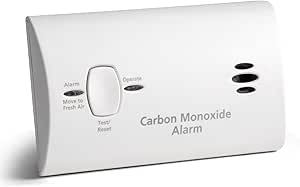 | Best for Flexible, Cord-Free Placement | Model: 9CO5LP2 / KN-COB-LP2 | Power: 2 included AA batteries | Sensor: Electrochemical | VIEW ON AMAZON | See Our Full Breakdown |
| Kidde Battery-Powered Carbon Monoxide Detector with LEDs |  | Best for Battery-Powered Controls and Memory | Sensor: Electrochemical | Power: 2 included AA batteries | Alarm: 85 dB | VIEW ON AMAZON | See Our Full Breakdown |
| Kidde COP Plug-In Carbon Monoxide Detector with AA Battery Backup |  | Best for Flexible Outlet Orientation | Model: COP | Power: 120V AC with 2 AA backup batteries | Alarm: 85 dB | VIEW ON AMAZON | See Our Full Breakdown |
| carbon monoxide detector | Model | Power | Warranty |
|---|---|---|---|
| First Alert Battery-Operated C | SMICO100 | — | — |
| Kidde COB Battery-Powered Carb | COB | Two AA batteries | 10-year limited |
| First Alert CO400 Battery-Powe | CO400 | — | 5-year limited |
| First Alert CO606 Plug-In Carb | CO606 | 120V plug-in with 9V battery backup | 7-year limited |
| Kidde Plug-In Carbon Monoxide | KN-COEG-3 | — | — |
| Kidde Plug-In Carbon Monoxide | COPD | 120V AC | 10-year limited |
| TOPTES CT-580 Portable Carbon | CT-580 | — | — |
| First Alert Battery-Powered Ca | — | One replaceable 9-volt battery per alarm; batteries included | 5-year limited |
| Klein Tools ET110 Carbon Monox | ET110 | — | — |
| Kidde Plug-In Carbon Monoxide | KN-COPP-3 | 120V AC plug-in | — |
| Kidde Plug-In Carbon Monoxide | KN-COB-DP2 | 120V AC plug-in | — |
| First Alert CO605 Plug-In Carb | CO606 (listed product title: CO605) | Corded electric with battery backup | 7-year limited |
| Kidde Battery-Powered Carbon M | 9CO5LP2 / KN-COB-LP2 | 2 included AA batteries | — |
| Kidde Battery-Powered Carbon M | — | 2 included AA batteries | 10-year limited warranty on alarm; battery performance excluded |
| Kidde COP Plug-In Carbon Monox | COP | 120V AC with 2 AA backup batteries | 10-year limited warranty |
More Details on Our Top Picks
First Alert Battery-Operated Combination Smoke and Carbon Monoxide Alarm
I’d choose this First Alert when one battery-powered unit needs to cover both smoke and carbon monoxide. Its test/silence button and end-of-life warning make routine checks and replacement easier to track, while Precision Detection technology is designed to reduce nuisance alarms from cooking. That combination gives it a broader role than the First Alert CO400, which monitors CO only, and it avoids dependence on an outlet. The tradeoff is its ionization sensor and the need to maintain its batteries; buyers seeking a dedicated CO alarm with an electrochemical sensor may prefer the CO400. This is a practical fit where combined coverage is the priority, but it is not a substitute for comparing the detector type and placement recommendations for your home.
Pros:- Detects both smoke and carbon monoxide
- Battery power allows installation without a nearby outlet
- End-of-life warning helps flag when replacement is due
- Test/silence button supports routine checks and alarm silencing
Cons:- Requires ongoing battery maintenance
- Uses an ionization sensor rather than the electrochemical sensor in the First Alert CO400
- Combination detection may be unnecessary for buyers who need CO monitoring only
Best for: Households that want one battery-powered alarm to cover both smoke and carbon monoxide in a location suited to a combination detector.
Not ideal for: Buyers seeking a dedicated CO-only alarm with an electrochemical sensor, or anyone who prefers not to maintain batteries.
- Brand:First Alert
- Model:SMICO100
- Alarm type:Smoke and carbon monoxide
- Power source:Battery powered
- Sensor type:Ionization
- Operating humidity:10–95% RH
- Dimensions:5.6 × 5.6 × 2 inches
- Weight:10.56 ounces
Our verdict“Choose this model if you want battery-powered smoke and CO coverage in one alarm and accept the upkeep of batteries.”
Kidde COB Battery-Powered Carbon Monoxide Detector
The Kidde COB suits buyers who want a standalone, battery-powered CO alarm that can sit on a tabletop or mount on a wall. Two AA batteries avoid reliance on household wiring, and the 85 dB alarm plus LED status lights give both audible and visual alerts. Compared with the First Alert CO400, this model is specified for two AA batteries and adds stated UL 2034 5th Edition and ETL listings, while the CO400 uses a 9V battery and an electrochemical sensor. The tradeoff is that this Kidde is limited to conditioned spaces and is not approved for RV or boat use, so its portable form should not be mistaken for universal travel suitability. Its 10-year limited warranty is a useful ownership detail, though it does not remove the need to follow replacement guidance.
Pros:- Two AA batteries allow operation without wiring
- Can be wall-mounted or placed on a tabletop
- 85 dB alarm and LED status lights provide audible and visual alerts
- Includes a 10-year limited warranty and stated UL 2034 5th Edition and ETL listings
Cons:- Not approved for RV or boat use
- Specified for conditioned spaces only
- Does not add smoke detection or a digital CO-level display
Best for: People who need a battery-powered CO alarm for a home or other conditioned space and want flexible tabletop or wall placement.
Not ideal for: RV and boat owners, or buyers who need an alarm approved for unconditioned spaces or vehicle use.
- Model:COB
- Power:Two AA batteries
- Alarm volume:85 dB
- Mounting:Wall-mounted or tabletop
- Standards:UL 2034 5th Edition; ETL Listed
- Warranty:10-year limited
- Use restrictions:Conditioned spaces only; not approved for RV or boat use
Our verdict“Pick the Kidde COB for flexible battery-powered CO monitoring in a conditioned home, not for an RV or boat.”
First Alert CO400 Battery-Powered Carbon Monoxide Alarm
For buyers who want CO monitoring without an outlet, the CO400 keeps the job focused: it uses an electrochemical sensor, runs on a replaceable 9V battery, and sounds an 85-decibel alarm. An optional wall mount and included bracket offer placement flexibility, while the test/silence button supports routine checks. Compared with the Kidde COB, the CO400 specifies its sensor type and uses a 9V battery rather than two AA batteries; the Kidde, by contrast, states a 10-year limited warranty and flexible tabletop placement. The key tradeoff here is the sensor lifespan of up to five years, after which the unit must be replaced. I’d favor it over the First Alert combination alarm when dedicated CO detection is the goal, but not when smoke coverage in the same device matters.
Pros:- Electrochemical sensor detects carbon monoxide
- Replaceable 9V battery supports operation without an outlet
- 85-decibel alarm provides a loud alert
- Includes a test/silence button and optional wall-mount hardware
Cons:- Sensor lifespan is up to five years, after which the unit must be replaced
- Requires battery replacement and upkeep
- Monitors CO only, unlike the First Alert combination alarm
Best for: Homeowners who need a dedicated CO alarm that can operate without an outlet and want an electrochemical sensor.
Not ideal for: Buyers who want smoke detection in the same alarm, a longer stated warranty, or a detector that does not require full-unit replacement after its sensor lifespan.
- Brand:First Alert
- Model:CO400
- Power source:Replaceable 9V battery
- Sensor:Electrochemical
- Alarm volume:85 decibels
- Sensor lifespan:Up to 5 years
- Warranty:5-year limited
- Mounting:Optional wall mount; no outlet required
Our verdict“Choose the CO400 for dedicated, outlet-free CO monitoring if a five-year sensor lifespan fits your replacement plans.”
First Alert CO606 Plug-In Carbon Monoxide Alarm, 3-Pack
This three-pack is aimed at buyers who want to place multiple CO alarms around a home without buying each unit separately. Every CO606 plugs into a 120V outlet and includes a 9V battery backup, so monitoring can continue through a power outage; its 85 dB alarm and test/silence button keep the core functions straightforward. Compared with the Kidde KN-COEG-3, the CO606 focuses on carbon monoxide rather than also detecting explosive gases, and it does not provide a digital level display. That simplicity is a tradeoff if you want more information about detected CO, but the three-alarm set offers a clearer fit for buyers prioritizing several plug-in locations. Outlet access is still required, and buyers should check their intended placement rather than assume every outlet will suit the unit.
Pros:- Three alarms support coverage at multiple locations
- 9V battery backup supports monitoring during power outages
- 85 dB alarm and test/silence button provide straightforward operation
- End-of-life chirp signals when the alarm has reached its service limit
Cons:- Each alarm requires access to a standard electrical outlet
- No display or detailed CO-level readings
- Monitors CO only, unlike the Kidde KN-COEG-3
Best for: Households that want three plug-in CO alarms with battery backup for several suitable outlet locations.
Not ideal for: Buyers who need portable placement, a digital CO-level readout, or detection of explosive gases in addition to carbon monoxide.
- Brand:First Alert
- Model:CO606
- Quantity:3 alarms
- Sensor type:Electrochemical
- Power:120V plug-in with 9V battery backup
- Alarm volume:85 dB
- Warranty:7-year limited
- End-of-life signal:Chirp
Our verdict“Choose this pack when several outlet-powered CO alarms with battery backup matter more than gas detection or a digital display.”
Kidde Plug-In Carbon Monoxide and Explosive Gas Alarm with Battery Backup
The Kidde KN-COEG-3 is the broadest hazard monitor in this group: alongside carbon monoxide, it detects methane, propane, natural gas, and sewer gas. Its digital display shows CO levels or signals gas detection, while Peak Level Memory can show a recorded CO peak—useful context the First Alert CO606 does not offer. The 9V backup battery supports operation during a power outage, and the approximately eight-minute hush function gives users a way to silence certain alarms while responding. That wider scope comes with a practical constraint: it normally needs a 120V outlet, and backup depends on a separate 9V battery. Choose it over a CO-only alarm when gas detection and displayed readings are priorities; skip it if you need a battery-only detector or only want basic CO monitoring.
Pros:- Detects CO, methane, sewer gas, propane, and natural gas
- Digital display shows CO levels or indicates gas detection
- 9V battery backup supports operation during power outages
- Peak Level Memory and an approximately eight-minute hush function add useful controls
Cons:- Requires a standard 120V outlet for normal operation
- Backup operation depends on maintaining a 9V battery
- Broader gas detection may be unnecessary for buyers seeking a simple CO-only alarm
Best for: Households with fuel-burning appliances or gas lines that want plug-in CO monitoring plus alerts for several named gas hazards and a digital display.
Not ideal for: Buyers without a suitable 120V outlet, those seeking a battery-only alarm, or anyone who wants CO monitoring without added gas detection.
- Brand:Kidde
- Model:KN-COEG-3
- Power source:120V AC plug-in
- Backup power:9V battery
- Detected gases:Carbon monoxide, methane, sewer gas, propane, and natural gas
- Alarm volume:85 dB
- Display:Digital LED
- Hush duration:Approximately 8 minutes
- Certifications:UL certified; meets UL 2034 and UL 1484
Our verdict“Choose the Kidde KN-COEG-3 if you want displayed CO readings and multiple gas alerts from a plug-in unit.”
Kidde Plug-In Carbon Monoxide Detector with AA Battery Backup
I’d choose this Kidde when I want a household alarm that shows CO levels without giving up backup power. Its backlit digital display makes readings visible at a glance, while the included AA batteries keep detection running through an outage. The rotating plug is a practical advantage over fixed-plug designs because it can fit outlets in either orientation. Compared with the older Kidde KN-COPP-3, this model uses AA backup batteries and is rated to UL 2034 5th Edition; the KN-COPP-3 instead offers peak-level memory and an extension cord for alternate placement. The tradeoff is that this is a 120V household detector, not a portable meter, and it is not approved for RV or boat use. I’d pick it for a conditioned home space, not travel or nonstandard power.
Pros:- Two included AA batteries provide backup during power outages
- Backlit display shows CO levels
- Rotating plug accommodates vertical or horizontal outlets
- 85 dB alarm and Test/Hush button support straightforward household use
Cons:- Not approved for RV or boat use
- 120V-only design does not suit 220V outlets
- Requires a suitable outlet in a conditioned space
Best for: Households wanting a plug-in CO alarm with a readable level display, outage backup, and a plug that fits different outlet orientations
Not ideal for: RV and boat owners, or buyers needing a detector for 220V outlets or portable monitoring
- Model:COPD
- Power:120V AC
- Backup:2 included AA batteries
- Alarm volume:85 dB
- Display:Backlit digital display showing CO levels
- Plug:Rotating; fits vertical or horizontal outlets
- Certifications:UL 2034 5th Edition tested; ETL Listed
- Warranty:10-year limited
- Use limitations:For conditioned spaces; not approved for RV or boat use; 120V single voltage
Our verdict“Choose this Kidde for a fixed 120V home location where readable CO levels and AA battery backup matter more than portability or peak-level memory.”
TOPTES CT-580 Portable Carbon Monoxide Detector
The TOPTES CT-580 is the outlier here: it is a portable CO meter, not a plug-in alarm intended to stay in one room. Its stated 0–1,000 ppm range, rapid 0.3-second response, and visual, audible, and vibration alerts give users several ways to notice a reading while moving between locations. The color screen, adjustable brightness, flashlight, and alarm history add useful context for checks away from a fixed outlet. Compared with the Klein Tools ET110, it adds vibration alerts and USB-C recharging, while Klein also displays temperature and includes a carrying pouch. The key limitation is that the listing gives no battery runtime or warranty duration, so I can’t judge how long it will run between charges or what support to expect. I’d use it as a portable measuring tool, not as a substitute for installed household alarms.
Pros:- Stated 0–1,000 ppm detection range with 0.3-second response
- Visual, audible, and vibration alarms suit varied working conditions
- TFT color display has adjustable brightness
- USB-C charging, flashlight, alarm history, and included protective case support portable checks
Cons:- Battery runtime is not specified
- No warranty duration is provided
- Portable meter format does not replace fixed household CO alarms
Best for: Technicians and property maintainers who need a rechargeable handheld CO meter with multiple alert modes while checking different locations
Not ideal for: Households seeking a permanent life-safety alarm, or buyers who need a stated battery runtime and warranty term before purchase
- Model:CT-580
- Detection range:0–1,000 ppm
- Response time:0.3 seconds
- Sensor type:DDS sensor
- Alarm modes:Visual, audible, and vibration
- Display:TFT color display with adjustable brightness
- Power and charging:Rechargeable battery; USB-C
- Included accessories:Protective case, Type-C charging cable, and user manual
Our verdict“Choose the CT-580 for mobile CO checks and layered alerts, but keep dedicated household alarms installed for continuous protection.”
First Alert Battery-Powered Carbon Monoxide Alarm, 2-Pack
This First Alert two-pack suits buyers who want to place alarms in separate rooms without relying on outlets. Each unit uses an electrochemical sensor and a replaceable 9-volt battery, so the alarms can keep operating through a household power failure and need no electrical installation. That makes them easier to position than either plug-in Kidde model, though neither provides the digital CO level display found on the Kidde COPD or KN-COPP-3. The 85-decibel alert, test/silence button, and low-battery and end-of-life warnings cover the basic needs of a standalone alarm. The main compromise is service life: the sensor lasts up to five years, after which each alarm must be replaced. I’d favor this pack for straightforward coverage in two locations, but skip it if a longer-lived detector or live readings are priorities.
Pros:- Two alarms cover separate rooms
- Battery operation avoids outlet dependence and works during power outages
- 85-decibel alert with test/silence button
- Low-battery and end-of-life alerts help flag maintenance needs
Cons:- Sensor life is up to five years, after which the alarm must be replaced
- No digital display for checking CO levels
- Each unit needs its own replaceable 9-volt battery
Best for: Renters and households that need two independently placed, battery-powered CO alarms without adding wiring or depending on outlets
Not ideal for: Buyers who want a digital concentration display, plug-in operation, or a sensor life beyond the stated five years
- Pack size:2 alarms
- Power:One replaceable 9-volt battery per alarm; batteries included
- Sensor:Electrochemical
- Alarm volume:85 dB
- Sensor life:Up to 5 years
- Alerts and controls:Test/silence button, low-battery alert, and end-of-life alert
- Mounting:Optional wall mount
- Certification:UL listed
- Warranty:5-year limited
Our verdict“Pick this First Alert pack for simple battery-powered coverage in two rooms, but choose a Kidde display model if seeing CO readings matters more.”
Klein Tools ET110 Carbon Monoxide Meter with Exposure Limit Alarm
I’d choose the Klein Tools ET110 for users who need to take portable CO measurements and see the temperature at the same time. Its 0–1,000 ppm range, backlit display, and audible and visual alarms make readings easier to check in dim or noisy work areas. Unlike the household Kidde COPD, the ET110 is a handheld meter rather than a plug-in alarm with battery backup, so it is better suited to deliberate spot checks than continuous room monitoring. Compared with the TOPTES CT-580, Klein includes a temperature display, four AAA batteries, and a carrying pouch; the TOPTES adds vibration alerts, USB-C charging, and a flashlight. The ET110’s auto-off after 20 minutes of inactivity can conserve power, but it may interrupt a session if the meter is left idle. I’d keep it in a work kit, not rely on it as a home alarm.
Pros:- Measures CO across a 0–1,000 ppm range
- Displays temperature in Fahrenheit or Celsius
- Backlit display plus audible and visual alarms
- Includes four AAA batteries and a carrying pouch
Cons:- Auto-off activates after 20 minutes of inactivity
- Does not provide continuous fixed-room monitoring like a household alarm
- Vibration alerts and rechargeable USB-C power are not listed, unlike the TOPTES CT-580
Best for: HVAC workers, maintenance staff, and inspectors who need a handheld CO meter with temperature readings for spot checks
Not ideal for: Households seeking a permanently installed alarm, or users who need a meter to remain powered during long idle periods
- Model:ET110
- CO measurement range:0–1,000 ppm
- Temperature display:Fahrenheit and Celsius
- Low alarm:35 ppm
- High alarm:200 ppm
- Display and alerts:Backlit display; audible and visual alarms
- Auto-off:After 20 minutes of inactivity
- Included accessories:Carrying pouch and 4 AAA batteries
Our verdict“Choose the ET110 for portable workplace checks where temperature readings and a supplied pouch are useful, not as a substitute for installed CO alarms.”
Kidde Plug-In Carbon Monoxide Detector with Digital Display and 9V Battery Backup
This Kidde stands out for combining a digital CO display with more placement options than a typical outlet-only alarm. It can plug directly into a 120V outlet, sit on a tabletop, or mount on a wall, and its 8-foot extension cord helps when the nearest outlet is not where I want the detector. A 9V battery provides outage backup, while peak-level memory can show whether CO rose while the room was unattended. Compared with the newer Kidde COPD, this model adds the extension cord and peak memory; the COPD uses two AA backup batteries and has a rotating plug for differently oriented outlets. The tradeoff is its stated replacement interval of five to seven years, so buyers should plan for a shorter service life than the 10-year limited warranty might suggest. It also still depends on an outlet for normal operation.
Pros:- Digital display shows readings from 30 to 999 ppm
- 9V battery backup supports operation during power outages
- Plug-in, tabletop, or wall-mounted placement with an 8-foot extension cord
- Peak-level memory and Smart-Hush button add useful monitoring controls
Cons:- Requires a nearby outlet for normal operation
- Product information recommends replacement every 5 to 7 years
- Does not list the rotating plug featured on the Kidde COPD
Best for: Homeowners who want a plug-in alarm with backup power, peak-level memory, and tabletop or wall placement options
Not ideal for: Buyers who need a battery-only alarm, lack a nearby 120V outlet, or want a stated service life matching the warranty term
- Model:KN-COPP-3
- Power:120V AC plug-in
- Backup battery:9V alkaline battery
- Sensor:Electrochemical
- Alarm volume:85 dB
- Display range:30–999 ppm
- Features:Peak-level memory, Smart-Hush button, and LED status indicators
- Placement and extension cord:Plug-in, tabletop, or wall-mounted; 8-foot cord
- Certification and warranty:UL certified; 10-year limited warranty
Our verdict“Choose this model when extension-cord placement and peak-level memory are more useful than AA backup or a rotating plug.”
Kidde Plug-In Carbon Monoxide Detector with AA Battery Backup
I’d choose this Kidde when I want more than an alarm signal: its digital CO display shows a level, while peak memory keeps the last detected reading or test available for reference. That makes it more informative than the First Alert CO605, which has no display. Both plug-in models offer an 85 dB alarm and battery backup, so the deciding difference is the added display and memory here. Two AA batteries help maintain monitoring during an outage, and the Test-Hush button provides a way to check or silence the unit. The tradeoff is placement: this detector needs a 120V outlet for primary power, so it is less flexible than Kidde’s battery-powered model. I’d favor it for an outlet-equipped room where visible readings are useful, not for spaces without a suitable outlet.
Pros:- Digital display shows CO level information
- Peak memory records the last detected level or test
- Two AA backup batteries support operation during power outages
- Test-Hush button and 85 dB alarm
Cons:- Requires a standard 120V outlet for primary power
- Less flexible to place than a battery-powered detector
Best for: Households that want a visible CO reading and peak memory near an available 120V outlet
Not ideal for: People who need outlet-free placement or a detector they can move between rooms without relying on AC power
- Model:KN-COB-DP2
- Power:120V AC plug-in
- Battery backup:2 AA alkaline batteries
- Sensor:Electrochemical
- Alarm:85 dB
- Display and memory:Digital CO level display; records last detected level or last test
- Hush duration:Approximately 8 minutes
- Certification and warranty:UL certified; 10-year limited manufacturer’s warranty
Our verdict“Choose this Kidde over the First Alert CO605 if a display and peak-level memory matter more than outlet-free placement.”
First Alert CO605 Plug-In Carbon Monoxide Detector with Battery Backup
The First Alert CO605 suits buyers who want plug-in CO monitoring with battery backup but don’t need a screen or recorded readings. Its electrochemical sensor, 85 dB alarm, and test-and-silence button cover the core functions, while an end-of-life signal gives a clear cue when replacement is due. Compared with the Kidde plug-in detector with a digital display, this model offers less information about detected levels; that simpler setup may appeal if an audible alert is all you need. The cost of that simplicity is the lack of a display or peak-level memory. Like the Kidde, it also depends on a wall outlet for primary power, so it is not the pick for outlet-free placement. I’d choose it for a fixed location where basic alarm coverage and a replacement signal matter more than viewing CO readings.
Pros:- Battery backup supports monitoring during power outages
- Electrochemical sensor
- Test and silence button
- End-of-life signal indicates when replacement is due
Cons:- No display or settings for viewing CO levels
- Requires a standard wall outlet for primary power
- 7-year limited warranty is shorter than the 10-year limited warranties listed for several Kidde models
Best for: Buyers seeking a simple plug-in alarm with outage backup and an end-of-life signal
Not ideal for: People who want a digital CO reading, peak-level memory, or flexible placement away from a wall outlet
- Model:CO606 (listed product title: CO605)
- Power:Corded electric with battery backup
- Sensor:Electrochemical
- Alarm:85 dB
- Controls and signal:Test and silence button; end-of-life signal
- Dimensions:1.38 × 5 × 3.4 inches
- Operating humidity:10–95% RH
- Warranty:7-year limited
Our verdict“Pick the CO605 for basic, fixed-location monitoring; choose the display-equipped Kidde plug-in model if you want to see recorded CO levels.”
Kidde Battery-Powered Carbon Monoxide Detector with 85 dB Alarm
This Kidde is the flexible choice for rooms where an outlet is inconvenient: two AA batteries power the detector, and the unit can sit on a tabletop or mount on a wall. Its 85 dB alarm, red CO-alert LED, and green power LED communicate alarm and status without requiring a display. Compared with the Kidde Plug-In Carbon Monoxide Detector with AA Battery Backup, this model gives up AC power and a digital reading in exchange for easier placement. Event Memory records the last detection or test, which adds some follow-up information, though it does not show a numerical CO level. The main upkeep tradeoff is battery replacement; the plug-in alternative can draw primary power from an outlet. I’d pick this for a room without a handy outlet or as a portable placement option, but skip it if you want a visible level readout.
Pros:- Runs on two included AA batteries without wiring
- Wall-mount or tabletop installation supports flexible placement
- 85 dB alarm with separate power and CO-alert LEDs
- Event Memory records the last detection or test
Cons:- Batteries need replacement when depleted
- No digital CO-level display is specified
Best for: Renters and households needing a battery-powered detector that can be wall-mounted or placed on a tabletop
Not ideal for: Buyers who want a digital CO-level display or prefer a plug-in unit to avoid routine battery replacement
- Model:9CO5LP2 / KN-COB-LP2
- Power:2 included AA batteries
- Sensor:Electrochemical
- Alarm:85 dB
- Indicators:Green power LED; red CO-alert LED
- Installation:Wall-mounted or tabletop
- Event Memory:Records the last CO detection or test
- Certification and warranty:UL certified; 10-year limited manufacturer’s warranty
Our verdict“Choose this battery-powered Kidde for flexible, outlet-free placement, but choose the plug-in Kidde if viewing CO levels is a priority.”
Kidde Battery-Powered Carbon Monoxide Detector with LEDs
This battery-powered Kidde brings a useful control-and-memory combination to outlet-free monitoring: it has a Test-Hush button and peak-level memory alongside its 85 dB alarm and status LEDs. Like the other battery-powered Kidde in this group, it can be wall-mounted or used on a tabletop, so placement does not depend on an outlet. Its main distinction from the Kidde 9CO5LP2 / KN-COB-LP2 is the explicitly listed peak-level memory and Test-Hush control; neither product specifies a digital CO display. That means memory helps retain a past reading or test, but it does not provide an on-screen level to check at a glance. Two AA batteries keep wiring out of the setup, though they must be replaced as needed. The stated warranty excludes battery performance, a limitation buyers should factor into ownership.
Pros:- Two AA batteries allow operation without wiring
- Wall-mount and tabletop installation options
- Peak-level memory retains the last detected level or test
- Test-Hush button and 85 dB alarm
Cons:- No digital CO-level display is specified
- Warranty excludes battery performance
Best for: Households wanting a wire-free detector with a hush control and peak-level memory
Not ideal for: Buyers who need a digital CO display or expect the warranty to cover battery performance
- Sensor:Electrochemical
- Power:2 included AA batteries
- Alarm:85 dB
- Indicators:Green power LED and red CO-alert LED
- Features:Peak-level memory; Test-Hush button
- Installation:Wall-mounted or tabletop
- Warranty:10-year limited warranty on alarm; battery performance excluded
Our verdict“Choose this model over the Kidde 9CO5LP2 if a specified Test-Hush button and peak-level memory are your priorities.”
Kidde COP Plug-In Carbon Monoxide Detector with AA Battery Backup
The Kidde COP is the outlet-powered pick for buyers whose receptacle orientation makes a conventional plug awkward. Its rotating plug fits vertical or horizontal outlets, while two AA batteries provide backup if household power fails. LED status lights and an 85 dB alarm cover basic alerts, and the Test/Hush button adds a way to check or silence the unit. Compared with the Kidde KN-COB-DP2, this model’s stated feature set focuses on outlet fit and status lights rather than a digital CO-level display and peak memory. It is tested to UL 2034 5th Edition standards and ETL listed, but its use restrictions matter: it is for conditioned spaces, is not approved for RV or boat use, and may not work with 220V outlets. I’d choose it for a compatible household outlet, not for travel or display-based monitoring.
Pros:- Rotating plug fits vertical or horizontal outlets
- Two AA backup batteries support monitoring during outages
- 85 dB alarm, LED status lights, and Test/Hush button
- ETL listed and tested to UL 2034 5th Edition standards
Cons:- Requires a compatible 120V outlet and may not work with 220V outlets
- Not approved for RV or boat use
- Conditioned-space use only
Best for: Households with vertical or horizontal 120V outlets that want battery backup and a plug that can rotate to fit
Not ideal for: RV or boat owners, people with 220V outlets, or buyers seeking a digital CO-level display
- Model:COP
- Power:120V AC with 2 AA backup batteries
- Alarm:85 dB
- Plug:Rotating; fits vertical or horizontal outlets
- Features:LED status lights; Test/Hush button; power surge immunity
- Standards:UL 2034 5th Edition tested; ETL listed
- Warranty:10-year limited warranty
- Use restrictions:Conditioned spaces only; not approved for RV or boat use; may not work with 220V outlets
Our verdict“Choose the Kidde COP when outlet orientation is the main placement hurdle; choose the KN-COB-DP2 if you want a digital CO display.”

How We Picked
I ranked these options by how well their stated design supports dependable, practical CO warning in the setting a buyer is likely to use them. The main factors were power and backup arrangement, placement flexibility, ease of understanding an alert, and whether added functions—such as smoke detection, a display, or portability—solve a clear need. I also separated household alarms from meters and portable detectors: those devices can serve different purposes and are not automatic substitutes for fixed home alarms.
The First Alert combination alarm leads because it covers smoke and carbon monoxide in one battery-powered unit; the Kidde digital-display plug-in model and TOPTES portable detector stand out for more specific needs. Simple battery and plug-in alarms remain useful choices, but their order depends on where an outlet is available and what backup is included. Similar or repeated product names are treated as distinct listings only where the supplied model details identify a difference; I would verify exact packaging and specifications before buying.
Factors to Consider When Choosing Carbon Monoxide Detector
Choosing a CO alarm is less about collecting features and more about matching its power, placement, and alert style to the home. I would start with the location and coverage you need, then check backup behavior, device type, and the instructions for maintenance and replacement.
Choose placement before choosing power
Make a room-by-room plan before deciding between a plug-in and battery-powered model. A plug-in alarm is convenient where an outlet sits in a suitable location, but furniture, outlet height, and household layout may limit placement. Battery-powered models offer more freedom from outlets and can suit hallways or areas where plugging in is impractical. Follow the manufacturer’s placement instructions and local guidance rather than assuming every wall or ceiling position is appropriate. A portable detector is useful for checking conditions while moving around, but it does not automatically provide the same continuous, fixed warning as an installed household alarm. Avoid buying several devices first and working out their locations later.
Treat backup power as a separate decision
A plug-in alarm without suitable backup may stop warning if power is interrupted, so check the exact backup arrangement on the model you are considering. The products in this roundup list different backup types, including AA and 9V batteries; they are not interchangeable assumptions. Battery-powered alarms avoid dependence on a wall outlet, but they still require attention to battery condition and device status. Think about who will notice a low-battery signal and how replacement batteries will be kept available. If outages are common where you live, backup behavior may matter more than a digital display. Read the instructions for what the alarm does during an outage, rather than relying on the phrase “battery backup” alone.
Know whether you need an alarm, a meter, or both
A home alarm is intended to alert occupants when its sensing and alarm conditions are met; a meter may provide readings or support checks in a specific situation. The Klein Tools ET110 and TOPTES CT-580 are the portable instrument-style options in this lineup, while the other products are household alarm designs. Do not assume a handheld device can replace alarms installed for ongoing protection, or that a standard alarm can provide the same measurement detail as a meter. Buyers comparing these categories should check what the device displays, what conditions trigger an alert, and what the manufacturer says it is designed to do. For most households, fixed alarms should remain the foundation. Add a portable tool only when its separate use is clear.
Decide whether a display or extra sensing helps you
A digital display can show information that a basic alarm does not, but more information is useful only if you know how to interpret it. A sound-only alarm keeps the task simple: respond to the alert and follow the manufacturer’s safety instructions. A combination smoke-and-CO unit can reduce the number of separate devices, but check that its placement and coverage suit both functions. Extra sensing for explosive gas, as listed on one Kidde model, may appeal to buyers seeking another type of warning, though it does not make the device a replacement for every other safety measure. Choose features that solve a real household need instead of treating a longer feature list as proof of better protection.
Check the model label, maintenance needs, and replacement schedule
Product names can be similar even when power arrangements or included features differ, and this roundup includes repeated Kidde plug-in listings with AA backup. Compare the full model number, packaging contents, backup battery type, and display or alarm details before checkout. Then read the manual for test procedures, cleaning, battery changes, end-of-life signals, and replacement timing. A detector that is difficult to maintain can be less useful if its status is ignored or it remains installed past its service life. Do not assume every model follows the same schedule just because it shares a brand. Keep the instructions accessible so future occupants can recognize the alarm signals and service requirements.
Frequently Asked Questions
Should I choose a plug-in or battery-powered carbon monoxide detector?
Choose based on where the detector needs to go and what happens if household power fails. Plug-in models are convenient near a suitable outlet, and some options here add battery backup. Battery-powered models offer more placement flexibility without relying on an outlet, but their batteries and status signals still need attention. Check the exact backup arrangement rather than assuming all plug-in alarms behave alike. Follow the model’s placement instructions and local requirements whichever power type you choose.
Can a portable carbon monoxide detector replace alarms installed in my home?
I would not treat a portable instrument as an automatic replacement for fixed household alarms. The TOPTES CT-580 and Klein Tools ET110 fill a different role from the plug-in and battery-powered alarm models in this roundup. A portable tool may help when you need readings or portability, while a fixed alarm is meant to remain in place and warn occupants. Check each manufacturer’s stated use and alert behavior before relying on a device for a particular job. If you buy a portable model, keep appropriate household alarms in place as directed by local guidance.
Is a digital display worth choosing over a basic alarm?
A display can be useful if you want visible information in addition to an audible alarm, which is the main distinction of the Kidde plug-in model with a digital display in this lineup. A basic alarm may suit buyers who prefer a simpler device and will respond to its warning as instructed. A displayed number should not be treated as permission to ignore an alarm or delay action. Read the manual to learn what the display communicates and how the device signals an emergency or fault. Pay for the extra information only if you expect to use it correctly.
Does a combination smoke and carbon monoxide alarm cover every detector need?
A combination unit can reduce the number of separate devices by providing smoke and CO warning in one product, which makes the First Alert combination alarm a distinct choice here. It does not remove the need to plan coverage throughout the home or follow placement instructions for both sensing functions. Check the product documentation and local rules to confirm where combination alarms are suitable. Some homes may need additional alarms or different placements to cover all required areas. Compare the device’s stated functions with your existing safety setup before replacing separate alarms.
What should I check when two detectors appear to have the same features?
Compare the full model number and exact listing details, not just the brand or a shortened product name. This roundup includes two Kidde plug-in listings described with AA battery backup, so the title alone may not reveal whether the products differ. Check the included battery, display, alarm features, packaging count, and any model-specific instructions. Confirm that the retailer’s listing matches the manufacturer’s documentation. If the distinction remains unclear, choose only after verifying the exact item you will receive.
Conclusion
For the broadest household fit in this lineup, I would start with the First Alert Battery-Operated Combination Smoke and Carbon Monoxide Alarm as the best overall pick, especially when one device needs to cover two warning functions. The best value depends on the number of locations you need to cover and the exact package; the First Alert battery-powered two-pack is a practical place to compare when buying for multiple rooms. For a premium-style feature set, choose the Kidde plug-in model with digital display and 9V backup if visible information and backup match your needs. Beginners may prefer a straightforward battery-powered alarm from Kidde or First Alert over a portable meter or a feature-heavy device. For specific needs, pick the TOPTES CT-580 for portability, the Klein Tools ET110 for a meter-style tool, or a plug-in Kidde model when outlet placement and its listed backup fit your home. Before ordering, verify the exact model and follow its installation and maintenance instructions.
Halloween Picks

Gemmy Bluey Family Halloween Inflatable Scene, 5.5 ft Lighted Yard Decoration

12-Foot Inflatable Pumpkin Halloween Archway with LED Lights

Max Fun 10-Foot Halloween Dragon and Pumpkin Inflatable Archway with LED Lights
As an affiliate, we earn on qualifying purchases.