
If you’re looking for fun, engaging STEM kits for kids, I’ve found some of the best options that make learning exciting. From electronics sets like Snap Circuits to science kits like Doctor Jupiter and Earth Science kits from National Geographic, there’s something for every age. Robotics, engineering, and anatomy kits also make hands-on exploration easy. Continue exploring these top choices to discover the perfect fit for nurturing curiosity and developing skills in young learners.
Key Takeaways
- Highlights top STEM kits suitable for various age groups, promoting hands-on learning and engagement.
- Covers a range of subjects including science, engineering, robotics, and environmental studies.
- Emphasizes safety, quality materials, and educational value in selecting effective kits.
- Includes beginner, advanced, and comprehensive options to suit different skill levels.
- Focuses on kits that foster curiosity, critical thinking, and practical STEM skills through fun activities.
Snap Circuits Jr. SC-100 Electronics Exploration Kit


If you’re looking for an engaging and safe way to introduce kids to electrical engineering, the Snap Circuits Jr. SC-100 Electronics Exploration Kit is a fantastic choice. I love how it offers over 100 projects with colorful, easy-to-use parts that snap together on a plastic grid—no soldering needed. Designed for kids ages 8 and up, it makes building gadgets like alarm systems or flying saucers simple and fun. Plus, the full-color manual guides them step-by-step, promoting practical skills and STEM learning. It’s a versatile, educational gift that sparks curiosity and creativity in young engineers.
Best For: children aged 8 and above who are interested in learning basic electrical engineering concepts through fun, hands-on projects.
Pros:
- Offers over 100 engaging projects with colorful, easy-to-assemble parts.
- No soldering or special tools required, making it safe and beginner-friendly.
- Promotes STEM learning and practical skills with a comprehensive, step-by-step full-color manual.
Cons:
- Requires batteries to operate projects, which are not included in the kit.
- Limited to the parts included; expanding beyond the kit may require additional purchases.
- May be too simple for older children or those with prior electronics experience seeking advanced projects.
Doctor Jupiter Science Kit for Kids Ages 4-8

Looking for a STEM kit that sparks curiosity in young children? The Doctor Jupiter Science Kit for Kids Ages 4-8 offers over 100 experiments that make learning fun and interactive. It’s perfect for boys and girls, encouraging exploration, critical thinking, and problem-solving. Kids can enjoy activities like Water Fireworks and Walking Water, helping them grasp scientific concepts naturally. The kit includes easy-to-follow instructions, making it simple for children to perform experiments independently or with minimal supervision. Safe and durable, it meets all U.S. safety standards, providing a screen-free, engaging way to introduce young learners to the wonders of science.
Best For: young children aged 4-8 who are curious about science and enjoy hands-on, screen-free learning experiences.
Pros:
- Over 100 engaging experiments that promote STEM skills and critical thinking
- Easy-to-follow, illustrated instructions suitable for independent or guided use
- Safe, durable materials meeting all U.S. safety standards, ideal for young learners
Cons:
- Some experiments may require adult supervision for very young children
- Limited to science and electricity topics, may not cover broader STEM areas
- Requires additional space and basic household items for certain activities
NATIONAL GEOGRAPHIC Earth Science Kit with 100+ Experiments

The NATIONAL GEOGRAPHIC Earth Science Kit with 100+ experiments is perfect for curious kids enthusiastic to explore Earth’s mysteries through hands-on activities. I love that it offers over 100 engaging experiments, like growing crystals and building erupting volcanoes, which bring science to life. The kit includes 15 core experiments, such as creating water tornadoes and excavating fool’s gold, providing a solid foundation for learning. Plus, the 10 rock and mineral specimens let kids start a personal collection. With a bonus guide featuring 85+ extra experiments using household items, this all-in-one kit truly sparks curiosity and fosters a love for Earth science.
Best For: curious kids and young science enthusiasts eager to explore Earth’s wonders through hands-on experiments and personal collections.
Pros:
- Over 100 engaging Earth science activities that foster learning and creativity
- Includes a rock collection with 10 specimens and storage case for organization
- Bonus guide with 85+ additional experiments using household items for extended exploration
Cons:
- The kit may require adult supervision for some experiments involving chemicals or small parts
- Some materials might need replenishing or additional household items not included in the kit
- The extensive number of experiments could be overwhelming for very young children or beginners
Sillbird 12-in-1 Solar Robot Building Kit for Kids
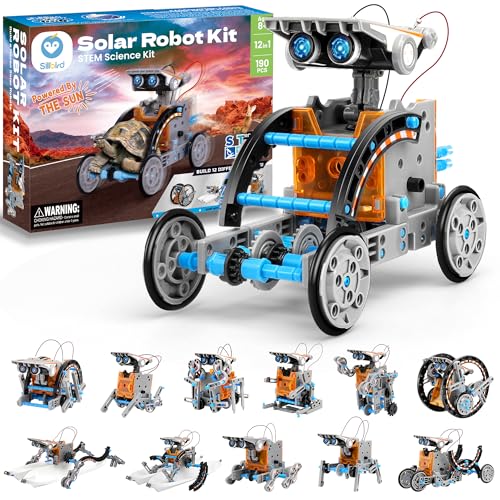
Designed for children aged 8 to 13 who enjoy hands-on learning, the Sillbird 12-in-1 Solar Robot Building Kit offers an engaging way to explore engineering and renewable energy concepts. With 190 parts, kids can build 12 different models, from robots to cars, matching their skill level. The kit encourages curiosity about solar power, sustainability, and problem-solving through step-by-step instructions that foster independence or family involvement. Its larger solar panel harvests more sunlight, powering models outdoors or indoors with artificial light. While some assembly challenges exist, especially for younger children, this kit provides a fun, educational experience that sparks creativity and environmental awareness.
Best For: children aged 8 to 13 who enjoy hands-on STEM learning, building, and exploring renewable energy concepts.
Pros:
- Offers 12 different models to build, promoting creativity and engineering skills
- Encourages environmental awareness through solar-powered functionality
- Comes with clear, step-by-step instructions suitable for independent or family projects
Cons:
- Can be challenging for younger children due to small parts and complex assembly
- Solar panel performance is limited indoors or on cloudy days, affecting model movement
- Some users report quality issues, including gear fitting problems and parts not functioning properly
UNGLINGA Science Kits for Kids

If you’re searching for a STEM kit that makes science both fun and accessible for kids aged 8 and up, UNGLINGA Science Kits is an excellent choice. It offers 150 experiments across earth science, chemistry, physics, and more, all with clear, step-by-step instructions and kid-friendly tools. Most projects use household items, making setup simple and practical. Kids can wear goggles and conduct experiments like real scientists, fostering curiosity and hands-on learning. Rated 4.7 stars, the kit provides hours of engaging, educational fun perfect for holidays, weekends, or school breaks. It’s a fantastic gift that makes science exciting and approachable for young learners.
Best For: parents, teachers, and young science enthusiasts aged 8 and above seeking a comprehensive, engaging, and educational STEM kit to inspire curiosity and hands-on learning.
Pros:
- Includes 150 experiments covering a wide range of scientific topics, providing extensive educational value.
- Well-illustrated, step-by-step manual makes experiments accessible and easy to follow for children.
- High-quality, kid-friendly tools and common household items facilitate safe, practical, and cost-effective experiments.
Cons:
- Some customers report missing items or language barriers in instructions, which may require additional assistance.
- The size and weight (over 3 pounds) may require space for storage and handling.
- A few experiments may need additional household supplies not included in the kit.
Klever Kits 36-in-1 Motor Robotic Kits for Kids
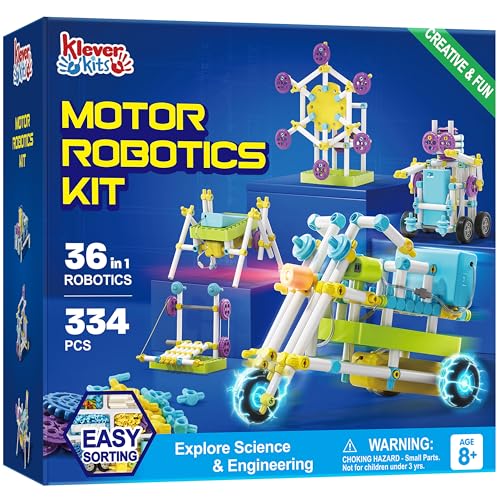
Klever Kits 36-in-1 Motor Robotic Kits is an excellent choice for kids aged 8 to 13 who love hands-on STEM projects. With the ability to build 36 different robots, including walking machines and racing cars, it sparks creativity and curiosity. The kit promotes learning in science, engineering, mechanics, problem-solving, and logical thinking through active play. All parts are neatly organized in a sorting tray, and clear instructions with video tutorials make building easy and fun. Made from durable, safe materials, it’s perfect as a gift and encourages teamwork, whether kids build solo or together with friends and family.
Best For: kids aged 8-13 who enjoy hands-on STEM projects, building robots, and exploring engineering concepts in a fun, engaging way.
Pros:
- Offers 36 different robot models to enhance creativity and problem-solving skills.
- Includes organized parts, clear instructions, and video tutorials for easy assembly.
- Made from durable, safe materials, making it a long-lasting and gift-ready kit.
Cons:
- Some children may require adult supervision or assistance with complex builds.
- The small parts could pose a choking hazard for younger children outside the recommended age range.
- Limited to the included robot designs; building additional or custom models may require extra parts or modifications.
NATIONAL GEOGRAPHIC Science Magic Kit for Kids

The NATIONAL GEOGRAPHIC Science Magic Kit for Kids stands out as an excellent choice for young science enthusiasts who love combining learning with fun. With over 100 experiments that blend science and magic, it sparks curiosity and creativity. The kit includes 20 tricks demonstrating physics and chemistry, like bending metal with water and floating coins, making science exciting and accessible. All necessary materials, including a magic wand and gloves, are provided, so kids can perform tricks confidently. Plus, a bonus guide offers 85+ additional experiments using household items, encouraging further exploration. It’s perfect for engaging children in STEM through interactive, magical demonstrations.
Best For: young children and curious minds who enjoy interactive science experiments combined with magic tricks to foster learning and creativity.
Pros:
- Engages children with over 100 science and magic experiments that promote STEM skills.
- Includes all necessary materials, such as a magic wand and gloves, for easy and confident performances.
- Features a bonus guide with 85+ additional experiments using household items to encourage further exploration.
Cons:
- Some experiments may require adult supervision or assistance for safety and proper execution.
- The kit’s complexity might be challenging for very young children without guidance.
- Limited details on the durability or storage of materials included in the kit.
Creativity for Kids Grow N Glow Terrarium Kit

Designed for young science enthusiasts aged 6 and up, the Creativity for Kids Grow N Glow Terrarium Kit offers an exciting hands-on experience that combines art, science, and responsibility. Kids can craft their own mini ecosystem with a clear terrarium, plant seeds, and watch them grow in just a few days. The kit includes glow-in-the-dark figurines, colorful sand, and stickers, encouraging creativity and decorating skills. As they water and care for their plants, children learn about ecosystems, responsibility, and botanical growth. The glowing effect at night makes this project even more magical, fostering curiosity and confidence in young explorers.
Best For: young children aged 6 and up who are interested in science, arts and crafts, and hands-on activities that promote learning about ecosystems and plant growth.
Pros:
- Combines STEM learning with creative arts, fostering both scientific understanding and artistic expression.
- Includes glow-in-the-dark figurines and decorative materials to enhance engagement and nighttime magic.
- Supports responsibility and care through planting and watering, with visible growth in just a few days.
Cons:
- May require adult supervision for younger children during assembly or watering.
- Limited plant variety, as only quick-growing chia and wheatgrass are included.
- The glow effect depends on exposure to light, which may vary in effectiveness.
UNGILINGA Science Lab Experiments Kit for Kids

If you’re looking for an engaging way to introduce children to science, the UNGILINGA Science Lab Experiments Kit for Kids is an excellent choice. It offers over 50 hands-on STEM activities, including volcano eruptions, gemstone creation, and rainbow rain, using household items. The kit includes a detailed guide that explains the science behind each experiment, helping kids develop critical thinking and problem-solving skills. Safe and easy to follow, it promotes curiosity and learning for children ages 8 and up. Whether used independently or with family, this kit provides hours of fun while fostering a genuine interest in earth sciences, chemistry, and physics.
Best For: children aged 8 and up who are curious about science and enjoy hands-on STEM activities at home or in educational settings.
Pros:
- Offers over 50 engaging experiments that promote critical thinking and problem-solving skills.
- Includes a detailed, easy-to-understand guide to explain scientific concepts behind each activity.
- Safe, durable, and suitable for independent or supervised use, making it versatile for different age groups.
Cons:
- Requires adult supervision for younger children to ensure safety during experiments.
- Some household items may need to be prepared in advance, which could be inconvenient.
- The kit’s size and contents may not be sufficient for large group activities or classroom use without additional supplies.
UNGLINGA 70 Lab Experiments Science Kits for Kids

Looking for an engaging STEM kit that turns kids into young scientists? The UNGLINGA 70 Lab Experiments Science Kit offers 70 exciting activities like erupting volcanoes, crystal growing, and balloon rockets, perfect for children aged 8 and up. It promotes critical thinking, problem-solving, and curiosity with safe, high-quality ingredients. The clear manual guides kids through each experiment, encouraging hands-on learning with household items. Parents and educators praise its durability and educational value, making science fun and accessible. Compact and lightweight, it’s ideal for home, school, or science clubs, inspiring a love for STEM while providing hours of engaging exploration.
Best For: parents, teachers, and young science enthusiasts seeking an engaging, educational STEM kit for children aged 8 and up to encourage hands-on learning and scientific curiosity.
Pros:
- Offers 70 diverse experiments that make learning fun and interactive
- Includes a detailed, easy-to-follow manual with safety instructions
- Made with safe, high-quality ingredients suitable for home and classroom use
Cons:
- Some experiments may require additional household items not included
- Small parts or chemicals may need close supervision to ensure safety
- Limited space for storage in the compact kit may affect organization over time
Dan&Darci Light-Up Terrarium Kit for Kids

The Dan&Darci Light-Up Terrarium Kit for Kids is an excellent choice for children aged 6-12 who love hands-on science projects and creative craft activities. It offers a fun way to build a miniature garden inside a glowing jar, combining layering rocks, sand, soil, and seeds. The LED-lit lid adds a magical night-time glow, making it visually mesmerizing. The kit includes everything needed, from miniatures to stickers and a spray bottle, encouraging kids to learn about ecosystems, plant growth, and responsibility. Easy-to-follow instructions make setup simple, making this kit perfect for engaging young minds in STEM learning while fostering creativity and environmental awareness.
Best For: children aged 6-12 who enjoy hands-on science, gardening, and creative craft activities that combine education and fun.
Pros:
- Encourages STEM learning, creativity, and responsibility through interactive gardening and decorating.
- Includes a glowing LED-lit lid that creates a magical night-time effect, enhancing visual appeal.
- Comes with comprehensive, easy-to-follow instructions and all necessary materials, making setup simple.
Cons:
- The LED light has a short battery life, requiring frequent recharging, which may be inconvenient.
- Seed germination and plant growth can vary, and some plants may not sprout as expected despite proper care.
- Some users report missing parts or technical issues with the LED light, and limited online support can hinder troubleshooting.
Smartivity Mega 150 Science Experiment Kit for Kids

Designed for children aged 6 to 14, the Smartivity Mega 150 Science Experiment Kit stands out as an ideal choice for young STEM enthusiasts seeking extensive hands-on learning. It offers 150 engaging experiments, from erupting volcanoes to chemical reactions, fostering curiosity and critical thinking. The kit includes all necessary materials and easy-to-follow instructions, making science accessible and fun. Developed by experts and tested over 1,000 hours, it promotes scientific exploration, dexterity, and problem-solving skills. Whether for individual discovery or classroom use, this versatile kit inspires a lifelong love of science while providing hours of educational entertainment.
Best For: children aged 6 to 14 who are eager to explore STEM concepts through hands-on experiments and educational play.
Pros:
- Offers 150 diverse and engaging science experiments to stimulate curiosity and learning.
- Includes all necessary materials with easy-to-follow instructions, making setup simple for kids and parents.
- Developed by experts and tested extensively, ensuring quality and educational value.
Cons:
- Some users have experienced damaged packaging or missing/damaged components like baking soda.
- The quality of packaging and components could be improved to prevent leakage or breakage.
- The complexity of experiments may vary, potentially requiring adult supervision for younger children.
60+ Science Experiment Kit for Kids Ages 5-8, STEM Educational Science Gifts

If you’re searching for a STEM kit that makes science fun and accessible for young children, this Science Experiment Kit for Kids Ages 5-8 is an excellent choice. It includes over 60 hands-on experiments like volcanic eruptions, dinosaur egg digging, and lava lamps, inspiring curiosity and understanding. All materials, tools, and safety goggles are included, along with easy-to-follow instructions, allowing kids to explore independently or with minimal supervision. Designed for early learners, it promotes active engagement with STEM concepts, fostering critical thinking, observation, and problem-solving skills. Perfect as a gift or classroom activity, this durable kit makes science exciting and approachable for young scientists.
Best For: young children aged 5-8 who are eager to explore science concepts through hands-on experiments in a fun and educational way.
Pros:
- Includes over 60 engaging experiments that promote curiosity and learning.
- All necessary materials and safety goggles are provided, making setup easy.
- Well-illustrated instructions enable independent or supervised exploration, enhancing confidence.
Cons:
- Some experiments may require adult supervision for safety or guidance.
- The kit’s small parts could pose a choking hazard for very young children under 3.
- May require additional space or cleanup time after experiments.
GobiDex Human Skeleton Model Kit (40 Pieces)
Are you looking for an engaging way to teach kids about human anatomy? The GobiDex Human Skeleton Model Kit is perfect for ages 8 and up. It features 40 durable plastic pieces, including bones, muscles, and organs, that assemble into a 12.6-inch glow-in-the-dark skeleton. This hands-on kit makes learning interactive and fun, with a detailed illustrated manual to guide understanding. It stands independently for display or play, encouraging curiosity and tactile exploration. While assembly may require some patience, especially for younger children, many find it rewarding. Overall, it’s a durable, educational tool that brings anatomy to life in a memorable way.
Best For: children aged 8 and above who are interested in learning about human anatomy through hands-on, interactive play and educational exploration.
Pros:
- Durable, high-quality plastic construction for safe repeated use.
- Glow-in-the-dark bones enhance visual engagement and learning appeal.
- Comes with a detailed illustrated manual that supports interactive education.
Cons:
- Assembly can be challenging for younger children, requiring adult assistance.
- Some users report parts may detach or be difficult to fit back into the case.
- Glowing effects may be inconsistent for certain parts, affecting visual impact.
Factors to Consider When Choosing Educational STEM Kits for Kids

When choosing STEM kits for kids, I always consider their age and skill level to guarantee the activities are challenging but manageable. I also look at the quality of the educational content and whether the materials are safe and easy to work with. Ultimately, a kit should be engaging and straightforward to assemble to keep kids interested and motivated.
Age Appropriateness
Choosing the right STEM kit for a child depends heavily on their age and developmental stage. Making sure the recommended age range matches their abilities helps keep them engaged and prevents frustration. For younger kids under 8, look for kits with larger, safer parts and simple, step-by-step instructions designed for early learners. As children grow, they benefit from more complex projects that challenge their developing skills. Some kits feature adjustable difficulty levels or modular components, allowing them to evolve with the child’s increasing knowledge. Always check product labels and descriptions to confirm age suitability. This guarantees the kit is both safe and appropriate for their current cognitive and motor skills, creating a positive, engaging learning experience.
Skill Level Compatibility
Matching a STEM kit’s difficulty level to a child’s current skills is essential for a rewarding learning experience. I recommend choosing kits that align with the child’s age and developmental stage, whether beginner, intermediate, or advanced. Look for clear, age-appropriate instructions and visual guides that match their reading and comprehension skills. It’s helpful to select kits with adjustable complexity or multiple project levels so the child can progress and stay challenged. Consider the number and type of components, ensuring they suit the child’s fine motor skills and safety when handling small parts. ultimately, verify that the content aligns with their current understanding of STEM concepts, avoiding kits that are too simple or too complex, which can hinder motivation and confidence.
Educational Content Quality
Selecting a STEM kit with high-quality educational content guarantees that kids not only have fun but also gain a solid understanding of scientific principles. I look for extensive, well-illustrated manuals that clearly explain concepts and procedures, making complex ideas accessible. The content should align with current educational standards and encourage critical thinking, problem-solving, and inquiry-based learning. It’s important that experiments are accurate, age-appropriate, and balanced in complexity to ensure safety while remaining engaging. Scientific accuracy and up-to-date information backed by research are essential for reliable learning. Additionally, supplementary resources like detailed guides, visual aids, and extension activities can deepen understanding and keep kids motivated. High-quality content makes the learning experience both effective and enjoyable.
Safety and Materials
Safety and the quality of materials are fundamental when picking an educational STEM kit for kids. I always look for kits made from non-toxic, BPA-free materials that meet safety standards like ASTM F963-17 or EN71. Durability is key, so I check that all components are sturdy, free from sharp edges, and securely assembled to prevent injuries. It’s also wise to choose kits that include safety gear such as goggles or gloves, especially when handling chemicals or small parts. Clear instructions should emphasize age-appropriate safety precautions and supervision requirements. Additionally, I prefer kits made from high-quality, environmentally friendly materials that can withstand repeated handling without wearing down. Prioritizing safety and material quality guarantees a fun, engaging, and risk-free learning experience for kids.
Ease of Assembly
When choosing an educational STEM kit for kids, ease of assembly plays a essential role in ensuring a smooth and enjoyable experience. Clear, step-by-step instructions with visual aids like diagrams or videos can considerably reduce frustration and confusion. The size and number of small parts matter too; kits with tiny components may require fine motor skills, making assembly harder for younger children. Pre-assembled parts or modular designs streamline the process, saving time and effort. Additionally, the fit and durability of components are key—poorly fitting pieces can increase difficulty and lead to frustration. Overall, a kit designed with simplicity and thoughtful engineering makes building more accessible, boosting confidence and allowing kids to focus on learning and fun.
Variety of Projects
Have you ever noticed how a STEM kit with a variety of projects keeps kids excited and enthusiastic to explore? When a kit offers multiple activities, children get exposure to different scientific fields like chemistry, physics, biology, and engineering, broadening their understanding. This diversity also helps maintain their interest by presenting new challenges and creative opportunities, preventing boredom. Plus, a kit with several projects provides extended value—kids can repeat experiments and continue learning without needing additional purchases. It also caters to different learning styles and preferences, making STEM education more inclusive. Most importantly, exploring various projects helps children discover their passions and strengths in STEM, guiding their future educational and career paths with confidence.
Budget and Value
Choosing the right STEM kit for kids involves more than just looking at the price; it’s about evaluating value. I consider the overall cost in relation to the number and complexity of experiments included, ensuring I get good bang for my buck. High-quality, durable materials are essential so the kit can withstand repeated use without needing replacements. I also check if the kit provides extensive instructions and educational content to maximize learning without extra resources. Comparing the price per experiment helps me determine if the kit offers enough educational engagement relative to its cost. In conclusion, I watch for hidden expenses like batteries, additional tools, or replacement parts that could inflate the total cost. Balancing these factors helps me find a kit that’s both affordable and worthwhile for my child’s development.
Frequently Asked Questions
How Do STEM Kits Support Different Age Groups’ Learning Styles?
STEM kits support different age groups’ learning styles by offering tailored activities that match their developmental stages. For younger children, I find that hands-on, colorful projects keep their curiosity alive. Older kids benefit from more complex experiments that challenge their problem-solving skills. I love how these kits adapt to various learning preferences, whether they’re visual, kinesthetic, or logical, making science and tech engaging for everyone.
Are STEM Kits Suitable for Children With Special Educational Needs?
Absolutely, STEM kits are like magic wands for children with special educational needs! They’re designed to be super adaptable, making learning feel like an exciting adventure rather than a challenge. I’ve seen kids thrive with these kits, gaining confidence and skills they never thought possible. With the right modifications and support, these kits can open a world of discovery, fun, and endless possibilities for every child, no matter their needs.
What Safety Features Should I Look for in STEM Kits?
When choosing a STEM kit, I look for safety features like non-toxic materials, rounded edges, and sturdy, child-proof containers. It’s important that the kit has clear instructions and age-appropriate components to prevent mishaps. I also check for secure parts that won’t easily break or cause injury. These features give me peace of mind, knowing my child can explore and learn safely while having fun with their STEM projects.
Can STEM Kits Be Used for Classroom and Homeschooling Environments?
They can absolutely be used in both classroom and homeschooling environments. As the saying goes, “The whole is greater than the sum of its parts,” and STEM kits foster collaboration and hands-on learning. I’ve found they’re versatile, adaptable, and perfect for engaging kids whether you’re in a traditional classroom or at home. They make science, technology, engineering, and math exciting and accessible for learners of all ages.
How Do STEM Kits Promote Long-Term Interest in Science and Technology?
Stem kits promote long-term interest in science and technology by making learning hands-on and exciting. I find that when kids actively build and experiment, they develop curiosity and confidence that lasts. These kits introduce complex concepts in a fun way, encouraging kids to explore further. As they see real-world applications, their passion for STEM grows, inspiring continued learning and even future careers in these fields.
Conclusion
So, there you have it—an arsenal of STEM kits to turn your kid into a mini Einstein or a future rocket scientist. Just remember, choosing the right kit is like picking the perfect spice for a recipe; too much or too little can ruin the dish. With these options, you’re not just investing in toys, but in tiny scientists who might someday cure boredom—or worse, adulting. Happy experimenting!