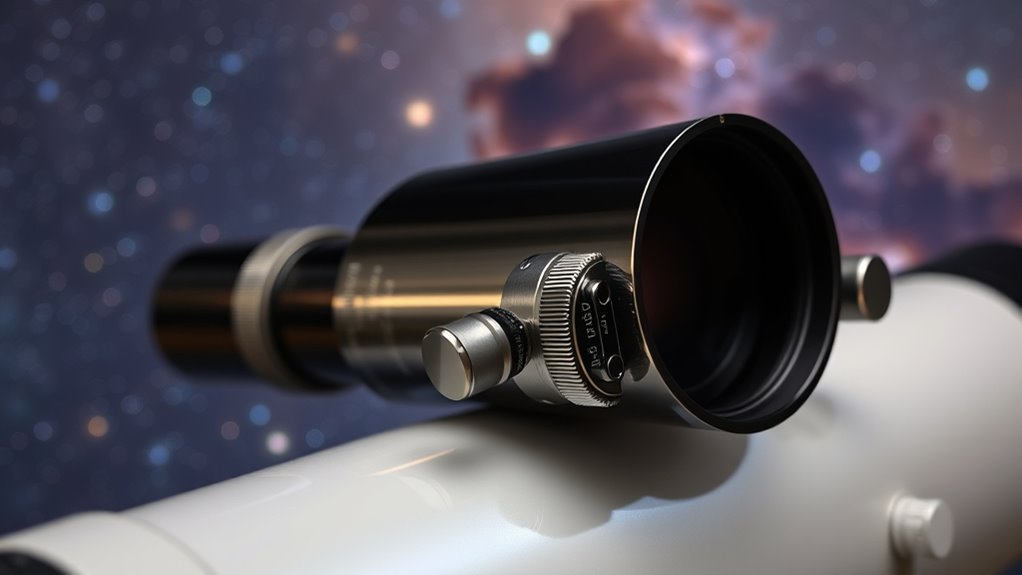

If you’re looking for the best field flatteners for refractor telescopes that deliver sharp, distortion-free images, I’ve found several top options. Devices like the SVBONY SV209, SV193, and SV260 effectively reduce focal length, correct field curvature, and support full-frame cameras, ensuring crisp stars across the entire field. Brands like Sky Watcher and HOTECH also offer excellent flatteners. Keep exploring to find the perfect match for your setup and maximize your astrophotography.
Key Takeaways
- Choose flatteners with high-quality, multi-coated optics to maximize contrast and minimize reflections for sharp, clear images.
- Ensure compatibility with your telescope’s focal ratio (f/4–f/8) and thread type (e.g., M48, 2-inch).
- Verify the correct backfocus distance (typically around 55mm) for optimal focus and image flatness.
- Opt for models designed to correct field curvature and distortions across full-frame or wide-field sensors.
- Prioritize flatteners with proven optical performance, ease of installation, and support for full-frame cameras for professional results.
SVBONY SV209 Field Flattener, 0.8X Focal Reducer for Telescopes


If you’re using a SV550 122mm f/7 apo refractor and want to improve your astrophotography, the SVBONY SV209 Field Flattener is an excellent choice. It reduces the focal length from 854mm to 683.2mm, offering a faster, wider field for capturing more of the sky. Designed specifically for SV550 telescopes, it corrects field curvature, ensuring sharp stars across the entire image. The device screws into your focuser with a secure 63x1mm metric thread. Users report noticeable improvements in image flatness and quality, making it a valuable accessory for astrophotographers aiming for consistent, high-quality results.
Best For: astrophotographers and amateur astronomers using SV550 122mm f/7 apo refractors seeking to improve image sharpness, reduce field curvature, and achieve wider, faster imaging fields.
Pros:
- Effectively reduces focal length from 854mm to 683.2mm, enabling wider and faster imaging.
- Corrects field curvature for sharp stars across the entire frame, improving image quality.
- Compatible with SVbony refractors and features secure metric threading for easy installation.
Cons:
- Backspacing and extension tube adjustments can be challenging, with inconsistent measurements affecting focus.
- Initial coatings may flake in some units, requiring replacements or careful handling.
- Precise spacing and backfocus matching are necessary for optimal results, which may require experimentation.
SVBONY SV193 Focal Reducer 2 Inch 0.8X Telescope Accessory

The SVBONY SV193 Focal Reducer 2 Inch 0.8X is an excellent choice for astrophotographers using SV503 80mm F7 ED refractor telescopes who want to expand their field of view and reduce exposure times. It features a standard 2-inch front socket and M48x0.75 threaded back end compatible with full-frame cameras. Supporting 2-inch filters, it provides a 0.8x focal reduction, minimizing star distortion at image edges and enabling brighter, wider-field astrophotos. Designed for high-quality imaging, it’s especially useful for capturing large objects like star clusters with minimal vignetting, making it a versatile addition to your astrophotography setup.
Best For: astrophotographers using SV503 80mm F7 ED refractor telescopes who want to achieve wider fields of view and shorter exposure times.
Pros:
- Supports full-frame cameras and 2-inch filters, offering versatile compatibility.
- Provides a 0.8x focal reduction to expand the field of view and minimize star distortion at edges.
- Designed for high-quality imaging with a flat field, ideal for capturing large celestial objects.
Cons:
- Some users may experience star elongation or minor optical defects requiring post-processing correction.
- Potential quality control issues such as coating spots or damaged units upon arrival.
- Proper installation and spacing are necessary, especially when used with CCD cameras, which may require additional adjustments.
SVBONY SV260 2 Telescope Filter for SV503 Refractor Telescope

For astrophotographers seeking to enhance their deep-sky imaging, the SVBONY SV260 2 Telescope Filter is an excellent choice when paired with the SV503 refractor telescope. This multi-bandpass filter isolates specific wavelengths, reducing light pollution and maximizing light transmission over 90%. It effectively restores true colors of celestial objects and captures fine details of nebulae, galaxies, and star clusters. The built-in field flattener in the SV503 ensures wide, sharp images with minimal distortion. Whether you’re shooting from suburban or darker sites, this filter improves contrast, clarity, and color fidelity, making it a valuable tool for high-quality astrophotography.
Best For: astrophotographers and amateur astronomers seeking to improve deep-sky imaging quality by reducing light pollution and enhancing color fidelity with their SV503 refractor telescope.
Pros:
- Effectively isolates multiple wavelength bands to reduce light pollution and enhance image detail
- High transmittance over 90% ensures minimal light loss and bright, sharp images
- Built-in field flattener provides wide, distortion-free views with minimal edge aberration
Cons:
- May require precise fitting and alignment with compatible telescopes and accessories
- Cost may be higher compared to single-band filters, which could be a consideration for budget-conscious users
- Limited to specific telescope models like the SV503, reducing versatility with other setups
SVBONY SV220 Dual-Band Nebula Filter with SV503 70mm Refractor Telescope

The SVBONY SV220 Dual-Band Nebula Filter paired with the SV503 70mm Refractor Telescope is an excellent choice for amateur astronomers who want to capture detailed images of nebulae and other deep-sky objects, even in light-polluted environments. This setup features a built-in field flattener that ensures wide, flat views free from edge distortion. The telescope’s F/6.78 optics and Extra-Low Dispersion Glass deliver sharp, true-to-life colors with minimal chromatic aberration. The dual-band filter enhances contrast by reducing interference from moonlight and artificial lighting, revealing intricate details of gaseous and planetary nebulae, making it perfect for astrophotography and visual observation alike.
Best For: amateur astronomers and astrophotographers seeking high-contrast, detailed images of nebulae and deep-sky objects in light-polluted environments.
Pros:
- Enhances contrast and detail of nebulae while reducing interference from moonlight and artificial lights.
- Built-in field flattener provides wide, flat views free from edge distortion.
- Delivers sharp, true-to-life colors with minimal chromatic aberration thanks to Extra-Low Dispersion Glass.
Cons:
- The setup may require precise alignment and handling for optimal results.
- The filter and telescope are specialized equipment, potentially requiring additional accessories for full use.
- Availability and pricing may fluctuate until the official release date on May 10, 2025.
Sky Watcher Evolux 62ED Reducer/Flattener (0.9X)

If you’re seeking a reliable reducer and flattener tailored for astrophotography with your Evolux 62mm refractor, the Sky Watcher Evolux 62ED Reducer/Flattener (0.9X) is an excellent choice. It reduces exposure time by 24%, producing a flat, sharp image across the entire field. Designed specifically for Evolux 62mm models, it features a 62mm aperture, f/5.8 focal ratio, and 360mm focal length. The device includes threaded adapters, a filter cavity, and a rotator. Compact and lightweight at just under a pound, it’s easy to attach, making it ideal for enhancing your astrophotography experience.
Best For: amateur and professional astrophotographers using Evolux 62mm refractors seeking to improve image quality and reduce exposure times.
Pros:
- Produces a flat, sharp image across the entire field for high-quality astrophotography
- Reduces exposure time by 24%, saving time during imaging sessions
- Compact, lightweight design with easy attachment and versatile threaded adapters
Cons:
- Designed specifically for Evolux 62mm models, limiting compatibility with other telescopes
- May require additional accessories or adjustments for optimal use with certain setups
- Slightly higher cost compared to standard reducers without flat-field correction
SVBONY Focal Reducer for SV503 102mm ED Telescope

The SVBONY Focal Reducer for SV503 102mm ED Telescope stands out as an excellent choice for astrophotographers seeking sharp, flat-field images with minimal star distortion. It offers 0.8x focal reduction and field flattening, perfect for full-frame astrophotography. Built with durable, multi-coated optics and a lightweight aluminum body, it ensures high image quality and ease of use. Compatibility with standard filters and camera adapters makes it versatile. While focusing may require removing the nose piece and using extension tubes, many users achieve crisp, wide-field views with tight star points across the entire field. It’s a reliable, affordable option for enhancing your refractor telescope’s imaging capabilities.
Best For: astrophotographers seeking a high-quality, flat-field focal reducer suitable for full-frame imaging with their SV503 102mm ED telescope.
Pros:
- Provides 0.8x focal reduction and field flattening for wider, sharper images
- Constructed with durable, multi-coated optics and lightweight anodized aluminum body
- Compatible with standard filters and camera adapters for versatile use
Cons:
- Focusing may require removal of the nose piece and use of extension tubes
- Proper backfocus adjustment is critical for optimal image quality
- Some setup adjustments and additional adapters may be necessary for certain camera models
SVBONY SV193 Focal Reducer 2 Inch 0.8X Field Flattener

For astrophotographers seeking sharp, distortion-free images across the entire field, the SVBONY SV193 Focal Reducer 2 Inch 0.8X Field Flattener delivers exceptional performance. Specifically designed for refractor telescopes, it features a standard 2-inch front socket and an M48x0.75 threaded back end compatible with full-frame cameras. Paired with the SV503 80ED refractor, it reduces star point distortion at the edges, producing bright, detailed celestial images. The 0.8x reduction guarantees full-frame illumination, making it ideal for capturing planetary and deep-sky objects with minimal optical aberrations, ensuring your astrophotos are crisp and professional.
Best For: astrophotographers seeking high-quality, distortion-free images of celestial objects using refractor telescopes with full-frame cameras.
Pros:
- Provides 0.8x reduction for full-frame illumination and wide-field imaging.
- Compatible with standard 2-inch front sockets and M48x0.75 threaded cameras.
- Ensures sharp, clear images across the entire field with minimal distortion.
Cons:
- Designed specifically for refractor telescopes, limiting versatility with other types.
- May require additional adapters or accessories for certain camera models.
- As an optical accessory, it may add some weight and complexity to the setup.
SVBONY SV503 Refractor Telescope, 102mm F7

The SVBONY SV503 Refractor Telescope stands out as an ideal choice for astrophotographers seeking sharp, accurate images, thanks to its 102mm aperture and F7 focal ratio. Its optical design features a doublet air-spaced achromatic lens made with S-FPL51 ED glass, which effectively reduces chromatic aberration and enhances color accuracy. Fully multi-coated optics maximize light transmission, boosting brightness and contrast. The 360° field rotator allows seamless framing during astrophotography, while the retractable lens hood minimizes stray light and condensation. With precise dual rack-and-pinion focusing and versatile accessories, this telescope delivers detailed, realistic images for both planetary and deep-sky imaging.
Best For: amateur and professional astrophotographers seeking high-precision, detailed images of planets and deep-sky objects with minimal chromatic aberration.
Pros:
- High-quality 102mm aperture with F7 focal ratio ideal for detailed astrophotography
- Doublet air-spaced achromatic lens with S-FPL51 ED glass reduces chromatic aberration and enhances color accuracy
- Fully multi-coated optics maximize light transmission, brightness, and contrast for clear, realistic images
Cons:
- Larger size and weight may require sturdy mounting and transport considerations
- Premium optical features and accessories can increase overall cost
- Requires some familiarity with astrophotography setup and focusing to achieve optimal results
Astromania 2 Field Flattener for Astronomy Photos

If you’re looking to achieve pinpoint stars across your astrophotography images, the Astromania 2 Field Flattener is an excellent choice, especially for refractor telescopes with focal ratios between f/4 and f/8. It offers perfect image flatness, ensuring sharp stars from center to edge. Its M48 thread provides full aperture illumination at 2-inch back focus, accommodating accessories up to 109mm. The multi-coated lenses reduce reflections, boosting contrast and clarity. Designed to correct field curvature, it minimizes optical distortions, resulting in high-quality, consistent photos with minimal post-processing. This flattener helps you capture detailed, sharp images across the entire frame.
Best For: astrophotographers using refractor telescopes with focal ratios between f/4 and f/8 seeking sharp, flat-field images.
Pros:
- Ensures pin-sharp stars across the entire image field.
- Compatible with 2-inch back focus and accessories up to 109mm.
- Multi-coated lenses reduce reflections, enhancing contrast and clarity.
Cons:
- Designed specifically for refractor telescopes within certain focal ratios, limiting use with other types.
- May require precise threading and setup for optimal performance.
- Does not include additional accessories, which may be needed separately.
Explore Scientific Field Flattener for Refractor Telescopes

Astrophotographers seeking sharp, distortion-free images across the entire field will appreciate the Explore Scientific Field Flattener, especially those using refractor telescopes with focal ratios between f/5 and f/7. Designed to minimize star distortion caused by field curvature, it guarantees crisp, round stars from edge to edge. Compatible with cameras requiring 55mm (+/- 2mm) spacing, it easily integrates with various setups. Fully multi-coated optics maximize light transmission and contrast, producing high-quality images of planets, nebulae, galaxies, and star clusters. Built for durability and backed by reliable support, this flattener is a top choice for astrophotographers aiming for sharp, flat fields.
Best For: astrophotographers using refractor telescopes with focal ratios between f/5 and f/7 who want sharp, distortion-free images across the entire field.
Pros:
- Minimizes star distortion caused by field curvature for crisp, round stars edge to edge.
- Fully multi-coated optics enhance light transmission and contrast for high-quality astrophotography.
- Compatible with various cameras requiring 55mm (+/- 2mm) spacing, ensuring versatile integration.
Cons:
- Designed specifically for f/5 to f/7 systems; less effective outside this range.
- Slightly heavy at 4 pounds, which may require sturdy mounting setups.
- Limited to refractor telescopes, so not suitable for other telescope types.
SVBONY SV503 Refractor Telescope with Built-in Field Flattener
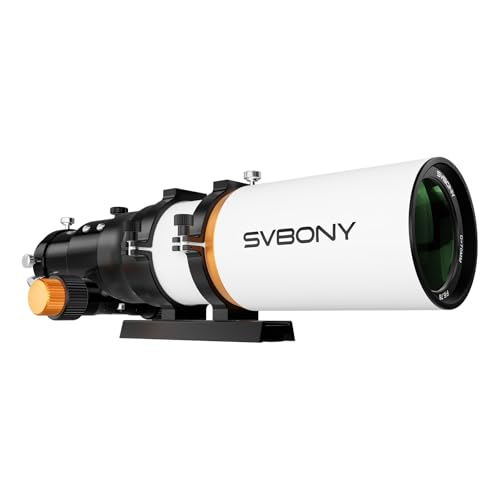
Designed for those seeking high-quality wide-field imaging, the SVBONY SV503 Refractor Telescope with Built-in Field Flattener offers exceptional flat-field correction that eliminates field curvature without needing extra accessories. Its 70mm aperture at F/6.78 produces bright, sharp images of galaxies, nebulae, and star clusters. The ED glass reduces chromatic aberration, maintaining true colors and clarity across the field. Its self-flat-field design allows for immediate, *best* imaging when connected to accessories, approaching the performance of higher-end APO scopes. Compact and durable, with a smooth focuser and sturdy rings, this scope is an excellent choice for astrophotography and wide-field views, delivering sharp, distortion-free images effortlessly.
Best For: amateur astronomers and astrophotographers seeking a portable, high-quality wide-field refractor telescope with excellent flat-field correction and minimal aberrations.
Pros:
- Excellent flat-field correction with built-in field flattener for distortion-free wide-field imaging
- Bright, sharp images with minimal chromatic aberration thanks to ED glass elements
- Durable construction with smooth focuser and sturdy rings, ideal for astrophotography and quick setup
Cons:
- Slight edge distortion at the very periphery, requiring post-processing adjustments
- Limited aperture size may restrict deep-sky object brightness compared to larger scopes
- Compact size may limit its use for high-magnification planetary observations
HOTECH SCA 2 Inch Field Flattener for Refractor Telescopes
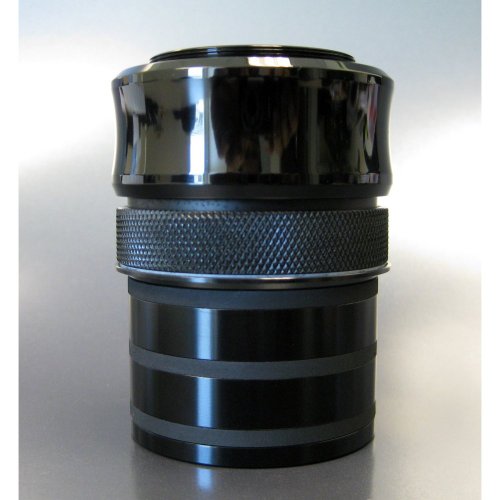
The HOTECH SCA 2 Inch Field Flattener stands out as an excellent choice for astrophotographers seeking crisp, sharp images across the entire field of their refractor telescopes. Fully multi-coated with a two-element lens, it ensures efficient light transmission and high image quality. Compatible with f/5 to f/8 refractors, it delivers bright, focused images edge-to-edge. Its built-in 2” filter thread and T-ring compatibility make it versatile for various cameras and filters. Easy to install and align, this flattener is perfect for capturing detailed astrophotography. Manufactured by HOTECH, it’s a reliable, well-rated accessory that consistently produces sharp, clear images.
Best For: astrophotographers and amateur astronomers seeking high-quality, edge-to-edge sharp images with their refractor telescopes.
Pros:
- Fully multi-coated two-element lens maximizes light transmission and image clarity.
- Compatible with f/5 to f/8 refractors, suitable for a wide range of telescopes.
- Built-in 2” filter thread and T-ring compatibility facilitate versatile camera and filter use.
Cons:
- Price and availability may vary; may be higher than generic alternatives.
- Requires proper installation and alignment for optimal performance.
- Not compatible with telescopes outside the specified focal ratio range.
SVBONY SV503 Portable Telescope Tube for Astrophotography and Astronomy

Looking for a portable telescope that delivers sharp, high-contrast images perfect for astrophotography and visual observation? The SVBONY SV503 Portable Telescope Tube is an excellent choice. It features an S-FPL51 ED glass objective lens that virtually eliminates chromatic aberration, ensuring crisp images. Its doublet air-spaced achromatic design provides exceptional clarity, making it suitable for detailed astrophotography and moon viewing. The 2-inch rack and pinion RAP focuser offers stable, precise focusing and can support heavy camera equipment. Compact and lightweight, the SV503 is perfect for travel, whether you’re a seasoned astronomer or a beginner enthusiastic to explore the night sky.
Best For: amateur and professional astronomers seeking a portable, high-quality telescope for astrophotography, moon viewing, and celestial exploration.
Pros:
- High-quality S-FPL51 ED glass objective lens virtually eliminates chromatic aberration for sharp images
- Stable, precise 2-inch rack and pinion RAP focuser supports heavy camera equipment
- Compact, lightweight design ideal for travel and mobile astronomy
Cons:
- May require additional accessories for complete astrophotography setups
- Slightly limited aperture compared to larger, more stationary telescopes
- Not motorized or computerized, requiring manual adjustments for focusing
SVBONY SV503 Refractor Telescope with Built-in Field Flattener and SV305C Pro Telescope Camera

If you’re seeking a refractor telescope that delivers wide, distortion-free views, the SVBONY SV503 with its built-in field flattener is an excellent choice. It offers outstanding flat-field correction, eliminating field curvature and edge blur for sharp, true-to-life images across the entire field. Its 70mm aperture and F/6.78 focal ratio produce bright, detailed views of galaxies, nebulae, and star clusters. Paired with the SV305C Pro camera featuring an ultra-sensitive IMX662 sensor and low noise, it captures crisp planetary details even in low light. This combination enhances your astrophotography experience, providing clear, sharp images with minimal distortion and excellent color fidelity.
Best For: Amateur astronomers and astrophotographers seeking wide, distortion-free views and detailed celestial imaging with high clarity and true-to-life colors.
Pros:
- Outstanding flat-field correction with built-in field flattener for sharp, edge-to-edge images
- Bright, clear views of galaxies, nebulae, and star clusters thanks to 70mm aperture and F/6.78 focal ratio
- High-sensitivity SV305C Pro camera with low noise captures detailed planetary images even in low-light conditions
Cons:
- May require additional accessories for advanced astrophotography setups
- Larger initial investment compared to basic beginner telescopes
- Limited information on warranty and long-term support without checking specific provider details
Factors to Consider When Choosing Field Flatteners for Refractor Telescopes

When selecting a field flattener, I consider how well it fits my telescope’s specifications to guarantee essential performance. I also look at optical quality, coatings, and how easily it integrates with my setup’s backfocus and spacing requirements. Finally, factors like aperture, focal ratio, and mounting options play a vital role in making the right choice for my astrophotography needs.
Compatibility With Telescope
Choosing the right field flattener for your refractor telescope depends heavily on guaranteeing compatibility with your optical setup. First, check that the threaded connection matches your focus tube, like M48 or 2-inch fittings, for a secure fit. Next, verify that the flattener’s focal ratio range (e.g., f/5 to f/7) aligns with your telescope’s optics to optimize image quality. It’s also essential to confirm that the back focus distance suits your available focus travel to maintain proper focus. Additionally, guarantee the flattener supports your camera type and sensor size, especially if using full-frame or APS-C sensors, to avoid vignetting or star distortion. Finally, review the manufacturer’s specifications or compatibility list to confirm it’s designed for your specific telescope model.
Optical Quality and Coatings
Optical quality and coatings play a crucial role in the performance of field flatteners, especially for astrophotography. High-quality flatteners feature multi-coated optics that maximize light transmission and minimize reflections, resulting in brighter, clearer images. Fully multi-coated lenses enhance contrast and color fidelity by reducing light loss and internal glare. Broadband anti-reflective coatings improve overall sharpness and contrast across the entire field of view. These coatings also help diminish optical aberrations like chromatic aberration and field curvature, ensuring stars stay sharp from the center to the edges. Additionally, the durability and effectiveness of coatings directly influence the flattener’s longevity and consistent optical performance during long imaging sessions. Choosing a flattener with superior coatings guarantees better image quality and a more rewarding astrophotography experience.
Backfocus and Spacing
Ensuring the correct backfocus and spacing is key to getting sharp, edge-to-edge focus in your astrophotography. Proper backfocus distance, often specified by the manufacturer (like 55mm), is essential; deviations can cause star distortion or blurring at the edges. Achieving the right spacing usually involves adding or removing extension tubes or spacers, tailored to your specific telescope and camera combination. Many flat-field reducers include recommended backfocus measurements, and following these guidelines ensures ideal flat-field correction. Incorrect spacing can lead to focus shifts across the image field, reducing overall image quality. Manufacturers often provide testing procedures or precise instructions, emphasizing how critical accurate backfocus and spacing are for capturing sharp, consistent images across the entire frame.
Aperture and Focal Ratio
The aperture size of your refractor telescope substantially impacts how well a field flattener performs, with larger apertures demanding higher-quality flatteners to keep star images sharp across the entire field. As aperture increases, optical imperfections become more noticeable, so choosing a flattener designed for your scope’s size is vital. Additionally, the focal ratio influences the level of correction needed; faster scopes (f/5 or below) require more precise flatteners to address increased field curvature. The combination of aperture and focal ratio affects the optical design, impacting image brightness and contrast. Selecting a field flattener compatible with both ensures ideal correction without sacrificing detail or introducing vignetting. Mismatched components can cause star elongation, uneven sharpness, or vignetting, so compatibility is key.
Mounting and Connectivity
Choosing a field flattener that fits your refractor telescope involves paying close attention to mounting and connectivity options. First, verify the flattener has compatible mounting threads, like 2-inch or M48x0.75, matching your focuser or camera adapter. Confirm that the connectivity supports your camera type, whether it uses T-ring, bayonet, or specific threaded interfaces. It’s also important that the flattener can be securely attached to your telescope’s focuser or visual back to prevent slipping or wobbling during imaging. Additionally, check if you need extra adapters or extension tubes to achieve the correct backfocus distance and focus properly. Finally, consider how easy it is to install and remove the flattener, ensuring quick setup and breakdown for efficient imaging sessions.
Price and Brand Reputation
Opting for a field flattener from a reputable brand often means getting higher-quality coatings and more reliable optical performance. These brands typically invest in better materials and manufacturing processes, which translate into sharper, clearer images. Price differences among brands often reflect variations in build quality, coatings, and features, so paying more can mean better durability and performance. Established brands also offer better warranty support and customer service, making troubleshooting easier if issues arise. Plus, well-known brands have extensive user reviews and feedback, helping you make informed choices. Choosing a trusted brand minimizes the risk of defects or compatibility problems, saving you time and money in the long run. Overall, brand reputation and price are key factors in ensuring you get a dependable, high-quality field flattener.
Frequently Asked Questions
How Does a Field Flattener Improve Image Sharpness Across the Field?
A field flattener improves image sharpness across the entire field by correcting the curvature introduced by the telescope’s optics. I’ve noticed that without one, stars near the edges appear distorted or blurry. By reducing this distortion, a flattener guarantees that stars stay pinpoint sharp from center to edge, giving me clearer, more detailed images. It’s especially helpful when capturing wide-field astrophotography or detailed planetary photos.
Can Field Flatteners Be Used With Both APO and Achromatic Refractors?
Yes, I can confirm that field flatteners work with both apo and achromatic refractors. I’ve used them on my apo refractor for extra sharp, flat images, and they also improve image quality on my achromat by reducing edge distortions. They’re versatile tools that enhance overall image clarity, making them a great addition regardless of your refractor type. Just verify compatibility with your specific telescope model for the best results.
What Impact Do Flatteners Have on Exposure Times in Astrophotography?
Oh, flatteners? They surprisingly don’t mess with your exposure times. I’ve found that they mainly improve image sharpness across the field, so you don’t need longer exposures trying to fix distortion in post-processing. Instead of increasing your time under the stars, they let you capture crisp images quickly. Honestly, they’re more like a shortcut to better astrophotos, saving you time, effort, and frustration, not extending your imaging sessions.
Are There Compatibility Concerns With Specific Telescope Brands or Models?
Yes, compatibility can be an issue. I’ve found that some flatteners are designed for specific brands like William Optics or Tele Vue, so I always double-check the size, thread type, and back focus requirements. It’s vital to match the flattener with your telescope’s model to avoid vignetting or image softness. Always consult the manufacturer’s specs or ask experienced users to guarantee a smooth fit and peak performance.
How Do I Determine the Best Focal Length Reduction for My Setup?
To determine the best focal length reduction for my setup, I first consider my target objects and desired field of view. I then look at my telescope’s original focal length and decide how much I want to widen the view. Using a focal reducer with the right reduction ratio (like 0.5x or 0.75x) helps me achieve sharper, more expansive images without sacrificing too much detail.
Conclusion
Choosing the right field flattener is like finding the perfect brush for a masterpiece—each one shapes your view into a stunning, crisp image. With these top picks, your refractor telescope can reveal the universe’s true colors and details, turning every night into a breathtaking adventure. Trust me, the clarity and sharpness you’ll achieve will make your stargazing feel like holding a tiny universe in your hands—pure magic.