
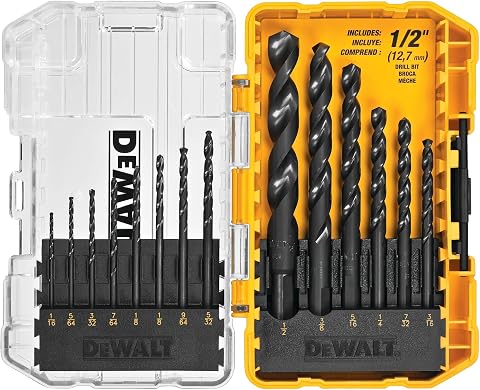
For a versatile cordless hammer drill, I’d start with the DEWALT 20V MAX XR Brushless DCD806B; for tougher concrete drilling, the DEWALT DCH273B SDS rotary hammer offers a more specialized approach, while the CRAFTSMAN V20 kit includes batteries and a charger for buyers starting without a compatible platform. The main choice is between a conventional hammer drill, which also handles routine drilling and driving, and an SDS-Plus rotary hammer, which is better suited to repeated masonry work. Corded models avoid battery limits, while cordless options trade runtime for freedom of movement. I compare all 14 picks by their intended workload, controls, power format, and practical tradeoffs below.

Get furniture and decor delivered free with Prime
- Fast, free delivery on millions of items
- Prime Video, Amazon Music and more included
- Member-only deals all year
Complete the kit


Key Takeaways
- Drill type matters more than the word “hammer”: the lineup includes conventional chuck-style hammer drills for mixed tasks and SDS-Plus rotary hammers for more demanding concrete work.
- The cordless DEWALT DCD806B is the strongest all-round fit: it pairs a brushless motor and 20V platform with the flexibility of a standard 1/2-inch hammer-drill format, but the bare tool requires a compatible battery and charger.
- For repeated masonry drilling, SDS-Plus models are the more relevant class: the DEWALT DCH273B and corded D25263K are better suited to that workload than the conventional chuck drills, though they are less adaptable for general driving.
- Included power accessories change the value equation: the CRAFTSMAN V20 kit comes with two batteries and a charger, while several cordless DEWALT options are tool-only.
- Corded options offer a different kind of convenience: SKIL, DEKOPRO, and BLACK+DECKER avoid battery-platform decisions, but a power cord limits mobility and needs planning around the work area.
| Berserker 1-1/8-Inch SDS-Plus Rotary Hammer Drill |  | Best Value for Concrete and Light Chiseling | Power source: Corded electric | Motor: 1,050 W, 9 A | Impact energy: 3.3 ft-lb (4.5 J) | VIEW ON AMAZON | See Our Full Breakdown |
| ENEACRO 1-1/4-Inch SDS-Plus 13-Amp Rotary Hammer Drill |  | Best for Higher-Impact Corded Masonry Work | Power source: Corded electric | Voltage and current: 120 V, 13 A | Maximum power: 1,500 W | VIEW ON AMAZON | See Our Full Breakdown |
| DEWALT 20V MAX XR Brushless Cordless 1/2-Inch Hammer Drill, Tool Only (DCD806B) |  | Best for Control in a Cordless Hammer Drill | Power source: Battery powered | Voltage: 20 V | Motor: Brushless | VIEW ON AMAZON | See Our Full Breakdown |
| CRAFTSMAN V20 Cordless Hammer Drill Kit, 1/2 inch, 2 Batteries and Charger Included (CMCD711C2) |  | Best Starter Kit | Voltage: 20 V | Battery type: Lithium-ion | Batteries included: 2 | VIEW ON AMAZON | See Our Full Breakdown |
| DeWalt DCD798B 20V MAX Brushless ½ in. Cordless Hammer Drill Driver (Tool Only) |  | Best Compact Pick | Power source: Battery powered | Voltage: 20 V | Motor: Brushless | VIEW ON AMAZON | See Our Full Breakdown |
| DESHUO 1-Inch SDS-Plus Rotary Hammer Drill with 1/2-Inch Adapter |  | Best Accessory Bundle | Power source: Corded electric | Voltage and amperage: 120 V, 9 A | Maximum speed: 1,100 RPM | VIEW ON AMAZON | See Our Full Breakdown |
| DEWALT D25263K SDS-Plus D-Handle Rotary Hammer Drill |  | Best for Vibration Control | Power source: Corded electric | Voltage and motor: 115 V, 8.5 A | Impact energy: 3.0 joules | VIEW ON AMAZON | See Our Full Breakdown |
| DEKOPRO 6-Amp 1/2-Inch Corded Hammer Drill with 12-Speed Control and 13-Piece Bit Set |  | Best for General DIY Drilling | Power source: Corded electric | Voltage and motor: 120 V, 6 A | Maximum rotational speed: 3,000 RPM | VIEW ON AMAZON | See Our Full Breakdown |
| Deshuo 1-Inch SDS-Plus Rotary Hammer Drill |  | Best Bare-Bones SDS-Plus Pick | Power source: Corded electric | Voltage and motor: 120 V, 9 A | Maximum speed: 1,100 RPM | VIEW ON AMAZON | See Our Full Breakdown |
| DEWALT 20V MAX SDS Rotary Hammer Drill, Cordless, 3 Application Modes, Bare Tool Only (DCH273B) |  | Best Cordless for Precision Work | Power source: Battery powered, 20V MAX | Motor: Brushless | Impact energy: 2.1 joules | VIEW ON AMAZON | See Our Full Breakdown |
| BLACK+DECKER 6.5-Amp 1/2-Inch Hammer Drill (BEHD201) |  | Best for Simple, Occasional Masonry Work | Motor: 6.5 A | Power source: Corded electric | Maximum speed: 2,800 rpm | VIEW ON AMAZON | See Our Full Breakdown |
| SKIL 7.5-Amp 1/2-Inch Corded Hammer Drill (HD182001) |  | Best for Controlled Corded Drilling | Motor: 7.5 A | Power source: Corded electric | Maximum speed: 3,000 rpm | VIEW ON AMAZON | See Our Full Breakdown |
| GALAX PRO 5-Amp 1/2-Inch Hammer Drill with 105-Piece Accessory Set |  | Best Accessory Bundle | Motor: 5 A | Power source: Corded electric | Maximum speed: 3,000 rpm | VIEW ON AMAZON | See Our Full Breakdown |
| BaiKrafton Cordless SDS-Plus Rotary Hammer Drill for Milwaukee M18 Batteries |  | Best for Chiseling and Heavier Masonry | Drill type: Cordless SDS-Plus rotary hammer | Battery compatibility: Milwaukee M18; battery not included | Listed voltage: 21 V | VIEW ON AMAZON | See Our Full Breakdown |
| hammer drill | Power source | Weight | Motor | Impact energy |
|---|---|---|---|---|
| Berserker 1-1/8-Inch SDS-Plus | Corded electric | 9.5 lb | 1,050 W, 9 A | 3.3 ft-lb (4.5 J) |
| ENEACRO 1-1/4-Inch SDS-Plus 13 | Corded electric | — | — | 5.5 ft-lb (7.4 J) |
| DEWALT 20V MAX XR Brushless Co | Battery powered | — | Brushless | — |
| CRAFTSMAN V20 Cordless Hammer | — | 5.4 lb | — | — |
| DeWalt DCD798B 20V MAX Brushle | Battery powered | 2.7 lb | Brushless | — |
| DESHUO 1-Inch SDS-Plus Rotary | Corded electric | 7.2 lb | — | 3 joules (2.21 ft-lb) |
| DEWALT D25263K SDS-Plus D-Hand | Corded electric | — | — | 3.0 joules |
| DEKOPRO 6-Amp 1/2-Inch Corded | Corded electric | — | — | — |
| Deshuo 1-Inch SDS-Plus Rotary | Corded electric | 7.19 lb | — | 3 joules (2.21 ft-lb) |
| DEWALT 20V MAX SDS Rotary Hamm | Battery powered, 20V MAX | 6.4 lb | Brushless | 2.1 joules |
| BLACK+DECKER 6.5-Amp 1/2-Inch | Corded electric | — | 6.5 A | — |
| SKIL 7.5-Amp 1/2-Inch Corded H | Corded electric | 5.2 lb | 7.5 A | — |
| GALAX PRO 5-Amp 1/2-Inch Hamme | Corded electric | — | 5 A | — |
| BaiKrafton Cordless SDS-Plus R | — | 4.4 lb | — | 2.3 J |
More Details on Our Top Picks
Berserker 1-1/8-Inch SDS-Plus Rotary Hammer Drill
The Berserker makes a practical case for a corded rotary hammer when masonry work calls for more than a standard hammer drill. Its 3.3 ft-lb impact energy and three modes cover concrete drilling, rotation-only work, and light chiseling, while the included bits and chisels let a buyer start with common tasks without assembling a separate accessory kit. It is also lighter than the 12.58-pound ENEACRO, which may matter during overhead or repeated drilling. The tradeoff is less impact energy and a smaller 1-1/8-inch stated concrete capacity than the ENEACRO’s 1-1/4-inch capacity. Its SDS-Plus chuck also rules out ordinary round-shank bits unless an adapter is used, and this tool is not intended for heavy demolition. I’d pick it for home masonry jobs, not sustained break-up work.
Pros:- Three modes handle drilling, hammer drilling, and hammer-only chiseling.
- Lighter than the ENEACRO rotary hammer in this lineup.
- Includes SDS-Plus bits, two chisels, grease, and a carrying case.
- Overload clutch and adjustable 360-degree handle add control and protection.
Cons:- Its 3.3 ft-lb impact energy is below the ENEACRO’s 5.5 ft-lb.
- SDS-Plus bit compatibility limits use of standard round-shank bits.
- Not intended for heavy demolition projects.
Best for: Homeowners and DIY renovators who need a corded SDS-Plus tool for concrete holes, occasional chiseling, and included starter accessories.
Not ideal for: Contractors doing frequent heavy demolition or buyers who need broad compatibility with standard drill bits.
- Power source:Corded electric
- Motor:1,050 W, 9 A
- Impact energy:3.3 ft-lb (4.5 J)
- Maximum rotational speed:1,050 rpm
- Impact rate:4,200 BPM
- Maximum concrete drilling diameter:1-1/8 in
- Weight:9.5 lb
- Modes:Rotation only; hammering with rotation; hammering only
- Bit compatibility:SDS-Plus
Our verdict“Choose the Berserker for occasional concrete drilling and light chiseling when you want a capable corded rotary hammer with accessories included.”
ENEACRO 1-1/4-Inch SDS-Plus 13-Amp Rotary Hammer Drill
Among these five picks, the ENEACRO is the corded choice for buyers who want more impact energy and a larger stated concrete capacity than the Berserker. Its 5.5 ft-lb impact energy, 13-amp motor, and four functions suit demanding drilling and chisel work, while a dedicated chisel-position setting makes it easier to orient a chisel before use. The package also includes bits, chisels, and a case. Those capabilities come with a real handling cost: at 12.58 pounds bare, it is substantially heavier than the Berserker and far heavier than the compact cordless DeWalt drills. Vibration control and a safety clutch help, but they do not make prolonged overhead work light. I’d favor this model for heavier masonry jobs near an outlet; buyers prioritizing portability or simple occasional holes should choose a smaller drill.
Pros:- Higher impact energy and larger stated concrete capacity than the Berserker.
- Four functions include chisel-position adjustment.
- Safety clutch and vibration control support more controlled work.
- Includes drill bits, chisels, an auxiliary handle, and a carrying case.
Cons:- At 12.58 pounds bare, it is the heaviest option among these five.
- Corded power limits mobility away from an outlet.
- SDS-Plus chuck does not accept standard round-shank bits directly.
Best for: DIY renovators and tradespeople who need a corded SDS-Plus tool for larger concrete holes and recurring chiseling near power.
Not ideal for: Buyers who frequently drill overhead, need a lightweight tool, or work where cord-free mobility matters.
- Power source:Corded electric
- Voltage and current:120 V, 13 A
- Maximum power:1,500 W
- Impact energy:5.5 ft-lb (7.4 J)
- No-load speed:820 rpm
- Maximum impact frequency:4,200 BPM
- Concrete drilling capacity:1.25 in
- Bare tool weight:12.58 lb
- Functions:Drill only; hammer only; hammer drill; chisel-position adjustment
Our verdict“Pick the ENEACRO when higher-impact corded masonry work matters more than carrying weight and cordless freedom.”
DEWALT 20V MAX XR Brushless Cordless 1/2-Inch Hammer Drill, Tool Only (DCD806B)
The DCD806B suits buyers who want a conventional 1/2-inch cordless hammer drill for mixed fastening, wood drilling, and masonry work rather than an SDS-Plus rotary hammer. Its brushless motor, two speed settings, and variable-speed trigger give more control across different materials, while the anti-rotation system is a useful safeguard if the bit binds. Compared with the DeWalt DCD798B, this model’s clearest stated distinction is that control system; the DCD798B is much lighter at 2.7 pounds and lists torque figures, while the DCD806B offers a three-position 70-lumen light. Neither is a substitute for the ENEACRO’s higher-impact rotary-hammer action on larger concrete holes. The main catch is the tool-only package: a compatible 20V MAX battery and charger are separate, and TOOL CONNECT capability also requires a separately sold chip.
Pros:- Brushless motor and two speed settings suit varied drilling tasks.
- Anti-rotation system helps manage reaction if a bit binds.
- Metal ratcheting chuck provides secure bit retention.
- Adjustable three-position LED helps light different work areas.
Cons:- Battery and charger are not included.
- Less suited to large or frequent concrete drilling than the ENEACRO rotary hammer.
- TOOL CONNECT chip is sold separately.
Best for: DeWalt 20V MAX owners who need a controllable cordless drill for varied drilling and occasional masonry work.
Not ideal for: Buyers without compatible batteries, or anyone drilling large concrete holes or chiseling regularly.
- Power source:Battery powered
- Voltage:20 V
- Motor:Brushless
- Chuck size:1/2 in
- Maximum rotational speed:2,000 rpm
- Speed settings:2
- LED brightness:70 lumens
- Battery compatibility:DeWalt 20V MAX batteries
- Package:Tool only; battery and charger sold separately
Our verdict“Choose the DCD806B if you already own DeWalt 20V MAX batteries and want added control in a general-purpose cordless hammer drill.”
CRAFTSMAN V20 Cordless Hammer Drill Kit, 1/2 inch, 2 Batteries and Charger Included (CMCD711C2)
Unlike the tool-only DeWalt drills in this roundup, the CRAFTSMAN arrives with two batteries and a charger, so a new cordless-tool buyer can start work without first sourcing a power pack. Its 5.4-pound weight and two-speed gearbox make it a portable choice for routine wood and masonry drilling, and the included spare battery can help keep a task moving while the other charges. The compromise is battery capacity: each pack is 1.3 Ah, which may mean more frequent charging during heavy use. Its listed 1,500-rpm maximum speed is also below the DCD806B’s 2,000 rpm, and the product data does not state an impact-energy figure or concrete capacity, so I would not rank it alongside rotary hammers for tough masonry. This kit makes more sense for household projects than sustained jobsite drilling.
Pros:- Includes two batteries and a charger, unlike the tool-only DeWalt options.
- Two-speed gearbox offers a choice between speed and torque.
- At 5.4 pounds, it is portable for routine household work.
- V20 battery platform supports compatibility with other CRAFTSMAN V20 tools.
Cons:- The included 1.3 Ah batteries may need frequent charging during heavy use.
- Its 1,500-rpm maximum speed is lower than the DCD806B’s stated 2,000 rpm.
- Product data does not state a concrete capacity or impact-energy figure.
Best for: First-time cordless-tool buyers and homeowners who want a ready-to-use kit for occasional wood and masonry drilling.
Not ideal for: Tradespeople drilling masonry all day or buyers who need high-capacity batteries and rotary-hammer performance.
- Voltage:20 V
- Battery type:Lithium-ion
- Batteries included:2
- Battery capacity:1.3 Ah
- Maximum rotational speed:1,500 rpm
- Chuck size:1/2 in
- Power output:280 UWO
- Weight:5.4 lb
- Charge time:60 minutes
Our verdict“Choose this CRAFTSMAN kit for occasional home drilling when included batteries matter more than extended runtime or rotary-hammer strength.”
DeWalt DCD798B 20V MAX Brushless ½ in. Cordless Hammer Drill Driver (Tool Only)
At a stated 2.7 pounds, the DCD798B is the standout here for buyers who value maneuverability over the heavier feel of a full-size drill. Its compact body, brushless motor, and listed 531 in-lb of torque make it suited to wood and metal drilling, while the hammer-drill function adds flexibility for lighter masonry tasks. Compared with the DEWALT DCD806B, this model’s strongest stated advantage is its lower weight and published torque figure; the DCD806B instead lists an anti-rotation system and a more adjustable work light. The compact format does not make it a rotary hammer, so I would not choose it for large concrete holes or regular chiseling. This is also a tool-only package, which makes most sense for buyers already invested in DeWalt 20V MAX batteries and chargers.
Pros:- Light 2.7-pound listed weight helps with maneuvering in tight spaces.
- Brushless motor supports efficient cordless operation.
- Listed 531 in-lb torque suits demanding wood and metal drilling tasks.
- Built-in LED improves visibility in dim work areas.
Cons:- Battery and charger must be supplied separately.
- Not a substitute for an SDS-Plus rotary hammer on large concrete holes or chiseling.
- The compact design may be less suited to extended heavy-duty masonry work.
Best for: DeWalt 20V MAX users who need a lightweight, compact drill for wood, metal, and occasional light masonry work.
Not ideal for: Buyers who need an included battery, sustained concrete drilling, or rotary-hammer chiseling capability.
- Power source:Battery powered
- Voltage:20 V
- Motor:Brushless
- Chuck size:1/2 in
- Maximum torque:531 in-lb
- Maximum power:404 W
- Weight:2.7 lb
- Dimensions:7.44 x 9.33 x 3.03 in
- Package:Tool only; battery and charger sold separately
Our verdict“Pick the DCD798B for a lightweight DeWalt cordless drill with hammer mode when compact handling matters more than rotary-hammer capability.”
DESHUO 1-Inch SDS-Plus Rotary Hammer Drill with 1/2-Inch Adapter
I’d choose this DESHUO when a mixed set of masonry jobs makes the included accessories useful, not just convenient. Its four operating modes cover concrete drilling, ordinary drilling with the adapter, and light chiseling, while 3 joules of impact energy put it in a similar class to the DEWALT D25263K for drilling and chipping. The box adds bits, chisels, a depth gauge, and a case, so a DIY buyer can start with fewer separate purchases. The tradeoff is that its 1/2-inch adapter works only in drill-only mode; it does not turn the SDS-Plus tool into a general-purpose hammer drill, nor does it accept SDS-Max bits. At 7.2 pounds and corded, it is better for planned projects than overhead work or heavy demolition.
Pros:- Four modes handle rotary hammer drilling, drill-only work, hammer-only work, and chisel positioning.
- 3 joules of impact energy suits routine concrete and masonry drilling.
- Includes bits, chisels, a 1/2-inch adapter, depth gauge, and carrying case.
- Safety clutch and vibration control add useful protection and comfort.
Cons:- The adapter is restricted to drill-only mode and is not compatible with SDS-Max.
- Its 7.2-pound corded format is less convenient for overhead or mobile work.
- Not intended for heavy-duty demolition.
Best for: DIYers who want one corded SDS-Plus tool and a supplied set of accessories for concrete drilling, ordinary drilling, and light tile removal.
Not ideal for: Buyers tackling heavy demolition, needing SDS-Max compatibility, or expecting the adapter to support hammer drilling with regular bits.
- Power source:Corded electric
- Voltage and amperage:120 V, 9 A
- Maximum speed:1,100 RPM
- Impact rate:5,300 BPM
- Impact energy:3 joules (2.21 ft-lb)
- Operating modes:Rotary hammer, rotary only, hammer only, chisel position adjustment
- Bit compatibility:SDS-Plus; included 1/2-inch adapter for regular bits in drill-only mode
- Weight:7.2 lb
- Warranty:24 months
Our verdict“I’d pick this DESHUO for DIYers who value a broad starter bundle and light chiseling more than cordless convenience or demolition capacity.”
DEWALT D25263K SDS-Plus D-Handle Rotary Hammer Drill
I’d put the DEWALT D25263K ahead of the DESHUO models for buyers who expect longer drilling or chipping sessions and want vibration managed at the handles. Its active vibration control addresses a real comfort issue in rotary hammer work, while the integral clutch helps limit sudden torque reactions if a bit binds. Impact energy is 3.0 joules, matching the DESHUO tools on paper, so the distinction is less raw impact than the DEWALT’s stated handle-focused control and included depth rod. The cord and lack of a dust extraction system are practical limits: this is not the pick for roaming between sites or keeping dust contained. I’d favor it over the cordless DEWALT DCH273B for uninterrupted plugged-in work, but not when mobility matters most.
Pros:- Active vibration control reduces vibration felt at the handles.
- 3.0 joules of impact energy supports concrete drilling and chipping.
- Integral clutch helps limit sudden torque reactions if the bit jams.
- Includes a 360-degree side handle, depth rod, and kit box.
Cons:- Corded operation ties work to access to a power outlet.
- No dust extraction system is included.
- The kit is less suited to mobile work than the cordless DEWALT DCH273B.
Best for: Home renovators and trade users drilling or chipping masonry near an outlet who value vibration control, a depth rod, and a kit box.
Not ideal for: Buyers working away from mains power or those who need integrated dust extraction for indoor drilling.
- Power source:Corded electric
- Voltage and motor:115 V, 8.5 A
- Impact energy:3.0 joules
- Maximum rotational speed:1,150 RPM
- Maximum power:300 W
- Drilling capacity:Wood: 30 mm; metal: 12.7 mm
- Included components:360-degree side handle, depth rod, kit box
- Warranty:3-year limited warranty
Our verdict“I’d choose the D25263K for plugged-in masonry work where handle vibration control matters more than cordless mobility.”
DEKOPRO 6-Amp 1/2-Inch Corded Hammer Drill with 12-Speed Control and 13-Piece Bit Set
The DEKOPRO is the straightforward choice here for someone who wants a conventional hammer drill for occasional holes in wood, metal, and masonry. Unlike the DESHUO SDS-Plus rotary hammers, it uses a 1/2-inch keyed chuck, so it suits ordinary round-shank bits without relying on an adapter. Its 12-speed control and stated ceiling of 3,000 RPM offer flexibility for general drilling, and the supplied bits and depth gauge make the kit approachable for household projects. That versatility has a limit: its 6-amp motor and hammer-drill format are a different class from the rotary hammers’ 3-joule impact systems, so I would not choose it for repeated concrete drilling or chiseling. The cord also rules out jobs where moving freely matters.
Pros:- Standard 1/2-inch keyed chuck accepts compatible conventional bits.
- Hammer and standard drilling modes cover several household materials.
- 12-speed control and up to 3,000 RPM provide flexibility for general drilling.
- Includes a 360-degree auxiliary handle, depth gauge, and 12 bits.
Cons:- A 6-amp conventional hammer drill is less suited to sustained concrete work than the SDS-Plus rotary hammers here.
- No chiseling mode is listed for tile removal or light demolition.
- Corded design requires access to a power source.
Best for: Home DIYers who need one corded tool for occasional holes in wood, metal, and masonry using standard bits.
Not ideal for: Buyers drilling concrete frequently, doing tile removal, or needing SDS-Plus chiseling modes or cordless freedom.
- Power source:Corded electric
- Voltage and motor:120 V, 6 A
- Maximum rotational speed:3,000 RPM
- Impact frequency:Up to 48,000 BPM
- Chuck:1/2-inch keyed metal
- Speed settings:12
- Drill modes:Hammer and standard drill
- Included accessories:Auxiliary handle, depth gauge, 12 drill bits
Our verdict“I’d choose the DEKOPRO for occasional mixed-material DIY drilling with standard bits, not for frequent or demanding concrete work.”
Deshuo 1-Inch SDS-Plus Rotary Hammer Drill
This Deshuo makes the most sense for a DIYer who wants rotary-hammer functions without needing the other model’s regular-bit adapter. It shares the 9-amp motor and 3-joule impact energy of the DESHUO B0GDD53DBK, along with four modes, reverse, a safety clutch, and vibration control. The key distinction is a simpler SDS-Plus-only setup: that keeps the tool focused on masonry drilling and light chiseling, but limits flexibility for standard drill bits. Its included SDS-Plus bits, chisels, depth gauge, and case give it a useful starting kit. At about 7.2 pounds, it is still a corded tool with some heft, and the maker positions it for DIY use rather than heavy demolition. I’d choose the DEWALT DCH273B instead when cordless access matters more than mains-powered operation.
Pros:- Four modes support masonry drilling, drill-only work, hammer-only action, and chisel positioning.
- 3 joules of impact energy is suited to routine concrete and brick drilling.
- Includes SDS-Plus bits, flat and point chisels, a depth gauge, and carrying case.
- Safety clutch, vibration control, variable speed, and reverse support controlled work.
Cons:- Accepts SDS-Plus bits only, unlike the adapter-equipped DESHUO B0GDD53DBK.
- Corded power limits mobility around a site.
- Not intended for heavy-duty demolition.
Best for: DIY renovators who mainly drill masonry or handle light chiseling and want an SDS-Plus tool with accessories included.
Not ideal for: Buyers who need standard-bit compatibility, cordless work, or a rotary hammer for heavy demolition.
- Power source:Corded electric
- Voltage and motor:120 V, 9 A
- Maximum speed:1,100 RPM
- Impact rate:5,300 BPM
- Impact energy:3 joules (2.21 ft-lb)
- Operating modes:Rotary hammer, rotary only, hammer only, chisel position adjustment
- Bit compatibility:SDS-Plus only
- Weight:7.19 lb
- Warranty:24 months
Our verdict“I’d pick this model for masonry-focused DIY work if SDS-Plus accessories are enough and a cord is no obstacle.”
DEWALT 20V MAX SDS Rotary Hammer Drill, Cordless, 3 Application Modes, Bare Tool Only (DCH273B)
I’d rank the DCH273B as the mobility pick for installers who drill anchor holes or mount cable trays where a cord gets in the way. Its cordless 20V platform, 6.4-pound weight, and three modes make it easier to place and maneuver than the corded DESHUO rotary hammers. The 2.1-joule impact energy is below their 3-joule rating, so I’d favor the DESHUO or D25263K for more demanding plugged-in drilling and chipping. Active vibration control and a brushless motor suit repeated precision tasks, though runtime depends on the battery, and this is sold as a bare tool with no battery or charger. Compared with the DEKOPRO, it gives up a standard 1/2-inch chuck but offers an SDS rotary-hammer format for masonry work.
Pros:- Cordless format improves access in tight areas and at locations without nearby outlets.
- Brushless motor and active vibration control suit repeated precision work.
- Three modes cover drilling, hammer drilling, and chiseling.
- At 6.4 pounds, it is lighter than the corded DESHUO rotary hammers listed here.
Cons:- Bare-tool package does not include a battery or charger.
- Its 2.1-joule impact energy is below the 3-joule corded rotary hammers in this batch.
- Battery runtime depends on the battery pack used.
Best for: Installers and remodelers already equipped with DEWALT 20V MAX batteries who need a maneuverable SDS rotary hammer for precision masonry tasks.
Not ideal for: Buyers without compatible batteries and charger, or those prioritizing greater impact energy for heavier corded drilling and chipping.
- Power source:Battery powered, 20V MAX
- Motor:Brushless
- Impact energy:2.1 joules
- Maximum rotational speed:1,100 RPM
- Drill-mode maximum speed:2,800 RPM
- Operating modes:Drill, hammer drill, chisel
- Weight:6.4 lb
- Battery package:Bare tool only; battery and charger not included
Our verdict“I’d choose the DCH273B for cordless precision masonry work if I already own compatible DEWALT batteries and do not need the higher impact energy of a corded model.”
BLACK+DECKER 6.5-Amp 1/2-Inch Hammer Drill (BEHD201)
I’d choose the BLACK+DECKER BEHD201 for straightforward household drilling where a corded tool and uncomplicated controls suit the job. Its 6.5-amp motor and stated 48,000-bpm impact rate support drilling into masonry, while the switchable standard mode also handles wood and other materials. The keyless 1/2-inch chuck makes bit changes simpler than on the SKIL HD182001 and GALAX PRO, both of which use keyed chucks. Its three-position side handle adds grip options when pushing into harder material.
The tradeoff is control: this model has one speed, unlike the variable-speed SKIL and GALAX PRO, so it offers less finesse when starting holes or changing materials. Its cord also ties work to an outlet. I’d rank it as a practical basic choice, not a substitute for a cordless drill or a rotary hammer when concrete work gets demanding.
Pros:- Hammer and standard drilling modes cover masonry and general drilling tasks.
- Keyless 1/2-inch chuck allows bit changes without a chuck key.
- Three-position side handle gives more grip choices during drilling.
- Corded power supports continuous work without battery swaps.
Cons:- Single-speed operation offers less control than the variable-speed SKIL HD182001 and GALAX PRO.
- The cord limits reach and requires access to a power outlet.
- A conventional hammer-drill format is less suited to sustained heavy concrete work than an SDS-Plus rotary hammer.
Best for: Homeowners who need an outlet-powered drill for occasional masonry holes and routine household drilling, and prefer quick bit changes.
Not ideal for: Buyers who need precise speed control, freedom from a power cord, or a rotary hammer for repeated heavy concrete drilling.
- Motor:6.5 A
- Power source:Corded electric
- Maximum speed:2,800 rpm
- Impact rate:48,000 bpm
- Chuck:1/2 in., keyless
- Drilling modes:Standard and hammer
- Voltage:120 V
- Included components:Hammer drill and side handle
Our verdict“Choose the BEHD201 for basic, corded household drilling and occasional masonry work if one-speed control is enough.”
SKIL 7.5-Amp 1/2-Inch Corded Hammer Drill (HD182001)
The SKIL HD182001 is the more control-oriented corded pick here. Its 7.5-amp motor and variable-speed trigger give it an advantage over the single-speed BLACK+DECKER BEHD201 when starting a hole or adjusting pace. It also switches between standard and hammer modes, so the same tool can handle general drilling and masonry tasks. A side handle, soft grip, and included depth gauge support steadier, more repeatable work than the simpler BLACK+DECKER package.
That added control comes with a keyed chuck: bit changes require the chuck key, unlike the BEHD201’s keyless setup. The cord remains a practical limit on reach, and the stated 5.2-pound weight may feel substantial during overhead work. Compared with the GALAX PRO, the SKIL offers a stronger motor rating and a depth gauge, while the GALAX PRO bundles a larger accessory set. I’d favor SKIL for controlled drilling, not portability.
Pros:- 7.5-amp motor has the highest stated amperage among these three corded conventional hammer drills.
- Variable-speed trigger helps manage starts and adapt drilling pace.
- Depth gauge and side handle support more controlled, repeatable holes.
- Switches between hammer drilling and standard drilling.
Cons:- Keyed chuck requires a separate key for bit changes.
- Corded operation limits mobility and depends on outlet access.
- At 5.2 lb, it may be tiring during prolonged overhead work.
Best for: DIYers who drill masonry and other materials from a workshop or jobsite outlet and want variable speed plus a depth gauge.
Not ideal for: Users who change bits frequently, need cordless reach, or want a lighter-feeling tool for extended overhead drilling.
- Motor:7.5 A
- Power source:Corded electric
- Maximum speed:3,000 rpm
- Impact rate:48,000 bpm
- Chuck:1/2 in. (13 mm), keyed
- Drilling modes:Standard and hammer
- Weight:5.2 lb
- Included components:Hammer drill, side handle, depth gauge, and chuck key
Our verdict“Pick the SKIL HD182001 if variable speed and depth control matter more to you than quick keyless bit changes or cordless convenience.”
GALAX PRO 5-Amp 1/2-Inch Hammer Drill with 105-Piece Accessory Set
The GALAX PRO’s main appeal is the 105-piece accessory set, which gives a new DIYer bits, anchors, screws, and a carrying case alongside the drill. Its variable-speed control and hammer/standard mode selection make it more adaptable than the single-speed BLACK+DECKER BEHD201, while the auxiliary handle and depth gauge help manage drilling. For a buyer assembling a basic home toolkit, having supplies on hand can matter more than choosing the strongest motor in this group.
The tradeoff is a 5-amp motor, below the SKIL HD182001’s 7.5 amps and the BLACK+DECKER’s 6.5 amps. It is corded, and its keyed metal chuck slows bit changes compared with the BLACK+DECKER’s keyless chuck. The included accessories broaden its everyday usefulness, but they do not make it a heavy-duty concrete tool. I’d pick it for general DIY coverage, not for frequent demanding masonry work.
Pros:- 105-piece set includes drill and screwdriver bits, anchors, screws, and a carrying case.
- Variable-speed control offers more pace adjustment than the BLACK+DECKER BEHD201.
- Hammer and standard drilling modes cover masonry and general tasks.
- Keyed metal chuck and auxiliary handle provide a conventional, supported setup.
Cons:- Its 5-amp motor is rated below the SKIL HD182001 and BLACK+DECKER BEHD201.
- Keyed chuck requires a chuck key when changing bits.
- Corded design restricts movement and access away from outlets.
Best for: First-time DIYers who want a corded hammer drill with a broad starter assortment of bits, fasteners, and a case.
Not ideal for: Frequent concrete drillers seeking a higher-amperage conventional hammer drill, or anyone who needs cordless mobility or keyless bit changes.
- Motor:5 A
- Power source:Corded electric
- Maximum speed:3,000 rpm
- Chuck:1/2 in. (13 mm), keyed metal
- Drilling modes:Hammer and standard
- Maximum power:600 W
- Wood drilling capacity:0.5 in.
- Included accessories:105 pieces, including bits, anchors, screws, and carrying case
Our verdict“Choose the GALAX PRO if a broad starter accessory set matters more than higher motor amperage or fast keyless bit changes.”
BaiKrafton Cordless SDS-Plus Rotary Hammer Drill for Milwaukee M18 Batteries
The BaiKrafton is a different class of tool from the BLACK+DECKER, SKIL, and GALAX PRO: it is an SDS-Plus rotary hammer with 2.3 J impact energy and four operating modes, including chiseling. That setup makes it the most task-specific choice here for concrete and masonry work that calls for more than occasional holes. Its included pointed and flat chisels add capabilities the three conventional hammer drills do not offer, while the 360-degree handle helps adapt grip position.
Its cordless format avoids the cord limits of those three drills, but the Milwaukee M18 battery is not included. The listed 21 V specification alongside M18 compatibility is also something I’d verify before buying. At 4.4 pounds, it is not automatically the lightest-feeling option, and its SDS-Plus chuck requires compatible shank accessories. I’d choose it for chiseling and concrete versatility, not for quick swaps among ordinary round-shank bits.
Pros:- SDS-Plus rotary-hammer design and 2.3 J impact energy suit more demanding masonry work than the conventional drills listed here.
- Four modes include chiseling, adding functions absent from the BLACK+DECKER, SKIL, and GALAX PRO.
- Milwaukee M18 battery compatibility supports cordless use for owners of that battery system.
- Includes three SDS-Plus bits, two chisels, a depth gauge, and a carrying case.
Cons:- Battery is not included, so cordless operation requires a compatible Milwaukee M18 battery.
- The listed 21 V specification may cause confusion alongside the stated M18 compatibility.
- SDS-Plus chuck accepts a different accessory format from the standard 1/2-inch chucks on the other three drills.
Best for: Milwaukee M18 battery owners who need a cordless SDS-Plus tool for concrete drilling, masonry, and occasional chiseling.
Not ideal for: Buyers without compatible batteries, users who mainly drill wood or metal with standard round-shank bits, or those seeking a conventional 1/2-inch chuck.
- Drill type:Cordless SDS-Plus rotary hammer
- Battery compatibility:Milwaukee M18; battery not included
- Listed voltage:21 V
- Impact energy:2.3 J
- Maximum speed:1,200 rpm
- Impact rate:4,800 bpm
- Operating modes:4
- Weight:4.4 lb
- Included components:Case, depth gauge, side handle, drill attachment, three SDS-Plus bits, pointed chisel, and flat chisel
Our verdict“Choose the BaiKrafton if you already have a compatible M18 battery and need rotary-hammer drilling or chiseling rather than a general-purpose 1/2-inch drill.”

How We Picked
I ranked these hammer drills by the work they are built to do, not by treating all tools with a hammer mode as interchangeable. The comparison weighs drilling format, power source, stated motor or platform details, control features, included accessories, and whether the tool’s design makes sense for everyday drilling, occasional masonry, or more frequent concrete work. SDS-Plus rotary hammers earn a place for masonry-focused tasks, while conventional 1/2-inch models are judged on their broader drilling and driving usefulness.
Ranking also reflects how much a buyer needs to add before the tool is ready for their setup. A cordless bare tool can suit someone who already owns compatible batteries, but it is a less complete purchase for a first-time buyer than a kit with batteries and a charger. Corded drills can be a practical fit near an outlet, while included bit sets and adapters add convenience but do not outweigh fit for the intended workload. Since the roundup spans distinct tool classes and product configurations, I give priority to clear use-case fit, versatility, and transparent tradeoffs rather than assuming one drill suits every job.
| hammer drill | Power source |
|---|---|
| Berserker 1-1/8-Inch SDS-Plus | Corded electric |
| ENEACRO 1-1/4-Inch SDS-Plus 13 | Corded electric |
| DEWALT 20V MAX XR Brushless Co | Battery powered |
| CRAFTSMAN V20 Cordless Hammer | — |
| DeWalt DCD798B 20V MAX Brushle | Battery powered |
| DESHUO 1-Inch SDS-Plus Rotary | Corded electric |
| DEWALT D25263K SDS-Plus D-Hand | Corded electric |
| DEKOPRO 6-Amp 1/2-Inch Corded | Corded electric |
| Deshuo 1-Inch SDS-Plus Rotary | Corded electric |
| DEWALT 20V MAX SDS Rotary Hamm | Battery powered, 20V MAX |
| BLACK+DECKER 6.5-Amp 1/2-Inch | Corded electric |
| SKIL 7.5-Amp 1/2-Inch Corded H | Corded electric |
| GALAX PRO 5-Amp 1/2-Inch Hamme | Corded electric |
| BaiKrafton Cordless SDS-Plus R | — |
Factors to Consider When Choosing Hammer Drill
Before choosing a hammer drill, I’d match the tool to the material, hole size, and frequency of the work. These choices matter more than accessory counts or a high-sounding power figure: buying an SDS rotary hammer for occasional shelf holes can mean carrying extra tool for little benefit, while a standard hammer drill may frustrate someone drilling concrete regularly.
Choose Between a Hammer Drill and an SDS-Plus Rotary Hammer
A conventional hammer drill uses a standard chuck and adds a hammering action to rotation, making it a flexible option for wood, metal, driving, and occasional masonry. An SDS-Plus rotary hammer uses a different bit-shank system and is designed around hammering work, so it is generally the better format for repeated concrete drilling. The tradeoff is versatility: SDS tools are less convenient for ordinary drill-driver tasks unless they have a compatible adapter, and an adapter does not make them equivalent to a standard chuck for every job. Buyers sometimes choose by the largest advertised capacity alone, but the actual material and frequency of drilling should lead the decision. If most work is in timber or metal with only an occasional hole in brick, a conventional hammer drill is usually the more adaptable pick. For recurring concrete work, I would favor the SDS format and keep a separate drill-driver if the project mix calls for it.
Match Power to the Material and Workload
Concrete, brick, and block put different demands on a drill than wood or thin metal, and tougher masonry work can call for a rotary hammer rather than simply a larger conventional drill. For occasional small masonry holes, a standard hammer drill may be enough when paired with a suitable masonry bit and steady technique. Repeated or larger holes can make the SDS-Plus mechanism a more comfortable and productive fit. Avoid assuming that a high amp rating or a bigger battery platform alone tells you how a tool will perform in every material; tool design and bit choice matter too. Think through the holes you actually need to make, including diameter and depth, before paying for a heavier specialized tool. When work crosses into concrete demolition or other demanding tasks, check the tool’s intended applications rather than stretching the label “hammer drill” to cover every job.
Decide Whether Corded or Cordless Fits the Site
Cordless drills make sense when the work moves around a property or takes place away from outlets, but runtime depends on the battery setup and workload. A bare tool can be a sensible way to expand an existing battery collection; for a new user, the cost and availability of compatible batteries and a charger are part of the purchase decision. A kit that includes batteries and a charger reduces that setup burden, though its battery count does not automatically make it the best choice for every task. Corded drills sidestep battery charging and platform compatibility, which can suit a fixed workshop or a long session near power. Their cord, however, can snag, restrict movement, or require an extension lead. I’d decide where the drilling will happen most often before choosing based on convenience alone.
Check Chuck, Bit Compatibility, and Included Accessories
Standard 1/2-inch chucks and SDS-Plus holders accept different bit types, so the tool format affects what you can use without extra equipment. Check your existing masonry and general-purpose bits before buying; an adapter may bridge some gaps, but it can add length and may not suit every operation. Accessory bundles can help a new owner get started, yet the number of included pieces says little about their suitability for the material or hole size. For masonry, prioritize the right bit shank and a bit rated for the task rather than treating a large set as a guarantee of coverage. Also check whether a bare tool includes the side handle, depth stop, or other items you expect, since package contents can vary. A quick compatibility check can prevent an otherwise capable drill from becoming an incomplete setup.
Weigh Control, Handling, and Fatigue
A drill that is powerful enough on paper can still be awkward if its weight, grip, or controls do not suit the job. Extended overhead work favors manageable handling, while concrete drilling often benefits from a side handle that helps maintain control. Speed settings and trigger control can make starting a hole cleaner, particularly on smooth surfaces where a bit can wander. Do not confuse added modes with a simple solution to poor technique; marking the hole, using the correct bit, and applying steady pressure remain important. If possible, compare the tool’s shape and handle layout against the positions you will work in, not just a comfortable waist-height stance. Buyers with intermittent tasks may value an easier-to-handle general-purpose drill over a heavier model meant for sustained masonry work.
Plan for Battery Platforms and Long-Term Ownership
For cordless models, the battery platform can affect the usefulness of the drill well beyond the first project. Owning compatible batteries across several tools can make a bare tool attractive, while starting a new platform means planning for batteries, a charger, and potentially future tools. Battery availability, charging time, and the demands of the material all shape how practical a cordless drill will be during a long workday. With corded models, long-term planning shifts toward access to power, cord condition, and storing the tool without damaging its lead. SDS-Plus tools also call for compatible bits, so their operating setup may differ from a standard chuck drill even if you already own many general-purpose bits. I’d compare the whole setup you need, not just the drill body.
Frequently Asked Questions
Should I buy a conventional hammer drill or an SDS-Plus rotary hammer for concrete?
For a few smaller holes in brick or masonry, a conventional hammer drill may be enough with an appropriate masonry bit. If you expect repeated drilling in concrete, larger holes, or longer sessions, an SDS-Plus rotary hammer is usually the better-matched tool format. The SDS option is more specialized and less convenient for general driving, so it may not replace a drill-driver around the house. Consider keeping separate tools if your work spans both jobs. Choose based on how often you will drill concrete, not simply on the fact that both tool types have “hammer” in the name.
Is a cordless hammer drill worth buying if I already own compatible batteries?
It can be, because an existing battery and charger setup makes a bare tool a more complete addition to your kit. That is particularly useful when you want to avoid managing another charging system or buying duplicate accessories. Runtime still depends on the battery and how demanding the work is, so repeated masonry drilling may put more pressure on your setup than light household jobs. Check that the drill and your batteries belong to the same compatible platform before ordering. If you do not own compatible batteries, compare the full kit cost and contents rather than judging the tool-only package by itself.
Can I use an SDS-Plus drill for wood, metal, and screwdriving?
Some SDS-Plus rotary hammers offer modes or adapters that support other drilling tasks, but that does not make them as convenient as a standard drill-driver for general use. An adapter may let you fit different bits, though the added length and tool handling can be less suitable for precise work. Screwdriving especially calls for careful control and a tool designed for that task. If wood, metal, and fasteners make up most of your projects, a conventional hammer drill is a more natural all-around choice. Reserve the SDS tool for masonry-heavy work unless its listed modes and accessories clearly match your other needs.
Do the included batteries, charger, or bit set make a kit a better buy than a bare tool?
That depends on what you already own and whether the included items suit your tasks. A kit with batteries and a charger can be a simpler starting point for someone new to that cordless platform, while a bare tool makes more sense for someone with compatible batteries. A bundled bit set is helpful only if it includes the shank types and sizes needed for the materials you plan to drill. Check the package contents closely, since adapters and accessories do not necessarily cover every application. Compare the complete setup you need, not just the number of items in the box.
When should I choose a corded hammer drill over a cordless one?
A corded model can suit regular work in a garage, workshop, or other place with convenient access to an outlet, especially when you want to avoid battery charging and platform choices. It also means the tool is tethered, which can complicate work outdoors, on ladders, or across a large site. An extension cord may help with reach, but it adds another item to manage around the work area. Cordless is often more practical when the job moves between locations or outlets are limited. Base the decision on where you will drill and how long you will work, rather than assuming one power source is always better.
Conclusion
For the best overall blend of cordless flexibility and general hammer-drill use, I’d choose the DEWALT 20V MAX XR DCD806B if I already had compatible batteries. For best value as a ready-to-start cordless package, the CRAFTSMAN V20 kit stands out because it includes two batteries and a charger. The best premium-style pick for masonry-focused work is the DEWALT DCH273B SDS rotary hammer, while buyers wanting a corded SDS option can compare it with the D25263K. For beginners who need a complete cordless setup, the CRAFTSMAN kit is the clearest starting point; a corded SKIL or BLACK+DECKER may suit someone who works near an outlet and wants to avoid batteries. If concrete drilling is the specific need, prioritize an SDS-Plus model; if your projects mix wood, metal, and occasional masonry, choose a conventional hammer drill instead.
Fall Picks
fall essentials
As an affiliate, we earn on qualifying purchases.