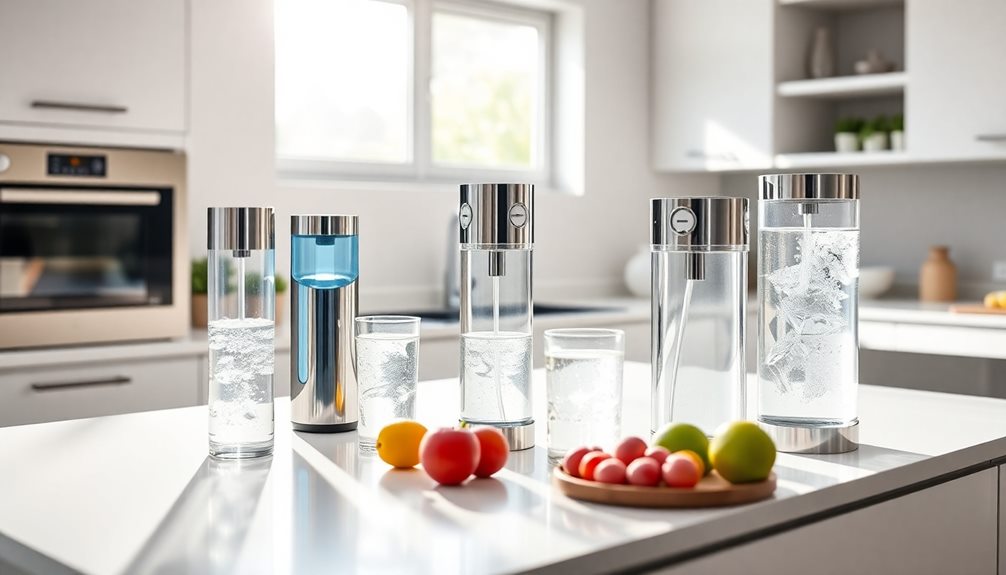

When I compare home water filtration systems, the first choice is whether to treat water throughout the house or focus on drinking water at a single tap. My best overall pick is the iSpring WGB32B, whose three-stage whole-house design offers a balanced fit for households seeking broad point-of-entry filtration. The iSpring RCC7AK-BN stands out for under-sink reverse osmosis with remineralization, while the iSpring WGB32BM targets water with iron and manganese concerns. The main tradeoffs are installation demands, the contaminants a system is designed to address, and ongoing filter changes. Read on for the full comparison, including compact countertop and tankless choices.

Get furniture and decor delivered free with Prime
- Fast, free delivery on millions of items
- Prime Video, Amazon Music and more included
- Member-only deals all year
Complete the kit


Key Takeaways
- Whole-house and drinking-water systems solve different problems: the WGB32B treats water at the main line, while the RCC7AK-BN, Bluevua RO100ROPOT, and Waterdrop G3P600 focus on drinking water.
- Specialized media matter when a water test points to a specific issue: the WGB32BM and iSpring Iron, Hydrogen Sulfide, Manganese system are aimed at mineral and odor concerns beyond routine sediment and chlorine filtration.
- Stage count alone did not establish a clear winner: housing size, stated micron rating, flow needs, treatment purpose, and replacement plan all affect whether a three-stage setup fits a home.
- Visible housings and pressure gauges trade convenience for upkeep: they can help owners monitor conditions, but require space and periodic checks; the Nu Aqua and clear-housing nine-filter systems make this tradeoff especially apparent.
- Reverse osmosis brings a focused drinking-water option, not whole-home coverage: the under-sink iSpring, countertop Bluevua, and tankless Waterdrop differ in installation and footprint, so the best fit depends on where and how water is used.
| iSpring WGB21B 2-Stage Whole House Water Filtration System, 50,000 Gallons |  | Best Overall for Balanced Whole House Filtration | Filter Capacity: 50,000 gallons | Flow Rate: 15 gpm | Dimensions: 26″L x 19″W x 11″H | VIEW ON AMAZON | See Our Full Breakdown |
| iSpring Iron, Hydrogen Sulfide, Manganese Whole House Water Filter System, 3-Stage |  | Best for Heavy Metal and Iron Removal in Whole House Systems | Filtration Stages: 3 | Flow Rate: 15 GPM | Cartridge Size: 20″ x 4.5″ | VIEW ON AMAZON | See Our Full Breakdown |
| Whole Home Water Filtration System – Removes Chlorine, Chloramine, Sediment, Silt, Debris, VOCs, and More – Easy Installation |  | Best for Large Households with Easy Installation Needs | Container Type: Bottle | Maximum Flow Rate: 15 GPM | Supported Water TDS Level: up to 1000 ppm | VIEW ON AMAZON | See Our Full Breakdown |
| WF3-01 3-Stage Whole-House Water Filtration System | 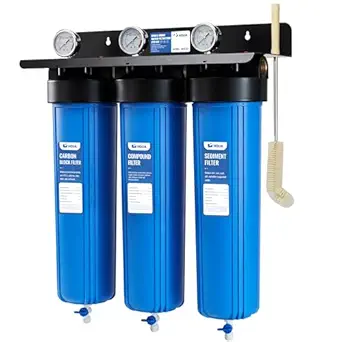 | Best for Multi-Contaminant Targeting with Monitoring Features | Filter stages: 3 | Filter size: 20 × 5.5 inches | Dimensions: 31″ high × 23″ wide × 8″ deep | VIEW ON AMAZON | See Our Full Breakdown |
| 3-Stage Whole House Water Filter System with 9 Filters, 0.5 Micron |  | Best for Well or Municipal Water with Long-Term Filter Supply | Filtration stages: 3 | Included filters: 9 (3 PP, 3 GAC, 3 CTO) | Filter lifespan: Up to 1.5–2 years | VIEW ON AMAZON | See Our Full Breakdown |
| iSpring RCC7AK-BN NSF Certified 6-Stage Reverse Osmosis Water Filter System with Mineral Remineralization |  | Best Overall for Purity and Balanced Water | Flow Rate: 75 GPD | Certification: NSF/ANSI 58 | Stages: 6 | VIEW ON AMAZON | See Our Full Breakdown |
| iSpring WGB32BM Iron, Manganese Whole House Water Filter System |  | Best for Iron and Manganese Removal at a Whole House Scale | Inlet/Outlet: 1 inch | Cartridge Size: 20 in. x 4.5 in. | Flow Rate: up to 15 GPM | VIEW ON AMAZON | See Our Full Breakdown |
| iSpring WGB32B Commercial-Grade Whole House Water Filter System |  | Best for Whole-House Chlorine, Sediment, and Odor Removal | Filtration Stages: 3 | Filter Dimensions: 20×4.5 inches | Inlet/Outlet Size: 1 inch | VIEW ON AMAZON | See Our Full Breakdown |
| iSpring WGB32B-KS Whole House Water Filter System, 3-Stage Filtration |  | Best for Heavy Metal and Chemical Removal in Whole House Setup | Flow Rate: up to 15 GPM | Cartridge Size: 20” x 4.5” | Stages: 3 | VIEW ON AMAZON | See Our Full Breakdown |
| Whole House Water Filter System with 9 Filters, 0.5 Micron Filtration, 3-Stage, 15 GPM, Clear Housing, 2-Year Filter Supply |  | Best for Visible Monitoring and Long-Term Home Filtration | Filtration Micron: 0.5 micron | Flow Rate: 15 GPM | Filter Stages: 3 | VIEW ON AMAZON | See Our Full Breakdown |
| Express Water Whole House Water Filter System, 3-Stage |  | Best for Pressure Monitoring | Filtration stages: 3 | Connection size: 1 inch | Flow rate: 0.25 gallons per second | VIEW ON AMAZON | See Our Full Breakdown |
| Bluevua RO100ROPOT Countertop Reverse Osmosis Water Filter System |  | Best for No-Installation RO | Installation type: Countertop | Purification method: Reverse osmosis | Filtration stages: 5, with remineralization | VIEW ON AMAZON | See Our Full Breakdown |
| Nu Aqua 3-Stage Main Line Whole House Water Filter System with Pressure Gauges (20” x 4.5”) | 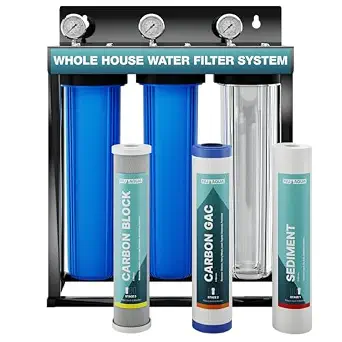 | Best for High-Volume Whole-Home Use | Filter size: 20 × 4.5 inches | Filtration stages: 3 | Filter lifespan: 100,000 gallons | VIEW ON AMAZON | See Our Full Breakdown |
| Waterdrop G3P600 Tankless Reverse Osmosis Water Filter System, 600 GPD |  | Best Under-Sink RO Upgrade | Filtration: 8-stage reverse osmosis and carbon block | Certifications: NSF/ANSI 42, 58, and 372; FCC; EU and UKCA standards | Capacity: 600 gallons per day | VIEW ON AMAZON | See Our Full Breakdown |
| 3-Stage Whole House Water Filter System with 0.5 Micron Filtration |  | Best for Easy Cartridge Checks | Filtration stages and media: 3-stage: PP, GAC, and CTO | Flow rate: 15 GPM | Water source compatibility: Well water and city tap water | VIEW ON AMAZON | See Our Full Breakdown |
| home water filtration systems compared | Flow Rate |
|---|---|
| iSpring WGB21B 2-Stage Whole H | 15 gpm |
| iSpring Iron | 15 GPM |
| Whole Home Water Filtration Sy | — |
| WF3-01 3-Stage Whole-House Wat | — |
| 3-Stage Whole House Water Filt | — |
| iSpring RCC7AK-BN NSF Certifie | 75 GPD |
| iSpring WGB32BM Iron | up to 15 GPM |
| iSpring WGB32B Commercial-Grad | up to 15 GPM |
| iSpring WGB32B-KS Whole House | up to 15 GPM |
| Whole House Water Filter Syste | 15 GPM |
| Express Water Whole House Wate | 0.25 gallons per second |
| Bluevua RO100ROPOT Countertop | — |
| Nu Aqua 3-Stage Main Line Whol | — |
| Waterdrop G3P600 Tankless Reve | — |
| 3-Stage Whole House Water Filt | 15 GPM |
More Details on Our Top Picks
iSpring WGB21B 2-Stage Whole House Water Filtration System, 50,000 Gallons
This system stands out for its effective two-stage filtration that targets sediment, chlorine, and odors, making it a strong choice for comprehensive whole house water treatment. Compared with the WF3-01, it offers a higher capacity and easier DIY installation, though it doesn’t reduce TDS levels. It’s ideal for families seeking straightforward, reliable filtration without complex features, but its size and lack of TDS reduction might be a drawback for those with very hard or mineral-rich water. The large capacity of 50,000 gallons ensures long service intervals, and its ability to retain beneficial minerals makes it suitable for those wanting better-tasting water without stripping essential nutrients.
Pros:- Effective two-stage filtration removing sediment, chlorine, and odors
- Large capacity of 50,000 gallons suitable for whole house use
- Easy DIY installation with included tools and pressure release valve
- Retains beneficial minerals in water
Cons:- Does not reduce Total Dissolved Solids (TDS), limiting its effectiveness for mineral-heavy water
- Requires annual filter replacement, adding ongoing maintenance
Best for: Families needing a dependable, easy-to-install system that handles sediment and chlorine effectively.
Not ideal for: Small households with limited space or those requiring TDS reduction for mineral control.
- Filter Capacity:50,000 gallons
- Flow Rate:15 gpm
- Dimensions:26″L x 19″W x 11″H
- Weight:11.7 kg
- Material:Polyethylene, steel
- Supported Water TDS Level:2500 ppm
Our verdict“This pick makes the most sense for households seeking reliable, straightforward whole house filtration without TDS reduction needs.”
iSpring Iron, Hydrogen Sulfide, Manganese Whole House Water Filter System, 3-Stage
This 3-stage system excels at reducing heavy metals, iron, manganese, lead, and chlorine, making it ideal for households with well water or contaminated municipal supplies. Compared to the Whole Home Water Filtration System – Removes Chlorine, Chloramine, Sediment, Silt, Debris, VOCs, and More, it provides more targeted removal of specific heavy metals and iron, though it may require more attention to water quality and usage patterns. Its long-lasting cartridges of up to one year mean less frequent replacements, but performance can vary based on initial water conditions. It’s well-suited for families dealing with iron or manganese issues, but it doesn’t reduce TDS, so mineral content remains unchanged.
Pros:- Highly effective at removing heavy metals, iron, manganese, and lead
- Long cartridge lifespan of up to one year reduces maintenance frequency
- Easy DIY installation with clear instructions and videos
- Maintains essential minerals while removing harmful contaminants
Cons:- Performance depends on initial water quality and usage volume
- Does not reduce TDS, so mineral content remains unaffected
Best for: Homeowners with well water or heavy metal contamination needing targeted heavy metal and iron removal.
Not ideal for: Households with high TDS or mineral-rich water where TDS reduction is desired, or those seeking simple, all-in-one filtration.
- Filtration Stages:3
- Flow Rate:15 GPM
- Cartridge Size:20″ x 4.5″
- Iron Reduction:up to 3.0 ppm
- Manganese Reduction:up to 1.0 ppm
- Cartridge Lifespan:up to 1 year
Our verdict“This system is best suited for homeowners needing heavy metal and iron reduction without TDS removal, especially in well water settings.”
Whole Home Water Filtration System – Removes Chlorine, Chloramine, Sediment, Silt, Debris, VOCs, and More – Easy Installation
This system effectively tackles multiple contaminants like chlorine, chloramine, sediment, and VOCs, providing better-tasting water and softer skin. Compared with the WF3-01, it offers a higher flow rate of 15 GPM and is designed to support larger homes with up to six bathrooms. Its simple, freestanding installation and maintenance make it appealing for homeowners seeking straightforward upgrades without complex features. However, it lacks smart home compatibility and is limited to water with TDS levels under 1000 ppm. Its container type and capacity make it suitable for large households, but space and periodic maintenance could be considerations.
Pros:- Effectively removes chlorine, chloramine, sediment, and VOCs
- Easy to install and maintain with a straightforward design
- Supports homes with up to six bathrooms
- Provides softer skin and better-tasting water
Cons:- Lacks smart home features or remote monitoring
- Limited to water TDS levels up to 1000 ppm
Best for: Large households seeking an easy-to-install system that improves water taste and skin softness.
Not ideal for: Small homes or those with very high TDS water, where more advanced or compact systems might be preferable.
- Container Type:Bottle
- Maximum Flow Rate:15 GPM
- Supported Water TDS Level:up to 1000 ppm
- Item Weight:19 Pounds
- Material Type:Carbon Fiber
Our verdict“This system is well-suited for large households wanting reliable, simple filtration with enhanced water quality.”
WF3-01 3-Stage Whole-House Water Filtration System
The WF3-01 impresses with its multi-stage filtering that targets sediment, heavy metals, chlorine, and odors, making it a versatile solution for comprehensive water quality improvement. Its inclusion of pressure gauges, 180-day filter timers, and maintenance valves provides a level of control and monitoring not found in simpler systems like the iSpring WGB21B. While its larger dimensions require ample space and periodic upkeep, these features attract homeowners who want detailed tracking of filter health and thorough chemical removal. However, it may be more complicated to install and maintain, especially for smaller spaces.
Pros:- Targets sediment, heavy metals, chlorine, and odors effectively
- Includes pressure gauges and 180-day filter timers for maintenance tracking
- Flexible installation options with valves, fittings, and cleaning tools
- Can be bracket-mounted or used free-standing
Cons:- Requires significant space for installation
- Periodic maintenance and housing cleaning needed
Best for: Homeowners seeking detailed control and multi-contaminant removal in a flexible, robust system.
Not ideal for: Those with limited space or who prefer a simpler, lower-maintenance filtration setup without advanced monitoring.
- Filter stages:3
- Filter size:20 × 5.5 inches
- Dimensions:31″ high × 23″ wide × 8″ deep
- Includes:Pressure gauges, 180-day timers, valves, brush, record card
- Flow direction:No direction required
Our verdict“Ideal for users wanting a detailed, multi-stage system with monitoring features and comprehensive contaminant reduction.”
3-Stage Whole House Water Filter System with 9 Filters, 0.5 Micron
This system offers a comprehensive package with nine replacement cartridges, designed for both well and municipal water sources. It effectively reduces sediment, chlorine, and odors while preserving natural minerals, making it suitable for households that want long-term filtration without TDS reduction. Compared with the iSpring WGB21B, it provides more filters and longer lifespan per set, but it lacks TDS reduction, which might be a concern for mineral control. Its built-in shut-off valves facilitate easier filter changes, yet installation depends on accessible 3/4-inch plumbing, which could be restrictive in some setups. This system balances long-term cost savings with straightforward installation for those who prefer a multi-filter approach.
Pros:- Includes three sets of replacement cartridges for extended use
- Built-in shut-off valves simplify filter changes
- Reduces sediment, chlorine, and odors effectively
- Works with well and municipal water sources
Cons:- Does not reduce TDS levels, limiting mineral adjustment
- Installation requires access to compatible plumbing
Best for: Homeowners with well or municipal water seeking extended filter supplies and easy maintenance.
Not ideal for: Users needing TDS reduction or with space constraints, as it requires accessible plumbing and does not alter mineral content.
- Filtration stages:3
- Included filters:9 (3 PP, 3 GAC, 3 CTO)
- Filter lifespan:Up to 1.5–2 years
- Compatible water sources:Well and municipal water
- Plumbing fit:3/4-inch
Our verdict“This system fits households wanting long-term, multi-layer filtration without TDS reduction, especially in well or municipal water contexts.”
iSpring RCC7AK-BN NSF Certified 6-Stage Reverse Osmosis Water Filter System with Mineral Remineralization
The iSpring RCC7AK-BN stands out as the best overall choice for those seeking pure, mineral-rich water. Its 6-stage reverse osmosis process ensures maximum contaminant removal, and the addition of natural minerals helps restore taste and pH balance—something that systems like the Waterdrop G3P600 lack. Its transparent filter housing makes monitoring easy, but the installation can challenge those without some plumbing skills, and the bulky design may not fit under all sinks. While filter replacements are more costly, the reliability and water quality make it a compelling option for health-conscious users. Compared to simpler RO systems, this model offers a more comprehensive, mineralized output, justifying its slightly higher maintenance needs.
Pros:- Easy top-mounted installation for DIYers
- Remineralizes water with natural minerals and balanced pH
- Transparent filter housing simplifies monitoring
- NSF/ANSI 58 certified for safety and performance
Cons:- Installation may still require some plumbing skills
- Filter replacements can be costly over time
- Bulkier design requires more under-sink space
Best for: Homeowners who prioritize water purity, mineral content, and easy DIY installation, especially in health-conscious households.
Not ideal for: Renters or those with limited space under the sink, due to its bulkier design and more complex setup.
- Flow Rate:75 GPD
- Certification:NSF/ANSI 58
- Stages:6
- Remineralization:Yes
- Installation:Top-mounted, easy DIY setup
- Filter Lifespan:6 months to 3 years
Our verdict“This system is perfect for those who want reliable, mineral-enhanced drinking water with straightforward installation despite higher ongoing costs.”
iSpring WGB32BM Iron, Manganese Whole House Water Filter System
The iSpring WGB32BM offers targeted removal of iron, manganese, sediment, and chlorine, making it an ideal choice for homes dealing with these specific contaminants. Unlike the WGB32B which focuses on general chlorine and sediment, this model tackles heavy metals and minerals that can stain fixtures and affect water taste. Its long-lasting cartridges and straightforward DIY installation are appealing, but it does not address TDS or dissolved minerals, which might be a drawback for those seeking comprehensive mineral balance. For families with iron or manganese issues, this system provides effective, dedicated filtration, but it may fall short if total mineral removal or TDS reduction are priorities.
Pros:- Effective removal of iron, manganese, sediment, and chlorine
- Long-lasting cartridges with up to 12 months or 100,000 gallons capacity
- Easy DIY installation with online support and warranty
Cons:- Does not reduce Total Dissolved Solids (TDS)
- Installation at main water line may require plumbing skills
- Limited contaminant removal scope
Best for: Homeowners with specific problems related to iron, manganese, or sediment, needing a targeted, long-lasting solution.
Not ideal for: Users seeking to reduce TDS or mineral content broadly, as this system doesn’t address dissolved solids or minerals beyond heavy metals.
- Inlet/Outlet:1 inch
- Cartridge Size:20 in. x 4.5 in.
- Flow Rate:up to 15 GPM
- Filtration Capacity:100,000 gallons
- Removes:Iron (max 3.0 ppm), Manganese (max 1.0 ppm), sediment, chlorine
Our verdict“This system works best for homes with specific iron or manganese issues, offering long-term, targeted filtration without TDS reduction.”
iSpring WGB32B Commercial-Grade Whole House Water Filter System
The iSpring WGB32B offers a robust 3-stage filtration process designed for whole house coverage, effectively removing chlorine, sediments, and odors. It surpasses smaller under-sink units like the WGB32BM in capacity and flow rate, making it suitable for larger households or homes with higher water demands. Installation is straightforward with DIY guides, but its size and the need for space might be a challenge for smaller utility areas. While it excels at clearing out chlorine and sediments, it does not address TDS or minerals, so it’s less suited for those looking to improve water mineralization or TDS levels. This system provides reliable, comprehensive filtration for general home water quality improvement.
Pros:- Effective removal of chlorine, sediments, and odors
- Easy to install with clear DIY guides
- High flow rate suitable for whole house use
- Long-lasting filters with 100,000-gallon capacity
Cons:- Requires space for installation and maintenance
- Does not remove TDS or dissolved minerals
- Initial setup may be complex for some users
Best for: Homeowners seeking a high-capacity, whole-home solution to remove chlorine, sediments, and odors efficiently.
Not ideal for: Those wanting mineral or TDS reduction, or with very limited space for larger systems.
- Filtration Stages:3
- Filter Dimensions:20×4.5 inches
- Inlet/Outlet Size:1 inch
- Flow Rate:up to 15 GPM
- Capacity:100,000 gallons
Our verdict“This system suits households needing large-scale, reliable removal of chlorine and sediments without mineral balancing features.”
iSpring WGB32B-KS Whole House Water Filter System, 3-Stage Filtration
The iSpring WGB32B-KS expands on basic filtration by targeting heavy metals, hydrogen sulfide, and chemicals alongside chlorine and sediment. Its 3-stage process is ideal for families concerned with chemical contaminants and heavy metals, delivering up to 100,000 gallons of clean water. Compared with the WGB32B, this model adds specific protection against hydrogen sulfide and heavy metals, making it more suitable for well water or contaminated municipal sources. Its DIY-friendly design is a plus, but unwrapping cartridges before installation can be a chore. Since it doesn’t reduce TDS, it’s not a comprehensive mineral or dissolved solids solution but excels at chemical and metal removal.
Pros:- Effective removal of chlorine, heavy metals, and hydrogen sulfide
- Easy DIY installation with detailed guides
- Long-lasting filters for up to 2 years or 100,000 gallons
Cons:- Does not reduce TDS or dissolved minerals
- Cartridge unwrapping adds installation time
- Limited to chemical and heavy metal removal
Best for: Families with well water or chemical contamination issues who need targeted removal of heavy metals and hydrogen sulfide.
Not ideal for: Homeowners wanting to lower TDS or improve mineral content, as it doesn’t address dissolved solids.
- Flow Rate:up to 15 GPM
- Cartridge Size:20” x 4.5”
- Stages:3
- Capacity:100,000 gallons
- Removes:Heavy metals, hydrogen sulfide, chlorine, sediment
Our verdict“This system is best for households needing targeted chemical and heavy metal filtration, especially in contaminated well water scenarios.”
Whole House Water Filter System with 9 Filters, 0.5 Micron Filtration, 3-Stage, 15 GPM, Clear Housing, 2-Year Filter Supply
The Whole House Water Filter System with 9 Filters emphasizes ease of maintenance and visibility, featuring clear housing that allows users to see debris and monitor filter condition. Its 3-stage filtration process effectively removes chlorine, rust, sediment, and odors—similar to the WGB32B but with added transparency and multiple filters for extended use. While it’s suitable for both well and city water, it does not reduce TDS or dissolved minerals, focusing instead on improving water clarity and taste. The included multiple filter sets support up to two years of maintenance, but some plumbing skills are needed for installation, and replacement frequency varies with water quality.
Pros:- Transparent housing allows easy debris monitoring
- Includes multiple filter sets for up to 2 years of use
- Effective removal of chlorine, rust, sediment, and odors
- Hassle-free quick-change filters
Cons:- Does not reduce TDS or dissolved minerals
- Requires basic plumbing skills for installation
- Filter replacement needed every 1-2 years
Best for: Homeowners who prioritize easy visual monitoring, long-term use, and effective removal of rust, sediment, and chlorine in their entire home.
Not ideal for: Those seeking TDS reduction or mineral balancing, or with very limited space for larger filter housings.
- Filtration Micron:0.5 micron
- Flow Rate:15 GPM
- Filter Stages:3
- Filter Sets Included:3 full sets (9 filters)
- Housing Material:Clear plastic
- Inlet/Outlet Size:3/4 inch
- Filter Life:Up to 2 years
Our verdict“This system is ideal for users wanting straightforward, long-term visible filtration that improves water clarity and taste without TDS removal.”
Express Water Whole House Water Filter System, 3-Stage
For households that want filtration at every tap, this three-stage whole-house system combines chlorine and heavy-metal reduction with scale protection. Its pressure gauges give a visible way to monitor system pressure, a practical advantage over the Nu Aqua 3-Stage Main Line system, whose listed details emphasize filtration capacity and warranty instead. The stainless steel bracket adds sturdy support, while the stated flow rate of 0.25 gallons per second gives buyers a concrete figure to check against household demand. The tradeoff is that this system does not reduce TDS, so it is not a substitute for reverse osmosis when dissolved solids are the concern. Installation also needs dedicated space, and replacement timing varies with use. I’d shortlist it for buyers who value whole-home treatment and an at-a-glance pressure check.
Pros:- Treats water throughout the home rather than at a single drinking-water tap
- Pressure gauges make system pressure easier to monitor
- Stainless steel bracket supports a durable installation
- Designed to reduce scale buildup that can affect pipes and appliances
Cons:- Does not reduce TDS
- Requires installation space and plumbing work
- Replacement timing varies with household usage
Best for: Homeowners seeking chlorine and heavy-metal reduction at multiple taps who want pressure gauges to help monitor the system.
Not ideal for: Renters or households with little installation space, and buyers who want reduced TDS in drinking water.
- Filtration stages:3
- Connection size:1 inch
- Flow rate:0.25 gallons per second
- Maximum pressure:80 PSI
- Filter replacement interval:6–12 months or 100,000 gallons
- Listed filtration targets:Chlorine, heavy metals, and scale buildup
Our verdict“Choose this Express Water system if you want whole-home chlorine and heavy-metal filtration with visible pressure monitoring and have room to install it.”
Bluevua RO100ROPOT Countertop Reverse Osmosis Water Filter System
The Bluevua brings reverse osmosis to the countertop without plumbing changes, making it a distinct choice from the under-sink Waterdrop G3P600. Its five-stage process includes remineralization, and the borosilicate glass carafe offers a separate water-contact container. With a 1.7-liter capacity and corded operation, it suits buyers who want treated drinking water without modifying a rental kitchen or cabinet plumbing. The tradeoffs are physical and practical: at about 23 pounds and over 15 inches wide, it takes meaningful counter space, while its listed maximum flow rate of 0.26 liters per minute is modest. It also depends on an electrical outlet and ongoing filter replacement. I’d pick it when installation flexibility matters more than a compact footprint or whole-home coverage.
Pros:- Countertop setup avoids under-sink plumbing installation
- Five-stage reverse osmosis includes remineralization
- Borosilicate glass carafe provides a glass storage option
- Listed pure-to-drain ratio is 2:1
Cons:- Large and heavy for a countertop appliance
- Requires electrical power
- Filter replacement creates ongoing upkeep
Best for: Renters and apartment dwellers who want countertop reverse osmosis with remineralization and no plumbing installation.
Not ideal for: Households with crowded counters, those needing filtered water at every faucet, or buyers who prefer an unpowered system.
- Installation type:Countertop
- Purification method:Reverse osmosis
- Filtration stages:5, with remineralization
- Maximum flow rate:0.26 liters per minute
- Capacity:1,700 milliliters
- Supported maximum water TDS:1,000 PPM
- Dimensions:10.9 × 15.4 × 14.3 inches
- Weight:23.15 pounds
- Power and warranty:Corded electric; 2 years
Our verdict“Pick the Bluevua if you want countertop reverse osmosis without installation and can spare the counter space.”
Nu Aqua 3-Stage Main Line Whole House Water Filter System with Pressure Gauges (20” x 4.5”)
The Nu Aqua is the whole-house pick here with a stated 100,000-gallon filter lifespan and a three-year warranty, a useful pairing for buyers planning a long-term main-line installation. Its three stages target chlorine, heavy metals, sediment, and odors, while the 20 × 4.5-inch filter size signals a larger-format system than the Express Water model’s listed one-inch connection details alone can convey. Compared with the 15 GPM clear-housing system in this batch, Nu Aqua emphasizes filter lifespan and residential or commercial suitability; the other system makes cartridge inspection and included spares more explicit. Nu Aqua’s tradeoffs are installation complexity and handling used filters during replacement. The product data does not specify a flow rate, so I’d verify household demand and plumbing fit before choosing it.
Pros:- Three filtration stages target chlorine, heavy metals, sediment, and odors
- Listed filter lifespan reaches 100,000 gallons
- Three-year warranty
- Specified for residential and commercial use
Cons:- Installation may require professional help
- Replacing filters involves handling used cartridges
- Product data does not state a flow rate
Best for: Homeowners or small commercial operators seeking a main-line system with a stated 100,000-gallon filter lifespan and multi-contaminant treatment.
Not ideal for: Buyers planning a DIY installation without plumbing experience or anyone who needs a clearly specified flow rate before purchase.
- Filter size:20 × 4.5 inches
- Filtration stages:3
- Filter lifespan:100,000 gallons
- Warranty:3 years
- Listed filtration targets:Chlorine, heavy metals, sediment, and odors
- Intended use:Residential and commercial
Our verdict“Choose Nu Aqua for long-life, main-line filtration when you can confirm the flow and installation fit for your property.”
Waterdrop G3P600 Tankless Reverse Osmosis Water Filter System, 600 GPD
For buyers who want reverse osmosis at a dedicated kitchen faucet, the Waterdrop G3P600 combines 600-gallon-per-day capacity with a tankless under-sink design. Its faucet displays TDS and filter life, giving more day-to-day feedback than the Bluevua countertop RO system, which avoids cabinet installation but relies on a separate carafe. The listed 2:1 pure-water-to-wastewater ratio and tool-free filter changes add convenience, while eight-stage RO and carbon filtration target a broader drinking-water treatment role than the whole-house cartridge systems in this group. The fit depends on having electricity under the sink and enough cabinet clearance; its 31-pound weight and specified 87 PSI operating pressure also merit a plumbing check. It makes the most sense for a planned, permanent kitchen setup.
Pros:- Rated capacity of 600 gallons per day
- Faucet shows TDS and filter life
- Tankless format saves space compared with a storage tank
- Filters are designed to change without tools
Cons:- Requires an electrical outlet under the sink
- Needs cabinet space and a permanent installation
- Specified operating pressure is 87 PSI, which buyers should check against their plumbing
Best for: Homeowners upgrading a kitchen who want high-capacity reverse osmosis, a dedicated faucet, and TDS and filter-life readouts.
Not ideal for: Renters or kitchens without an under-sink outlet and adequate cabinet clearance.
- Filtration:8-stage reverse osmosis and carbon block
- Certifications:NSF/ANSI 42, 58, and 372; FCC; EU and UKCA standards
- Capacity:600 gallons per day
- Pure-water-to-wastewater ratio:2:1
- Maximum flow rate:0.42 GPM
- Dimensions and weight:18.12 × 5.67 × 17.72 inches; 31 pounds
- Installation:Under sink; requires electricity
- Operating pressure:87 PSI
- Supported maximum water TDS:1,500 PPM
Our verdict“Choose the Waterdrop if you want a high-capacity, monitored RO setup at a permanent kitchen faucet and have the required power and cabinet space.”
3-Stage Whole House Water Filter System with 0.5 Micron Filtration
This system’s clearest advantage is day-to-day serviceability: transparent housings let owners see cartridge condition, and individual shut-off valves make swaps more manageable. It also includes two spare filter sets, a practical head start over the Nu Aqua system, whose listing gives a 100,000-gallon lifespan but no spare sets. Its three PP, GAC, and CTO stages are described for chlorine, rust, and odors, with a stated 15 GPM flow rate for multi-use homes. The tradeoff is frequent upkeep: the listed replacement interval is only four to six months, so the included spares do not remove the need for regular cartridge changes. Like the Express Water whole-house option, it does not reduce TDS. I’d favor it when visible checks and accessible maintenance matter more than long intervals between replacements.
Pros:- Transparent housings make cartridge condition easy to inspect
- Individual shut-off valves support easier cartridge swaps
- Includes two spare filter sets and installation accessories
- 15 GPM stated flow rate suits multiple household uses
Cons:- Listed replacement interval is four to six months
- Does not reduce TDS or remove beneficial minerals
- Frequent cartridge changes add ongoing maintenance
Best for: Homeowners who want visible cartridge checks, shut-off valves for servicing, and a stated 15 GPM flow rate.
Not ideal for: People seeking reduced TDS or a low-maintenance system with long intervals between cartridge changes.
- Filtration stages and media:3-stage: PP, GAC, and CTO
- Flow rate:15 GPM
- Water source compatibility:Well water and city tap water
- Filter replacement interval:4–6 months
- Included spare filters:2 spare filter sets
- Housing type:Transparent
- Included accessories:Wrench, tape, faucet connectors, and valves
Our verdict“Pick this system if easy visual checks and service access matter more to you than infrequent filter changes or TDS reduction.”
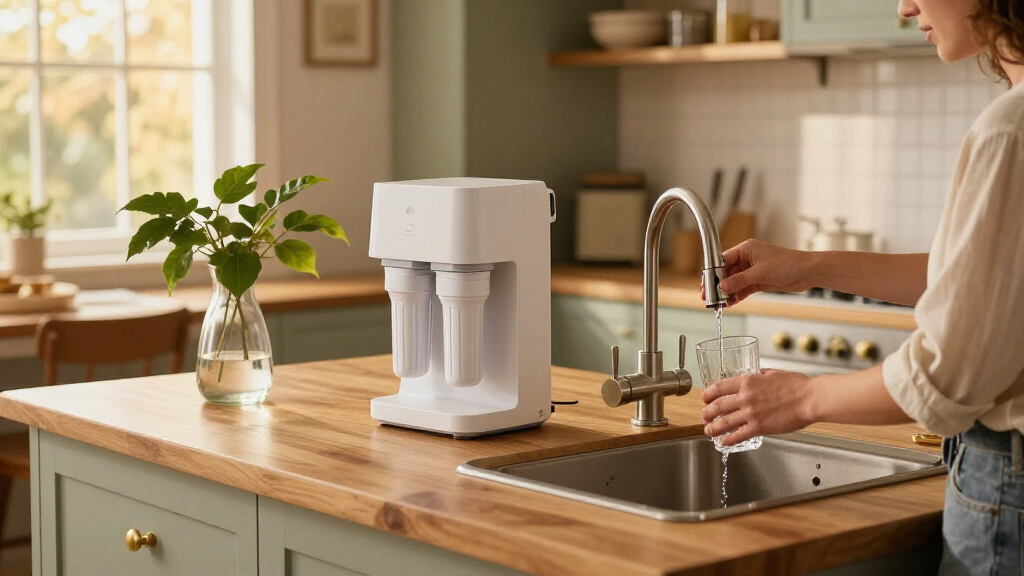
How We Picked
I ranked these systems by how clearly their stated design matches a real household need: whole-house treatment, targeted iron or manganese reduction, or drinking-water filtration. I weighed treatment focus, stated capacity or flow where provided, installation footprint, monitoring features, filter replacement demands, and whether the setup suits a renter or owner. I gave stronger placement to options with a distinct, understandable role and less dependence on assumptions about a household’s water.
The ranking favors the iSpring WGB32B as a broad whole-house choice, then places specialized and alternative-format systems according to the problems they address. Models with similar three-stage layouts are differentiated by stated media, housing size, filter supply, and monitoring details rather than stage count alone. Reverse-osmosis systems are ranked within their point-of-use role, since they do not replace a main-line filter. Product claims do not substitute for a water test; buyers should confirm that a system addresses their measured contaminants.
Factors to Consider When Choosing Home Water Filtration Systems Compared
I would start with the water problem and the point of use, then match system format and maintenance to the home. These broader decisions can prevent a mismatch that feature lists and stage counts do not reveal.
Match Treatment to a Water Test
Choose a system based on a current report from your water utility or a lab test for private-well water. A chlorine taste complaint calls for a different treatment approach than iron staining, sediment, or a specific dissolved contaminant. Product descriptions often list many substances, but that wording does not show whether a system has been independently certified for each reduction claim. Check the exact model and contaminant in the certification listing, and note any stated conditions such as flow rate or cartridge life. A broad filter can improve taste or trap particles while leaving other dissolved substances untouched. If the test finds several distinct problems, ask a water-treatment professional whether they need separate treatment stages.
Choose Whole-House or Point-of-Use Coverage
A main-line system treats water supplied to multiple fixtures, which can suit a homeowner who wants treatment for showers, laundry, and taps. It also means the system must handle the home’s peak flow without causing an unacceptable pressure drop. A reverse-osmosis unit treats water at a drinking-water outlet, making it a more focused option for cooking and drinking. That arrangement can avoid treating every gallon to the same level, but it does not address water at showers or other faucets. Some households combine the formats when their test and priorities support both. Avoid buying a point-of-use unit as though it were a whole-house solution.
Check Flow, Pressure, and Installation Space
System capacity is not only about how many gallons a cartridge may treat; flow and plumbing compatibility affect daily use. Compare the stated flow rate with simultaneous demand from showers, appliances, and faucets, and review pressure requirements before selecting a main-line unit. Large housings need clearance for cartridge changes, while gauges and transparent bowls need space to remain visible and accessible. Under-sink reverse osmosis needs room for the unit, connections, and often a dedicated faucet; countertop models trade permanent plumbing for counter space. Measure the installation area and identify shutoff access before ordering. If plumbing changes are beyond your comfort level, include installation help in your decision.
Estimate Maintenance Before You Commit
Replacement intervals depend on incoming water quality and actual household use, so treat advertised filter life as a planning estimate. A system with several cartridges may require different parts on different schedules, and a multi-filter supply does not remove the need to track those dates. Check how replacements are identified, whether pressure or flow changes offer a useful service cue, and how easy the housings are to open. For reverse osmosis, account for the membrane and any post-filter or remineralization stage as well as routine prefilters. Skipping changes can reduce performance and may affect water quality. Choose a maintenance routine you can keep up with, rather than assuming a higher stage count means less work.
Compare Certifications and Claims Carefully
Words such as “commercial-grade” or a low micron rating do not by themselves establish what contaminants a system reduces. Look for a certification tied to the exact model and the specific performance claim that matters to you. A sediment rating describes particle filtration under stated conditions; it does not prove removal of dissolved chemicals or microbes. Reverse osmosis membranes and carbon filters address different classes of substances, and certification details can clarify those boundaries. Also check whether claims apply to the complete system or only a particular cartridge. When a health concern drives the purchase, verify the claim before comparing convenience or appearance.
Know When a More Focused System Is Worth It
Paying for specialized treatment makes sense when a test identifies a problem the standard system is not designed to handle. Iron or manganese can call for dedicated media and may affect cartridge life in other filters, so a targeted system can be a better match than a general-purpose stack. Reverse osmosis may appeal to buyers focused on drinking water, but it adds a separate faucet, membrane upkeep, and wastewater considerations. A countertop unit can lower installation commitment, while a tankless under-sink model may suit buyers with limited cabinet room and compatible plumbing. Do not add stages solely because a larger number sounds more thorough. Each added stage should solve a defined need.
Frequently Asked Questions
Should I choose a whole-house system or reverse osmosis?
I would choose a whole-house system when treatment across multiple taps and fixtures is the goal, and reverse osmosis when the priority is water from a dedicated drinking tap. The WGB32B represents the main-line format, while the RCC7AK-BN, Bluevua, and Waterdrop are point-of-use options. They do not cover the same fixtures, so one cannot be treated as a direct substitute for the other. Start with a water test and decide where the identified issue matters in daily use. A household may use both formats if each addresses a separate need.
Can a three-stage filter remove iron or manganese?
Stage count alone cannot answer that question because the filter media determine what the system is designed to reduce. This roundup includes dedicated options such as the WGB32BM and the iSpring Iron, Hydrogen Sulfide, Manganese system, which are more directly aimed at those concerns than general-purpose sediment and carbon setups. Have well water tested first, since concentration and other water conditions affect treatment choices. Confirm that the exact system claims coverage for the level found in your test. If the issue is substantial, seek guidance on pretreatment and maintenance needs.
Is a lower micron rating automatically better?
No. A lower micron rating can indicate finer particle filtration, but it does not establish reduction of dissolved chemicals, odors, or microorganisms. Finer filtration can also affect flow and cartridge life, depending on the water and system design. Compare the rating with the specific particles you want to address and the home’s flow needs. Look for testing or certification for the exact reduction claim that matters. A number on its own is not a complete measure of system performance.
Which option makes sense if I cannot modify my plumbing?
A countertop reverse-osmosis unit such as the Bluevua RO100ROPOT can suit someone seeking drinking water without a permanent under-sink installation. It does occupy counter space and treats water at the unit, so it will not provide filtered water at every fixture. Under-sink systems such as the RCC7AK-BN and Waterdrop G3P600 generally involve plumbing connections and a dedicated faucet. Check setup requirements and available space before choosing. Renters should also confirm whether any proposed connection is allowed in their home.
How do I know when replacement filters are due?
Use the manufacturer’s replacement schedule as a starting point, then account for your water quality and household use. Some systems offer pressure gauges or visible housings that can help show changes, but these are not a substitute for scheduled maintenance. Keep a record of installation dates and the replacement part numbers for each stage. A drop in flow, changes in taste, or visible loading can signal that a check is due, though waiting for symptoms may allow performance to fall first. Follow the product instructions for cartridge and membrane changes.
What are the best best water filters for home?
The best water filters for home depend on your water source, the contaminants you want to reduce, and how much water your household uses. The picks above offer options for different needs, including countertop, under-sink, and whole-house filtration. Before choosing, check your local water quality report and compare each filter’s stated capabilities, installation requirements, maintenance needs, and certifications. A filter certified for a particular contaminant may not address others, so match its documentation to your concerns. If you’re unsure which contaminants matter, a water test can help narrow down the right type of filtration for your home.
Conclusion
For broad main-line coverage, I recommend the iSpring WGB32B as best overall; buyers with iron or manganese findings should compare the WGB32BM and the dedicated iSpring iron system instead. The best value depends on matching a straightforward three-stage setup, such as the Express Water or WGB32B-KS, to a verified need and a manageable replacement plan. For a best premium drinking-water setup, consider the tankless Waterdrop G3P600 or the remineralizing RCC7AK-BN based on installation fit and treatment priorities. The Bluevua is a practical starting point for beginners who need a countertop drinking-water option, while the Nu Aqua with pressure gauges suits owners who want monitoring on a main-line system. Match any choice to a water test, available space, and the maintenance you are prepared to do.
Halloween Picks
halloween
As an affiliate, we earn on qualifying purchases.