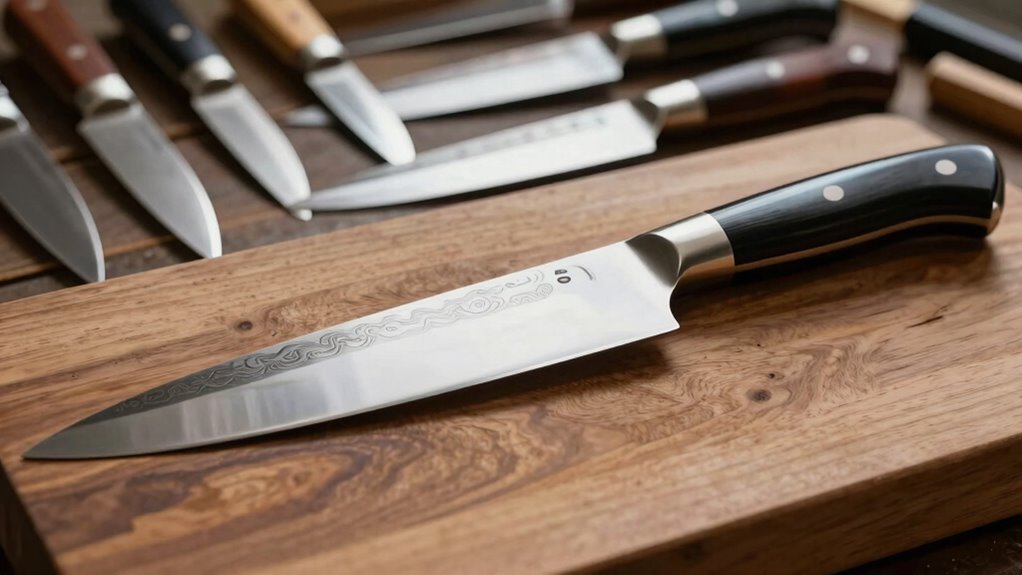

Among these Japanese knife brands, I rank the Shun Premier 8-Inch Chef’s Knife as the best overall pick for cooks seeking an established brand and a versatile kitchen profile. The KAWAHIRO VG10 Chef Knife stands out as a focused single-knife option, while the imarku 14-piece set suits buyers who want a broad assortment in one purchase. The key tradeoffs are single-knife performance versus set convenience, and harder, thinner blades versus easier day-to-day care. Brand name alone does not settle the choice: blade style, steel, handle comfort, and maintenance all matter. Read on for how the 13 options differ and which one fits your kitchen.

Get furniture and decor delivered free with Prime
- Fast, free delivery on millions of items
- Prime Video, Amazon Music and more included
- Member-only deals all year
Complete the kit


Key Takeaways
- Shun Premier leads the ranking for buyers who prioritize an established Japanese kitchen-knife brand and a versatile chef’s knife; its premium positioning is less compelling if you want a full set.
- KAWAHIRO and HOSHANHO are single-knife alternatives, but the choice depends on whether you prefer a VG10-focused offering or a high-carbon steel blade that calls for more care.
- imarku’s 14-piece set covers more kitchen tasks than any single knife here, but a large set may take up more space and include pieces you rarely use.
- Damascus appearance appears across several picks, including KEEMAKE, Emojoy, and Atumuryou; the pattern alone does not tell you how a knife cuts or how much maintenance it needs.
- The Higo no Kami is the clear outlier: it is a folding pocket knife, not a substitute for a chef’s knife or kitchen set.
| KAWAHIRO 8.27-Inch Japanese VG10 Chef Knife |  | Best for Precise, Controlled Cutting | Blade length: 210 mm (8.27 in) | Steel core: VG10 | Construction: 3-layer | VIEW ON AMAZON | See Our Full Breakdown |
| KEEMAKE 8-Inch VG10 Damascus Kiritsuke Chef Knife with Ash Wood Sheath |  | Best Kiritsuke-Style Pick | Blade length: 8 inches | Blade material: 67-layer Damascus steel with VG10 core | Blade hardness: Listed as 62 HRC and 60±2 HRC | VIEW ON AMAZON | See Our Full Breakdown |
| Shun Premier 8-Inch Chef’s Knife |  | Best Established Japanese Brand Pick | Brand: Shun | Model: TDM0706 | Blade length: 8 inches | VIEW ON AMAZON | See Our Full Breakdown |
| Atumuryou 3-Piece Japanese Damascus Chef Knife Set with VG10 Steel Core |  | Best Three-Knife Set | Pieces: 3 | Included knives: 8-inch chef knife, 7-inch santoku knife, 3.5-inch paring knife | Blade construction: Forged, 67-layer Damascus | VIEW ON AMAZON | See Our Full Breakdown |
| imarku 8-Inch Japanese Chef Knife |  | Best Lower-Maintenance Everyday Pick | Blade length: 8 inches | Blade material: High-carbon stainless steel | Carbon content: 0.6–0.75% | VIEW ON AMAZON | See Our Full Breakdown |
| Emojoy 8-Inch Damascus Steel Chef Knife with Olive Wood Handle |  | Best for a Traditional Damascus-and-Wood Look | Blade length: 8 inches | Blade material: 67-layer Damascus steel | Carbon content: 0.98% | VIEW ON AMAZON | See Our Full Breakdown |
| imarku 14-Piece Japanese High-Carbon Stainless Steel Knife Set with Block and Built-In Sharpener |  | Best Full-Kitchen Set | Set size: 14 pieces | Blade material: High-carbon stainless steel | Edge angle: 10–15° | VIEW ON AMAZON | See Our Full Breakdown |
| HOSHANHO 8-Inch Japanese High-Carbon Steel Chef’s Knife |  | Best for Everyday Precision | Blade length: 8 inches | Blade material: 10Cr15CoMoV Japanese high-carbon steel | Hardness: Up to 60 HRC | VIEW ON AMAZON | See Our Full Breakdown |
| Atumuryou 8-Inch Japanese Chef Knife with VG-10 Damascus Steel |  | Best Premium-Spec Steel | Model: AT8101-US02 | Blade length: 8 inches | Blade material: Japanese VG-10 steel core | VIEW ON AMAZON | See Our Full Breakdown |
| FAMCÜTE 8-Inch Japanese Chef Knife with Rosewood Handle |  | Best Octagonal Handle | Blade length: 8 inches | Blade material: Five-layer 9CR18MOV high-carbon steel | Hardness: Up to HRC 62 | VIEW ON AMAZON | See Our Full Breakdown |
| imarku 3-Piece Japanese Stainless Steel Kitchen Knife Set |  | Best Japanese-Style Starter Set | Number of knives: 3 | Included knives: 8-inch chef knife, 7-inch nakiri knife, 3.5-inch paring knife | Blade material: High-carbon Japanese stainless steel | VIEW ON AMAZON | See Our Full Breakdown |
| imarku 7-Inch Santoku Knife |  | Best Single-Knife Everyday Pick | Blade length: 7 inches | Blade material: High-carbon stainless steel | Blade thickness: 2.5 mm | VIEW ON AMAZON | See Our Full Breakdown |
| Higo no Kami 10 Folding Pocket Knife, Brass Finish | 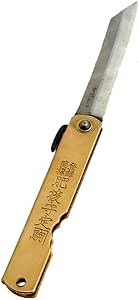 | Best Traditional Japanese Pocket Knife | Model: 10 | Manufacturer: Iwachu | Blade material: Warikomi steel | VIEW ON AMAZON | See Our Full Breakdown |
| japanese knife brand | Blade material | Handle material | Blade length |
|---|---|---|---|
| KAWAHIRO 8.27-Inch Japanese VG | — | — | 210 mm (8.27 in) |
| KEEMAKE 8-Inch VG10 Damascus K | 67-layer Damascus steel with VG10 core | Pakkawood | 8 inches |
| Shun Premier 8-Inch Chef’s Kni | VG-MAX steel core with 68 layers of Damascus cladding | Pakkawood | 8 inches |
| Atumuryou 3-Piece Japanese Dam | — | Stabilized wood and resin | — |
| imarku 8-Inch Japanese Chef Kn | High-carbon stainless steel | Pakkawood | 8 inches |
| Emojoy 8-Inch Damascus Steel C | 67-layer Damascus steel | Olive wood | 8 inches |
| imarku 14-Piece Japanese High- | High-carbon stainless steel | — | — |
| HOSHANHO 8-Inch Japanese High- | 10Cr15CoMoV Japanese high-carbon steel | Wood | 8 inches |
| Atumuryou 8-Inch Japanese Chef | Japanese VG-10 steel core | Stabilized wood and resin | 8 inches |
| FAMCÜTE 8-Inch Japanese Chef K | Five-layer 9CR18MOV high-carbon steel | Rosewood | 8 inches |
| imarku 3-Piece Japanese Stainl | High-carbon Japanese stainless steel | Pakkawood | — |
| imarku 7-Inch Santoku Knife | High-carbon stainless steel | Pakkawood | 7 inches |
| Higo no Kami 10 Folding Pocket | Warikomi steel | Brass | 3 inches |
More Details on Our Top Picks
KAWAHIRO 8.27-Inch Japanese VG10 Chef Knife
The KAWAHIRO stands out among these Japanese knife brands for its 210 mm hand-sharpened gyuto and octagonal Wa handle. Its VG10 core and stated hardness of 60+ HRC favor a keen edge for detailed slicing, while the tapered blade is intended to move through ingredients with less resistance. Compared with the imarku 8-Inch Japanese Chef Knife, which uses softer 56–58 HRC steel, this is the more specialized choice for cooks focused on precise cuts and edge retention. That harder, thinner-bladed approach also asks more of its owner: hand-wash and dry it promptly, and keep it away from bones, frozen food, and other hard materials. The distinctive wood handle and presentation box add gift appeal, but the core value here is controlled cutting rather than all-purpose toughness.
Pros:- Hand-sharpened 210 mm blade is suited to controlled slicing
- VG10 core and stated 60+ HRC hardness support edge retention
- Octagonal Wa handle is designed for a secure, balanced grip
- Includes a velvet-lined wooden gift box
Cons:- Requires hand washing and immediate drying
- Not suited to bones, frozen food, or other hard materials
- Hard steel needs careful handling to avoid damage
Best for: Home cooks who want a Japanese-style gyuto for precise vegetable and boneless-protein prep and are willing to hand-wash it.
Not ideal for: Cooks who cut through bones or frozen ingredients, or anyone who wants a knife that can go in the dishwasher.
- Blade length:210 mm (8.27 in)
- Steel core:VG10
- Construction:3-layer
- Hardness:60+ HRC
- Weight:6.7 oz
- Handle:Octagonal Wa handle crafted from ebony, turquoise, and ruby wood
- Included components:Chef knife, certificate of authenticity, manual, wipe cloth
- Model number:KH-6601
Our verdict“Choose the KAWAHIRO for precise everyday prep if you can follow its careful cleaning and cutting requirements.”
KEEMAKE 8-Inch VG10 Damascus Kiritsuke Chef Knife with Ash Wood Sheath
The KEEMAKE gives this lineup a kiritsuke-shaped alternative to conventional chef knives, pairing an 8-inch blade with a stated 10° edge for slicing, dicing, and chopping. Its VG10 core sits within 67-layer hammered Damascus steel, and the full-tang build with a triple-riveted pakkawood handle favors a familiar, substantial grip. Compared with the Shun Premier 8-Inch Chef’s Knife, which has a 16-degree edge and a hammered finish, the KEEMAKE specifies a narrower edge angle and includes a freestanding ash wood sheath for storage. The tradeoff is that its very sharp edge calls for careful handling, and the listing gives two hardness figures—62 HRC and 60±2 HRC—rather than one consistent specification. Buyers who want a traditional, forgiving all-purpose profile may prefer a standard gyuto.
Pros:- Kiritsuke profile is described as suitable for slicing, dicing, and chopping
- VG10 core and layered blade are designed to retain a sharp edge
- Full-tang construction and triple-riveted pakkawood handle
- Freestanding ash wood sheath provides blade protection in storage
Cons:- Very sharp edge requires careful handling
- Hardness is listed as both 62 HRC and 60±2 HRC
- Kiritsuke profile may feel less familiar than a standard chef knife
Best for: Cooks comfortable handling a very sharp, kiritsuke-style knife who want an included wooden sheath and a full-tang grip.
Not ideal for: Beginners seeking a conventional chef-knife profile or buyers who prefer a product listing with consistent hardness specifications.
- Blade length:8 inches
- Blade material:67-layer Damascus steel with VG10 core
- Blade hardness:Listed as 62 HRC and 60±2 HRC
- Blade edge:Plain, 10° edge
- Construction:Forged, full tang
- Handle material:Pakkawood
- Included components:1 kiritsuke knife and 1 wooden sheath
- Model number:Z1760108K-2S
Our verdict“Pick the KEEMAKE if you want a sharp kiritsuke-style blade with a dedicated sheath and are comfortable managing its edge.”
Shun Premier 8-Inch Chef’s Knife
Shun Premier is the clearest choice here for buyers who want a Japanese-made chef’s knife from a named Japanese brand, rather than a set or an unfamiliar label. Its VG-MAX core, 68 layers of Damascus cladding, and 16-degree edge suit everyday slicing, dicing, and mincing; the hammered tsuchime finish is designed to reduce drag and food sticking. Compared with the KEEMAKE kiritsuke, Shun uses a more conventional chef-knife profile and specifies a less acute edge angle, which may suit cooks who want a familiar general-purpose shape. The contoured Pakkawood handle is designed for left- and right-handed users. The tradeoff is upkeep: the edge needs regular honing and sharpening, and this is a single knife rather than the multi-knife coverage offered by the Atumuryou 3-Piece Set.
Pros:- Manufactured in Japan, with a VG-MAX steel core
- Hammered tsuchime finish is designed to reduce drag and sticking
- Conventional 8-inch chef-knife profile suits a range of prep tasks
- Contoured handle is designed for left- and right-handed users
Cons:- Requires regular honing and sharpening to maintain its edge
- Provides one knife, unlike the three-knife Atumuryou set
- Does not include a sheath or other listed storage accessory
Best for: Cooks seeking a Japanese-made, single chef’s knife from an established Japanese brand for varied kitchen prep.
Not ideal for: Buyers who want several knife shapes in one purchase or do not want to maintain a sharp edge with regular honing and sharpening.
- Brand:Shun
- Model:TDM0706
- Blade length:8 inches
- Blade material:VG-MAX steel core with 68 layers of Damascus cladding
- Blade edge:Plain, 16-degree edge
- Handle material:Pakkawood
- Finish:Hammered tsuchime
- Weight:214 g
- Country of manufacture:Japan
Our verdict“Choose Shun Premier if brand provenance and a versatile Japanese-made chef’s knife matter more than getting a multi-knife set.”
Atumuryou 3-Piece Japanese Damascus Chef Knife Set with VG10 Steel Core
The Atumuryou set earns its place by covering three different jobs with an 8-inch chef knife, 7-inch santoku, and 3.5-inch paring knife. That spread is more useful to cooks building a basic kit than the single-knife KAWAHIRO or Shun Premier picks, while the VG10 cores and stated 62 HRC hardness put all three blades in a relatively hard-steel category. The 67-layer Damascus construction and full-tang handles with stabilized wood and ocean-blue resin give the set a coordinated look. The compromise is less certainty about ownership: the listing provides no care or maintenance instructions, and the 12°-per-side edges and 62 HRC rating suggest these knives deserve careful cutting and cleaning habits. Choose this set for variety, not if you specifically want the Japanese-made brand provenance stated for Shun.
Pros:- Three knife shapes cover broad prep, santoku work, and smaller tasks
- VG10 cores and stated 62 HRC hardness across the set
- Full-tang construction
- Includes a gift box
Cons:- Listing provides no care or maintenance instructions
- Set offers less specialization than choosing one preferred knife shape
- Hardness and acute edge angle call for careful use and upkeep
Best for: Home cooks equipping a kitchen who want a chef knife, santoku, and paring knife in one coordinated set.
Not ideal for: Buyers who want a single Japanese-made brand-name knife, or who need clear care instructions before choosing harder-edged blades.
- Pieces:3
- Included knives:8-inch chef knife, 7-inch santoku knife, 3.5-inch paring knife
- Blade construction:Forged, 67-layer Damascus
- Blade core:Japanese VG10 steel
- Hardness:62 HRC
- Edge angle:12° per side
- Handle material:Stabilized wood and resin
- Item weight:1.1 pounds
- Included accessory:Gift box
Our verdict“Choose the Atumuryou set if you need three useful knife shapes at once and can supply your own care routine.”
imarku 8-Inch Japanese Chef Knife
The imarku is the practical counterpoint to the harder VG10 knives in this roundup. Its 56–58 HRC high-carbon stainless steel has a lower stated hardness than the KAWAHIRO’s 60+ HRC and Atumuryou set’s 62 HRC, which makes this a better fit for buyers prioritizing a broad, familiar chef-knife role over a more specialized hard-steel edge. The blade’s stated 16–18% chromium content points to corrosion resistance, while the Pakkawood handle keeps the design conventional. It is described for slicing, chopping, dicing, and cutting meat, but the listing supplies no care or sharpening instructions, so buyers will need to work out maintenance themselves. Unlike Shun Premier, it also has no stated country of manufacture or Damascus construction for shoppers who value those details.
Pros:- Multipurpose 8-inch blade is described for slicing, chopping, dicing, and meat
- Stated 56–58 HRC hardness is lower than the lineup’s harder VG10 options
- 16–18% chromium content is specified for corrosion resistance
- Pakkawood handle is designed for a comfortable grip
Cons:- Listing provides no care or sharpening instructions
- Lower stated hardness may be less suited to buyers prioritizing edge retention
- Product logo may vary due to a brand upgrade
Best for: Home cooks looking for a straightforward 8-inch stainless chef knife for varied daily prep, without seeking a high-hardness VG10 blade.
Not ideal for: Cooks seeking a Japanese-made knife with stated provenance, layered Damascus construction, or detailed care guidance.
- Blade length:8 inches
- Blade material:High-carbon stainless steel
- Carbon content:0.6–0.75%
- Chromium content:16–18%
- Hardness:56–58 HRC
- Handle material:Pakkawood
- Item weight:6.56 ounces
- Item length:13 inches
Our verdict“Pick the imarku for a conventional stainless-steel chef knife if you value everyday versatility over harder VG10 construction or stated Japanese manufacture.”
Emojoy 8-Inch Damascus Steel Chef Knife with Olive Wood Handle
Among these Japanese-style chef knives, I’d place the Emojoy for buyers drawn to layered Damascus steel and a natural handle, rather than the harder, more specialized cutting profile of the Atumuryou VG-10 knife. Its 67-layer blade, 15° edge, and 58 HRC rating suggest a balance geared toward everyday prep, with a less hard blade than the Atumuryou’s stated 62 HRC. That can make the Emojoy a more approachable choice for routine kitchen tasks, though the product details do not establish how it performs or how easy it is to sharpen. The olive wood handle, half bolster, gift box, and lifetime warranty add appeal as a present. The tradeoff is limited care guidance; buyers should be ready to seek suitable maintenance advice for a forged steel blade and wood handle.
Pros:- 67-layer Damascus steel construction gives it a distinctive layered appearance.
- 15° edge is specified for precise cutting.
- Olive wood handle and half bolster provide a traditional grip design.
- Wooden gift box and stated lifetime warranty are included.
Cons:- Care instructions are not provided, leaving maintenance guidance unclear.
- At 58 HRC, it is softer than the Atumuryou knife’s stated 62 HRC.
- The product data does not identify the steel grade beyond its composition figures.
Best for: Home cooks who want an eight-inch Damascus-style chef knife with a natural olive wood handle and gift-ready packaging.
Not ideal for: Buyers who need clear care and sharpening instructions, or who specifically want the harder VG-10 core listed for the Atumuryou knife.
- Blade length:8 inches
- Blade material:67-layer Damascus steel
- Carbon content:0.98%
- Chromium content:18%
- Hardness:58 HRC
- Edge angle:15°
- Handle material:Olive wood
- Construction:Forged
- Warranty:Lifetime
Our verdict“Choose the Emojoy if a Damascus-style blade, olive wood handle, and gift presentation matter more than a specified VG-10 core or detailed care guidance.”
imarku 14-Piece Japanese High-Carbon Stainless Steel Knife Set with Block and Built-In Sharpener
I’d rank this imarku set for households that need a whole knife drawer in one purchase, not for shoppers seeking the focused feel of a single Japanese-style chef knife. It includes six kitchen knives, six steak knives, shears, and a hardwood block with a built-in sharpener; that breadth makes it more practical for shared kitchens than the individual HOSHANHO chef’s knife. The stated 10–15° edges and non-slip handles point to controlled everyday use, while the sharpener offers a convenient maintenance option without requiring a separate tool. The compromise is that the set prioritizes coverage over a standout blade material or single-knife specialization. Although it is listed as dishwasher safe, the product description also recommends hand-washing to help preserve sharpness, so cleanup is not as carefree as that label may suggest.
Pros:- Includes six kitchen knives, six steak knives, and kitchen shears.
- Hardwood block with built-in pull-through sharpener keeps the set together and supports convenient upkeep.
- Non-slip ergonomic handles are designed for controlled handling.
- Product description states a lifetime warranty.
Cons:- Hand-washing is recommended to help preserve sharpness despite the dishwasher-safe listing.
- The set provides less focus on a particular steel grade than the VG-10 and 10Cr15CoMoV single-knife options.
- A 14-piece block set takes more counter and storage space than a standalone chef knife.
Best for: Households setting up a kitchen that want matching prep, bread, slicing, steak, and utility knives plus shears and storage.
Not ideal for: Buyers who want one refined Japanese-style chef knife, premium steel specifications, or a set they can routinely put through the dishwasher without concern for sharpness.
- Set size:14 pieces
- Blade material:High-carbon stainless steel
- Edge angle:10–15°
- Included kitchen knives:8-inch chef, 8-inch bread, 8-inch slicing, 7-inch Santoku, 5-inch utility, and 3.5-inch paring
- Other included components:Six serrated steak knives, kitchen shears, and hardwood block with built-in sharpener
- Handle:Ergonomic, non-slip
- Dishwasher safe:Yes; hand-washing is recommended to help preserve sharpness
- Model number:ZCD-0291
- Warranty:Lifetime warranty stated in product description
Our verdict“Pick this imarku set to equip a busy household with a broad range of knives and built-in storage, but choose a single-blade option if steel specification is your priority.”
HOSHANHO 8-Inch Japanese High-Carbon Steel Chef’s Knife
The HOSHANHO is the clearest fit here for cooks who want a single Japanese-style knife centered on everyday prep rather than Damascus presentation or a full block set. Its 13° edge per side gives it a more acute stated geometry than the Emojoy’s 15° edge, while the 10Cr15CoMoV steel and hardness up to 60 HRC place it between the Emojoy and the harder Atumuryou on the listed hardness figures. A wood handle and sloped bolster are designed to support a pinch grip, which can feel more natural for cooks who guide the blade near the heel. The matte finish keeps the look restrained compared with the layered blades in this roundup. The drawback is sparse maintenance information: unlike the imarku set, there is no built-in sharpener, and the listing gives no care guidance.
Pros:- Hand-sharpened 13°-per-side edge is specified for precise everyday cutting.
- 10Cr15CoMoV steel is described as rust-resistant and durable.
- Wood handle and sloped bolster are shaped to support a pinch grip.
- Gift box is included.
Cons:- Care and maintenance instructions are not provided.
- No built-in sharpener or extra knives are included, unlike the imarku set.
- The blade hardness is listed as up to 60 HRC rather than a single fixed figure.
Best for: Home cooks who use a pinch grip and want an eight-inch high-carbon steel chef knife for regular vegetable, fish, and meat preparation.
Not ideal for: Buyers who want a complete knife set, explicit care instructions, or the decorative layered-steel look of the Emojoy and Atumuryou knives.
- Blade length:8 inches
- Blade material:10Cr15CoMoV Japanese high-carbon steel
- Hardness:Up to 60 HRC
- Edge angle:13 degrees per side
- Handle material:Wood
- Blade finish:Matte
Our verdict“Choose the HOSHANHO for a focused everyday chef knife with a pinch-grip-oriented handle, provided you are comfortable finding care guidance separately.”
Atumuryou 8-Inch Japanese Chef Knife with VG-10 Damascus Steel
For buyers prioritizing the listed steel and edge specifications, I’d put the Atumuryou ahead of the Emojoy: it pairs a VG-10 core with 67-layer Damascus cladding, a hand-sharpened 12° edge, and stated 62 HRC hardness. Those figures make it the most performance-focused single chef knife among these five, while the HOSHANHO offers a less acute 13°-per-side edge and hardness up to 60 HRC. Its stabilized wood-and-resin handle is designed to resist slipping and provide balance, a more practical choice for varied kitchen prep than a purely decorative handle might suggest. That sharper, harder profile comes with a real handling tradeoff: it calls for careful use, and the listing provides no care or sharpening directions. I’d favor it over the softer Emojoy for specification-led buyers, not for those wanting the simplest upkeep.
Pros:- VG-10 steel core is paired with 67-layer Damascus cladding.
- Hand-sharpened 12° edge and stated 62 HRC hardness distinguish its cutting specification.
- Stabilized wood-and-resin handle is designed for a balanced, slip-resistant grip.
- Forged, eight-inch chef-knife format suits a range of kitchen prep tasks.
Cons:- The sharp edge calls for careful handling.
- Care and sharpening instructions are not specified.
- At 1.1 pounds, its listed weight may feel substantial to buyers who prefer a lighter knife.
Best for: Confident home cooks or kitchen professionals seeking a forged VG-10-core chef knife with a narrow stated edge angle and Damascus cladding.
Not ideal for: New cooks who prefer a less acute edge, or anyone who needs clear manufacturer guidance on care and sharpening.
- Model:AT8101-US02
- Blade length:8 inches
- Blade material:Japanese VG-10 steel core
- Blade construction:67-layer Damascus cladding
- Blade hardness:62 HRC
- Edge:Plain, hand-sharpened 12°
- Construction type:Forged
- Handle material:Stabilized wood and resin
- Item weight:1.1 pounds
Our verdict“Choose the Atumuryou if a VG-10 core and harder, acute-edged profile lead your priorities, and skip it if you want more forgiving handling or clearer upkeep guidance.”
FAMCÜTE 8-Inch Japanese Chef Knife with Rosewood Handle
The FAMCÜTE earns its place for buyers who care as much about handle shape as blade construction. Its octagonal rosewood handle is designed for a secure, balanced grip, giving it a different feel from the rounder ergonomic handle described for the HOSHANHO. The blade uses five layers of 9CR18MOV high-carbon steel and is listed at up to HRC 62, putting its stated hardness closer to the Atumuryou than to the Emojoy’s 58 HRC. That specification may appeal to cooks looking for a firm, sharpness-oriented blade, though the listing does not give an edge angle or much detail about sharpening. The simpler five-layer construction also makes this a less decorative Damascus-style choice than the Emojoy or Atumuryou. I’d select it for its grip design, while accepting that maintenance details are unusually thin.
Pros:- Octagonal rosewood handle is designed for a secure, balanced grip.
- Forged blade uses five layers of 9CR18MOV high-carbon steel.
- Hardness is listed as up to HRC 62.
- Eight-inch blade suits general chef-knife prep.
Cons:- No care or dishwasher guidance is provided.
- Sharpening requirements and edge angle are not specified.
- Five-layer construction offers a less elaborate layered look than the 67-layer Damascus options.
Best for: Cooks who prefer an octagonal handle and want a forged eight-inch high-carbon chef knife with a rosewood grip.
Not ideal for: Buyers who need a stated edge angle, clear sharpening and care guidance, or a blade with a specified VG-10 core like the Atumuryou.
- Blade length:8 inches
- Blade material:Five-layer 9CR18MOV high-carbon steel
- Hardness:Up to HRC 62
- Handle material:Rosewood
- Handle shape:Octagonal
- Construction:Forged
- Blade edge:Plain
- Item length:36.5 cm
- Model number:SHG-0008
Our verdict“Choose the FAMCÜTE if an octagonal rosewood handle is your priority, but pick the Atumuryou for a specified VG-10 core and more detailed edge information.”
imarku 3-Piece Japanese Stainless Steel Kitchen Knife Set
This set is the most practical entry point among these three picks for someone building a kitchen kit: it pairs an 8-inch chef knife with a 7-inch nakiri and a small paring knife, so everyday slicing, vegetable prep, and detail work each have a dedicated blade. Its 15° double-bevel edges and 57±1 HRC steel offer a more accessible, general-purpose setup than the single-purpose Higo no Kami pocket knife, while the nakiri adds a vegetable-focused option missing from the standalone imarku santoku. The tradeoff is that three knives require more storage and care than buying one versatile blade, and the supplied care guidance calls for hand washing and drying. Choose it for useful coverage rather than a specialist blade or a large collection.
Pros:- Three distinct blade shapes cover main prep, vegetable chopping, and small detail work.
- 15° double-bevel edges provide a consistent cutting profile across the set.
- Pakkawood handles are designed for comfortable, balanced control.
- High-carbon stainless steel is vacuum heat-treated to 57±1 HRC.
Cons:- Hand washing and prompt drying add upkeep compared with a dishwasher-safe option.
- A three-knife set takes more storage space than the standalone imarku santoku.
- The broad, general-purpose lineup is less suited to buyers seeking a traditional Japanese pocket knife.
Best for: Home cooks starting a Japanese-style knife collection who regularly prepare vegetables and want chef, nakiri, and paring formats in one set.
Not ideal for: Cooks who want just one versatile knife, need dishwasher-friendly care, or prefer a specialist Japanese-made traditional knife.
- Number of knives:3
- Included knives:8-inch chef knife, 7-inch nakiri knife, 3.5-inch paring knife
- Blade material:High-carbon Japanese stainless steel
- Blade hardness:57±1 HRC
- Blade thickness:2.3 mm
- Edge:15° double bevel
- Handle material:Pakkawood
- Care:Hand wash and dry after use
- Model number:P31
Our verdict“Choose this set if you want three practical Japanese-style kitchen knives for varied home prep and are willing to hand-wash them.”
imarku 7-Inch Santoku Knife
The 7-inch santoku makes sense for cooks who want one compact, all-purpose kitchen blade rather than a three-piece set. Its hollow-edge indentations are intended to help food release during chopping, while the 15–18°-per-side edge supports slicing, dicing, and mincing. Compared with the imarku three-piece set, this is easier to store and puts the choice in one versatile knife, but it does not provide a separate nakiri or paring blade. Its 6.88-ounce weight and 12-inch overall length suit buyers who prefer a manageable format to a longer chef knife such as the KAWAHIRO 8.27-inch model. The supplied product details do not specify care instructions, so buyers should not assume dishwasher use is suitable.
Pros:- A 7-inch santoku shape handles a broad range of everyday prep tasks.
- Hollow-edge indentations are designed to reduce food sticking.
- Pakkawood handle is designed for a comfortable, secure grip.
- High-carbon stainless steel is described as rust- and corrosion-resistant.
Cons:- One blade cannot match the task-specific coverage of the imarku three-piece set.
- Care instructions are not specified in the provided product information.
- The 2.5 mm blade is thicker than the 2.3 mm blades listed for the imarku three-piece set.
Best for: Home cooks with limited drawer space who want one mid-length knife for routine chopping, slicing, dicing, and mincing.
Not ideal for: Cooks who need dedicated chef, vegetable, and paring knives, or buyers who want explicit care instructions before purchase.
- Blade length:7 inches
- Blade material:High-carbon stainless steel
- Blade thickness:2.5 mm
- Edge angle:15–18 degrees per side
- Handle material:Pakkawood
- Item weight:6.88 ounces
- Item length:12 inches
- Included components:1 santoku knife
- Model number:I-KSK0064DB
Our verdict“Pick this santoku if you want a compact, versatile daily knife and do not need the extra blades or defined care guidance of a set.”
Higo no Kami 10 Folding Pocket Knife, Brass Finish
Unlike the imarku kitchen knives, the Higo no Kami 10 is a compact folding tool, not a substitute for a chef knife or santoku. Its defining appeal is its Japanese provenance: it is handmade by Nagao Seisakusho, identified in the product details as the last remaining maker of the trademarked Higo no Kami knife. The Warikomi steel blade, brass handle, and simple lever opening keep the design spare, while its 3-inch Wharncliffe blade and 6.75-inch overall length make it portable for outdoor tasks. That traditional, lightweight format suits camping, fishing, and hiking better than the imarku three-piece kitchen set. Handmade construction can bring variation in appearance and specifications, and hand washing adds care work; this pick is for pocket-knife buyers, not cooks seeking kitchen coverage.
Pros:- Handmade in Japan by Nagao Seisakusho, the maker identified for the Higo no Kami trademark.
- Warikomi steel blade and brass handle reflect the traditional design.
- Folding format is lightweight and portable for outdoor use.
- Ambidextrous orientation suits left- and right-handed users.
Cons:- A 3-inch pocket blade is not a replacement for the imarku santoku or a kitchen knife set.
- Handmade construction may lead to variation in specifications and appearance.
- Hand washing is required.
Best for: Outdoor enthusiasts and collectors who want a Japanese-made traditional folding knife for light camping, fishing, or hiking tasks.
Not ideal for: Home cooks shopping for a primary food-prep knife, or buyers who need uniform factory finish and low-maintenance care.
- Model:10
- Manufacturer:Iwachu
- Blade material:Warikomi steel
- Handle material:Brass
- Blade length:3 inches
- Item length:6.75 inches
- Blade shape:Wharncliffe
- Recommended uses:Camping, fishing, hiking
- Country of origin:Japan
Our verdict“Choose this Higo no Kami if Japanese-made pocket-knife tradition matters more to you than kitchen versatility or uniform finish.”

How We Picked
I compared these 13 options by how well each serves its intended buyer, looking at knife type, blade steel, usability, build details, and likely care needs. A versatile kitchen knife ranked ahead of specialist or decorative choices when it could serve more everyday prep tasks. Sets were judged for the range of tools they offer and the space and upkeep that come with owning more pieces; the folding Higo no Kami was assessed as a separate pocket-knife choice.
The ranking gives weight to brand identity and practical fit, not just Japanese styling or a Damascus pattern. Established positioning, clear use cases, and a useful balance of performance and maintenance helped the Shun Premier take the lead. Single-knife alternatives, budget-oriented options, sets, and specialty formats follow according to how well they meet narrower needs; a product’s inclusion does not mean it suits every cook.
| japanese knife brand | Handle material |
|---|---|
| KAWAHIRO 8.27-Inch Japanese VG | — |
| KEEMAKE 8-Inch VG10 Damascus K | Pakkawood |
| Shun Premier 8-Inch Chef’s Kni | Pakkawood |
| Atumuryou 3-Piece Japanese Dam | Stabilized wood and resin |
| imarku 8-Inch Japanese Chef Kn | Pakkawood |
| Emojoy 8-Inch Damascus Steel C | Olive wood |
| imarku 14-Piece Japanese High- | — |
| HOSHANHO 8-Inch Japanese High- | Wood |
| Atumuryou 8-Inch Japanese Chef | Stabilized wood and resin |
| FAMCÜTE 8-Inch Japanese Chef K | Rosewood |
| imarku 3-Piece Japanese Stainl | Pakkawood |
| imarku 7-Inch Santoku Knife | Pakkawood |
| Higo no Kami 10 Folding Pocket | Brass |
Factors to Consider When Choosing Japanese Knife Brands
Choosing among Japanese knife brands is easier when you begin with the job the knife must do, then check whether its upkeep and form suit your kitchen. These broader factors can help distinguish genuine everyday fit from a choice driven mainly by appearance or the number of pieces in a box.
Start With the Knife You Will Reach For Most
For a first Japanese-style kitchen knife, decide whether you want one tool for varied prep or a shape built around a narrower task. A chef’s knife is a flexible starting point, while a santoku’s shorter, broader profile may feel more natural to cooks who favor chopping and push cuts. Buying a specialist blade before you know your preferred cutting motion can leave it unused. A set can fill several roles, but it does not make every included knife necessary. I would start with the tasks you do weekly and buy around those habits. Add specialty pieces only when a clear gap remains.
Match Steel to Your Care Routine
Steel choice affects not only cutting feel but also the attention a blade needs between meals. High-carbon steel can appeal to cooks willing to dry a knife promptly and keep it away from prolonged moisture. Stainless and high-carbon stainless options usually suit people who want a simpler routine, though every blade benefits from careful washing and drying. Do not assume that a harder blade means less work: edge maintenance and suitable sharpening still matter. Think about who will clean the knife and how often it will be used. A steel that fits your routine is more useful than one chosen for its name alone.
Treat Damascus as Appearance, Not a Performance Guarantee
A visible layered pattern can give a knife a distinctive look, but it does not by itself establish cutting quality or durability. Buyers should check what is stated about the blade core and steel rather than judging only the surface finish. This distinction matters across several Damascus-styled options in this roundup, where the pattern is shared but the designs and intended uses differ. Decorative appeal may be a welcome bonus if the knife also fits your grip and prep style. Avoid paying attention to pattern at the expense of blade geometry, balance, or maintenance. Choose the knife you can use comfortably, not just the one that looks most elaborate.
Check Grip, Balance, and Handle Fit
Handle materials such as wood can look and feel different from synthetic materials, but comfort depends on the shape, size, and your grip. If you use a pinch grip, make sure the blade-to-handle junction gives your fingers a comfortable place to rest. A knife that feels unwieldy can make routine prep tiring even if its steel specification sounds appealing. Consider whether the handle needs gentler care, especially if you expect to leave knives soaking or run them through a dishwasher. If you cannot handle a model in person, examine dimensions and return terms before buying. A good fit is personal, so brand reputation cannot replace it.
Choose a Single Knife or Set With Your Storage in Mind
A single chef’s knife is often the more focused purchase for someone who already owns basic kitchen tools. Sets can be convenient when you need several blade types at once, but they require more storage and more upkeep. Built-in sharpeners may simplify one part of maintenance, yet they do not make every knife or edge suitable for the same sharpening method. Check the set’s actual contents against your cooking habits instead of treating piece count as value on its own. A compact three-piece grouping may fit a smaller kitchen better than a large block. Leave room in your budget and routine for storage, cleaning, and sharpening tools.
Keep Kitchen Knives and Pocket Knives Separate
A traditional folding knife serves a different role from a kitchen blade, even when both are associated with Japanese craft. The Higo no Kami in this roundup is a pocket-knife format; it is not designed to replace a chef’s knife for routine food preparation. Buyers should check local rules and think about safe storage and carry before choosing a folding knife. For kitchen work, prioritize a fixed kitchen blade suited to food prep and a safe place to store it. Mixing these categories can lead to buying the wrong tool for the job. Shop by intended use first, then compare makers within that category.
Frequently Asked Questions
Which knife here makes the most sense as my only Japanese kitchen knife?
I would start with the Shun Premier 8-Inch Chef’s Knife if you want a versatile chef’s knife from an established brand. It is a more direct one-knife choice than the multi-piece sets or the santoku, which has a more specific shape and feel. The KAWAHIRO is another focused option if its VG10-oriented specification and design appeal to you. Before choosing, compare handle fit and care requirements with your own habits. If you mainly prepare ingredients suited to a santoku, the imarku 7-inch Santoku may feel like a better match.
Should I choose a knife set or buy one knife at a time?
Choose a set if you need several common blade types now and have a practical place to store them. The imarku 14-piece set offers the broadest assortment in this lineup, while the three-piece options offer a narrower bundle. A large block can occupy valuable counter space, and extra knives need cleaning and upkeep even when seldom used. If you already own a paring knife or other basics, a single chef’s knife may fill the real gap more effectively. Buying one knife at a time also lets you learn which profiles suit your grip before committing to more.
Is a Damascus-pattern knife a better performer than a plain-finish knife?
Not by appearance alone. A Damascus pattern describes the visible finish, so it is not a standalone measure of sharpness, edge life, or ease of maintenance. Look for the stated blade core or steel, then compare the knife’s shape and intended use. In this roundup, several picks have Damascus styling, but they are not interchangeable choices simply because their blades share a patterned look. If appearance matters to you, treat it as one preference among several. Let comfort, steel care, and the task you need the knife to perform decide the rest.
Would a high-carbon steel knife suit someone who does not want much upkeep?
A cook who wants minimal attention may find a stainless or high-carbon stainless option easier to live with than a blade requiring prompt drying and careful handling. High-carbon steel can be rewarding for someone who accepts a more attentive routine, but moisture left on a blade can create problems. Whichever steel you choose, hand-washing and drying promptly are sensible habits. Think about whether other people in your household will use the knife and follow the same care routine. If not, a lower-maintenance choice may be the more practical fit.
Is the Higo no Kami a Japanese chef’s knife?
No. The Higo no Kami 10 is a folding pocket knife, a different kind of tool from the kitchen knives in this roundup. It is not a replacement for a chef’s knife, santoku, or kitchen set when preparing meals. Choose it only if you specifically want a traditional pocket-knife format and have considered safe handling, storage, and local carry rules. For food preparation, pick one of the fixed kitchen blades instead. Keeping the intended use clear prevents a distinctive specialty knife from being mistaken for an everyday kitchen tool.
Conclusion
For an everyday kitchen knife from an established brand, I recommend the Shun Premier 8-Inch Chef’s Knife as the best overall fit in this lineup. Buyers who want a more focused single-knife alternative can compare the KAWAHIRO VG10 with the HOSHANHO high-carbon steel chef’s knife, choosing according to steel-care preferences and blade design. For broader coverage, the imarku 14-piece set is the best fit for someone furnishing a kitchen, while the imarku three-piece set suits buyers seeking a smaller bundle. Beginners should start with one versatile chef’s knife rather than a large set, unless they genuinely need several tools at once. For a compact kitchen-cutting profile, consider the imarku santoku; for a pocket knife rather than food prep, choose the Higo no Kami. The right pick depends less on the label “Japanese” than on the knife’s job, care demands, and fit in your hand.
Fall Picks
fall essentials
As an affiliate, we earn on qualifying purchases.