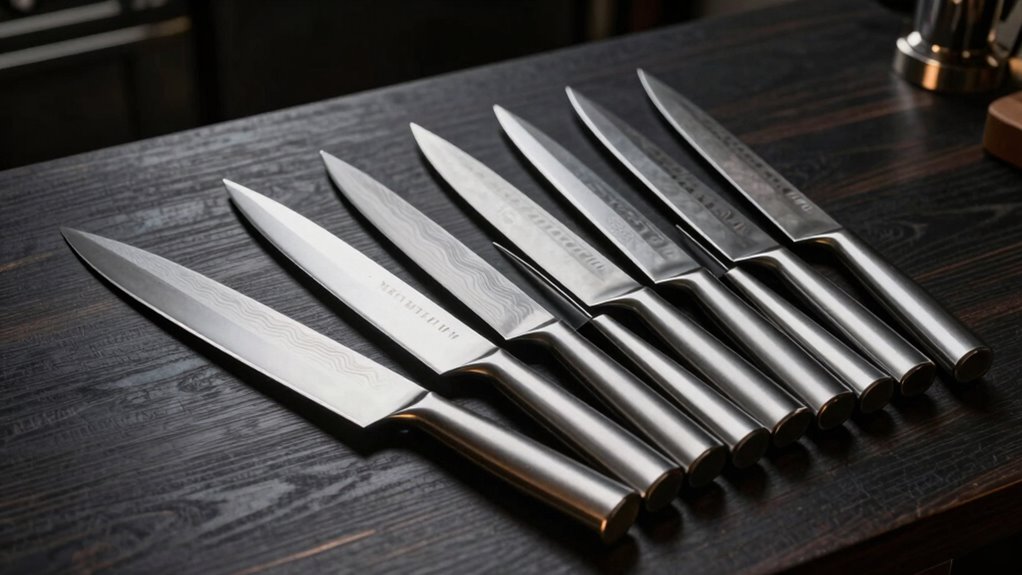

Japanese santoku knives combine a relatively compact blade with a broad profile for slicing, dicing, and chopping, but the right choice depends on how you prep and care for a knife. I rank the Shun Premier 7-Inch Santoku as the best overall pick for buyers seeking a refined, versatile option, while the HOSHANHO 7-Inch Japanese Santoku Chef Knife offers a more practical everyday alternative and the HOSHANHO 5-Inch Santoku suits smaller hands and tight workspaces. The main tradeoffs are blade length, edge geometry, steel maintenance, and how much you value premium finishing over straightforward utility. A decorative Damascus pattern alone does not tell you how a knife will cut or how much care it needs. Read on for the full comparison, buying advice, and recommendations by kitchen and skill level.

Get furniture and decor delivered free with Prime
- Fast, free delivery on millions of items
- Prime Video, Amazon Music and more included
- Member-only deals all year
Complete the kit


Key Takeaways
- The 7-inch blade is the most versatile size in this group: it gives most home cooks more reach for vegetables and proteins than the two 5-inch options, without taking up as much space as a longer chef’s knife.
- The Shun Premier is the strongest all-around choice: it leads the lineup for buyers who want a polished, Japanese-style santoku, while its premium positioning and more involved care expectations make it less suitable for rough handling.
- HOSHANHO’s two 7-inch listings serve as practical alternatives: their familiar length and utility-focused format suit routine prep, though buyers should compare the exact listing details rather than assume similarly named models are identical.
- VG10 and Damascus construction are not automatic performance guarantees: the Atumuryou and HexClad options appeal to buyers drawn to layered styling and harder-steel claims, but edge geometry, handle comfort, and sharpening needs matter more in daily use.
- The compact knives solve different problems than full-size santoku: the HOSHANHO 5-inch and imarku 5-inch are easier to control for small tasks, yet they are less efficient when chopping large vegetables or preparing several portions.
| HOSHANHO 5-Inch Japanese Santoku Chef Knife |  | Best Compact Santoku | Blade length: 5 inches | Blade material: 10Cr15CoMoV high-carbon stainless steel | Blade construction: Triple-layer laminated, forged | VIEW ON AMAZON | See Our Full Breakdown |
| imarku 7-Inch Santoku Knife |  | Best for Low-Fuss Cleanup | Blade length: 7 inches | Item length: 12 inches | Blade material: High-carbon stainless steel | VIEW ON AMAZON | See Our Full Breakdown |
| Shun Premier 7-Inch Santoku Knife |  | Best Premium Pick | Blade length: 7 inches | Blade material: VG-MAX steel core with 68 layers of Damascus cladding | Blade edge: Plain, 16-degree edge | VIEW ON AMAZON | See Our Full Breakdown |
| Atumuryou 7-Inch Damascus Santoku Knife with VG10 Steel Core |  | Best for Included Storage | Blade length: 7 inches | Blade material: VG10 steel core with 67-layer Damascus construction | Hardness: 62 HRC | VIEW ON AMAZON | See Our Full Breakdown |
| 7-Inch High-Carbon Stainless Steel Santoku Chef Knife |  | Best Straightforward Everyday Pick | Brand: DDF iohEF | Blade length: 7 inches | Blade material: 5Cr15MoV stainless steel | VIEW ON AMAZON | See Our Full Breakdown |
| HOSHANHO 7-Inch Japanese Santoku Chef Knife |  | Best for Food Release | Knife type: Santoku chef knife | Blade length: 7 inches | Blade material: 10Cr15CoMoV high-carbon stainless steel | VIEW ON AMAZON | See Our Full Breakdown |
| HOSHANHO 7-Inch Japanese Santoku Knife |  | Best for a Lightweight, Fine Edge | Blade length: 6.9 inches | Blade material: 10Cr15CoMoV high-carbon steel | Construction: Forged | VIEW ON AMAZON | See Our Full Breakdown |
| DiiHAUZZ 7-Inch Santoku Knife with Granton Edge |  | Best Set-Up for Safe Storage | Blade length: 7 inches | Blade material: 5Cr15MoV high-carbon stainless steel | Construction: Forged | VIEW ON AMAZON | See Our Full Breakdown |
| imarku 7-Inch Santoku Knife |  | Best Everyday Stainless Option | Blade length: 7 inches | Blade material: High-carbon stainless steel | Blade thickness: 2.5 mm | VIEW ON AMAZON | See Our Full Breakdown |
| HexClad 7-Inch Japanese Damascus Stainless Steel Santoku Knife |  | Best Premium Damascus Construction | Blade length: 6.7 inches | Total length: 12.2 inches | Handle length: 4.5 inches | VIEW ON AMAZON | See Our Full Breakdown |
| MITSUMOTO SAKARI 7-Inch Japanese Santoku Knife |  | Best for Traditional Handling | Blade length: 7 inches | Blade material: 3-layer 9Cr18MoV high-carbon steel | Blade edge: Plain | VIEW ON AMAZON | See Our Full Breakdown |
| imarku 5-Inch Santoku Knife with Pakkawood Handle |  | Best Compact Santoku | Model: P5 | Blade length: 5 inches | Blade thickness: 2.3 mm | VIEW ON AMAZON | See Our Full Breakdown |
| japanese santoku knife | Blade length | Blade material | Handle material | Construction |
|---|---|---|---|---|
| HOSHANHO 5-Inch Japanese Santo | 5 inches | 10Cr15CoMoV high-carbon stainless steel | African pakkawood | — |
| imarku 7-Inch Santoku Knife | 7 inches | High-carbon stainless steel | Stainless steel | Forged |
| Shun Premier 7-Inch Santoku Kn | 7 inches | VG-MAX steel core with 68 layers of Damascus cladding | Pakkawood | — |
| Atumuryou 7-Inch Damascus Sant | 7 inches | VG10 steel core with 67-layer Damascus construction | Stabilized wood and resin | Full tang |
| 7-Inch High-Carbon Stainless S | 7 inches | 5Cr15MoV stainless steel | Stainless steel | — |
| HOSHANHO 7-Inch Japanese Santo | 7 inches | 10Cr15CoMoV high-carbon stainless steel | African pakkawood | Triple-layer laminated, forged |
| HOSHANHO 7-Inch Japanese Santo | 6.9 inches | 10Cr15CoMoV high-carbon steel | — | Forged |
| DiiHAUZZ 7-Inch Santoku Knife | 7 inches | 5Cr15MoV high-carbon stainless steel | Pakkawood | Forged |
| imarku 7-Inch Santoku Knife | 7 inches | High-carbon stainless steel | Pakkawood | — |
| HexClad 7-Inch Japanese Damasc | 6.7 inches | 67-layer Japanese Damascus stainless steel | Pakkawood | Full tang |
| MITSUMOTO SAKARI 7-Inch Japane | 7 inches | 3-layer 9Cr18MoV high-carbon steel | Rosewood | Forged |
| imarku 5-Inch Santoku Knife wi | 5 inches | High-carbon stainless steel | Pakkawood | Forged |
More Details on Our Top Picks
HOSHANHO 5-Inch Japanese Santoku Chef Knife
For small prep jobs and tight workspaces, this 5-inch forged santoku is easier to maneuver than the 7-inch Shun Premier or imarku. Its 15-degree edge and triple-layer 10Cr15CoMoV steel construction point to precise slicing, while the grooved blade is designed to help food release instead of clinging during repeated cuts. The pakkawood handle also offers a different grip feel from the imarku’s all-steel handle. The tradeoff is reach: a short blade means more strokes for large vegetables, broad cuts of meat, or batch prep. At 9.6 ounces, it is not especially light for its size, either. I’d choose it as a nimble secondary knife, not as the only santoku in a busy kitchen.
Pros:- Compact blade offers control for small ingredients and close work
- Triple-layer forged high-carbon stainless steel construction
- 15-degree edge is suited to precise slicing
- Grooves are designed to reduce food sticking
Cons:- Short blade requires extra strokes on larger ingredients
- At 9.6 ounces, it may feel substantial for a compact knife
Best for: Cooks with compact kitchens or smaller hands who want a short blade for controlled vegetable and fruit prep.
Not ideal for: Batch cooks or buyers seeking one all-purpose santoku for large produce and long slicing tasks; the 5-inch blade limits reach.
- Blade length:5 inches
- Blade material:10Cr15CoMoV high-carbon stainless steel
- Blade construction:Triple-layer laminated, forged
- Blade hardness:62 HRC
- Blade angle:15 degrees
- Handle material:African pakkawood
- Weight:9.6 ounces
Our verdict“Choose this HOSHANHO when maneuverability matters more than the longer cutting reach of the Shun Premier or imarku 7-inch santokus.”
imarku 7-Inch Santoku Knife
This imarku pairs a full-length 7-inch blade with dishwasher-safe care, making it the practical pick for cooks who want less cleanup after everyday prep. Its hollow edge is intended to release sliced food, a useful feature when cutting vegetables in quick succession. Compared with the Shun Premier, it gives up the named VG-MAX core, Damascus cladding, and handcrafted Japanese origin in favor of a straightforward, all-steel design. The seamless handle has no rivets or gaps to trap residue, but steel can feel slippery when wet or oily, unlike the pakkawood handles on the HOSHANHO and Shun. Although dishwasher safe is listed, frequent machine cleaning may be less kind to the edge than careful hand washing. This is a convenience-first choice, not a premium finishing knife.
Pros:- 7-inch blade handles routine chopping and slicing
- Hollow scallops are designed to help food release
- Seamless stainless steel handle has no rivets or gaps
- Dishwasher-safe care is listed
Cons:- All-steel handle may feel slippery when wet or oily
- Dishwasher cleaning may be less suitable for preserving the edge
- Product data does not specify steel grade or hardness
Best for: Busy home cooks who want a standard-length santoku, a seamless handle, and the option of dishwasher cleanup.
Not ideal for: Cooks who need a secure-feeling grip with wet hands or want premium steel details and hand-care longevity.
- Blade length:7 inches
- Item length:12 inches
- Blade material:High-carbon stainless steel
- Blade edge:Hollow
- Construction:Forged
- Handle material:Stainless steel
- Care:Dishwasher safe
Our verdict“Pick the imarku over the Shun Premier when easy cleanup matters more than premium blade materials and a wood-composite grip.”
Shun Premier 7-Inch Santoku Knife
The Shun Premier is the premium choice here for cooks who value specified blade materials and Japanese craftsmanship over a convenience-led design. Its VG-MAX core, 68-layer Damascus cladding, and 16-degree edge are built around fine, controlled cutting; the hammered finish is intended to reduce drag and food sticking. Compared with the HOSHANHO 5-inch santoku, this gives you a full 7-inch working edge for broader prep. The imarku 7-inch is a more cleanup-friendly alternative, but its product details do not name a steel grade or hardness. Shun’s tradeoffs are a higher-care approach—hand washing is a sensible choice for preserving the edge—and a limited lifetime warranty whose details are not provided here. Free sharpening and honing support adds useful maintenance backing.
Pros:- VG-MAX steel core with 68-layer Damascus cladding
- 16-degree edge and hammered finish suit precise, low-drag cutting
- Contoured pakkawood handle is designed for left- and right-handed users
- Free sharpening and honing are supported
Cons:- Premium material details do not make it a low-maintenance dishwasher choice
- Limited lifetime warranty details are not specified
Best for: Serious home cooks who want a full-size Japanese santoku with specified premium steel, a refined edge, and sharpening support.
Not ideal for: Buyers prioritizing dishwasher convenience, a short maneuverable blade, or clearly stated warranty terms.
- Blade length:7 inches
- Blade material:VG-MAX steel core with 68 layers of Damascus cladding
- Blade edge:Plain, 16-degree edge
- Handle material:Pakkawood
- Finish:Hammered tsuchime
- Weight:212 g
- Origin:Handcrafted in Japan
- Warranty:Limited lifetime warranty
Our verdict“Choose the Shun Premier over the imarku for specified premium steel and sharpening support, provided you are comfortable with more careful upkeep.”
Atumuryou 7-Inch Damascus Santoku Knife with VG10 Steel Core
Atumuryou’s strongest distinction is its included leather sheath and care accessories, rather than a feature set that clearly beats the Shun Premier’s. Both use a 7-inch blade with layered Damascus construction, while this knife specifies a VG10 core, 62 HRC hardness, and a particularly acute 12-degree edge. Those details suit buyers drawn to a sharp, fine-cutting profile for slicing and dicing. The full-tang stabilized wood-and-resin handle is designed to provide a solid feel, though the listed weight of 0.5 kg is substantial beside the Shun’s 212 g. Unlike the imarku, this is not presented as dishwasher safe; care instructions are not specified, and the sheath needs separate storage. I’d favor it for a gift or protected storage setup, not for a light, low-maintenance daily knife.
Pros:- VG10 core with 67-layer Damascus construction
- 12-degree hand-sharpened edge and stated 62 HRC hardness
- Full-tang stabilized wood-and-resin handle
- Includes a leather sheath, wipe cloth, manual, and gift box
Cons:- Listed weight of 0.5 kg is heavy beside the Shun Premier
- Dishwasher-safe care instructions are not specified
- Leather sheath requires separate storage and handling
Best for: Gift buyers and home cooks who want a layered VG10 santoku supplied with a sheath and care accessories.
Not ideal for: Cooks seeking a lightweight knife, explicit dishwasher guidance, or a simpler storage routine.
- Blade length:7 inches
- Blade material:VG10 steel core with 67-layer Damascus construction
- Hardness:62 HRC
- Edge angle:12 degrees
- Handle material:Stabilized wood and resin
- Construction:Full tang
- Weight:0.5 kg
- Included components:Leather sheath, manual, wipe cloth, certificate of authenticity
Our verdict“Choose Atumuryou over the Shun Premier if the VG10 details and included sheath matter more to you than lower listed weight and established sharpening support.”
7-Inch High-Carbon Stainless Steel Santoku Chef Knife
This DDF iohEF santoku favors a simple forged, double-edged blade over the layered construction of the Shun Premier or Atumuryou. Its 7-inch length and 15-degree-per-side edge suit routine chopping, slicing, and dicing, while the double edge works for left- and right-handed cooks. The stainless steel handle creates an all-metal feel similar to the imarku, but this listing specifies a 5Cr15MoV steel and hardness up to 58 HRC. That is a more basic specification set than the VG-MAX Shun or VG10 Atumuryou, so buyers seeking a premium steel story should look elsewhere. The listing says dishwasher safe in the title, yet care details are limited; I’d treat hand washing as the safer routine. It is a practical, no-frills option, with less finish and maintenance support spelled out than the Shun.
Pros:- 7-inch blade works for common chopping and slicing tasks
- Double-edged design accommodates left- and right-handed users
- Forged stainless steel construction
- 15-degree-per-side edge supports controlled cutting
Cons:- Steel and hardness specifications are more basic than those of the Shun Premier or Atumuryou
- Dishwasher safety is stated in the title but not detailed in the product information
- No specific warranty details are provided
Best for: Households wanting a conventional 7-inch double-edged santoku for everyday mixed prep without layered Damascus construction.
Not ideal for: Buyers seeking a premium Japanese steel core, detailed care guidance, or a wood-composite handle.
- Brand:DDF iohEF
- Blade length:7 inches
- Blade material:5Cr15MoV stainless steel
- Carbon content:0.45%–0.55%
- Chromium content:14%–15%
- Hardness:Up to 58 HRC
- Edge:Plain, double-edged; 15 degrees per side
- Handle material:Stainless steel
- Weight:8 ounces
Our verdict“Choose this DDF iohEF over the Shun Premier when you want a straightforward forged santoku rather than premium layered steel and added sharpening support.”
HOSHANHO 7-Inch Japanese Santoku Chef Knife
The double-sided grooves give this HOSHANHO a clear edge for cooks who find sliced vegetables clinging to a flat blade. Its triple-layer forged steel and 15-degree edge pair a relatively fine cut with a construction suited to regular kitchen prep. Compared with the similarly sized imarku 7-Inch Santoku Knife, which also has a hollow edge, this model specifies its steel as 10Cr15CoMoV and its hardness as 62 HRC; the imarku instead lists a broader 15–18-degree-per-side angle.
The tradeoff is its 350 g weight, which may feel substantial during long sessions, especially beside the lighter HOSHANHO 7-Inch Japanese Santoku Knife at 210 g. The pakkawood handle adds a comfortable-looking grip, but the supplied details omit care guidance, so buyers must plan for attentive hand washing and drying.
Pros:- Double-sided grooves are designed to reduce food sticking during slicing.
- Triple-layer forged 10Cr15CoMoV stainless steel construction.
- 15-degree edge supports precise everyday cutting.
- African pakkawood handle is designed for ergonomic control.
Cons:- At 350 g, it is heavier than the other HOSHANHO 7-inch model listed here.
- The supplied product details do not include care or maintenance instructions.
Best for: Home cooks who regularly slice moist vegetables and want a grooved, forged 7-inch blade for general prep.
Not ideal for: Cooks who prefer a light knife or want clear manufacturer care instructions before buying.
- Knife type:Santoku chef knife
- Blade length:7 inches
- Blade material:10Cr15CoMoV high-carbon stainless steel
- Construction:Triple-layer laminated, forged
- Hardness:62 HRC
- Edge angle:15 degrees
- Handle material:African pakkawood
- Weight:350 g
Our verdict“Choose this HOSHANHO if food release and a substantial forged feel matter more to you than a lightweight knife.”
HOSHANHO 7-Inch Japanese Santoku Knife
At 210 g, this HOSHANHO is the lightest of the knives in this batch with a stated weight, making it a natural fit for cooks who want less heft during repeated chopping. Its 12-degree edge is finer than the 15-degree edge on the other HOSHANHO 7-Inch Japanese Santoku Chef Knife here, while the forged 10Cr15CoMoV blade is rated at 62 HRC. That combination favors controlled slicing and dicing rather than a weighty, force-driven feel.
The octagonal rosewood handle distinguishes it from the African pakkawood handle on its HOSHANHO counterpart and is designed to support grip and balance. The tradeoff is maintenance: its high-carbon steel calls for attentive care to help prevent corrosion, and no care or dishwasher guidance is supplied. Buyers seeking a protective sheath should look instead at the DiiHAUZZ 7-Inch Santoku Knife, which includes one.
Pros:- Light 210 g listed weight favors nimble handling.
- 12-degree edge is the narrowest stated angle among the products in this batch.
- Forged 10Cr15CoMoV steel is rated at 62 HRC.
- Octagonal rosewood handle is designed for secure grip and balance.
Cons:- High-carbon steel requires attentive drying and care to help limit corrosion.
- No care or dishwasher instructions are provided in the supplied details.
Best for: Cooks who do frequent slicing and dicing and prefer a lightweight knife with a narrow stated edge angle.
Not ideal for: Buyers who want low-maintenance care, a supplied sheath, or a heavier knife with more heft.
- Blade length:6.9 inches
- Blade material:10Cr15CoMoV high-carbon steel
- Construction:Forged
- Hardness:62 HRC
- Edge angle:12 degrees
- Handle:Octagonal rosewood
- Item weight:210 g
- Item length:12 inches
Our verdict“Pick this HOSHANHO if you want a light, fine-edged Santoku and are willing to keep up with steel care.”
DiiHAUZZ 7-Inch Santoku Knife with Granton Edge
The DiiHAUZZ stands out for combining a 12-degree edge with a protective sheath, so it arrives with a storage option rather than leaving blade protection to the buyer. Its forged 5Cr15MoV high-carbon stainless steel is rated at 59±1 HRC, below the 62 HRC specified for both HOSHANHO 7-inch knives. That makes the listed hardness less demanding on paper, though the product details do not establish how often sharpening will be needed.
Compared with the imarku 7-Inch Santoku Knife, which also uses a hollow edge to address food sticking, DiiHAUZZ adds a sheath and states a narrower edge angle. The tradeoff is that its steel grade and hardness are more modest than the HOSHANHO options, and the supplied details give no care instructions. Its included box and lifetime warranty add practical appeal, but buyers should verify warranty terms with the seller.
Pros:- Includes a protective sheath for blade storage.
- Forged 5Cr15MoV high-carbon stainless steel blade.
- Hand-sharpened 12-degree edge is suited to fine slicing.
- Pakkawood handle is designed for a secure grip.
Cons:- Listed 59±1 HRC hardness is below the 62 HRC specified for the HOSHANHO alternatives.
- The supplied product details do not include care or maintenance instructions.
Best for: Home cooks who want a forged 7-inch Santoku with a supplied sheath for drawer or cupboard storage.
Not ideal for: Buyers prioritizing the harder 62 HRC steel specified on the HOSHANHO models or requiring detailed care guidance.
- Blade length:7 inches
- Blade material:5Cr15MoV high-carbon stainless steel
- Construction:Forged
- Hardness:59±1 HRC
- Edge bevel:12 degrees
- Handle material:Pakkawood
- Item weight:7.36 ounces
- Included components:Knife and protective sheath
- Warranty:Lifetime warranty
Our verdict“Choose the DiiHAUZZ if a supplied sheath and narrow edge angle matter more than matching the harder steel specs of the HOSHANHO models.”
imarku 7-Inch Santoku Knife
This imarku is the straightforward everyday pick for cooks who want a hollow-edge blade and a familiar 7-inch Santoku format without choosing a more specifically detailed steel package. Its high-carbon stainless steel is described as resisting rust, corrosion, and discoloration, while the hollow edge is intended to reduce food sticking. Compared with the DiiHAUZZ 7-Inch Santoku Knife, it does not include a sheath, but its stated 2.5 mm blade thickness and 15–18-degree-per-side angle give buyers a more defined sense of its blade geometry.
The tradeoff is less specificity: no steel grade or hardness is supplied, and the angle range is broader than the 12-degree edges listed for DiiHAUZZ and the second HOSHANHO. Pakkawood and a comfortable grip suit routine prep, but the lack of care and sharpening instructions leaves upkeep to the owner. This makes more sense as a practical generalist than as a choice for shoppers prioritizing fine edge specifications.
Pros:- Hollow edge is designed to reduce food sticking.
- High-carbon stainless steel is described as resisting rust, corrosion, and discoloration.
- 7-inch blade suits a broad range of chopping, slicing, and dicing tasks.
- Pakkawood handle is described as ergonomic and comfortable.
Cons:- The supplied details do not specify the steel grade or blade hardness.
- No care or sharpening instructions are provided.
- Packaging may vary during a brand upgrade.
Best for: Everyday home cooks who want a 7-inch stainless Santoku with a hollow edge for routine vegetable, meat, and fish prep.
Not ideal for: Buyers comparing knives by specified steel grade, hardness, or a narrow edge angle, or those who need a supplied blade sheath.
- Blade length:7 inches
- Blade material:High-carbon stainless steel
- Blade thickness:2.5 mm
- Edge angle:15–18 degrees per side
- Handle material:Pakkawood
- Item weight:6.88 ounces
- Item length:12 inches
- Model number:I-KSK0064DB
Our verdict“Pick the imarku for a general-purpose stainless Santoku with a hollow edge, but choose a HOSHANHO if stated steel and hardness specs are your priority.”
HexClad 7-Inch Japanese Damascus Stainless Steel Santoku Knife
HexClad is the most construction-focused choice here: its 67-layer Japanese Damascus stainless steel, full-tang build, and 12-degree edge set it apart from the more utilitarian imarku and DiiHAUZZ options. The stated Honbazuke sharpening method speaks to a refined edge, while the 6.7-inch blade keeps the cutting profile slightly shorter than the nominal 7-inch blades elsewhere in this batch. For buyers drawn to layered construction and a fine edge, those details make it the premium-leaning alternative.
That specification comes with a real upkeep commitment. HexClad is hand wash only, and frequent honing is recommended; the imarku’s stainless description may better suit someone seeking less explicit maintenance. The lifetime warranty applies to manufacturer’s defects, not a promise of carefree use. Its Pakkawood handle offers a familiar grip, but cooks unwilling to hand wash and hone regularly should choose a simpler-maintenance option.
Pros:- 67-layer Japanese Damascus stainless steel blade.
- 12-degree edge sharpened using the three-step Honbazuke method.
- Full-tang construction and Pakkawood handle.
- Lifetime warranty against manufacturer’s defects.
Cons:- Hand washing is required; it is not dishwasher safe.
- Frequent honing is recommended to maintain the edge.
Best for: Knife enthusiasts seeking a full-tang Damascus Santoku with a fine edge and who are comfortable with regular honing and hand washing.
Not ideal for: Busy cooks who need dishwasher convenience or do not want to maintain an edge through frequent honing.
- Blade length:6.7 inches
- Total length:12.2 inches
- Handle length:4.5 inches
- Blade material:67-layer Japanese Damascus stainless steel
- Construction:Full tang
- Edge angle:12 degrees
- Handle material:Pakkawood
- Care:Hand wash only; frequent honing recommended
- Warranty:Lifetime warranty against manufacturer’s defects
Our verdict“Choose HexClad for its layered Damascus construction and fine edge if you accept hand washing and frequent honing as part of ownership.”
MITSUMOTO SAKARI 7-Inch Japanese Santoku Knife
The MITSUMOTO SAKARI pairs a 7-inch forged blade with an octagonal rosewood handle, making it a strong choice for cooks who want a full-size santoku with a more traditional grip. Its wide blade suits the classic santoku rhythm of slicing, dicing, and mincing, and can also help move chopped ingredients from board to pan. Compared with the compact imarku 5-Inch Santoku, it offers more room for larger produce and longer cuts, though it needs more counter and drawer space. The hammered Tsuchime surface may help food release, but it cannot prevent sticking with every ingredient. Its stated use for boneless meat and fish also makes it a less suitable choice for cooks who expect to cut through bones. The included sandalwood box supports storage, but does not replace careful knife care.
Pros:- 7-inch blade handles a wider range of everyday prep than a compact santoku
- Wide blade can help gather and transfer chopped ingredients
- Forged 9Cr18MoV core with layered steel cladding
- Octagonal rosewood handle and included sandalwood storage box
Cons:- The 7-inch blade may feel oversized for detailed work or limited counter space
- The hammered surface may not stop some foods from sticking
- Specified for boneless meat and fish rather than bone-cutting tasks
Best for: Home cooks who want a full-size santoku, prefer an octagonal rosewood handle, and mainly prep vegetables, boneless meat, and fish.
Not ideal for: Cooks who need a compact knife for small workspaces or regularly cut through bones and other hard materials.
- Blade length:7 inches
- Blade material:3-layer 9Cr18MoV high-carbon steel
- Blade edge:Plain
- Construction:Forged
- Handle material:Rosewood
- Handle shape:Octagonal
- Treatment:Deep-cryo treated
- Item weight:0.29 kg
- Included:Sandalwood storage box
Our verdict“Choose this MITSUMOTO SAKARI if you want a full-size santoku with traditional-style handling; pick the imarku 5-inch model for tighter spaces and finer work.”
imarku 5-Inch Santoku Knife with Pakkawood Handle
The imarku P5 is a compact 5-inch santoku for cooks who value control over cutting capacity. Its shorter blade can feel more manageable when slicing small produce or doing detailed prep, while the hand-polished 15–18° edge is designed for precise everyday cuts. That size is the main distinction from the MITSUMOTO SAKARI 7-Inch: the imarku is easier to handle in tight spaces, but offers less blade length for large vegetables or repeated batch prep. Its anti-stick surface may ease food release, though the product data does not specify a hammered or granton pattern. The ergonomic Pakkawood handle is intended to support a comfortable grip, but this is a single-knife package with no stated storage accessory. Maintenance guidance is also absent, so buyers should be prepared to seek care instructions separately.
Pros:- Short blade offers control for detailed cutting and small ingredients
- Hand-polished 15–18° edge is designed for precise slicing
- Anti-stick surface may help food release during prep
- Light 3.2-ounce build and ergonomic Pakkawood handle
Cons:- 5-inch blade can be limiting for large produce and batch preparation
- No care or maintenance instructions are provided
- Includes only the knife, with no stated storage box or sheath
Best for: Apartment cooks and detail-focused home preppers who want a small santoku for vegetables, fruit, and other everyday tasks.
Not ideal for: Cooks who often prep large ingredients or batches and want the reach and capacity of a 7-inch blade.
- Model:P5
- Blade length:5 inches
- Blade thickness:2.3 mm
- Blade material:High-carbon stainless steel
- Blade edge:Plain
- Construction:Forged
- Handle material:Pakkawood
- Item weight:3.2 ounces
- Included components:1 santoku knife
Our verdict“Choose the imarku P5 for compact, controlled prep in a small kitchen; choose the MITSUMOTO SAKARI 7-inch model when you need greater cutting capacity.”

How We Picked
I compared the 12 listed knives through the factors that most affect a santoku’s daily usefulness: blade length and profile, steel and edge claims, grip and balance cues, construction, maintenance demands, and versatility for home prep. I gave more weight to clear functional advantages than to appearance alone; a Damascus pattern, for example, does not establish cutting performance by itself. I also treated duplicate or similarly named listings carefully, since a repeated name does not prove that two listings have the same specification.
The ranking favors knives that appear suited to a broad range of everyday tasks and offer a clear reason to choose them. The Shun Premier leads as the most rounded premium pick; practical 7-inch options follow for buyers prioritizing routine utility, while compact blades and more style- or feature-led models rank for narrower needs. Since the supplied product names do not include full specifications for every model, I avoid claiming unprovided steel grades, manufacturing origins, or performance test results. Buyers should verify current listing details, especially for products with generic names or duplicate entries.
| japanese santoku knife | Handle material | Construction |
|---|---|---|
| HOSHANHO 5-Inch Japanese Santo | African pakkawood | — |
| imarku 7-Inch Santoku Knife | Stainless steel | Forged |
| Shun Premier 7-Inch Santoku Kn | Pakkawood | — |
| Atumuryou 7-Inch Damascus Sant | Stabilized wood and resin | Full tang |
| 7-Inch High-Carbon Stainless S | Stainless steel | — |
| HOSHANHO 7-Inch Japanese Santo | African pakkawood | Triple-layer laminated, forged |
| HOSHANHO 7-Inch Japanese Santo | — | Forged |
| DiiHAUZZ 7-Inch Santoku Knife | Pakkawood | Forged |
| imarku 7-Inch Santoku Knife | Pakkawood | — |
| HexClad 7-Inch Japanese Damasc | Pakkawood | Full tang |
| MITSUMOTO SAKARI 7-Inch Japane | Rosewood | Forged |
| imarku 5-Inch Santoku Knife wi | Pakkawood | Forged |
Factors to Consider When Choosing Japanese Santoku Knives
Before choosing among these Japanese santoku knives, decide what work the knife will do most often and what care you are willing to give it. Those choices usually matter more than decorative finishes or broad claims about sharpness.
Choose Blade Length for Your Board and Typical Prep
A 7-inch santoku is the most flexible starting point for cooks who regularly chop vegetables, portion boneless proteins, and prepare more than one serving. A 5-inch blade can feel less intimidating and easier to guide for small hands, narrow boards, or detail work, but it may require extra strokes on large produce. Match the blade to your usable cutting-board space, not just your preferred knife length. A crowded board can make even a capable full-size knife awkward to control. Conversely, buying a compact knife as your only prep tool may slow down batch cooking. In this lineup, the two 5-inch options make the most sense as compact-focused choices rather than direct substitutes for every 7-inch model.
Treat Steel Claims as a Maintenance Signal
Steel affects edge retention, sharpening feel, and how forgiving a blade is when care slips, but a steel label alone cannot predict the whole experience. Harder steels may hold an edge longer yet can be less tolerant of twisting, prying, or careless contact with hard surfaces. Stainless construction can reduce corrosion worries, though it does not make a knife dishwasher-safe or maintenance-free. Carbon-rich and layered-steel descriptions call for checking the exact product specifications and care instructions before buying. A common mistake is paying extra for a named steel while ignoring whether local sharpening services can handle it. Choose the steel you can maintain consistently, rather than the one with the most impressive-sounding label.
Look Beyond Damascus Patterns and Granton Hollows
Damascus layering is primarily a construction and appearance cue; it does not by itself show how thin, sharp, or well-ground the cutting edge is. A Granton-style edge may reduce sticking for some ingredients, but the hollows do not replace sound cutting technique or make every food release cleanly. When comparing the Atumuryou and HexClad Damascus options with simpler-looking knives, check for specific information about the core steel, grind, and sharpening angle. Also consider whether the finish is something you value enough to maintain carefully. Do not treat a patterned blade or hollowed face as proof of superior cutting. Clear specifications and a comfortable handle are more useful signals for everyday buyers.
Prioritize Grip, Balance, and Handle Fit
A santoku’s broad blade can feel stable during chopping, but the handle determines whether that stability feels controlled in your hand. Handle shape, material, and the balance point all affect comfort, especially during repeated prep. Pakkawood and other composite-style handles may appeal to buyers who want a wood-like look with practical durability, but material names alone do not establish grip comfort. If possible, compare handle dimensions and product photographs against your hand size and preferred pinch grip. New cooks often focus on blade sharpness while overlooking a handle that feels cramped or slippery. If control is your priority, favor a size and grip you can manage confidently over an elaborate finish.
Know What Santoku Geometry Can and Cannot Do
A santoku is designed as a versatile kitchen knife, particularly for slicing, dicing, and chopping, but it is not a specialist for every job. Its relatively flatter cutting profile may suit a push-cutting motion better than cooks who rely on a pronounced rocking action. The broad blade can help move chopped ingredients, though it is not a substitute for a dedicated cleaver when breaking through bones. Avoid using a santoku to pry, twist, or cut frozen food, since those actions can damage a fine edge. Buyers who already own a chef’s knife should ask whether they want a more compact alternative or a complementary blade for controlled prep. That answer can prevent buying a second knife that performs nearly the same role.
Pay More for Fit and Finish, Not Decoration Alone
A premium knife can make sense when its materials, balance, finishing, and support match your needs and care habits. It makes less sense when the main attraction is a decorative pattern or a brand name without useful specification details. Compare what you gain: more comfortable handling, clearer steel information, or a finish you value, rather than assuming a higher tier will transform basic chopping. For a first santoku, a straightforward 7-inch model may be a better learning tool than a blade that feels costly to maintain. If the knife will see frequent use and careful upkeep, premium finishing may be rewarding. If it will be shared, handled roughly, or washed with mixed kitchen tools, prioritize resilience and easy care instead.
Frequently Asked Questions
Should I choose a 5-inch or 7-inch santoku as my only knife?
For most cooks choosing one santoku, a 7-inch blade is the more versatile choice because it handles larger vegetables and multi-serving prep with fewer strokes. A 5-inch model is easier to maneuver in a small workspace and may feel more manageable for smaller hands or precise tasks. The tradeoff is capacity: larger ingredients can crowd the shorter blade. Consider the size of your cutting board and the foods you prepare most often. In this roundup, the HOSHANHO and imarku 5-inch options fit compact needs, while the 7-inch group better suits all-purpose use.
Is a Damascus santoku a better cutter than a plain-finish model?
Not necessarily. Damascus describes a layered appearance or construction, but cutting feel depends more on the core steel, blade grind, edge geometry, and sharpening quality. A simpler-looking knife can cut very well if its edge is well made and maintained. Compare the exact specifications for the Atumuryou and HexClad models rather than choosing from the pattern alone. If the listing does not clearly explain the core steel or care needs, treat the visual finish as a style preference, not a performance guarantee.
Do I need a VG10 santoku if I am new to Japanese knives?
No; a steel name does not make a knife automatically suitable for a beginner. A newer cook may benefit more from a comfortable grip, manageable blade length, and clear care instructions than from a particular steel designation. Harder steels can retain an edge well but may need more careful use and appropriate sharpening. The Atumuryou listing names a VG10 core, so check its maintenance guidance and decide whether that care fits your routine. If you want a low-fuss first knife, favor straightforward handling and avoid using any santoku on bones, frozen food, or hard surfaces.
Can I use a santoku instead of my chef’s knife?
For many home tasks, yes: a santoku can slice, dice, and chop vegetables and boneless proteins effectively. Its profile may feel especially comfortable for cooks who use a push-cutting motion. It may feel less natural for someone who relies on rocking a curved chef’s knife, and it is not a substitute for a cleaver or boning knife. If you already own a chef’s knife, choose a santoku only if its length or handling offers a real benefit for your routine. A 7-inch option is the more direct all-purpose alternative in this roundup.
What should I verify before buying one of the similarly named or generic listings?
Check the exact blade length, steel description, handle material, included accessories, and care instructions on the current product listing. This matters especially for the repeated imarku 7-inch name and the two similarly named HOSHANHO 7-inch knives, since the names alone do not confirm identical specifications. A generic title such as “7-Inch High-Carbon Stainless Steel Santoku Chef Knife” may leave important details unclear. Confirm whether the listed measurements refer to blade length and look for sharpening guidance. If key facts are missing, avoid assuming the knife matches a better-documented model.
Conclusion
For the broadest mix of everyday versatility and refined finishing, I recommend the Shun Premier 7-Inch Santoku as the best overall pick, provided you are comfortable with careful knife maintenance. The HOSHANHO 7-Inch Japanese Santoku Chef Knife is my practical value-oriented choice for routine prep, while the imarku 7-Inch Santoku is another straightforward full-size option to compare after verifying its listing details. Beginners should prioritize a manageable 7-inch blade, clear care guidance, and a grip that feels secure over steel prestige; cooks with smaller hands or limited board space can start with the HOSHANHO 5-Inch or imarku 5-Inch. For a premium, pattern-forward option, compare the Atumuryou VG10 Damascus and HexClad Damascus on documented specifications and upkeep, not appearance alone. If you want a hollowed edge, the DiiHAUZZ Granton Edge has a more specific feature-led role. Match blade length, handling, and maintenance to your kitchen, and the choice becomes clearer.
Fall Picks
fall essentials
As an affiliate, we earn on qualifying purchases.