For everyday outdoor weather checks, I’d start with the Newentor Wireless Indoor/Outdoor Thermometer and Hygrometer with 4-Inch Display: its larger screen and humidity readings make at-a-glance checks easier. The AcuRite Digital Indoor/Outdoor Thermometer is a simpler choice if daily high and low records matter more, while the Taylor Aluminum Wall Thermometer suits readers who want a glanceable, battery-free display. The main tradeoff is between easy-to-read remote readings and the simplicity of a thermometer mounted outside. Wireless models add convenience and sometimes humidity data, but require batteries, sensor placement, and a clear signal path. Read on for how all nine options differ and which one fits your weather-check routine.

Get furniture and decor delivered free with Prime
- Fast, free delivery on millions of items
- Prime Video, Amazon Music and more included
- Member-only deals all year
Complete the kit


Key Takeaways
- Display size changes the experience: the Newentor model with a 4-inch display is the standout for readers who want indoor readings they can scan from across a room.
- High-low tracking is a distinct advantage: the AcuRite 00424CA records daily extremes, which is more useful for checking overnight lows than a basic current-temperature reading.
- Wireless models trade simplicity for convenience: they let you check outside conditions indoors, but add a remote sensor, batteries, and placement considerations.
- Humidity is useful when it answers a real question: UNNI and several weather-station-style options add indoor and outdoor humidity readings, while a basic thermometer keeps the display focused.
- Analog Taylor models fill a different role: the aluminum wall thermometer and Taylor 5159 offer direct outdoor readings without a receiver, but cannot provide remote indoor checks or stored records.
| Taylor Indoor/Outdoor Aluminum Wall Thermometer, White |  | Best Simple Analog Pick | Type: Analog wall thermometer | Material: Aluminum | Temperature range: -60°F to 120°F / -50°C to 50°C | VIEW ON AMAZON | See Our Full Breakdown |
| Indoor Outdoor Thermometer Wireless Weather Station (White) with Digital Display and Remote Sensor |  | Best for Alerts and Readability | Display: Large color LCD with adjustable backlight | Wireless range: Up to 330 feet | Temperature accuracy: ±0.5°F | VIEW ON AMAZON | See Our Full Breakdown |
| AcuRite Digital Indoor/Outdoor Thermometer with Daily High and Low Records, White (00424CA) |  | Best for Daily Highs and Lows | Model: 00424CA | Display: LCD with indoor and outdoor readings | Wireless range: Up to 165 feet (50 meters) | VIEW ON AMAZON | See Our Full Breakdown |
| TempPro TempAir Wireless Indoor and Outdoor Thermometer with Sensor |  | Best for Multiple Sensor Locations | Wireless range: Up to 500 ft (150 m) | Temperature range: -58°F to 158°F (-50°C to 70°C) | Temperature accuracy: ±2°F | VIEW ON AMAZON | See Our Full Breakdown |
| UNNI Wireless Indoor and Outdoor Thermometer and Hygrometer with Remote Sensor |  | Best for Weather Context | Model: UN0581-MET01 | Indoor temperature range: +14.2°F to +122°F | Outdoor temperature range: -58°F to +158°F | VIEW ON AMAZON | See Our Full Breakdown |
| Newentor Wireless Indoor/Outdoor Thermometer and Hygrometer with 4-Inch Display |  | Best for Multi-Location Humidity Checks | Model: Q8 | Display: 4-inch LCD | Measurements: Temperature and humidity | VIEW ON AMAZON | See Our Full Breakdown |
| Indoor Outdoor Thermometer Hygrometer Wireless Weather Station with Remote Sensor |  | Best for Detailed Weather Readings | Indoor temperature range: +14.2 °F to +122 °F | Outdoor temperature range: -58 °F to +158 °F | Humidity range: 1% to 99% indoors and outdoors | VIEW ON AMAZON | See Our Full Breakdown |
| Taylor 5159 5.25-Inch Outdoor Thermometer |  | Best Simple Analog Pick | Model: 5159 | Display: Analog | Dial diameter: 5.25 inches | VIEW ON AMAZON | See Our Full Breakdown |
| Newentor Weather Station Wireless Indoor Outdoor Thermometer, Black, 1 Sensor |  | Best for an All-in-One Home Display | Display: Color LCD | Included sensor: 1 remote sensor | Remote sensor capacity: Up to 3 sensors | VIEW ON AMAZON | See Our Full Breakdown |
| outdoor thermometers for weather check | Display | Wireless range |
|---|---|---|
| Taylor Indoor/Outdoor Aluminum | Large numbers in Fahrenheit and Celsius | — |
| Indoor Outdoor Thermometer Wir | Large color LCD with adjustable backlight | Up to 330 feet |
| AcuRite Digital Indoor/Outdoor | LCD with indoor and outdoor readings | Up to 165 feet (50 meters) |
| TempPro TempAir Wireless Indoo | — | Up to 500 ft (150 m) |
| UNNI Wireless Indoor and Outdo | — | — |
| Newentor Wireless Indoor/Outdo | 4-inch LCD | Up to 330 feet |
| Indoor Outdoor Thermometer Hyg | — | 330 feet |
| Taylor 5159 5.25-Inch Outdoor | Analog | — |
| Newentor Weather Station Wirel | Color LCD | — |
More Details on Our Top Picks
Taylor Indoor/Outdoor Aluminum Wall Thermometer, White
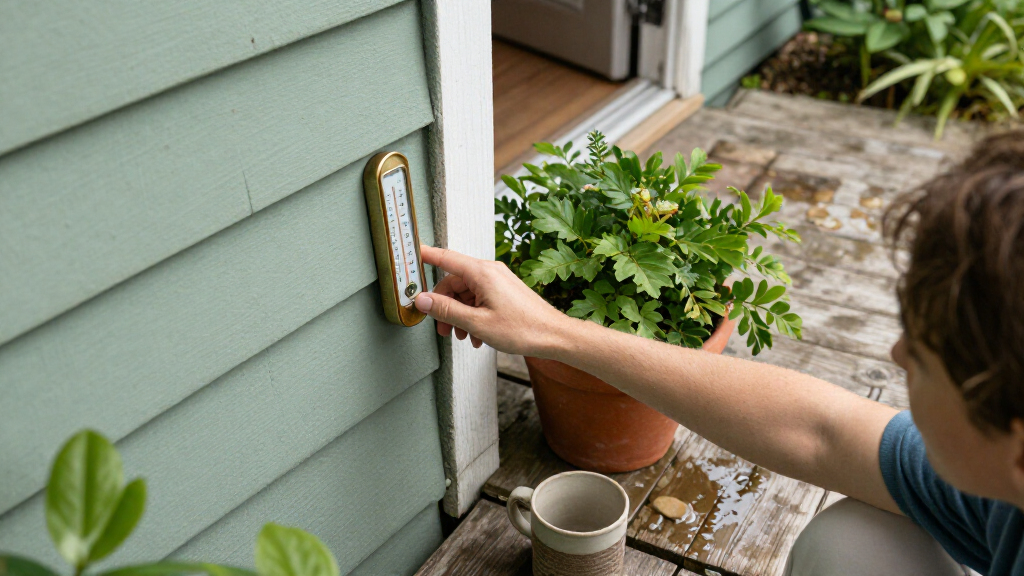
The Taylor Aluminum Wall Thermometer suits weather checks when I want a quick outdoor reading without batteries, a remote sensor, or extra data. Its large Fahrenheit and Celsius markings are straightforward to scan, while the rust-proof aluminum body is suited to an exposed wall. Compared with the AcuRite Digital Indoor/Outdoor Thermometer, it gives up high-and-low records and remote indoor viewing, but it also avoids battery changes and wireless placement limits. The tradeoff is that readings are only resolved to 1°F, and the fixed wall-mount design offers less placement flexibility than digital units that can sit on a table. I’d choose it for a simple, always-visible temperature check, not for tracking humidity or daily swings.
Pros:- Rust-proof aluminum body is suitable for outdoor mounting
- Shows temperatures in both Fahrenheit and Celsius
- Large markings are easy to read at a glance
- Needs no batteries or power connection
Cons:- Wall mounting is required, limiting placement options
- 1°F resolution is less detailed than the digital wireless options
- Provides no humidity readings, trends, or high-low records
Best for: Buyers who want a battery-free outdoor temperature reading mounted beside a door, patio, or garden entrance
Not ideal for: People who need indoor readings, humidity data, recorded highs and lows, or a display they can move around
- Type:Analog wall thermometer
- Material:Aluminum
- Temperature range:-60°F to 120°F / -50°C to 50°C
- Scale resolution:1°F
- Display:Large numbers in Fahrenheit and Celsius
- Dimensions:2.25 in wide × 8.875 in long
- Mounting:Pre-drilled holes
- Power:None
Our verdict“Choose the Taylor if you want a simple, battery-free wall reading; choose a wireless model if you need indoor access or weather records.”
Indoor Outdoor Thermometer Wireless Weather Station (White) with Digital Display and Remote Sensor
This wireless weather station is a better fit than the Taylor Aluminum Wall Thermometer for someone who wants outdoor conditions visible from indoors. Its large color LCD with adjustable backlight makes readings easier to check in dim rooms, and customizable temperature alerts add a practical heads-up when conditions cross a chosen threshold. The remote sensor’s stated 330-foot range gives more placement latitude than the AcuRite Digital Indoor/Outdoor Thermometer’s 165-foot range, though actual coverage depends on the setting. It also reports humidity, which the Taylor cannot. The main limitation is a single included sensor, so monitoring several outdoor locations means buying more hardware if supported. Batteries are not included, adding a setup step; USB power is available for the display.
Pros:- Large color LCD has an adjustable backlight
- Remote sensor has a stated range of up to 330 feet
- Displays temperature and humidity with stated accuracy figures
- Customizable temperature alerts provide at-a-glance warnings
Cons:- Only one remote sensor is included
- Batteries are not included
- Requires an electronic display and sensor rather than offering a power-free reading
Best for: Households that want a bright indoor display, humidity readings, and temperature alerts from one outdoor sensor
Not ideal for: Buyers who want several locations monitored out of the box or prefer a battery-free analog instrument
- Display:Large color LCD with adjustable backlight
- Wireless range:Up to 330 feet
- Temperature accuracy:±0.5°F
- Humidity accuracy:±2%
- Sensor temperature range:-40°F to 158°F
- Humidity range:1% to 99%
- Alerts:Customizable temperature alerts
- Power:Batteries not included; USB cable included
Our verdict“Pick this station for readable indoor monitoring and alerts, but choose the Taylor for a simpler outdoor-only check without electronics.”
AcuRite Digital Indoor/Outdoor Thermometer with Daily High and Low Records, White (00424CA)
The AcuRite 00424CA is the most useful choice here when a single current reading does not tell the whole weather story. It tracks the previous 24 hours’ high and low temperatures and adds trend arrows, helping me see whether outdoor conditions have shifted since the last check. Its sensor updates every 30 seconds and reaches up to 165 feet, shorter than the 330-foot range listed for the wireless weather station in this lineup. In exchange, AcuRite gives weather checks a clear focus on recent temperature changes without the UNNI model’s added heat index, dew point, and mold index. The display can sit on a table or hang on a wall. Four AA batteries are required across the display and sensor, and they are not included.
Pros:- Records the previous 24 hours’ high and low temperatures
- Trend arrows help show the direction of temperature changes
- Sensor updates every 30 seconds
- Display supports tabletop or wall placement
Cons:- Wireless range is up to 165 feet, shorter than the 330-foot options here
- Four AA batteries are required and not included
- Outdoor sensor needs to be hung or mounted on a branch or post
Best for: Gardeners and homeowners who want to track outdoor daily temperature swings from a tabletop or wall display
Not ideal for: Buyers who need humidity, a longer wireless range, or included batteries for immediate setup
- Model:00424CA
- Display:LCD with indoor and outdoor readings
- Wireless range:Up to 165 feet (50 meters)
- Update interval:30 seconds
- Recorded temperatures:Daily high and low for the past 24 hours
- Temperature range:Up to 158°F
- Power:Four AA batteries required, not included
- Placement:Display stands on a tabletop or hangs on a wall; sensor can hang on a branch or post
Our verdict“Choose the AcuRite if daily high-low history matters more than extended range or humidity and forecast extras.”
TempPro TempAir Wireless Indoor and Outdoor Thermometer with Sensor
The TempPro TempAir stands apart for buyers who may want to compare conditions at several outdoor spots. It supports up to three sensors and lists a 500-foot wireless range, exceeding the 330-foot reach of the UNNI Wireless Thermometer and Hygrometer. That can help when a yard, outbuilding, or greenhouse is farther from the display, though extra sensors must be purchased separately. The screen includes temperature and humidity, daily and all-time maximums and minimums, and trend arrows, giving it more tracking detail than the simpler Taylor analog thermometer. Its stated ±2°F temperature accuracy is less precise than the ±0.5°F listed for UNNI, so I’d favor TempPro for sensor flexibility and range rather than fine-grained readings. Batteries are included, and the display can sit on a table or mount on a wall.
Pros:- Supports up to three sensors for monitoring separate locations
- Stated wireless range reaches up to 500 feet
- Shows humidity, temperature trends, and daily and all-time highs and lows
- Four AAA batteries are included, and the display supports tabletop or wall placement
Cons:- Additional sensors must be purchased separately
- Temperature accuracy is specified as ±2°F, less precise than UNNI’s ±0.5°F figure
- Humidity accuracy is specified as ±2 to 3% RH
Best for: Homeowners who want to monitor multiple outdoor zones, such as a garden, greenhouse, and outbuilding
Not ideal for: Buyers who prioritize tighter stated temperature accuracy or need multiple sensors included in the box
- Wireless range:Up to 500 ft (150 m)
- Temperature range:-58°F to 158°F (-50°C to 70°C)
- Temperature accuracy:±2°F
- Humidity range:10% to 99%
- Humidity accuracy:±2 to 3% RH
- Sensor capacity:Up to 3 sensors
- Records and display:Digital LCD with temperature trend arrows and daily and all-time maximums and minimums
- Power and mounting:Four AAA batteries included; tabletop or wall mount
Our verdict“Choose TempPro when long range and expansion to several sensor locations matter more than the tighter stated accuracy of the UNNI.”
UNNI Wireless Indoor and Outdoor Thermometer and Hygrometer with Remote Sensor
The UNNI Wireless Thermometer and Hygrometer adds context that a plain temperature reading cannot: its display includes heat index, dew point, mold index, and a weather forecast, alongside indoor and outdoor temperature and humidity. That makes it a more information-rich weather check than the AcuRite, which focuses on current readings, trends, and 24-hour highs and lows. UNNI’s stated temperature accuracy of ±0.5°F is also tighter than TempPro’s ±2°F specification, though TempPro has a longer stated wireless range of 500 feet versus UNNI’s 330 feet. One sensor is included, and the unit can support up to three. The 10-second backlight is brief, and batteries are not included, so it suits buyers who value extra atmospheric indicators more than a continuously lit screen.
Pros:- Displays heat index, dew point, mold index, and a weather forecast
- Measures indoor and outdoor temperature and humidity
- Temperature and humidity accuracy are specified as ±0.5°F and ±2%
- Supports up to three sensors and tabletop or wall placement
Cons:- Batteries are not included
- Backlight stays on for only 10 seconds when activated
- 330-foot range is shorter than the TempPro’s stated 500-foot range
Best for: Weather-aware homeowners who want temperature and humidity plus heat index, dew point, and mold information
Not ideal for: People who need a backlight that stays on, included batteries, or a sensor range beyond 330 feet
- Model:UN0581-MET01
- Indoor temperature range:+14.2°F to +122°F
- Outdoor temperature range:-58°F to +158°F
- Temperature accuracy:±0.5°F
- Humidity:1% to 99%; accuracy ±2%
- Wireless range and update interval:Up to 330 ft; updates every 30 seconds
- Display and weather data:LCD with 10-second backlight, weather forecast, heat index, dew point, and mold index
- Sensor capacity and power:One outdoor sensor included; supports up to three sensors; batteries not included
Our verdict“Choose UNNI for broader weather context and tighter stated temperature accuracy, but pick TempPro if longer sensor reach is the priority.”
Newentor Wireless Indoor/Outdoor Thermometer and Hygrometer with 4-Inch Display
The Newentor Q8 is a strong fit when an outdoor temperature reading is only part of the check: its 4-inch display also shows humidity and a dry, comfortable, or wet indicator. That makes it more informative for checking a porch, greenhouse, or other spot where dampness matters. It tracks highs and lows across 24 hours, 48 hours, and all time, a broader history view than a basic dial such as the Taylor 5159. Support for up to three locations and a stated 330-foot wireless range can help compare conditions around a property. The tradeoff is that it runs on batteries, with no battery type or runtime specified, and the supplied data gives a maximum temperature range but no minimum. Choose it for broad readings and trend tracking, not a fully specified temperature-range claim.
Pros:- Large 4-inch display presents readings for quick checks.
- Shows temperature, humidity, and a dry, comfortable, or wet indicator.
- Tracks 24-hour, 48-hour, and all-time highs and lows.
- Supports up to three locations with a stated wireless range of 330 feet.
Cons:- Battery type and expected runtime are not provided.
- The listed temperature data gives a maximum of 158 °F but no minimum limit.
Best for: Households or gardeners who want temperature and humidity readings from up to three locations, plus recorded highs and lows.
Not ideal for: Buyers who need a clearly stated lower temperature limit or want an always-powered display; battery runtime and type are not specified.
- Model:Q8
- Display:4-inch LCD
- Measurements:Temperature and humidity
- Wireless range:Up to 330 feet
- Monitoring locations:Up to 3
- Temperature maximum:158 °F listed; minimum not provided
- High-low tracking:24-hour, 48-hour, and all-time maximum/minimum
- Power:Battery powered
Our verdict“Choose the Newentor Q8 if you want multi-location temperature and humidity checks with useful high-low history, and can accept unspecified battery life and lower-range data.”
Indoor Outdoor Thermometer Hygrometer Wireless Weather Station with Remote Sensor
This wireless station goes beyond a simple outdoor temperature check with readings for humidity, heat index, and dew point. The extra indices can help explain how conditions may feel or how much moisture is in the air, while stated temperature and humidity accuracy figures make its performance claims more specific than the available data for the Newentor Q8. Its backlit, large display is useful for checking readings in dimmer rooms, and support for up to three sensors allows monitoring separate locations within the stated 330-foot range. That breadth comes with setup work: sensors need manual placement or mounting, batteries are not included, and the system tops out at three sensors. Compared with the straightforward Taylor 5159, this is the more informative option, but it depends on powered wireless components rather than a glance at an analog dial.
Pros:- Displays heat index and dew point alongside temperature and humidity.
- Lists temperature accuracy of ±0.5 °F and humidity accuracy of ±2%.
- Large backlit display supports checks in dim conditions.
- Works with up to three sensors within a stated 330-foot range.
Cons:- Batteries are not included.
- Sensor support is limited to three locations.
- Sensors require manual placement or mounting.
Best for: Weather-conscious homeowners who want temperature, humidity, heat index, and dew point readings from several sensor locations.
Not ideal for: Buyers seeking a no-battery, low-setup thermometer or anyone who needs to monitor more than three sensor locations.
- Indoor temperature range:+14.2 °F to +122 °F
- Outdoor temperature range:-58 °F to +158 °F
- Humidity range:1% to 99% indoors and outdoors
- Temperature accuracy:±0.5 °F
- Humidity accuracy:±2%
- Wireless range:330 feet
- Sensor support:Up to 3 sensors
- Display and power:Large backlit display; battery powered
- Warranty:1 year
Our verdict“Pick this station for detailed, multi-location weather readings and a backlit display, provided you are comfortable supplying batteries and placing the sensors yourself.”
Taylor 5159 5.25-Inch Outdoor Thermometer
The Taylor 5159 suits buyers who want an outdoor temperature check without a sensor, wireless link, or digital readout. Its 5.25-inch analog dial has raised numbers, and the included bracket gives it a straightforward mounting option. Compared with the feature-rich Newentor Weather Station, it skips humidity, forecasts, and alerts; in return, there are no wireless sensors to position or electronic readings to keep powered. The dial’s listed range, -60 °F to 120 °F, covers cold conditions but has a lower upper limit than the wireless station’s stated outdoor range. Its weather-resistant construction supports outdoor placement, though the product data does not give a precision or accuracy figure. This is a deliberately narrow choice: useful for a quick temperature glance, but not for comparing multiple locations or tracking weather trends.
Pros:- Analog dial avoids wireless sensors and digital setup.
- Raised numbers on the 5.25-inch dial support quick visual checks.
- Includes a mounting bracket.
- Weather-resistant design is listed for indoor or outdoor use.
Cons:- Measures temperature only, with no humidity or additional weather readings.
- The listed range ends at 120 °F.
- No accuracy specification is provided.
Best for: Buyers who want a simple, mountable analog temperature reading outdoors without wireless sensors or extra weather functions.
Not ideal for: People who need humidity data, recorded highs and lows, remote readings, or temperatures above the listed 120 °F limit.
- Model:5159
- Display:Analog
- Dial diameter:5.25 inches
- Temperature range:-60 °F to 120 °F (-50 °C to 50 °C)
- Material:Alloy steel
- Weather resistance:Weather-resistant
- Use:Indoor or outdoor
- Included component:Mounting bracket
- Weight:3.2 ounces
Our verdict“Choose the Taylor 5159 if a mounted, no-frills temperature glance matters more than humidity, remote monitoring, or recorded weather history.”
Newentor Weather Station Wireless Indoor Outdoor Thermometer, Black, 1 Sensor
This Newentor makes sense for buyers who want outdoor conditions alongside household timekeeping and a wider weather snapshot. The color LCD displays indoor and outdoor temperature and humidity, while forecast information, moon phase, and barometric pressure add context that the simpler Newentor Q8 does not list. Its atomic clock and dual alarms make the display useful beyond weather checks, and it can pair with up to three remote sensors. The package includes only one, however, so monitoring additional spots means sourcing more sensors. AC power supports a more visible everyday display; battery eco mode is available, but the listing warns that visibility may be limited in that mode. Compared with the Taylor 5159, this is far more capable, but also more dependent on power and a larger, busier screen.
Pros:- Color LCD combines indoor and outdoor temperature and humidity readings.
- Adds weather forecast, moon phase, and barometric pressure information.
- Atomic clock and dual alarms make the station useful for daily timekeeping.
- Supports up to three remote sensors.
Cons:- Only one remote sensor is included, so additional locations require more sensors.
- Batteries are not included.
- Battery eco mode may limit display visibility.
Best for: Households that want a central color display for indoor and outdoor readings, weather context, and clock and alarm functions.
Not ideal for: Buyers who want a basic outdoor-only thermometer, need several sensor locations straight from the box, or expect a bright display in battery eco mode.
- Display:Color LCD
- Included sensor:1 remote sensor
- Remote sensor capacity:Up to 3 sensors
- Measurements:Indoor and outdoor temperature and humidity
- Weather features:Forecast, moon phase, and barometric pressure
- Clock features:Atomic clock and dual alarms
- Power modes:AC power with optional battery eco mode
Our verdict“Choose this Newentor if you want a feature-rich home weather and clock display, but pick a simpler thermometer if outdoor readings are your only priority.”
How We Picked
I ranked these options around the job implied by the search: getting a useful outdoor temperature reading for routine weather checks. I weighed how easily a reader can access and interpret the reading, whether a model tracks high and low temperatures or adds humidity, and how much setup or upkeep its design asks of the owner. For wireless units, the usefulness of the indoor display and remote sensor mattered more than a long feature list; for wall-mounted dials, legibility and straightforward outdoor placement mattered most.
The order favors models with a clear everyday advantage, not simply the most features. The Newentor 4-inch display leads for accessible, information-rich checks, while AcuRite’s high-low records and the TempPro and UNNI wireless designs offer different ways to make remote readings useful. Simpler Taylor models rank as focused choices for buyers who do not need remote data. Where product names do not establish sensor range, accuracy, or weatherproofing details, I avoid treating those as proven advantages; buyers should confirm those specifications before installation.
Factors to Consider When Choosing Outdoor Thermometers For Weather Checks
Before choosing, decide where you want to read the temperature and what you need the number to tell you. A thermometer for a porch glance has different requirements from a sensor that reports conditions to a kitchen display. These broader tradeoffs can help narrow the list even when several products appear to offer similar readings.
Choose between a direct outdoor reading and an indoor receiver
A wall-mounted thermometer puts the reading where the weather is, which works well when you pass the installation spot often. A wireless sensor is better if you want to check outdoor conditions from inside, especially when the sensor can sit in a suitable sheltered location. The common mistake is buying a remote model without deciding where its sensor will go or where its display will sit. Think through walls, windows, distance, and convenient power access before choosing a layout. If you only need a quick glance near a door, a direct-reading dial may be less fussy. If you need readings from another room, the receiver-based design earns its added setup.
Match the display to the way you check the weather
Display size and contrast matter more when you read the thermometer from a distance or in a busy room. A larger screen can make temperature and humidity easier to distinguish, but it also takes up more counter or wall space. Smaller displays suit a desk or shelf where you can get close, while a dial needs clear markings that remain readable at its intended viewing distance. Do not assume that adding more data makes a display more useful; extra icons can make the main temperature harder to spot. Decide whether the reading should be glanceable from across the room or checked up close. Then prioritize legibility over a long feature list.
Decide whether high-low records or humidity will change your routine
A current temperature answers what it feels like now, but daily high and low records can show how conditions shifted while you were away or asleep. That history is useful for garden checks, deciding when to cover plants, or comparing overnight conditions. Humidity adds context for indoor comfort and outdoor dampness, yet it may be unnecessary if temperature is your only concern. A frequent buying mistake is paying attention to extra readings without asking how they will guide a decision. Pick the one added measurement you expect to use, rather than treating every additional feature as an upgrade. If neither records nor humidity affects your choices, a simpler model may be easier to live with.
Check sensor placement, exposure, and installation before buying
A thermometer can only help if its sensor is placed where the reading represents the conditions you care about. Direct sun, heat from a wall, nearby vents, or sheltered corners can make an outdoor reading less representative of the surrounding air. For wireless designs, also check the maker’s stated sensor range and whether the sensor and display can communicate through the walls in your home. For a wall-mounted dial, confirm the intended mounting method and whether the location leaves the scale easy to read. A sheltered, ventilated spot is often more useful than a highly exposed position that gets heated by sunlight or rain. Plan the mounting location before selecting a model, rather than trying to make a poor spot work afterward.
Weigh convenience against upkeep and ownership complexity
Wireless displays reduce the need to step outside, but their sensors and receivers need power and may require battery changes. A basic analog model avoids electronic setup, though it gives up remote readings, stored extremes, and humidity data. More functions can also mean more settings to learn and more parts to place or maintain. Consider who will read the thermometer: a simple dial may suit a household member who wants an immediate outdoor glance, while a receiver is easier for someone who checks conditions from indoors. Before choosing a feature-rich weather station, verify that its display shows the measurements you actually want without unnecessary clutter. The best fit is the one whose routine you will keep using.
Frequently Asked Questions
Should I choose a wireless thermometer or an outdoor wall-mounted dial?
Choose wireless if you want to check outdoor conditions from indoors or need a display in a room away from the sensor. A wall-mounted dial makes more sense when the thermometer can sit in a spot you pass regularly and you prefer a direct reading without batteries or a receiver. The wireless option adds setup and depends on a reliable connection between sensor and display. The dial depends more on being mounted somewhere both representative and easy to see. Decide where you will read the temperature each day before choosing the format.
Are daily high and low records useful for ordinary weather checks?
They are useful when a single current reading does not tell the whole story. Overnight lows can matter for plants, exposed pipes, or deciding whether to bring items indoors, while daily highs help show how warm an area became during the day. If you only check the temperature before going outside, a current reading may be enough. Confirm how the device resets or stores its daily extremes so the records match the period you want to track. In this group, the AcuRite model is the clearest fit for buyers who specifically want daily high and low information.
Do I need an outdoor hygrometer as well as a thermometer?
Humidity readings help when you want context for indoor comfort, dampness, or conditions around a greenhouse or storage area. They are less important if your only question is whether it is cold or warm outside. A combined thermometer and hygrometer can put more information on one display, but that can also make the screen busier. Consider whether you will act on the humidity reading; if not, a focused thermometer may be easier to read. If you do want both measurements, compare the display layout and make sure indoor and outdoor readings are clearly identified.
Where should I place a remote sensor for a useful outdoor reading?
Choose a shaded, ventilated location that reflects the conditions you want to monitor rather than a spot heated by direct sunlight or a nearby wall. Avoid placing it beside a vent, window, dryer outlet, or other source of heat or airflow that can distort the reading. Keep the sensor within the manufacturer’s stated range and test its connection from the intended display location before settling on a permanent mount. A sheltered position can help protect the sensor, but a fully enclosed spot may not represent outdoor air well. Follow the product’s placement guidance, since sensor design and weather protection vary.
What should I check before buying a wireless outdoor thermometer for a large or multi-story home?
Check the stated sensor range, then account for walls, floors, and other obstacles that can reduce communication distance. A published range is not a guarantee that the sensor will connect reliably through every building layout. Look for whether the system supports additional sensors if you might later monitor another side of the house, but confirm compatibility rather than assuming sensors are interchangeable. Consider where both the receiver and sensor can be powered and placed. If the signal path is uncertain, choose a model with a practical return window and test it in the intended locations promptly.
Conclusion
For the strongest all-around fit for indoor weather checks, I’d choose the Newentor Wireless Indoor/Outdoor Thermometer and Hygrometer with 4-Inch Display, especially if a larger readout and humidity matter. The AcuRite 00424CA is my pick for best value in useful tracking when daily highs and lows are the priority, while the Newentor 4-inch model is the best premium-style choice in this lineup for readers who want a larger, more informative display. For beginners who want a straightforward outdoor glance, the Taylor Aluminum Wall Thermometer keeps the task simple; the Taylor 5159 is another focused analog option. Choose UNNI if paired temperature and humidity readings suit your routine, or TempPro if you want a wireless sensor-and-display setup without making the Taylor-style dial the centerpiece. The remaining wireless weather-station options make most sense when their display and sensor arrangement match your space; check their specifications for range and placement before deciding.