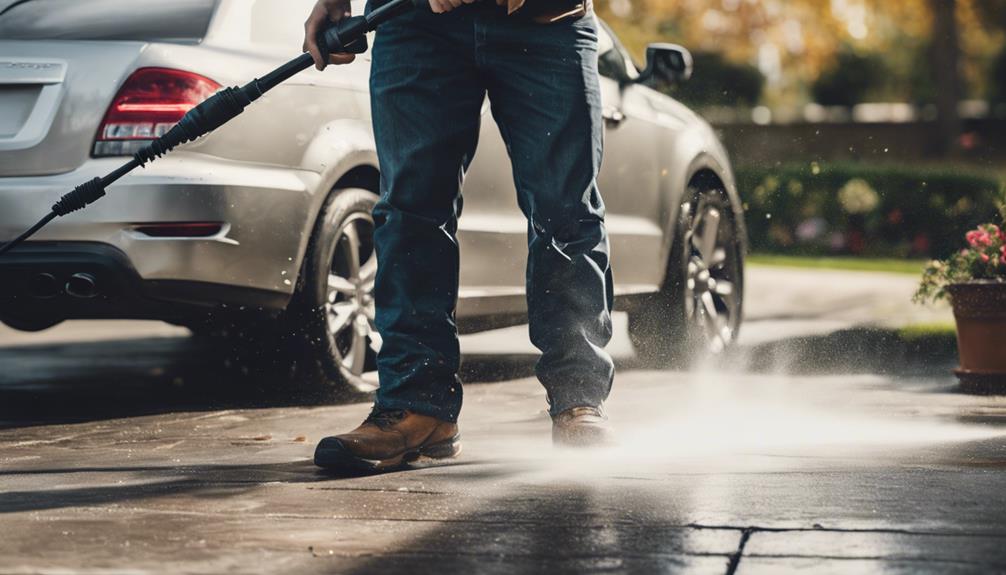
A power washer can speed up cleaning cars, patios, fences, and driveways, but the right choice depends on how much force and portability you need. I would put the Westinghouse WPX3000e first for its strong electric performance and broad nozzle selection. The BILT HARD 3200 PSI is a standout for buyers prioritizing an induction motor, while the Westinghouse ePX3500 suits people who want a more compact design with anti-tipping features. The main tradeoff is between stronger corded cleaning and the freedom—but lower pressure—of cordless models. Read on for how all nine options compare and which one fits your jobs.

Get furniture and decor delivered free with Prime
- Fast, free delivery on millions of items
- Prime Video, Amazon Music and more included
- Member-only deals all year
Complete the kit


Key Takeaways
- The Westinghouse WPX3000e leads this group by pairing the highest listed maximum pressure among the full-size electric options with 1.76 GPM, five nozzles, and an onboard soap tank.
- The BILT HARD 3200 PSI stands apart on motor design: its induction motor may appeal to frequent users, though its pressure figure alone does not guarantee faster cleaning.
- Portability comes with a clear compromise. The YKYI and 1300 PSI cordless washers are easier to bring to remote spots, but their lower pressure makes them a different class from corded driveway-focused models.
- Several corded picks share a 1.76 GPM rating, so hose reach, stability, included accessories, and pressure claims help separate them more than flow rate does.
- Accessory bundles shape convenience, not core cleaning power. Foam cannons and soap tanks can simplify vehicle washing, but nozzle choice and suitable pressure matter more for the surface itself.


| power washer | Maximum pressure | Hose length | Maximum flow rate | Weight |
|---|---|---|---|---|
| Westinghouse WPX3000e Electric | 3000 PSI | 25 feet | 1.76 GPM | — |
| Westinghouse ePX3500 Electric | 2500 PSI | 25 feet | 1.76 GPM | 19 pounds |
| Pressure Washer | 2030 PSI | 6.3 meters | 2.5 GPM | 16.6 pounds |
| Pressure Washer with 4 Nozzles | 2030 PSI | 6.3 meters | 2.5 GPM | 16.6 pounds |
| YKYI Cordless Pressure Washer | 1200 PSI | 24 feet | — | — |
| Cordless Portable Pressure Was | 1300 PSI | 16.5 ft | — | 7.4 lbs |
| BILT HARD 3200 PSI Electric Pr | 3200 PSI | 25 ft | 1.7 GPM | 52.2 lbs |
| BILT HARD 1.76 GPM 2465 PSI El | 2465 PSI | 20 ft | 1.76 GPM | 18.4 lbs |
| Westinghouse ePX3100s Electric | 2100 PSI | 20 ft | 1.76 GPM | 13.5 lbs |
More Details on Our Top Picks
Westinghouse WPX3000e Electric Pressure Washer, 3000 Max PSI, 1.76 GPM, 5 Nozzle Set, Onboard Soap Tank
The WPX3000e is the strongest fit here for homeowners who want an electric washer for larger, dirtier jobs such as driveway and deck cleaning. Its stated 3000 PSI maximum exceeds the Westinghouse ePX3500’s 2500 PSI, while both list 1.76 GPM; that extra pressure may help with stubborn grime, but it also calls for care on paint, soft wood, and other delicate surfaces. Five nozzles, including a turbo tip, give it more ways to match the spray to the task, and the 0.45-gallon soap tank adds a convenient option for detergent use. The tradeoff is its heavyweight design: the 10-inch wheels help with rolling, but this is less appealing to carry or move frequently than the 19-pound ePX3500. It also needs an AC outlet, so it cannot match a cordless washer’s freedom from a power cord.
Pros:- Highest stated maximum pressure among these five products at 3000 PSI
- Five-nozzle set includes a turbo nozzle for tougher cleaning tasks
- Built-in 0.45-gallon soap tank supports detergent use
- 25-foot hose and 35-foot power cord provide useful working reach
Cons:- Heavyweight design is less convenient to lift and transport
- Requires an AC outlet, limiting use away from household power
- Maximum-pressure spray can be too aggressive for delicate surfaces without careful nozzle selection
Best for: Homeowners with outlet access who regularly clean driveways, decks, fences, and vehicles and want stronger stated pressure than the ePX3500.
Not ideal for: People who need a lightweight washer to carry between locations, or buyers who need cordless operation or gas-level job-site mobility.
- Maximum pressure:3000 PSI
- Maximum flow rate:1.76 GPM
- Nozzle set:5 nozzles: 0°, 15°, 25°, soap, and turbo
- Soap tank capacity:0.45 gallons
- Hose length:25 feet
- Power:AC 120V
- Power cord length:35 feet
- Wheels:10-inch never-flat
- Warranty:3 years
Our verdict“Choose the WPX3000e for demanding home cleaning where its higher stated pressure matters more than low weight or cordless convenience.”
Westinghouse ePX3500 Electric Pressure Washer, 2500 Max PSI, 1.76 Max GPM, Anti-Tipping Technology, Onboard Soap Tank, Steel Wand, 5-Nozzle Set
The Westinghouse ePX3500 makes the most sense for buyers who want a capable corded washer without managing a heavier machine. At 19 pounds, it is easier to move and store than the WPX3000e, though its 2500 PSI maximum is lower than that model’s 3000 PSI. Both list 1.76 GPM and include five nozzles plus an onboard soap tank, so the ePX3500 keeps useful task flexibility while giving up some peak pressure. Its anti-tipping design is a practical advantage when pulling the unit across a patio, and the 17.5-inch steel wand offers a solid reach at the spray end. The 25-foot hose may feel limiting on broad driveways, and corded operation still ties the washer to an outlet. I’d favor it for routine home cleaning over the WPX3000e when portability matters more than maximum pressure.
Pros:- 19-pound listed weight makes it relatively easy to move and store
- Anti-tipping design helps keep the unit stable while repositioning it
- Five quick-connect nozzles and onboard soap tank support varied home tasks
- Steel wand and 1.76 GPM maximum flow rate suit regular vehicle and patio cleaning
Cons:- 2500 PSI maximum is lower than the WPX3000e’s stated 3000 PSI
- 25-foot hose can restrict movement across large driveways
- Requires an electrical outlet, limiting where it can be used
Best for: Homeowners who clean cars, patios, and fences near an outlet and want a lighter, easier-to-move machine than the WPX3000e.
Not ideal for: Buyers tackling large areas or stubborn buildup who prioritize the WPX3000e’s higher stated maximum pressure, or anyone needing cordless use.
- Maximum pressure:2500 PSI
- Maximum flow rate:1.76 GPM
- Wand length:17.5 inches
- Hose length:25 feet
- Weight:19 pounds
- Nozzle set:5 quick-connect nozzles
- Soap tank:Onboard
- Warranty:3 years
Our verdict“Pick the ePX3500 if easier handling and stable movement matter more than the WPX3000e’s higher maximum pressure.”
Pressure Washer, Portable Power Washer, 4 Quick Connect Nozzles, High Pressure Cleaning Machine for Car Fence Driveway Patio Washing (Light Green)
This LWQ S5 is a compact alternative for buyers who want a corded washer that is easier to store than the Westinghouse WPX3000e. Its listed 16.6-pound weight and 18-by-14-by-11-inch dimensions make it less cumbersome to tuck away, while the 6.3-meter hose offers more length than the Westinghouse models’ 25-foot hoses. The tradeoff is lower stated maximum pressure: 2030 PSI, compared with 2500 PSI on the ePX3500 and 3000 PSI on the WPX3000e. It also lists a 2.5 GPM maximum flow rate, but buyers should not read that number alone as proof of stronger cleaning than the higher-pressure alternatives. Four quick-connect nozzles and a foam cannon cover common vehicle and patio tasks. I’d choose it for compact storage and general household use, not demanding or commercial cleaning.
Pros:- Compact listed dimensions suit smaller storage areas
- 16.6-pound listed weight is lighter than the WPX3000e’s described heavyweight design
- 6.3-meter hose is longer than the 25-foot hoses listed for the Westinghouse options
- Includes four quick-connect nozzles and a foam cannon
Cons:- 2030 PSI maximum is below both Westinghouse models in this lineup
- AC power requires access to an outlet
- Assembly may be challenging for some buyers
Best for: Apartment or small-home owners who have an outlet nearby, limited storage space, and mostly clean vehicles, fences, and patios.
Not ideal for: Buyers who need higher stated pressure for heavy buildup, commercial work, or large areas where the Westinghouse models may be a better fit.
- Brand:LWQ
- Model:S5
- Maximum pressure:2030 PSI
- Maximum flow rate:2.5 GPM
- Weight:16.6 pounds
- Hose length:6.3 meters
- Dimensions:18 x 14 x 11 inches
- Nozzle accessories:4 quick-connect nozzles and foam cannon
- Power source:AC
Our verdict“Choose the LWQ S5 when compact storage and a longer hose matter more than the higher maximum pressure of the Westinghouse washers.”
Pressure Washer with 4 Nozzles and Foam Cannon for Home and Vehicle Cleaning
This dark-blue LWQ S5 has the same listed 2030 PSI, 2.5 GPM, 16.6-pound weight, and 6.3-meter hose as the light-green LWQ S5 in this roundup. That makes the choice between them less about cleaning capability and more about the specific listing and its included details: this description confirms four quick-connect nozzles and a foam cannon, but gives less accessory information overall. Like the other LWQ, its compact 18-by-14-by-11-inch body is easier to store than the Westinghouse WPX3000e, while its lower stated pressure makes it less suited to the toughest grime. The foam cannon is useful for applying suds to vehicles, but it does not compensate for the pressure gap with the ePX3500. I’d shortlist it for routine home and car washing, while checking exactly what arrives in the box.
Pros:- Compact 18-by-14-by-11-inch listed size is easier to store than the WPX3000e
- Includes four quick-connect nozzles and a foam cannon for vehicle washing
- 6.3-meter hose provides useful reach for a compact washer
- Listed 16.6-pound weight supports easier repositioning than the described heavyweight WPX3000e
Cons:- 2030 PSI maximum is lower than the Westinghouse ePX3500 and WPX3000e
- Product details do not specify accessories such as an extension wand
- AC power means it must be used near an electrical outlet
Best for: Vehicle owners and small-home users who want a compact corded washer with a foam cannon for regular car and patio cleaning.
Not ideal for: Buyers who need clearly documented accessories, stronger stated pressure for heavy buildup, or cordless operation.
- Brand:LWQ
- Model:S5
- Maximum pressure:2030 PSI
- Maximum flow rate:2.5 GPM
- Weight:16.6 pounds
- Hose length:6.3 meters
- Dimensions:18 x 14 x 11 inches
- Nozzle accessories:4 quick-connect nozzles and foam cannon
- Power source:AC
Our verdict“Choose this LWQ S5 for routine car and home cleaning with a compact footprint, but favor a Westinghouse model for higher stated pressure.”
YKYI Cordless Pressure Washer, 1200 PSI Portable Handheld Power Washer
The YKYI cordless washer fills a different role from the corded Westinghouse and LWQ machines: it can reach places where an outlet is inconvenient, using a rechargeable battery and a 24-foot hose. Its listed 1200 PSI is well below the WPX3000e’s 3000 PSI and the ePX3500’s 2500 PSI, so I’d treat it as a portability-first option for vehicles, light deck cleanup, and outdoor surfaces rather than a substitute for a stronger driveway washer. Six spray patterns and adjustable pressure give buyers flexibility for gentler tasks, while the included storage case, nozzles, and foam cannon make the kit easier to carry as a package. The stated 60–90 minute runtime is useful, but recharge time and durability details are not provided. Choose this model when freedom from a power cord matters more than tackling stubborn grime.
Pros:- Cordless battery power allows use away from an electrical outlet
- Six spray patterns and adjustable pressure accommodate varied cleaning tasks
- 24-foot hose and included storage case support portable use
- Listed 60–90 minute runtime supports multiple light-duty tasks
Cons:- 1200 PSI maximum is substantially below the corded washers in this lineup
- Battery recharge time is not specified
- Durability and build-quality details are limited
Best for: Car owners, campers, and people cleaning outdoor areas away from outlets who value a portable battery-powered setup over maximum pressure.
Not ideal for: Homeowners who routinely remove heavy driveway buildup or need sustained higher-pressure cleaning like the corded Westinghouse models provide.
- Maximum pressure:1200 PSI
- Flow rate:3 GPM
- Motor power:300W
- Battery:21V 4000mAh rechargeable lithium-ion
- Hose length:24 feet
- Spray patterns:6
- Runtime:60–90 minutes
- Included accessories:Storage case, nozzles, and foam cannon
Our verdict“Choose the YKYI for light cleaning in places without convenient power, not for replacing a higher-pressure corded washer on tough jobs.”
Cordless Portable Pressure Washer 1300 PSI with All-Copper Brushless Motor
Among these options, this is the pick for buyers who value cordless reach over sustained, higher-pressure cleaning. Its battery operation and 7.4-pound weight make it easier to carry around a car, boat, or patio without dragging a power cord, while the 6-in-1 nozzle and foam pot offer useful ways to adjust the wash. The listed runtime of up to 40 minutes can cover smaller jobs, but battery-dependent operation is a real limit for larger driveways or back-to-back tasks. Compared with the corded Westinghouse ePX3100s, it gives up pressure and requires charging, but it can work where an outlet is inconvenient. Choose it for portable spot cleaning, not as a substitute for a more powerful corded washer.
Pros:- Battery-powered design avoids a power cord during use
- 7.4-pound weight is easier to carry than the listed corded models
- 6-in-1 nozzle supports several spray patterns
- Foam pot adds a soap-application option for vehicle cleaning
Cons:- Up to 40 minutes of runtime may not cover larger jobs
- 1300 PSI is lower than the listed corded washers
- Extended use depends on battery charging
Best for: Car and boat owners who need a lightweight washer for short cleaning sessions away from a convenient outlet
Not ideal for: Homeowners tackling large driveways or extended cleaning jobs who need higher pressure and continuous corded operation
- Maximum pressure:1300 PSI
- Power source:Battery
- Runtime:Up to 40 minutes
- Hose length:16.5 ft
- Weight:7.4 lbs
- Dimensions:17.72 x 3.94 x 15.75 in
- Included accessories:6-in-1 nozzle and foam pot
- Motor:All-copper brushless motor
Our verdict“Choose this for portable, short-duration vehicle and patio cleaning; pick a corded model for larger or more demanding jobs.”
BILT HARD 3200 PSI Electric Pressure Washer with Induction Motor, 35ft GFCI Cord, Onboard Soap Tank, 5 Nozzle Set
This BILT HARD is the lineup’s high-pressure choice for buyers who want more force for tough outdoor grime. Its listed 3200 PSI exceeds the BILT HARD 2465 PSI model and the Westinghouse ePX3100s, making it the stronger candidate here for demanding surfaces and stubborn buildup. The induction motor, five-nozzle set, and onboard soap tank add flexibility for different cleaning tasks, while the 35-foot GFCI cord and 25-foot hose provide reach around a work area. That capability comes with a significant handling cost: at 52.2 pounds, it is far heavier than the other corded picks in this batch. I would favor it when pressure matters more than easy lifting, and skip it if frequent carrying or compact storage is a priority.
Pros:- Highest listed maximum pressure among the four products in this batch
- Induction motor is specified for the unit
- Five-nozzle set supports different cleaning tasks
- Onboard soap tank and long power cord add convenience during setup
Cons:- At 52.2 pounds, it is substantially heavier than the other corded options in this batch
- Its 25-foot hose is shorter than its 35-foot power cord
- The supplied product details do not specify accessories beyond the nozzles and onboard tank
Best for: Homeowners with stubborn outdoor buildup who want high listed pressure, multiple nozzles, and an onboard soap tank
Not ideal for: People who need to carry a washer up stairs or move it often, given its 52.2-pound listed weight
- Maximum pressure:3200 PSI
- Maximum flow rate:1.7 GPM
- Motor:Induction motor
- Power cord:35 ft GFCI cord
- Hose length:25 ft
- Tank volume:1.05 gallons
- Weight:52.2 lbs
- Included nozzles:5-nozzle set
Our verdict“Pick this BILT HARD when high pressure is the priority and you can accommodate a heavy washer.”
BILT HARD 1.76 GPM 2465 PSI Electric Pressure Washer with 4 Quick Connect Nozzles, 35ft Cord, 20ft Hose
This BILT HARD offers a middle ground between the more forceful 3200 PSI BILT HARD and the lighter Westinghouse ePX3100s. Its listed 2465 PSI and 1.76 GPM suit a range of home jobs, from vehicle washing to fences and outdoor surfaces, while the 20-foot hose and 35-foot cord give room to work without placing the unit right beside the cleaning area. Four quick-connect nozzles and a detergent bottle make it a versatile setup without matching the heavier BILT HARD’s five-nozzle kit and onboard tank. At 18.4 pounds, it is more portable than that higher-pressure model, though heavier than the Westinghouse. The tradeoff is a 1600W motor and no stated built-in storage, so it suits practical general use better than buyers seeking a feature-rich or especially compact unit.
Pros:- 2465 PSI and 1.76 GPM provide a balanced specification for varied home cleaning
- 35-foot cord and 20-foot hose offer useful working reach
- Four quick-connect nozzles allow spray-pattern changes
- Detergent bottle, automatic shutoff, and safety lock are included in the product details
Cons:- Its 18.4-pound weight is higher than the Westinghouse ePX3100s in this batch
- Lower listed maximum pressure than the 3200 PSI BILT HARD
- No storage system or additional accessories are specified
Best for: Homeowners who want a corded washer for mixed vehicle and outdoor cleaning, with useful reach and manageable weight
Not ideal for: Buyers who need the highest listed pressure, or who want a very light washer with built-in accessory storage
- Power:1600 W
- Maximum pressure:2465 PSI
- Maximum flow rate:1.76 GPM
- Hose length:20 ft
- Power cord length:35 ft
- Weight:18.4 lbs
- Dimensions:15.08 x 13 x 32.68 in
- Included accessories:4 quick-connect nozzles and detergent bottle
Our verdict“Choose this for versatile corded home cleaning with good reach, unless you need maximum pressure or the lightest carry.”
Westinghouse ePX3100s Electric Pressure Washer, 2100 Max PSI, 1.76 GPM with Foam Cannon and Turbo Nozzle
The Westinghouse ePX3100s is the easiest corded option here to justify for buyers who want useful cleaning attachments without a bulky machine. At 13.5 pounds, it weighs less than both BILT HARD models in this batch, and its listed 2100 PSI and 1.76 GPM make it a more capable choice for regular vehicle, fence, and patio cleaning than the cordless 1300 PSI washer. The foam cannon and turbo nozzle give it a different accessory mix from the BILT HARD 2465 PSI, which lists four quick-connect nozzles and a detergent bottle instead. Its compact dimensions and built-in storage help keep the unit and accessories together, but it still needs an AC outlet and offers less maximum pressure than either BILT HARD. I’d choose it for convenient storage and lighter handling, not for the toughest buildup.
Pros:- 13.5-pound weight makes it the lightest corded option among these four products
- Foam cannon and turbo nozzle offer useful cleaning choices
- Built-in storage helps keep accessories with the washer
- 1.76 GPM flow rate matches the BILT HARD 2465 PSI model in this batch
Cons:- Requires access to an AC outlet during use
- 2100 PSI is below both BILT HARD models listed in this batch
- The supplied product data does not specify power cord length
Best for: Vehicle owners and household users seeking a lightweight corded washer with built-in storage and dedicated foam and turbo attachments
Not ideal for: People without access to an outdoor power outlet, or those prioritizing maximum listed pressure for stubborn grime
- Maximum pressure:2100 PSI
- Maximum flow rate:1.76 GPM
- Power source:AC
- Hose length:20 ft
- Weight:13.5 lbs
- Dimensions:13 x 9.7 x 8 in
- Included attachments:Foam cannon and turbo nozzle
- Storage:Built-in accessory storage
Our verdict“Choose the ePX3100s for a lighter, easy-to-store corded washer, but favor a BILT HARD model for higher listed pressure.”

How We Picked
I compared these nine power washers on the details that change how they work for real cleaning jobs: stated pressure and flow, power source, portability, motor type where listed, hose and cord reach, nozzle selection, and soap or foam accessories. I treated maximum PSI as a comparison point rather than a promise of cleaning speed, since surface condition, nozzle, technique, and water flow all affect results.
The ranking favors machines with a useful balance of cleaning capacity and practical features for common home tasks. The WPX3000e ranks first for its combination of listed pressure, flow, and included nozzles. The BILT HARD 3200 PSI earns a strong place for its induction motor and long GFCI cord, while compact and cordless units rank lower for broad household work because their lower pressure limits their role. I also weighed usability and likely fit: a portable washer can be the better choice for a car or remote rinse even when it is not the best driveway tool.
Factors to Consider When Choosing Power Washer
Before choosing a power washer, match its power source and accessories to the jobs you actually expect to do. I would start with the surface and cleaning frequency, then check the setup details that affect reach, control, and storage. These tradeoffs matter more than selecting the biggest PSI number on a label.
Match pressure and flow to the surface
Pressure helps loosen grime, while water flow carries it away; neither figure alone tells the whole story. A high-pressure stream can damage soft wood, paint, vehicle trim, and mortar if used too close or with the wrong nozzle. For delicate surfaces, favor a wider spray pattern, keep distance, and test a hidden area before cleaning the full surface. Driveways and heavily soiled hard surfaces can call for more capacity, but technique still affects the result. A common mistake is treating maximum PSI as the normal working pressure or assuming a larger number always means a better washer. Choose for your hardest regular task, then use the right nozzle and distance for gentler jobs.
Choose corded or cordless based on access
Corded electric washers suit longer sessions near an outlet and water source, making them a practical fit for patios, siding, and driveways. A cordless unit makes more sense where outlets are inconvenient or the job is a quick rinse away from the house. That convenience comes with lower listed pressure in the two cordless options here, so it may not replace a full-size machine for stubborn concrete grime. Think about where the water comes from as well as where the washer sits; portability does not remove the need for a workable water supply. Buyers often focus on the battery-powered format without asking whether its cleaning strength matches the job. If you expect extended sessions or broad hard-surface cleaning, a corded model is usually the more suitable starting point.
Read PSI claims in context
Maximum PSI is a headline figure, not a complete measure of cleaning performance. Flow rate, nozzle type, and how consistently the machine supplies water all affect the work a washer can do. In this lineup, several corded models list 1.76 GPM, which makes other differences—such as pressure claims, motor type, and included accessories—more useful for comparison. Do not assume that a washer with a larger maximum PSI will clean every surface faster or more safely. If product specifications are not directly comparable, prioritize the task, included setup, and manufacturer guidance over a small difference in the headline number. For sensitive surfaces, control and a suitable spray pattern can matter more than maximum force.
Check reach before comparing accessories
Cord length and hose length decide how often you must move the machine, so they can affect convenience more than an extra accessory. A longer cord can help cover a wider work area, but you still need a properly rated outlet and safe cable placement. Check whether the listed hose length suits your driveway or the distance around a vehicle, and remember that a hose can kink or restrict movement if routed poorly. Nozzle sets and foam cannons are useful only when they suit your cleaning routine; they do not make up for inadequate reach. Buyers sometimes count included pieces without checking what is actually included or how each attachment is used. Prioritize the reach you need, then treat extras as a bonus.
Decide whether soap features will earn their place
An onboard soap tank or foam cannon can make detergent application easier for vehicle washing and some exterior cleaning. They do not replace rinsing, and detergent must be appropriate for the surface and washer. A foam attachment is most useful when you will regularly wash cars or apply cleaner over a broad area; occasional use may not justify making it a deciding factor. Check the instructions for detergent compatibility and which nozzle or setting works with the soap system. One frequent mistake is assuming thick foam means stronger cleaning, when dwell time, cleaner choice, and safe rinsing also matter. If your main task is rinsing mud from hard surfaces, pressure control and reach may be more valuable than a foam accessory.
Consider motor design, upkeep, and storage
A washer used often has different demands from one brought out a few times each year. The BILT HARD 3200 PSI lists an induction motor, a detail that may interest buyers seeking a machine for regular use, while compact designs can be easier to store and move. Whatever the motor, follow the manual for water supply, shutdown, storage, and any winterizing steps; neglect can shorten equipment life. Plan for a dry storage spot and enough room for the unit, cord, hose, and attachments. Do not buy a larger machine solely for occasional light cleaning if its size and setup will discourage you from using it. Pay more attention to durability-oriented features when you expect frequent, demanding sessions.
Frequently Asked Questions
Is a 1200–1300 PSI cordless power washer enough for a driveway?
It can help with light rinsing and small, limited areas, but the cordless models in this roundup are not the strongest fit for cleaning a large or heavily soiled driveway. Their portability is the main advantage, while their listed pressure is well below the full-size corded options here. Concrete condition, dirt, and the washer’s water flow also affect the result. For broad driveway cleaning, I would favor a corded unit with greater capacity and suitable surface-cleaning accessories. Choose cordless when access and quick setup matter more than tackling stubborn buildup.
Does the highest PSI mean a power washer will clean faster?
Not by itself. PSI describes pressure, but flow rate, spray pattern, detergent, and the condition of the surface all influence cleaning speed. A narrow nozzle can concentrate force but may damage paint or wood if used carelessly. Compare PSI alongside GPM and the included nozzles, then follow guidance for the material you are cleaning. For this lineup, several electric models share a 1.76 GPM listing, so accessories and other design details also help distinguish them.
Should I buy a washer with an induction motor for occasional home use?
An induction motor may be attractive if you expect to use a washer often, but the motor label alone does not settle whether a model suits your work. Consider the machine’s pressure and flow, its weight and storage needs, and the tasks you plan to do. For occasional car rinses or small patio jobs, a simpler, easier-to-store model may be a better match. For recurring outdoor cleaning, the BILT HARD 3200 PSI’s induction motor is a feature worth weighing alongside its other specifications. Follow the manufacturer’s maintenance instructions whichever design you choose.
Is a foam cannon more useful than an onboard soap tank?
Neither is universally better; the useful choice depends on how you apply detergent and what you clean. A foam cannon is aimed at spreading foam over a vehicle or other surface, while an onboard tank keeps soap integrated into the washer setup. Check the product instructions for detergent compatibility and the settings required to draw soap. For car washing, either feature can make detergent application more convenient, but neither replaces a careful rinse or surface-safe technique. If you rarely use detergent, do not let either accessory outweigh pressure control, reach, or portability.
How much hose and cord reach do I need?
Think about the largest area you clean and where you can safely place the washer near an outlet and water source. A longer cord or hose can reduce how often you move the unit, though actual working reach is affected by the route, obstacles, and how much slack you need. Avoid stretching a cord or hose taut, and keep connections away from hazards. The BILT HARD 3200 PSI and the 2465 PSI model list a 35-foot cord, but their hose lengths differ, so check both figures rather than relying on one. If your work area is spread out, reach may matter more day to day than a small pressure difference.
Conclusion
For the best overall fit, I recommend the Westinghouse WPX3000e for buyers who want strong listed electric performance, five nozzles, and an onboard soap tank in one package. The BILT HARD 3200 PSI is my pick for buyers prioritizing an induction motor and long cord reach, making it the premium-leaning choice in this group. For value-minded shoppers comparing full-size electric options, the BILT HARD 2465 PSI offers a practical set of quick-connect nozzles and a 35-foot cord. Beginners who want a more compact corded washer may prefer the Westinghouse ePX3500 and its anti-tipping design. For light jobs away from an outlet, choose the YKYI cordless model; for serious driveway cleaning, skip the cordless picks and stay with a higher-capacity corded option.
Halloween Picks
halloween
As an affiliate, we earn on qualifying purchases.