If you’re looking to elevate your connected living, I recommend considering premium hubs like the ecobee Smart Thermostat Premium, SmartThings Hub, Philips Hue Bridge, Sengled Smart Home Device, and the Echo 4th gen with Alexa. These hubs support multiple protocols, tie together various devices, and offer advanced automation features. They’re designed for seamless control and reliability. Keep exploring, and you’ll discover even more options to enhance your smart home experience.
Key Takeaways
- Premium hubs like ecobee and Philips Hue offer advanced environmental control, seamless device integration, and enhanced automation capabilities.
- Support for protocols like Zigbee, Z-Wave, and Matter ensures broad device compatibility and future-proofing.
- Features such as local processing, extensive coverage, and easy setup elevate user experience and system reliability.
- Many premium hubs integrate with popular ecosystems like Alexa, Google Assistant, and Apple HomeKit for versatile control.
- Additional features like mesh Wi-Fi, voice support, and robust automation make these hubs ideal for sophisticated smart home setups.
ecobee Smart Thermostat Premium with Smart Sensor and Air Quality Monitor


If you’re looking for a smart home hub that combines energy efficiency with advanced environmental monitoring, the ecobee Smart Thermostat Premium is an excellent choice. I love how it saves up to 26% annually and has ENERGY STAR certification, making it eco-friendly. The vibrant display and occupancy sensing make it easy to use, while the included SmartSensor adjusts temperatures in key rooms to eliminate hot and cold spots. Its built-in air quality monitor alerts me to poor indoor air and suggests improvements. Plus, it acts as a security hub with smoke detection and break-in alerts. Overall, it’s a sleek, reliable device that truly elevates my connected living.
Best For: homeowners seeking an energy-efficient, eco-friendly smart thermostat with advanced environmental and security monitoring features.
Pros:
- Saves up to 26% on energy annually and is ENERGY STAR certified
- Includes SmartSensor to optimize temperature control in key rooms and eliminate hot/cold spots
- Acts as a comprehensive home security hub with smoke detection and break-in alerts
Cons:
- Requires an Apple home hub for Siri compatibility, which may add to setup complexity
- Subscription needed for some advanced features like SmartSensor door/window monitoring
- The device and sensors may be on the higher price range compared to basic thermostats
SmartThings Hub 3rd Generation Smart Home Automation Hub
![SmartThings Hub 3rd Generation [GP-U999SJVLGDA] Smart Home Automation Hub Home](https://m.media-amazon.com/images/I/21hChu0ounL._SL500_.jpg)
The SmartThings Hub 3rd Generation is an excellent choice for homeowners seeking seamless integration across multiple smart devices and voice assistants. It supports Alexa, Google Home, Zigbee, Z-Wave, and cloud-to-cloud protocols, ensuring broad compatibility. With a simple app, I can monitor and control all compatible devices from anywhere, making home management straightforward. I appreciate its automation capabilities—setting routines based on door openings, occupancy, or other triggers has never been easier. Its sleek white design blends well with any decor. Overall, this hub centralizes my smart home, boosting convenience, security, and peace of mind.
Best For: homeowners seeking a versatile, easy-to-use hub that seamlessly integrates multiple smart home devices and voice assistants for enhanced convenience and security.
Pros:
- Supports a wide range of protocols including Zigbee, Z-Wave, Alexa, and Google Home, ensuring broad compatibility.
- Enables centralized control and automation of smart devices through a single app, simplifying home management.
- Sleek white design that blends well with modern home decor.
Cons:
- May require some technical knowledge to set up advanced automations.
- Limited compatibility with certain proprietary or less common smart devices.
- Firmware updates or network issues can occasionally disrupt device connectivity.
Philips Hue Bridge Smart Lighting Hub
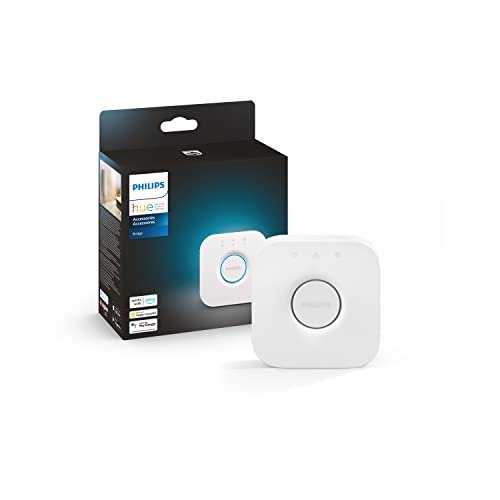
Looking to unleash the full potential of your smart lighting system? The Philips Hue Bridge is essential for unlocking advanced features like automations, zones, and seamless integrations. It’s easy to set up—just connect it to your router and power, then configure via the Hue app. Supporting up to 50 lights and accessories, including outdoor lights, it uses Zigbee mesh tech for a stable, secure connection that works even during Wi-Fi outages. Compatible with Alexa, Google Assistant, Siri, and Matter, it offers quick response times and reliable control. Overall, it’s a powerful hub that transforms your smart lighting into a truly immersive, effortless experience.
Best For: smart home enthusiasts seeking to maximize control, automation, and seamless integration of their lighting system with reliable, high-quality hardware.
Pros:
- Supports up to 50 lights and accessories, including outdoor lighting, for comprehensive coverage.
- Utilizes Zigbee mesh technology for a secure, stable connection that functions during Wi-Fi outages.
- Compatible with major voice assistants and Matter, enabling versatile, effortless control.
Cons:
- Higher cost compared to basic smart lighting solutions.
- Lacks PoE Ethernet port, which could improve wired connectivity options.
- Hardware may be outdated in earlier versions, with some users wishing for more frequent updates.
Sengled Smart Home Device (1 Pack, White)

For anyone seeking a reliable central controller to manage multiple smart devices, the Sengled Smart Home Device (1 Pack, White) stands out. It connects up to 64 Sengled smart devices, including LEDs and accessories, and works seamlessly with Alexa, Google Assistant, Apple HomeKit, and Siri for voice control. Easy to set up via Ethernet, it supports ZigBee and Ethernet protocols. Using the Sengled Home app, I can create schedules, group devices, and automate lighting remotely. Its sleek design and user-friendly interface make managing my smart home straightforward. With a 3-year warranty and compatibility across major platforms, it’s a dependable hub for elevating connected living.
Best For: smart home enthusiasts seeking a reliable, versatile central hub to manage multiple Sengled devices with easy setup and broad voice assistant compatibility.
Pros:
- Supports connecting up to 64 smart devices for comprehensive home automation
- Compatible with major voice assistants including Alexa, Google Assistant, and Apple HomeKit
- Easy installation via Ethernet with a user-friendly Sengled Home app for remote control and automation
Cons:
- Requires Ethernet connection, which may limit placement options for some users
- Customer ratings average 3.6 out of 5 stars, indicating mixed reviews on performance or reliability
- No batteries included, so power must be supplied through the Ethernet connection
Echo (4th generation) International Version with Alexa and Smart Home Hub

If you’re seeking a smart home hub that simplifies device management and offers reliable voice control, the Echo (4th generation) International Version with Alexa is a strong choice. It delivers premium sound with clear highs, dynamic mids, and deep bass, automatically adapting to room acoustics for the best listening experience. With Alexa built-in, you can control compatible smart devices, play music from various streaming services, and get updates on news, weather, and more. Privacy is prioritized with features like a Microphone Off button. Plus, setup is straightforward, making it an excellent centerpiece for your connected home ecosystem.
Best For: those seeking a smart home hub with premium sound quality, reliable voice control, and easy setup to enhance their connected home experience.
Pros:
- Excellent sound quality with clear highs, dynamic mids, and deep bass that adapts to room acoustics
- Built-in Alexa and Zigbee smart hub for seamless smart device control and voice assistance
- Privacy features including a Microphone Off button to safeguard user data
Cons:
- Some features like Alexa Guard and Amazon Kids may not be available in all countries
- Streaming services like Spotify Free Tier are not supported in Korea (KR)
- Limited compatibility with certain third-party smart home devices
Echo (4th generation) International Version with Alexa and Smart Home Hub
The Echo (4th generation) International Version with Alexa and Smart Home Hub is an excellent choice for anyone seeking to streamline their smart home setup. It connects seamlessly to Alexa, giving you voice control for music, timers, alarms, and smart devices. Its built-in Zigbee hub simplifies the setup of smart lights, locks, sensors, and more. The device offers premium sound with a 3.0” woofer and dual tweeters, plus supports Bluetooth streaming. Privacy is prioritized with a Microphone Off button and multiple protections. Compact yet powerful, it’s perfect for enhancing your connected living experience while keeping your home automation simple and secure.
Best For: those looking to enhance their smart home with a versatile, high-quality voice assistant that offers premium sound and easy Zigbee device integration.
Pros:
- Seamless integration with Alexa and built-in Zigbee hub simplifies smart home setup
- Rich audio with a 3.0” woofer and dual tweeters delivers high-quality sound for various spaces
- Supports streaming from Spotify, Bluetooth, and pairing with other Echo Devices for stereo sound
Cons:
- Some Alexa features like Alexa Guard and Amazon Kids may not be available in all countries
- Bluetooth does not support PIN codes for certain speakers, potentially limiting device pairing options
- Wi-Fi support excludes ad-hoc networks, which could affect setup in some network environments
Homey Pro Smart Home Hub for Automation

Looking for a smart home hub that offers extensive device compatibility and keeps your automation running smoothly even without internet? The Homey Pro is a standout choice. It supports Z-Wave Plus, Zigbee, Wi-Fi, Bluetooth LE, Infrared, Matter, and Thread protocols, working seamlessly with over 50,000 devices from 1,000+ brands like Philips Hue, Yale, Ecobee, and Sonos. Its local-first processing guarantees automations continue even if your internet drops, enhancing privacy and reliability. The intuitive Homey Flow system makes creating routines simple, whether you’re controlling lights, thermostats, or security. Despite some occasional delays and limited device support, it’s a powerful hub for serious smart home enthusiasts.
Best For: smart home enthusiasts seeking a highly versatile, privacy-focused hub that supports a wide range of protocols and device brands for seamless automation.
Pros:
- Supports multiple protocols including Z-Wave Plus, Zigbee, Wi-Fi, BLE, Infrared, Matter, and Thread, ensuring broad device compatibility.
- Emphasizes local processing for automation, enhancing privacy and reliability even without internet.
- User-friendly Homey Flow system allows for creating complex routines without programming knowledge.
Cons:
- Some users experience delays or instability with Z-Wave devices and Wi-Fi connections.
- Limited official support for certain North American devices and specific brands can cause compatibility issues.
- Higher price point (~$350-$600) and lack of Ethernet port may be a drawback for some users seeking more connectivity options.
Hubitat Elevation Home Automation Hub (Model C-8)

Home automation enthusiasts seeking a versatile, locally processed hub will find the Hubitat Elevation C-8 an excellent choice, as it supports over 1,000 devices across multiple protocols like Zigbee, Z-Wave, and Matter. It’s compatible with popular smart home systems such as Alexa, Apple HomeKit, and Google Home, making integration seamless. Designed for local processing, it guarantees fast, reliable automation even during internet outages, with added Wi-Fi and Ethernet options for flexible connectivity. Its compact size and user-friendly setup make managing and automating lights, locks, thermostats, and sensors straightforward. The C-8 offers robust automation tools suitable for both simple and complex setups, all without subscription fees.
Best For: home automation enthusiasts seeking a versatile, locally processed hub that supports multiple protocols and integrates with popular smart home systems for reliable, customizable automation.
Pros:
- Supports over 1,000 devices across Zigbee, Z-Wave, and Matter protocols for extensive device compatibility
- Local processing ensures fast, reliable automations even during internet outages
- User-friendly setup with robust automation tools suitable for both simple and complex configurations
Cons:
- Customer ratings average 3.7 out of 5 stars, indicating some user concerns or issues
- Initial setup may require multiple updates and reboots, which could be time-consuming
- Price and availability can vary, and accessories are sold separately without batteries
Sengled Z02-hub Smart Home Hub (Pack of 1)

Need a reliable central control for your smart home devices? The Sengled Z02-hub is a solid choice, supporting up to 64 Sengled smart lights and accessories. It connects easily via Ethernet and works with Alexa and Google Assistant for seamless voice control. You can manage everything through the Sengled Home app on iOS and Android, setting schedules, grouping devices, and automating your home remotely. Its compact design and straightforward setup make it user-friendly. While reviews are mixed, the hub remains a dependable option for those wanting a simple, effective way to centralize their smart home ecosystem. It’s especially great for indoor use.
Best For: homeowners seeking a reliable, easy-to-use central hub to manage multiple smart home devices with voice control compatibility.
Pros:
- Supports up to 64 Sengled smart lights and accessories for extensive automation
- Easy setup with Ethernet connection and user-friendly app interface
- Compatible with Alexa and Google Assistant for seamless voice control
Cons:
- Mixed customer reviews with an average rating of 3.6 out of 5 stars
- Designed for indoor use only, limiting deployment options
- Requires a stable internet connection and Ethernet cable for setup

If you’re seeking a smart button that guarantees seamless integration across leading ecosystems, the arre Smart Button with Matter and Thread support is an excellent choice. It works effortlessly with Apple HomeKit and Samsung SmartThings, thanks to its Matter and Thread compatibility. The device offers quick, reliable responses, with three trigger functions—single, double, and long press—that you can customize for different actions. Its magnetic mounting and personalized stickers make setup and styling simple. Although some users report occasional connectivity issues, most find it a solid, user-friendly addition to their smart home, especially when paired with an Apple HomePod Mini as a Thread border router.
Best For: smart home enthusiasts seeking a versatile, easy-to-install button compatible with Apple HomeKit, Samsung SmartThings, Matter, and Thread for seamless automation.
Pros:
- Supports Matter and Thread for broad ecosystem interoperability and reliable, low-latency connections
- Magnetic mounting and customizable stickers for simple setup and personalization
- Tactile, clicky feedback with quick response times and straightforward battery replacement
Cons:
- Some users experience connectivity dropouts or device unresponsiveness over time
- Battery access can be difficult, and no battery level indicators are available
- Occasional reports of units arriving used or damaged, impacting initial reliability
Like-New Amazon eero Pro 6 Mesh Wi-Fi Router with Zigbee Hub
The Like-New Amazon eero Pro 6 Mesh Wi-Fi Router with Zigbee Hub stands out as an ideal choice for those looking to streamline their smart home setup. This tri-band Wi-Fi 6 router offers premium coverage up to 2,000 sq. ft., supporting speeds up to a gigabit, perfect for streaming, gaming, and video calls. It connects up to 75+ devices and is easily expandable. Its built-in Zigbee hub simplifies smart device management, while compatibility with Alexa makes voice control effortless. Certified like-new, it comes with a warranty and is packaged in generic boxes. Overall, it’s a powerful, reliable, and versatile hub that elevates your connected living experience.
Best For: those seeking a powerful, reliable mesh Wi-Fi system with integrated smart home capabilities for seamless coverage and device management.
Pros:
- Supports Wi-Fi 6 technology for faster speeds and better network efficiency
- Includes Zigbee hub for easy smart home device integration and management
- Covers up to 2,000 sq. ft. and supports over 75 devices, making it ideal for busy households
Cons:
- Refurbished model may come in generic packaging despite being like-new
- Requires compatible smart home devices and apps for full functionality
- Limited to a 1-year warranty, which may be shorter than some new devices
MOES ZigBee 3.0 Hub/Wired Gateway for Smart Home

The MOES ZigBee 3.0 Hub/Wired Gateway is an excellent choice for homeowners seeking a reliable, wired solution to unify their ZigBee smart devices. It functions as both a WiFi smart home bridge and remote controller, supporting compatible Tuya ZigBee devices for seamless automation. Its wired connectivity offers over 200 meters of coverage, ensuring stable, extensive communication. Compact in size and easy to set up, it requires no batteries—just a simple 5V DC power supply. With a solid 4.2-star rating from hundreds of reviews, it’s a dependable, straightforward hub that elevates your connected living experience effortlessly.
Best For: homeowners seeking a reliable, wired ZigBee hub to unify and automate their smart home devices with extensive coverage and straightforward setup.
Pros:
- Supports a wide range of Tuya ZigBee smart devices for seamless integration.
- Wired connectivity provides over 200 meters of stable communication coverage.
- Compact design with easy installation and no batteries required, ensuring reliability.
Cons:
- Limited to Tuya ZigBee compatible devices; not compatible with other ZigBee ecosystems.
- First available date listed as February 14, 2025, which may be a typographical error or future release.
- No additional features such as WiFi networking or advanced automation options beyond basic bridging.
TREATLIFE Zigbee Hub Gateway, 2.4 GHz WiFi Smart Home Hub
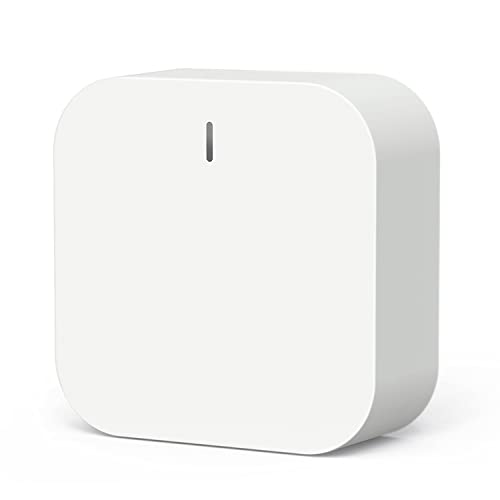
For homeowners seeking a reliable and easy-to-set-up smart home hub, the TREATLIFE Zigbee Hub Gateway stands out by supporting up to 128 devices and integrating seamlessly with Alexa, Google Home, and Apple HomeKit. Designed specifically for TREATLIFE ZigBee devices like water leak detectors, motion sensors, and door sensors, it offers straightforward setup—just plug in, connect via the app, and you’re ready to go. With a range of up to 164 feet, it enables automation routines and remote control, making home management simple and efficient. Its compact size and stable network support ensure dependable coverage throughout your home.
Best For: homeowners looking for a reliable, easy-to-set-up smart home hub that seamlessly integrates with major voice assistants and supports multiple ZigBee devices.
Pros:
- Supports up to 128 ZigBee devices for extensive home automation.
- Compatible with Alexa, Google Home, and Apple HomeKit for versatile control.
- Simple setup process with no network cables needed, completing in minutes.
Cons:
- Limited to TREATLIFE ZigBee devices, which may restrict device choices.
- Customer ratings are moderate at 3.8 out of 5 stars, indicating mixed reviews.
- Requires 2.4GHz Wi-Fi, so incompatible with 5GHz networks.
Smart Hub Gateway Compatible with Alexa and Google Home

If you want a smart hub that seamlessly integrates with popular voice assistants, this gateway is an excellent choice. It supports Tuya ZigBee and Bluetooth protocols, working with all compatible devices from the store. While it doesn’t support 433MHz RF roller blind motors or 5GHz WiFi, it operates smoothly on 2.4GHz networks. With compatibility for Alexa, Google Home, and SmartThings, you get effortless voice control and automation. The hub covers up to 50 meters, allowing control through walls, and easily connects via the SmartLife app. Its sleek design and simple setup make it a versatile, user-friendly centerpiece for your connected home.
Best For: homeowners seeking a versatile, easy-to-setup smart hub that integrates seamlessly with Alexa, Google Home, and SmartThings for comprehensive smart device management.
Pros:
- Supports Tuya ZigBee and Bluetooth protocols, compatible with a wide range of devices from the store
- Offers up to 50 meters coverage, enabling control through walls without signal issues
- Simple setup via the SmartLife app with a sleek, compact design for easy placement anywhere in the home
Cons:
- Does not support 433MHz RF roller blind motors or 5GHz WiFi networks
- Limited to 2.4GHz WiFi, which may affect compatibility with certain routers or networks
- Requires compatible devices adhering to standard protocols for full functionality
Smart Hub for Weffort Shades, Wi-Fi 2.4GHz, USB-A, Control 20 Motors
Designed for homeowners seeking seamless control over multiple motorized blinds, the Smart Hub for Weffort Shades excels by supporting up to 20 motors across various types, including Standard, Zigbee, and Wi-Fi models. It offers wide ecosystem compatibility with Smart Life, Smart Things, Alexa, Google Home, and IFTTT, enabling effortless voice commands and automation. Its portable USB-A design makes powering easy via outlets or devices, while compact dimensions ensure discreet placement. Note that it’s intended for indoor use only and requires a secure 2.4 GHz Wi-Fi network. Overall, it simplifies managing multiple blinds, making your smart home more integrated and responsive.
Best For: homeowners seeking an easy-to-use, versatile smart hub to control multiple motorized blinds with broad ecosystem compatibility and seamless automation.
Pros:
- Supports up to 20 motors, including Standard, Zigbee, and Wi-Fi models, offering extensive flexibility.
- Compatible with popular platforms like Smart Life, Smart Things, Alexa, Google Home, and IFTTT for integrated voice and automation control.
- Portable USB-A design allows simple power connection via outlets, power strips, or devices, and is suitable for indoor use only.
Cons:
- Requires a secure 2.4 GHz Wi-Fi network, limiting compatibility with dual-band routers or networks.
- Not water-resistant, so it’s unsuitable for outdoor or humid environments.
- Compact size may limit mounting options or require careful placement to avoid interference.
Factors to Consider When Choosing Premium Smart Home Hubs
When selecting a premium smart home hub, I consider how well it supports different protocols and integrates with my devices, ensuring seamless operation. I also look at its ability to process data locally for faster responses and enhanced privacy, along with automation features that match my needs. ultimately, I evaluate its connectivity options to make sure it fits into my existing setup without hassle.
Protocol Compatibility Importance
Choosing a premium smart home hub hinges considerably on its protocol compatibility, as this determines how well it can connect with and control a variety of devices. When a hub supports multiple protocols like Zigbee, Z-Wave, Thread, and Wi-Fi, it can seamlessly integrate devices from different ecosystems, reducing the need for multiple hubs. Compatibility with popular ecosystems such as Apple HomeKit, Google Home, and Alexa also broadens control options and simplifies automation. Devices supporting the Matter protocol are especially valuable because they offer universal compatibility, future-proofing your setup. Ensuring strong protocol compatibility is essential for reliable operation, minimizing connectivity issues, and maximizing your smart home’s flexibility. Ultimately, it’s about creating a cohesive, efficient, and hassle-free connected living experience.
Device Integration Range
A smart home hub’s ability to connect with a wide range of devices depends considerably on its integration range. The farther a hub can communicate, the better it can cover larger spaces and include more devices. Protocols like Zigbee, Z-Wave, and Thread are designed for low-power, long-distance communication, often exceeding Wi-Fi’s range indoors and outdoors. Some support over 100 meters, which is ideal for bigger homes or outdoor setups. The hub’s physical placement also matters; positioning it centrally helps maximize coverage and reduces dead spots. Multi-protocol hubs that support Zigbee, Z-Wave, and Wi-Fi tend to offer broader compatibility and greater coverage than single-protocol options. Overall, a wider integration range guarantees your smart home is more connected and responsive.
Local Processing Benefits
Opting for a premium smart home hub with local processing offers immediate benefits in performance and privacy. Automations run instantly without depending on internet connectivity, cutting down latency and ensuring a smoother experience. By processing data locally, your sensitive information stays within the hub, markedly boosting privacy and reducing cloud data exposure. This setup also enhances reliability, as automations continue to operate seamlessly during internet outages, minimizing disruptions. Additionally, it decreases reliance on cloud services, lowering the risk of system failures and increasing overall stability. With local control, responses are faster, making your smart home more efficient and responsive. Overall, local processing provides a more secure, dependable, and swift smart home experience, making it a key factor when choosing a premium hub.
Automation Capabilities
When evaluating premium smart home hubs, it’s vital to take into account their automation capabilities, which determine how effectively your system can adapt to your lifestyle. A top-tier hub should support multiple protocols like Zigbee, Z-Wave, Thread, and Matter to guarantee compatibility with various devices. Advanced automation features, such as complex routines, conditional triggers, and multi-device scenes, allow for highly personalized home workflows. The ability to manage automations remotely through a user-friendly app is essential for convenience. Additionally, local processing of automations enhances reliability and privacy by reducing dependence on the cloud. Seamless voice control through integrations with Alexa, Google Assistant, or Siri further simplifies automation, making your smart home more intuitive and responsive to your needs.
Connectivity Options Offered
Selecting a premium smart home hub means paying close attention to its connectivity options, which directly impact device compatibility and network reliability. I look for hubs that support multiple protocols like Zigbee, Z-Wave, Wi-Fi, and Bluetooth, ensuring I can connect a wide range of smart devices. Many premium hubs include both Ethernet and Wi-Fi options, offering flexible setup and stable connections. Some advanced models support the Matter protocol, allowing seamless integration across different ecosystems. Zigbee and Z-Wave support are vital for secure, low-power communication with compatible devices. Additionally, features like built-in cellular or USB connectivity provide backup options or expanded network integration, ensuring my smart home remains connected even if primary networks face issues. Connectivity options are essential for a reliable, flexible smart home experience.
User-Friendly Setup
Have you ever struggled to set up a smart home hub because the instructions were confusing or the process was complicated? If so, you’re not alone. A truly user-friendly setup makes all the difference. Look for hubs that offer clear instructions, minimal wiring, and guided app configurations—that way, you can get everything running quickly. Devices that support automatic detection and pairing of compatible gadgets simplify the initial setup, saving you time and frustration. Intuitive mobile apps with step-by-step onboarding and visual guides make configuring and customizing your hub straightforward. Compatibility with popular ecosystems like Apple HomeKit, Alexa, or Google Home can also streamline device integration. Features like quick start guides, graphical interfaces, and minimal network requirements further reduce complexity, making your smart home experience seamless from the start.
Security and Privacy Measures
Ensuring your smart home hub keeps your data safe is vital, especially with sensitive information transmitted across connected devices. Premium hubs often feature advanced security measures like end-to-end encryption and secure device pairing, which help protect your data from unauthorized access. Regular firmware updates are essential, as they fix vulnerabilities and keep the system resilient over time. Many hubs also offer privacy controls, allowing you to disable microphones, cameras, or data collection features when needed. Storing data locally reduces dependence on cloud servers, lowering the risk of breaches. Additionally, compatibility with security protocols like WPA3, TLS, and Zigbee or Z-Wave layers ensures secure communication within your network. Prioritizing these features gives you peace of mind and safeguards your connected home.
Expandability Potential
When selecting a premium smart home hub, it’s vital to evaluate its expandability potential, which determines how well your system can grow over time. A great hub supports multiple protocols like Zigbee, Z-Wave, Thread, and Wi-Fi, allowing you to connect a wide array of devices. It should handle over 50 devices without slowing down, ensuring your system remains responsive as it expands. Compatibility with third-party ecosystems and open standards makes adding new devices seamless, future-proofing your setup. Modular hardware features, such as multiple ports and mesh network support, facilitate easy network growth and device clustering. Additionally, firmware and software updates that enable new protocols or device compatibilities enhance the hub’s long-term expandability, making it a smart investment for a flexible, scalable smart home.
Frequently Asked Questions
How Do Premium Smart Hubs Ensure Compatibility Across Different Device Brands?
Premium smart hubs guarantee compatibility across different device brands by supporting multiple protocols like Zigbee, Z-Wave, and Wi-Fi. I’ve found that they act as a central translator, allowing devices from various manufacturers to communicate seamlessly. They also regularly update their firmware to add new integrations and fix issues. This flexibility means I can connect my smart lights, locks, and sensors without worrying about compatibility problems.
What Security Features Are Standard in High-End Smart Home Hubs?
You might be surprised to learn that high-end smart home hubs usually come with robust security features like end-to-end encryption, multi-factor authentication, and regular firmware updates. I’ve found these protections essential for safeguarding my data and devices. They also often include intrusion detection and secure local storage, giving me peace of mind. It’s like having a digital fortress guarding my connected home, ensuring my privacy and safety are never compromised.
Can Premium Hubs Integrate With Existing Home Automation Systems?
Yes, premium hubs can usually integrate seamlessly with your existing home automation systems. I’ve found that many high-end hubs support popular protocols like Z-Wave, Zigbee, and Wi-Fi, making it easy to connect devices from different brands. They often come with advanced software that allows you to customize and expand your setup effortlessly. So, upgrading your system doesn’t mean starting from scratch — it’s about enhancing what you already have.
How Do Advanced Hubs Handle Software Updates and Firmware Management?
Imagine your smart hub is like a sleek spaceship, constantly updating to stay ahead. Advanced hubs handle software updates and firmware management automatically, often during off-peak hours, ensuring minimal disruption. They check for updates regularly, download, and install them seamlessly, just like a well-oiled machine. This process keeps your system secure, compatible, and running smoothly, so you can enjoy a truly connected, hassle-free home experience without lifting a finger.
What Is the Average Lifespan of a Premium Smart Home Hub?
On average, a premium smart home hub lasts about 5 to 7 years. I’ve noticed that with regular firmware updates, good maintenance, and occasional hardware upgrades, these hubs can serve you well for quite a while. However, technology evolves quickly, so I recommend keeping an eye on product life cycles and considering upgrades every few years to stay current and guarantee peak performance.
Conclusion
Ultimately, choosing the perfect premium smart home hub depends on your needs, nuances, and network nuances. By balancing benefits and barriers, you’ll build a beautiful, bustling, and seamlessly synchronized smart space. Remember, the right hub helps harness harmony, heightens home happiness, and simplifies your smart living lifestyle. So, step confidently, select your super-smart hub, and start shaping your sensational, synchronized sanctuary today!