
The best smart plug for home automation is the TP-Link Tapo P125M Matter Smart Plug Mini, thanks to its Matter support, compact housing, and rock-solid integration with Alexa, Google Home, and Apple Home. If you’re building on a budget, the Kasa Smart Plug HS103P4 4-pack delivers dependable scheduling and away modes at a lower per-outlet cost, while the Minoston Matter Outdoor Smart Plug is the standout for patios, holiday lights, and garden equipment. The main tradeoffs in this category come down to ecosystem lock-in versus openness (Alexa-only plugs are cheap but rigid), whether you need energy monitoring to track power-hungry devices, and whether paying more for Matter compatibility future-proofs your setup. Continue reading for the full breakdown of all 14 plugs and which one fits your setup.

Get furniture and decor delivered free with Prime
- Fast, free delivery on millions of items
- Prime Video, Amazon Music and more included
- Member-only deals all year
Complete the kit


Key Takeaways
- Matter compatibility is the biggest differentiator in this lineup: the Tapo P125M, amazon.com/dp/B0C36WXGP1?tag=perfectfitliving-20&ascsubtag=dc-686553″ target=”_blank” rel=”nofollow sponsored noopener”>Linkind Matter plug, and Minoston MP22M all work across Apple Home, Alexa, and Google Home, while the Amazon Smart Plug remains Alexa-only and the standard GHome plugs require cloud accounts with no Apple Home support.
- Kasa plugs (HS103P4, EP10, EP10P4) earned the top value spots because TP-Link‘s app offers the most reliable local scheduling and automation routines without a subscription or hub, something budget brands like Govee and GHome can’t consistently match.
- Energy monitoring only appears on the Govee Smart Plug with Energy Monitoring in this lineup — buyers who want to track consumption on heaters, dehumidifiers, or AV racks should treat that as a must-have filter, not a nice-to-have.
- Outdoor use is a category of one here: the Minoston MP22M’s IP65 weather resistance makes it the only safe pick for exposed outlets, so anyone automating patio or garden loads should skip every indoor plug regardless of price.
- The ultra-mini designs (Kasa EP10, Tapo P125M, Philips WiZ) are the only ones that stack two plugs in a single duplex wall plate — a decisive factor for kitchens and power strips where full-size bodies block adjacent outlets.
| Philips Smart Lighting Smart Plug (Connected by WiZ) |  | Best for Multi-Ecosystem Homes | Voltage: 125 volts | Plug Type: Type B | Connectivity: Wi-Fi (WiZ) | VIEW ON AMAZON | See Our Full Breakdown |
| Kasa Smart Plug HS103P4, 4-Pack |  | Best Overall | Model: HS103P4 | Pack Size: 4 plugs | Operating Voltage: 120 V AC | VIEW ON AMAZON | See Our Full Breakdown |
| GHome Smart Plug Mini (4 Pack) | 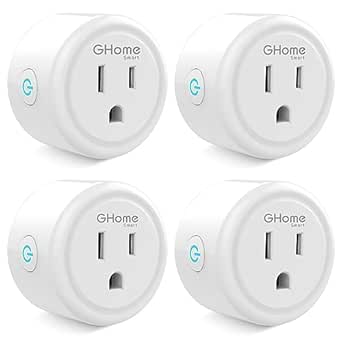 | Best Value Pick | Voltage: 120V | Amperage: 10A | Connectivity: Wi-Fi (2.4GHz only) + Bluetooth | VIEW ON AMAZON | See Our Full Breakdown |
| Kasa Smart Plug Ultra Mini 15A (EP10) |  | Best Single-Plug Pick | Model: EP10 | Amperage: 15A | Connectivity: 2.4GHz Wi-Fi | VIEW ON AMAZON | See Our Full Breakdown |
| Kasa Smart Wi-Fi Plug Mini, 15A, 4-Pack (EP10P4) | 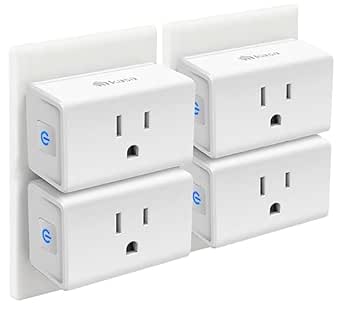 | Best for Small Spaces | Model: EP10P4 | Pack Size: 4 plugs | Max Load: 15A | VIEW ON AMAZON | See Our Full Breakdown |
| Govee Smart Plug (4-Pack), WiFi Outlet Compatible with Alexa & Google Assistant |  | Best Value Multi-Pack | Quantity: 4-pack | Connectivity: 2.4GHz WiFi, Bluetooth | Compatibility: Alexa, Google Assistant, Govee Home App | VIEW ON AMAZON | See Our Full Breakdown |
| GHome Smart Plug (WiFi, Works with Alexa & Google Home) | 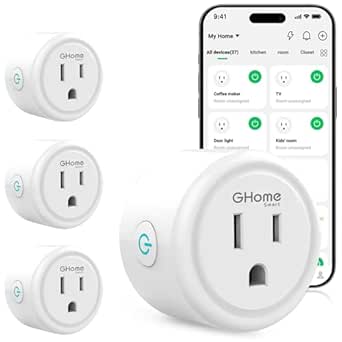 | Best for App Flexibility | Connectivity: 2.4GHz WiFi, Bluetooth | Compatibility: Alexa, Google Home, GHome, Smart Life, Tuya | Features: Voice control, timers, schedules, group control, device sharing | VIEW ON AMAZON | See Our Full Breakdown |
| Minoston Matter Outdoor Smart Plug, 15A, IP65 Weather-Resistant, Black (MP22M) |  | Best Outdoor Pick | Model: MP22M | Max Current: 15A | Weather Resistance: IP65 | VIEW ON AMAZON | See Our Full Breakdown |
| Govee Smart Plug with Energy Monitoring, WiFi Bluetooth Outlet, 4 Pack |  | Best for Energy Tracking | Pack Size: 4-pack | Connectivity: 2.4GHz WiFi, Bluetooth | Max Load: 15A, 120V | VIEW ON AMAZON | See Our Full Breakdown |
| Linkind Matter Smart Plug | 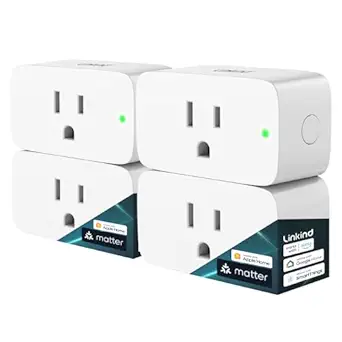 | Best Future-Proof Pick | Connectivity: 2.4GHz WiFi, IPv6, Matter | Power Capacity: 1800W, 15A | Compatibility: Apple Home, Alexa, Siri, Google Home, SmartThings, AiDot | VIEW ON AMAZON | See Our Full Breakdown |
| Amazon Smart Plug with Alexa |  | Best for Alexa-Only Households | Dimensions: 3.2 x 1.5 x 2.2 in (80 x 38 x 57 mm) | Weight: 3.1 oz (87 g) | Input: 120 VAC, 60 Hz, 15 A max | VIEW ON AMAZON | See Our Full Breakdown |
| GHome Wi-Fi Smart Plug | 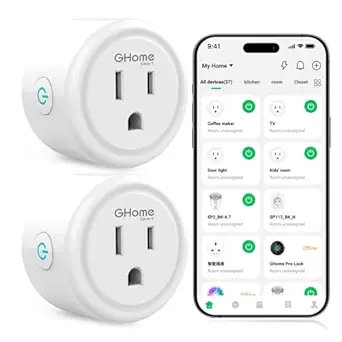 | Best Budget Single Plug | Connectivity: 2.4 GHz Wi-Fi | Voice assistants: Amazon Alexa, Google Assistant | Compatible apps: GHome, Smart Life, Tuya | VIEW ON AMAZON | See Our Full Breakdown |
| TP-Link Tapo P125M Matter Smart Plug Mini (3-Pack) |  | Best Future-Proof Pick | Model: Tapo P125M | Quantity: 3-pack | Max load: 15 A / 1800 W | VIEW ON AMAZON | See Our Full Breakdown |
| GHome Smart 5G 15A WiFi Smart Plug (4 Pack) |  | Best for Crowded Wi-Fi Networks | Pack size: 4-pack | Connectivity: 2.4 GHz and 5 GHz Wi-Fi, Bluetooth | Max current: 15 A | VIEW ON AMAZON | See Our Full Breakdown |
| smart plugs for home automation | Connectivity | Compatibility |
|---|---|---|
| Philips Smart Lighting Smart P | Wi-Fi (WiZ) | Alexa, Google Home, Apple Home (Matter) |
| Kasa Smart Plug HS103P4 | 2.4 GHz Wi-Fi | — |
| GHome Smart Plug Mini | Wi-Fi (2.4GHz only) + Bluetooth | Alexa, Google Home |
| Kasa Smart Plug Ultra Mini 15A | 2.4GHz Wi-Fi | Alexa, Google Assistant |
| Kasa Smart Wi-Fi Plug Mini | 2.4 GHz Wi-Fi | — |
| Govee Smart Plug | 2.4GHz WiFi, Bluetooth | Alexa, Google Assistant, Govee Home App |
| GHome Smart Plug | 2.4GHz WiFi, Bluetooth | Alexa, Google Home, GHome, Smart Life, Tuya |
| Minoston Matter Outdoor Smart | 2.4GHz WiFi | Matter, Apple Home, Alexa, Google Home, SmartThings |
| Govee Smart Plug with Energy M | 2.4GHz WiFi, Bluetooth | Alexa, Google Assistant, Govee Home App |
| Linkind Matter Smart Plug | 2.4GHz WiFi, IPv6, Matter | Apple Home, Alexa, Siri, Google Home, SmartThings, AiDot |
| Amazon Smart Plug with Alexa | — | Alexa only |
| GHome Wi-Fi Smart Plug | 2.4 GHz Wi-Fi | — |
| TP-Link Tapo P125M Matter Smar | 2.4 GHz Wi-Fi, Bluetooth, Matter | Apple Home, Alexa, Google Home, SmartThings |
| GHome Smart 5G 15A WiFi Smart | 2.4 GHz and 5 GHz Wi-Fi, Bluetooth | Alexa, Google Home, GHome App |
More Details on Our Top Picks
Philips Smart Lighting Smart Plug (Connected by WiZ)
Most smart plugs force you to pick an ecosystem, but this WiZ-connected option is Matter-certified, meaning it plays nicely with Alexa, Google Home, and Apple Home from day one. That alone separates it from the Kasa HS103P4, which lacks Apple HomeKit support entirely. Another underrated feature: it keeps working through local schedules even if your Wi-Fi drops, something budget plugs like the GHome Mini can’t claim. The tradeoff is capacity — a single outlet means less value per purchase than the four-packs elsewhere in this lineup, and Philips Hue owners should note it won’t integrate with that system. This pick makes the most sense for households where iPhones and Android devices coexist and nobody wants to argue about which assistant runs the house.
Pros:- Matter certification means true cross-platform support including Apple Home
- Automations keep running locally even when Wi-Fi goes down
- Works with all three major voice assistants without reconfiguration
- Quick setup through the well-designed WiZ app
Cons:- Single outlet in the box offers poor per-plug value versus 4-pack competitors
- Incompatible with Philips Hue products, which confuses many Philips buyers
Best for: Mixed-device households using Apple Home alongside Alexa or Google who want one plug that works everywhere
Not ideal for: Hue ecosystem loyalists — it won’t connect to the Philips Hue bridge or app
- Voltage:125 volts
- Plug Type:Type B
- Connectivity:Wi-Fi (WiZ)
- Compatibility:Alexa, Google Home, Apple Home (Matter)
- Hub Required:No
- Dimensions:1.5″ D x 2.6″ W x 2.13″ H
- Product Grade:Residential
Our verdict“Buy this if your household spans Apple and Google or Alexa ecosystems and you want one plug that works with all of them.”
Kasa Smart Plug HS103P4, 4-Pack
This is the pick I’d point most people toward first. The Kasa app is the most polished scheduling experience in this batch, and TP-Link’s track record for reliability and firmware support beats newer entrants like GHome. Compared with the GHome Smart Plug Mini 4-pack, setup is simpler — no fiddly Bluetooth pairing step before linking to Alexa — and the 1800W rating handles heavier loads like space heaters that 10A plugs should avoid. The obvious limitation: it’s 2.4GHz Wi-Fi only and there’s no Matter or HomeKit support, so Apple-centric households should jump to the Philips WiZ plug instead. But for the majority of buyers building out lamps, fans, and humidifiers on Alexa or Google, this pack nails the basics without any recurring friction.
Pros:- Mature Kasa app with reliable scheduling, timers, and away-mode features
- 1800W capacity safely handles higher-draw appliances than 10A competitors
- No hub required — plugs connect directly to your router
- UL certified with a strong reliability reputation
Cons:- 2.4GHz-only Wi-Fi can complicate setup on modern mesh routers
- No Matter or HomeKit support limits future-proofing
Best for: First-time smart home builders outfitting several rooms at once with lamps and fans on Alexa or Google
Not ideal for: Apple Home users — there’s no HomeKit or Matter support here
- Model:HS103P4
- Pack Size:4 plugs
- Operating Voltage:120 V AC
- Max Wattage:1800 W
- Connectivity:2.4 GHz Wi-Fi
- Voice Assistants:Amazon Alexa, Google Assistant
- Hub Required:No
- Certification:UL
Our verdict“The safest all-around choice for Alexa and Google households outfitting multiple rooms on one purchase.”
GHome Smart Plug Mini (4 Pack)
When the goal is blanketing your home in smart outlets without overspending, this 4-pack delivers the essentials: app control, scheduling, group control, and Alexa/Google voice support. The Bluetooth-assisted pairing is genuinely useful in homes with spotty Wi-Fi, helping plugs stay connected where the Kasa HS103P4 might drop off — though it adds an extra step during setup since you must register everything in the GHome app before linking a voice assistant. At 10A/120V, it’s rated for lighter duty than the 15A Kasa EP10, so keep space heaters and amplifiers away. The compact housing stacks cleanly on power strips. Compared with Govee’s 4-pack, this model emphasizes stability over extras like energy monitoring, which is a reasonable trade at this price.
Pros:- Four plugs at a lower cost per outlet than most name-brand rivals
- Bluetooth plus Wi-Fi connectivity improves connection stability
- Group control lets one tap switch multiple devices
- ETL and FCC certified for safety
Cons:- Setup requires the GHome app before voice assistant linking — extra friction versus Kasa
- 10A limit rules out heavier appliances
Best for: Budget-conscious renters wanting to automate many lamps and small devices at once
Not ideal for: Owners of high-wattage appliances like heaters or hair tools — the 10A limit is too low
- Voltage:120V
- Amperage:10A
- Connectivity:Wi-Fi (2.4GHz only) + Bluetooth
- Compatibility:Alexa, Google Home
- Certifications:ETL, FCC
- Dimensions:2″ D x 2″ W x 1″ H
- Plug Type:Type B
- Quantity:4-pack
Our verdict“The most economical way to put smart control on a handful of lights and small appliances across your home.”
Kasa Smart Plug Ultra Mini 15A (EP10)
Buying just one plug? This is the one. The Ultra Mini housing is small enough to leave the second wall outlet free, which bulkier options like the Philips WiZ plug partially block. The 15A rating also matches the Kasa EP10P4 4-pack, giving it more headroom than the 10A GHome Mini for demanding devices. Setup follows the same well-documented Kasa flow, and the 2-year warranty with UL certification reflects TP-Link’s confidence in the hardware. The compromises mirror the rest of the Kasa range: 2.4GHz-only networking, no Matter, and no Apple Home support. If you later expand, you’ll wish you’d grabbed the EP10P4 bundle, but for a single lamp, aquarium, or Christmas lights run, the single-unit format keeps things simple.
Pros:- Ultra Mini body leaves the neighboring outlet fully usable
- 15A rating supports higher-draw appliances than 10A budget plugs
- 2-year warranty backed by UL certification
- Simple, reliable Kasa app setup
Cons:- Poor value versus buying the EP10 4-pack if you need more than one outlet
- No Matter or HomeKit support limits ecosystem flexibility
Best for: Buyers adding smart control to one specific device who don’t want leftover plugs in a drawer
Not ideal for: Anyone planning multi-room expansion — the 4-pack EP10P4 is the smarter buy
- Model:EP10
- Amperage:15A
- Connectivity:2.4GHz Wi-Fi
- Compatibility:Alexa, Google Assistant
- Certification:UL
- Warranty:2 years
Our verdict“The right single-outlet purchase for one targeted automation, with Kasa reliability in a tiny footprint.”
Kasa Smart Wi-Fi Plug Mini, 15A, 4-Pack (EP10P4)
This pack combines the compact footprint of the single EP10 with multi-room value, and adds something its sibling lacks: Samsung SmartThings support, plus compatibility with both the Kasa and Tapo apps for easier migration if TP-Link consolidates platforms. The slim bodies fit side by side on a duplex outlet — something the GHome Mini 4-pack also manages, but without the 15A headroom or Away Mode that randomly toggles lights to mimic occupancy while you travel. Like every Kasa plug here, it demands 2.4GHz Wi-Fi and skips Matter, so Apple Home users are again left out. Between this and the HS103P4, the choice comes down to size versus nothing — the EP10P4 does everything the HS103 does in a smaller shell, which is why it edges ahead for tight outlets and power strips.
Pros:- Slim mini design stacks cleanly on duplex outlets and power strips
- Away Mode simulates occupancy for vacation security
- Broader platform support including Samsung SmartThings
- Works with both Kasa and Tapo apps for platform flexibility
Cons:- 2.4GHz-only connection may frustrate owners of dual-band mesh systems
- No Matter support, unlike newer Tapo and Philips options
Best for: Smart home upgraders with crowded outlets or power strips who still want full-size 15A capability
Not ideal for: Matter-first households — the TP-Link Tapo P125M is the better future-proofed mini plug
- Model:EP10P4
- Pack Size:4 plugs
- Max Load:15A
- Connectivity:2.4 GHz Wi-Fi
- Hub Required:No
- Voice Assistants:Alexa, Google Assistant, SmartThings
- Apps:Kasa Smart or Tapo
- Certifications:UL, RoHS, FCC, IC
- Warranty:2 years
Our verdict“Four compact, full-power plugs that solve the blocked-outlet problem while covering schedules, timers, and away-mode automation.”
Govee Smart Plug (4-Pack), WiFi Outlet Compatible with Alexa & Google Assistant
For buyers furnishing several rooms on a budget, this 4-pack delivers the lowest per-plug cost in the lineup without cutting corners on the basics. Compared with the Kasa Smart Plug HS103P4, Govee adds Bluetooth as a fallback connection, which keeps the plug responsive on flaky networks where WiFi-only plugs drop off. The compact housing also means you can fit two of these side-by-side on a power strip — something bulkier options like the Minoston Matter Outdoor can’t manage. The tradeoff: these plugs top out around 10-11A, so high-draw appliances are off the menu, and anyone wanting energy tracking should step up to the Govee Smart Plug with Energy Monitoring instead.
Pros:- Dual WiFi and Bluetooth connectivity is more stable than WiFi-only plugs
- Four plugs in one box keeps cost per outlet low
- Compact housing fits multiple plugs side-by-side on strips
- ETL and FCC certified for electrical safety
Cons:- No 5GHz WiFi support
- Govee Home App is mandatory for setup and management
Best for: Budget-conscious buyers outfitting multiple rooms with lamps, fans, and small devices at once
Not ideal for: Owners of high-wattage appliances like space heaters — the 10-11A rating isn’t built for heavy loads
- Quantity:4-pack
- Connectivity:2.4GHz WiFi, Bluetooth
- Compatibility:Alexa, Google Assistant, Govee Home App
- Max Load:10-11A, 1200W
- Voltage:120V
- Plug Type:Type B
- Certification:ETL, FCC
Our verdict“The smart pick if you need dependable basic automation across four outlets without paying for features you won’t use.”
GHome Smart Plug (WiFi, Works with Alexa & Google Home)
What sets this single plug apart is multi-app support: it works with GHome, Smart Life, and Tuya, which matters if you already run a Smart Life ecosystem and don’t want yet another manufacturer app cluttering your phone. That flexibility beats the Amazon Smart Plug with Alexa, which locks you into one ecosystem entirely. Compared with the GHome Smart Plug Mini 4-Pack, this model offers the same voice control, timers, and group management, so the choice comes down to whether you need one outlet or four. Setup via Bluetooth pairing is quick, though like nearly every plug here it’s 2.4GHz only — owners of mesh routers will need to split their bands first.
Pros:- Works with three apps: GHome, Smart Life, and Tuya
- Bluetooth pairing makes initial setup fast
- Timers, schedules, and group control cover everyday automation
- Compatible with both Alexa and Google Home
Cons:- 2.4GHz WiFi only, no 5GHz support
- Initial setup requires the GHome App before Alexa or Google will connect
Best for: Smart Life or Tuya app users adding a single outlet to an existing automation setup
Not ideal for: Buyers wanting Matter future-proofing — this plug relies on cloud-connected third-party apps rather than the newer standard
- Connectivity:2.4GHz WiFi, Bluetooth
- Compatibility:Alexa, Google Home, GHome, Smart Life, Tuya
- Features:Voice control, timers, schedules, group control, device sharing
- Network Requirement:2.4GHz WiFi only
- Setup:Bluetooth or WiFi pairing via app
Our verdict“A sensible single-outlet choice for anyone already invested in the Smart Life or Tuya app ecosystem.”
Minoston Matter Outdoor Smart Plug, 15A, IP65 Weather-Resistant, Black (MP22M)
This is the only plug in the batch built to live outside, and that changes the calculus entirely. The IP65 weather-resistant housing means porch lights, string lights, and holiday displays stay automated through rain and dust — no indoor plug here can claim that. With 15A capacity, it also handles heavier loads than the Govee 4-Pack, and its Matter compatibility spans Apple Home, Alexa, Google Home, and SmartThings, putting it a step ahead of the Linkind Matter Smart Plug for anyone whose setup lives in the garden rather than the living room. The catch: Matter integration needs an updated hub, and without one you’ll fall back on the Smart Life or Minoston apps, which are less polished than Kasa’s software.
Pros:- IP65 rating allows genuine outdoor installation
- Matter support across Apple Home, Alexa, Google Home, and SmartThings
- 15A rating handles higher-draw outdoor equipment
- Child lock and device sharing add practical safety features
Cons:- Some integrations require an updated hub
- 2.4GHz WiFi only
- Bulkier than indoor mini plugs
Best for: Homeowners automating outdoor lighting, holiday displays, or patio equipment in any weather
Not ideal for: Indoor-only users — the rugged outdoor housing adds bulk and cost you won’t benefit from inside
- Model:MP22M
- Max Current:15A
- Weather Resistance:IP65
- Connectivity:2.4GHz WiFi
- Compatibility:Matter, Apple Home, Alexa, Google Home, SmartThings
- Setup Apps:Smart Life, Minoston
- Use:Indoor and outdoor
Our verdict“The clear choice when the outlet needs to survive the elements while staying fully platform-compatible.”
Govee Smart Plug with Energy Monitoring, WiFi Bluetooth Outlet, 4 Pack
For anyone trying to actually cut their electricity bill, this is the more compelling Govee option. The real-time energy monitoring shows power, current, and voltage per outlet, letting you spot which devices quietly drain power all day — something the standard Govee Smart Plug 4-Pack simply can’t do. The upgraded 15A rating also means coffee makers and other high-wattage appliances are fair game, closing the gap with the Kasa Ultra Mini 15A while adding consumption data Kasa’s entry-level models lack. Fire-resistant housing and ETL certification back up the higher load rating. You’ll still live inside the Govee Home App for all of it, and there’s no Matter support, so platform loyalists may prefer the Tapo P125M.
Pros:- Real-time energy monitoring of power, current, and voltage
- 15A capacity supports high-power appliances
- Fire-resistant materials with ETL and FCC certification
- Dual WiFi and Bluetooth connectivity for stable control
Cons:- Full functionality depends on the Govee Home App
- No 5GHz WiFi support
- Energy data adds app clutter if you only want simple on/off control
Best for: Energy-conscious households tracking down power-hungry appliances while automating several rooms at once
Not ideal for: Apple Home or SmartThings users — no Matter support means limited platform integration
- Pack Size:4-pack
- Connectivity:2.4GHz WiFi, Bluetooth
- Max Load:15A, 120V
- Certifications:FCC, ETL
- Compatibility:Alexa, Google Assistant, Govee Home App
- Features:Energy monitoring, scheduling, group control
Our verdict“If understanding your power usage matters as much as remote control, this 4-pack earns its premium over plain smart plugs.”
Linkind Matter Smart Plug
For buyers tired of juggling manufacturer apps, this plug’s Matter certification is the headline: once onboarded, it lives natively inside Apple Home, Alexa, Google Home, or SmartThings without Linkind’s software in the loop. Its standout trick is offline-ready local control — automations keep running when your internet drops, a resilience cloud-dependent plugs like the GHome Smart Plug can’t match. It competes directly with the TP-Link Tapo P125M, trading Tapo’s polished app ecosystem for broader AiDot integration and a compact body that won’t block neighboring outlets. The friction point is real, though: major platforms demand a Matter-certified hub, and the plug also needs IPv6 support on your router, which older network gear may not provide.
Pros:- Native Matter support across all major platforms
- Local control keeps automations working during internet outages
- Compact design avoids blocking adjacent outlets
- Overload and short-circuit protection built in
Cons:- Matter-certified hub required for major platform integration
- Needs IPv6 network support on your router
- 2.4GHz WiFi only
Best for: Smart home enthusiasts standardizing on Matter who want cross-platform control and offline reliability
Not ideal for: Buyers with older routers or no smart hub — setup will stall without IPv6 and a Matter controller
- Connectivity:2.4GHz WiFi, IPv6, Matter
- Power Capacity:1800W, 15A
- Compatibility:Apple Home, Alexa, Siri, Google Home, SmartThings, AiDot
- Hub Requirement:Matter-certified hub for major platforms; AiDot app works without
- Safety:FCC certified, fire-resistant materials, overload and short-circuit protection
Our verdict“The right plug if you’re building a hub-based, multi-platform smart home and want gear that won’t be obsolete when standards evolve.”
Amazon Smart Plug with Alexa
For homes already built around Echo devices, this plug offers the friction-free path into automation that most competitors can’t match. Setup is nearly instant because the Alexa app detects the plug automatically — no manual account pairing like the GHome Wi-Fi Smart Plug demands before linking a voice assistant. Its compact housing keeps the second outlet usable, and it reconnects on its own after power or Wi-Fi drops, which matters for appliances on schedules.
The tradeoff is lock-in: it speaks Alexa and nothing else. Compared with the TP-Link Tapo P125M, which works across Apple Home, Alexa, Google, and SmartThings via Matter, this plug paints you into one ecosystem. There’s also no Matter upgrade path, no energy monitoring, and indoor-only use.
Pros:- Setup detected automatically by the Alexa app with no hub required
- Compact body leaves the second outlet free
- Auto-reconnects after Wi-Fi or power outages
- Full support for Alexa routines, timers, and schedules
Cons:- Locked to Alexa with no support for other assistants or smart hubs
- 2.4 GHz Wi-Fi only; no 5 GHz option
- Indoor use only with no energy monitoring
Best for: Alexa-centric households that want plug-and-play setup with zero configuration friction
Not ideal for: Google Home or Apple Home users, or anyone planning to change ecosystems later — Alexa-only support makes this a dead end
- Dimensions:3.2 x 1.5 x 2.2 in (80 x 38 x 57 mm)
- Weight:3.1 oz (87 g)
- Input:120 VAC, 60 Hz, 15 A max
- Wi-Fi:2.4 GHz, 802.11 b/g/n
- Compatibility:Alexa only
- Use:Indoor only
- Warranty:1-year limited
Our verdict“Buy this only if Alexa runs your home and always will; everyone else should pick a multi-ecosystem option like the Tapo P125M.”
GHome Wi-Fi Smart Plug
Where the Amazon Smart Plug restricts you to Alexa, this single unit covers both Alexa and Google Assistant, making it a smarter pick for mixed-ecosystem homes on a budget. Flexibility extends to the app layer too: it works with GHome, Smart Life, or Tuya, so buyers already running Smart Life automations can fold it in without changing workflows.
Its 1200 W ceiling is the real limitation — noticeably lower than the GHome Smart 5G 4-Pack’s 1800 W rating — so space heaters, kettles, and other hungry appliances are off the table. Setup also runs through the GHome app first, which adds a step Echo owners won’t experience with Amazon’s own plug. Still, for lamps, fans, and humidifiers, it covers the basics well.
Pros:- Works with both Alexa and Google Assistant
- Compatible with GHome, Smart Life, and Tuya apps
- No hub required
- App, remote, touch, and voice control options
Cons:- 1200 W power ceiling limits which appliances it can safely run
- 2.4 GHz Wi-Fi only
- Requires GHome app setup before linking a voice assistant
Best for: Buyers adding one or two low-wattage devices like lamps, fans, or humidifiers who want both Alexa and Google support
Not ideal for: Anyone automating high-draw appliances — the 1200 W limit rules out heaters and most kitchen devices
- Connectivity:2.4 GHz Wi-Fi
- Voice assistants:Amazon Alexa, Google Assistant
- Compatible apps:GHome, Smart Life, Tuya
- Operating voltage:120 V
- Wattage:1200 W
- Control methods:App, remote, touch, voice
- Hub required:No
Our verdict“A sensible low-cost pick for lighting and small appliances, provided you respect its modest power rating.”
TP-Link Tapo P125M Matter Smart Plug Mini (3-Pack)
This 3-pack earns its place as the lineup’s most ecosystem-agnostic option. Matter support means one plug works with Apple Home, Alexa, Google Home, and SmartThings — a genuine advantage over the Alexa-only Amazon Smart Plug and a hedge against switching platforms later. Two features separate it from budget rivals like the Govee Smart Plug 4-Pack: local LAN control keeps automations running during internet outages, and Bluetooth onboarding sidesteps the tedious 2.4 GHz pairing dance.
The catches are real, though. Full Matter integration requires a compatible hub or controller, and the plugs still only connect over 2.4 GHz Wi-Fi. Buyers deep in a single-voice-assistant setup who never plan to move may find simpler, cheaper plugs do the same job.
Pros:- Matter support across Apple Home, Alexa, Google Home, and SmartThings
- Local LAN control works without internet
- Bluetooth onboarding simplifies setup
- UL-certified flame-retardant housing with 2-year warranty
Cons:- Requires a compatible Matter hub or controller for full integration
- 2.4 GHz Wi-Fi only
- Higher cost per plug than basic 4-pack alternatives
Best for: Multi-platform smart homes — especially Apple Home users — and anyone who wants automations that survive internet outages
Not ideal for: Single-ecosystem households without a Matter controller, who would pay for flexibility they’ll never use
- Model:Tapo P125M
- Quantity:3-pack
- Max load:15 A / 1800 W
- Connectivity:2.4 GHz Wi-Fi, Bluetooth, Matter
- Compatibility:Apple Home, Alexa, Google Home, SmartThings
- Certification:UL Certified
- Warranty:2-year limited
Our verdict“The pick for buyers building a smart home meant to last — Matter and local control make it the most adaptable plug here.”
GHome Smart 5G 15A WiFi Smart Plug (4 Pack)
Dual-band Wi-Fi is this 4-pack’s differentiator, and it’s rarer than it should be. On a congested 2.4 GHz network — common in apartment buildings — the ability to join 5 GHz means fewer dropouts than single-band rivals like the Kasa Smart Plug HS103P4. With a full 15 A / 1800 W rating, it also handles space heaters and other heavy appliances that the GHome Wi-Fi Smart Plug (1200 W) cannot, and ETL/FCC certification backs the safety claim.
The weak spot is onboarding: every plug must register through the GHome app before Alexa or Google Home will recognize it, a multi-step process that’s clunkier than the Matter-native setup on the Tapo P125M. There’s no Apple Home support either.
Pros:- Dual-band 2.4 GHz and 5 GHz Wi-Fi for stable connections in crowded networks
- 15 A / 1800 W rating handles heavy-duty appliances
- Compact design fits crowded outlets
- ETL and FCC certified for safety
Cons:- Must register each plug in the GHome app before linking voice assistants
- No Apple Home or Matter support
- Requires the app for setup and advanced features
Best for: Households in dense Wi-Fi environments who want a full 4-pack rated for heavy appliances like heaters and AC units
Not ideal for: Apple Home users or anyone wanting ecosystem flexibility — this pack stops at Alexa, Google Home, and the GHome app
- Pack size:4-pack
- Connectivity:2.4 GHz and 5 GHz Wi-Fi, Bluetooth
- Max current:15 A
- Max power:1800 W
- Voltage:120 V
- Compatibility:Alexa, Google Home, GHome App
- Certifications:ETL, FCC
Our verdict“The strongest choice when Wi-Fi congestion or high-wattage appliances are the problem, as long as Alexa or Google is your platform.”

How We Picked
I evaluated each plug against four criteria, weighted for home automation use rather than simple remote control. First, ecosystem and protocol support: plugs that work with Matter or all three major voice assistants scored higher than Alexa-only or cloud-dependent models, because automation setups grow and change. Second, app and automation reliability: scheduling, timers, away modes, and sunrise/sunset triggers had to work consistently, since a plug that misses routines undermines the entire point of automation. Third, hardware practicality: physical size, amperage rating, weather resistance, and energy monitoring determined what each plug could actually be trusted to control.
The ranking logic is straightforward: plugs that combine open compatibility with dependable automation features sit at the top, value-focused multi-packs fill the middle, and single-purpose or ecosystem-locked options round out the bottom. Where two plugs looked similar on paper — as with the three Kasa models — I separated them by outlet-blocking size, packaging flexibility, and firmware support history. Every product here earned a place by doing at least one job well; the order reflects how many automation jobs each one does well.
Factors to Consider When Choosing Smart Plugs For Home Automation
Choosing a smart plug for automation involves more than picking the cheapest four-pack. These are the factors that separate a plug that quietly runs your routines for years from one you end up replacing within months.Protocol Support: Why Matter Changes the Math
A plug that only speaks one ecosystem’s language becomes a liability the moment you add a second voice assistant, switch phones, or want to share control with a household member on a different platform. Matter-certified plugs connect locally over your Wi-Fi network without depending on a manufacturer’s cloud servers, which means faster response times and fewer outages. The catch: Matter plugs typically cost more per outlet, and older Wi-Fi routers with weak 2.4GHz band handling can cause onboarding headaches. A common mistake is buying a cheap Alexa-only multi-pack, then discovering Apple Home users in the house can’t control anything. If you own a mix of devices already, pay the premium for Matter; if you’re committed to a single assistant for the long haul, ecosystem-specific plugs are a reasonable way to save.
Automation Depth, Not Just Remote Control
Every plug on the market can turn a lamp on from your phone — that’s the floor, not the ceiling. Real automation value comes from timers, sunrise/sunset schedules, away modes, and countdown timers that run without your input. The difference between brands shows up in the details: some apps let you chain plugs together into scenes, others support random on/off patterns that mimic occupancy for security, and a few limit you to basic daily schedules. Before buying, check whether the plug supports the specific automation style you need — a holiday lighting setup needs sunset triggers, while a humidifier needs countdown shutoffs. Buyers who skip this step often end up with plugs that require manual taps, which defeats the purpose entirely.
Energy Monitoring: A Feature You Can’t Add Later
Energy monitoring is the one feature that physically cannot be retrofitted — either the plug has the sensing hardware or it doesn’t. Real-time consumption data lets you identify which devices drain power in standby, verify that a heater actually shut off, and set alerts when usage spikes abnormally. It matters most for high-draw appliances like space heaters, dehumidifiers, and AV equipment, where wasted electricity adds up over a year. The tradeoff: energy-monitoring plugs usually cost noticeably more per unit, so outfitting an entire home with them rarely makes financial sense. A smarter approach is one or two monitoring plugs for your suspect devices, paired with cheaper basic plugs everywhere else.
Physical Design and Outlet Blocking
Plug geometry matters more than most buyers expect. Full-size smart plugs cover the second outlet in a standard duplex wall plate, which forces awkward daisy-chaining or relocating devices entirely. Ultra-mini designs solve this, but some achieve their size by trimming heat dissipation, which matters if you’re switching a full 15-amp load continuously. Outdoor plugs are a separate beast entirely: they need IP-rated weatherproof housing and a design that shields the outlet when a cord is plugged in. A frequent mistake is buying indoor plugs for a covered porch — humidity and temperature swings will kill them long before the electronics fail. Match the housing to the environment first, then worry about features.
Cloud Dependency Versus Local Control
Many budget plugs route every command through the manufacturer’s cloud servers, meaning an internet outage — or a company shutting down its servers — turns your smart plug into a plain outlet. Locally controlled plugs keep automations running even when your connection drops, and they respond faster because commands don’t make a round trip to a data center. This distinction is invisible at purchase time but defines the long-term ownership experience. Matter plugs and certain brands with strong local-control implementations hold up better here, while ultra-cheap cloud-only plugs carry real risk if the vendor exits the market. For anything mission-critical, like a sump pump or aquarium heater, insist on local control without exception.
Multi-Pack Math and Scaling Your Setup
Per-plug pricing drops sharply in multi-packs, which tempts buyers into purchasing far more outlets than their router can comfortably handle. Every Wi-Fi plug is another device competing for bandwidth on the often-congested 2.4GHz band, and networks with 30+ smart devices can develop connection instability. A common error is buying one 4-pack from Brand A, another from Brand B, and a third from Brand C — suddenly you’re juggling three apps to run one household. Standardizing on a single brand simplifies scenes, grouping, and troubleshooting considerably. Start with a modest pack covering your immediate needs, verify your network handles the load, then scale deliberately rather than all at once.
Frequently Asked Questions
Do I need Matter, or is it fine to buy a regular Wi-Fi smart plug?
If you only use Alexa or Google Home and don’t plan to change, a standard Wi-Fi plug handles scheduling and voice control perfectly well, and the Kasa models in this lineup are proof that non-Matter plugs can be dependable for years. Matter becomes worth paying for when you want Apple Home support, local control without cloud dependency, or freedom to switch ecosystems later without replacing hardware. Matter plugs also tend to respond faster because commands stay on your network. The practical middle ground: use Matter plugs for your core, always-on automations and cheaper standard plugs for simple, low-stakes devices like a desk lamp. What you should avoid is assuming all Wi-Fi plugs are equal — some cheap models depend entirely on fragile cloud connections.
Can smart plugs handle high-wattage appliances like space heaters?
Only plugs rated for 15 amps should switch anything with a heating element, and even then you need to check the appliance’s wattage — 1,500 watts is the typical maximum a 15A plug can safely handle in North America. The Kasa 15A models and the Minoston outdoor plug are built for this kind of load, with heavier internal relays than mini plugs designed for lamps and chargers. Never run a heater through a plug rated below its draw, as the relay contacts can overheat even if the plug appears to work. Also verify the manufacturer explicitly lists heater use, because some warranties exclude high-draw appliances regardless of amperage rating. For anything hotter than a coffee maker, treat the 15A rating as a requirement, not a suggestion.
Why won’t my smart plug connect, and does the 2.4GHz-only limitation matter?
Nearly every plug in this category connects only to the 2.4GHz Wi-Fi band, which causes the majority of setup failures on modern routers that combine both bands under one network name. Your phone may be on the 5GHz band during pairing, so the plug can’t find the network it needs. Fixes include temporarily splitting your bands into separate names, moving closer to the router during setup, or disabling band steering in your router settings. Some newer Matter plugs support additional connection methods that ease this pain, which is one reason they onboard more smoothly. If your router can’t separate bands, check whether the plug’s app offers a Bluetooth-assisted setup, which several models in this lineup include.
Is energy monitoring worth the extra cost per plug?
It depends entirely on what you’re plugging in. For a lamp or phone charger, energy data is trivia; for a space heater, dehumidifier, or always-on AV rack, monitoring can reveal standby drain that pays back the price difference within months. The Govee energy-monitoring plugs in this lineup let you set usage alerts, which is genuinely useful for catching a freezer with a failing door seal or confirming a heater turned off after its schedule ended. The mistake to avoid is buying monitoring plugs for everything — the premium per outlet adds up fast, and most devices draw so little that the data changes nothing. A hybrid approach works best: one or two monitoring plugs as diagnostic tools, basic plugs for the rest.
Can I use indoor smart plugs on a covered porch or in a garage?
A covered porch is a gray zone, and most indoor plugs will fail there eventually because humidity, condensation, and temperature swings corrode contacts even when rain never touches them. The Minoston MP22M with its IP65 rating exists precisely for this use case, and it’s the only plug in this lineup certified for exposed outdoor outlets. Garages are more forgiving if they’re temperature-controlled, though unheated garages in cold climates still exceed the operating range of many indoor plugs. If you’re automating holiday lights, pond pumps, or patio string lights, buy the outdoor-rated plug — the price difference is small compared to replacing a shorted plug or dealing with a tripped breaker. Indoor plugs in outdoor enclosures are a fire risk, not a workaround.
Conclusion
The right pick here depends less on specs and more on how you plan to automate. For best overall, the TP-Link Tapo P125M wins on Matter support, compact size, and dependable routines across every major ecosystem — it’s the plug I’d build a new setup around today. The Kasa HS103P4 4-pack takes best value, giving most households four reliable, app-driven outlets without the Matter premium. For beginners already living in the Alexa world, the Amazon Smart Plug offers the simplest setup in the lineup, though its ecosystem lock-in means committed Apple Home users should skip straight to the Linkind Matter Smart Plug instead. Specific needs round things out: the Minoston MP22M is the only choice for outdoor loads, the Govee energy-monitoring plugs are the pick for tracking power-hungry appliances, and the Philips WiZ plug suits buyers who want tight Apple Home integration with lighting-style scene control. Whatever you choose, standardize on one brand per room group — mixed-app households are where most smart home frustrations begin.
Halloween Picks
halloween
As an affiliate, we earn on qualifying purchases.