
If you’re looking to upgrade your home with the latest smart thermostats, I recommend checking out options like the Nest Learning Thermostat (3rd and 4th Gen), Ecobee models, and Sensi thermostats. These devices learn your schedule, adapt to weather, and help save energy while boosting comfort. With features like customizable displays, voice control, and seamless smart home integration, they make your home smarter. If you’re curious about which suits your needs best, there’s more to explore below.
Key Takeaways
- Many top smart thermostats, like Ecobee and Nest, feature advanced self-learning algorithms to optimize home comfort automatically.
- Compatibility with major smart home ecosystems ensures seamless integration and automation in 2025.
- Modern models offer customizable displays, remote control, and energy-saving modes to enhance user convenience.
- Installation is straightforward for most DIY users, with options for homes lacking traditional wiring setups.
- Learning thermostats can reduce energy bills by up to 26% through adaptive scheduling and occupancy detection.
Google Nest Learning Thermostat (3rd Gen, 2015)
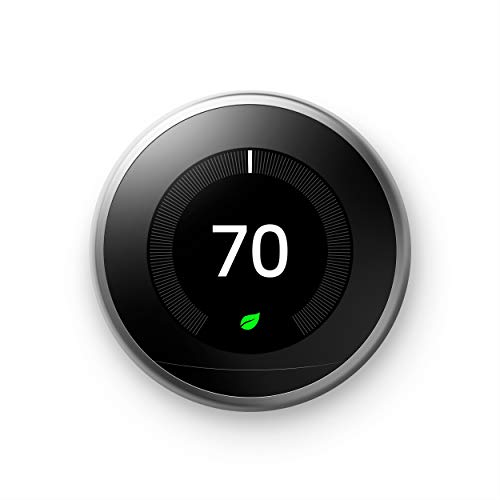

If you’re looking for a smart thermostat that combines sleek design with advanced learning capabilities, the Google Nest Learning Thermostat (3rd Gen, 2015) is an excellent choice. Its round, stainless steel finish and digital display give it a modern look that fits seamlessly into any home. It connects via Wi-Fi, Bluetooth, and Zigbee, allowing remote control through the app or voice assistants like Alexa and Google Assistant. The thermostat learns your schedule using Auto-Schedule, saving energy by adjusting heating and cooling automatically. With features like Home/Away Assist and energy history, it helps you save up to 12% on heating and 15% on cooling costs.
Best For: homeowners seeking a sleek, energy-efficient smart thermostat with advanced learning features that easily integrates with voice assistants and smart home systems.
Pros:
- Learns user schedules and adjusts heating/cooling automatically, maximizing energy savings.
- Compatible with Alexa, Google Assistant, and Zigbee for versatile control options.
- Stylish stainless steel design with a bright, modern display that complements various home décors.
Cons:
- Requires a compatible 24V HVAC system; incompatible systems may need additional wiring or upgrades.
- Installation, while straightforward, involves shutting off power and handling wiring, which may be challenging for some users.
- Limited to Wi-Fi, Bluetooth, and Zigbee connections; lacks support for other smart home protocols without additional hubs.
Google Nest Learning Thermostat (4th Gen, 2024) with Nest Temperature Sensor

The Google Nest Learning Thermostat (4th Gen, 2024) with Nest Temperature Sensor stands out as an excellent choice for homeowners seeking a sleek, intelligent thermostat that adapts to their habits. Its polished Obsidian finish and optional large faceplate blend seamlessly with modern decor. The bright touchscreen with Dynamic Farsight ensures visibility from across the room, and it automatically adjusts brightness for comfort. Easy to install, it supports most 24V systems—many without needing a C wire. The included Nest Temperature Sensor helps manage hot and cold spots for precise comfort, while its compatibility with voice assistants and smart home protocols makes daily control effortless.
Best For: homeowners seeking a stylish, easy-to-install smart thermostat that offers precise temperature control and seamless smart home integration.
Pros:
- Sleek, modern design with customizable display options
- Easy installation, often without the need for a C wire
- Supports multiple smart home platforms and voice assistants
Cons:
- Some users experience compatibility issues outside the US
- Slightly higher price point compared to basic thermostats
- Requires Wi-Fi connection for full functionality
Google Nest Learning Thermostat, 3rd Gen, Programmable Smart Thermostat

The Google Nest Learning Thermostat (3rd Gen) stands out for homeowners who want a sleek, intuitive device that automatically adapts to their habits. It features a stainless steel finish that adds a modern touch to any home. The thermostat learns your schedule and preferred temperatures, adjusting itself to save energy. With Home/Away Assist, it switches to Eco Temperature when you’re gone, preventing waste. You can control it remotely via your phone, laptop, or tablet, and it monitors your HVAC system for potential issues. Optional Nest Temperature Sensors enhance room-specific comfort, while the intuitive interface and energy history make managing your home’s climate simple and efficient.
Best For: homeowners seeking an energy-efficient, sleek, and easy-to-use smart thermostat that adapts to their schedule and can be controlled remotely.
Pros:
- Learns your schedule and preferred temperatures to optimize energy savings
- Compatible with Alexa and other smart home ecosystems for voice control
- Remote control via phone, tablet, or laptop for convenience
Cons:
- Requires Wi-Fi connection for remote features and updates
- Optional Nest Temperature Sensors are sold separately, adding extra cost for room-specific control
- May have a learning curve for users unfamiliar with smart thermostats
Sensi Smart Thermostat with Wi-Fi and Alexa Compatibility
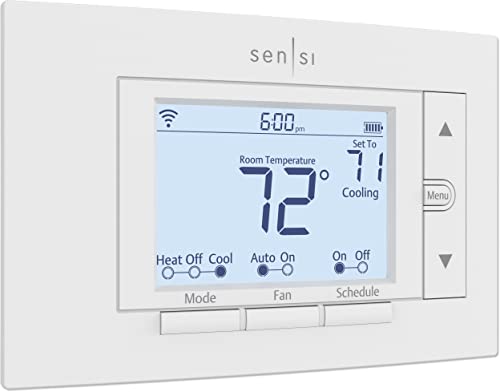
For homeowners seeking an easy-to-install smart thermostat that offers seamless Wi-Fi connectivity and voice control, the Sensi Smart Thermostat with Alexa Compatibility stands out. Its simple design fits standard spaces without the need for patching or painting, and installation is straightforward, often without a c-wire. The mobile app makes remote control easy, while compatibility with most HVAC systems ensures broad setup options. Certified by ENERGY STAR, it helps cut energy use by around 23%. Plus, it provides helpful maintenance alerts and detailed usage reports, making it easy to optimize efficiency and save money—all while preserving your privacy.
Best For: homeowners seeking an easy-to-install, energy-efficient smart thermostat with Wi-Fi and voice control compatibility.
Pros:
- Simple, traditional design that fits standard thermostat spaces without patching or painting
- Easy DIY installation with step-by-step app instructions, often without needing a c-wire
- ENERGY STAR certified, reducing HVAC energy consumption by approximately 23%
Cons:
- Compatibility may vary with certain complex or less common HVAC systems
- Lacks advanced features found in more premium smart thermostats
- Requires Wi-Fi connection and smartphone app for full remote functionality
Google Nest Learning Thermostat, 3rd Generation
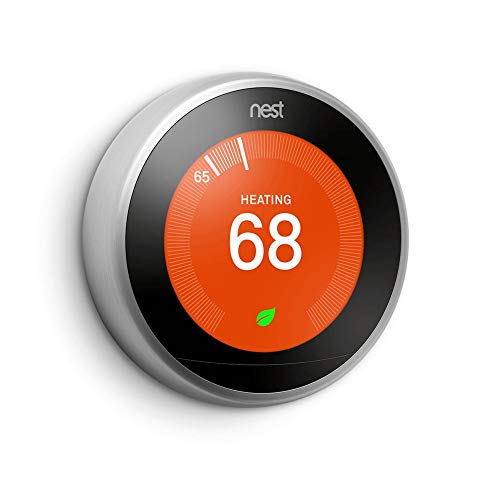
If you’re seeking a sleek, self-learning thermostat that adapts to your schedule and offers remote control, the Google Nest Learning Thermostat (3rd Generation) stands out. Its slim design, larger LCD display, and Far Sight feature that lights up when it detects your presence make it both stylish and functional. Compatible with various heating and cooling systems, it connects via Wi-Fi for easy remote management through the app. While setup can be tricky—especially without a C wire—many find it intuitive once installed. Customers praise its energy savings and seamless integration with other smart home devices, making it a popular choice for modern, energy-efficient homes.
Best For: homeowners seeking a stylish, self-learning thermostat with remote control capabilities and seamless smart home integration.
Pros:
- Sleek, modern design with a larger, sharper LCD display
- Auto-schedule and self-learning features that adapt to your routines
- Compatible with a wide range of HVAC systems and integrates easily with smart home devices
Cons:
- Setup can be complicated, especially without a C wire or for first-time users
- Battery life may be short, requiring replacements or troubleshooting
- Connectivity issues and app setup difficulties reported by some users
Amazon Smart Thermostat

Those seeking an affordable and easy-to-install smart thermostat will find the Amazon Smart Thermostat an excellent choice, especially if they already use Alexa devices. First released in 2021, it’s compatible with most 24V HVAC systems, including heat pumps and radiant boilers, but not with 110-240V systems. Setup is simple with the Alexa app, taking around 30-60 minutes, and installation is straightforward with optional tools. It offers automatic control via Alexa, scheduling, energy dashboards, and integration with other Alexa devices. While some users report minor glitches, its sleek design, affordability, and seamless smart home integration make it a practical upgrade for most homes.
Best For: homeowners seeking an affordable, easy-to-install smart thermostat that works seamlessly with Alexa and has compatible wiring.
Pros:
- Easy installation and setup with guided app instructions
- Affordable price point with potential energy savings and rebates
- Integrates smoothly with Alexa for voice control and automation
Cons:
- May experience minor software glitches or connectivity issues
- Not compatible with 110-240V systems like electric baseboard heat
- Requires C-wire or an additional power adapter for installation
ecobee Smart Thermostat Enhanced, Programmable Wifi Thermostat
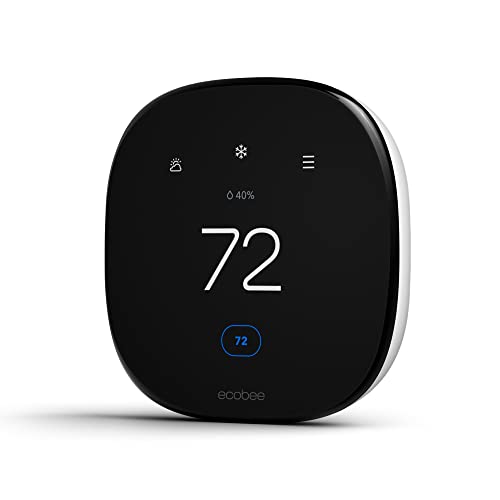
The ecobee Smart Thermostat Enhanced stands out as an excellent choice for homeowners seeking maximum energy savings and seamless smart home integration. It automatically adjusts temperatures based on occupancy, sleep, and away modes, saving up to 26% annually on energy costs. Compatible with most 24 VAC systems, including heat pumps and boilers, it also features a Power Extender Kit for homes without a C-wire. Easy to install and control via app or voice assistants like Alexa, Google, and Apple HomeKit, it offers a sleek LCD display and smart scheduling. Certified Energy Star, it combines efficiency with user-friendly design, making it a top pick for modern smart homes.
Best For: homeowners seeking an energy-efficient, easily integrated smart thermostat compatible with a wide range of HVAC systems, including those without a C-wire.
Pros:
- Easy to control via app, voice assistants, and touchscreen, with intuitive setup and operation.
- Automatic energy savings through occupancy and mode-based temperature adjustments, reducing costs by up to 26% annually.
- Compatible with most 24 VAC HVAC systems and includes a Power Extender Kit for homes lacking a C-wire.
Cons:
- Installation can be challenging without prior wiring knowledge, especially for homes without a C-wire.
- The display may be difficult to keep constantly visible in narrow hallways or limited lighting conditions.
- Some users experience difficulties with website login persistence and occasional product delivery mismatches.
ecobee Smart Thermostat Essential, Wi-Fi Programmable Thermostat

The ecobee Smart Thermostat Essential stands out as an excellent choice for homeowners seeking an affordable, energy-saving device that’s easy to install and use. It’s Energy Star certified and compatible with Siri, Alexa, Google Assistant, and Apple HomeKit, making integration seamless. The sleek round design features a color LCD touchscreen and intuitive touchpad controls. It can help you save up to 23% annually on heating and cooling costs by automatically adjusting based on schedules, occupancy, and weather reports. Plus, it supports a wide range of HVAC systems, often requiring no C-wire, and can be set up in about 20 minutes.
Best For: homeowners seeking an affordable, easy-to-install smart thermostat that maximizes energy savings and integrates seamlessly with popular smart home ecosystems.
Pros:
- Energy Star certified, promoting cost savings and environmental responsibility
- Compatible with major voice assistants and smart home platforms like Alexa, Google Assistant, and Apple HomeKit
- Simple DIY installation with minimal wiring needed and quick setup in about 20 minutes
Cons:
- Slightly lower screen resolution compared to some older models like Nest
- Cover plate not included, which may require additional purchase
- May need tech support for complex wiring or older HVAC systems
Google Nest Thermostat E, Programmable Smart Thermostat

If you’re looking for an affordable yet smart way to manage your home’s temperature, the Google Nest Thermostat E is an excellent choice. Its sleek white design blends seamlessly into any decor, and it works effortlessly with Alexa, Google Assistant, and other smart speakers for voice control. The thermostat learns your preferences and automatically adjusts to save energy, while the Nest app makes it easy to modify schedules remotely. Home/Away Assist switches to Eco Mode when you’re away, reducing waste. Plus, with optional temperature sensors and HVAC monitoring, it offers precise control and maintenance alerts, all while helping you cut energy costs effortlessly.
Best For: homeowners seeking an affordable, easy-to-use smart thermostat that seamlessly integrates with voice assistants and offers energy-saving features.
Pros:
- Sleek white design that complements any home decor
- Learns user preferences and adjusts temperature settings automatically
- Remote control via the Nest app for convenient scheduling and adjustments
Cons:
- Requires separate purchase of the Nest Temperature Sensor for room-specific control
- Limited display interface compared to more advanced smart thermostats
- Dependence on Wi-Fi connectivity for full functionality
ecobee Smart Thermostat Premium with Sensors and Air Quality Monitor

For homeowners looking to maximize energy savings and improve indoor air quality, the ecobee Smart Thermostat Premium with Sensors and Air Quality Monitor stands out as an excellent choice. It can save up to 26% annually on heating and cooling costs, earning ENERGY STAR certification for efficiency. The SmartSensor adjusts temperatures in key rooms, reducing hot or cold spots, while the system automatically pauses heating or cooling if a window or door stays open for five minutes. Built-in air quality monitoring detects poor air conditions, offers tips, and reminds you to change filters. Its sleek design, voice control compatibility, and all-encompassing home monitoring make it a standout option for a smarter, healthier home.
Best For: homeowners seeking to maximize energy efficiency, improve indoor air quality, and enjoy smart home integration with easy control and monitoring.
Pros:
- Up to 26% annual savings on heating and cooling costs with ENERGY STAR certification.
- Built-in air quality monitor and smartSensor technology for healthier indoor environments and temperature precision.
- Compatibility with multiple voice assistants and smart home systems, plus sleek, modern design.
Cons:
- Requires Apple Home Hub for Siri voice control functionality.
- Installation may be complex for some DIYers despite included Power Extender Kit.
- Premium features and sensors come at a higher price point compared to basic thermostats.
Google Nest Learning Thermostat, 3rd Gen (2015)
When searching for a smart thermostat that combines learning capabilities with sleek design, the Google Nest Learning Thermostat 3rd Gen (2015) stands out as an excellent choice. Its polished steel finish and round alloy body give it a modern look that fits various home styles. It learns your schedule, auto-programs itself, and guides you toward energy savings with features like Auto-Schedule and the Nest Leaf. Control is easy via Wi-Fi, voice commands through Alexa or Google Assistant, and the Nest app. While setup is straightforward, some users experience battery or connectivity issues. Overall, it offers reliable automation and energy efficiency, earning high customer ratings and making it a popular choice.
Best For: homeowners seeking an energy-efficient, stylish smart thermostat with learning capabilities and easy control via voice and app integration.
Pros:
- Learns user schedules and auto-programs for convenience
- Sleek, modern design with polished steel finish
- Compatible with Alexa, Google Assistant, and Wi-Fi for remote control
Cons:
- Some users experience battery charging and connectivity issues
- Limited automation options with Alexa routines and app scheduling
- No C wire support for certain HVAC systems, which can complicate installation
meross Smart Thermostat for Home
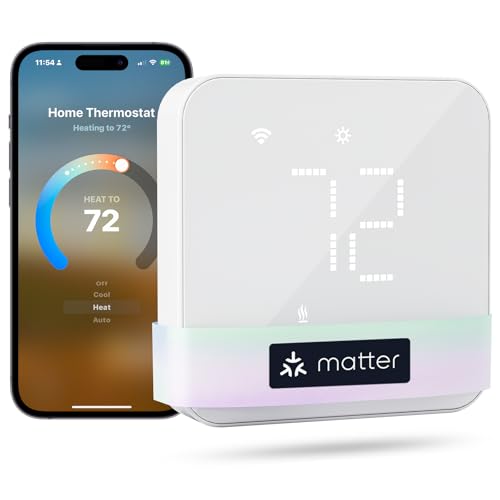
The meross Smart Thermostat for Home stands out as an excellent choice for homeowners seeking a budget-friendly yet reliable smart climate control solution. Compatible with 95% of HVAC systems, it supports conventional heating, cooling, heat pumps, and more, though not electric baseboard heaters. Easy to install on 24V systems with a C-wire or adapter, it offers a sleek LED display, app control, and voice integration with Alexa, Google, and Apple HomeKit. Its smart scheduling, energy monitoring, and compatibility with Matter technology help reduce bills and simplify control. Overall, it’s a reliable, cost-effective upgrade that blends simplicity with smart features.
Best For: homeowners seeking an affordable, reliable, and easy-to-install smart thermostat compatible with most HVAC systems.
Pros:
- Supports a wide range of HVAC systems, including heat pumps and conventional heating/cooling.
- Easy to install with clear guidance and optional C-wire adapter.
- Offers comprehensive smart features such as app control, voice integration, and energy monitoring.
Cons:
- Not suitable for electric baseboard heaters.
- Some users may experience limitations with the 24-hour clock format in scheduling.
- Firmware updates might be needed to address minor interface or functionality issues.
Google Nest Thermostat, Programmable Wi-Fi Smart Thermostat

If you’re seeking a smart thermostat that combines energy efficiency with seamless connectivity, the Google Nest Thermostat stands out as an excellent choice. It’s ENERGY STAR certified, helps save energy by adjusting when you’re away, and maintains comfort with automatic temperature control. With Wi-Fi support and integration with Google Assistant, Alexa, and Matter, controlling it is simple via voice or the app. Installation is straightforward, often taking just 30 minutes, and it works with most HVAC systems, even without a C wire. Its sleek design, remote control features, and energy monitoring make it a practical, user-friendly upgrade for smarter home climate management.
Best For: homeowners seeking an energy-efficient, easy-to-install smart thermostat that integrates seamlessly with voice assistants and offers remote control.
Pros:
- ENERGY STAR certified, promoting significant energy savings and environmental benefits
- Supports Wi-Fi, Bluetooth, and voice control through Google Assistant, Alexa, and Matter
- Easy DIY installation typically completed within 30 minutes, compatible with most HVAC systems
Cons:
- Reliance on a stable internet connection for remote access and notifications
- May require additional wiring or accessories, such as a C wire, for certain HVAC systems
- Some users experience initial setup challenges related to wiring and compatibility checks
Sensi Lite Smart Thermostat

The Sensi Lite Smart Thermostat stands out for its ease of installation and user-friendly app control, making it an excellent choice for DIY enthusiasts and homeowners seeking straightforward smart home upgrades. It features simple wiring, a built-in level, and clear instructions, allowing most users to install it in about 10 minutes. With Wi-Fi connectivity, you can control it remotely via Android or iOS apps, and it works with Alexa, Google Assistant, and SmartThings. Its sleek LCD display and energy-saving features, like flexible scheduling and geofencing, help reduce HVAC costs by roughly 23%. Overall, this thermostat offers an accessible, efficient, and reliable way to upgrade your home’s climate control.
Best For: DIY homeowners and tech-savvy users seeking an easy-to-install, energy-efficient smart thermostat compatible with popular smart home platforms.
Pros:
- Easy DIY installation with built-in level and clear instructions
- App control available for Android and iOS for remote thermostat management
- Energy-saving features like scheduling and geofencing that help reduce HVAC costs by approximately 23%
Cons:
- Connectivity issues may occur after battery replacement or Wi-Fi outages
- Limited international support, primarily suited for US and Canadian markets
- Some users experience challenges with Wi-Fi reconnection and technical support wait times
Factors to Consider When Choosing Smart Thermostats With Learning Features
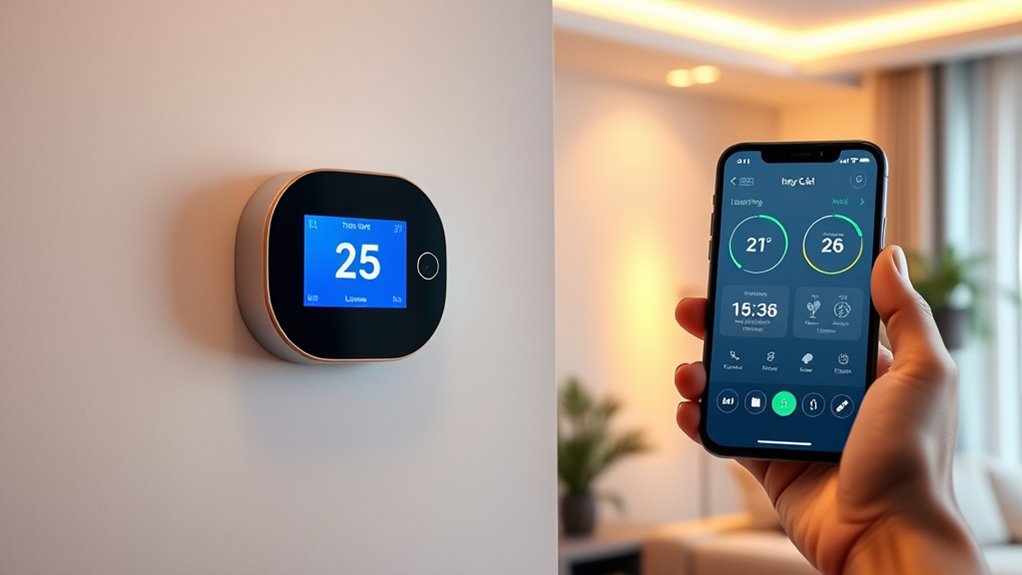
When choosing a smart thermostat with learning features, I consider how well it works with my HVAC system and how easy it is to install. I also look at the accuracy of its learning algorithms and whether it seamlessly integrates with other smart devices. Finally, I evaluate its potential to save energy and cut costs over time.
Compatibility With HVAC
Choosing a smart thermostat that works seamlessly with your HVAC system starts with verifying compatibility. First, confirm it supports your specific system type—gas, electric, oil, heat pump, or radiant. Many thermostats require a C-wire for consistent power, so check if your setup needs one or if the model supports wire-free operation. Additionally, verify that it handles your HVAC’s features, like multi-stage heating or cooling, or zone control, to maximize efficiency and comfort. Compatibility with your smart home ecosystem—like Alexa, Google Assistant, or Apple HomeKit—is also key for smooth integration and voice commands. Finally, review installation requirements and wiring standards to prevent future issues and make setup straightforward. Being thorough here saves you headaches later.
Installation Ease
Installing a smart thermostat with learning features can vary in complexity depending on your existing HVAC setup. The wiring, especially whether you have a C-wire, plays a vital role in ease of installation. Thermostats that support plug-and-play setups or come with detailed installation kits make the process quicker and simpler. Devices compatible with common HVAC systems and capable of operating without a C-wire reduce the need for extra wiring or accessories, streamlining installation. Clear, step-by-step instructions and app-guided setup also make the process more straightforward. However, if your wiring is complex, involves dual systems, or if you encounter initial setup challenges, professional installation might be the best route to guarantee safety and proper function.
Learning Algorithm Accuracy
The accuracy of a smart thermostat’s learning algorithm is essential because it directly affects how well the device can predict and adjust to your preferences over time. A highly effective algorithm analyzes multiple data points, including occupancy patterns, temperature adjustments, and external weather conditions, to improve its predictive capabilities. When the algorithm is precise, your home stays comfortable while energy use is optimized, reducing waste. Conversely, inaccurate algorithms may cause unnecessary heating or cooling, leading to higher energy bills and less comfort. The reliability of these devices is often measured by how frequently they make successful automatic adjustments. Continuous software updates and user feedback play critical roles in enhancing the algorithm’s accuracy, ensuring your thermostat becomes smarter and more personalized with each use.
Integration Options
When selecting a smart thermostat with learning features, considering its integration options is essential because these determine how well the device fits into your existing smart home setup. Many thermostats support popular voice assistants like Alexa, Google Assistant, and Siri, enabling easy, hands-free control. They often use protocols such as Zigbee, Z-Wave, or Matter, allowing seamless communication with other smart devices and ecosystems. Compatibility with platforms like SmartThings or Apple HomeKit lets you automate routines based on occupancy sensors or time schedules. Additionally, robust mobile apps and cloud services provide remote access, so you can adjust your thermostat anytime, anywhere. Supporting multiple ecosystem integrations gives you the flexibility to create a unified smart home system that connects climate control with security, lighting, and more.
Energy Saving Potential
Choosing a smart thermostat with learning features can substantially boost your energy savings by automatically adjusting temperatures based on your routines and occupancy patterns. These devices often cut heating and cooling bills by 10-15% by optimizing schedules and avoiding unnecessary HVAC operation during unoccupied times. Integrated sensors and adaptive algorithms help fine-tune climate control, ensuring consistent comfort while minimizing waste. Many models also provide energy usage reports and tips, empowering me to identify patterns and improve savings further. Features like auto-away, eco modes, and demand response participation can notably enhance cost reductions compared to traditional thermostats. Overall, a smart thermostat with learning capabilities offers a powerful way to reduce energy consumption, save money, and make my home more efficient without sacrificing comfort.
Frequently Asked Questions
How Do Smart Thermostats Improve Energy Efficiency Over Traditional Thermostats?
Smart thermostats improve energy efficiency by learning my schedule and adjusting temperatures accordingly, so I don’t waste energy when I’m not home or asleep. They monitor my usage patterns and optimize settings to save power without sacrificing comfort. Additionally, I can control them remotely via my phone, making it easy to turn off or adjust the temperature when needed. All this helps reduce my energy bills and carbon footprint.
Can Smart Thermostats Be Integrated With Existing Home Automation Systems?
Absolutely, I can integrate smart thermostats with existing home automation systems. I usually check compatibility first, then follow setup instructions to connect via Wi-Fi or hubs like Zigbee or Z-Wave. This seamless integration allows me to control temperature settings through a single app or voice commands, making my home smarter and more energy-efficient. It’s pretty straightforward, and I love how it simplifies managing my home environment.
What Are the Privacy Concerns Associated With Smart Thermostat Data Collection?
Did you know 81% of smart home users worry about their data privacy? I believe the biggest concern with smart thermostats is data collection; they track when you’re home, your routines, and even your daily habits. I always make certain my device’s privacy settings are secure and stay informed about how my data is used. Protecting my personal information is vital for trusting and enjoying smart home technology.
How Often Do Smart Thermostats Require Software Updates or Maintenance?
Smart thermostats typically need software updates every few months to stay secure and add new features. I recommend checking for updates regularly through the app or device settings. Maintenance is minimal—usually just ensuring the device is connected to Wi-Fi and cleaning the sensors occasionally. Staying on top of updates helps keep your system running smoothly and securely, making your home more comfortable and energy-efficient.
Are There Any Compatibility Issues With Specific HVAC Systems for These Smart Thermostats?
Did you know that around 15% of smart thermostat users face compatibility issues? Yes, some models might not work seamlessly with certain HVAC systems, especially older ones. I’ve found that checking the thermostat’s compatibility with your specific system before buying is essential. Most manufacturers provide compatibility guides, so I always recommend reviewing those or consulting a professional to avoid surprises later.
Conclusion
After exploring these smart thermostats, I believe the right choice depends on your home’s needs and your tech preferences. It’s like finding the perfect rhythm for your comfort and energy savings—once you sync up with a device that learns your habits, it feels almost like magic. I’ve seen how these gadgets truly make a difference, proving that investing in a smart thermostat isn’t just a trend, but a smart move toward a more efficient, cozy home.