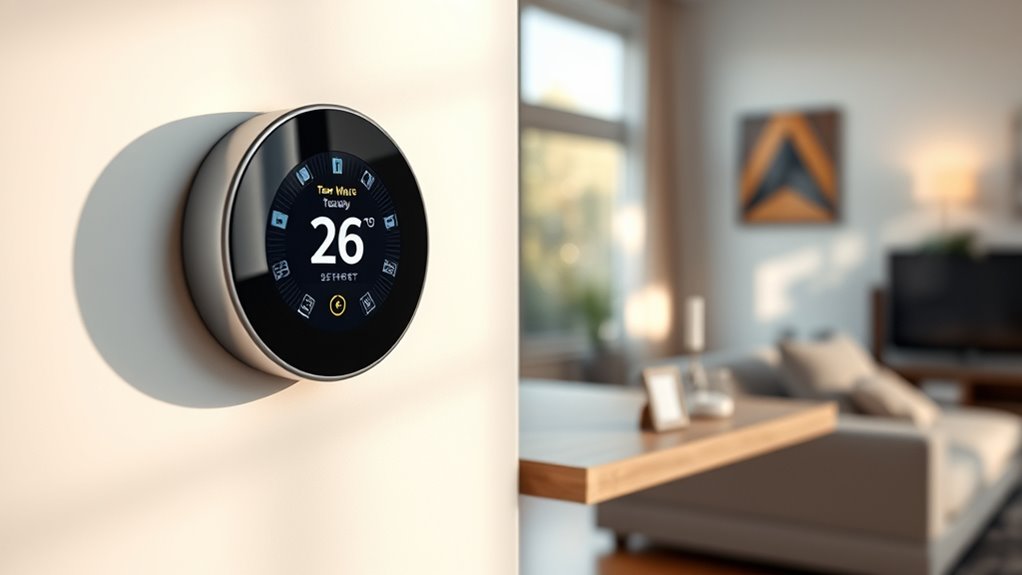

If you’re looking to boost home comfort and save energy, I recommend smart thermostats with remote sensors like the ecobee models, Sensi, or the T9. They let me control multiple rooms and adjust temperatures based on sensor placement, all while supporting voice assistants and smart integrations. Most need a C-wire, but they’re easy to set up and can cut heating and cooling costs markedly. Keep exploring for more details on the best options to suit your needs.
Key Takeaways
- Compatibility with multiple remote sensors allows for precise multi-room temperature control and enhanced comfort.
- Integration with popular smart home ecosystems and voice assistants enables seamless automation and remote management.
- Advanced features like energy-saving routines, auto modes, and geofencing optimize efficiency and reduce utility costs.
- User-friendly interfaces and guided setup processes facilitate easy installation and management, even for DIY users.
- Support for various HVAC systems, including multi-stage and heat pump setups, ensures versatile compatibility and optimal performance.
ecobee Smart Thermostat Premium with Smart Sensor and Air Quality Monitor


If you’re looking to maximize energy savings and improve home comfort, the ecobee Smart Thermostat Premium with Smart Sensor and Air Quality Monitor is an excellent choice. It can save you up to 26% annually on heating and cooling costs and is ENERGY STAR certified. The included SmartSensor adjusts temperature in key rooms, reducing hot or cold spots. It also automatically pauses HVAC when a window or door stays open for 5 minutes, saving money and energy. Plus, it monitors indoor air quality, detects poor conditions, and offers tips for improvement. Its sleek design, voice control options, and compatibility with most HVAC systems make it a versatile and smart addition to your home.
Best For: homeowners seeking to reduce energy costs, improve indoor air quality, and enjoy smart home convenience with versatile compatibility.
Pros:
- Saves up to 26% annually on heating and cooling costs, leading to significant savings.
- Built-in air quality monitor and home security features for comprehensive home management.
- Supports voice control via Siri and Alexa, enhancing user convenience.
Cons:
- Requires a compatible HVAC system and may need a Smart Security plan for certain features.
- Apple Home Hub is necessary for Siri integration, adding to setup complexity.
- Premium price point may be a consideration for budget-conscious buyers.
Sensi Smart Thermostat
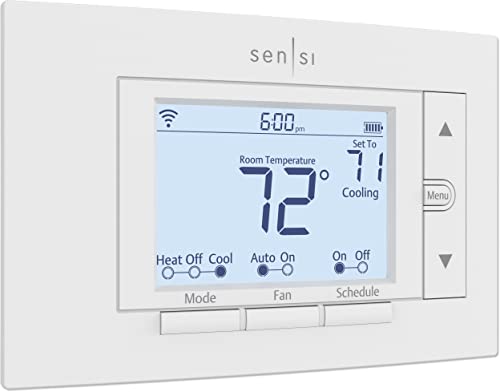
The Sensi Smart Thermostat stands out as an ideal choice for homeowners seeking an easy-to-install, reliable device that offers precise temperature control without complex wiring. Its intuitive design resembles traditional thermostats, fitting seamlessly into standard wall space without needing patching or painting. Installation is straightforward with built-in level and step-by-step app instructions, often eliminating the need for a common wire. Compatible with most HVAC systems and Alexa voice control, it provides remote management via a mobile app. ENERGY STAR-certified, it can reduce energy use by about 23%, helping you save on bills while maintaining comfort effortlessly.
Best For: homeowners seeking an easy-to-install, reliable smart thermostat that offers precise temperature control and energy savings without complex wiring.
Pros:
- Easy DIY installation with built-in level and step-by-step app instructions
- ENERGY STAR-certified, reducing HVAC energy use by approximately 23%
- Compatible with most HVAC systems and supports voice control via Alexa
Cons:
- May not require a c-wire in many cases, but some systems could still need one
- Limited customization options compared to more advanced smart thermostats
- Requires a compatible smartphone or device for remote management
T9 WiFi Smart Thermostat with 1 Smart Room Sensor

The T9 WiFi Smart Thermostat with 1 Smart Room Sensor is an excellent choice for homeowners wanting precise temperature control across different rooms, especially in multi-story or multi-zone homes. It features a sleek touchscreen display, built-in speaker, and compatibility with various forced air heating systems, hot water, steam, and heat pumps. Installation is straightforward, with a guided setup and an included low-voltage power adapter. The thermostat connects via Wi-Fi for remote control and supports energy-saving programs like Auto Home/Away Scheduling. Its smart sensors detect temperature and humidity, helping balance comfort across multiple rooms and zones, all controllable through popular voice assistants and mobile apps.
Best For: homeowners seeking precise, multi-room temperature control and energy savings in multi-story or multi-zone homes with forced air or heat pump systems.
Pros:
- Easy to install and set up with guided instructions and included low-voltage power adapter
- Effective multi-room sensing with Honeywell’s proprietary sensors for balanced comfort
- Compatible with popular voice assistants and smart home ecosystems like Alexa, Google, and Apple HomeKit
Cons:
- Fixed temperature differential of approximately 1 degree with no adjustable setting
- Does not support electric baseboard heating systems (120-240V)
- Limited to Wi-Fi connectivity, requiring a stable internet connection for remote features
ecobee Smart Thermostat Essential, Wi-Fi Thermostat with Voice Assistant Compatibility

For homeowners seeking to maximize energy savings and comfort, the ecobee Smart Thermostat Essential stands out because it automatically adjusts the temperature based on your schedule and presence. It can save up to 23% annually on heating and cooling costs by reducing energy use when you’re away and boosting comfort when you’re home. The thermostat tracks energy consumption via the ecobee app, giving you control on the go. It supports most HVAC systems, including gas, electric, and heat pumps, and features a user-friendly color touchscreen. With compatibility for Apple HomeKit, Google Assistant, and Alexa, it’s easy to integrate into your smart home ecosystem.
Best For: homeowners looking to optimize energy efficiency and integrate a versatile, user-friendly smart thermostat into their existing HVAC system.
Pros:
- Saves up to 23% annually on heating and cooling costs through automatic scheduling and energy tracking.
- Compatible with most HVAC systems and major smart home ecosystems like Apple HomeKit, Google Assistant, and Alexa.
- Easy DIY installation with no C-wire needed, plus a sleek color touchscreen for intuitive control.
Cons:
- Compatibility with HVAC systems should be verified via the ecobee Compatibility Checker before purchase.
- May require additional accessories like the ecobee Power Extender Kit for homes without a C-wire.
- Limited advanced features compared to higher-end ecobee models, which might be a consideration for tech-savvy users.
Smart Thermostat with Room Sensor, 7-Day Programmable, WiFi and Touchscreen Control

If you’re looking to optimize comfort and energy savings in your home, a smart thermostat with remote sensors offers a clever solution. The Provirtec TH-01 supports most 24VAC HVAC systems and features a user-friendly 3.95-inch touchscreen for easy control. It allows 7-day programmable schedules, auto-away, sleep, and location-based temperature adjustments. WiFi connectivity (2.4GHz) and Bluetooth Mesh ensure stable remote access via the Prodigytec app. While setup may require some effort, especially with wiring, many users appreciate its modern design and reliable control. Despite minor issues with sensors and display brightness at night, it’s a cost-effective option for enhanced comfort and efficiency.
Best For: homeowners seeking an affordable, easy-to-program smart thermostat with remote control capabilities and compatibility with most 24VAC HVAC systems.
Pros:
- Modern, sleek touchscreen design with intuitive app and manual control options
- Supports customizable 7-day schedules, auto-away, sleep, and location-based temperature adjustments
- WiFi (2.4GHz) and Bluetooth Mesh ensure stable remote access and connectivity
Cons:
- Bright display can be disruptive at night; lacks a dimming feature
- Setup may be challenging for wiring, especially with 6-wire configurations
- Some users report limited effectiveness and functionality issues with the thermo-hygrometer sensor
Sensi Touch 2 Smart Thermostat with Touchscreen Display

Those seeking precise temperature control throughout their home will appreciate the Sensi Touch 2 Smart Thermostat’s compatibility with remote sensors. Its colorful touchscreen display makes programming and adjusting settings simple and intuitive. Wi-Fi connectivity allows remote access via the app, so you can monitor and control your climate from anywhere. It’s Energy Star certified, helping you save around 23% on HVAC costs. Compatible with Sensi Room Sensors (sold separately), it balances temperatures across your home. Easy to install with a C-wire and guided setup, it integrates seamlessly with Alexa and prioritizes your privacy. This thermostat combines smart features with user-friendly design for ideal comfort and efficiency.
Best For: those seeking precise, customizable, and remote-controlled temperature management with easy installation and smart home integration.
Pros:
- User-friendly touchscreen interface makes programming simple and intuitive.
- Wi-Fi connectivity enables remote access and control via the app from anywhere.
- Compatible with Sensi Room Sensors for balanced temperatures throughout the home.
Cons:
- Requires a C-wire for installation, which may not be available in all homes.
- Sensi Room Sensors are sold separately, adding to the overall cost.
- Limited compatibility with certain HVAC systems that lack standard wiring.
Google Nest Learning Thermostat (4th Gen, 2024) with Nest Temperature Sensor

The Google Nest Learning Thermostat (4th Gen, 2024) with Nest Temperature Sensor is ideal for anyone looking to optimize home comfort while maximizing energy savings. Its sleek Obsidian finish and larger display with Dynamic Farsight make it easy to see from across the room. Compatible with most 24V systems and easy to install, it supports smart home integration via Matter protocol. The included Nest Temperature Sensor allows you to manage multiple rooms and reduce hot or cold spots. You can control it remotely through the Google Home app or voice commands, while its intelligent learning capabilities help cut heating and cooling bills by up to 15%.
Best For: homeowners seeking an advanced, aesthetically pleasing smart thermostat to optimize comfort and energy savings across multiple rooms.
Pros:
- Sleek Obsidian finish with a larger, easy-to-read display featuring Dynamic Farsight.
- Compatible with most 24V systems and supports Matter protocol for seamless smart home integration.
- Includes Nest Temperature Sensor for managing multiple rooms and reducing hot or cold spots.
Cons:
- May require Wi-Fi and smart home ecosystem setup, which could be complex for some users.
- The initial cost might be higher compared to basic thermostats.
- Some users may find the learning curve for advanced features slightly steep.
T9 WiFi Smart Thermostat with Room Sensor and Touchscreen Display
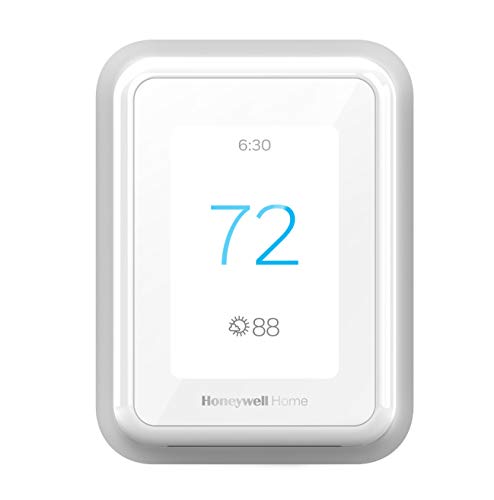
The T9 WiFi Smart Thermostat with Room Sensor and Touchscreen Display is an excellent choice for homeowners seeking customizable temperature control across multiple rooms. It features an intuitive touchscreen, voice assistant compatibility, and energy-saving tools, making it user-friendly and efficient. The thermostat supports most HVAC systems, including forced air, hot water, steam, and heat pumps, though it’s incompatible with electric baseboard heat. With optional remote sensors, geofencing, and auto home/away modes, you can focus temperature where needed. Easy to install, it offers remote control via the app, learning routines, and sending alerts, all while maintaining a sleek, backlit display.
Best For: homeowners seeking an affordable, easy-to-use smart thermostat with multi-room temperature control and remote access.
Pros:
- Supports a wide range of HVAC systems, including forced air, hot water, steam, and heat pumps
- User-friendly touchscreen interface with remote control via mobile app and voice assistants
- Energy-saving features, customizable schedules, and room sensors for focused comfort
Cons:
- Requires a C-wire for installation; may need a power adapter or professional help if unavailable
- Less sleek design and fewer advanced occupancy sensors compared to higher-end models like Ecobee
- Geofencing has limitations, as it needs all phones to be on and cannot distinguish individual room occupancy
ecobee Smart Thermostat Enhanced with Wi-Fi and Voice Assistant Compatibility
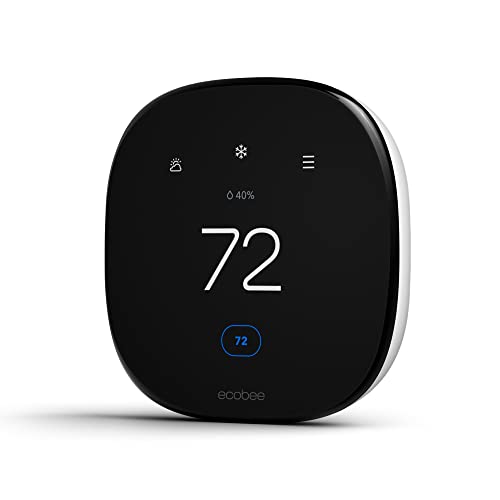
If you want a smart thermostat that seamlessly integrates with your home’s heating and cooling system, the ecobee Smart Thermostat enhanced with Wi-Fi and voice assistant compatibility is an excellent choice. It can save you up to 26% annually on energy costs by automatically adjusting temperature based on occupancy, sleep schedule, and humidity levels. Compatible with most 24 VAC systems, including heat pumps and boilers, it’s easy to install with the included Power Extender Kit. You can control it remotely via the Ecobee app or voice commands through Siri, Alexa, or Google Assistant, ensuring convenience and ideal comfort wherever you are.
Best For: homeowners seeking an energy-efficient, easy-to-install smart thermostat that integrates seamlessly with popular voice assistants and smart home systems.
Pros:
- Saves up to 26% annually on heating and cooling costs through smart adjustments and automation.
- Compatible with most 24 VAC HVAC systems, including heat pumps and boilers, with an included Power Extender Kit for easy installation.
- Supports remote control and voice commands via Ecobee app, Siri, Alexa, and Google Assistant for added convenience.
Cons:
- May be overkill for users with basic heating and cooling needs or simpler thermostats.
- Requires a wired connection; not suitable for homes without a compatible HVAC system or C-wire without the Power Extender Kit.
- Some users might find the advanced features and app interface complex initially.
Amazon Smart Thermostat, Alexa & Ring Compatible

Anyone looking to seamlessly integrate their thermostat with Alexa and Ring devices will find the Amazon Smart Thermostat an excellent choice, especially since it’s compatible with select Echo and Ring products. Installation is straightforward, requiring a C-wire, and it works with Amazon’s smart home ecosystem for effortless automation. Certified ENERGY STAR, it can save around $50 annually on energy bills, with rebates available through local providers. The thermostat automatically adjusts heating and cooling based on presence or temperature, and you can control it remotely via the Alexa app. Built with reliable Honeywell technology, it’s a practical, energy-efficient upgrade for modern smart homes.
Best For: homeowners seeking an easy-to-install, energy-efficient smart thermostat that integrates seamlessly with Alexa and Ring devices for enhanced home automation.
Pros:
- Compatible with Alexa, Ring, and select Echo devices for effortless voice control and automation
- ENERGY STAR certified, saving approximately $50 annually on energy bills
- Simple installation with guidance from the Alexa app and reliable Honeywell technology
Cons:
- Requires a C-wire for installation, which may not be present in all homes
- Limited compatibility to select Echo and Ring devices, potentially restricting integration options
- May need additional support for advanced customization or non-standard HVAC systems
Sensi Lite Smart Thermostat

Designed for homeowners seeking easy DIY installation and remote control, the Sensi Lite Smart Thermostat stands out with its user-friendly setup and compatibility with popular smart home systems. Its built-in level and step-by-step instructions make installation straightforward, often without needing a C-wire. You can control it via the app on Android or iOS, supporting Alexa, Google Assistant, and SmartThings. With features like programmable schedules, humidity display, and auto changeover, it enhances comfort and efficiency. Compact and lightweight, it fits seamlessly into your home, providing remote access and energy savings. Overall, it’s a reliable, easy-to-use thermostat perfect for modern, connected living.
Best For: homeowners seeking an easy-to-install, remote-controlled smart thermostat compatible with popular smart home systems and focused on energy savings.
Pros:
- User-friendly DIY installation with built-in level and step-by-step instructions.
- Compatible with Alexa, Google Assistant, and SmartThings for integrated smart home control.
- ENERGY STAR certified, offering potential HVAC energy cost savings of around 23%.
Cons:
- May require a C-wire for certain HVAC systems, especially heat pumps and heat/cool setups.
- Users occasionally experience Wi-Fi reconnection issues after power outages or battery changes.
- Limited functionality outside US and Canada, with regional restrictions and language/units limitations.
Emerson Sensi Touch Wi-Fi Smart Thermostat

The Emerson Sensi Touch Wi-Fi Smart Thermostat stands out for those seeking easy DIY installation combined with modern design and smart features. Its large color touchscreen offers an intuitive interface, displaying clear temperature readings and menus that blend seamlessly with contemporary decor. Designed for straightforward installation, it includes a built-in level, illuminated terminals, and step-by-step app instructions. Compatible with most HVAC systems, it requires a common C-wire. With ENERGY STAR certification, it promotes energy savings of around 23%. You can control it remotely via the Sensi app, ensuring convenient management from anywhere. Plus, it offers smart maintenance alerts to keep your system running efficiently.
Best For: homeowners seeking an easy-to-install, modern Wi-Fi thermostat with energy-saving features and remote control capabilities.
Pros:
- Intuitive large color touchscreen with sleek design options
- Easy DIY installation with built-in level and step-by-step app instructions
- ENERGY STAR certification promoting approximately 23% energy savings
Cons:
- Requires a common C-wire for proper operation, which may not be available in all homes
- Compatibility limited to systems that support Wi-Fi and smart features
- May need app updates or internet connection for optimal remote functionality
Meross Smart WiFi Thermostat with Matter, Alexa & HomeKit Compatibility
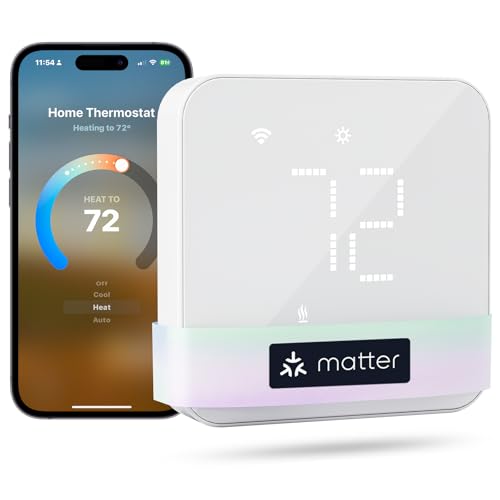
If you’re looking for a versatile smart thermostat compatible with most HVAC systems, the Meross Smart WiFi Thermostat stands out. It works with about 95% of systems, including traditional heating, cooling, and heat pumps, but not electric baseboard heaters. You’ll need a C-wire unless you get the Meross adapter. It supports 2.4GHz Wi-Fi and offers customizable 7-day schedules that run even without Wi-Fi. With Matter technology, it integrates seamlessly with Apple Home, Alexa, Google, and SmartThings. Plus, you can control it remotely via the app, helping you save energy and stay comfortable anytime, anywhere.
Best For: homeowners seeking a versatile, easy-to-integrate smart thermostat compatible with most HVAC systems and smart home platforms.
Pros:
- Compatible with 95% of HVAC systems, including heat pumps and traditional setups
- Supports Matter technology for seamless integration with Apple Home, Alexa, Google, and SmartThings
- Offers customizable 7-day schedules that operate even without Wi-Fi
Cons:
- Not compatible with electric baseboard heaters
- Requires a C-wire for installation or the purchase of a C-wire adapter
- Supports only 2.4GHz Wi-Fi networks, limiting connectivity options
YoLink Thermostat 2, Smart Home & Commercial Thermostat

The YoLink Thermostat 2 stands out as an excellent choice for those managing large or complex heating and cooling systems, thanks to its long-range LoRa connectivity and support for external sensors. It’s versatile, supporting dual-stage heating and cooling, heat pumps, and external sensors for precise climate control. The sleek design and app control make it easy to manage remotely, while voice compatibility with Alexa and Google offers hands-free operation. Although it requires a hub for full functionality and can experience connectivity issues, its extensive ecosystem integration and long-range wireless capacity make it ideal for both residential and commercial use. It’s a durable, customizable thermostat for smarter climate management.
Best For: homeowners and building managers seeking a long-range, customizable smart thermostat capable of supporting complex HVAC systems in large or challenging environments.
Pros:
- Supports long-range LoRa connectivity up to 1/4 mile, ideal for large properties or commercial spaces.
- Compatible with external sensors for precise climate control and real-time monitoring.
- Integrates seamlessly with YoLink ecosystem and popular voice assistants like Alexa and Google Home.
Cons:
- Requires a hub for full functionality, adding complexity and cost to installation.
- Connectivity issues and app errors have been reported, affecting remote control reliability.
- Limited scheduling options with only four daily temperature adjustments and no temperature alert notifications.
MOES Programmable Smart Thermostat with Remote Sensor and C-Wire Adapter
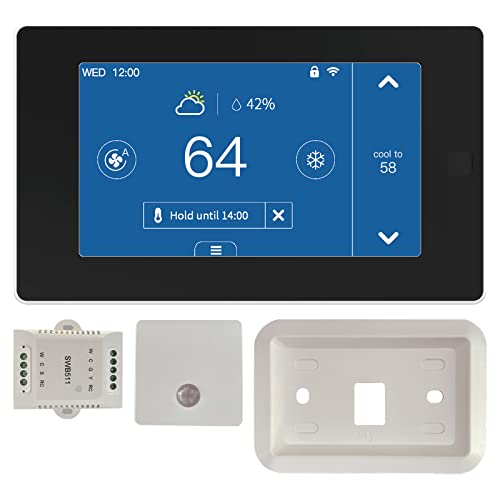
For homeowners seeking precise temperature control across different zones, the MOES Programmable Smart Thermostat with Remote Sensor and C-Wire Adapter stands out as a versatile choice. It offers 7-day scheduling, supports various HVAC systems, and integrates with Wi-Fi, Alexa, and Google Assistant for remote control. The included remote sensor helps monitor different areas, while the C-wire adapter simplifies installation for homes without a common wire. Its features like auto changeover, backlit display, and calibration options enhance accuracy and efficiency. Despite some setup challenges and occasional connectivity issues, it provides a solid balance of affordability, programmability, and smart home compatibility.
Best For: homeowners seeking customizable, multi-zone temperature control with smart features and easy installation across various HVAC systems.
Pros:
- Supports 7-day programmable scheduling and multiple HVAC types, including heat pump and gas systems.
- Integrates seamlessly with Wi-Fi, Alexa, and Google Assistant for remote operation.
- Includes a remote sensor and C-wire adapter for flexible placement and simplified setup.
Cons:
- Some users experience initial connectivity issues and software instability.
- Temperature readings may require calibration adjustments for accuracy.
- Limited effectiveness of remote sensors over longer distances and occasional setup challenges with wiring.
Factors to Consider When Choosing Smart Thermostats With Remote Sensors

When selecting a smart thermostat with remote sensors, I consider several key factors to guarantee it fits my needs. It’s important to check compatibility with my HVAC system, where sensors can be placed, and how easy the setup is. I also look at connectivity options and power requirements to make sure everything works smoothly.
Compatibility With HVAC Systems
Choosing a smart thermostat with remote sensors starts with guaranteeing compatibility with your HVAC system’s voltage and wiring setup. I recommend checking if the thermostat supports your system’s voltage, such as 24VAC, or if it’s compatible with heat pumps and multi-stage configurations. It’s also important to verify whether the thermostat can work with your existing wiring—especially if you lack a common C-wire, which might require adapters or power extenders. Additionally, confirm that the remote sensors can communicate effectively with the main unit within your home’s layout. Finally, review the control protocols—Wi-Fi, Z-Wave, Zigbee, or proprietary—to ensure seamless integration with your smart home ecosystem. Proper compatibility ensures reliable performance and easy setup, maximizing your investment’s benefits.
Sensor Placement Flexibility
Flexibility in sensor placement is essential for maximizing the effectiveness of smart thermostats with remote sensors. Placing sensors in frequently used rooms helps accurately reflect your home’s overall temperature, boosting comfort and efficiency. The ideal placement is at eye level, away from direct sunlight, drafts, or heat sources, ensuring precise readings. Having flexible options allows you to better zone your home, especially in multi-story houses or spaces with uneven insulation. Some smart thermostats support multiple sensors, so you can position them in various areas to balance temperature and save energy. Proper placement and adaptability prevent hot or cold spots, making your HVAC system more responsive and efficient. This adaptability enhances comfort and ensures you’re getting the most out of your smart thermostat system.
Ease of Installation
Installing a smart thermostat with remote sensors can be straightforward, especially if you consider a few key factors beforehand. Many models are designed for DIY setup, with built-in levels and clear app instructions that simplify the process. Compatibility with your existing wiring, especially the presence of a C-wire, is essential for a smooth installation. Some thermostats need additional components like C-wire adapters or Power Extender Kits if your system lacks a common wire. The complexity of installation can also depend on your HVAC system type, with certain setups requiring professional help. To ensure an easy experience, look for models with detailed setup guides and intuitive interfaces. Taking these factors into account helps you avoid surprises and get your remote sensor system up and running quickly.
Connectivity and Integration
Have you checked if your smart thermostat supports the connectivity protocols needed for remote sensor communication? Confirming compatibility with Wi-Fi, Zigbee, Z-Wave, or proprietary protocols is essential for seamless integration with your existing smart home system. Confirm that the thermostat can work with remote sensors that monitor temperature, humidity, or occupancy across multiple rooms, helping optimize comfort and energy use. Additionally, look for models that integrate smoothly with voice assistants like Alexa, Google Assistant, or Siri, enabling hands-free control and automation. It’s also important to verify the reliability and range of the connectivity technology, especially for larger homes, to prevent disconnection issues that could disrupt sensor performance. Strong, stable connectivity ensures your remote sensors function effectively and consistently.
Power Supply Requirements
Do you know if your smart thermostat has the right power supply setup to support remote sensors reliably? Most models require a C-wire to provide continuous power, which guarantees stable operation and consistent sensor communication. If your home lacks a dedicated C-wire, some thermostats offer a C-wire adapter or Power Extender Kit to simplify installation. Battery-powered remote sensors are another option, but they depend on batteries that need periodic replacement, potentially affecting system reliability. Without proper power, remote sensors may disconnect or malfunction, especially in older or specialized HVAC systems. Making sure your thermostat has the correct power setup is essential for maintaining seamless operation, maximizing efficiency, and achieving reliable remote sensing across your home.
Programming and Scheduling Options
When choosing a smart thermostat with remote sensors, it’s important to contemplate the programming and scheduling options it offers, as these features directly impact comfort and energy efficiency. Many models provide 5-2 or 7-day schedules, allowing me to set different temperatures for weekdays and weekends, aligning with my routine. Advanced options include multiple daily time slots like wake, leave, return, and sleep, giving me granular control. Some thermostats support automatic adjustments via geofencing or occupancy detection, reducing manual input and optimizing energy use. The level of flexibility varies; while some offer simple preset schedules, others enable detailed customization and copying routines across days. These features ensure my home stays comfortable when I need it and conserves energy when I don’t.
Accuracy of Temperature Readings
How accurate are the temperature readings from remote sensors in smart thermostats? The accuracy largely depends on sensor quality, calibration, and placement. Most sensors offer about ±1°F accuracy, but environmental factors can influence this. Proper placement is key—avoid direct sunlight, drafts, or heat sources, which can skew readings. Inaccurate sensors may cause discomfort or energy waste if the thermostat adjusts based on faulty data. Calibration options can help improve accuracy, but inconsistent calibration among multiple sensors may lead to temperature discrepancies within your system. Overall, investing in high-quality sensors and ensuring correct placement and calibration are essential for reliable temperature readings. Accurate data guarantees your thermostat maintains comfort efficiently without unnecessary energy consumption.
Smart Home Ecosystem Compatibility
Choosing a smart thermostat with remote sensors requires guaranteeing compatibility with your existing smart home ecosystem, such as Apple HomeKit, Google Home, or Amazon Alexa. Compatibility ensures seamless integration of remote sensors and voice control features, making your smart home more intuitive. Some thermostats support the Matter protocol, which broadens compatibility across multiple platforms and simplifies device interoperability. The ability to control sensors and thermostats through a single app or voice command depends on your ecosystem’s integration capabilities. Additionally, compatibility affects automation, scheduling, and alert features, allowing you to maximize remote sensor benefits. Devices supporting multiple ecosystems or standard protocols offer greater flexibility and help future-proof your setup, ensuring your smart home can adapt as your needs evolve.
Frequently Asked Questions
How Do Remote Sensors Improve Overall Energy Efficiency?
Remote sensors improve overall energy efficiency by providing accurate temperature readings from different areas of my home. This allows my smart thermostat to adjust heating or cooling precisely where needed, avoiding wasteful energy use. Instead of maintaining a single, broad temperature setting, the sensors help me target specific zones, ensuring comfort while saving energy. I’ve noticed my utility bills decrease and my home stays more consistently comfortable.
Can Multiple Remote Sensors Be Used for Larger Homes?
Absolutely, you can use multiple remote sensors in larger homes. I’ve set up several sensors throughout my house, and it really helps the thermostat adjust to different zones effectively. With more sensors, I get better temperature control and energy savings. Just make sure your smart thermostat supports multiple sensors, and follow the manufacturer’s guidelines for placement. This way, every area stays comfortable while optimizing efficiency.
Are Remote Sensors Compatible With All Smart Thermostat Brands?
Remote sensors aren’t universal magic wands; they don’t work with all smart thermostat brands. Compatibility is like fitting puzzle pieces—some brands embrace sensors seamlessly, while others don’t. I recommend checking each thermostat’s specifications before buying sensors to verify they’re compatible. Think of it like finding the right key for a lock—using the wrong one won’t open the door, so it’s best to do your homework first.
How Accurate Are the Temperature Readings From Remote Sensors?
Remote sensors are generally quite accurate, usually within a degree or two of the actual room temperature. I’ve found that their readings help me maintain consistent comfort, especially in larger homes or multi-room setups. However, accuracy can vary depending on the sensor quality and placement. I recommend placing sensors away from direct sunlight or drafts for the best results. Overall, they’re a reliable way to fine-tune your home’s climate.
What Is the Typical Installation Process for Remote Sensors?
I find that installing remote sensors is usually straightforward. First, I choose a suitable spot away from drafts or direct sunlight. Then, I typically remove the sensor’s cover, connect it to the thermostat or Wi-Fi as instructed, and mount it on the wall with screws or adhesive. After that, I sync it with my smart thermostat, ensuring it’s functioning correctly. It takes about 10-15 minutes to complete.
Conclusion
Choosing the right smart thermostat with remote sensors truly transformed my home’s comfort and efficiency. It’s funny how a small device can make such a big difference—saving energy while keeping me cozy. I never expected that a simple upgrade would bring peace of mind and a touch of convenience every day. If you’re looking to enhance your space, trust me, this little coincidence of tech and comfort might just be what you need.