In this ultimate coffee maker showdown, I rank options for different routines, from quick pod brewing to hands-on espresso and family-size drip coffee. The Ninja DualBrew Pro Specialty earns my best overall spot for its range of brew styles, while the Ninja Luxe Café Premier stands out for buyers who want espresso, drip coffee, and cold brew in one machine. For straightforward single-cup convenience, the Keurig K-Supreme is a strong alternative. The main tradeoffs are flexibility versus ease, countertop space versus capability, and the control of ground coffee versus the speed of pods. Read on for the full breakdown and a guide to choosing the right machine for your household.

Get furniture and decor delivered free with Prime
- Fast, free delivery on millions of items
- Prime Video, Amazon Music and more included
- Member-only deals all year
Complete the kit


Key Takeaways
- The Ninja DualBrew Pro Specialty is the most adaptable all-rounder in this group, balancing pod convenience with ground-coffee brewing and specialty options.
- Espresso machines ask more of their owners: the Breville Barista Express offers hands-on control, while the Philips 5500 Series automates more of the drink-making process.
- Pod convenience and carafe capacity solve different routines. The K-Supreme and K-Elite suit fast individual servings; the Cuisinart DCC-3200 and K-Duo Gen 2 better suit multiple cups.
- Cold coffee is not one feature. The Ninja CM371 focuses on hot, iced, and rapid cold-brew options, while the Ninja Luxe Café Premier pairs cold brew with espresso and drip styles.
- Flexibility brings tradeoffs. Multi-style machines can take more counter space and require more setup than a focused drip brewer or single-serve pod machine.
| Ninja DualBrew Pro Specialty Coffee Maker, Black, CFP301 |  | Best Overall for Brewing Flexibility | Coffee input: Grounds and K-Cup pods | Brew styles: Classic, Rich, Over Ice, Specialty | Pod brew sizes: 6, 8, 10, and 12 oz | VIEW ON AMAZON | See Our Full Breakdown |
| Cuisinart DCC-3200 14-Cup Programmable Coffee Maker with Glass Carafe |  | Best for Big-Batch Drip Coffee | Type: Drip coffee maker | Capacity: 14 cups, approximately 5 oz per cup | Carafe: Glass | VIEW ON AMAZON | See Our Full Breakdown |
| Keurig K-Supreme Single-Serve K-Cup Coffee Maker with MultiStream Technology, 4 Brew Sizes, and 66 oz Dual-Position Reservoir |  | Best Compact-Use Pick for Pod Drinkers | Compatible pods: K-Cup | Brew sizes: 6, 8, 10, or 12 oz | Reservoir capacity: 66 fl oz | VIEW ON AMAZON | See Our Full Breakdown |
| Ninja Luxe Café Premier Espresso, Drip Coffee & Cold Brew, Green, ES601GY |  | Best Premium All-in-One Coffee Station | Coffee styles: Espresso, drip coffee, cold brew | Espresso styles: Double shot or quad shot | Drip styles: Classic, Rich, Over Ice | VIEW ON AMAZON | See Our Full Breakdown |
| Keurig K-Elite Single-Serve K-Cup Pod Coffee Maker |  | Best for High-Volume Pod Convenience | Coffee input: K-Cup pods | Brew sizes: 4, 6, 8, 10, and 12 oz | Water reservoir capacity: 75 oz | VIEW ON AMAZON | See Our Full Breakdown |
| Ninja CM371 Hot & Iced XL Coffee Maker with Rapid Cold Brew |  | Best for Hot, Iced, and Cold Brew Variety | Brew styles: Classic, Rich, Over Ice, Cold Brew | Brew sizes: 8 sizes, from a small cup to a full carafe | Capacity: 12 cups | VIEW ON AMAZON | See Our Full Breakdown |
| Keurig K-Duo Hot & Iced Single Serve and Carafe Coffee Maker, Gen 2 |  | Best for Pod-and-Carafe Convenience | Brewing options: K-Cup single cups and ground-coffee carafes | Single-cup sizes: 6, 8, 10, or 12 ounces | Carafe sizes: 6, 8, 10, or 12 cups | VIEW ON AMAZON | See Our Full Breakdown |
| Hamilton Beach FlexBrew Trio 2-Way Drip and Single-Serve Coffee Maker |  | Best for Flexible Single-Serve Brewing | Brewing options: Single-serve pods or grounds; 12-cup carafe with grounds | Ground-coffee single-serve sizes: 6, 8, 10, 12, or 14 ounces | Pod single-serve sizes: 6, 8, or 10 ounces | VIEW ON AMAZON | See Our Full Breakdown |
| Breville Barista Express Espresso Machine with Built-In Grinder, Brushed Stainless Steel |  | Best for Hands-On Espresso | Machine type: Manual espresso machine | Grinder: Integrated precision conical burr grinder | Bean hopper capacity: 1/2 pound | VIEW ON AMAZON | See Our Full Breakdown |
| Philips 5500 Series Fully Automatic Espresso Machine with LatteGo | 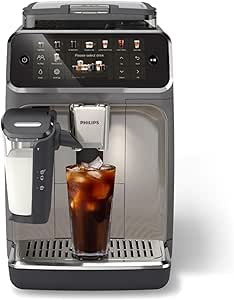 | Best for One-Touch Espresso Drinks | Drink presets: 20 hot and iced presets | Milk system: LatteGo, three parts with no internal tubes | Grinder: Built-in ceramic grinder | VIEW ON AMAZON | See Our Full Breakdown |
| the ultimate coffee maker showdown | Dimensions | Wattage |
|---|---|---|
| Ninja DualBrew Pro Specialty C | 9.13 × 11.39 × 15.54 in (D × W × H) | 1550 watts |
| Cuisinart DCC-3200 14-Cup Prog | 7.75 × 9 × 14 in | — |
| Keurig K-Supreme Single-Serve | 10.12 × 14.84 × 14.41 in (D × W × H) | — |
| Ninja Luxe Café Premier Espres | 12.99 × 13.39 × 14.57 in (D × W × H) | 1650 watts |
| Keurig K-Elite Single-Serve K- | 12.7 × 9.9 × 16.5 in | 1500 watts |
| Ninja CM371 Hot & Iced XL Coff | 12.32 x 9.13 x 15.08 inches | 1550 watts |
| Keurig K-Duo Hot & Iced Single | 12.9 x 11.1 x 12.7 inches | 1100 watts |
| Hamilton Beach FlexBrew Trio 2 | 12.3 x 11.1 x 13.5 inches | 1400 watts |
| Breville Barista Express Espre | 13.8 x 12.5 x 15.9 inches | — |
| Philips 5500 Series Fully Auto | 9.69 x 14.61 x 17.05 inches (D x W x H); verify against manufacturer information | — |
More Details on Our Top Picks
Ninja DualBrew Pro Specialty Coffee Maker, Black, CFP301
The Ninja DualBrew Pro is my most adaptable pick here: it switches between grounds and K-Cup pods, then stretches beyond standard drip with four brew styles, a built-in frother, and a separate hot water system. That range makes it more useful for households with different routines than the Cuisinart DCC-3200, which focuses on programmable carafe brewing, or the Keurig K-Supreme, which is limited to pods. The tradeoff is counter space: at over 15 inches tall and more than 11 inches wide, it takes up a noticeable footprint. Pod brewing also offers only four size choices, and its 12-cup carafe is better for batches than for a compact single-serve setup. I’d choose it when one machine needs to handle varied drinks and brewing methods.
Pros:- Brews both K-Cup pods and ground coffee, covering single servings and full carafes
- Four brew styles include Over Ice and Specialty for more than standard drip
- Fold-away frother supports dairy and plant-based milk drinks
- Separate hot water system offers hot and boil settings
Cons:- Large footprint can crowd smaller countertops
- K-Cup brewing is limited to 6, 8, 10, and 12 oz sizes
- Its many functions may be unnecessary for buyers who only want basic drip coffee
Best for: Households that alternate between K-Cup convenience, ground coffee carafes, iced drinks, and milk-based specialties
Not ideal for: Small kitchens or buyers who want a simple, compact pod brewer with minimal setup
- Coffee input:Grounds and K-Cup pods
- Brew styles:Classic, Rich, Over Ice, Specialty
- Pod brew sizes:6, 8, 10, and 12 oz
- Carafe capacity:12 cups
- Water reservoir:60 oz
- Wattage:1550 watts
- Dimensions:9.13 × 11.39 × 15.54 in (D × W × H)
- Included components:Smart scoop, fold-away frother, 1-hole K-Cup pod adapter, 12-cup glass carafe
Our verdict“Choose the DualBrew Pro if your household wants one machine for pods, carafes, iced coffee, and frothy drinks and has room for it.”
Cuisinart DCC-3200 14-Cup Programmable Coffee Maker with Glass Carafe
The Cuisinart DCC-3200 earns its place by doing one job at household scale: brewing a programmable pot with room for up to 14 five-ounce cups. Its bold setting gives drinkers a strength choice, while three warming-plate temperatures let you manage how hot the remaining coffee stays. Compared with the Ninja DualBrew Pro, it gives up pods, iced styles, and a frother, but its simpler drip-focused controls suit people who mainly want a pot ready on schedule. The 1–4 cup setting is useful when a full batch would go stale, though this remains a glass-carafe machine rather than a single-serve solution. The stated cup size is smaller than a typical mug, so buyers should judge capacity by their own serving habits, not the headline number.
Pros:- 14-cup stated capacity suits larger batches
- Regular and bold strength settings offer a simple flavor adjustment
- Three warming-plate temperature settings give control over holding heat
- 24-hour programmability, 1–4 cup mode, and auto shutoff support varied routines
Cons:- The stated cup is approximately 5 oz, so capacity may be less than buyers expect from mug-sized servings
- Glass carafe relies on the warming plate to keep coffee hot
- No pod brewing or specialty drink features
Best for: Households that regularly serve several coffee drinkers and want scheduled, adjustable-strength drip brewing
Not ideal for: Solo drinkers seeking pod convenience, specialty beverages, or a compact machine with a thermal carafe
- Type:Drip coffee maker
- Capacity:14 cups, approximately 5 oz per cup
- Carafe:Glass
- Brew strength:Regular or bold
- Carafe temperature settings:Low, medium, high
- Programmability:24 hours
- Auto shutoff:0–4 hours
- Dimensions:7.75 × 9 × 14 in
- Warranty:Limited three-year warranty
Our verdict“Pick the Cuisinart if your priority is a programmable, large-batch drip pot rather than the broader drink options of the Ninja DualBrew Pro.”
Keurig K-Supreme Single-Serve K-Cup Coffee Maker with MultiStream Technology, 4 Brew Sizes, and 66 oz Dual-Position Reservoir
The Keurig K-Supreme keeps the routine focused: choose a K-Cup, select one of four sizes, and brew a single drink. Its dual-position 66-ounce reservoir is the standout practical touch, letting you reposition the tank to fit different counter layouts while limiting refill interruptions. A stronger setting and hot-over-ice option give it more range than a bare-bones pod machine. Compared with the Keurig K-Elite, it has a smaller reservoir and fewer brew sizes, but its repositionable tank and back-to-back brewing make it a flexible fit for daily single-cup use. It cannot match the grounds-and-carafe versatility of the Ninja DualBrew Pro, and the reusable My K-Cup filter is sold separately. With no clock or frother, it is a practical brewer, not a café station.
Pros:- Four cup sizes and a stronger-brew option make it easy to adjust a pod drink
- Hot-over-ice setting adds a dedicated iced-coffee option
- 66 oz removable reservoir can be positioned on either side
- Supports back-to-back brewing and travel mugs up to 7 inches tall
Cons:- Compatible with K-Cup pods rather than grounds by default; reusable filter is sold separately
- No milk frother or digital clock
- Offers fewer brew sizes and a smaller reservoir than the K-Elite
Best for: K-Cup drinkers who want quick single servings, occasional iced coffee, and a reservoir that can be repositioned
Not ideal for: Buyers who want to brew ground coffee without an add-on, make carafes, or prepare milk-based drinks
- Compatible pods:K-Cup
- Brew sizes:6, 8, 10, or 12 oz
- Reservoir capacity:66 fl oz
- Reservoir:Removable, dual-position
- Brew options:Stronger brew and hot over ice
- Travel mug clearance:Up to 7 in
- Dimensions:10.12 × 14.84 × 14.41 in (D × W × H)
- Controls:Buttons
Our verdict“Choose the K-Supreme for straightforward K-Cup brewing with flexible reservoir placement, but look to the DualBrew Pro for carafes and ground coffee.”
Ninja Luxe Café Premier Espresso, Drip Coffee & Cold Brew, Green, ES601GY
The Ninja Luxe Café Premier is the most ambitious machine in this group, bringing espresso, drip coffee, and cold brew together with an integrated grinder and guided brewing features. Its weight-based dosing, grind recommendations, and assisted tamper aim to remove some of the guesswork that usually separates espresso from ordinary drip brewing. The hands-free frother also handles several textures, giving it a wider milk-drink range than the DualBrew Pro. That breadth comes with a learning curve and more steps than a pod brewer such as the Keurig K-Elite; buyers who mostly want a quick cup may leave much of its capability unused. It also occupies a substantial counter area and depends on whole beans or grounds rather than K-Cup convenience. This is the pick for variety and guided control, not speed through simplicity.
Pros:- Combines espresso, drip coffee, and cold brew in one machine
- Integrated conical burr grinder has 25 grind settings
- Weight-based dosing and assisted tamping reduce manual espresso guesswork
- Hands-free frother offers four presets, including cold foam
Cons:- More involved than single-serve machines such as the Keurig K-Elite
- Larger, multi-part setup requires more counter and storage space
- Does not offer the K-Cup pod convenience available with the DualBrew Pro
Best for: Home coffee enthusiasts who want espresso, drip, cold brew, fresh grinding, and assisted milk frothing in one system
Not ideal for: People who prioritize a quick pod-based cup, have limited counter space, or do not want a more involved brewing routine
- Coffee styles:Espresso, drip coffee, cold brew
- Espresso styles:Double shot or quad shot
- Drip styles:Classic, Rich, Over Ice
- Cold brew styles:Cold-pressed espresso or cold brew coffee
- Grinder:Integrated conical burr grinder with 25 settings
- Frother:Dual Froth System with four presets
- Wattage:1650 watts
- Dimensions:12.99 × 13.39 × 14.57 in (D × W × H)
- Included components:Portafilter, milk jug, baskets, assisted tamper, funnel, cleaning tools and supplies
Our verdict“Choose the Luxe Café Premier if you want guided espresso and multiple coffee styles at home and are willing to trade simplicity for range.”
Keurig K-Elite Single-Serve K-Cup Pod Coffee Maker
The Keurig K-Elite is the pod-focused choice for households that want a generous reservoir and more control over each cup. Its 75-ounce tank is larger than the K-Supreme’s 66-ounce reservoir, while five brew sizes, temperature control, Strong Brew, and an iced setting give regular K-Cup use useful flexibility. A hot water button also covers simple non-coffee tasks. Compared with the Ninja DualBrew Pro, the K-Elite is easier to keep centered on pod brewing, but it cannot brew a carafe or switch to grounds unless you buy a reusable filter separately. Its tall, deep body may also claim more counter space than a buyer expects from a single-serve machine. I’d favor it over the K-Supreme when reservoir capacity and the extra 4-ounce size matter more than repositionable tank placement.
Pros:- 75 oz removable reservoir supports multiple drinks between refills
- Five brew sizes include a 4 oz option
- Strong Brew, iced setting, and temperature control add useful customization
- Hot water button works for simple non-coffee drinks and foods
Cons:- Designed for K-Cup pods; reusable filter for ground coffee is sold separately
- No carafe-brewing option compared with the Ninja DualBrew Pro
- Its 16.5-inch height and 12.7-inch depth may challenge tight counters
Best for: Frequent K-Cup drinkers who want fewer reservoir refills, five cup sizes, and hot water on demand
Not ideal for: Buyers who want carafe brewing, included ground-coffee support, or a compact single-serve footprint
- Coffee input:K-Cup pods
- Brew sizes:4, 6, 8, 10, and 12 oz
- Water reservoir capacity:75 oz
- Brew features:Strong Brew, iced setting, temperature control
- Hot water:Hot water on demand
- Wattage:1500 watts
- Dimensions:12.7 × 9.9 × 16.5 in
- Weight:6.6 lbs
Our verdict“Pick the K-Elite if you brew several K-Cup drinks daily and value its large reservoir more than carafe or ground-coffee capability.”
Ninja CM371 Hot & Iced XL Coffee Maker with Rapid Cold Brew
I’d rank the Ninja CM371 as the most versatile ground-coffee drip option in this group: it offers Classic, Rich, Over Ice, and Cold Brew settings, plus eight brew sizes from a small serving to a full carafe. That range makes it a stronger fit for households switching between morning mugs and iced drinks than the Cuisinart DCC-3200, which centers on carafe brewing. The removable, auto-metering reservoir also makes refilling less awkward, while a permanent filter cuts down on disposable-filter use. The tradeoff is a clear boundary: this machine requires ground coffee and does not take pods, unlike the Keurig K-Duo Gen 2. Its glass carafe is also less rugged than a thermal option, so I’d choose it for drink flexibility rather than pod convenience or maximum carafe durability.
Pros:- Four brew styles cover classic, stronger, iced, and cold-brew drinks.
- Eight serving sizes let users brew from a small cup through a full carafe.
- Removable auto-metering reservoir simplifies filling and water measurement.
- Permanent filter and 24-hour delay brew support reusable, scheduled brewing.
Cons:- Does not support pods, so pod users need another machine or a change in routine.
- Glass carafe is more vulnerable to breakage than a thermal carafe.
- Requires ground coffee rather than whole beans or ready-to-use capsules.
Best for: Ground-coffee drinkers who want one machine for full carafes, individual servings, iced coffee, and cold brew.
Not ideal for: K-Cup users or buyers who want a thermal carafe; this model requires grounds and includes a glass carafe.
- Brew styles:Classic, Rich, Over Ice, Cold Brew
- Brew sizes:8 sizes, from a small cup to a full carafe
- Capacity:12 cups
- Water reservoir:Removable, auto-metering
- Filter:Reusable permanent filter
- Wattage:1550 watts
- Dimensions:12.32 x 9.13 x 15.08 inches
- Programmable features:24-hour delay brew, keep warm, auto shut-off
Our verdict“Choose the CM371 if brew-style flexibility with ground coffee matters more than pod compatibility or a thermal carafe.”
Keurig K-Duo Hot & Iced Single Serve and Carafe Coffee Maker, Gen 2
The Keurig K-Duo Gen 2 is my pick for households split between quick pod-made cups and shared pots: it brews K-Cup pods for single servings and grounds for a 12-cup carafe. That two-mode setup gives it an advantage over the Ninja CM371 for pod drinkers, while the Ninja offers more brew styles for ground coffee, including a dedicated cold-brew setting. The K-Duo adds Brew Over Ice, Strong Brew, and Extra Hot options, and its shared 72-ounce removable reservoir reduces refill chores across both modes. Scheduled carafe brewing is useful when mornings run on a routine. The compromise is that pods are limited to single cups, and the carafe side still depends on grounds. I’d also treat the supplied 16-ounce weight figure cautiously, since it may not represent the machine’s actual shipping or operating weight.
Pros:- Combines K-Cup single servings with a grounds-based 12-cup carafe.
- Shared removable 72-ounce reservoir reduces refills across brewing modes.
- Brew Over Ice, Strong Brew, and Extra Hot settings offer useful drink adjustments.
- Programmable carafe brewing can be scheduled up to 24 hours ahead.
Cons:- Single-cup brewing requires K-Cup pods, adding a consumable the Ninja CM371 does not need.
- The carafe side uses grounds rather than pods, so the two modes do not share one coffee format.
- The listed 16-ounce weight may be inaccurate, making that specification unreliable for planning.
Best for: Households where one person wants K-Cup convenience and others regularly brew full pots from ground coffee.
Not ideal for: Buyers who want a pod-free setup or a dedicated cold-brew function; single-cup brewing requires K-Cup pods, and cold brew is not listed.
- Brewing options:K-Cup single cups and ground-coffee carafes
- Single-cup sizes:6, 8, 10, or 12 ounces
- Carafe sizes:6, 8, 10, or 12 cups
- Water reservoir:Removable shared 72-ounce reservoir
- Carafe:12-cup glass
- Special features:Brew Over Ice, Strong Brew, Extra Hot, Auto Brew, Pause & Pour
- Wattage:1100 watts
- Dimensions:12.9 x 11.1 x 12.7 inches
Our verdict“Pick the K-Duo Gen 2 if your household needs both K-Cup singles and scheduled ground-coffee carafes in one machine.”
Hamilton Beach FlexBrew Trio 2-Way Drip and Single-Serve Coffee Maker
I’d give the Hamilton Beach FlexBrew Trio the edge for buyers who want a choice of pod or ground coffee for a single cup, alongside a conventional 12-cup carafe. Its single-serve side accepts grounds in sizes up to 14 ounces, a useful difference from the Keurig K-Duo Gen 2, whose single-cup brewing is pod-based. The FlexBrew can also use K-Cup-compatible pods, but those servings top out at 10 ounces; the larger sizes are for grounds. A reported roughly 90-second single-cup brew suits rushed mornings, and the removable 56-ounce reservoir limits constant refilling. Compared with the four-style Ninja CM371, though, this is more about format flexibility than specialty drinks: the listed options do not include a dedicated cold-brew setting. I’d pick it for quick everyday cups, not for a broad hot-and-cold menu.
Pros:- Single servings can use either K-Cup-compatible pods or ground coffee.
- Grounds-based single servings offer sizes up to 14 ounces.
- Single-serve brewing takes about 90 seconds, according to the product data.
- Removable 56-ounce reservoir and programmable carafe brewing reduce routine effort.
Cons:- Pod-based single servings are limited to 10 ounces.
- Pods cannot brew a full carafe; the carafe uses ground coffee.
- The listed options do not include dedicated iced-coffee or cold-brew modes like the Ninja CM371.
Best for: Busy coffee drinkers who want quick single cups from either grounds or K-Cup-compatible pods, with a carafe option for serving several people.
Not ideal for: People who want pod servings larger than 10 ounces or specialty cold-brew options; pod size is capped and cold brew is not listed.
- Brewing options:Single-serve pods or grounds; 12-cup carafe with grounds
- Ground-coffee single-serve sizes:6, 8, 10, 12, or 14 ounces
- Pod single-serve sizes:6, 8, or 10 ounces
- Single-serve brew time:About 90 seconds
- Water reservoir:Removable, 56 fluid ounces
- Wattage:1400 watts
- Dimensions:12.3 x 11.1 x 13.5 inches
- Warranty:1-year limited
Our verdict“Choose the FlexBrew Trio if fast single cups from pods or grounds matter more than large pod servings or specialty brew settings.”
Breville Barista Express Espresso Machine with Built-In Grinder, Brushed Stainless Steel
The Breville Barista Express belongs in this showdown for a different reason than the drip-and-pod machines: it gives espresso-focused buyers control over grinding, dosing, extraction, and milk texturing. Its integrated conical burr grinder feeds fresh grounds into the portafilter, while low-pressure pre-infusion and PID temperature regulation are aimed at steadier extraction. The steam wand also opens the door to microfoam for lattes and cappuccinos, which the Philips 5500 Series handles with a more automated milk system. That distinction defines the choice: Breville offers hands-on adjustment; Philips is better suited to one-touch convenience and a wide preset menu. The Breville requires manual preparation and practice, and at 22.1 pounds it is a substantial, less portable appliance. I’d choose it for the craft of making espresso, not for fast unattended coffee or full carafes.
Pros:- Integrated conical burr grinder delivers freshly ground coffee directly into the portafilter.
- PID temperature regulation and low-pressure pre-infusion support controlled espresso extraction.
- Steam wand can texture milk for microfoam-based drinks.
- Supplied accessories include a portafilter, filter baskets, tamper, milk jug, and cleaning tools.
Cons:- Manual grinding, preparation, and milk texturing require more effort than the Philips 5500 Series.
- At 22.1 pounds, it is heavy and less convenient to move.
- Its espresso-focused workflow does not replace a drip carafe maker for serving larger groups.
Best for: Espresso drinkers who want to grind, dose, extract, and texture milk themselves, with room to refine their routine.
Not ideal for: People seeking one-touch drinks, drip coffee, or a lightweight machine; this is a heavy manual espresso setup that takes hands-on work.
- Machine type:Manual espresso machine
- Grinder:Integrated precision conical burr grinder
- Bean hopper capacity:1/2 pound
- Water tank capacity:67 ounces
- Power:1600 watts
- Dimensions:13.8 x 12.5 x 15.9 inches
- Weight:22.1 pounds
- Warranty:1-year limited
Our verdict“Choose the Barista Express if you want hands-on espresso control and are willing to trade speed and simplicity for it.”
Philips 5500 Series Fully Automatic Espresso Machine with LatteGo
The Philips 5500 Series is the convenience-first espresso pick: it grinds, tamps, and brews from a menu of 20 hot and iced presets, with controls for drink strength, volume, and milk froth. That makes it a better match for people who want repeatable drinks with little manual work than the Breville Barista Express, which puts grinding and espresso preparation in the user’s hands. Philips also separates itself with its three-part LatteGo system, which has no internal tubes and can be rinsed quickly or placed in a dishwasher. Up to four saved profiles can help households keep preferred settings close, though the supplied description conflicts on whether the machine supports two or four profiles, so I would verify that detail before buying. The listed weight and dimensions may also need checking. This is an espresso convenience machine, not a drip brewer or a hands-on barista setup.
Pros:- Twenty hot and iced presets provide a broad menu without manual espresso preparation.
- Built-in ceramic grinder and automatic grinding, tamping, and brewing streamline drink making.
- LatteGo has three parts, no internal tubes, and is dishwasher safe or designed to rinse clean quickly.
- Touchscreen and saved profiles support repeatable drink preferences.
Cons:- Offers less hands-on control than the Breville Barista Express for users who want to manage each espresso step.
- Product information conflicts on saved profile capacity, listing both up to four and up to two.
- The supplied weight and dimensions may warrant verification before planning counter space or moving the machine.
Best for: Households that want customizable hot or iced espresso drinks at the touch of a button and quick-clean milk handling.
Not ideal for: Buyers who want manual control over espresso preparation, drip coffee by the carafe, or specifications free of unresolved listing conflicts.
- Drink presets:20 hot and iced presets
- Milk system:LatteGo, three parts with no internal tubes
- Grinder:Built-in ceramic grinder
- Pump pressure:15 bar
- Water capacity:1.8 liters
- Operation and interface:Fully automatic, touchscreen
- Profiles:Listing conflicts: up to four in one section and up to two in another
- Dimensions:9.69 x 14.61 x 17.05 inches (D x W x H); verify against manufacturer information
Our verdict“Choose the Philips 5500 Series if you want a broad, customizable espresso menu with minimal preparation and easy milk-system cleanup.”

How We Picked
I compared these ten machines by the job they do best and how well that job fits a real household routine. My criteria included brewing range, serving capacity, day-to-day effort, control over drink preparation, cleaning demands, and the amount of counter space and equipment each style tends to require. I also weighed whether a machine’s extra features solve a practical need or add complexity a buyer may not use.
The ranking favors useful versatility without treating every extra mode as a win. The Ninja DualBrew Pro Specialty leads because it bridges pod and ground coffee while covering more than one kind of brew. More specialized picks rank higher for buyers whose needs are clear: the Breville and Philips serve different espresso preferences, while the Keurig models prioritize quick individual cups. Drip-focused and hybrid machines remain compelling when batch size or format flexibility matters more than espresso capability.
Factors to Consider When Choosing The Ultimate Coffee Maker Showdown
Before choosing, I’d start with the routine the machine needs to support—not the number of buttons on its panel. The differences between these picks reflect a few broader decisions that can affect daily convenience, upkeep, and whether you actually use the features you pay for.
Choose a brewing format before comparing features
Decide whether most of your coffee will come from pods, ground coffee, espresso, or a mix. A machine that accepts several formats can make a household with different preferences easier to serve, but it may also demand more storage and setup. Buyers who mostly want one quick cup can avoid paying attention to carafe features they rarely use. Espresso is its own workflow, often involving fresh beans, preparation, and cleanup beyond pressing a brew button. A common mistake is buying for an occasional drink style while overlooking the process required each morning. I’d prioritize the format you use most, then treat secondary brewing modes as a bonus.
Match serving capacity to the people drinking
Single-serve convenience is useful when people wake at different times or prefer different drinks, while a carafe makes it easier to serve several cups in succession. These needs can coexist in a household, which is where a dual-format machine may earn its extra footprint. Think about whether you need several cups ready at once or simply want the option to make them one at a time. A large stated capacity does not automatically mean a better match if most batches go unfinished. Also check how the machine handles refill and placement, since reservoir access can matter when it sits beneath cabinets. Match the brewer to your usual serving pattern rather than an occasional gathering.
Be realistic about espresso effort
Espresso machines differ less by the word “automatic” than by how much work they leave to the owner. A manual-oriented setup offers more involvement in grinding and preparing each drink, while a fully automatic model aims to reduce the number of steps. That convenience can be valuable, but it does not remove the need for cleaning and routine care. Before choosing, ask who will make the drinks and whether they want to learn a hands-on process or press a button and move on. Buyers sometimes focus on specialty drink options without accounting for the daily workflow behind them. If espresso is an occasional treat, a large dedicated machine may be harder to justify than a more general brewer.
Separate iced coffee from cold brew
Iced coffee and cold brew are not interchangeable just because both are served cold. Some brewers offer a faster cold-brew-style cycle or a setting meant for brewing over ice, while traditional cold brew typically depends on a longer steeping process. Think about whether you want a cold drink quickly or prefer a method that can be prepared ahead. A machine’s cold setting is most useful when it matches the way you actually make cold coffee; the label alone does not tell the whole story. Check what the mode produces and what preparation it requires. If cold drinks are occasional, a dedicated feature may matter less than reliable everyday hot brewing.
Budget for upkeep, not just brewing
Every format has ongoing work: pod users handle pod storage and disposal, drip users clean baskets and carafes, and espresso owners manage more involved parts and residue. The right choice depends on which kind of maintenance you are willing to repeat. Removable components and accessible water reservoirs can make routine care less frustrating, so look beyond the control panel when comparing machines. Another frequent misstep is choosing a feature-rich brewer without checking whether its parts are easy to clean or fit the available sink space. Consider where beans, pods, filters, and accessories will live as well. A machine that fits your habits is more useful than one whose extra modes become a cleaning obligation.
Measure the counter and check the workflow
More brewing options often mean a larger appliance, and height can matter as much as the counter footprint when upper cabinets sit close overhead. Measure the place where the machine will live, including room to open lids, remove reservoirs, and pour a full carafe. Consider nearby outlets, access to water, and whether the machine will need to move for cleaning. Compact pod brewers can suit tight kitchens, while a larger all-in-one or espresso setup needs a more settled home. Do not assume that a machine will be convenient just because it can make your preferred drink. The best fit is the one that works within your kitchen’s actual space and daily movements.
Frequently Asked Questions
Should I choose a machine that brews pods and ground coffee?
Choose a dual-format machine if different people in your household use different coffee formats or if you want a convenient backup for busy mornings. If everyone prefers the same kind of coffee, a more focused brewer may be simpler to use and maintain. Pod compatibility can save time, but it adds a supply to store and dispose of. Ground coffee offers more choice but usually involves handling a filter basket and grounds. I’d pay for format flexibility only when you expect to use both options regularly.
Is a built-in grinder worth the added effort?
A built-in grinder can make fresh-ground coffee more convenient by combining two steps in one setup. It makes the most sense for someone who enjoys espresso or wants more control over beans and preparation. Grinding also brings extra cleanup and a learning curve that a pod brewer avoids. If you prefer a fast, repeatable cup with little interaction, that added control may feel like work rather than a benefit. Decide whether the ritual is part of the appeal before choosing a grinder-equipped machine.
Can one coffee maker realistically replace both a drip brewer and an espresso machine?
A multi-style machine can cover several drink preferences, but “one machine” does not always mean every style is equally convenient. Espresso, drip coffee, and cold brew involve different preparation needs, and an all-in-one design may trade simplicity for range. Consider which drink you make most often and whether the machine makes that routine easy, not just whether the mode exists. If espresso quality and control are your main priorities, a dedicated espresso setup may suit you better. For a household that values variety and shared counter space, a hybrid model can be a practical compromise.
What should I check before buying a coffee maker for a small kitchen?
Measure the counter area and the clearance beneath cabinets, then check whether the lid, reservoir, and brew basket need space to open or lift out. A tall machine can be awkward even when its base seems compact. Consider where you will keep pods, filters, beans, and any accessories, since they add to the footprint of the overall setup. A smaller single-serve model can be easier to place, while a larger brewer may reduce the need for a second appliance. Choose based on the space required to use and clean the machine, not only its listed dimensions.
Which brewing style is easiest to maintain day to day?
Pod brewing usually avoids handling loose grounds, while a drip machine calls for regular care of its filter basket and carafe. Espresso machines can involve more frequent attention to the parts that contact coffee and milk, especially when making specialty drinks. The actual burden depends on which components are removable and how often you brew. Before buying, check what needs cleaning after each use versus what needs periodic maintenance. If low effort is your priority, choose a style whose routine you can sustain rather than relying on an “easy” label.
Conclusion
For the best overall balance, I’d choose the Ninja DualBrew Pro Specialty, especially if your household switches between pods, ground coffee, and different brew styles. The best value for a straightforward routine is the Cuisinart DCC-3200 for buyers who mainly want programmable batch coffee without espresso-focused complexity. For a premium espresso experience, pick the Breville Barista Express if you want hands-on control, or the Philips 5500 Series if automated preparation matters more. Beginners who want a simple single-cup routine should look at the Keurig K-Supreme, while the Ninja CM371 fits buyers whose specific priority is hot, iced, and cold-brew-style coffee. If you need both a single cup and a carafe, compare the K-Duo Gen 2 and Hamilton Beach FlexBrew Trio against your preferred brewing format. I’d make the final choice by matching the machine to your most frequent drink, available counter space, and willingness to handle cleanup.
Halloween Picks
halloween
As an affiliate, we earn on qualifying purchases.