For most people shopping for standalone VR headsets, I’d start with the Meta Quest 3 512GB: its sharper mixed-reality view and roomy storage make it the strongest all-round choice here. The Quest 3S 256GB is a more accessible route into standalone VR, while the HTC VIVE Focus Vision suits buyers who also want a headset with PC VR options. The main tradeoffs are visual clarity, comfort, storage, and whether you need PC connectivity—not every headset in this lineup is equally current or suited to the same library. Read on for how I rank all 10 options and which compromises matter most for your use.

Get furniture and decor delivered free with Prime
- Fast, free delivery on millions of items
- Prime Video, Amazon Music and more included
- Member-only deals all year
Complete the kit


Key Takeaways
- Quest 3 512GB leads as the most balanced pick: it pairs mixed-reality capability with more storage than the listed Quest 3S models.
- The Quest 3S 256GB and Quest 3S 128GB share the same headset family, so the choice between them is mainly about how much room you want for installed games and media.
- HTC Vive XR Elite and VIVE Focus Vision stand apart for buyers weighing standalone play alongside PC VR, rather than seeking the simplest entry into a standalone library.
- The Meta Quest Pro and older Quest 2 models make more sense when their specific features or bundle condition match a buyer’s needs; age, storage, and software support deserve extra scrutiny.
- Renewed and bundled listings add different tradeoffs: check the exact included accessories, condition terms, and what the bundle or trial actually provides before choosing.
| HTC Vive XR Elite Mixed Reality and PC VR Headset with Deluxe Pack | 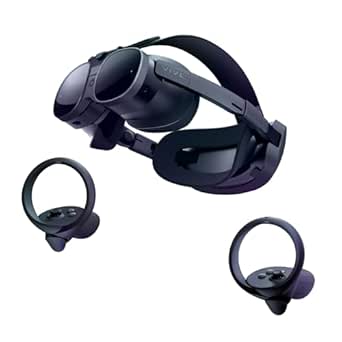 | Best Convertible PC-and-Standalone Pick | Display resolution: 3840 × 1920 combined pixels | Field of view: Up to 110° | Refresh rate: 90 Hz | VIEW ON AMAZON | See Our Full Breakdown |
| HTC VIVE Focus Vision Mixed Reality and PC VR Headset with Controllers |  | Best for Tracking-Rich PC VR | Display resolution: 2448 × 2448 pixels per eye | Field of view: Up to 120° | Refresh rate: 90 Hz | VIEW ON AMAZON | See Our Full Breakdown |
| Meta Quest 3S 256GB VR Headset |  | Best Standalone Value | Storage: 256 GB | Processor: Snapdragon XR2 Gen 2 | Memory: 8 GB RAM | VIEW ON AMAZON | See Our Full Breakdown |
| Meta Quest 3 512GB VR Headset with Gorilla Tag Monkenaut Bundle and 3-Month Meta Horizon+ Trial |  | Best Overall Standalone Pick | Storage: 512 GB | Resolution: 2064 × 2208 pixels per eye | Refresh rate: 120 Hz | VIEW ON AMAZON | See Our Full Breakdown |
| Meta Quest Pro Mixed Reality Headset | 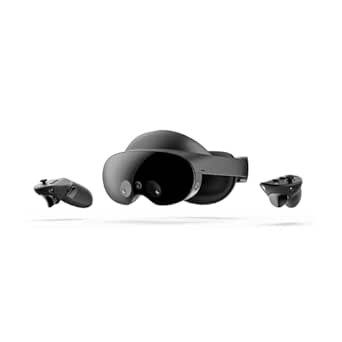 | Best Premium Mixed-Reality Work Pick | Storage: 256 GB | Memory: 12 GB RAM | Field of view: 106° | VIEW ON AMAZON | See Our Full Breakdown |
| Meta Quest 2 All-in-One VR Headset, 128 GB |  | Best Straightforward Standalone Pick | Storage: 128 GB | Display: LCD | Maximum resolution: 1832 x 1920 | VIEW ON AMAZON | See Our Full Breakdown |
| HTC VIVE Focus Vision XR Headset with DisplayPort PC VR Streaming Kit |  | Best for Standalone and PC VR Flexibility | Display resolution: 2448 x 2448 pixels per eye | Field of view: Up to 120° | Refresh rate: 90 Hz | VIEW ON AMAZON | See Our Full Breakdown |
| Meta Quest 2 All-in-One VR Headset, 256 GB (Renewed) |  | Best for a Larger Quest 2 Library | Storage: 256 GB | Display resolution: 1832 × 1920 pixels per eye | Display type: LCD | VIEW ON AMAZON | See Our Full Breakdown |
| HTC Vive Focus Plus 6DoF Standalone VR Headset Bundle |  | Best for Business and Kiosk Use | Tracking: 6DoF, world-scale | Resolution: 2880 × 1600 combined | Display: 3.5-inch AMOLED | VIEW ON AMAZON | See Our Full Breakdown |
| Meta Quest 3S 128GB VR Headset (Renewed Premium) |  | Best for Standalone Mixed Reality | Storage: 128 GB | Processor: Snapdragon XR2 Gen 2 | Memory: 8 GB RAM | VIEW ON AMAZON | See Our Full Breakdown |
| vr headsets standalone | Storage | Refresh rate | Field of view | Connectivity |
|---|---|---|---|---|
| HTC Vive XR Elite Mixed Realit | 128 GB | 90 Hz | Up to 110° | USB Type-C |
| HTC VIVE Focus Vision Mixed Re | 128 GB, expandable up to 2 TB with MicroSD | 90 Hz | Up to 120° | — |
| Meta Quest 3S 256GB VR Headset | 256 GB | — | — | Wireless |
| Meta Quest 3 512GB VR Headset | 512 GB | 120 Hz | — | Bluetooth, USB Type-C |
| Meta Quest Pro Mixed Reality H | 256 GB | — | 106° | HDMI |
| Meta Quest 2 All-in-One VR Hea | 128 GB | 90 Hz | — | Wi-Fi, USB Type-C |
| HTC VIVE Focus Vision XR Heads | — | 90 Hz | Up to 120° | DisplayPort, USB, Wi-Fi |
| Meta Quest 2 All-in-One VR Hea | 256 GB | 90 Hz | 90 degrees | — |
| HTC Vive Focus Plus 6DoF Stand | 32 GB | 90 Hz | 110° | — |
| Meta Quest 3S 128GB VR Headset | 128 GB | 90 Hz | 96 degrees | — |
More Details on Our Top Picks
HTC Vive XR Elite Mixed Reality and PC VR Headset with Deluxe Pack
The VIVE XR Elite suits buyers who want one headset to move between standalone VR, mixed reality, and PC VR. Its convertible design and included Deluxe Pack make it more adaptable out of the box than the Meta Quest 3S, while adjustable IPD and diopter settings offer more ways to tune the image for different users. The combined 3840 × 1920 resolution, 110° field of view, and 90 Hz refresh rate provide a capable visual setup, and color passthrough supports mixed-reality use.
The tradeoff is endurance: its hot-swappable battery lasts up to two hours, so longer sessions may call for a spare. PC streaming also needs a separately sold USB cable. I’d choose it over the Quest 3S when fit adjustment and PC VR flexibility matter more than a longer stated battery life or a simpler all-in-one setup.
Pros:- Supports standalone VR, mixed reality, and PC VR
- Adjustable IPD and diopter allow more personalized visual fit
- Hot-swappable battery can be replaced during longer sessions
- Deluxe Pack includes a deluxe strap and mixed-reality gasket
Cons:- Battery life is rated for up to two hours
- USB streaming cable for PC VR is sold separately
Best for: PC VR owners who also want a convertible standalone headset, mixed-reality passthrough, and extra fit adjustments
Not ideal for: Buyers who want long sessions without battery changes or a complete wired PC setup in the box
- Display resolution:3840 × 1920 combined pixels
- Field of view:Up to 110°
- Refresh rate:90 Hz
- Battery life:Up to 2 hours
- Storage:128 GB
- Display type:LCD
- Tracking:Inside-out optical tracking with 4 wide field-of-view cameras
- Connectivity:USB Type-C
- Included accessories:VIVE Face Gasket 2.0, VIVE Deluxe Strap, VIVE Temple Clips, VIVE MR Gasket
Our verdict“Choose the VIVE XR Elite if you want a convertible standalone headset with PC VR support and flexible fit adjustments, and can work around its short battery runtime.”
HTC VIVE Focus Vision Mixed Reality and PC VR Headset with Controllers
Among these standalone options, the VIVE Focus Vision is the strongest fit for buyers who want advanced tracking and a direct route into PC VR. It combines standalone mixed reality with DisplayPort streaming, built-in eye and hand tracking, and support for extra face and body trackers. Compared with the VIVE XR Elite, its stated 120° field of view is wider, and its 2448 × 2448-per-eye displays provide a detailed PC VR-oriented specification. A detachable, hot-swappable battery also gives longer sessions a practical workaround.
This focus comes with setup demands: PC streaming requires a wired link from the computer to the Wi-Fi router, and some tracking functions depend on separately supported accessories. The Meta Quest 3 offers a simpler wireless standalone experience, but lacks the Focus Vision’s stated tracking range and DisplayPort emphasis. I’d pick this model for a PC-centered setup, not for the least complicated entry into standalone VR.
Pros:- Supports standalone mixed reality and DisplayPort PC VR
- Built-in eye and hand tracking
- Hot-swappable detachable battery supports extended sessions
- MicroSD expansion supports storage up to 2 TB
Cons:- PC VR streaming requires a wired connection from the PC to the Wi-Fi router
- Some face and body tracking features require separately supported accessories
Best for: PC VR users who want standalone play plus eye and hand tracking, with room to add supported face or body trackers
Not ideal for: Buyers seeking an easy wireless PC setup or tracking features that work without extra compatible accessories
- Display resolution:2448 × 2448 pixels per eye
- Field of view:Up to 120°
- Refresh rate:90 Hz
- Display type:LCD
- Storage:128 GB, expandable up to 2 TB with MicroSD
- Memory:12 GB RAM
- Tracking:Built-in eye and hand tracking; supports face and body trackers
- Audio:Open-back dual-driver spatial audio speakers; 3.5 mm audio jack
- Battery:Detachable, hot-swappable battery
Our verdict“Pick the VIVE Focus Vision if tracking options and wired PC VR matter more to you than a straightforward wireless setup.”
Meta Quest 3S 256GB VR Headset
The Meta Quest 3S 256GB makes standalone VR appealing to buyers who want wireless play without building a PC VR setup. Its Snapdragon XR2 Gen 2 processor, 8 GB of RAM, and full-color passthrough support both games and mixed-reality experiences, while the included Batman: Arkham Shadow gives buyers a game to start with. Compared with the HTC VIVE Focus Vision, the Quest 3S is the more straightforward pick for untethered use; it avoids that model’s wired PC-to-router requirement.
The tradeoff is that the supplied details don’t specify display resolution, refresh rate, or field of view, so buyers comparing visual specifications have less to go on than with the VIVE headsets or Meta Quest 3. Battery life is listed at just over two hours, which limits uninterrupted sessions. I’d choose it for a simple standalone library and bundled game, not for detailed PC VR tracking or extended play away from charging.
Pros:- Wireless standalone play without a PC connection
- Snapdragon XR2 Gen 2 processor and 8 GB of RAM
- Full-color passthrough supports mixed-reality experiences
- Includes Batman: Arkham Shadow and a three-month games catalog trial
Cons:- Battery life is listed as just over two hours
- Supplied specifications do not state display resolution or refresh rate
Best for: First-time standalone VR buyers who want wireless games, color passthrough, 256 GB of storage, and an included title
Not ideal for: PC VR enthusiasts who prioritize specified display details, advanced tracking, or long sessions without recharging
- Storage:256 GB
- Processor:Snapdragon XR2 Gen 2
- Memory:8 GB RAM
- Battery life:More than 2 hours
- Cameras:Dual RGB color cameras
- Connectivity:Wireless
- Included game:Batman: Arkham Shadow
- Games catalog trial:3 months
Our verdict“Choose the Quest 3S 256GB for an accessible wireless headset with color passthrough and a bundled game, rather than for detailed PC VR specifications.”
Meta Quest 3 512GB VR Headset with Gorilla Tag Monkenaut Bundle and 3-Month Meta Horizon+ Trial
The Meta Quest 3 512GB is my most balanced pick for standalone VR because it pairs wireless use with a clearly specified display, a 120 Hz refresh rate, and full-color passthrough. Its 512 GB of storage gives frequent players more room for games and other content than the Quest 3S 256GB, while the Snapdragon XR2 Gen 2 processor and 8 GB of RAM match that model’s listed core platform. The Gorilla Tag items and three-month Meta Horizon+ trial add bundle-specific extras.
Compared with the VIVE XR Elite, the Quest 3 is the more focused choice for a self-contained Meta Quest setup; it does not offer the same stated PC VR and fit-adjustment emphasis. Its approximately 2.2-hour battery life still sets a limit on longer play, and the bundled extras may not matter to buyers outside the Gorilla Tag audience. I’d choose it for a broad standalone experience with generous built-in storage.
Pros:- 512 GB storage leaves room for a large installed library
- Full-color passthrough supports mixed-reality use
- 120 Hz refresh rate and 2064 × 2208 resolution per eye are specified
- Includes Gorilla Tag items and a three-month Meta Horizon+ trial
Cons:- Battery life is approximately 2.2 hours
- The bundled Gorilla Tag items may have little value to buyers who do not play that game
Best for: Standalone players who want a detailed display specification, full-color passthrough, and substantial storage for a growing game library
Not ideal for: PC VR buyers who need the listed wired PC compatibility of the HTC VIVE models, or players who want long sessions without charging
- Storage:512 GB
- Resolution:2064 × 2208 pixels per eye
- Refresh rate:120 Hz
- Display type:LCD
- Processor:Snapdragon XR2 Gen 2
- Memory:8 GB RAM
- Battery life:Approximately 2.2 hours
- Connectivity:Bluetooth, USB Type-C
- Operating system:Meta Horizon OS
Our verdict“Pick the Quest 3 512GB for a well-specified standalone headset with more storage than the Quest 3S, provided its battery limit and Meta-focused setup suit you.”
Meta Quest Pro Mixed Reality Headset
The Meta Quest Pro stands apart from the Quest 3 and Quest 3S by putting mixed-reality work and collaboration at the center of its feature set. Its pancake lenses, full-color passthrough, and resizable virtual displays suit people who want to arrange multiple screens in a virtual workspace. Touch Pro controllers add self-tracking cameras and haptics, while facial-expression support can make avatar interactions feel more expressive than a basic gaming-focused setup.
This is a specialized choice, not the default pick for standalone games. The listed 879 g weight may be a drawback for buyers sensitive to headset heft, and the product requires a Meta account. Its 256 GB storage is also half the capacity of the Quest 3 512GB, so the Quest 3 makes more sense for buyers prioritizing a larger game library. I’d choose the Pro for virtual displays and collaboration, not for maximum storage or lightest wear.
Pros:- Full-color passthrough supports mixed-reality use
- Resizable virtual displays support multitasking
- Touch Pro controllers feature self-tracking cameras and haptics
- Facial-expression support adds expressiveness to avatars
Cons:- Listed weight is 879 g
- Requires a Meta account
- 256 GB storage is less than the Quest 3 512GB
Best for: Remote workers and collaborators who want color passthrough, virtual displays, and more expressive avatar interactions in a standalone headset
Not ideal for: Gaming-focused buyers who want more storage, or users who are sensitive to a heavier headset or do not want a Meta account
- Storage:256 GB
- Memory:12 GB RAM
- Field of view:106°
- Lens technology:Pancake
- Operating platform:Standalone
- Controller:Touch Pro controllers
- Connectivity:HDMI
- Connector:USB Type-C
- Item weight:879 g
Our verdict“Choose the Quest Pro for standalone mixed-reality work and collaboration features, but favor the Quest 3 if gaming storage or lighter wear matters more.”
Meta Quest 2 All-in-One VR Headset, 128 GB
The Meta Quest 2 128 GB is a practical choice for buyers who want wireless VR for games, fitness, and entertainment without adding a computer or console. Its Touch controllers, hand tracking, and screen casting make it a flexible entry point, while the 90 Hz LCD display supports a smooth-feeling experience across compatible apps. Compared with the newer Meta Quest 3S, this Quest 2 listing has less detail about mixed-reality features and uses an older platform generation; its appeal is simpler standalone use rather than newer capabilities. The 128 GB capacity also asks for more app-library housekeeping than the renewed 256 GB Quest 2. I’d choose it for a familiar all-in-one setup, but skip it if you need generous storage or want color passthrough features.
Pros:- Runs standalone without a PC or console
- Includes two Touch controllers and supports hand tracking
- 3D positional audio adds spatial sound for compatible experiences
- Can cast the headset view to a compatible display
Cons:- 128 GB storage can require managing installed apps
- Older-generation feature set compared with the Meta Quest 3S
- Some apps and experiences may be aimed at more mature audiences
Best for: First-time VR buyers who want wireless access to gaming, fitness, and entertainment without a PC or console
Not ideal for: Buyers who keep many large games installed or want newer mixed-reality features and more storage headroom
- Storage:128 GB
- Display:LCD
- Maximum resolution:1832 x 1920
- Refresh rate:90 Hz
- Connectivity:Wi-Fi, USB Type-C
- Battery capacity:3640 mAh
- Included controllers:2 Touch controllers
Our verdict“Choose this Quest 2 for uncomplicated wireless VR with controllers and broad uses, but pick the Quest 3S if newer mixed-reality features matter more.”
HTC VIVE Focus Vision XR Headset with DisplayPort PC VR Streaming Kit
The HTC VIVE Focus Vision is the most adaptable headset here for buyers who want a standalone device now and a route to PC VR later. Its 2448 x 2448 pixels per eye, eye and hand tracking, and field of view up to 120° give it a more specification-led profile than the Meta Quest 2 or the business-focused Vive Focus Plus. A hot-swappable battery can reduce interruptions during longer sessions, while MicroSD expansion up to 2 TB helps users with large libraries. That flexibility comes with setup demands: PC streaming uses DisplayPort, and the listed wireless streaming setup calls for a wired Ethernet connection to the router. Full-body tracking also requires extra trackers. I’d rank it for buyers who will use both modes, not for someone seeking the simplest standalone-only setup.
Pros:- Supports standalone VR and DisplayPort PC VR streaming
- High-resolution display with up to 120° field of view
- Eye and hand tracking are built in
- Hot-swappable battery and MicroSD expansion support longer or larger-use setups
Cons:- PC streaming setup calls for a wired Ethernet connection to the Wi-Fi router
- Full-body tracking requires additional trackers
- Its PC-oriented flexibility may be unnecessary for standalone-only buyers
Best for: VR enthusiasts who want standalone use alongside high-resolution PC VR streaming and room to expand storage
Not ideal for: Buyers seeking a simple wireless-only headset or full-body tracking without buying additional trackers
- Display resolution:2448 x 2448 pixels per eye
- Field of view:Up to 120°
- Refresh rate:90 Hz
- Memory:12 GB RAM
- Expandable storage:Up to 2 TB via MicroSD card
- Tracking:Eye, hand, and camera-based tracking
- Battery:Hot-swappable battery with reserve front battery
- Connectivity:DisplayPort, USB, Wi-Fi
Our verdict“Pick the Focus Vision if you want one headset for standalone sessions and demanding PC VR, and accept the added setup and accessory requirements.”
Meta Quest 2 All-in-One VR Headset, 256 GB (Renewed)
This renewed Meta Quest 2 with 256 GB makes the most sense for buyers who prefer the Quest 2 platform but want more room for installed games and media than the 128 GB version provides. It keeps the same 1832 × 1920 pixels per eye and 90 Hz refresh rate listed for the smaller-capacity Quest 2, so the main advantage is storage rather than a display upgrade. The included knuckle straps and silicone grip covers add a more secure controller setup, while the 90-day limited warranty and renewed condition are real compromises. Compared with the newer Meta Quest 3S, this is a capacity-first pick, not the choice for newer processing and full-color passthrough. I’d favor it over the 128 GB Quest 2 for a larger app collection, provided renewed-device terms suit you.
Pros:- 256 GB storage provides more room than the 128 GB Quest 2
- 1832 × 1920 pixels per eye with a 90 Hz refresh rate
- Includes adjustable knuckle straps and silicone controller grip covers
- Supports standalone play and personal-computer compatibility
Cons:- Renewed condition may vary
- Limited 90-day warranty
- Does not list the Quest 3S’s Snapdragon XR2 Gen 2 processor or full-color passthrough
Best for: Quest 2 buyers who want to keep more games installed and value the included controller straps and grip covers
Not ideal for: Buyers who require a new headset, longer warranty coverage, or the newer features of the Meta Quest 3S
- Storage:256 GB
- Display resolution:1832 × 1920 pixels per eye
- Display type:LCD
- Refresh rate:90 Hz
- Field of view:90 degrees
- Weight:1.8 pounds
- Included items:Headset, controllers, knuckle straps
- Warranty:90-day limited warranty
Our verdict“Choose this renewed Quest 2 if storage capacity matters more than getting a newer headset or a longer warranty.”
HTC Vive Focus Plus 6DoF Standalone VR Headset Bundle
The HTC Vive Focus Plus stands apart from the Meta Quest 2 models by leaning toward managed, business-oriented VR rather than a broad consumer entertainment setup. Its 6DoF world-scale tracking supports movement through a mapped space, and the bundle’s controllers, face cushion, charger, and cable give organizations a useful starting kit. The AMOLED display, 90 Hz refresh rate, and 110° field of view round out a capable standalone specification. However, its 32 GB storage is far below both Quest 2 options, and the listing highlights enterprise features such as Kiosk mode rather than a consumer-focused platform pitch. Gaze and hand tracking also depend on compatible software. I’d shortlist it for training, demonstrations, or controlled installations, but home users may find the Quest 2 or Quest 3S a better fit.
Pros:- Standalone operation with 6DoF world-scale tracking
- AMOLED display with 90 Hz refresh rate and 110° field of view
- Designed to accommodate glasses
- Bundle includes controllers, face cushion, QC 3.0 charger, and USB-C cable
Cons:- 32 GB storage is limited compared with either Quest 2 option
- Gaze and hand tracking require compatible software
- Enterprise emphasis may be a poor match for casual home use
Best for: Organizations setting up standalone VR for training, demonstrations, or kiosk-style experiences
Not ideal for: Home gamers who want a large app library, consumer-first features, or generous built-in storage
- Tracking:6DoF, world-scale
- Resolution:2880 × 1600 combined
- Display:3.5-inch AMOLED
- Refresh rate:90 Hz
- Field of view:110°
- Storage:32 GB
- Platform:Standalone, Android
- Included items:Controllers, face cushion, QC 3.0 charger, USB Type-C cable
Our verdict“Choose the Vive Focus Plus for a managed standalone VR deployment, but favor a Quest headset for a more consumer-oriented home library.”
Meta Quest 3S 128GB VR Headset (Renewed Premium)
The Meta Quest 3S 128 GB is the strongest fit here for buyers who want newer standalone processing and mixed-reality play without stepping up to the more PC-oriented HTC VIVE Focus Vision. Its Snapdragon XR2 Gen 2 chip and full-color passthrough can support experiences that blend virtual objects with the room, while hand tracking and Touch controllers cover familiar VR interaction. Compared with either Quest 2, the 3S has newer hardware and listed passthrough cameras; its 128 GB capacity, however, matches the smaller Quest 2 rather than the renewed 256 GB model. Battery life is listed at just over two hours, and this is a renewed product, so condition may vary. I’d choose it for mixed-reality features, not for long sessions or maximum storage.
Pros:- Snapdragon XR2 Gen 2 processor with 8 GB RAM
- Full-color passthrough supports mixed-reality experiences
- Includes hand tracking and Touch controllers
- One-year warranty is listed
Cons:- Battery life is listed at just over two hours, with up to three hours noted
- 128 GB storage offers less room than the renewed 256 GB Quest 2
- Renewed condition may vary
Best for: Standalone VR buyers who want full-color passthrough and newer processing in a compact, self-contained setup
Not ideal for: People who need long uninterrupted sessions, 256 GB storage, or a new-product condition guarantee
- Storage:128 GB
- Processor:Snapdragon XR2 Gen 2
- Memory:8 GB RAM
- Display:LCD, 2064 × 2208 pixels
- Refresh rate:90 Hz
- Field of view:96 degrees
- Battery life:2+ hours (up to 3 hours listed)
- Weight:515 g
- Warranty:1 year
Our verdict“Pick the Quest 3S for newer standalone performance and color passthrough, but choose the 256 GB Quest 2 if storage is the higher priority.”

How We Picked
I ranked these headsets around what changes day-to-day standalone use: access to a useful game library, visual experience, comfort and fit, storage capacity, setup simplicity, and the ability to connect to a PC when that matters. I also separated standalone-first choices from models whose strongest case includes PC VR or mixed-reality features. A higher specification only earns a higher place when it gives a clear benefit to the likely buyer.
The ranking favors the most balanced and straightforward choices first, then models aimed at particular needs, followed by older, renewed, or more specialized options. I treated storage variants as distinct buying decisions where capacity or condition changes the tradeoff, and I did not treat a bundle or trial as a substitute for headset capability. Because the lineup includes products from different generations, buyers should check current software compatibility, warranty terms, and included hardware before ordering.
| vr headsets standalone | Connectivity |
|---|---|
| HTC Vive XR Elite Mixed Realit | USB Type-C |
| HTC VIVE Focus Vision Mixed Re | — |
| Meta Quest 3S 256GB VR Headset | Wireless |
| Meta Quest 3 512GB VR Headset | Bluetooth, USB Type-C |
| Meta Quest Pro Mixed Reality H | HDMI |
| Meta Quest 2 All-in-One VR Hea | Wi-Fi, USB Type-C |
| HTC VIVE Focus Vision XR Heads | DisplayPort, USB, Wi-Fi |
| Meta Quest 2 All-in-One VR Hea | — |
| HTC Vive Focus Plus 6DoF Stand | — |
| Meta Quest 3S 128GB VR Headset | — |
Factors to Consider When Choosing Vr Headsets Standalone
Choosing a standalone headset is not just a choice between specifications. I’d start with how you plan to use it, then check that the headset’s library, fit, and storage match your habits. These broader checks can prevent a capable device from becoming the wrong purchase.
Start With the Games and Apps You Want
Standalone headsets run games on the headset itself, so access to the software you want matters more than a feature that rarely affects your play. Make a short list of must-have games, fitness apps, and social experiences, then confirm platform availability for the exact model. Do not assume that two headsets from the same brand share identical compatibility or support simply because they use a familiar name. Older models may still be useful, but a smaller or changing software selection can limit their long-term appeal. If your main aim is PC VR, compare the headset’s connection method and requirements as a separate decision from its standalone library.
Choose Storage Around Your Habits
Storage capacity affects how many large games, apps, and media files you can keep installed at once. Buyers who tend to try many titles or keep a personal library on the headset should favor more capacity; occasional players may be comfortable managing downloads. A common mistake is treating listed storage as a minor detail and only noticing the constraint after building a library. Check whether the capacity refers to the headset itself and whether the listing is new or renewed. Bundled content may add value for a particular buyer, but it does not automatically reduce the need for storage.
Treat Comfort as a Fit Problem, Not a Spec Sheet
Weight distribution, face interface, adjustment range, and how securely the headset sits can shape whether longer sessions feel manageable. A headset that is technically capable may still be a poor match if it presses on your face or does not fit your head well. If possible, check return terms before buying, especially when selecting a renewed unit or a model with a distinctive form factor. Glasses wearers should look for fit guidance and available spacing or prescription options rather than assuming every headset accommodates glasses equally. Comfort is personal, so prioritize a return path over relying on a single measurement.
Decide Whether PC VR Is a Real Need
Some buyers want a self-contained headset for everyday play, while others want one device that can also connect to a gaming PC. PC VR can expand the available experiences, but it may bring extra setup, a suitable computer, and connection requirements. Check whether the specific headset supports the PC connection you intend to use; a product name that mentions PC VR does not mean every cable or streaming feature is included. If you have no PC or do not plan to use PC-based titles, paying attention to PC features can distract from fit, library, and ease of use. Choose a hybrid option only when that added flexibility solves a real need.
Compare Mixed Reality With Your Actual Room Use
Mixed-reality features can blend digital elements with a view of your surroundings, but their value depends on the experiences you expect to use. Think about whether you want room-aware apps, shared-space play, or primarily immersive VR games. A headset’s mixed-reality label alone does not tell you how often you will use those features or how well they fit your routine. Consider available space, lighting, and whether other people or objects regularly move through your play area. If you mainly want conventional VR, prioritize the headset’s core play experience over features you may seldom open.
Check Generation, Condition, and What the Listing Includes
Older and renewed headsets can be appealing, but the model’s age makes support, battery condition, and replacement-part availability worth checking. For renewed products, read the seller’s condition definition, warranty, and return policy instead of assuming the headset is equivalent to a new one. Bundles can contain useful accessories or content, yet the exact contents vary and may not suit every buyer. Confirm that controllers, charging equipment, facial interfaces, and any advertised PC streaming kit are included as described. This extra check is especially useful when two listings share a headset name but differ in bundle, storage, or condition.
Frequently Asked Questions
Should I choose the Quest 3 512GB or Quest 3S 256GB?
I’d choose the Quest 3 512GB if sharper mixed-reality viewing and more room for a larger installed library matter most to you. The Quest 3S 256GB is a better fit if you want a current standalone option and can accept a different visual experience in exchange for a more restrained choice. Think about how many games you keep installed at once, since storage management can become a recurring annoyance for frequent players. Check the exact bundle contents too; a trial or game bundle should only tip the decision if you would use it. If visual clarity is a priority, compare the two headset designs closely before deciding.
Is a renewed Meta Quest 2 still a sensible first headset?
It can suit a buyer who wants to explore VR without needing the latest features, but I would verify current software support and compatibility for the games you intend to play. A renewed headset also brings more uncertainty around battery condition, wear, and included accessories than a new unit. Compare the 128GB and 256GB versions against your library habits rather than assuming either capacity will be enough. Read the renewal terms and return policy carefully, since those protections matter if the fit or condition disappoints. For a first headset you expect to keep for years, a newer model may be the safer choice.
Do I need a gaming PC to use the VIVE Focus Vision or XR Elite?
No, these models are presented as supporting standalone use, but their PC VR options are relevant only if you also have a compatible computer and plan to use PC-based experiences. Before buying, check the exact connection method and whether the required kit or accessories are included in that particular listing. A headset marketed with PC VR capability does not automatically make PC setup simple or remove computer performance requirements. If you expect to play only standalone titles, compare library access, comfort, and setup instead. If PC VR is central to your plan, verify compatibility with your existing hardware first.
How much storage should I choose for a standalone VR headset?
I’d choose capacity based on how often you install new games and whether you want to keep multiple large titles ready to play. A smaller library can make a lower-capacity version workable, especially if you are willing to remove and reinstall games. Frequent players, households sharing one headset, and users who store media locally are more likely to value extra room. Bundled software does not always replace storage, since other apps still compete for space. Check the usable capacity and listing details rather than relying on the headline number alone.
What should I check before buying a bundled or renewed headset?
Confirm the headset’s exact model and storage first, then check the condition description, warranty, and return window. Read the included-items list closely for controllers, charging equipment, cables, and any PC streaming accessories you expect to need. For a bundle, verify whether the advertised game or trial is active, redeemable in your region, and useful to you. Renewed listings can differ in cosmetic condition and battery history, so seller terms matter more than a general label. If any essential detail is unclear, compare with a listing that spells out its contents before committing.
Conclusion
For the best overall balance in this lineup, I recommend the Meta Quest 3 512GB. The Quest 3S 256GB is my best value-style pick for buyers who want a standalone-first headset and do not need the Quest 3’s particular visual advantages. Beginners should look first at the Quest 3S 128GB if they expect a smaller library, or the 256GB version if they want more room from the start. For a best premium or PC-focused fit, compare the HTC VIVE Focus Vision and Vive XR Elite against your computer and connection needs; their added flexibility is most useful when you will use it. Buyers seeking a more specialized option can consider the Meta Quest Pro, while those choosing a Quest 2, renewed headset, or older HTC model should verify software support, condition, and included accessories before purchase. My final rule is simple: pick the headset that matches your library and use pattern, not the longest feature list.