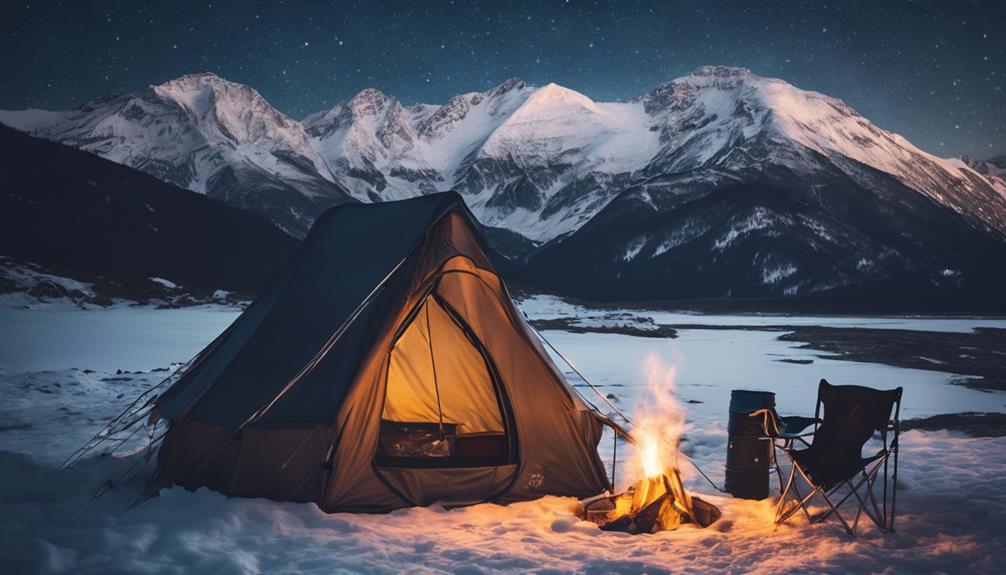

A winter tent with a stove jack can make cold-weather camping more comfortable, but the right choice depends on group size, portability, and how you plan to camp. My best overall pick is the 4-season hot tent with stove jack for 6–8 people, which prioritizes shared space and capacity. For smaller trips, the POMOLY STOVEHUT 20 favors a lighter, compact setup, while the Kodiak Canvas Cabin Lodge is the premium cabin-style option. The main tradeoff is between room and durability on one side, and packability and easier setup on the other. Read on for the full breakdown and a guide to choosing a stove-ready shelter for your winter camping needs.

Get furniture and decor delivered free with Prime
- Fast, free delivery on millions of items
- Prime Video, Amazon Music and more included
- Member-only deals all year
Complete the kit


Key Takeaways
- Capacity changes the whole setup: the 6–8-person poly-cotton cabin tent targets group camping, while the POMOLY STOVEHUT 20 and Circle 2 are designed for one or two people.
- Canvas bell tents favor spacious base camps: the MC Tomount, WildFinder, ShinHye, WaldWander, and other bell styles emphasize room, but are a different fit from compact backpacking hot tents.
- Inflatable frames trade pole assembly for pump-based setup: the skylight models from YOLENY and the generic 4–6-person option, plus Soboyo’s cabin, appeal to campers who want a different pitching routine.
- Product names do not settle stove compatibility: a stove jack alone does not confirm that a particular stove, flue, or heat-shield arrangement is suitable; verify dimensions and instructions before buying.
- The lineup has no universal winner: choose by trip style first—backpacking, family base camping, or a roomy glamping-style stay—then compare fabric, frame, and packing demands.
| 4-Season Hot Tent with Stove Jack, 6–8 Person Poly-Cotton Cabin Tent |  | Best for Spacious Family Camping | Occupancy: 6–8 people | Tent style: Cabin | Roof material: 210g TC poly-cotton (65% polyester, 35% cotton) | VIEW ON AMAZON | See Our Full Breakdown |
| POMOLY Camping Hot Tent Cabin Tent, Chalet 70 Series Portable Wall Tents with Stove Jack and Two Poles for 2-3 Person Hiking, Backpacking |  | Best for Small-Group Four-Season Camping | Occupancy: 2 people | Seasons: 4-season | Water resistance: 2500mm | VIEW ON AMAZON | See Our Full Breakdown |
| 4–6 Person Inflatable Camping Tent with Skylight and Stove Jack |  | Best for Fast-Setup Car Camping | Capacity: 4–6 people | Dimensions: 118 × 83 × 79 inches | Interior area: About 68 sq ft | VIEW ON AMAZON | See Our Full Breakdown |
| MC Tomount Canvas Bell Tent with Stove Jack, 16.4 ft x 9.2 ft Glamping Tent |  | Best for Large-Group Winter Base Camps | Occupancy: Up to 10 people | Dimensions: 196.85 × 177.17 × 110.24 inches | Floor area: 218.03 sq ft | VIEW ON AMAZON | See Our Full Breakdown |
| WildFinder 16.5-Foot Canvas Bell Tent with Stove Jack |  | Best for Flexible Bell-Tent Camping | Occupancy: 12 people | Dimensions: 197 × 197 × 110 inches | Maximum height: 9.2 feet | VIEW ON AMAZON | See Our Full Breakdown |
| ShinHye Canvas Bell Tent Yurt Tent 4 Seasons for Camping, 100% Cotton Glamping Tents with Stove Jack, Family Outdoor Camping |  | Best Canvas Pick for Small Family Camping | Material: Cotton canvas with PE bottom fabric | Diameter: 9.85 ft | Top height: 7.22 ft | VIEW ON AMAZON | See Our Full Breakdown |
| POMOLY STOVEHUT 20 Ultralight Hot Tent for 1–2 Person Camping |  | Best Compact Pick for Solo Hot-Tent Camping | Occupancy: Listed as 1 person; recommended capacity 1–2 people | Season: 4-season | Fabric: 20D tear-resistant silicone nylon | VIEW ON AMAZON | See Our Full Breakdown |
| Bell Yurt Tent with Stove Jack, Waterproof 4-Season Canvas Glamping Tent for Family Camping |  | Best for Canvas Glamping Convenience | Material: Cotton canvas with PE bottom fabric | Diameter: 9.85 ft | Top height: 7.22 ft | VIEW ON AMAZON | See Our Full Breakdown |
| YOLENY 4-6 Person Inflatable Camping Tent with Stove Jack, Skylights & Pump |  | Best for Fast Family Campsite Setup | Capacity: 4–6 people | Season: 4-season | Material: 300D Oxford fabric with PU coating | VIEW ON AMAZON | See Our Full Breakdown |
| WaldWander 4-Season Bell Tent with Stove Jack, 16.4 ft |  | Best for Large Winter Camping Groups | Capacity: Up to 10 people | Shape: Octagonal | Dimensions: 197 × 197 × 110 in | VIEW ON AMAZON | See Our Full Breakdown |
| Kodiak Canvas Cabin Lodge Stove-Ready Tents |  | Best for Spacious, Long-Stay Camping | Capacity: Up to 8 people; 4 when using a stove | Dimensions: 12 x 12 feet | Peak height: 7.5 feet | VIEW ON AMAZON | See Our Full Breakdown |
| Soboyo Inflatable Cabin Camping Tent with Detachable Awning and Stove Jack, 4–6 Person |  | Best for Fast Family Camp Setup | Capacity: 4–6 people | Dimensions: 118 x 83 x 83 inches | Floor area: 68 square feet | VIEW ON AMAZON | See Our Full Breakdown |
| POMOLY Tipi Tent Camping Hot Tent, Circle 2 Portable Pyramid Wood Stove Tents for 2 Person Hiking, Hunting, Backpacking (Circular Braces) |  | Best for Lightweight Winter Backcountry Trips | Capacity: 2 people | Unfolded dimensions: 11.8 x 11.8 x 7.87 feet | Weight: 11.9 pounds | VIEW ON AMAZON | See Our Full Breakdown |
| winter tent with stove | Weight | Capacity | Fabric | Dimensions |
|---|---|---|---|---|
| 4-Season Hot Tent with Stove J | — | — | — | — |
| POMOLY Camping Hot Tent Cabin | — | — | 100% 70D plaid ripstop polyester | — |
| 4–6 Person Inflatable Camping | 31 pounds | 4–6 people | 420D Oxford | 118 × 83 × 79 inches |
| MC Tomount Canvas Bell Tent wi | 55 pounds | — | — | 196.85 × 177.17 × 110.24 inches |
| WildFinder 16.5-Foot Canvas Be | 28 kg | — | — | 197 × 197 × 110 inches |
| ShinHye Canvas Bell Tent Yurt | 28 lb | 2–4 people | — | — |
| POMOLY STOVEHUT 20 Ultralight | 7.5 lb | — | 20D tear-resistant silicone nylon | 147.6 × 59.1 × 49.2 in |
| Bell Yurt Tent with Stove Jack | 28 lb | 2–4 people | — | — |
| YOLENY 4-6 Person Inflatable C | — | 4–6 people | — | — |
| WaldWander 4-Season Bell Tent | 49.8 lb | Up to 10 people | Oxford 400D polyester | 197 × 197 × 110 in |
| Kodiak Canvas Cabin Lodge Stov | 97 pounds | Up to 8 people; 4 when using a stove | Hydra-Shield 100% cotton duck canvas | 12 x 12 feet |
| Soboyo Inflatable Cabin Campin | 28 pounds | 4–6 people | 420D Oxford fabric with PU coating | 118 x 83 x 83 inches |
| POMOLY Tipi Tent Camping Hot T | 11.9 pounds | 2 people | 20D ripstop silnylon | — |
More Details on Our Top Picks
4-Season Hot Tent with Stove Jack, 6–8 Person Poly-Cotton Cabin Tent
For groups who want a stove-ready tent with a more upright layout, this 6–8-person cabin tent offers a practical middle ground between the smaller POMOLY CHALET 70 Pro and the much larger MC Tomount Canvas Bell Tent. Its 6.5-foot center peak gives campers room to stand near the middle, while the integrated floor and two doors suit shared family camping. The poly-cotton roof is breathable, and the waterproof polyester sidewalls add weather protection; together, they make this a more structured shelter than a floorless hot tent. The stove jack accepts compatible 2.7–4.7-inch pipes, but the listing does not specify a stove or its clearance requirements. I would also treat the setup and window details cautiously: the listing gives conflicting setup times and window counts. Steel poles and a cabin footprint make this better for a planned campsite than a lightweight hiking trip.
Pros:- Cabin design and 6.5-foot peak provide useful standing room.
- Integrated floor suits campsite use without requiring a separate groundsheet.
- Breathable poly-cotton roof is paired with waterproof sidewalls.
- Two doors and multiple mesh windows offer access and ventilation.
Cons:- The listed setup time conflicts between 10 and 15 minutes.
- The window count is inconsistent, listed as both four and six.
- Steel poles and a large cabin form are less suited to carrying on foot.
Best for: Families or small groups car camping in cool weather who want a standing-height layout, integrated floor, and a compatible wood-stove option.
Not ideal for: Backpackers and campers who need verified setup instructions or a clearly specified window layout before buying.
- Occupancy:6–8 people
- Tent style:Cabin
- Roof material:210g TC poly-cotton (65% polyester, 35% cotton)
- Sidewall material:210T ripstop polyester
- Floor material:140g PE
- Center peak height:6.5 ft (200 cm)
- Doors:2
- Stove jack pipe compatibility:2.7–4.7 in (7–12 cm)
Our verdict“Choose this for family-style winter camping when standing room and an integrated floor matter more than a compact load.”
POMOLY Camping Hot Tent Cabin Tent, Chalet 70 Series Portable Wall Tents with Stove Jack and Two Poles for 2-3 Person Hiking, Backpacking
Compared with the larger family shelters in this roundup, the POMOLY CHALET 70 Pro puts its emphasis on a compact sleeping group and weather-ready construction. Its 70D ripstop polyester has a stated 2500mm water resistance, while two aluminum poles, 12 guylines, and 12 stakes provide several points for securing the shelter in exposed conditions. The integrated fire-resistant groundsheet is a useful distinction from tents that only provide a stove jack, though buyers still need a compatible stove and safe pipe clearances. Two opposing doors with roll-up rain curtains make ventilation easier to manage in wet weather. At a listed two-person capacity, it is far less suitable for a family than the 6–8-person cabin tent, and its frame and fire-resistant floor add bulk for backpacking. I’d choose it for a small group prioritizing a secured hot-tent setup over generous living space.
Pros:- 70D ripstop polyester has a stated 2500mm water-resistance rating.
- Two aluminum poles and 12 guylines support a secured pitch.
- Integrated fire-resistant groundsheet is designed to accommodate a stove.
- Opposing doors with rain curtains allow access and ventilation in wet conditions.
Cons:- Two-person capacity offers limited room for extra occupants or bulky gear.
- The solid frame and fire-resistant floor may be cumbersome to carry.
- Stove compatibility still requires buyers to check their stove and pipe setup.
Best for: Two-person camping partners seeking a four-season hot tent with a fire-resistant groundsheet and multiple tie-down points.
Not ideal for: Families, larger groups, or hikers who need the lightest and smallest possible pack load.
- Occupancy:2 people
- Seasons:4-season
- Water resistance:2500mm
- Fabric:100% 70D plaid ripstop polyester
- Floor material:Silicone + fiberglass cloth
- Pole material:Aluminum
- Doors:2
- Guylines and stakes:12 guylines; 12 stakes
Our verdict“Pick the CHALET 70 Pro for small-group four-season camping when its stove-ready groundsheet and tie-down system matter more than extra space.”
4–6 Person Inflatable Camping Tent with Skylight and Stove Jack
This inflatable shelter is the most setup-focused option here: its air-beam frame replaces conventional poles, and the tent is listed as inflating in about five minutes with a pump. That can simplify arrival at a campsite compared with the steel-pole cabin tent, although the pump remains part of the setup and the shelter weighs 31 pounds. The panoramic skylight brings in daylight, with an interior curtain for privacy, while the stove jack and mesh openings add cold-weather camping flexibility. Its roughly 68-square-foot floor is a more moderate footprint than the expansive MC Tomount bell tent, making it easier to place at some sites but limiting room for a large group and gear. Waterproof 420D Oxford fabric and a PU3000mm rating support wet-weather use, but an inflatable frame is a different maintenance proposition from the rigid-pole designs. I’d favor this for car campers who value a quick pitch and a bright interior.
Pros:- Air beams allow a listed setup time of about five minutes with a pump.
- Panoramic skylight includes an interior privacy curtain.
- 420D Oxford fabric has a stated PU3000mm waterproof rating.
- Stove jack and mesh openings support cold-weather use and airflow.
Cons:- At 31 pounds, it is a car-camping shelter rather than a backpacking choice.
- A high-pressure pump is required for inflation.
- About 68 square feet may feel tight for six people and their cold-weather gear.
Best for: Car campers who want a stove-jack tent for a small group and prefer an air-beam setup over assembling traditional poles.
Not ideal for: Backpackers, campers without a suitable pump, or groups needing expansive floor space for people and winter gear.
- Capacity:4–6 people
- Dimensions:118 × 83 × 79 inches
- Interior area:About 68 sq ft
- Weight:31 pounds
- Fabric:420D Oxford
- Waterproofing:PU3000mm
- Air-beam material:TPU
- Doors:2
- Setup:Inflates in about 5 minutes; pump required
Our verdict“Choose this for car camping when quick inflation and a skylight matter more than low weight or generous group space.”
MC Tomount Canvas Bell Tent with Stove Jack, 16.4 ft x 9.2 ft Glamping Tent
With a stated 218-square-foot floor area and room for up to 10 people, the MC Tomount is the clear choice in this batch for a spacious, stationary camping base. Its 9.2-foot peak creates a much airier interior than the smaller POMOLY CHALET 70 Pro, and the breathable polyester-cotton canvas, stove jack, and eight mesh openings are suited to a group that expects to spend time inside. The waterproof 600D Oxford floor adds a substantial base for campsite use. That size has a real cost: at 55 pounds, the tent is demanding to transport and pitch, and its footprint may not fit smaller sites. It is less convenient than the inflatable 4–6-person tent for campers who prioritize quick setup and a more modest footprint. I’d shortlist it for group camping where space and a tall interior outweigh portability.
Pros:- 218.03-square-foot floor area provides ample room for a large group.
- 9.2-foot peak height creates a tall interior.
- Stove jack and breathable cotton-blend canvas suit four-season camping plans.
- Eight mesh windows and doors provide multiple ventilation openings.
Cons:- At 55 pounds, it is difficult to transport without vehicle access.
- Its broad footprint can rule it out at smaller campsites.
- The large structure is more demanding to pitch than the compact POMOLY tent.
Best for: Large families or groups setting up a roomy, stove-ready base camp at a site with space for a broad tent footprint.
Not ideal for: Solo campers, backpackers, and anyone with a small campsite or limited help for carrying and setup.
- Occupancy:Up to 10 people
- Dimensions:196.85 × 177.17 × 110.24 inches
- Floor area:218.03 sq ft
- Weight:55 pounds
- Canvas material:65% polyester, 35% cotton
- Floor material:600D Oxford cloth with PU3000mm coating
- Pole material:Alloy steel
- Doors/windows:8
- Seasons:4-season
Our verdict“Choose the MC Tomount for spacious group camping when you have room to pitch it and can manage its 55-pound weight.”
WildFinder 16.5-Foot Canvas Bell Tent with Stove Jack
The WildFinder combines 12-person stated capacity with features that let campers change how they use the shelter: its floor is removable, and the sidewalls roll up for an open-sided setup. That flexibility separates it from the MC Tomount, which is also a large canvas bell tent but is described with a fixed Oxford floor. A breathable TC cotton roof, eight mesh windows and doors, and a stove jack make the WildFinder a candidate for cool-weather group camping, while the PU3000mm rating is specified for its Oxford floor. Its 28kg weight still points to vehicle-supported trips, and the roughly 16.5-foot diameter needs substantial campsite room. Compared with the 6–8-person cabin tent, it offers a more open, high-ceilinged bell-tent layout, but less of a compact, upright cabin footprint. The short three-month warranty is another limitation for buyers planning frequent use.
Pros:- Stated capacity of 12 people and a 9.2-foot peak provide generous group space.
- Removable floor and roll-up sidewalls allow multiple campsite configurations.
- Breathable TC cotton roof is paired with a stove jack for cool-weather camping.
- Eight mesh windows and doors support airflow.
Cons:- At 28kg, it is heavy to transport and manage at camp.
- Its nearly 16.5-foot diameter needs a large, clear pitch area.
- Hand-wash care instructions may complicate cleaning, and the warranty is three months.
Best for: Large groups who want a spacious bell tent that can shift between enclosed camping and an open-sided canopy setup.
Not ideal for: Backpackers, campers with compact pitches, or buyers who want a long stated warranty or easy-care materials.
- Occupancy:12 people
- Dimensions:197 × 197 × 110 inches
- Maximum height:9.2 feet
- Weight:28 kg
- Roof material:210G breathable TC cotton
- Sidewall material:210D Oxford
- Floor material:600D Oxford
- Floor water resistance:PU3000mm
- Ventilation:8 mesh windows and doors
Our verdict“Pick the WildFinder if your group wants a configurable, high-capacity bell tent and has vehicle access and room for its broad pitch.”
ShinHye Canvas Bell Tent Yurt Tent 4 Seasons for Camping, 100% Cotton Glamping Tents with Stove Jack, Family Outdoor Camping
The ShinHye makes the most sense for campers who want a canvas shelter with a stove jack and room to share, without stepping up to a large group tent. Its 9.85-foot diameter and 7.22-foot peak give two to four people more livable space than the narrow POMOLY STOVEHUT 20, though the ShinHye is far heavier and less suited to hiking in. The cotton canvas and sewn-in groundsheet suit campsite-based trips where breathable fabric and a ready-made floor are useful. Windows and roof vents add airflow, but the product details do not explain how well they manage condensation during stove use. At 28 pounds, this is a car-camping choice, and first-time bell-tent owners may need practice pitching it. I would choose it over the YOLENY inflatable when traditional canvas and a smaller footprint matter more than rapid setup.
Pros:- Cotton canvas construction offers a breathable alternative to synthetic hot tents.
- Stove jack supports cold-weather camping with a compatible stove setup.
- Sewn-in groundsheet, windows, roof vents, poles, and toolkit are included.
- 9.85-foot diameter and 7.22-foot peak provide shared space for two to four campers.
Cons:- At 28 pounds, it is better suited to vehicle access than backpacking.
- Bell-tent pitching may take practice for beginners.
- Ventilation performance is not described in enough detail to judge condensation management.
Best for: Small families and car campers who want a breathable canvas bell tent with a stove jack and included groundsheet.
Not ideal for: Backpackers or campers who need a clearly documented ventilation setup for stove use; its 28-pound weight and limited airflow details are drawbacks.
- Material:Cotton canvas with PE bottom fabric
- Diameter:9.85 ft
- Top height:7.22 ft
- Side wall height:1.9 ft
- Weight:28 lb
- Capacity:2–4 people
- Included:Groundsheet, stove jack, mesh windows, roof vents, poles, toolkit, weatherproof bag
Our verdict“Choose the ShinHye for small-family campsite trips where canvas comfort and an included stove jack matter more than low pack weight.”
POMOLY STOVEHUT 20 Ultralight Hot Tent for 1–2 Person Camping
For a solo camper carrying gear on foot, the STOVEHUT 20 has a clear advantage over the canvas options in this group: it weighs 7.5 pounds, compared with 28 pounds for the ShinHye and the similarly sized Bell Yurt Tent. Its 20D silicone nylon fabric, 3000 mm waterproof rating, and snow skirts suit exposed, cold-weather trips better than a spacious family-oriented tent. Three doors and both mesh and fabric panels give campers useful options for airflow and insect protection. The main compromise is room: although the title says one to two people, the listed occupancy is one person, so I would treat it as a solo shelter with gear space rather than a comfortable two-person tent. The stove jack also needs to be cut to fit the pipe, adding setup work the canvas bell tents do not specify.
Pros:- At 7.5 pounds, it is far easier to carry than the 28-pound canvas bell tents.
- 3000 mm waterproof rating and snow skirts are suited to wet, snowy conditions.
- Three doors and fabric-and-mesh options support flexible access and ventilation.
- Includes poles, pegs, guylines, stove jack, and tent bag.
Cons:- Listed occupancy is one person despite the title suggesting one to two.
- The stove jack must be cut to fit the stove pipe.
- Its compact footprint offers less room than the family-oriented ShinHye or YOLENY.
Best for: Solo winter campers and lightweight hikers who prioritize a low carry weight, snow skirts, and a stove-ready shelter.
Not ideal for: Two campers who need generous sleeping or gear space, or beginners unwilling to trim the stove jack to fit their pipe.
- Occupancy:Listed as 1 person; recommended capacity 1–2 people
- Season:4-season
- Fabric:20D tear-resistant silicone nylon
- Dimensions:147.6 × 59.1 × 49.2 in
- Weight:7.5 lb
- Doors:3
- Included components:18 pegs, 6 guylines, 2 tent poles, 2 tarp poles, stove jack, tent bag
Our verdict“Pick the STOVEHUT 20 for solo winter trips where carrying weight matters more than shared space or a ready-sized stove opening.”
Bell Yurt Tent with Stove Jack, Waterproof 4-Season Canvas Glamping Tent for Family Camping
This Bell Yurt is a practical match for families who want a canvas bell tent for campsite stays and value a supplied frame and setup accessories. Its listed dimensions, capacity, and weight match the ShinHye: both offer a 9.85-foot diameter, space for two to four, and a 28-pound carry load. The distinction here is the stated durable steel frame and corrosion-resistant materials, alongside a sewn-in groundsheet and weatherproof bag. That makes its setup package appealing for glamping or vehicle-supported camping, though the product data does not provide a detailed pitch time or define how the steel frame changes assembly. Like the ShinHye, it is no lightweight hiking shelter; the POMOLY STOVEHUT 20 is a much easier carry. Careful setup is also needed for waterproofing, so I would not treat the all-season label as a substitute for sound pitching.
Pros:- Breathable canvas and a stove jack support cold-weather campsite use.
- Sewn-in groundsheet, poles, toolkit, and weatherproof bag are included.
- Steel frame and corrosion-resistant materials are specified.
- Room for two to four campers in a 9.85-foot-diameter layout.
Cons:- The 28-pound weight makes it unsuitable for most backpacking plans.
- Its capacity is limited for larger families or groups.
- Waterproofing depends on careful setup, and setup details are limited.
Best for: Families and glamping campers who want a canvas bell tent with a stove jack, sewn-in floor, and supplied frame components.
Not ideal for: Backpackers, larger groups, or buyers who need detailed setup and waterproofing instructions before heading into severe weather.
- Material:Cotton canvas with PE bottom fabric
- Diameter:9.85 ft
- Top height:7.22 ft
- Side wall height:1.9 ft
- Weight:28 lb
- Capacity:2–4 people
- Frame:Steel frame
- Included:Groundsheet, stove jack, windows, roof vents, poles, toolkit, weatherproof bag
Our verdict“Choose this Bell Yurt for vehicle-based family glamping when a canvas build and supplied frame matter more than low weight or large-group capacity.”
YOLENY 4-6 Person Inflatable Camping Tent with Stove Jack, Skylights & Pump
The YOLENY is the group-camping pick for buyers who want to pitch a larger shelter without assembling a conventional pole frame. Its inflatable poles and included pump promise a simpler setup than the canvas bell tents, while the four-to-six-person capacity gives it more room than the ShinHye and Bell Yurt. Skylights, multiple windows, and adjustable air inlets provide several ventilation routes—useful in a stove-ready tent, although safe stove operation still depends on proper clearances and airflow. The 300D Oxford fabric with PU coating adds a synthetic alternative to canvas, but the product specifically advises against heavy rain or blizzard conditions. That limitation matters for a winter-tent roundup: I would choose the POMOLY STOVEHUT 20 for harsher, snowier trips, and reserve the YOLENY for milder cold-weather camping where easy setup and group space take priority.
Pros:- Inflatable poles and included pump simplify pitching compared with conventional pole setups.
- Four-to-six-person capacity exceeds the listed capacity of the canvas bell tents.
- Skylights, multiple windows, and adjustable air inlets offer ventilation options.
- Stove jack supports a compatible stove setup for cold-weather camping.
Cons:- Not recommended for heavy rain or blizzard conditions.
- The heater is not included.
- Requires careful drying after damp use.
Best for: Families or groups of four to six who camp near a vehicle and want a roomy tent with pump-assisted setup for milder winter conditions.
Not ideal for: Campers expecting heavy rain, blizzards, or remote trips where a compact, low-weight shelter is needed.
- Capacity:4–6 people
- Season:4-season
- Material:300D Oxford fabric with PU coating
- Setup:Inflatable poles with included pump
- Stove feature:Stove jack
- Ventilation:Skylights, multiple windows, adjustable air inlets
- Included:Pump, guylines, steel stakes
Our verdict“Choose the YOLENY for roomy, easy-to-pitch family camping in manageable winter weather, not severe storms or blizzard conditions.”
WaldWander 4-Season Bell Tent with Stove Jack, 16.4 ft
The WaldWander stands apart from the smaller bell tents in this set by offering 190 square feet of floor area and space for up to ten people. Its 9.2-foot center height gives campers room to move around, while eight mesh doors and eight windows create multiple ventilation routes. For group campsite use, that scale is a meaningful alternative to the two-to-four-person ShinHye and Bell Yurt; it is also much larger than the YOLENY inflatable. The 400D Oxford fabric, PU 3000 mm coating, and seam sealing give it a specified wet-weather construction, and the stove jack suits cold-weather use. The tradeoffs are substantial: 49.8 pounds makes transport and handling harder, and dry-clean-only care may complicate maintenance after muddy trips. I would pick it for a group basecamp, not a mobile winter hike.
Pros:- 190-square-foot floor area and capacity for up to ten people suit group camping.
- 9.2-foot center height allows standing room.
- PU 3000 mm coating and seam sealing are specified for wet-weather protection.
- Eight doors and eight windows provide ventilation from multiple sides.
Cons:- At 49.8 pounds, it is cumbersome to carry and handle.
- Dry-clean-only care is inconvenient after muddy campsite use.
- Its large footprint is excessive for small parties or compact campsites.
Best for: Large families or groups setting up a vehicle-supported winter basecamp who need standing room and a stove-ready communal shelter.
Not ideal for: Backpackers, small parties, or campers who want easy at-home washing after muddy or wet trips.
- Capacity:Up to 10 people
- Shape:Octagonal
- Dimensions:197 × 197 × 110 in
- Floor area:190 sq ft
- Center height:9.2 ft
- Fabric:Oxford 400D polyester
- Waterproofing:PU 3000 mm coating and seam sealing
- Weight:49.8 lb
- Doors and windows:8 doors and 8 windows
Our verdict“Choose the WaldWander for a large, vehicle-supported winter basecamp where group space outweighs heavy transport and demanding care.”
Kodiak Canvas Cabin Lodge Stove-Ready Tents
The Kodiak Canvas Cabin Lodge is my pick for campers who want a roomy base camp with a stove jack, not a tent they plan to carry far from the vehicle. Its 12-by-12-foot floor, vertical walls, and 7.5-foot peak height make moving around easier than in the low, tapered POMOLY Circle 2, while the cotton canvas and sewn-in vinyl floor suit longer stays. The stove jack supports cold-weather use, though the wood stove is sold separately and the listed capacity drops from eight people to four when a stove is in use. Six mesh windows and two rain-openable vents offer flexible airflow. The tradeoff is substantial: at 97 pounds, this steel-framed tent is a vehicle-camping choice, and its canvas needs to dry before storage.
Pros:- Roomy 12-by-12-foot interior with vertical walls and a 7.5-foot peak
- Breathable Hydra-Shield cotton canvas paired with a waterproof reinforced vinyl floor
- Five-inch stove jack supports use of a separate wood stove
- Six mesh windows and two vents provide multiple airflow options
Cons:- At 97 pounds, it is impractical to carry far from a vehicle
- Stove use reduces the stated occupancy from eight people to four
- Canvas must dry before storage, adding care and packing demands
Best for: Car campers or base-camp groups who want standing room, a durable canvas shelter, and space to use a stove with up to four occupants.
Not ideal for: Backpackers, solo campers, or anyone who needs a quick-drying, lightweight tent that is easy to transport and store.
- Capacity:Up to 8 people; 4 when using a stove
- Dimensions:12 x 12 feet
- Peak height:7.5 feet
- Weight:97 pounds
- Fabric:Hydra-Shield 100% cotton duck canvas
- Floor:13.5 oz vinyl with polyester reinforcement and welded seams
- Stove jack:5 inches
- Ventilation:6 windows and 2 vents
Our verdict“Choose the Kodiak for spacious, vehicle-based winter camping with a stove; skip it if portability or minimal upkeep matters most.”
Soboyo Inflatable Cabin Camping Tent with Detachable Awning and Stove Jack, 4–6 Person
The Soboyo stands out for campers who want a cabin-style layout without assembling a conventional pole frame: the included pump supports a stated five-minute setup. Its 68-square-foot floor and two doors make it a more compact family shelter than the 12-by-12-foot Kodiak Canvas Cabin Lodge, though the Kodiak offers more room to stand and move around. The stove jack, waterproof 420D Oxford fabric, and UPF 50+ rating make the feature mix suitable for camping across seasons; the detachable awning and skylight add flexibility that the simpler POMOLY Circle 2 does not emphasize. At 28 pounds, it is far easier to transport than the Kodiak, but still bulky for a long carry. The supplied details do not specify the stove-jack size or cold-weather construction beyond the listed materials, so I would verify compatibility and setup requirements before a winter trip.
Pros:- Included pump supports a stated setup time of about five minutes
- Stove jack and waterproof fabric support four-season camping use
- Detachable awning and skylight add shelter and light options
- Two doors and six windows offer flexible access and ventilation
Cons:- At 28 pounds, it is heavy for extended carry-in camping
- The listed 68-square-foot floor is smaller than the Kodiak’s 12-by-12-foot space
- Stove-jack dimensions and snow-load performance are not specified
Best for: Families or small groups who camp by car and value quick inflation, multiple openings, and an awning for variable weather.
Not ideal for: Backpackers seeking a compact load, or winter campers who need clearly specified stove-jack dimensions and proven snow-load details.
- Capacity:4–6 people
- Dimensions:118 x 83 x 83 inches
- Floor area:68 square feet
- Weight:28 pounds
- Fabric:420D Oxford fabric with PU coating
- Water resistance:Waterproof
- Setup time:About 5 minutes
- Doors and windows:2 doors and 6 windows
- Included components:Air pump, detachable awning, guy ropes, tent, and stakes
Our verdict“Pick the Soboyo for car camping when fast setup and family-friendly features matter more than a light carry or fully detailed winter specifications.”
POMOLY Tipi Tent Camping Hot Tent, Circle 2 Portable Pyramid Wood Stove Tents for 2 Person Hiking, Hunting, Backpacking (Circular Braces)
Among these three, the POMOLY Circle 2 is the clearest choice for carrying into a remote camp: it weighs 11.9 pounds, compared with 28 pounds for the Soboyo and 97 pounds for the Kodiak. Its circular braces are designed to shape the pyramid quickly, while the integrated snow skirt helps limit snow and cold-air entry around the base. The 20D ripstop silnylon has a stated 3000 mm waterproof rating and taped seams, but it does not offer the breathable canvas feel or the sewn-in vinyl floor of the Kodiak. The interior is sized for two adults, and its stove jack is described as DIY, so buyers should be ready to handle setup details and confirm stove compatibility. I would choose it for hiking or hunting trips where low carry weight matters more than cabin-style comfort.
Pros:- At 11.9 pounds, it is much easier to carry than either cabin-style alternative
- Integrated snow skirt is designed to reduce drafts and snow intrusion
- 3000 mm waterproof rating and taped seams support wet-weather protection
- Circular braces help form the tent outline without repeated stake adjustments
Cons:- Two-person capacity leaves little room for a group or bulky gear
- DIY stove jack requires buyers to address setup and compatibility details
- Silnylon construction lacks the breathable canvas and reinforced floor of the Kodiak
Best for: Two-person backpacking, hunting, or winter hiking teams who want a portable pyramid tent with a stove option and snow-skirt coverage.
Not ideal for: Families, groups wanting standing-room cabin comfort, or buyers who prefer a clearly specified, ready-to-use stove-jack configuration.
- Capacity:2 people
- Unfolded dimensions:11.8 x 11.8 x 7.87 feet
- Weight:11.9 pounds
- Fabric:20D ripstop silnylon
- Stove jack:DIY stove jack
- Doors:2
- Poles:2
- Included components:Bottom pole, tent, 10 guylines, 24 tent pegs, and tent pole
Our verdict“Choose the Circle 2 for a two-person winter backcountry camp where portability and a snow skirt outweigh cabin space and turnkey stove-jack convenience.”

How We Picked
I ranked these options around the needs behind a winter tent with stove: usable floor space, a practical layout for a stove, suitability for the stated group size, and fit for camping style. I also weighed portability and pitching approach, since an inflatable family shelter, a large canvas bell tent, and a two-person hot tent solve different problems. Product names and supplied descriptions support broad comparisons, but they do not provide enough verified detail to claim specific performance figures or stove compatibility.
The ranking gives the lead position to a roomy, clearly stove-ready cabin-style option for general cold-weather camping, then separates compact trekking shelters, canvas base-camp tents, and inflatable family models by intended use. Products with similar formats are distinguished by their stated construction and layout rather than assumed quality differences. Before purchase, readers should confirm the maker’s specifications for materials, packed size, included components, stove-jack dimensions, and safe clearances; missing details keep any product from being an automatic choice.
Factors to Consider When Choosing Winter Tent With Stove
Before choosing a model, decide what your winter camp actually looks like. A stove-ready tent is a shelter-and-heating system, so the tent’s footprint, ventilation, stove placement, and carrying demands matter together. These broader checks can prevent a spacious shelter from becoming a poor match for a small stove or a difficult load to transport.
Match the tent to the trip, not just the headcount
A listed capacity usually describes sleeping space, not how comfortable the tent feels once you add winter bedding, bags, and a stove. For a group, allow room for people to move around the stove area without crowding the sleeping zone. Backpackers should give more weight to packed dimensions and carried components than to advertised floor capacity. A family camping from a vehicle can accept a heavier shelter if the extra living space is useful. A common mistake is buying for the maximum number of sleepers and leaving no practical shared space.
Check stove-jack placement and compatibility
The presence of a stove jack does not mean every stove or flue will fit it safely. Compare the jack’s position and dimensions with the stove maker’s flue specifications, and look for clear instructions on heat protection and required clearances. Think through where the stove will sit relative to doors, sleeping areas, and the tent’s central walkway. A badly placed opening can make an otherwise roomy layout awkward to use. Do not cut or modify a tent for a different flue without guidance from the tent maker.
Choose fabric with maintenance in mind
Canvas and poly-cotton shelters often appeal to campers seeking a substantial base-camp tent, but the fabric choice also affects drying, storage, and care. Put a damp tent away for too long and mildew can become a problem, so plan for drying time after a trip. Ask the maker how the fabric should be cleaned, treated, and stored rather than relying on assumptions about natural or blended materials. A lighter synthetic-style shelter may suit frequent transport better, though its exact weather performance still depends on construction and care. The best fabric is the one whose upkeep matches your camping habits.
Treat ventilation as part of the heating plan
A wood stove can add warmth, but it does not replace ventilation. Follow the tent and stove makers’ instructions for airflow, safe operation, and carbon-monoxide precautions, and use a separate battery-powered carbon-monoxide alarm where appropriate. Avoid sealing vents to trap heat; condensation can build up and dampen bedding. Stove heat can also vary across the shelter, so plan sleeping positions and gear storage around the layout. If safe stove use depends on closing necessary vents, the setup is not right for that tent.
Compare setup effort across frame styles
Pole-supported cabin and bell tents, trekking-oriented hot tents, and inflatable shelters ask for different setup routines. An inflatable frame may reduce the number of conventional poles to assemble, but it brings a pump and a need to follow the maker’s inflation instructions. Larger canvas designs need enough space to pitch and may be cumbersome to handle with a small group. For winter trips, practice pitching before departure so cold, wind, or limited daylight do not turn setup into guesswork. Check whether stakes, pump, poles, and repair materials are included rather than assuming they come with the tent.
Pay for the features your camping pattern uses
Extra room, a more elaborate frame, or a premium cabin-style build only pays off when it supports the way you camp. Frequent car campers may value a generous living area more than a compact packed size, while hikers should avoid carrying features they rarely use. Skylights, awnings, and multiple doors can shape comfort and access, but they do not answer questions about stove fit or weather suitability. Read the full specifications and warranty details before paying more for a feature-led design. When key information is unclear, ask the manufacturer rather than treating the product title as proof.
Frequently Asked Questions
Can I use any wood stove with a tent that has a stove jack?
No. The stove’s flue diameter, the jack opening, and the maker’s instructions need to work together. Check whether the tent maker specifies compatible flue sizes or stove types, and follow the stove maker’s clearance and heat-shield guidance. The jack label alone does not confirm that a particular setup is safe. If the compatibility details are missing, ask both manufacturers before using the stove inside the tent.
Is a larger tent always better for winter camping with a stove?
Not necessarily. More floor space can make it easier to separate sleeping areas from the stove, but it can also take longer to pitch and may require more heat to feel comfortable. A smaller shelter can suit a solo camper or pair better, especially when portability matters. Capacity should account for winter bedding and gear, not just the number of people. Choose the smallest layout that still allows the intended group to move safely around the stove.
Are inflatable stove-ready tents a good choice for cold-weather camping?
They can be a fit for campers who prefer an inflatable-frame setup and are comfortable carrying and using a pump. The product description alone does not establish how a model handles snow, wind, or repeated winter use, so check the manufacturer’s seasonal ratings and setup instructions. Confirm that the stove jack is designed for the flue you plan to use. Also ask about puncture repair and what happens if the frame loses pressure during a trip. They make the most sense when the pitching style suits your plans and the cold-weather details are clearly documented.
What should I verify before choosing a canvas bell tent for winter?
Start with the maker’s cold-weather guidance, stove-jack specifications, and instructions for ventilation and safe stove clearances. Check the packed size and weight, since a large bell tent is generally better matched to a vehicle-supported camp than a backpacking route. Ask how the canvas should be dried and stored after wet or snowy trips. Confirm whether poles, stakes, and any stove-jack reinforcement are included. These checks help distinguish a roomy shelter from one that suits your actual transport and maintenance routine.
Which type makes the most sense for a first-time hot-tent camper?
A first-time buyer should favor a straightforward layout, clear stove and ventilation instructions, and a size that is manageable to pitch with the available help. A roomy cabin-style shelter may be easier to organize for a group, while a compact hot tent can limit carrying demands for a solo camper. Neither style removes the need to learn stove operation, safe clearances, and fire management. Practice pitching the tent and installing the stove before a winter trip, using the manufacturer’s directions. If the product documentation leaves basic compatibility or safety questions unanswered, choose a model with clearer support.
Conclusion
For a general camping setup with room for a group, my best overall choice is the 6–8-person poly-cotton cabin tent with a stove jack, based on its stated capacity and cabin format. For best value in practical use, I would start with the POMOLY STOVEHUT 20 if a compact one- or two-person hot tent matches the trip; its size makes more sense for a small crew than a large bell tent. The Kodiak Canvas Cabin Lodge is my premium-style pick for buyers who want a cabin-format shelter and can support its transport and setup needs. For beginners, I would favor a manageable cabin or inflatable design only after confirming clear pitching, ventilation, and stove instructions. For specific needs, choose the POMOLY Circle 2 or STOVEHUT 20 for compact two-person camping, a canvas bell tent for a spacious base camp, or an inflatable model if its pump-based setup suits your routine. Match the stove and jack specifications before making the final call.