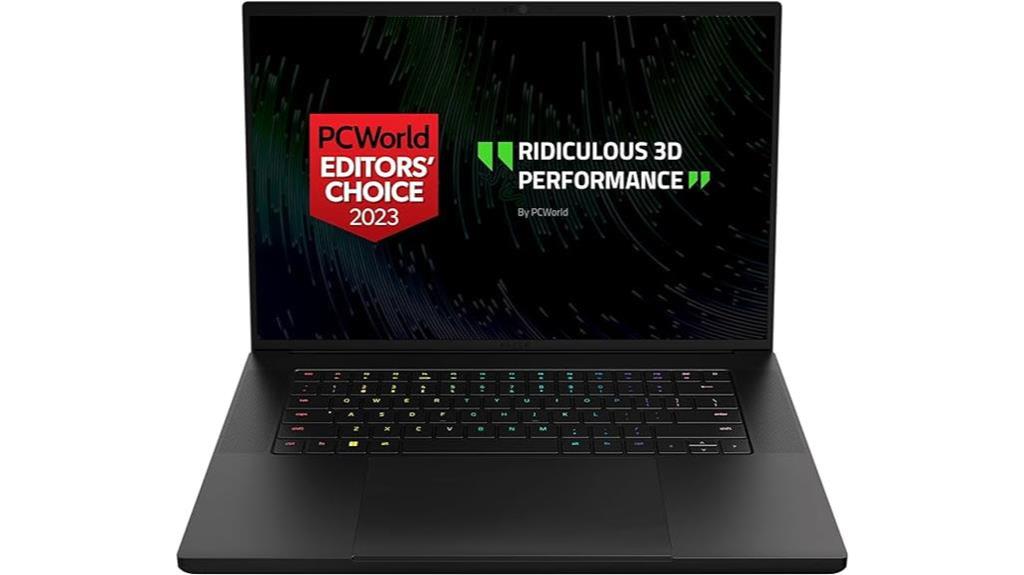

Choosing a Razer Blade 16 is less about deciding whether the OLED screen is appealing and more about matching its graphics tier, memory, and generation to the games and creative work you actually do. I rank the 2025 RTX 5080 model first for its strong blend of graphics headroom and generous memory, while the RTX 4090 configuration is the pick for buyers who want the most powerful GPU in this group. The 2026 RTX 5070 Ti Blade gives a newer platform and modern connections without going to the top graphics tier.

Get furniture and decor delivered free — and shop member deals
- Fast, free delivery on millions of items
- Access to Prime Big Deal Days deals on October 6–7
- Prime Video, Amazon Music and more included
The tradeoffs matter: the fastest configurations put demanding hardware in a slim chassis, the 2026 model’s 32GB memory cannot be upgraded, and the older RTX 4070 option gives up graphics capacity and uses a non-OLED panel. My ranking weighs performance class, screen characteristics, expandability, and practical fit rather than treating every Blade 16 as interchangeable. These are product-based impressions, not claims of hands-on testing; buyers should also check the exact configuration and return terms before ordering.
Complete the kit


Key Takeaways
- Best overall: The 2025 RTX 5080 configuration combines a 240Hz OLED display, 64GB of memory, and 2TB of storage for demanding gaming and mixed creative work.
- Most graphics headroom: The RTX 4090 model has 24GB of graphics memory and a powerful Core i9, but its older platform and demanding slim-chassis design make it a focused high-end pick.
- Best newer-generation balance: The 2026 RTX 5070 Ti Blade adds Thunderbolt 5 and a vapor chamber while keeping the 240Hz OLED; its 32GB RAM is fixed.
- Best for a less demanding workload: The RTX 4070 Blade retains an i9 and 240Hz QHD+ display, but its 16GB RAM and LED panel are meaningful compromises against the newer OLED options.
- Shared buying consideration: Slim construction helps these laptops fit a premium portable setup, but demanding components can make sustained performance and thermal behavior important to research.
| Razer Blade 16 (2025) Gaming Laptop, RTX 5080, 64GB RAM, 2TB SSD |  | Best Overall | Processor: AMD Ryzen AI 9 365, 10 cores and 20 threads | Graphics: NVIDIA GeForce RTX 5080 Laptop GPU, up to 160W TGP | Memory: 64GB LPDDR5X, 8000MHz | VIEW ON AMAZON | See Our Full Breakdown |
| Razer Blade 16 Gaming Laptop with RTX 4090, Intel Core i9-14900HX, 16-inch OLED QHD+ 240Hz Display, 32GB RAM, and 2TB SSD |  | Best for Maximum Listed Graphics Memory | Processor: Intel Core i9-14900HX, 24 cores, up to 5.8GHz | Graphics: NVIDIA GeForce RTX 4090, 24GB graphics memory | Memory: 32GB RAM | VIEW ON AMAZON | See Our Full Breakdown |
| Razer Blade 16 (2026) Gaming Laptop, RTX 5070 Ti, 32GB RAM, 1TB SSD |  | Best Newer-Generation Balance | Processor: Intel Core Ultra 9 386H, 16 cores, up to 4.9GHz | Graphics: NVIDIA GeForce RTX 5070 Ti, 12GB GDDR7, up to 140W TGP | Memory: 32GB LPDDR5X 9600MHz, non-upgradeable | VIEW ON AMAZON | See Our Full Breakdown |
| Razer Blade 16 Gaming Laptop, RTX 4070, Intel Core i9-13950HX, 16-inch QHD+ 240Hz Display, 16GB RAM, 1TB SSD |  | Best for Buyers Who Want the Core Blade Design | Processor: 13th Gen Intel Core i9-13950HX | Graphics: NVIDIA GeForce RTX 4070, up to 140W TGP, 8GB GDDR6 | Memory: 16GB RAM | VIEW ON AMAZON | See Our Full Breakdown |
| razer blade 16 gaming laptop review impressions insight | Processor | Graphics | Memory | Storage |
|---|---|---|---|---|
| Razer Blade 16 | AMD Ryzen AI 9 365, 10 cores and 20 threads | NVIDIA GeForce RTX 5080 Laptop GPU, up to 160W TGP | 64GB LPDDR5X, 8000MHz | 2TB SSD, expandable up to 8TB |
| Razer Blade 16 Gaming Laptop w | Intel Core i9-14900HX, 24 cores, up to 5.8GHz | NVIDIA GeForce RTX 4090, 24GB graphics memory | 32GB RAM | 2TB NVMe SSD |
| Razer Blade 16 | Intel Core Ultra 9 386H, 16 cores, up to 4.9GHz | NVIDIA GeForce RTX 5070 Ti, 12GB GDDR7, up to 140W TGP | 32GB LPDDR5X 9600MHz, non-upgradeable | 1TB PCIe 4.0 SSD; dual M.2 slots, expandable up to 8TB |
| Razer Blade 16 Gaming Laptop | 13th Gen Intel Core i9-13950HX | NVIDIA GeForce RTX 4070, up to 140W TGP, 8GB GDDR6 | 16GB RAM | 1TB NVMe SSD |
More Details on Our Top Picks
Razer Blade 16 (2025) Gaming Laptop, RTX 5080, 64GB RAM, 2TB SSD
This configuration is the strongest all-round match in the group because it puts RTX 5080 graphics together with 64GB of memory and a 2TB SSD. That combination gives demanding games, editing projects, and multitasking more room than the RTX 5070 Ti model’s fixed 32GB, while the 240Hz OLED keeps the display quality aligned with the laptop’s high-performance intent. Its Ryzen AI 9 365 platform also distinguishes it from the two older Intel-based options.
Against the RTX 4090 Blade, the 2025 model offers a newer graphics generation and twice the stated system memory, while the older machine lists 24GB of graphics memory and an i9-14900HX. I would not call the RTX 5080 configuration an automatic winner in every workload: the supplied specifications do not include direct benchmark comparisons, and the RTX 4090’s large graphics-memory capacity may appeal to particular rendering or GPU-heavy tasks. Still, for a buyer seeking one Blade 16 for both gaming and broader workloads, the 5080 configuration is the most balanced package here.
The slim aluminum chassis makes a high-performance system easier to carry than a bulky desktop replacement, but packing powerful components into a 0.59-inch profile puts cooling behavior on the buyer’s checklist. This laptop has no touchscreen, and the memory is listed as LPDDR5X rather than as user-upgradeable modules. Storage, by contrast, is expandable up to 8TB, which gives the configuration useful room for a large game library. I rank it first for its unusually generous memory and storage alongside high-tier graphics, not because its thinness removes the usual performance and heat tradeoffs.
Pros:- RTX 5080 graphics paired with a 240Hz QHD+ OLED display
- 64GB LPDDR5X memory suits heavy multitasking and creative applications
- 2TB SSD with listed expansion capacity up to 8TB
- Slim aluminum design with Wi-Fi 7 and a Windows Hello webcam
Cons:- High-performance components share a very slim chassis, making sustained cooling behavior worth checking
- No touchscreen, and system memory is not specified as upgradeable
Best for: Buyers who want a high-end Blade 16 for gaming plus memory-hungry creative work, and value 64GB RAM and 2TB storage out of the box.
Not ideal for: Shoppers who need a touchscreen, user-upgradeable system memory, or a laptop primarily chosen for sustained workloads without first checking cooling and performance behavior.
- Processor:AMD Ryzen AI 9 365, 10 cores and 20 threads
- Graphics:NVIDIA GeForce RTX 5080 Laptop GPU, up to 160W TGP
- Memory:64GB LPDDR5X, 8000MHz
- Storage:2TB SSD, expandable up to 8TB
- Display:16-inch OLED, 2560 x 1600, 240Hz
- Battery:90Wh lithium polymer
- Connectivity:Wi-Fi 7, Bluetooth 5.4, HDMI
- Dimensions:13.98 x 9.69 x 0.59 inches
Our verdict“I rank this first for buyers who want the most complete balance of high-tier graphics, generous memory, OLED speed, and storage in this lineup.”
Razer Blade 16 Gaming Laptop with RTX 4090, Intel Core i9-14900HX, 16-inch OLED QHD+ 240Hz Display, 32GB RAM, and 2TB SSD
The RTX 4090 Blade is the specialist choice for buyers who prioritize a top-tier GPU and want 24GB of graphics memory. Its Core i9-14900HX, 32GB system memory, and 2TB SSD make it a strong-looking configuration for gaming and GPU-focused creation, while the 16-inch 240Hz OLED brings the same broad appeal of fast response and rich color associated with the premium Blade 16 options. A vapor chamber cooling system is included, though the listed specs alone cannot establish sustained temperatures or noise.
Compared with my first-place RTX 5080 pick, this model has more stated graphics memory but less system memory, an older Intel platform, and a thicker 0.87-inch listed profile. It also offers a notably broad port selection, including Thunderbolt 4, HDMI 2.1, USB-A, USB-C, and an SD card reader; that is more convenient for peripherals and media workflows than a setup that depends on adapters. For buyers who specifically value its graphics-memory capacity and port mix, those differences may outweigh the newer-generation appeal of the 5080 model.
There are practical cautions. This is not the newest platform in the lineup, and the configuration is still a substantial gaming machine rather than a lightweight everyday notebook. The listing also states that the return policy excludes opened computers unless specific conditions are met, so I would read those terms closely before committing. Snap Tap is off by default and needs Razer Synapse to enable. I place it second: a compelling high-end option, but a narrower recommendation than the more balanced 2025 RTX 5080 Blade.
Pros:- RTX 4090 graphics with 24GB of graphics memory
- 240Hz OLED display with listed 0.2ms response time and 100% DCI-P3 coverage
- 2TB SSD and 32GB system memory
- Useful port selection including Thunderbolt 4, HDMI 2.1, and an SD card reader
Cons:- Older processor generation than the 2025 and 2026 configurations listed here
- Return terms restrict opened computers unless specific conditions are met
- Snap Tap requires Razer Synapse and is off by default
Best for: Buyers who prioritize the listed 24GB of GPU memory, want a high-end OLED gaming display, and value a broad selection of built-in ports.
Not ideal for: Shoppers seeking the newest configuration in this group, a thin-and-light daily laptop, or flexible return terms after opening the computer.
- Processor:Intel Core i9-14900HX, 24 cores, up to 5.8GHz
- Graphics:NVIDIA GeForce RTX 4090, 24GB graphics memory
- Memory:32GB RAM
- Storage:2TB NVMe SSD
- Display:16-inch OLED, 2560 x 1440, 240Hz, 400 nits
- Cooling:Vapor chamber cooling system
- Wireless:Wi-Fi 7 and Bluetooth 5.4
- Ports:Thunderbolt 4, USB-C, three USB-A, HDMI 2.1, UHS-II SD card reader, 3.5mm audio
Our verdict“I recommend this RTX 4090 Blade to buyers who value its GPU memory and ports more than the newer platform and larger system memory of the RTX 5080 option.”
Razer Blade 16 (2026) Gaming Laptop, RTX 5070 Ti, 32GB RAM, 1TB SSD
This 2026 configuration makes the most sense for buyers who want a newer platform and modern connectivity without stepping up to the RTX 5080 or RTX 4090 models. The RTX 5070 Ti, Core Ultra 9 386H, and vapor chamber cooling sit alongside a 240Hz OLED panel. Thunderbolt 5 and Wi-Fi 7 give it a forward-looking connection set compared with the RTX 4090 model’s Thunderbolt 4, and the 14.9mm CNC-milled chassis emphasizes the slim Blade design.
It is not the most flexible choice. Its 32GB LPDDR5X memory is non-upgradeable, and its 1TB SSD is half the included capacity of the 2025 RTX 5080 and RTX 4090 options, even though the listing describes dual M.2 slots and expansion up to 8TB. That may be fine for a focused game library, but a buyer with large projects or many installed games should factor in future storage needs. Compared with the RTX 4070 Blade, this model offers a newer processor, OLED rather than LED, and more memory; those are meaningful reasons to prefer it if the configuration fits the workload.
The thin build is attractive for moving between a desk and other spaces, yet the product description itself cautions that the design may limit sustained performance during extended demanding workloads. I would treat that as a reason to investigate independent thermal and performance measurements for the games or applications that matter most. This ranks behind the RTX 5080 and RTX 4090 choices because its graphics tier, fixed memory, and smaller included SSD make it less capable as an all-purpose long-term configuration. Its best case is a newer Blade with premium display and connection features, not maximum headroom.
Pros:- RTX 5070 Ti and Core Ultra 9 386H in a newer-generation configuration
- 240Hz OLED panel with listed 0.2ms response time and 100% DCI-P3 color
- Thunderbolt 5, Wi-Fi 7, and a vapor chamber cooling design
- Dual M.2 slots allow listed SSD expansion up to 8TB
Cons:- 32GB LPDDR5X memory is non-upgradeable
- 1TB included SSD is less than the 2TB offered by two competing models
- Thin design may limit sustained performance under extended heavy workloads
Best for: Buyers who want a 2026 Blade 16 with an OLED screen, Thunderbolt 5, Wi-Fi 7, and a high-end but not flagship graphics configuration.
Not ideal for: People who expect to upgrade system memory, need more than 1TB of included storage, or prioritize the highest graphics tier for long gaming sessions.
- Processor:Intel Core Ultra 9 386H, 16 cores, up to 4.9GHz
- Graphics:NVIDIA GeForce RTX 5070 Ti, 12GB GDDR7, up to 140W TGP
- Memory:32GB LPDDR5X 9600MHz, non-upgradeable
- Storage:1TB PCIe 4.0 SSD; dual M.2 slots, expandable up to 8TB
- Display:16-inch OLED, 2560 x 1600, 240Hz, 0.2ms
- Cooling:Vapor chamber
- Connectivity:Wi-Fi 7, Thunderbolt 5, HDMI 2.1, USB, Bluetooth
- Chassis and battery:CNC-milled aluminum, 14.9mm thick; 90Wh
Our verdict“I would choose this model for its newer platform and connections, provided fixed 32GB memory and 1TB of included storage fit the plan.”
Razer Blade 16 Gaming Laptop, RTX 4070, Intel Core i9-13950HX, 16-inch QHD+ 240Hz Display, 16GB RAM, 1TB SSD
The RTX 4070 Blade keeps several recognizable premium features: a CNC-milled aluminum chassis, an i9-13950HX processor, and a 16-inch QHD+ display with a 240Hz refresh rate and G-SYNC support. It is the entry point among these four configurations by graphics tier, but its screen remains suited to fast-refresh gaming on paper. The included compact GaN adapter is a useful distinction for packing, although the laptop itself is listed at 5.4 pounds.
Its position becomes clearer beside the 2026 RTX 5070 Ti model. The newer option has an OLED panel, 32GB of fixed memory, and a more recent processor and connection set; this RTX 4070 model instead offers 16GB RAM and an LED display. Against the 2025 RTX 5080 Blade, the graphics and memory gap is wider still. The older model may suit a buyer whose workload is less demanding or who values the familiar Intel i9 configuration, but I would not choose it simply because it shares the Blade name and a 240Hz panel.
The 16GB memory capacity is the main long-term limitation, especially for heavy multitasking or creation work alongside games. Its 1TB SSD also gives less room than the two 2TB alternatives, and the listed 0.87-inch thickness and 5.4-pound weight make this less slim than the 2025 model’s 0.59-inch profile. The provided product information does not identify the display as OLED, so buyers should not assume it matches the OLED screens on the other three. I rank it fourth because the newer options make a stronger case for demanding use, while this one remains a reasonable fit for buyers with more modest expectations.
Pros:- RTX 4070 graphics listed at up to 140W TGP
- 16-inch QHD+ 240Hz display with NVIDIA G-SYNC support
- CNC-milled anodized aluminum chassis
- Compact GaN power adapter
Cons:- 16GB RAM is the lowest memory capacity in this comparison
- LED panel is not specified as OLED, unlike the other three models
- Listed weight is 5.4 pounds and storage is 1TB
Best for: Buyers who want an aluminum Blade with an i9 processor and 240Hz QHD+ display for gaming that does not require the highest graphics tier or large memory capacity.
Not ideal for: Creative professionals, heavy multitaskers, OLED-focused buyers, or anyone seeking the strongest graphics headroom and longer-term memory flexibility.
- Processor:13th Gen Intel Core i9-13950HX
- Graphics:NVIDIA GeForce RTX 4070, up to 140W TGP, 8GB GDDR6
- Memory:16GB RAM
- Storage:1TB NVMe SSD
- Display:16-inch LED, QHD+ 2560 x 1600, 240Hz
- Operating system:Windows 11 Home
- Weight:5.4 pounds
- Chassis and charger:CNC-milled anodized aluminum; compact GaN adapter up to 280W
Our verdict“I would choose this Blade only when its i9-and-RTX 4070 configuration meets the workload and the OLED and memory advantages of newer options are not priorities.”

How We Picked
I compared these four configurations as choices for a buyer specifically considering a Razer Blade 16, not as a general list of gaming laptops. My order reflects the balance each one offers across graphics capability, display, memory, storage, platform features, and how long the configuration may remain comfortable for demanding games or creative applications. I gave extra weight to distinctions that change daily use: OLED versus LED, upgradeable versus fixed memory, and the difference between 1TB and 2TB of included storage.
The RTX 5080 model ranks first because it pairs a high graphics tier with 64GB memory and a 2TB SSD, making it the most complete all-round configuration on paper. The RTX 4090 ranks second for raw graphics resources, but it is an older Intel platform and lacks the 5080 model’s stated 64GB memory. The 2026 RTX 5070 Ti comes next for newer connectivity and balanced specifications, though fixed 32GB RAM limits flexibility. The RTX 4070 closes the list: it remains capable on paper and has an i9, but its 16GB RAM and LED display put it behind the other three for this particular comparison.
I have not treated listed specifications as a substitute for measured frame rates, noise, temperatures, or battery runtime. Those can vary with game, power profile, room conditions, and configuration. A thin aluminum chassis is part of the Blade appeal, yet it also makes cooling behavior a sensible question for buyers planning long, demanding sessions. I also considered the supplied caveats, including non-upgradeable memory on the 2026 model and the stated return-policy restriction on the RTX 4090 listing.
| razer blade 16 gaming laptop review impressions insight | Graphics | Connectivity | Cooling |
|---|---|---|---|
| Razer Blade 16 | NVIDIA GeForce RTX 5080 Laptop GPU, up to 160W TGP | Wi-Fi 7, Bluetooth 5.4, HDMI | — |
| Razer Blade 16 Gaming Laptop w | NVIDIA GeForce RTX 4090, 24GB graphics memory | — | Vapor chamber cooling system |
| Razer Blade 16 | NVIDIA GeForce RTX 5070 Ti, 12GB GDDR7, up to 140W TGP | Wi-Fi 7, Thunderbolt 5, HDMI 2.1, USB, Bluetooth | Vapor chamber |
| Razer Blade 16 Gaming Laptop | NVIDIA GeForce RTX 4070, up to 140W TGP, 8GB GDDR6 | — | — |
Factors to Consider When Choosing Razer Blade 16 Gaming Laptop Review Impressions Insights
I would make the decision in this order: identify the graphics tier your games or software call for, decide whether OLED and high refresh are must-haves, then check memory and storage against the life of the laptop. The Blade name and 16-inch format are shared, but these configurations differ enough that the model year alone does not tell the whole story.
Choose graphics for the workload, not the label
The RTX 4090 and RTX 5080 sit at the top of this group, followed by the RTX 5070 Ti and RTX 4070. That ordering is useful as a first filter, but I would not infer exact frame rates from model names alone: power limits, cooling, game settings, and driver behavior affect results. For demanding games or GPU-focused creative work, the 5080 or 4090 configuration is the natural shortlist. Buyers with less demanding titles may find the RTX 4070 configuration adequate, while the 5070 Ti is the middle path for someone who wants a newer-generation system without selecting the flagship GPU options.
There is a specific distinction between system memory and graphics memory. The RTX 4090 model’s listed 24GB refers to graphics memory, while the RTX 5080 model’s 64GB is system RAM. Those capacities serve different functions; do not compare them as if they were interchangeable. If your software has a known GPU-memory requirement, check that requirement directly before choosing.
Decide whether OLED is worth prioritizing
Three models in this group list OLED panels at 240Hz, while the RTX 4070 configuration is described as an LED QHD+ screen with the same refresh rate. A high refresh rate can support smooth motion in compatible games, and OLED is the defining display difference for buyers who care about the panel technology and listed color characteristics. The 2026 and RTX 4090 listings specify 100% DCI-P3 coverage; the RTX 5080 listing gives resolution and refresh rate but does not state that coverage figure. I would compare the exact panel details rather than assume every OLED specification is identical.
A 240Hz screen is not a guarantee that every game will render at that rate. For visually demanding games, graphics settings and GPU capability matter; for competitive titles, the fast panel may be more useful if the system can deliver high frame rates. If display technology is a deciding factor, the LED RTX 4070 model should not be treated as equivalent to the OLED alternatives simply because both list 240Hz.
Treat memory and storage as different upgrade questions
The most generous starting memory configuration is the 2025 RTX 5080 model at 64GB. The RTX 4090 and 2026 RTX 5070 Ti models list 32GB, but the 2026 model explicitly says its memory is non-upgradeable. The RTX 4070 model starts at 16GB. For browser-heavy work, content creation, large projects, or keeping multiple applications open, memory capacity can shape how comfortable the system remains over time. If you are unsure, favor a capacity that suits your real software rather than assuming you can add RAM later.
Storage is more flexible on the 2026 RTX 5070 Ti listing, which describes dual M.2 slots and expansion up to 8TB; the 2025 RTX 5080 also lists expansion up to 8TB. The RTX 4090 comes with 2TB, while the RTX 4070 and 2026 RTX 5070 Ti include 1TB. Game installations and media projects can consume space quickly, so compare the initial capacity with your likely library and confirm expansion details for the exact unit.
Weigh slim construction against long sessions
A slim aluminum body gives the Blade 16 its premium portable identity, but it does not make powerful hardware behave like a desktop. The 2026 listing specifically warns that its thin design may limit sustained performance during extended demanding workloads. The 2025 model also packs high-performance components into a slim chassis. I would seek independent measurements of temperatures, fan noise, and sustained performance for the exact configuration if you expect long gaming sessions, rendering, or other extended heavy work.
Do not judge portability from thickness alone. The RTX 4070 model lists a 5.4-pound weight, while the other supplied descriptions do not provide a comparable weight figure. Charger size, battery performance, and the need to stay plugged in during intensive gaming also affect how portable the laptop feels in practice. The listed 90Wh batteries on the two newer configurations are specifications, not a promise of a particular runtime.
Check connections, platform details, and purchase terms
The 2026 model lists Thunderbolt 5, while the RTX 4090 model lists Thunderbolt 4 and a useful SD card reader alongside HDMI 2.1 and multiple USB ports. The RTX 5080 listing includes Wi-Fi 7, Bluetooth 5.4, and HDMI, and the RTX 4070 listing highlights a compact GaN charger. Match ports to your dock, external display, storage, and accessories; a port that is only useful occasionally can still matter if it avoids carrying adapters.
Finally, read the exact product listing carefully. The RTX 4090 listing states that opened computers are excluded from returns unless specific conditions apply, so I would review those terms before opening the package. Confirm the configuration, operating system, memory description, and storage expansion information rather than relying on a family name shared across several generations.
Frequently Asked Questions
Which Razer Blade 16 is the best overall pick in this comparison?
I rank the 2025 RTX 5080 model first because it combines high-tier graphics with 64GB of memory, a 2TB SSD, and a 240Hz OLED screen. The RTX 4090 model has more listed graphics memory, and the 2026 RTX 5070 Ti brings newer connections, but the 5080 configuration offers the broadest balance for gaming and creative work. Buyers should still check independent performance and cooling results for the applications they use.
Should I choose the RTX 4090 or RTX 5080 Blade 16?
I would start with the specific workload rather than assume one GPU label settles the choice. The RTX 4090 listing specifies 24GB of graphics memory, a Core i9-14900HX, and a broad port selection; the 2025 RTX 5080 listing pairs its GPU with 64GB system memory, a newer Ryzen AI processor, and a 2TB SSD. If graphics-memory capacity is central to your work, the RTX 4090 may be compelling. For a more balanced system configuration, I favor the RTX 5080.
Is the 2026 RTX 5070 Ti model a good choice for future upgrades?
It offers useful storage flexibility through dual M.2 slots and listed expansion up to 8TB, along with Thunderbolt 5 and Wi-Fi 7. Its main limitation is system memory: the 32GB LPDDR5X is explicitly non-upgradeable. I would choose it if 32GB meets the expected workload and the newer platform features matter; buyers who expect memory-heavy work to grow may prefer the 64GB RTX 5080 configuration.
Is the RTX 4070 Blade 16 still worth considering?
It remains a plausible fit for buyers whose games and applications suit an RTX 4070 and who value the i9 processor, aluminum chassis, and 240Hz QHD+ display. Its position is weaker for demanding or longer-term use because it lists 16GB RAM, a 1TB SSD, and an LED rather than OLED screen. I would compare those limits against the RTX 5070 Ti option before deciding, especially if screen technology and memory capacity matter.
Are all four Blade 16 displays OLED?
No. The RTX 5080, RTX 5070 Ti, and RTX 4090 configurations specify OLED panels, while the RTX 4070 listing specifies an LED QHD+ panel. All four listings describe a 240Hz display, but refresh rate does not make their panel technology or color specifications identical. I would confirm the exact screen details in the product listing before purchase.
Conclusion
For the buyer who wants one high-end Blade 16 for gaming and demanding mixed workloads, I recommend the 2025 RTX 5080 model first: its 64GB memory and 2TB SSD set it apart from the rest of this comparison. If your priority is the listed 24GB of graphics memory and a broad port selection, the RTX 4090 model is the specialist choice, but check its return terms carefully. The 2026 RTX 5070 Ti is a better fit for someone who values Thunderbolt 5 and a newer platform and can live with fixed 32GB RAM and 1TB of included storage. I would pick the RTX 4070 configuration only for buyers whose needs are moderate and who do not require OLED or more than 16GB of memory.
Whichever one you choose, I would verify the precise display, memory, storage, ports, and purchase terms for that listing. For extended gaming or creative sessions, look for independent cooling and sustained-performance measurements rather than treating slim construction or a GPU name as proof of real-world behavior.
Halloween Picks
halloween
As an affiliate, we earn on qualifying purchases.