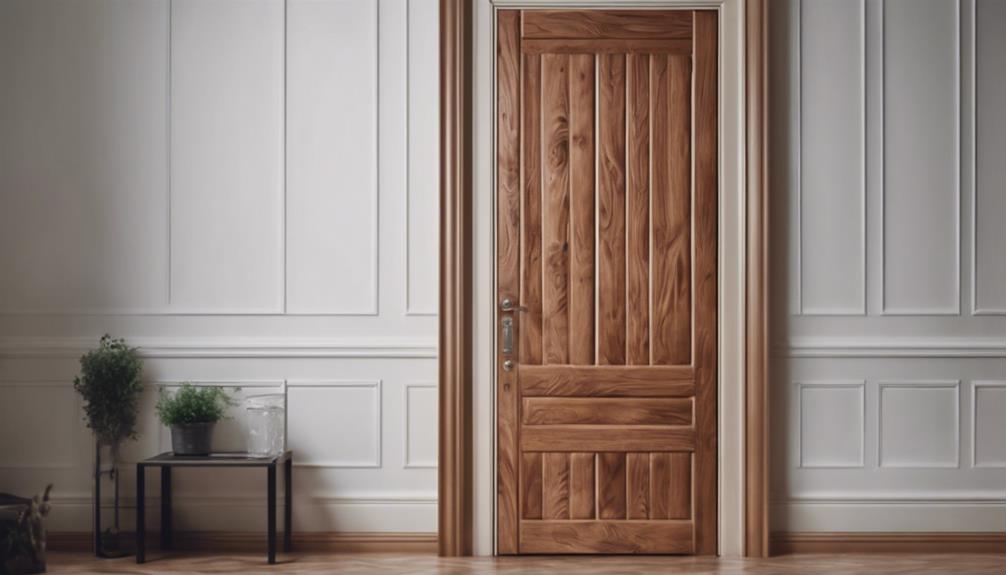

When updating your interiors, remember that interior doors typically range from 24 to 36 inches wide. Closet doors are usually 24 to 36 inches wide, while bedroom and office doors can vary from 28 to 36 inches. For bathrooms, consider doors between 28 to 32 inches. French doors offer more space and range from 48 to 72 inches wide. Keep in mind room size and traffic flow when selecting door widths since different areas may benefit from wider or narrower doors. Understanding these standard widths will help you make informed decisions about your interior doors.
Key Takeaways
- Standard interior door widths range from 24 to 36 inches.
- Minimum width for disability access is recommended at 36 inches.
- Match door widths to room size and traffic flow for optimal functionality.
- Accurate measurements prevent fitting issues and extra costs.
- Consider door height (80 inches) and thickness (1 3/8 to 1 3/4 inches) for stability.
interior door width measurement tool
As an affiliate, we earn on qualifying purchases.
As an affiliate, we earn on qualifying purchases.
Standard Widths of Interior Doors
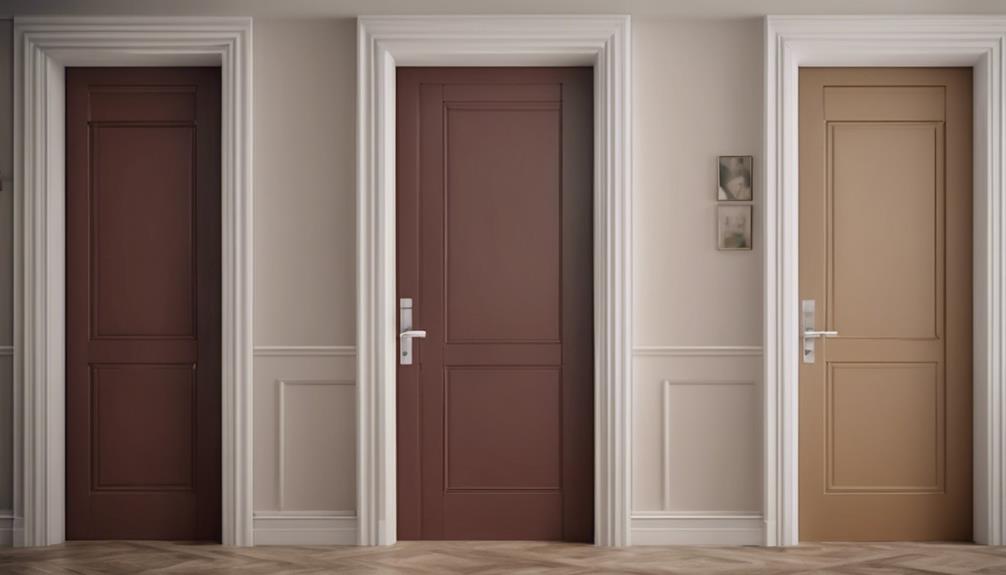
When considering the standard widths of interior doors, it's important to account for various room sizes and layouts, ranging from 24 to 36 inches. Standard door sizes play a significant role in ensuring that your doors fit seamlessly into your living spaces.
For instance, closet doors typically fall within this range to provide easy access to storage areas without encroaching on your room's layout. In bedrooms and offices, interior door sizes commonly range from 28 to 36 inches wide, allowing for smooth movement and convenient furniture arrangement.
Moreover, specific spaces like bathrooms often feature doors within the 28 to 32-inch width range to maintain privacy and optimize space utilization. French doors, known for their elegance and light-enhancing properties, can be as wide as 48 to 72 inches, creating a striking entrance or acting as a stylish room partition.
Understanding these interior door widths helps you make informed decisions when enhancing both the functionality and aesthetics of your living environment.
Common Interior Door Widths
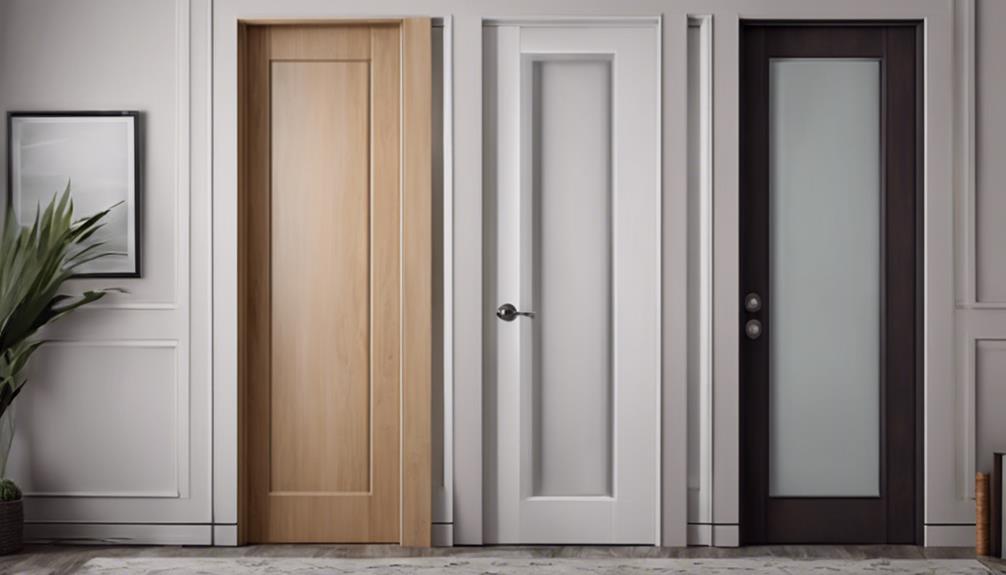
When it comes to common interior door widths, you'll find a range from 24 to 36 inches for various rooms in your home. Closet doors typically fall within the 24 to 36-inch width, while bathroom doors commonly span from 28 to 32 inches.
For bedroom and office doors, widths usually range from 28 to 36 inches, with French doors offering a more expansive opening at 48 to 72 inches wide.
Standard Door Sizes
Standard interior door widths typically range from 24 to 36 inches, with common options including 30, 32, and 36 inches. These standard door sizes guarantee that interior doors fit most door frames and cater to various room sizes. While narrower widths like 28 and 24 inches are available for specific needs, the International Residential Code (IRC) sets minimum size requirements for interior doors to ensure accessibility and safety. For disability access, a minimum width of 36 inches is recommended.
When choosing the width of the door, consider the function of the room and traffic flow to ensure ease of movement. Understanding the standard door sizes for interior doors can help you make informed decisions when renovating or building your space.
Choosing the Right Width
To select the appropriate width for an interior door, consider the room size and its intended use. When choosing the right width for your interior doors, keep the following points in mind:
- Room Size: Match the door width to the size of the room. Smaller rooms may benefit from narrower doors like 24 or 28 inches, while larger rooms could accommodate wider doors such as 32 or 36 inches.
- Traffic Flow: Opt for wider doors in high-traffic areas to allow for easy movement and accessibility.
- Furniture Placement: Consider the layout of furniture in the room. Make sure the door width allows for comfortable passage without obstructing any furniture.
- Accessibility: For spaces requiring wheelchair access, wider doors of 32 or 36 inches are recommended to meet accessibility standards.
Minimum Width for Disability Access

Enhancing accessibility within buildings often necessitates incorporating doorways that are a minimum of 36 inches wide to facilitate comfortable passage for individuals with disabilities. This width allows for easier movement of wheelchairs and other mobility aids, meeting accessibility standards and ensuring a smooth shift for those with diverse mobility needs.
Wider interior doors not only comply with regulations but also enhance independence and inclusivity within a space. By installing 36-inch wide doors, you can create an environment that welcomes everyone, regardless of their physical abilities. Consider this dimension as a thoughtful design choice that benefits not only individuals with disabilities but also anyone who may require a bit more space to navigate comfortably.
Making small adjustments like widening doorways can have a significant impact on the overall accessibility and usability of a building, making it a more welcoming and inclusive place for all.
Importance of Accurate Door Measurements
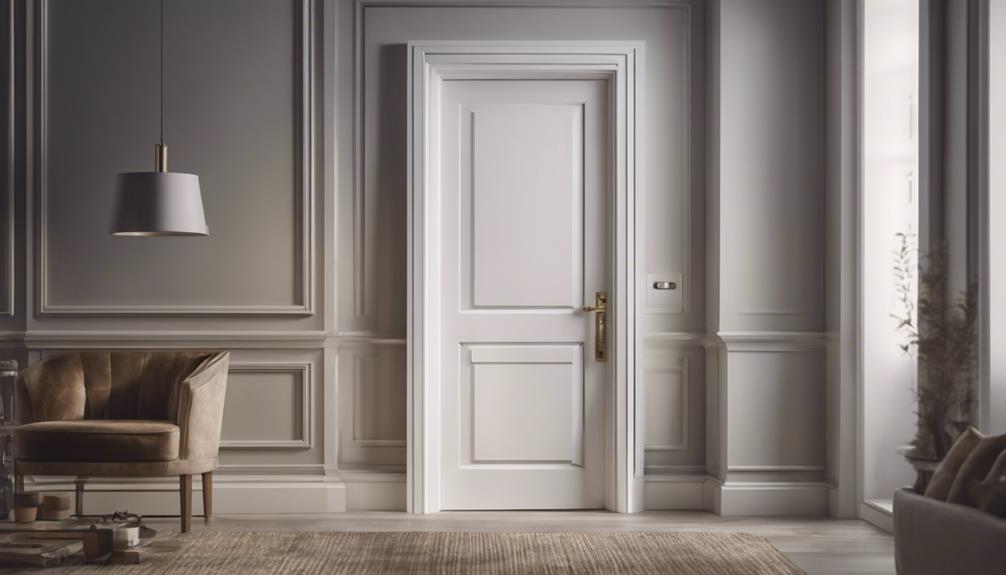
Ensuring your door measurements are accurate plays a vital role in guaranteeing a proper fit and functionality within the door frame. Here are some essential points to bear in mind when measuring a door for your home:
- Preventing Issues: Accurate measurements help prevent issues such as gaps around the door or difficulties in opening and closing it, ensuring smooth operation.
- Cost-Efficiency: Incorrect measurements can lead to additional costs for adjustments or even the need for a replacement door, making accurate measurements essential to avoid unnecessary expenses.
- Selecting the Right Size: Measuring the door frame, width, height, and thickness is essential for selecting the correct standard door size that will fit perfectly in your space.
- Comfortable Clearance: Adding a few extra inches to both the width and height measurements provides a comfortable clearance for the door, making it easier to move furniture in and out of rooms while ensuring the door functions properly.
Choosing the Right Width for Your Home
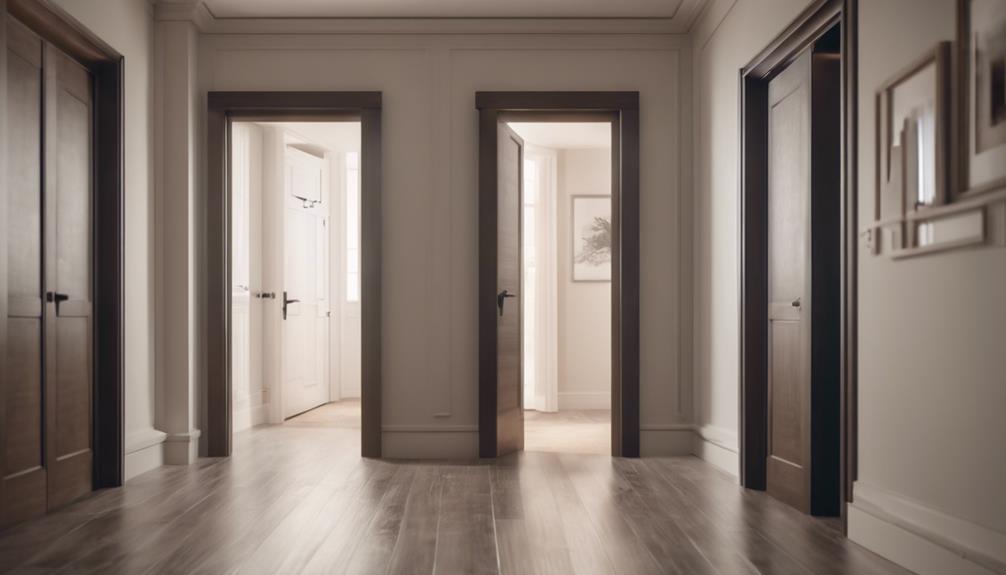
Consider the size of your rooms and the flow of movement when determining the appropriate width for interior doors in your home. Standard interior door widths typically range from 24 to 36 inches, with common options being 28, 30, 32, and 36 inches.
If you aim to enhance functionality, wider interior doors like 32 or 36 inches can accommodate better traffic flow and larger furniture movement. On the other hand, narrower interior doors such as 24 or 28 inches are suitable for spaces with limited room or for closets.
Bear in mind that the minimum width for disability access is usually 36 inches for interior doors. When choosing the right width for your home, take into account the purpose of each room and the layout to ensure maximum functionality and aesthetics.
Benefits of Wider Interior Doors
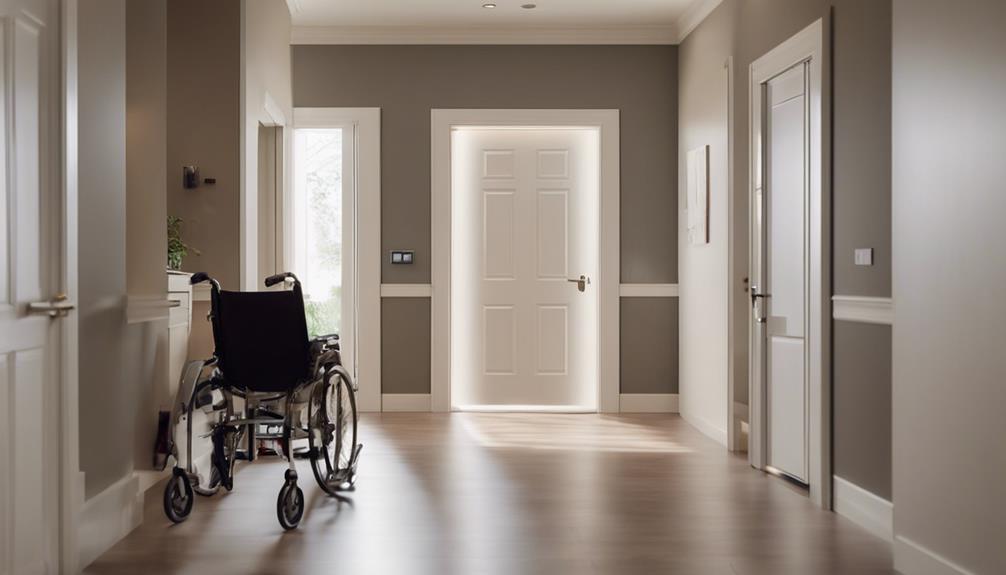
Wider interior doors, like those measuring 36 inches, offer increased accessibility for individuals using wheelchairs or mobility aids. Here are some benefits of opting for wider interior doors:
- Improved Accessibility: Wide interior doors provide ample space for wheelchair users and those with mobility aids to move freely throughout the home, promoting independence and ease of navigation.
- Easier Furniture Movement: With wider doors, you can effortlessly move larger furniture pieces in and out of rooms, saving you time and effort during redecorating or moving.
- Enhanced Aesthetic Appeal: Wide interior doors create a visually appealing and spacious environment, making rooms feel more open and inviting.
- Better Traffic Flow: Choosing wider doors can help improve traffic flow in busy areas of your home, reducing congestion and allowing for smoother movement between rooms.
Considerations for Narrower Interior Doors
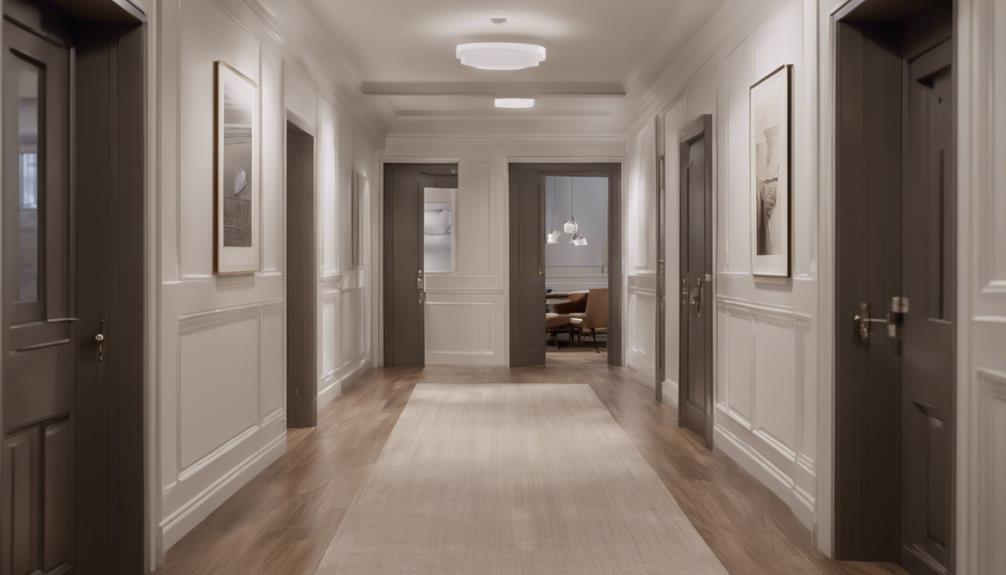
When selecting interior doors for tighter spaces or smaller rooms, it's essential to carefully consider the width that best suits your needs and space constraints.
Narrower interior doors can come as small as 24 inches in width, perfect for those tight spots where every inch counts.
If you need a bit more room to maneuver, a 28-inch wide interior door provides a slightly wider opening while still saving space compared to standard sizes.
For increased comfort and accessibility in various room layouts, a 30-inch interior door might be the ideal choice.
Opting for a 32-inch interior door offers a balanced solution, accommodating most furniture and traffic needs without compromising too much on space.
Remember to think about the room layout, furniture placement, and traffic flow when deciding on the width of interior doors to make the most out of your space.
Ensuring Proper Fit: Height and Thickness Measurements

When measuring the height of your interior doors, guarantee accuracy within the standard range of 80 to 96 inches. Consider the thickness of the door for stability, with typical options between 1 3/8 to 1 3/4 inches.
Remember to account for rough opening dimensions to ensure proper clearance, as door slabs are often slightly smaller than the nominal size.
Door Height Consideration
Guaranteeing the proper fit for your interior doors involves accurately measuring both the height and thickness of the door frame. When considering door height for standard interior doors, passage doors typically stand at 80 inches, while closet doors are commonly 78 inches tall. Here are some essential tips for door height consideration:
- Check Ceiling Height: Taller doors might be necessary for ceilings over 8 feet.
- Thickness Matters: Doors taller than 90 inches benefit from a thicker door, usually 1 3/4 inches, for added stability.
- Accurate Measurement: Measure the door frame precisely to ensure a proper fit for both height and thickness.
- Aesthetic Appeal: Factor in the room's overall look and functionality when selecting the height of your interior doors.
Thickness for Stability
To guarantee a proper fit for your interior doors, the thickness plays a crucial role in providing stability and durability. Standard interior door thickness typically ranges from 1 3/8 to 1 3/4 inches, offering a balance between security and cost-effectiveness.
Thicker doors, like the 1 3/4-inch option, provide enhanced security and soundproofing benefits, while thinner doors at 1 3/8 inches are more budget-friendly. When selecting door thickness, consider your specific needs for security, soundproofing, and budget constraints.
It's important to strike a balance between the benefits of thicker doors, such as improved security, and potential limitations like hardware customization options. Choose the thickness that best suits your requirements for a secure and stable interior door.
Frequently Asked Questions
What Is the Most Popular Interior Door Width?
The most popular interior door width is 32 inches, offering versatility for various spaces. However, narrower options like 30, 28, and 24 inches are common for specific areas such as closets or small rooms.
A 32-inch door strikes a good balance between functionality and space utilization in many homes. Room size, flow, and design choices can influence door width selection.
Take these factors into account to guarantee a proper fit and functionality for your space.
What Are Standard Internal Door Widths?
When it comes to standard internal door widths, options typically range from 24 to 36 inches, with popular choices at 28, 30, and 32 inches. The International Residential Code (IRC) provides minimum requirements, but some states may have stricter regulations.
Older homes tend to have narrower doors, while newer constructions often feature wider ones. Consider your room's function and traffic flow to determine the ideal door width for your space.
What Size Door for a 36 Inch Opening?
To get the right door size for a 36-inch opening, consider the actual door slab size, usually 35 1/4 inches wide. Guarantee you account for swing direction and clearance needs.
Measure the rough opening accurately to select the best fit. Give space for the frame and hardware on each side.
A nominal door size of 36 inches is commonly used for this opening. Make sure to plan for smooth installation and functionality.
What Is the Rough Opening for an Interior Door?
When hanging an interior door, knowing the rough opening dimensions is essential. It should be 2 inches wider and 2 inches taller than the actual door size. This extra space allows for adjustments during framing and guarantees a seamless fit.
For a standard 30-inch interior door, aim for a rough opening around 32 inches wide and 82 inches tall. Proper measurement and framing are vital for a smooth installation process.
Conclusion
So, when it comes to interior doors, remember that the standard widths can vary but typically range from 24 to 36 inches.
An interesting statistic to note is that wider doors, such as those around 36 inches, can make a room feel more spacious and are great for wheelchair accessibility.
Make sure to measure accurately, consider your specific needs, and choose the right width to enhance your home's functionality and style.