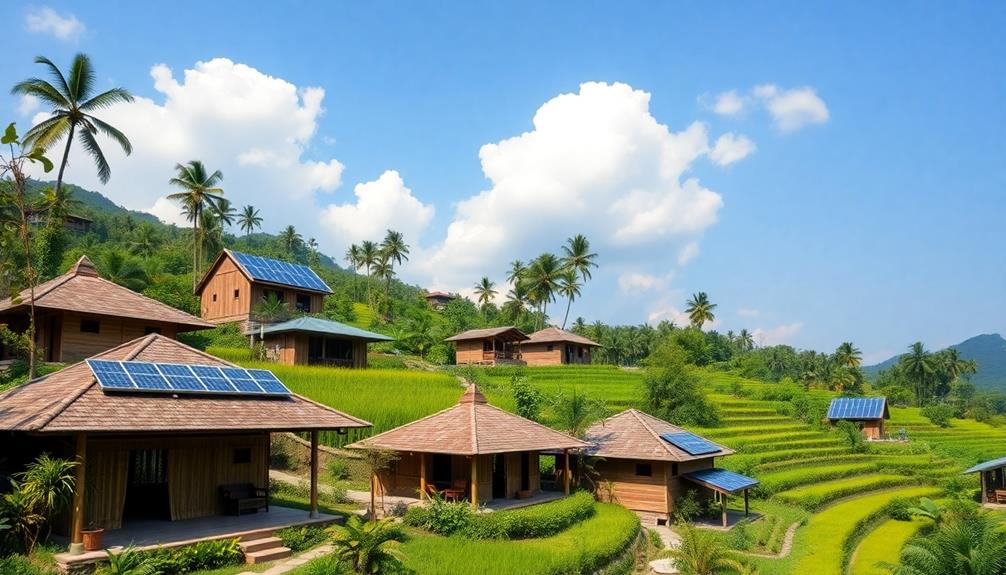

You'll find that Indonesia's sustainable rural design trends beautifully blend tradition and innovation. First, traditional practices like Niteni enhance ecological balance, while participatory design approaches empower communities to shape their environments. Utilizing local materials, such as bamboo and reclaimed wood, helps reduce emissions and supports local economies. Renewable energy sources, particularly solar power, electrify rural areas effectively. Additionally, eco-friendly architecture emphasizes passive design and rainwater harvesting. Seasonal agricultural practices optimize yields, and cultural tourism fosters community pride. Finally, social interaction spaces promote connection and collaboration. Explore these trends to discover how they transform rural living in this vibrant archipelago.
Key Takeaways
- Integration of Traditional Ecological Knowledge (TEK) enhances sustainable practices, promoting biodiversity and cultural heritage through local wisdom in rural design.
- Utilization of Local Materials like bamboo and reclaimed wood reduces carbon footprints, supports local economies, and reflects indigenous architecture.
- Participatory Design Approaches empower community members as co-designers, fostering resilience and ensuring that local narratives are integrated into development projects.
- Renewable Energy Solutions such as community-based solar projects electrify rural areas, improving lives while reducing reliance on fossil fuels.
- Indigenous Plant Species are prioritized in landscaping to maintain ecological balance, support biodiversity, and reinforce cultural identity in rural settings.
Impact of Traditional Practices
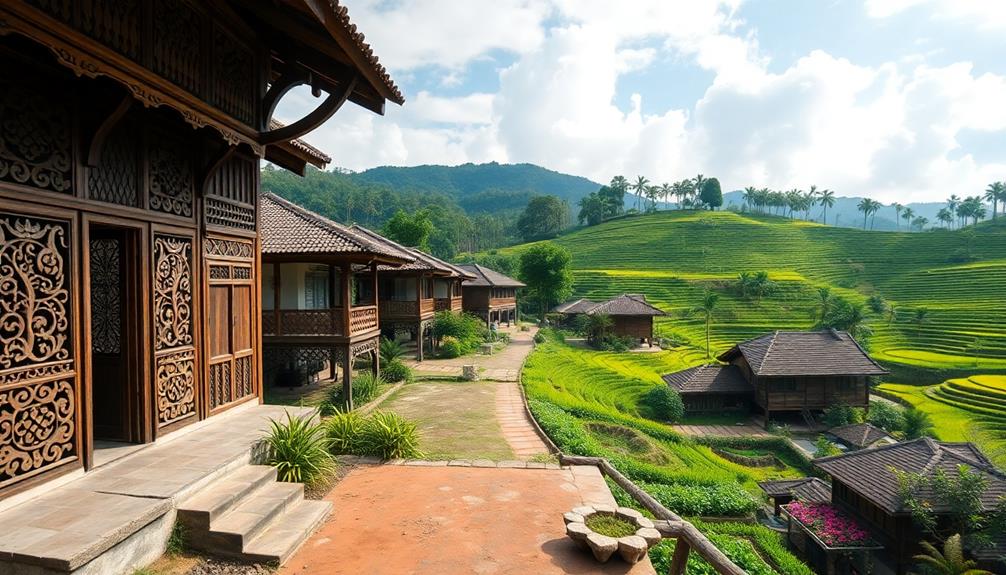
Traditional practices in Indonesia play an essential role in promoting sustainable rural design. By emphasizing methods like Niteni and Pranatamangsa, you can see how these approaches guide farmers in their planting and harvesting, ensuring crops align with natural cycles. This Traditional Ecological Knowledge (TEK) not only supports sustainable development but also helps maintain biodiversity that the Green Revolution often overlooked.
Additionally, the architecture of traditional Indonesian houses, known as "Rumah Adat," often reflects these sustainable practices, utilizing local materials and designs that harmonize with the environment and climate considerations (traditional housing practices).
Integrating these time-tested practices into contemporary agriculture allows rural communities to thrive while preserving their cultural identity. You'll find that indigenous learning techniques foster a deep connection between human activities and the environment, which is essential for sustaining ecological balance. By valuing local knowledge and practices, you empower communities to adapt to modern challenges without losing their heritage.
Moreover, incorporating traditional practices into design initiatives can promote tourism and heritage preservation, enhancing local pride. When rural communities engage in these practices, they co-create knowledge, ensuring their narratives remain significant.
This synergy between tradition and innovation ultimately strengthens the foundation of sustainable development, benefiting both the environment and community resilience. Embracing these traditional practices is key to fostering a sustainable future in Indonesia.
Participatory Design Approaches
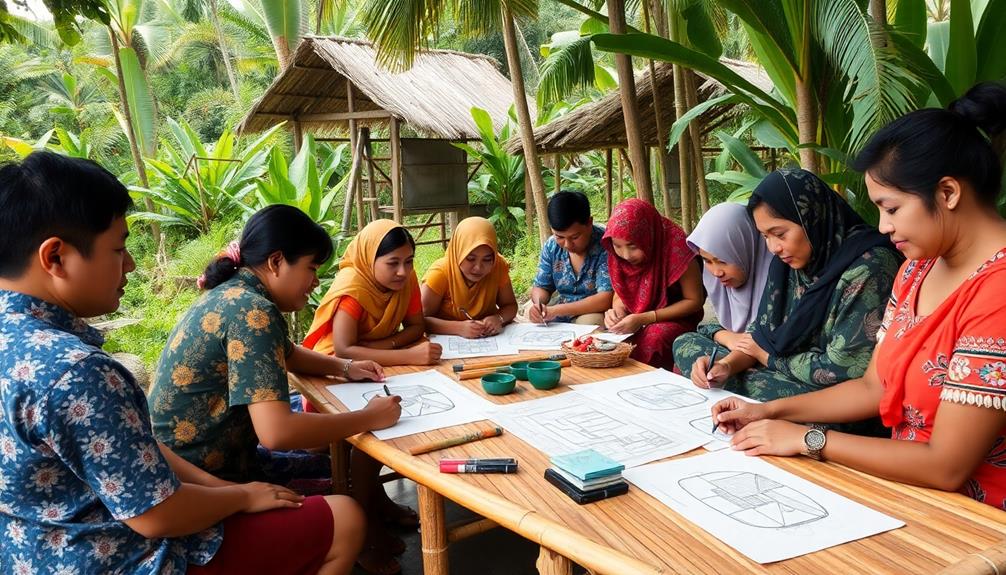
Participatory design approaches in Indonesia actively engage community members as co-designers, promoting their voices to shape local narratives and identities. This method empowers you to contribute to rural development in Indonesia by involving you in key activities like initiation meetings, treasure mapping, idea generation, craft design workshops, and project reflection.
These steps promote collaboration and engagement, allowing diverse perspectives to flourish. Additionally, incorporating elements such as Indonesian Decorative Pillows can enhance the comfort and cultural representation in community spaces.
Through ethnographic methods, your community life and cultural activities are documented, capturing local insights that inform sustainable design practices tailored to your unique needs. Engaging a total of 58 participants, including local farmers and government representatives, promotes that a broad range of voices is heard, fostering resilience and empowerment within your community.
Moreover, integrating Traditional Ecological Knowledge (TEK) into participatory design practices enhances sustainable agricultural methods while reflecting the cultural specificity of rural communities like yours. By valuing TEK, your community can create solutions that resonate with your traditions and environmental context.
Integration of Local Materials

While embracing sustainable rural design in Indonesia, integrating local materials plays an essential role in fostering environmental responsibility and cultural identity. By utilizing indigenous resources like bamboo and local timber, you not only reduce transportation emissions but also support the local economy and craftsmanship. This connection strengthens community pride and identity.
Consider the following table showcasing the benefits of integrating local materials:
| Local Material | Benefits | Traditional Technique |
|---|---|---|
| Bamboo | Fast-growing, sustainable | Used in frames and roofs |
| Local Timber | Supports local economies | Traditional joint techniques |
| Natural Stone | Low environmental impact | Stone masonry for walls |
The revival of traditional construction techniques reflects a commitment to cultural heritage while promoting ecological balance. By applying Traditional Ecological Knowledge (TEK), you can select materials based on seasonal cycles, ensuring responsible resource use. Emphasizing adaptive reuse in sustainable rural design, existing local structures are renovated using locally sourced materials, minimizing waste and enhancing community resilience. Integrating local materials isn't just about building; it's about creating a sustainable future rooted in culture and environment.
Renewable Resource Utilization
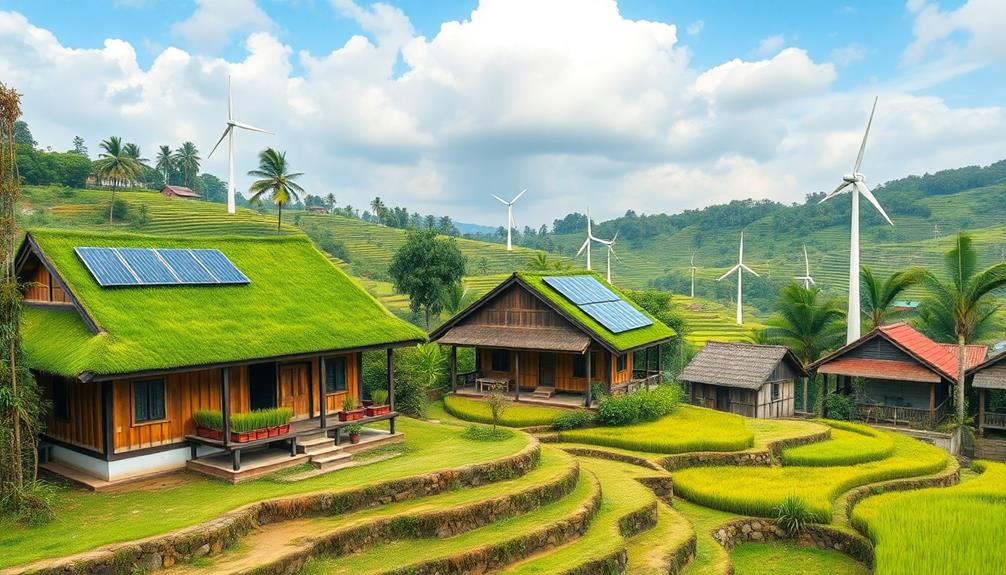
In rural Indonesia, harnessing solar energy can transform communities by reducing reliance on fossil fuels and providing power to off-grid areas.
Traditional Indonesian housing, often built with local materials like wood and bamboo, not only supports local economies but also promotes environmental conservation.
You'll also find that utilizing sustainable materials like bamboo not only supports local economies but also promotes environmental conservation.
Together, these practices create a more resilient and self-sufficient rural landscape.
Solar Energy Adoption
Indonesia's vast solar energy potential presents a golden opportunity for rural communities to transform their energy landscape. With an estimated capacity of 207.8 GW, solar energy can greatly contribute to electrifying rural areas in Indonesia while reducing reliance on fossil fuels.
Additionally, integrating sustainable architecture concepts can enhance the overall effectiveness of these solar projects by ensuring that new constructions are energy-efficient and eco-friendly. The government's goal to increase the renewable energy share in the national energy mix to 23% by 2025 underscores solar's role in this vision.
Community-based solar projects, including solar home systems, have already improved the lives of over 1.5 million households, enhancing quality of life and creating new economic opportunities.
The cost of solar photovoltaic (PV) systems has plummeted by over 80% since 2010, making these technologies more accessible and affordable for rural communities.
Sustainable Material Sourcing
Sustainable material sourcing is gaining traction in rural areas, emphasizing the use of renewable resources like bamboo and reclaimed wood. These materials are abundant in Indonesia and have a notably lower environmental impact compared to traditional options.
By opting for local stone and clay in construction, you not only minimize transportation emissions but also support local development and craftsmanship, preserving cultural heritage. This approach resonates with the principles of Balinese design characteristics, which highlight the importance of sustainability through eco-friendly materials.
Incorporating agricultural byproducts—like rice husks and coconut shells—into building materials is another innovative approach. This practice helps reduce waste while providing effective insulation solutions.
Additionally, using natural fibers such as rattan and jute in furniture design showcases a commitment to eco-friendly practices, enhancing the aesthetic appeal of rural interiors.
Community-driven initiatives, like those in Sabrang Village, highlight the importance of utilizing indigenous plant species for sustainable landscaping. This fosters biodiversity and ecological balance in rural settings, ensuring that development aligns with environmental stewardship.
Community Engagement Strategies
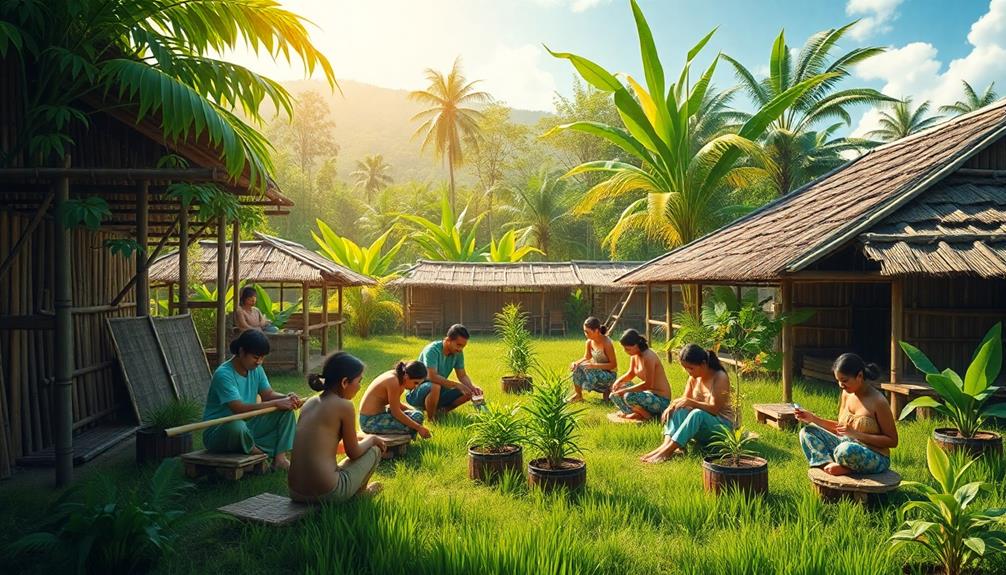
Effective community engagement strategies in rural Indonesia prioritize participatory design, allowing stakeholders to become co-designers in their own development. This approach fosters active involvement in decision-making processes, enhancing local narratives and identities.
By engaging in initiation meetings, treasure mapping, and craft design workshops, you empower community members, promoting sustainable social changes tailored to their unique needs. Additionally, incorporating elements of local artistry, such as traditional handicrafts, can further enrich the engagement process and encourage a deeper connection to cultural heritage.
Utilizing ethnographic methods, you can document local cultural practices and perspectives, ensuring design solutions reflect the community's traditions. In Sabrang Village, for instance, integrating Traditional Ecological Knowledge (TEK) into your engagement efforts supports sustainable agricultural practices and bolsters local pride.
Collaboration among diverse stakeholders, including local farmers and government representatives, is essential for tackling rural development challenges. By encouraging this cooperative spirit, you can drive effective social innovation that resonates with the community's values.
When everyone has a voice, the solutions developed not only meet immediate needs but also celebrate the rich cultural heritage of rural Indonesia. Ultimately, these community engagement strategies cultivate a sense of ownership and responsibility among residents, paving the way for a sustainable future that honors both tradition and innovation.
Smart Village Innovations

In exploring smart village innovations, you'll see how ICT can drive development and empower communities.
Initiatives like Pondok Ranji and Cibuntu showcase the power of local-led projects that directly address specific needs.
Additionally, the integration of traditional craftsmanship within these initiatives can foster sustainable practices and preserve cultural heritage, as seen in various Indonesian wedding decor ideas that emphasize local artistry.
ICT for Development
As communities in Indonesia face various challenges, leveraging information and communication technology (ICT) through smart village innovations offers a promising path for local development. These initiatives have proven essential, especially during the COVID-19 pandemic, which underscored the need for digital solutions to enhance resilience and support local entrepreneurship.
Innovative ICT applications can transform sectors like agriculture, improving practices through data analytics and better plantation management. By September 2022, 27.34% of villages were classified as Developed, illustrating the potential of ICT for development in bridging gaps in education, health, and economic opportunities in rural Indonesia.
Here's a breakdown of the impact of smart village innovations:
| Sector | ICT Application | Benefit |
|---|---|---|
| Education | Non-formal education programs | Enhanced learning opportunities |
| Agriculture | Data analytics for farming | Improved crop yield and practices |
| Communication | Cellular signal enhancement | Increased connectivity and access |
With a focus on collaborative capacity building, these initiatives pave the way for sustainable development, leveraging local resources and community skills to uplift rural Indonesia.
Community-Led Initiatives
Community-led initiatives are at the heart of Indonesia's Smart Village movement, harnessing the power of ICT to tackle local challenges and promote sustainable development. By focusing on community needs and empowering residents, these initiatives aim to enhance local development and address vulnerabilities.
These initiatives reflect a commitment to sustainable practices, much like the emphasis on eco-friendly design choices found in traditional Indonesian style home decor. Take, for instance, Pondok Ranji, which provides non-formal education, or Geluran Taman, which boosts English language skills. Both projects exemplify how smart village concepts can drive diverse approaches to community empowerment, showcasing what's possible when locals take charge.
As of September 2022, 8.43% of villages in Indonesia have achieved Independent status, reflecting significant progress driven by these innovative, community-led initiatives.
The COVID-19 pandemic highlighted the resilience smart villages can offer. Digital solutions became essential for local entrepreneurship and improving living conditions.
To guarantee the success of these initiatives, collaborative engagement among stakeholders is vital. When the community actively participates, rural development becomes more effective, directly addressing socio-economic disparities.
Eco-Friendly Architectural Solutions
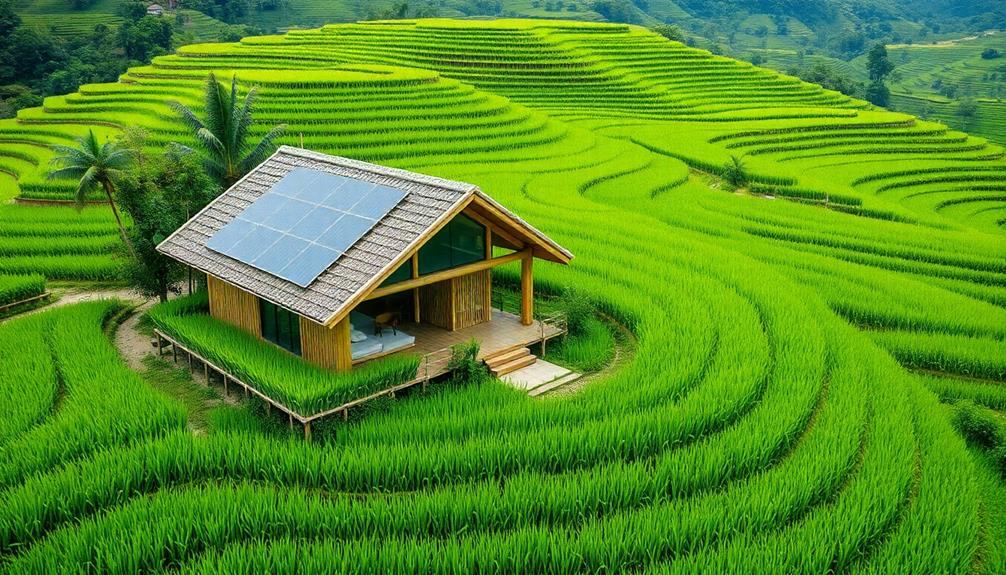
Sustainable architectural solutions frequently embrace eco-friendly practices that harmonize with Indonesia's rich natural environment. Incorporating local materials like bamboo not only supports sustainable development but also reflects traditional design elements that resonate with the community's culture.
Luxury tropical design aesthetics often utilize bamboo due to its abundance, sustainability, and low carbon footprint, making it a perfect choice for eco-friendly structures.
You'll find that passive design techniques, such as natural ventilation and daylighting, can notably reduce energy consumption in buildings by up to 50%. This aligns perfectly with Indonesia's goals for sustainable development.
Additionally, green roofs and vertical gardens enhance biodiversity while providing insulation, which helps mitigate urban heat in surrounding areas.
Water management systems are key features in these designs, addressing critical issues like water scarcity through rainwater harvesting and greywater recycling. By integrating these systems, you guarantee sustainable water use, which is crucial for rural areas.
Seasonal Agricultural Practices

Understanding Indonesia's seasonal agricultural practices reveals how deeply intertwined farming is with the country's natural rhythms. The Pranatamangsa system, a traditional framework, guides farmers on specific activities that align with seasonal changes, ensuring ideal crop yields. By using the Niteni approach, you can see how careful observation of natural phenomena helps farmers adapt their planting and harvesting times based on environmental cues.
| Seasonal Indicator | Farming Activity |
|---|---|
| Rainfall Patterns | Planting Schedule |
| Temperature Changes | Harvesting Time |
| Soil Moisture | Crop Rotation Plans |
| Pest Activity | Integrated Pest Management |
In Sabrang Village, traditional rice varieties like Rojolele and Mentik Wangi highlight local knowledge in selecting crops that thrive under specific seasonal conditions. While the Green Revolution introduced mechanized methods, many Indonesian farmers still embrace seasonal agricultural practices, promoting biodiversity and sustainable development. These practices not only contribute to food security but also reflect the deep connection between local traditions and the natural environment in rural communities.
Cultural Preservation Efforts
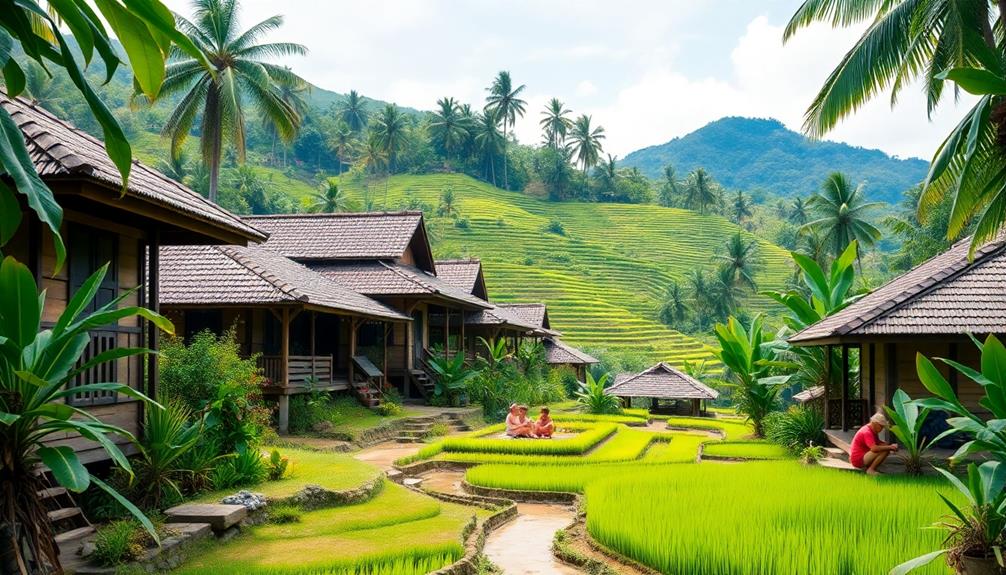
In Indonesia, you're seeing a strong push to integrate Traditional Ecological Knowledge into rural design, which helps keep local culture alive.
This effort often involves the use of traditional art forms, such as Indonesian decor masks, that showcase vibrant artistry and reflect the rich cultural heritage of the region.
Community-based craft workshops not only foster creativity but also empower you to connect with your heritage.
As cultural heritage tourism gains traction, it's becoming essential for preserving the unique identities of these rural areas.
Traditional Ecological Knowledge Integration
Integrating Traditional Ecological Knowledge (TEK) into design practices not only enhances cultural preservation but also fosters a deeper connection between communities and their environment.
In Indonesia, TEK emphasizes the interconnection between human activities and nature, guiding sustainable agricultural practices through local wisdom such as Niteni and Pranatamangsa. These methods, rooted in careful observation of natural phenomena, play a vital role in sustainable development.
Participatory design processes that incorporate TEK actively engage community members, allowing you to contribute your knowledge and cultural practices into sustainable initiatives. By valuing and preserving traditional agricultural methods, TEK helps mitigate ecological degradation caused by modern farming techniques introduced during the Green Revolution.
Ethnographic methods used in participatory design not only document cultural activities but also guarantee that design solutions are informed by your community's lived experiences.
This approach fosters regional identity and pride, enhancing local narratives that promote cultural preservation and tourism. By integrating TEK into contemporary design, you're not just preserving history; you're also paving the way for a sustainable future that honors both the environment and your cultural heritage.
Community-Based Craft Workshops
Community-based craft workshops play a significant role in preserving Indonesia's rich cultural heritage while promoting sustainable practices.
These workshops serve as crucial platforms where local artisans pass down traditional design skills and techniques to younger generations. By integrating Traditional Ecological Knowledge (TEK), they reflect local identities and foster regional pride.
You'll find that participatory design approaches encourage community members to engage actively in co-creating cultural products. This collaborative learning enhances their sense of ownership and identity, ensuring that these traditions continue to thrive.
Furthermore, these workshops provide economic opportunities through the sale of handcrafted goods, helping combat rural poverty, which stood at 12.36% in rural areas as of September 2022.
The success of these community-based initiatives is also evident in their ability to attract tourism, contributing to sustainable development while preserving local cultural narratives.
By participating in these workshops, you're not just supporting artisans; you're also becoming a part of a movement that values sustainability and cultural preservation.
In this way, community-based craft workshops are fundamental for maintaining the unique heritage of Indonesia while promoting a more sustainable future.
Cultural Heritage Tourism Promotion
Cultural heritage tourism in Indonesia not only showcases the country's rich traditions but also actively supports local communities in preserving their unique identities. By emphasizing traditional practices and local wisdom, this form of tourism fosters sustainable development, allowing communities to thrive economically while maintaining their cultural heritage.
Key regions like Sabrang Village highlight the importance of traditional ecological knowledge, promoting local rice varieties and engaging visitors in cultural activities. You'll find that integrating participatory design approaches encourages community involvement, allowing residents to share their stories and deepen connections with tourists. This sense of ownership enhances cultural narratives and strengthens community bonds.
Moreover, the rise of smart villages enables better connectivity and access to information about local traditions and attractions. This blend of technology with traditional design guarantees that visitors can easily explore and appreciate the cultural offerings.
According to the Ministry of Tourism and Creative Economy, cultural heritage tourism greatly contributes to economic growth, particularly in rural areas where visitor numbers and revenue from unique cultural experiences are on the rise. Embracing these trends helps protect and promote Indonesia's diverse heritage for generations to come.
Social Interaction Spaces
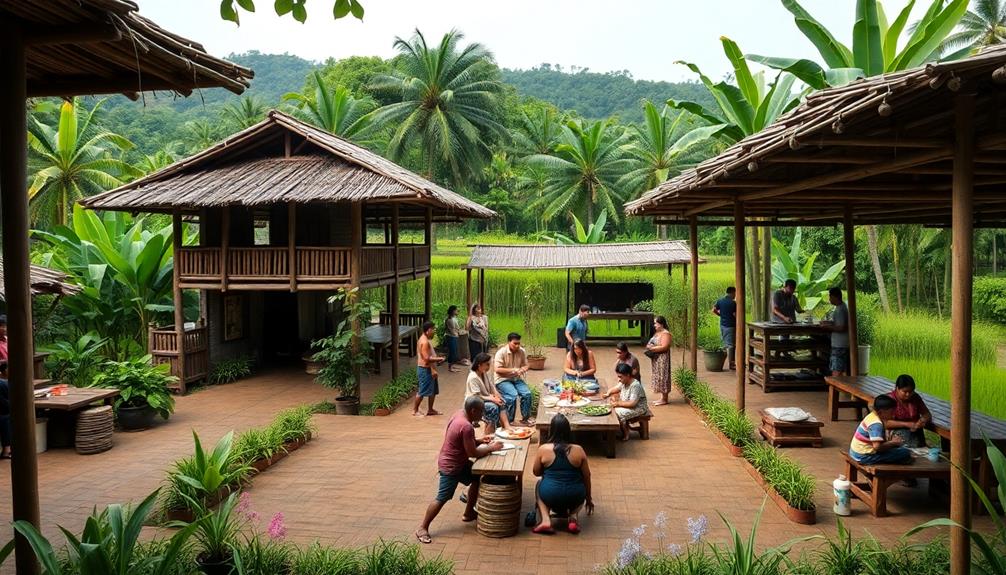
Social interaction spaces in rural Indonesia are transforming to bring people together and strengthen community bonds. These spaces are increasingly designed with community engagement in mind, emphasizing collective decision-making in local development.
By incorporating Traditional Ecological Knowledge (TEK), these areas not only promote cultural practices but also enhance biodiversity, fostering a deeper social cohesion among residents.
Participatory design methodologies play an essential role in this transformation. They encourage local involvement in creating communal areas, ensuring that the design reflects the community's cultural identity and needs.
Innovations like multifunctional community centers are emerging, supporting a variety of activities from agricultural training to cultural events, thereby strengthening social networks.
Design trends now prioritize open, flexible spaces that facilitate gatherings and knowledge exchange. This approach addresses the pressing need for social innovation, especially in the face of urbanization pressures.
By creating environments that promote collaboration and interaction, rural communities in Indonesia can thrive, preserving their unique cultural heritage while adapting to modern challenges.
Frequently Asked Questions
What Is the Most Sustainable City in Indonesia?
If you're looking for the most sustainable city in Indonesia, Bandung stands out. Its eco-friendly initiatives, green transportation systems, effective waste management, and community engagement truly make it a model for sustainable urban living.
Why Are Rural Areas More Sustainable?
Rural areas are often more sustainable because they rely on traditional practices and local resources. You'll find lower pollution levels and a closer connection to nature, which fosters biodiversity and encourages healthier living practices.
Conclusion
In embracing these sustainable rural design trends, you're not just building structures; you're crafting a vibrant tapestry of community and culture. By weaving together traditional practices, local materials, and eco-friendly solutions, you'll breathe new life into Indonesia's landscapes. Remember, each effort you make is a seed planted for future generations. So, let's cultivate these ideas together, nurturing a sustainable future where nature and community thrive hand in hand. Your vision can truly reshape the rural fabric!