If you’re looking to add plants and flowers to your home without risking your pets’ safety, opt for non-toxic options like Spider Plants, Calatheas, and Christmas Cacti. These plants not only beautify your space but also help improve air quality. Be mindful of plant placement to keep curious pets at bay. By selecting the right varieties and caring for them properly, you can create a safe and vibrant environment for both you and your furry friends. There’s much more to explore!

Get furniture and decor delivered free — and shop member deals
- Fast, free delivery on millions of items
- Access to Prime Big Deal Days deals on October 6–7
- Prime Video, Amazon Music and more included
Key Takeaways
- Choose non-toxic plants like Spider Plants, Calathea, and Christmas Cactus to ensure pet safety in your home.
- Regularly consult the ASPCA list to avoid toxic plants and monitor your pets for any signs of poisoning.
- Use hanging pots or elevated plant stands to keep plants out of reach of curious pets.
- Provide proper care, including adequate watering and humidity, to maintain healthy pet-friendly plants.
- Enjoy the benefits of plants, such as improved air quality and a calming atmosphere for both pets and owners.
As an affiliate, we earn on qualifying purchases.
Understanding Pet-Friendly Plants
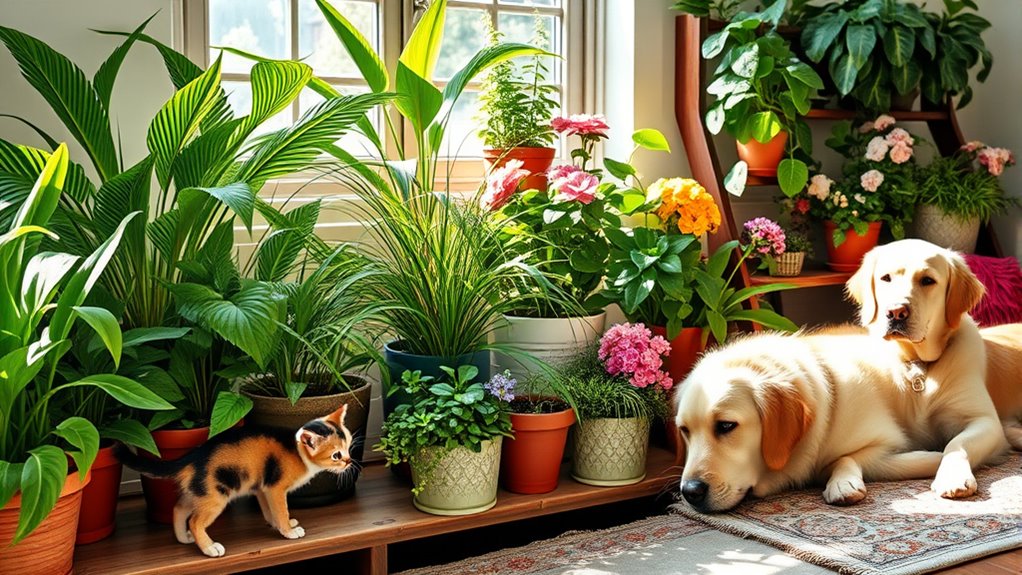
When you’re looking to add some greenery to your home, understanding pet-friendly plants is vital for keeping your furry friends safe. You want to choose pet-safe plants that are non-toxic to pets, ensuring your cats and dogs can explore without worry.
Common options like Calathea, Spider Plants, Christmas Cactus, and Money Trees not only beautify your space but also pose no health risks. It’s important to check the ASPCA list for toxic plants, as certain species may be safe for dogs but harmful to cats.
Regular maintenance and strategic placement of these plants can deter pets from nibbling on them. Plus, many pet-friendly plants improve indoor air quality, making your home with pets a healthier environment for everyone.
Top Pet-Safe Indoor Plants
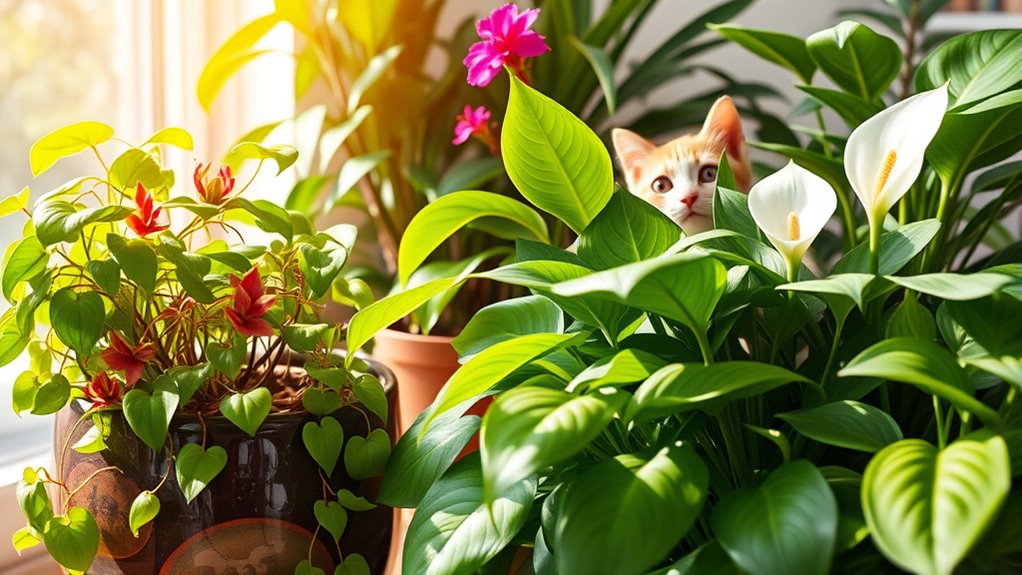
If you’re looking to brighten your home with plants that are safe for your furry friends, you’ve got some great options. Popular choices like Spider Plants and Boston Ferns not only enhance your indoor space but also keep your pets safe. Additionally, many dog breeds, like the Golden Retriever, are known for their friendly temperament, making them great companions while you enjoy your indoor garden. Moreover, keeping your pets healthy can be supported by incorporating nutrient-dense foods, such as chia seeds, into their diet. Plus, with a few simple care tips, you can guarantee these plants thrive without putting your pets at risk. Additionally, incorporating vertical storage solutions can help create a more organized space for your plants and pet essentials.
Popular Pet-Safe Choices
Creating a pet-friendly home doesn’t mean sacrificing greenery or beauty. You can easily incorporate pet-friendly plants that are non-toxic to dogs and safe for cats.
Start with the resilient Spider Plant, which purifies the air and thrives in various conditions. The Boston Fern is another excellent choice, flourishing in humidity and indirect light while keeping your indoor air fresh. These plants also benefit from proper watering techniques, ensuring they remain healthy and vibrant. Regular monitoring for signs of running dry can help maintain their vigor. Additionally, incorporating effective wall organization can create a more harmonious space for both plants and pets.
For a splash of color, consider African Violets; they’re vibrant and thrive in low light. The Chinese Money Plant, with its unique coin-like leaves, propagates easily and is a favorite among pet owners.
Ultimately, Calathea varieties offer stunning patterns and prefer indirect light, ensuring both aesthetic appeal and safety for your furry friends. Additionally, creating a safe environment for pets can promote emotional and psychological growth in both animals and humans alike.
Care Tips for Safety
To keep your home safe for pets while enjoying the beauty of indoor plants, it’s important to choose varieties that are non-toxic and easy to care for.
Consider adding Boston Ferns, Spider Plants, or African Violets to your collection, guaranteeing pet safety. Regularly check the ASPCA’s list of toxic plants to confirm your choices are safe for both cats and dogs. Additionally, some plants, like certain herbs, can also provide culinary benefits while being safe for your pets. Incorporating sustainable habits in your plant care routine can also contribute positively to the environment.
Place plants on high shelves or in hanging pots to keep mildly toxic plants out of reach. Monitor your pets for any signs of plant poisoning.
Verify proper plant care by providing appropriate light, watering, and humidity. Finally, pet-friendly flowering options like snapdragons and marigolds can add color without compromising your pets’ safety. Additionally, it’s crucial to understand puffed-up behavior in pets, as it can indicate discomfort that may stem from exposure to harmful plants.
How to Choose Plants for Your Pets
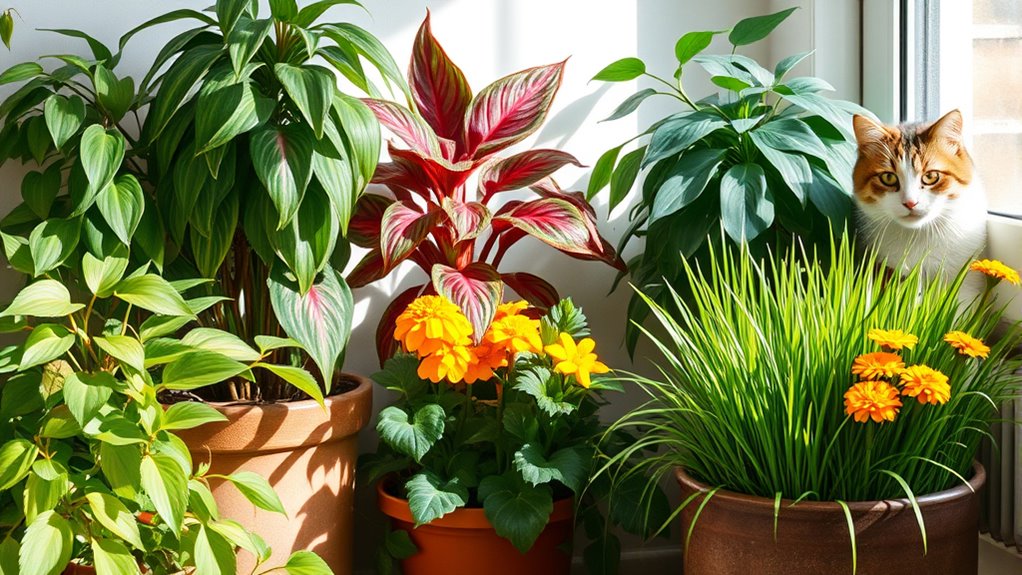
When selecting plants for your home, it’s essential to prioritize the safety and well-being of your pets. Start by consulting the ASPCA list of toxic plants to guarantee you choose non-toxic options for both cats and dogs.
Look for well-known pet-friendly options like Spider Plants, Boston Ferns, and African Violets, which thrive indoors without posing harm. Consider their specific care needs, including light and humidity, to keep the plants healthy and safe.
Consider adding safe indoor plants like Spider Plants, Boston Ferns, and African Violets to your home for a pet-friendly environment.
Position them in areas out of reach to prevent accidental ingestion, especially if any plants are mildly toxic. Finally, regularly monitor your pets for any signs of plant poisoning, as individual sensitivities can vary, even with non-toxic varieties.
Your pets’ safety is worth the extra effort!
Care Tips for Pet-Friendly Plants

Caring for pet-friendly plants means paying close attention to their watering, light, and soil needs.
You’ll want to keep an eye on humidity levels, especially for plants that thrive in moist conditions.
Plus, managing how your pets interact with these plants will guarantee both your greenery and furry friends stay healthy and safe.
Watering and Light Requirements
While selecting pet-friendly plants, understanding their watering and light requirements is essential for ensuring they thrive in your home.
Many of these plants, like the Spider Plant and Boston Fern, prefer indirect light and need consistently moist soil.
In contrast, succulents such as Haworthia and Echeveria thrive in bright light and require minimal watering—about every two weeks—allowing the soil to dry out completely.
The African Violet benefits from bright, indirect light and should be watered from the bottom to prevent leaf rot.
For plants like the Chinese Money Plant and Parlor Palm, medium to bright indirect light is ideal, with watering every one to two weeks.
Regularly check soil moisture to maintain healthy, pet-safe plants.
Soil and Humidity Needs
Selecting the right soil and humidity levels for your pet-friendly plants is just as important as meeting their watering and light needs.
Most pet-friendly plants, like the Boston Fern and Parlor Palm, thrive in high humidity and prefer consistently moist soil. For tropical varieties, consider regular misting or placing them in humid spaces like bathrooms.
Conversely, succulents like Echeveria and Haworthia need well-draining, sandy soil and should dry out completely between waterings.
It’s essential to choose soil types that retain moisture while ensuring proper aeration, such as peat-free mixes. Regularly monitor moisture levels; for instance, African Violets prefer well-drained soil but still require consistent moisture to prevent wilting or leaf damage.
Pet Interaction Management
To keep your pet-friendly plants thriving, it’s crucial to manage how your pets interact with them.
Place your plants on high shelves or in hanging pots to deter nibbling and minimize potential damage. Regularly monitor your plants for signs of distress, guaranteeing they receive adequate light, water, and humidity for peak health.
Utilize barriers or stands designed to keep pets away while still enjoying your greenery. You can also use pet-safe repellents to discourage pets from approaching without harming your plants.
Indoor Flower Options Safe for Pets
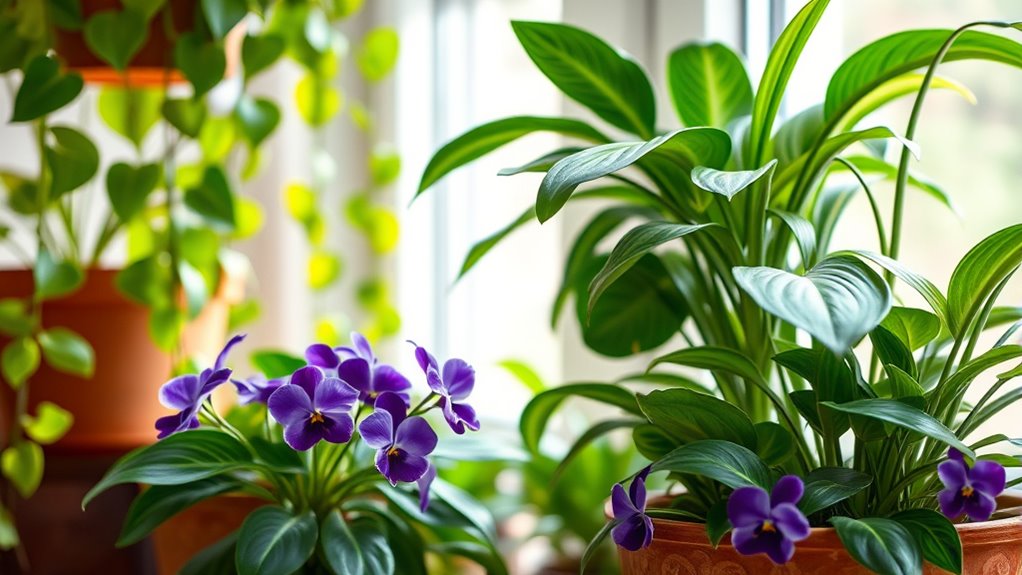
Finding indoor flowers that are safe for your pets can be a delightful challenge. Luckily, there are plenty of pet-safe options that can brighten your home.
Discovering pet-safe indoor flowers can be a rewarding journey, with numerous options to enhance your living space.
African Violets are a great choice, thriving in low light and boasting vibrant blooms.
Christmas Cacti are another non-toxic favorite, perfect for adding a festive touch.
If you want a plant that improves air quality, consider the Spider Plant; its hardy growth and cascading foliage are both attractive and safe for pets.
For stunning leaf patterns, Calathea varieties like Calathea Medallion are ideal, thriving in medium light.
Friendship Plants offer easy propagation and prefer bright, indirect light.
Finally, Bromeliads bring a tropical vibe while remaining non-toxic for your furry friends.
Creative Ways to Display Plants Around Pets

While creating a pet-friendly home, you can showcase your favorite plants without compromising your furry friends’ safety. One of the most creative ways to display plants is by using hanging pots or wall-mounted shelves to keep pet-safe plants like Spider Plants and Boston Ferns out of reach.
Consider creating plant shelves at varying heights, incorporating a mix of Calathea and African Violets for visual appeal. Elevate greenery with stylish plant stands, making it tough for pets to nibble on Money Trees and Parlor Palms.
Decorative terrariums can also house smaller pet-safe plants like Baby’s Tears. Finally, use barriers like decorative screens around larger plants, such as the Areca Palm, to enhance your decor while keeping your pets safe.
Common Plant Myths Regarding Pet Safety
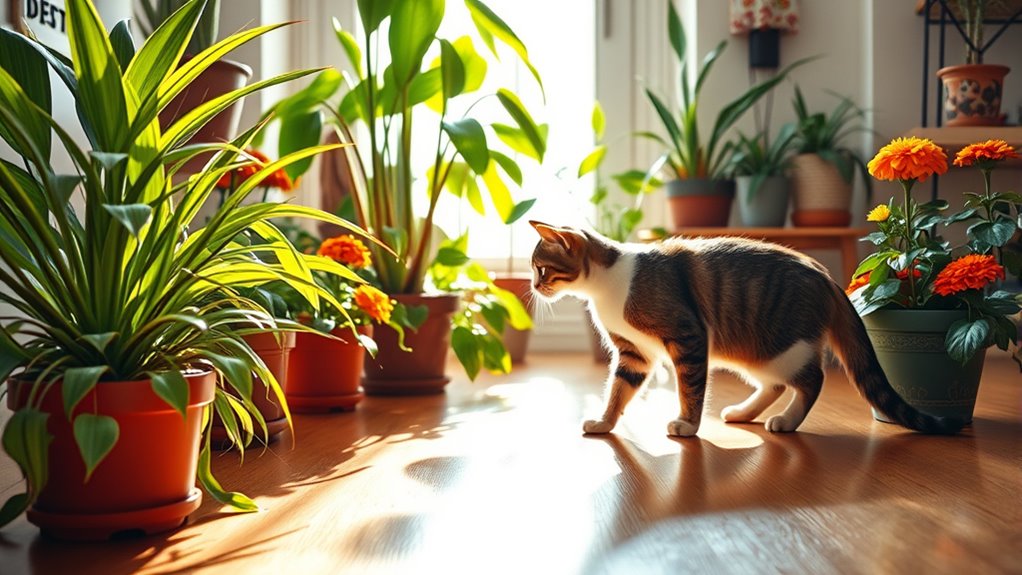
Despite the assumption that all houseplants are safe for pets, many popular varieties can actually pose serious risks. For instance, plants like lilies and sago palms are toxic to cats and dogs.
You might think that if a plant is labeled as non-toxic for one type of pet, it’s safe for all, but that’s misleading. African Violets can be safe for dogs but harmful to cats.
Even mildly toxic plants can cause gastrointestinal issues if ingested in large amounts. Just placing plants out of reach isn’t foolproof—curious pets can still find a way.
Ultimately, not all common flowers are pet-friendly; some daisies and aster varieties can also be toxic to cats and dogs, so choose plants that are safe carefully.
Benefits of Having Plants in a Pet-Friendly Home
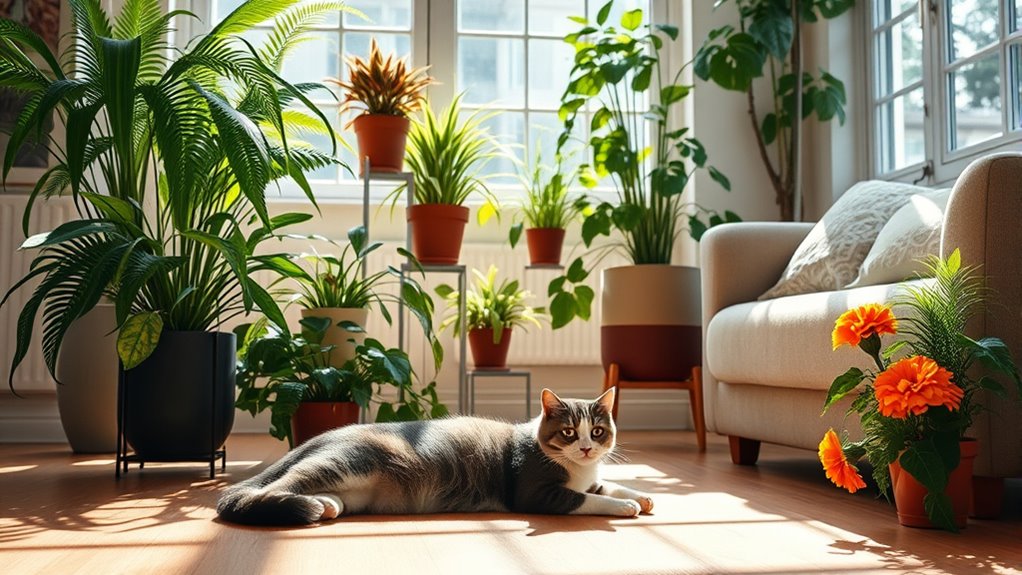
Choosing the right plants can lead to a healthier and more enjoyable living space for you and your pets. Incorporating pet-safe plants, like Spider Plants and Areca Palms, can greatly enhance air quality by filtering out toxins, making your home a fresher place to breathe.
These non-toxic options not only beautify your decor with vibrant colors but also create a calming atmosphere, reducing stress for both you and your furry friends.
Furthermore, the presence of greenery can boost your mental well-being, helping to alleviate anxiety and improve your mood.
Resources for Pet Owners on Plant Safety
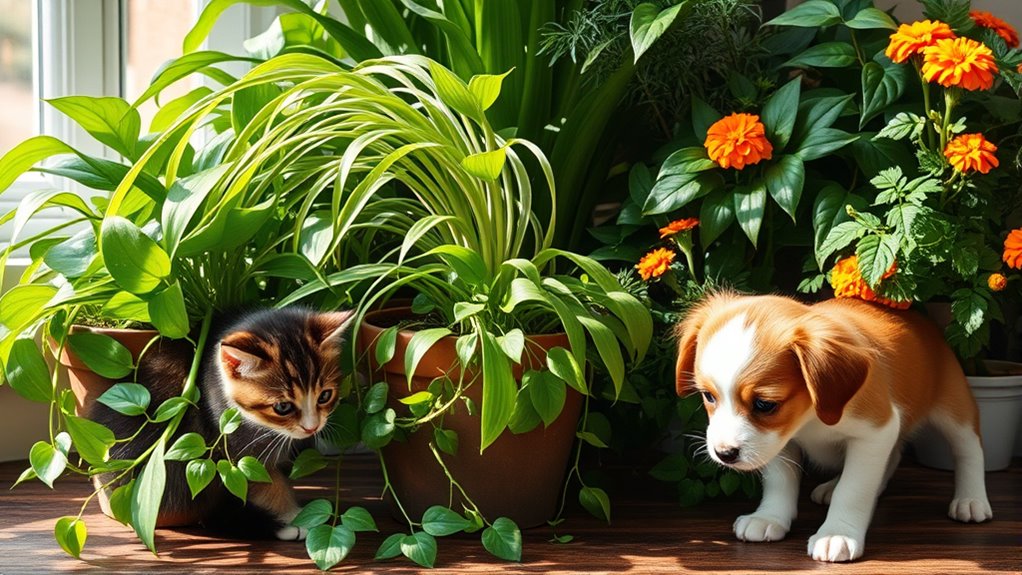
As you explore the world of indoor gardening, it’s essential to stay informed about plant safety for your pets. The ASPCA offers an invaluable list of toxic and non-toxic plants, helping you choose pet-safe plant options wisely. Remember, some plants, like African Violets, may be safe for dogs but not for cats.
Here’s a quick reference table to guide your choices:
| Plant | Toxicity Level | Pet Safe? |
|---|---|---|
| Spider Plant | Non-toxic | Yes |
| Calathea | Non-toxic | Yes |
| Christmas Cactus | Non-toxic | Yes |
| Boston Fern | Mildly toxic | Somewhat |
Regularly monitor your pets for any signs of poisoning, even with non-toxic plants, to guarantee their well-being.
Frequently Asked Questions
What Indoor Plants Are Good for Pets?
When you’re looking for indoor plants that are good for pets, consider options like Spider Plants, Boston Ferns, and Calatheas.
These plants are non-toxic and safe for both cats and dogs. You might also explore African Violets and Orchids, which are generally safe but can upset a cat’s stomach if ingested.
Always check the ASPCA’s list for specific plants.
What Landscaping Plants Are Safe for Dogs?
When you’re crafting your outdoor oasis, think of it as a canvas where safety and beauty intertwine.
For your furry friend, consider planting vibrant Marigolds or cheerful Snapdragons that won’t pose a threat. You can also incorporate lush Boston Ferns and Bamboo Palms, which not only elevate your garden’s charm but also purify the air.
Always double-check the ASPCA’s guidelines to guarantee your landscaping choices keep your pup safe and sound.
What Indoor Air Purifying Plants Are Safe for Dogs?
If you’re looking for indoor air purifying plants that are safe for dogs, you’ve got some great options!
Spider plants not only filter pollutants but also thrive easily.
The Areca palm acts as a natural humidifier, while Boston ferns require consistent moisture and high humidity to flourish.
You can also consider peace lilies for their air-filtering abilities, just keep them out of your pup’s reach.
Finally, bamboo palms are both pet-friendly and great for air quality!
What Are the Best Pet-Friendly Plants for Bathrooms?
What’s better than adding greenery to your bathroom while keeping your pets safe?
Consider the Boston Fern, Spider Plant, or Parlor Palm. These plants thrive in high humidity and low light, making them perfect for bathroom environments.
The Friendship Plant and Calathea also thrive under similar conditions and are non-toxic to pets.
With such options, you can easily create a serene, lush atmosphere without worrying about your furry friends!
Conclusion
Incorporating pet-friendly plants into your home isn’t just about aesthetics; it’s about creating a safe haven for your furry friends. Imagine a space where nature thrives alongside your pets, free from worry. By choosing the right plants and displaying them creatively, you enhance your home’s beauty and safeguard your beloved companions. So, why settle for a dull indoor landscape when you can cultivate a vibrant, pet-friendly environment? Your pets will thank you with every wag and purr!
Halloween Picks
halloween
As an affiliate, we earn on qualifying purchases.