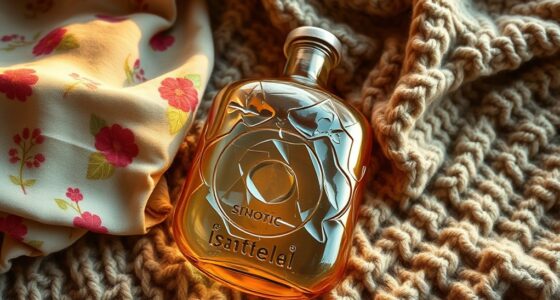
To use a hot water bottle safely, choose a bottle made of rubber, thermoplastic, or silicone with a durable cover like fleece or wool. Fill it with hot, not boiling, water to about two-thirds full, screw the cap on tightly, and check for leaks. Always place it on a soft surface with a cover to avoid burns, and monitor its temperature during use. Keep the bottle clean and store it properly—more tips await if you continue!
Key Takeaways
- Choose a suitable bottle material and size, then select an insulating cover like fleece or silk for safety and comfort.
- Fill the bottle with hot (not boiling) water, leaving about two-thirds capacity, and screw the cap tightly.
- Use a cover or towel to prevent direct skin contact and place the bottle on soft surfaces like the back or abdomen.
- Monitor the heat and skin condition during use, limiting sessions to 10-30 minutes and adjusting temperature as needed.
- Rinse and dry the bottle after use, check for damage regularly, and store in a cool, dry place to maintain safety and longevity.
hot water bottle with fleece cover
As an affiliate, we earn on qualifying purchases.
As an affiliate, we earn on qualifying purchases.
Choosing the Right Hot Water Bottle

When choosing a hot water bottle, it’s important to take into account the size and material that best suit your needs. Material options include rubber, thermoplastic, and silicone, each offering different flexibility, durability, and safety levels. Rubber bottles are traditional and affordable but may emit a strong odor initially. Thermoplastic options are lightweight and less odorous, making them suitable for sensitive skin. Silicone bottles are soft and flexible, providing comfort but often at a higher cost. Size considerations depend on how you plan to use the bottle; smaller sizes are ideal for targeted pain relief, while larger bottles heat broader areas or provide longer-lasting warmth. Additionally, selecting a bottle made from Best Beaches technologies can enhance safety features and durability, ensuring a reliable and effective relief experience. Choosing the right combination of material and size ensures comfort, safety, and effective relief.
Preparing Your Hot Water Bottle Safely

Before filling your hot water bottle, it’s important to prepare it properly to guarantee safety and effectiveness. The hot water bottle benefits include soothing aches, relieving stress, and providing comfort, but improper preparation can pose risks. Understanding the history of hot water bottles reveals their long-standing use as a simple, effective remedy. To prepare safely, check for any cracks or damage, and ensure the stopper fits tightly to prevent leaks. Use a clean, dry bottle to avoid contamination. Always select water that’s comfortably hot but not boiling, as boiling water can weaken the material and increase burn risk. Proper preparation ensures you enjoy the hot water bottle benefits safely, making it a reliable source of warmth and relief whenever needed. Additionally, using self watering plant pots as a comparison, ensuring the bottle is in good condition helps maintain consistent and safe warmth. Being aware of family photoshoot fails can remind you to handle your hot water bottle carefully to avoid accidents or leaks during use. Incorporating modern safety standards can further reduce risks associated with hot water bottles. Staying informed about safety guidelines and temperature control can help prevent incidents and ensure safe use over time.
Filling the Bottle Correctly

To fill your hot water bottle correctly, start by holding it upright and carefully pouring hot, but not boiling, water into it. Pay attention to the water level; fill it until the water reaches about two-thirds of the bottle’s capacity. This provides enough warmth without risking spills or leaks. Use a proper filling technique to avoid overfilling, which can cause pressure buildup. Here are some tips:
- Check the water temperature to ensure it’s hot but safe.
- Fill slowly to prevent splashing.
- Leave some space at the top for air and expansion.
- Never fill to the very brim to avoid spills when sealing.
- Always inspect the material integrity of your hot water bottle before use to ensure it is free from cracks or damage. Proper care and regular inspection help extend the lifespan of your hot water bottle and ensure safe usage. Additionally, being aware of the industry standards for hot water bottles can help you select a safe and reliable product. Staying informed about regulatory guidelines can further enhance safety and performance. Regularly reviewing manufacturer guidelines can also aid in maintaining safety and performance.
Properly Sealing the Hot Water Bottle

Make certain the cap fits snugly to prevent leaks and guarantee safety. Avoid overfilling the bottle, as this can cause spills or bursts. Proper sealing is key to enjoying the heat without worries. Additionally, ensure the durability of the material to maintain safety during use. Regularly check the seals and caps for signs of wear or damage to prevent leaks over time. Being aware of trauma management techniques can also help in selecting the best investment options for your retirement portfolio. For optimal performance, store the hot water bottle in a safe, dry environment when not in use.
Secure Cap Fit
Ensuring the cap is securely fitted is essential to prevent leaks and spills. Proper cap tightness guarantees a secure closure, keeping hot water safely inside. To achieve this, check the cap for any damage before use. Follow these steps:
- Screw the cap on firmly, ensuring it is aligned correctly.
- Twist clockwise until you feel resistance, indicating it’s tight.
- Give the cap a gentle tug to confirm it won’t loosen.
- Inspect the seal for any cracks or debris that could compromise the fit.
- Confirm that the seal integrity is intact before use. Additionally, inspecting the cap material for signs of wear can help prevent future leaks. Regularly checking the pressure resistance of the cap can also ensure it maintains a secure fit during use. Being aware of proper maintenance practices can extend the lifespan of your hot water bottle and prevent potential hazards.
A secure cap fit prevents accidental leaks and ensures you stay safe and dry. Remember, a well-sealed hot water bottle is more effective and lasts longer, making your experience safer and more comfortable.
Avoid Overfilling
Overfilling your hot water bottle can lead to leaks or even bursts, so it’s vital to fill it only up to the recommended water level. Check the bottle’s markings to make sure you’re not overfilling, as excess water increases pressure and risk of spillage. Properly sealing the bottle after filling is fundamental for overflow prevention; make sure the cap is tightly secured. Leave some space at the top to allow for expansion as the water heats up. Avoid filling it to the very brim, which can cause leaks when pressure builds. By paying attention to the water level and guaranteeing a secure seal, you minimize the chances of spills or bursts. This careful approach guarantees safe and effective use of your hot water bottle.
Using a Cover or Sleeve for Protection

Choosing the right cover material helps safeguard your skin and extend the life of your hot water bottle. Make sure to select a fabric that’s durable, comfortable, and easy to clean. Regularly maintaining and washing your cover ensures it stays safe and hygienic for repeated use.
Choosing the Right Cover Material
Selecting the right cover material for your hot water bottle is essential for safety and comfort. The cover affects fabric durability and insulation properties, ensuring your skin stays protected and heat lasts longer. Consider these options:
- Fleece: Soft, warm, with excellent insulation, ideal for cozy use.
- Cotton: Durable and breathable, offering good fabric durability and easy cleaning.
- Wool: Provides natural insulation, keeps heat in longer, and is gentle on skin.
- Silk: Luxurious, lightweight, with good insulation properties, perfect for sensitive skin.
Choose a cover material that balances durability with insulation, so your hot water bottle remains safe and effective over time. The right cover enhances comfort while preventing burns or leaks.
Proper Cover Maintenance
Using a cover or sleeve for your hot water bottle is essential for maintaining safety and prolonging its lifespan. Regularly check the cover’s durability to prevent tears or holes that could expose the rubber or plastic. Clean the cover according to the manufacturer’s instructions to keep it hygienic and avoid odors. Proper maintenance also involves inspecting the cover’s fit; a snug, secure fit prevents slipping or damage during use. Keep the cover’s aesthetics in mind—choose colors or patterns that suit your style, and replace worn-out covers to keep your hot water bottle looking inviting. By caring for your cover properly, you guarantee it remains effective, safe, and visually appealing, enhancing your overall experience and extending the life of your hot water bottle.
Placing the Hot Water Bottle Correctly

To guarantee maximum comfort and safety, you should place the hot water bottle correctly on your body. Proper placement helps with temperature regulation and protects your skin from burns. Follow these steps:
- Ensure the bottle is well-covered with a towel or a fabric cover to prevent direct contact and skin damage.
- Place the bottle on a soft surface, like your back or abdomen, where it can distribute heat evenly.
- Avoid placing it on sensitive areas or areas with broken skin.
- Check that the water inside is at a comfortable temperature before application to avoid burns or discomfort.
Monitoring Temperature and Duration

After placing the hot water bottle securely on your body, it’s important to keep an eye on its temperature and how long you keep it in place. Proper temperature regulation guarantees comfort and safety, preventing burns or discomfort. The ideal duration depends on your needs, but generally, 20 to 30 minutes is safe. Use the table below as a guideline:
| Temperature Range | Duration | Safety Tip |
|---|---|---|
| Slightly warm | 30 mins | Check skin regularly |
| Warm but not hot | 20 mins | Use a cloth barrier |
| Hot | 10-15 mins | Remove immediately if too hot |
Monitoring helps maintain safe, effective relief while avoiding skin irritation or burns.
Cleaning and Maintaining Your Hot Water Bottle

Regular cleaning and maintenance are essential to keep your hot water bottle safe and effective. Proper care preserves its hot water bottle aesthetics and ensures it lasts longer, reflecting its rich hot water bottle history. To maintain it well:
Regular cleaning and maintenance keep your hot water bottle safe, effective, and looking its best for years of cozy comfort.
- Rinse with warm water after each use to prevent residue buildup.
- Use mild soap and a soft brush for thorough cleaning, avoiding harsh chemicals.
- Check for cracks or leaks regularly to prevent accidents.
- Store it dry and in a cool place when not in use to maintain flexibility and hygiene.
Maintaining your hot water bottle not only prolongs its life but also keeps it safe and comfortable to use. Regular upkeep ensures it remains a reliable source of warmth, respecting its long-standing role in comfort and health.
Safe Storage and Disposal Tips

Proper storage is essential to keep your hot water bottle in good condition and ready for use when needed. Store it in a cool, dry place away from direct sunlight, sharp objects, and extreme temperatures. Confirm it is completely dry before storing to prevent mold or deterioration. Follow disposal guidelines carefully: never puncture or burn the bottle, and always empty it completely. When discarding, check local recycling options for rubber or plastic bottles. Use the following table for clarity:
| Storage Safety | Disposal Guidelines | Safe Storage Tips |
|---|---|---|
| Keep in a cool, dry area | Empty and drain completely | Store away from heat sources |
| Avoid direct sunlight | Puncture only if recycling is possible | Keep out of children’s reach |
| Check for damage before storing | Do not burn or incinerate | Store upright in a secure place |
Frequently Asked Questions
Can Hot Water Bottles Be Used for Cold Therapy?
Hot water bottles are typically used for warmth, but they can be adapted for cold therapy too. You can fill a hot water bottle with cold water and use it as a cold compress, helping reduce inflammation and numb pain. This method promotes muscle relaxation and eases swelling. Just make sure to wrap it in a cloth to prevent direct contact with your skin and avoid frostbite while using it for cold therapy.
How Long Does a Hot Water Bottle Typically Stay Warm?
A hot water bottle typically stays warm for about 2 to 6 hours, depending on factors like water retention and insulation duration. To maximize heat retention, use a well-insulated cover and fill it with hot but not boiling water. The bottle’s material and insulation help maintain warmth, but remember, it gradually loses heat over time. For longer-lasting warmth, consider rewarming or using multiple bottles.
Are There Any Health Risks Associated With Hot Water Bottles?
Think of hot water bottle safety as guarding a delicate flame—if you’re not careful, you risk potential skin burns. You should always check the temperature before use and avoid direct contact with skin. While hot water bottles are generally safe, misusing them can cause burns or discomfort. Properly insulating and not overfilling your hot water bottle reduces risks and keeps you cozy without harm.
Can Children Safely Use Hot Water Bottles?
When considering child safety with hot water bottles, you should always prioritize hot water precautions. Children can safely use hot water bottles if you supervise them closely, ensure the bottle isn’t too hot, and use a cover to prevent burns. Never leave a child alone with a hot water bottle, and check it regularly for leaks or damage. Following these guidelines helps keep your child safe and comfortable.
What Should I Do if My Hot Water Bottle Leaks?
Like a delicate teacup teetering on the edge, your hot water bottle might leak unexpectedly. When this happens, stop using it immediately. Conduct leak repair carefully, inspecting for tiny cracks or holes. Follow safety precautions by emptying the bottle and drying it thoroughly before attempting any repair. If the damage is severe, replace it altogether. Always prioritize safety to avoid burns or water damage, ensuring cozy warmth without risk.
Conclusion
So, now you’re practically a hot water bottle expert, ready to conquer chills with style and safety. Just remember, misuse might turn your cozy companion into a fiery foe or a frozen foe—either way, not quite what you had in mind. Treat it with respect, follow the steps, and you’ll stay warm and injury-free. After all, nothing says “smart” like avoiding burns or leaks while enjoying your toasty new best friend. Stay safe, stay warm!