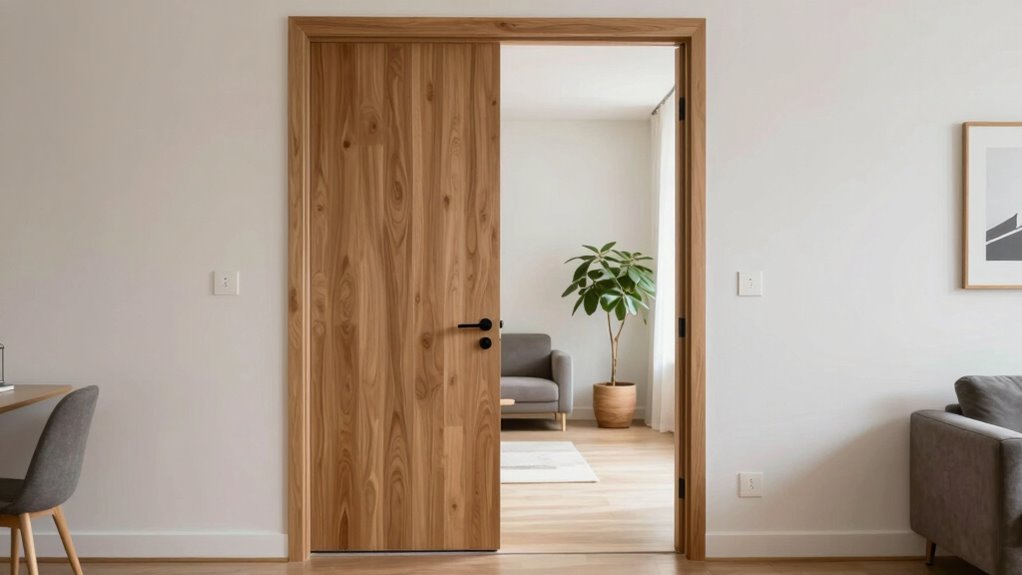
To improve your home flow, consider how door swings affect movement and space. Reassess each door’s direction, ensuring they don’t block walkways, furniture, or key areas like kitchens and bedrooms. Using sliding or pocket doors can free up space and reduce congestion in high-traffic zones. Think about how door placement influences daily habits and traffic patterns. Making small adjustments can transform your home’s functionality—if you explore these options further, you’ll discover even more ways to optimize your layout.

Get furniture and decor delivered free with Prime
- Fast, free delivery on millions of items
- Prime Video, Amazon Music and more included
- Member-only deals all year
Key Takeaways
- Assess furniture and pathway layouts to determine optimal door swing directions that prevent obstructions.
- Use outward or sliding doors in tight spaces to maximize interior accessibility and flow.
- Reversing door swings or installing pocket doors reduces congestion in high-traffic areas.
- Align door swings with daily movement patterns for smoother transitions and improved home functionality.
- Strategically place doors to avoid blocking key features like closets, windows, or appliances.
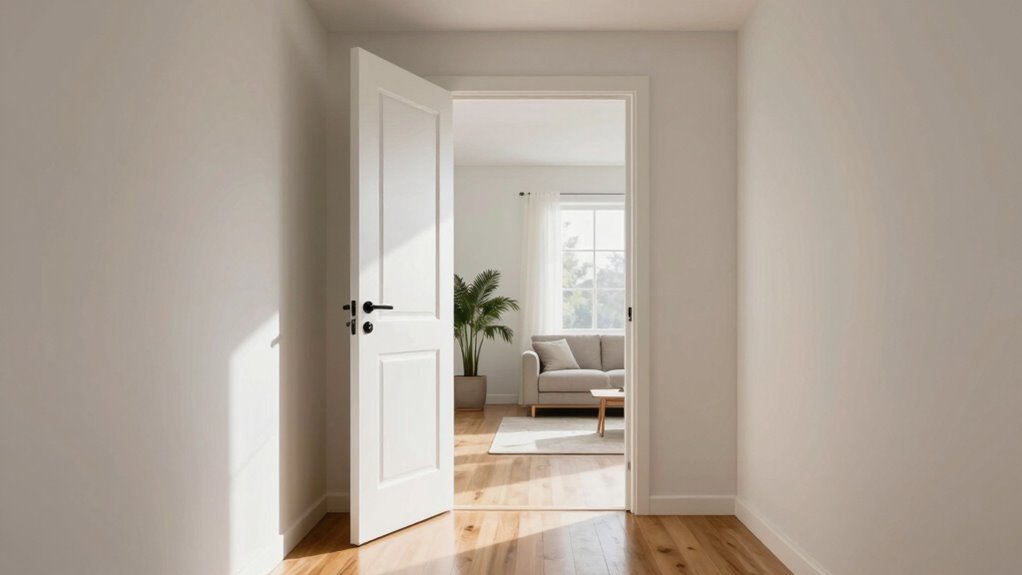
When designing or renovating your home, one often overlooked factor that can considerably impact flow and functionality is door swing direction. The way doors swing open affects how easily you move through rooms, how furniture fits, and how open or closed a space feels. Making smart door placement choices ensures your home feels both comfortable and efficient. When you plan door swings thoughtfully, you improve room accessibility, allowing for smoother transitions between spaces without obstruction or awkward angles.
Start by assessing each room’s layout. Consider how furniture is arranged and where natural pathways develop. For example, in a living room, a door that swings inward toward seating can block access or limit furniture placement. Instead, opt for a door that swings outward or slides, freeing up space inside and making it easier to move around. In bedrooms, ensure closet doors and entry doors don’t block closets, windows, or walkways. Properly placed doors that swing in the right direction can prevent furniture from being squeezed into tight corners or creating awkward traffic patterns.
Assess each room’s layout to optimize door swing for better space and flow.
In kitchens and bathrooms, door swing decisions matter even more. A poorly placed door that swings into a work area can hinder movement and cause frustration. Instead, consider swinging doors away from major appliances or fixtures, or use pocket doors where space is limited. This not only maximizes room accessibility but also promotes a more open, inviting atmosphere. When you think about smart door placement, you’re designing a home where movement feels natural, not forced. Additionally, incorporating space-saving door options can significantly enhance room usability, especially in compact areas. Being aware of door hardware choices can further optimize how smoothly your doors operate and how seamlessly they integrate into your design.
Furthermore, think about how door swing direction influences overall flow between rooms. For example, a door swinging into a hallway can create congestion, especially if multiple doors open into the same corridor. Reversing the swing or switching to a sliding door can alleviate this issue, making it easier for everyone to navigate. This approach is particularly useful in high-traffic areas or homes with limited space. Additionally, understanding door swing options allows you to customize your home’s layout to better suit your daily needs. When you prioritize door placement, you create a seamless transition from one room to another, enhancing the overall flow.
Ultimately, choosing the right door swing direction involves considering how you use each space and how movement occurs naturally. By making informed decisions about smart door placement, you’ll improve room accessibility and create a home that feels more open, functional, and inviting. Small adjustments in door swing can have a big impact on how your home functions daily, making your living environment more comfortable and efficient.
sliding pocket doors for small spaces
As an affiliate, we earn on qualifying purchases.
As an affiliate, we earn on qualifying purchases.
Frequently Asked Questions
How Do Door Swings Affect Room Privacy?
Door swings considerably impact your room privacy. When a door swings inward or outward, it influences privacy concerns and sound insulation. An inward swing can create a barrier, enhancing privacy, especially if you add a lock. Conversely, outward swings might reduce privacy if the door doesn’t fully close or seal. Choosing the right swing direction helps control sound transfer and maintains your desired level of privacy in each room.
What Are the Cost Implications of Changing Door Swings?
Changing door swings can impact your budget due to door hinge costs and installation expenses. Typically, switching the swing involves purchasing new hinges, which are usually affordable, but installation may require professional help, adding to costs. If you’re handy, you might lower expenses by doing it yourself. Overall, expect a moderate investment, but the improved flow and privacy could make it well worth the cost.
Can Door Swing Modifications Increase Home Value?
A stitch in time saves nine, and updating your door swings can boost your home’s value. By enhancing interior aesthetics and improving energy efficiency, you make your space more appealing to buyers. Properly chosen door swings create a seamless flow, making rooms feel larger and more functional. These small modifications signal thoughtful upgrades, increasing your home’s marketability and potentially raising its resale value.
Are There Safety Concerns With Certain Door Swing Choices?
Yes, certain door swing choices can pose safety concerns. You might face security risks if doors swing outward into walkways or open into narrow hallways, increasing the chance of accidents. To prevent accidents, choose door swings that minimize obstruction and keep pathways clear. Properly installed doors with secure hinges also enhance safety, helping you avoid falls or injuries and ensuring your home’s safety and security.
How Do Door Swings Impact Furniture Placement?
Like a well-choreographed dance, door swings influence furniture arrangement and door clearance, shaping your space’s flow. You’ll want to take into account which way doors open to prevent blocking pathways or limiting furniture placement. A door swinging inward may require more clearance, dictating where larger pieces go, while outward swings offer more flexibility. Planning door swings thoughtfully ensures your furniture fits comfortably and your home moves seamlessly, enhancing both function and aesthetic harmony.
Conclusion
By choosing the right door swings, you open the door to better flow, smoother movement, and a more inviting home. When you consider space, function, and style, you create a seamless journey from room to room. Embrace the choices that guide your home’s rhythm, the decisions that shape your daily life, and the details that make your space truly yours. With thoughtful door swing decisions, you transform your home into a place where every step feels natural, every space feels connected, and every moment feels effortless.
Halloween Picks
halloween
As an affiliate, we earn on qualifying purchases.