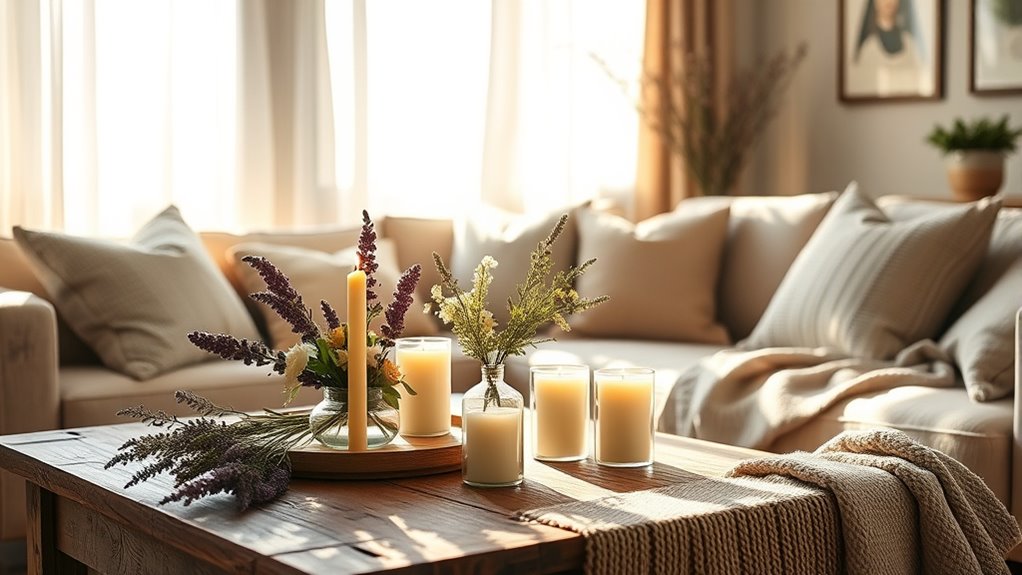

To make your home smell signature but not overpowering, focus on layering scents thoughtfully. Start with a light base, like subtle essential oils or diffusers, then add mid-notes for depth, such as floral or woody accents. Finish with fresh top notes that evaporate quickly. Adjust scent intensity and distribute products evenly, placing them near seating or windows. Keep the environment balanced and cozy—if you want more tips, explore beyond the basics for harmonious scent layering.
Key Takeaways
- Layer lighter, fresh scents as top notes to create a subtle signature aroma without overpowering the space.
- Use complementary fragrance notes that blend naturally, ensuring seamless transitions for a balanced scent profile.
- Maintain scent intensity by starting with gentle layers and gradually increasing, avoiding overwhelming the environment.
- Distribute scent sources evenly across different areas and heights to promote a cohesive, inviting atmosphere.
- Regularly refresh and clean scent devices and linens to preserve a natural, balanced aroma that feels signature and not overpowering.
As an affiliate, we earn on qualifying purchases.
Understanding the Basics of Scent Layering

Understanding the basics of scent layering starts with recognizing that it’s about combining different fragrances to create a unique, personalized aroma. You’ll want to contemplate seasonal variations, as certain scents work better in warmer or cooler weather, affecting how your layers blend. For example, fresh citrus might be perfect for summer, while warm spices suit winter. Scent longevity also plays a role—some fragrances fade faster, so layering with longer-lasting scents helps your overall aroma stay consistent throughout the day. Proper ventilation and fire safety regulations should also be considered to ensure a safe environment when using multiple scent sources. When you layer thoughtfully, you enhance your space with a signature scent that feels just right for any season. Experimenting with different combinations allows you to craft a scent profile that’s both dynamic and true to your personal style.
Choosing the Right Base Scents for Your Home

Selecting the right base scents is essential because they set the foundation for your home’s overall aroma. Your personal scent preferences play a key role here—whether you favor warm, woody notes or fresh, citrusy scents, choose bases that resonate with your style. Consider seasonal scent choices as well; light florals and citrus work well in spring and summer, while spiced or woody scents suit fall and winter. Focus on subtlety to avoid overpowering your space. Base scents should create a lasting but gentle background that complements your other layers. By selecting scents that match your personality and the season, you’ll craft a signature aroma that feels natural and inviting, rather than overwhelming or artificial. Incorporating fragrance layering techniques can help achieve a balanced and personalized scent profile for your home.
Incorporating Mid-Notes to Add Depth

After establishing your base scents, adding mid-notes brings richness and complexity to your home’s aroma. These notes act as a bridge between your base and top layers, enhancing depth. Use carefully chosen essential oil blends that complement your existing scents, creating a harmonious atmosphere. Mid-notes such as lavender, rose, or geranium add warmth and sophistication, making your scent signature more memorable. Incorporate these notes gradually, adjusting until you achieve the desired balance. This layering technique also enhances scent memory, helping your home become associated with comforting or inspiring feelings. Proper scent layering techniques can elevate your home fragrance experience and ensure your scent remains balanced and inviting. By thoughtfully integrating mid-notes, you ensure your home’s scent isn’t just strong, but multi-dimensional and inviting, giving your space a refined, personalized aroma that lingers beautifully.
Using Top Notes for a Fresh First Impression

Top notes are the first scents you notice when entering a space, setting the tone for the overall aroma. They create an immediate impression that influences your mood and expectations. To make this impression memorable, consider these tips:
- Choose seasonal variations—citrus and light florals work well in spring and summer, while spicy or woody scents suit fall and winter.
- Reflect personal scent preferences by selecting fresh, energizing notes if you favor vibrant aromas, or softer, calming scents if you prefer subtlety.
- Opt for top notes that evaporate quickly, ensuring a clean, inviting first impression without overpowering.
- Experiment with layering different top notes to find a signature scent that aligns with your home’s personality and your mood.
- Incorporate sustainable fragrance options, such as essential oils and eco-friendly diffusers, to enhance your scent layering while reducing environmental impact.
Balancing Strength and Subtlety in Your Fragrance

To strike the right balance, you need to adjust the fragrance’s intensity so it’s noticeable but not overwhelming. Layer your scent with complementary notes that enhance instead of compete with each other. This way, you create a harmonious fragrance that’s both strong and subtle. Incorporating layering techniques can help you achieve a more nuanced and sophisticated scent profile.
Adjust Fragrance Intensity
Balancing the strength and subtlety of your fragrance is key to achieving the desired scent experience. To adjust scent intensity effectively, consider these steps:
- Start with a light application, gradually increasing until you reach the preferred fragrance strength.
- Use different concentrations of your scent, like eau de toilette or perfume, based on how strong you want the aroma.
- Diffuse fragrances carefully, opting for fewer or smaller sources to prevent overwhelming scent strength.
- Combine scents with varying diffusion levels to create a balanced aroma, avoiding overpowering fragrance strength.
- Pay attention to the fragrance composition, as the balance of notes influences overall scent perception and subtlety.
Layer With Complementary Notes
Layering with complementary notes allows you to fine-tune your fragrance, creating a harmonious balance between strength and subtlety. By selecting scents that enhance each other, you influence the scent memory your home leaves behind, making it uniquely yours. This approach supports a smooth fragrance evolution, preventing overpowering notes from dominating your space. For example, pairing a bold base with soft, airy accents can soften intensity while maintaining depth. As your fragrance develops throughout the day, this layered combination ensures it remains inviting without becoming overwhelming. Ultimately, thoughtful layering with complementary notes helps craft a signature scent that’s both memorable and understated, allowing your home to exude personality without shouting for attention.
Selecting Complementary Fragrance Products

Choosing the right fragrance products starts with coordinating notes that complement each other. You want to layer scents that enhance your overall aroma without overpowering it. By focusing on balance, you’ll create a harmonious scent that stays true to your style. Incorporating essential oil blends can help you achieve a personalized and cohesive fragrance profile.
Coordinating Fragrance Notes
When selecting fragrance products to create a cohesive scent layer, understanding how different notes interact is essential. Fragrance compatibility and scent harmony ensure your home smells refined rather than overwhelming. To achieve this:
- Focus on notes with similar scent families, like citrus or floral, for natural compatibility.
- Mix fragrances with balanced intensity to avoid overpowering layers.
- Use base notes as anchors, pairing them with complementary middle and top notes.
- Test combinations in small amounts to check for scent harmony before full deployment.
- Recognize how spiritual energy can be influenced by scent choices, helping to elevate your home’s ambiance and promote positive vibrations.
Layering for Balance
To achieve a balanced scent experience, you need to select fragrance products that complement each other without competing for attention. Focus on fragrance mixing that enhances scent harmony, creating a seamless progression between layers. Choose products with similar scent profiles or complementary notes to prevent overpowering the space. For example, pair a light citrus diffuser with a subtle floral candle to add depth without overwhelming. Keep the intensity in mind—lighter scents should lead, with richer scents supporting for balance. Avoid cluttering the environment with too many competing fragrances; instead, aim for a cohesive blend that feels natural. When done thoughtfully, scent harmony emerges, making your home feel inviting without feeling overpowering or chaotic. Fragrance harmony is essential for creating a signature scent that enhances your living space.
Applying Scent Layers Strategically Throughout Your Space
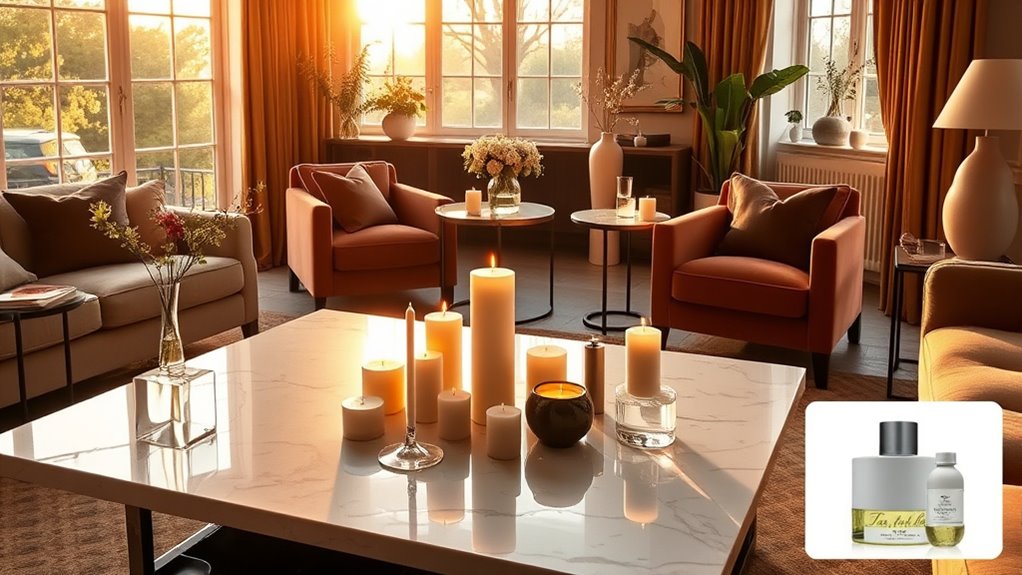
Strategically applying scent layers throughout your space enhances the overall ambiance and creates a welcoming environment. To achieve this, consider these tips:
- Place candles thoughtfully, such as on coffee tables or shelves, to add subtle, consistent scent diffusion.
- Use scented decor like decorative diffusers or reed sticks in entryways and living areas for a gentle aroma boost.
- Layer scents by combining candles with other scented decor, ensuring they complement each other without overpowering.
- Position scent sources at different heights and areas, like near seating or windows, to distribute fragrance evenly.
Tips for Maintaining a Consistent Signature Scent

Maintaining a consistent signature scent requires intentional effort and regular upkeep. To do this, pay attention to seasonal variations, adjusting your scent layers subtly as the weather changes. For example, you might favor lighter, fresher notes in summer and richer, warmer scents in winter. Your personal preferences also play a key role—trust your instincts to keep your home smelling authentic to your style. Consistency can be achieved by reapplying your signature scents at regular intervals, such as weekly or biweekly. Use the same fragrances or layer similar notes to maintain a cohesive aroma. Regular cleaning of scent diffusers, candles, and linens also helps preserve your signature scent without it becoming overpowering. These small adjustments keep your home smelling just right year-round.
Frequently Asked Questions
How Long Do Layered Scents Typically Last in a Home?
Layered scents usually last around 4 to 8 hours in your home, depending on the fragrance strength and materials used. You might notice scent longevity varies, especially with natural versus synthetic scents. Over time, the fragrance fade becomes noticeable, so you may need to refresh your layers regularly. To maintain a balanced aroma without overwhelming, reapply or adjust scent intensities as needed, ensuring your home smells inviting without overpowering.
Can Scent Layering Help Hide Household Odors Effectively?
Scent layering can help hide household odors effectively, and a study shows that pleasant scents can improve perceived air quality. By carefully combining different fragrances, you create a mask that reduces unwanted smells without overwhelming your space. Just keep allergy considerations in mind, as some scents might trigger sensitivities. Proper scent layering enhances your home’s atmosphere while maintaining good air quality, making it more inviting without risking discomfort or allergy issues.
Are There Specific Scents to Avoid Combining in Layering?
You should avoid combining scents that create fragrance conflicts, as they can clash and disrupt the harmony of your home’s aroma. Steer clear of mixing overly strong or competing fragrances, which can lead to scent overload and make the space feel overwhelming. Instead, choose complementary scents that blend smoothly, ensuring your scent layering remains subtle and inviting without turning into a confusing or overpowering olfactory experience.
How Often Should I Refresh or Reapply My Scent Layers?
Think of scent layers like a delicate dance; you don’t want to interrupt it too often. You should refresh or reapply your scent layers every 4 to 6 hours to maintain fragrance consistency and enhance scent longevity. Pay attention to how the scent fades and reapply as needed, especially in high-traffic or warm areas. This keeps your home smelling inviting without overwhelming, like a gentle melody that lingers beautifully.
Do Different Rooms Require Different Scent Layering Strategies?
Yes, different rooms may need different scent layering strategies based on your personal scent preferences and seasonal scent variations. You might prefer a subtle aroma in bedrooms for relaxation, while living areas could have more vibrant scents. Adjust your layering techniques accordingly, using lighter or richer scents depending on the season. This tailored approach guarantees each space feels balanced and inviting without overwhelming your senses or those of your guests.
Conclusion
Mastering the art of scent layering helps you craft a enchanting, consistent, and subtle signature aroma. By blending bold base notes, balanced mid-tones, and fresh top accents, you create a harmonious haven that’s inviting without overwhelming. Stay strategic with your scent selections and smoothly synchronize layers throughout your space. With a little patience and practice, you’ll perfect your personal perfume palette—leaving a lasting, lovely, and luxurious impression every time someone steps inside.